Category: News

  • Pakistani Diaspora Members Scream “Shame on You, Asim Munir” in Protests Across U.S.

    Pakistani Diaspora Members Scream “Shame on You, Asim Munir” in Protests Across U.S.

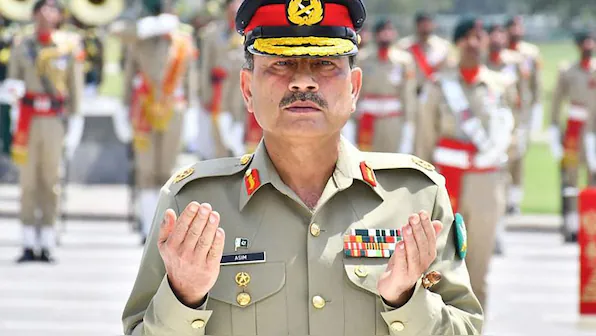
    Washington, D.C., June 17, 2025 Pakistan’s Army Chief, Field Marshal Syed Asim Munir, faced intense public backlash from members of the Pakistani diaspora during his visit to the United States for the 250th anniversary celebrations of the U.S. Army. Protesters, largely supporters of the Pakistan Tehreek-e-Insaf (PTI) party led by jailed former Prime Minister Imran Khan, gathered outside the Pakistani Embassy in Washington, D.C., chanting “Shame on you, Asim Munir!” and branding him a “mass murderer” and “Islamabad ka Qaatil” (Killer of Islamabad). The demonstrations, which included digital vans and posters, were part of a broader wave of diaspora-led protests reflecting deep discontent with Munir’s leadership and Pakistan’s military establishment.

    The protests coincided with Munir’s high-profile visit to attend a U.S. military parade and hold meetings with State Department and Pentagon officials, following praise from U.S. Central Command head Gen. Michael Kurilla, who called Pakistan a “phenomenal partner” in counterterrorism efforts. However, the diaspora’s anger stemmed from Munir’s controversial role in Pakistan’s domestic politics, particularly his alleged suppression of PTI and the crackdown on protests following Khan’s arrest in May 2023. Demonstrators accused Munir of orchestrating the “Islamabad Massacre” in November 2024, where security forces allegedly used live rounds against PTI supporters, prompting a case against him with London’s Metropolitan Police for torture and crimes against humanity.

    Viral footage shared on X captured the intensity of the protests, with slogans like “Failed Marshal” and “Liar” echoing sentiments from a recent Times Square billboard campaign that labeled Munir a “Fraud Marshal” alongside former President Asif Ali Zardari and Prime Minister Shehbaz Sharif. The billboard, widely shared by Indian journalist Aditya Raj Kaul, accused Munir of military failures during India’s Operation Sindoor in May 2025, which targeted terror camps in Pakistan after the Pahalgam attack that killed 26 civilians.

    PTI’s Secretary for Overseas Affairs, Sajjad Burki, rallied Pakistani-Americans to protest, stating on X, “Let the White House know that any deal with this government is not acceptable to the people of Pakistan.” The diaspora’s grievances also highlighted Munir’s inflammatory rhetoric, particularly his April 2025 speech invoking the “two-nation theory” and calling Kashmir Pakistan’s “jugular vein,” which Indian officials linked to the Pahalgam attack.

    The protests underscore a growing rift between Pakistan’s military leadership and its diaspora, particularly in the U.S. and UK, where similar demonstrations have occurred. In February 2025, British Pakistanis protested Munir’s visit to London, and a legal case was filed against him for alleged human rights violations. Analysts like Michael Kugelman noted that Munir’s U.S. visit, while aimed at strengthening counterterrorism ties, has instead amplified diaspora dissent, reflecting Pakistan’s internal political crisis and the military’s faltering public image.

    As Munir’s visit continues, the Pakistani Embassy has not commented on the protests, but the diaspora’s vocal opposition signals a deepening legitimacy crisis for Pakistan’s military leadership on the global stage.
  • Trump to Leave G7 Summit Early Amid of Fear Of Narendra Modi

    Trump to Leave G7 Summit Early Amid of Fear Of Narendra Modi

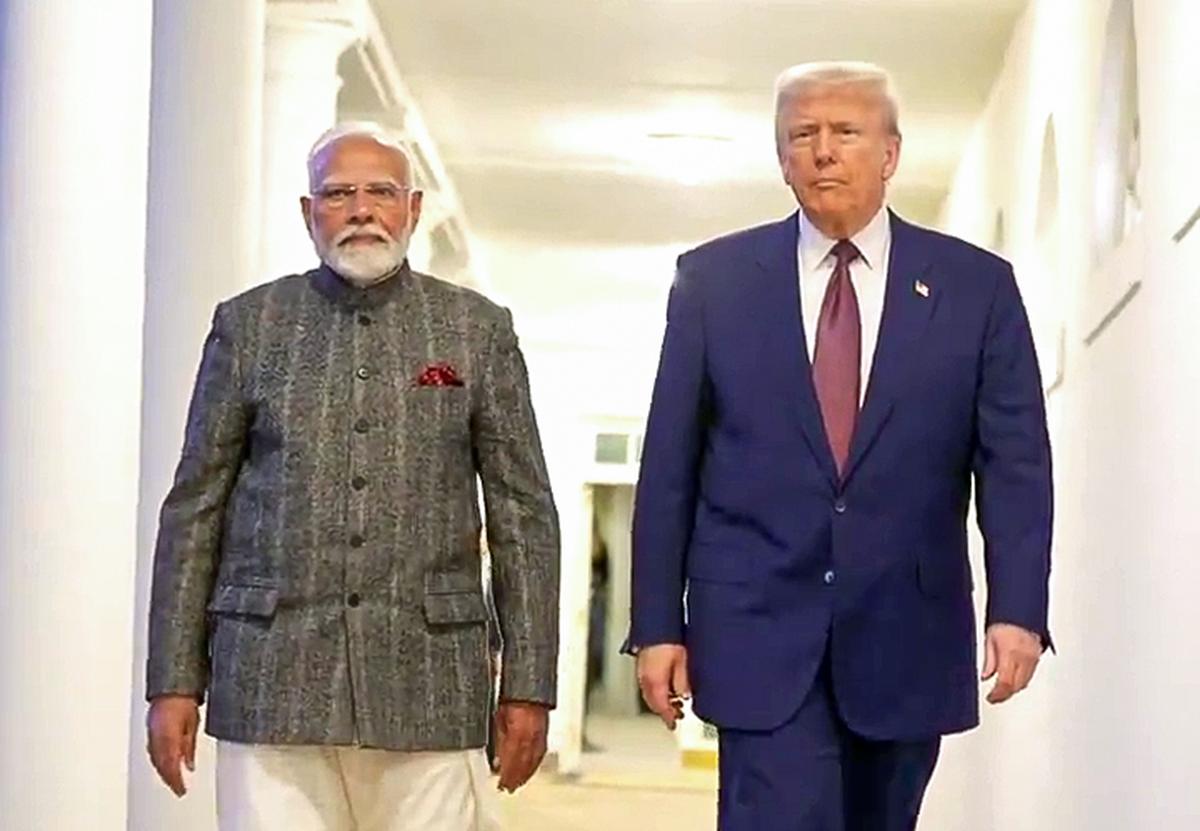
    Kananaskis, Canada, June 17, 2025 U.S. President Donald Trump abruptly departed the G7 Summit in Kananaskis, Alberta, a day earlier than planned, citing the escalating Israel-Iran conflict as the primary reason for his return to Washington. However, posts on X and regional media have fueled speculation that Trump’s early exit was motivated by a fear to face-to-face meeting with Indian Prime Minister Narendra Modi, who arrived in Calgary on Monday evening to attend the summit’s outreach session.

    The White House, through Press Secretary Karoline Leavitt, confirmed Trump’s departure on Monday night after a dinner with G7 leaders, stating, “Much was accomplished, but because of what’s going on in the Middle East, President Trump will be leaving tonight.” Trump had been scheduled to meet Ukrainian President Volodymyr Zelenskyy and Mexican President Claudia Sheinbaum on Tuesday, but these engagements were canceled. The president’s decision followed his controversial Truth Social post urging Tehran’s 10 million residents to “immediately evacuate” amid Israel’s ongoing strikes on Iran’s nuclear and military infrastructure.

    Social media platforms, particularly X, have been abuzz with unverified claims suggesting Trump’s exit was strategically timed to avoid Modi. Posts allege that Trump was wary of confronting Modi over recent U.S. statements on India-Pakistan tensions and his push for a ceasefire in the Israel-Iran conflict, which New Delhi has not endorsed. One user claimed, “Trump can’t face Modi after his ceasefire shenanigans which have no takers in New Delhi,” while another suggested Trump feared Modi’s “loser face” after diplomatic disagreements. These claims remain unconfirmed, and no official statements from the White House or Indian government support the narrative of personal or diplomatic friction between the leaders.

    The G7 Summit, hosted by Canadian Prime Minister Mark Carney, was overshadowed by the Israel-Iran conflict, with discussions on trade, Ukraine, and energy security taking a backseat. Modi, attending as a guest alongside leaders from Mexico, Ukraine, and others, was set to address global issues like energy security and the priorities of the Global South. His arrival in Canada, however, sparked protests in Calgary by members of the Indian diaspora, particularly supporters of the Khalistan movement, who displayed flags and effigies criticizing Modi’s government.

    Trump’s early departure has drawn mixed reactions. Some G7 leaders, including French President Emmanuel Macron and German Chancellor Friedrich Merz, expressed frustration over the lack of unity, particularly after Trump refused to sign a joint statement urging de-escalation in the Israel-Iran conflict. Macron noted that Trump had floated a ceasefire proposal, but the U.S. president’s absence hindered consensus. Meanwhile, Trump’s supporters argue his focus on the Middle East crisis, where Israel’s “Operation Rising Lion” has killed 224 in Iran and Iran’s “Operation True Promise 3” has caused 24 deaths in Israel, justifies his exit.

    Despite the speculation, Trump and Modi share a history of cordial relations, with Trump previously inviting Modi to a G7 Summit in 2020 and describing their ties as “exceptional.” The Indian Ministry of External Affairs emphasized Modi’s agenda in Canada, stating he would engage with G7 leaders on critical global issues, with no mention of a planned bilateral meeting with Trump.

    As the G7 continues without Trump, the remaining leaders are working to salvage discussions, with Modi expected to hold bilateral talks with Carney, Zelenskyy, and German Chancellor Merz. The unverified claims circulating on X highlight the polarized sentiment around Trump’s exit, but the official narrative remains centered on the Middle East crisis as the driving factor. Whether Trump’s departure was influenced by Modi’s presence or purely by geopolitical priorities remains a matter of speculation, with no concrete evidence supporting the former.

  • Israel strikes Iranian state TV, warns people to evacuate Tehran after accusing Iran of targeting civilians

    Israel strikes Iranian state TV, warns people to evacuate Tehran after accusing Iran of targeting civilians

    Israel intensified its military campaign against Iran on Monday, striking the headquarters of the Islamic Republic of Iran Broadcasting (IRIB) during a live broadcast, as the ongoing conflict entered its fifth day. The attack, part of Israel’s “Operation Rising Lion,” followed accusations by Israeli officials that Iran deliberately targeted civilians in missile and drone strikes, killing at least 24 people in Israel. Israel’s military also issued an urgent evacuation warning to approximately 330,000 residents in central Tehran’s District 3, where IRIB and key government facilities are located, citing imminent airstrikes on military targets.

    The strike on IRIB’s fortified complex in northern Tehran disrupted a live broadcast by anchor Sahar Emami, who denounced the “aggression against the homeland” moments before an explosion sent debris and smoke into the studio, forcing her to flee. The broadcast briefly switched to prerecorded programming before resuming from another studio. Iran’s Foreign Ministry spokesman, Esmaeil Baghaei, condemned the attack as a “war crime” and a “direct assault on press freedom,” alleging Israel’s history of targeting media, including Al Jazeera and Hezbollah-affiliated Al-Manar. The Committee to Protect Journalists reported 178 journalists killed in Gaza by Israel since October 2023, calling the IRIB strike “appalling.”

    Israeli Defense Minister Israel Katz justified the attack, claiming IRIB was a “propaganda and incitement mouthpiece” used by Iran’s military under civilian cover. The Israel Defense Forces (IDF) stated the strike targeted a “communications center” linked to the Quds Force, an elite arm of Iran’s Revolutionary Guard, and destroyed 10 command centers in Tehran, killing four officials, including IRGC Intelligence Chief Mohammad Kazemi. The IDF also claimed to have established “full aerial superiority” over Tehran, destroying over 120 surface-to-surface missile launchers—one-third of Iran’s total arsenal.

    The evacuation warning, affecting an area with hospitals, police headquarters, and IRIB, sparked panic in Tehran, a city of nearly 10 million. Long lines at gas stations and traffic jams were reported as residents fled, with metro stations and mosques converted into bomb shelters. Iran’s Health Ministry reported 224 deaths, 90% civilians, and over 1,200 injuries since Israel’s strikes began on June 13, though Human Rights Activists documented a higher toll of 406 deaths, including 197 civilians. Iran’s retaliatory “Operation True Promise 3” targeted Israeli cities like Tel Aviv and Haifa, with a missile strike in Bat Yam killing three and injuring dozens.

    Israeli Prime Minister Benjamin Netanyahu claimed the strikes have set Iran’s nuclear program back “a very long time,” targeting sites like Natanz and Isfahan, though Iran insists its nuclear ambitions are peaceful. U.S. President Donald Trump, attending the G7 summit in Canada, posted on Truth Social, urging Tehran’s immediate evacuation and warning that Iran “cannot have a nuclear weapon.” Trump also claimed Iran missed a chance to sign a nuclear deal, predicting a potential resolution to the conflict.

    The attack on IRIB, a symbolic target tied to Iran’s government, has heightened fears of a broader regional war. Iran’s Foreign Minister Abbas Araghchi vowed a “powerful response,” while the U.S., G7 leaders, and regional powers like Saudi Arabia and Qatar called for de-escalation. Pakistan, organizing evacuations for its citizens in Iran, rejected Iran’s claim of a nuclear pact against Israel, underscoring regional tensions. As both sides exchange threats and strikes, the conflict risks further destabilizing the Middle East, with global energy markets and civilian lives hanging in the balance.

  • Pakistan Rejects Iran’s Claim of Nuclear Pact Against Israel

    Pakistan Rejects Iran’s Claim of Nuclear Pact Against Israel

    Pakistan has categorically dismissed claims by a senior Iranian Revolutionary Guard Corps (IRGC) commander that the two nations had agreed to a nuclear pact to counter Israel amid the ongoing Israel-Iran conflict. The assertion, made by IRGC Aerospace Force Commander Amir Ali Hajizadeh on Monday, suggested Pakistan would support Iran with nuclear capabilities in response to Israel’s “Operation Rising Lion,” which targeted Iran’s military and nuclear sites. Pakistan’s swift rebuttal underscores its intent to maintain neutrality in the escalating West Asian crisis.

    Defence Minister Khawaja Asif, addressing the claim on X, stated, “Pakistan has made no such commitment. Our nuclear capability is solely for the defence of our people, not for advancing hegemonic policies.” Asif also criticized Israel’s undeclared nuclear arsenal, warning of its “catastrophic consequences for the region.” The Foreign Office echoed this stance, emphasizing Pakistan’s policy of non-interference and calling for de-escalation to prevent further destabilization.

    The controversy arises as Iran faces intensified Israeli strikes, with Tehran retaliating through “Operation True Promise 3,” involving missile and drone attacks. Iran’s claim of a nuclear pact with Pakistan appears to be an attempt to project strength amid domestic pressure and significant casualties—224 reported deaths in Iran compared to 24 in Israel. However, analysts suggest the statement may also reflect Iran’s frustration with Pakistan’s cautious diplomacy, as Islamabad balances ties with Iran, Saudi Arabia, and Western powers.

    Pakistan’s nuclear arsenal, estimated at 170 warheads, is a cornerstone of its defence policy, primarily aimed at deterring India. Experts, including Michael Kugelman of the Wilson Center, argue that Pakistan would avoid entanglement in the Israel-Iran conflict due to its economic dependence on Gulf states like Saudi Arabia, a key rival of Iran. “Pakistan’s nuclear program is for strategic deterrence, not for lending to others,” Kugelman noted.

    The rejection comes amid Pakistan’s closure of border crossings with Iran, including Taftan and Gabd-Rimdan, due to security concerns. The Foreign Office has activated a Crisis Management Unit to evacuate Pakistani nationals, including 450 pilgrims and 200 students, from Iran and Iraq. While expressing “moral and diplomatic solidarity” with Iran, Pakistan has urged all parties to pursue dialogue to avert a broader conflict that could disrupt regional trade and energy supplies, particularly through the Strait of Hormuz.

    As tensions persist, Pakistan’s firm denial of Iran’s claim reinforces its commitment to strategic autonomy, even as it navigates the complex geopolitics of a volatile region.

  • Israel-Iran War: Pakistan shuts border crossings with Iran

    Israel-Iran War: Pakistan shuts border crossings with Iran

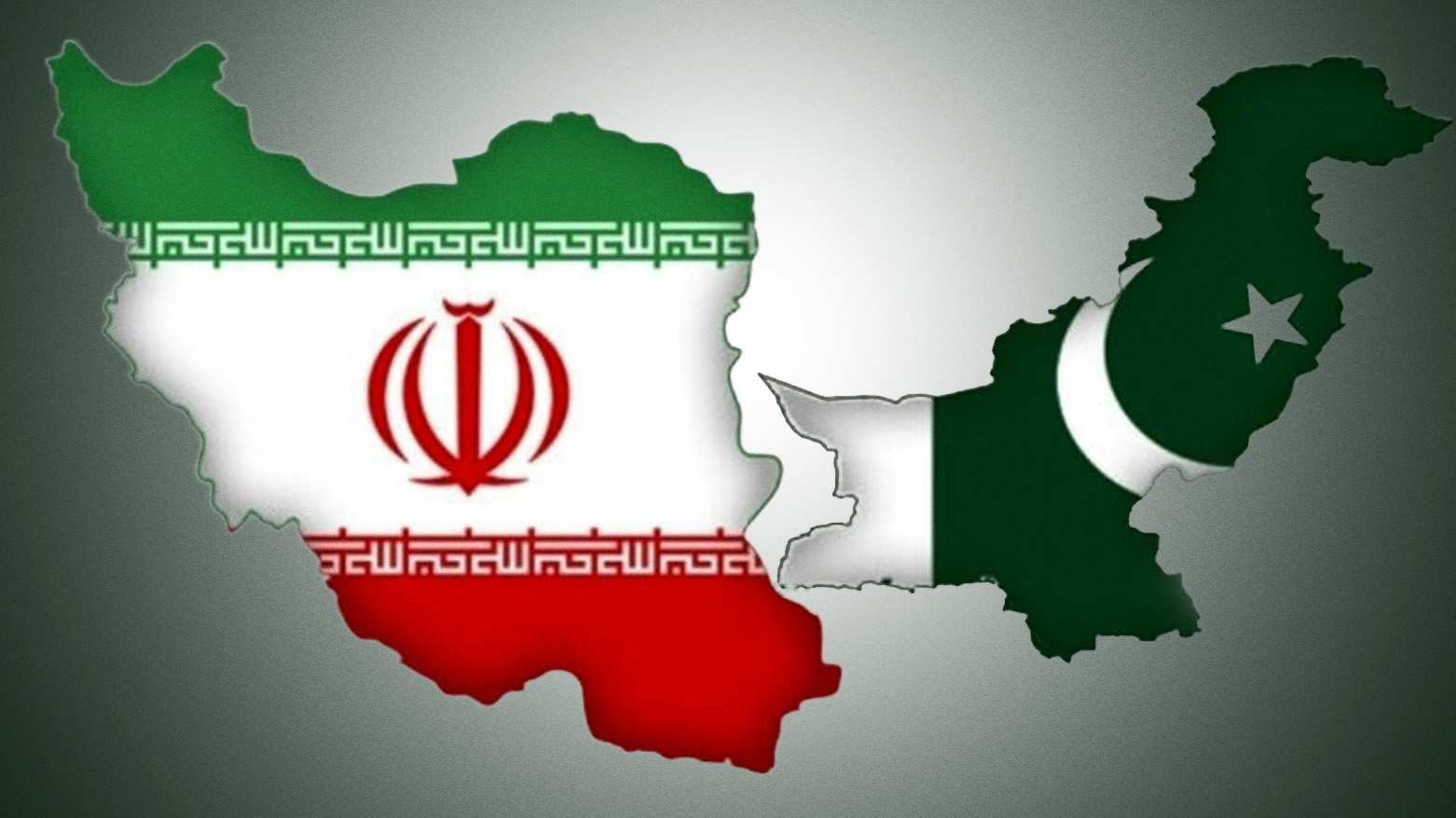
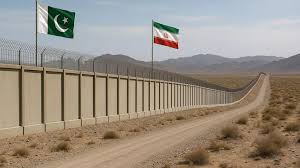
    Pakistan has indefinitely closed all border crossings with Iran, citing security concerns amid the escalating conflict between Israel and Iran, now in its fifth day. The decision, announced by provincial authorities in Balochistan, affects key crossing points in Chaghi, Washuk, Panjgur, Kech, and Gwadar districts, including the critical Taftan and Gabd-Rimdan crossings, which facilitate cross-border trade and travel. The move follows Iran’s closure of its side of the border and comes as Israel’s “Operation Rising Lion” and Iran’s “Operation True Promise 3” intensify, raising fears of regional instability.

    According to Qadir Bakhsh Pirkani, a senior official in Balochistan, “Border facilities in all five districts have been suspended until further notice due to the volatile situation created by Israel’s strikes.” While pedestrian and vehicular movement into Iran has been halted, limited trade activities continue, and Pakistani nationals, including an estimated 200 students, are being allowed to return from Iran. On Sunday, Foreign Minister Ishaq Dar confirmed the evacuation of 450 Pakistani pilgrims from Iran, with additional evacuations planned from Iran and Iraq, home to sacred Shiite sites.

    The border closure threatens to disrupt local economies in Balochistan, where districts like Turbat, Gwadar, and Panjgur rely heavily on Iranian food supplies and smuggled oil. Residents, such as Basham Baloch from Gwadar, expressed concerns to Anadolu Agency about potential shortages, stating, “If the border remains closed for weeks, we could face serious oil and food shortages.” Balochistan’s government spokesman, Shahid Rind, downplayed immediate fuel scarcity claims, asserting that most petrol pumps in Quetta remain operational, but locals report rising prices and supply chain disruptions.

    Pakistan’s decision reflects its delicate balancing act in the region. While expressing “moral and diplomatic solidarity” with Iran against Israeli strikes, Islamabad has denied claims by an Iranian Revolutionary Guard Corps commander that Pakistan would support Tehran militarily, including with nuclear retaliation. Defence Minister Khawaja Asif clarified on X, “Pakistan has made no such commitment. Our nuclear capability is for the defence of our people, not for hegemonic policies.” Asif also criticized Israel’s undeclared nuclear arsenal, warning of its “catastrophic consequences.”

    The closure impacts bilateral trade, valued at $3 billion annually, with ambitions to reach $10 billion. Iran supplies 100 megawatts of electricity to Balochistan’s border towns, and disruptions could exacerbate local challenges. Pakistan’s Foreign Office has activated a 24/7 Crisis Management Unit to assist nationals, urging pilgrims to reconsider travel to Iran and Iraq. As the Israel-Iran conflict rages, Pakistan’s border shutdown underscores its cautious stance, prioritizing citizen safety and regional stability while navigating complex ties with Iran and Saudi Arabia.

  • Indians Evacuated from Tehran as Iran-Israel Tensions Escalate

    Indians Evacuated from Tehran as Iran-Israel Tensions Escalate

    New Delhi, June 17, 2025 – In a swift response to the escalating conflict between Iran and Israel, India has initiated the evacuation of its citizens from Tehran, prioritizing the safety of approximately 10,000 Indian nationals, including 6,000 students, residing in Iran. The Ministry of External Affairs (MEA) announced on Tuesday that Indian students in Tehran have been relocated to safer locations, with many facilitated to cross into Armenia via land routes due to Iran’s sealed airspace.
    The Indian Embassy in Tehran has been actively coordinating with local authorities and universities, including Tehran University of Medical Sciences, Shahid Beheshti University, and Urmia Medical University, to ensure the safe movement of students. A batch of 110 students from Urmia Medical University crossed the Armenian border on Monday evening, with a flight to New Delhi scheduled for Wednesday. Additionally, around 600 students from Tehran have been bussed to Qom, a city 140 kilometers south of the capital, identified as a safer location.
    The evacuation efforts come amid intensified hostilities, now in their fifth day, following Israel’s “Operation Rising Lion,” launched on June 13 to target Iran’s nuclear facilities. Iran retaliated with “Operation True Promise 3,” firing missiles and drones at Israeli targets, resulting in significant casualties—224 reported deaths in Iran and 24 in Israel. The conflict has triggered widespread panic in Tehran, with Israeli warnings urging residents, including 300,000 in central districts, to evacuate immediately.
    The Indian Embassy issued an urgent advisory, urging all Indian nationals and Persons of Indian Origin (PIOs) in Tehran to contact the embassy and move to safer areas if possible. Emergency helplines (+98 901044557, +98 9128109115, +98 9128109109) and a 24×7 control room have been established to assist citizens. External Affairs Minister Dr. S. Jaishankar has engaged with regional counterparts, including Armenia’s Foreign Minister, to facilitate safe passage.
    Reports indicate that five Indian students sustained injuries in recent Israeli strikes, amplifying anxiety among the Indian community. Students like Imtisal Mohidin, a third-year MBBS student at Shahid Beheshti University, described living in fear, with explosions occurring near hostels. “We trust in India’s power and really want to be evacuated,” Mohidin told media outlets.
    The operation marks one of India’s largest evacuation efforts in Iran, drawing comparisons to previous missions like Operation Ajay (Israel-Hamas conflict, 2023) and Operation Kaveri (Sudan, 2023). With contingency plans exploring additional border crossings, New Delhi is bracing for a complex operation to bring its citizens home safely amidst the volatile West Asian crisis.
    [Sources: Business Standard, The Indian Express, News18, The Tribune, India Today]
  • Pakistan Violates Ceasefire Hours After India-Pakistan Agreement, Escalating Tensions

    Pakistan Violates Ceasefire Hours After India-Pakistan Agreement, Escalating Tensions

    Just hours after India and Pakistan announced a US-mediated ceasefire to halt escalating military hostilities, Pakistan violated the agreement with unprovoked shelling and air raids in multiple border regions, including Barmer in Rajasthan and Baramulla, Rajouri, and Akhnoor in Jammu and Kashmir, according to Indian officials. The breach has reignited fears of a broader conflict between the nuclear-armed neighbors, undermining the fragile truce.

    The ceasefire, effective from 5:00 PM IST on May 10, 2025, was confirmed by India’s Foreign Secretary Vikram Misri and Pakistan’s Foreign Minister Ishaq Dar, following a call between the Directors General of Military Operations (DGMOs) of both nations. The agreement aimed to stop all military actions on land, air, and sea, with further talks scheduled for May 12. US President Donald Trump claimed credit for brokering the deal, though Indian sources emphasized it was a bilateral understanding.

    However, reports of Pakistani artillery fire and drone activity emerged soon after. Jammu and Kashmir Chief Minister Omar Abdullah posted a video on X, showing explosions in Srinagar, stating, “This is no ceasefire. The air defence units in the middle of Srinagar just opened up.” Indian air defense systems shot down drones in Pokhran, Rajasthan, and Rajouri, while heavy shelling was reported in the Palanwalla sector.

    The Indian Army responded “promptly and proportionately,” with the Border Security Force ordered to retaliate with full force, defense sources said. No casualties have been reported so far, but civilian infrastructure in border villages has been damaged.

    The violations follow a pattern of Pakistani aggression since the April 22 Pahalgam terror attack, which killed 26 civilians and prompted India to suspend the Indus Waters Treaty and launch Operation Sindoor, targeting terrorist infrastructure in Pakistan. Since April 24, Pakistan has repeatedly violated the 2021 ceasefire agreement, with firing reported across multiple sectors of the Line of Control (LoC).

    External Affairs Minister S. Jaishankar reiterated India’s “firm and uncompromising stance against terrorism,” stating that measures like the Indus Waters Treaty suspension and visa bans on Pakistani nationals remain in place. Government sources clarified that the ceasefire does not alter India’s punitive actions against Pakistan’s support for terrorism.

    Congress leader Shashi Tharoor welcomed the ceasefire but cautioned, “India wanted to teach terrorists a lesson, and that lesson has been taught. Peace is essential, but we must remain vigilant.” AIMIM chief Asaduddin Owaisi urged the government to pursue the Pahalgam attack’s perpetrators, warning, “As long as Pakistan uses its territory for terrorism, there can be no permanent peace.”

    Pakistan’s Foreign Ministry has not officially commented on the violations, but former Prime Minister Nawaz Sharif described Pakistan as “peace-loving” yet capable of self-defense, congratulating the military and Prime Minister Shehbaz Sharif.

    International reactions have been cautious. The UK’s Foreign Secretary David Lammy called the ceasefire “hugely welcome,” while Bangladesh’s Muhammad Yunus expressed support for diplomatic resolutions. China reaffirmed its backing of Pakistan’s sovereignty, raising concerns about regional alignments.

    The Indian government has lifted some restrictive orders in border districts like Barnala and Hoshiarpur but maintained a ban on civilian drone flights. Prime Minister Narendra Modi chaired a high-level meeting with service chiefs to assess the situation, signaling heightened preparedness.

    Analysts warn that Pakistan’s swift violation—reminiscent of past breaches after the 2003 and 2021 understandings—indicates aggressive intent, possibly to cover terrorist infiltrations or provoke India. “These actions suggest Pakistan is testing India’s resolve while maintaining plausible deniability,” said Major General (Retd) Harsha Kakkar.

    As tensions simmer, the international community urges restraint, but the repeated ceasefire violations threaten to unravel the delicate truce, keeping the region on edge.

  • Former Pakistan Prime Minister Imran Khan Reportedly Murdered in Jail

    Former Pakistan Prime Minister Imran Khan Reportedly Murdered in Jail

    Rawalpindi, Pakistan – May 10, 2025: In a shocking development, unverified reports circulating on social media claim that former Prime Minister of Pakistan and leader of the Pakistan Tehreek-e-Insaf (PTI) party, Imran Khan, has been murdered in Adiala Jail, Rawalpindi. The news, which first emerged through posts on X, has sparked widespread outrage and speculation, though no official confirmation has been issued by Pakistani authorities or credible media outlets at this time.

    According to posts on X, Khan’s body was allegedly found in cell no. 804 of Adiala Jail, with some sources claiming signs of brutal torture and sexual assault. One post attributed to a user named @Ranjan_zeh stated, “IMRAN KHAN’s lifeless body found in the cell no 804 of Adiala Jail. Signs of brutal torture and sexual assault according to sources. Imran Khan’s legacy will be debatable but can’t be ignored. RIP.” Another post by @Kiraaydaar claimed, “Imran Khan beaten to death by Pakistani Army in Jail,” accompanied by unverified images. These posts have fueled hashtags such as #imrankhanPTI and #IndiaPakistanWar, amplifying the claims across social media platforms.

    Imran Khan, 72, has been incarcerated since August 2023, facing multiple charges ranging from corruption to inciting violence, which he and his party have consistently denounced as politically motivated. His detention followed a tumultuous political career, marked by his ouster as prime minister in April 2022 via a no-confidence vote and subsequent legal battles, including a 14-year sentence in a corruption case linked to the Al-Qadir Trust. Khan’s supporters have long alleged that he was targeted by Pakistan’s military establishment, a claim that gained traction after his arrest sparked nationwide protests in 2023.

    The reports of Khan’s alleged murder come amid heightened political tensions in Pakistan. His party, PTI, has faced a severe crackdown, with thousands of supporters arrested and allegations of rigged elections in 2024, where PTI-backed candidates won significant seats but were unable to form a government. Khan’s vocal criticism of the military and calls for transparent elections had made him a polarizing figure, with many viewing his imprisonment as an attempt to silence dissent.

    However, the claims of Khan’s murder remain unverified and highly controversial. Earlier this year, a fabricated medical report alleging sexual assault against Khan in jail was debunked by Pakistani officials, who confirmed that his medical evaluations were conducted by the Pakistan Institute of Medical Sciences (PIMS) and showed no such findings. The timing of the current claims, coupled with discrepancies in some posts (such as a report dated after its alleged leak), raises questions about their authenticity.

    Pakistani authorities have not issued an official statement addressing the allegations, and major news outlets like Geo News, ARY News, and Dawn have yet to report on the incident. The PTI has not released an official response, though supporters have taken to social media to demand clarity and justice. Protests are reportedly being organized in Islamabad and Lahore, with fears of escalating unrest if the claims are substantiated.

    The international community is closely monitoring the situation, given Khan’s global prominence as a former cricket star and political leader. The United States and United Kingdom previously called for adherence to the rule of law during Khan’s 2023 arrest, and human rights organizations have criticized his detention as politically driven.

    As the situation develops, the lack of verified information underscores the need for caution. The claims of Imran Khan’s murder, if proven false, could be part of a disinformation campaign amid Pakistan’s volatile political climate. Conversely, if confirmed, they could trigger a major crisis with far-reaching implications for the country’s stability.

  • Any Act Of Terror Will Be Considered An Act of War: India’s Warning To Pakistan

    Any Act Of Terror Will Be Considered An Act of War: India’s Warning To Pakistan

    New Delhi, May 10, 2025 — In a bold and unprecedented statement, the Indian government has declared that any future terrorist attack on its soil will be considered an “act of war,” promising a swift and decisive response. The announcement, made by the Ministry of Defence, underscores India’s hardening stance against cross-border terrorism and signals a potential shift in its national security policy.

    Speaking at a press conference, Defence Minister Rajnath Singh stated, “India has always exercised restraint in the face of provocation, but our patience must not be mistaken for weakness. Any further terror attack orchestrated or supported from beyond our borders will be treated as an act of war, and India will respond accordingly with the full might of its armed forces.”

    The statement comes amid heightened tensions in the region, following a series of intelligence reports indicating potential threats from terrorist groups allegedly backed by hostile neighboring states. While the government did not name any specific country, analysts suggest the warning is primarily directed at Pakistan, given the history of cross-border militancy in Jammu and Kashmir.

    The Ministry of External Affairs further clarified that India would reserve the right to take preemptive or retaliatory actions, including military strikes, to neutralize threats. “We will not hesitate to act in self-defense to protect our citizens and sovereignty,” a ministry spokesperson said.

    International reactions have been mixed. The United States and several European nations expressed support for India’s right to defend itself but urged restraint to avoid escalation in an already volatile region. Meanwhile, Pakistan’s Foreign Ministry denounced the statement as “provocative” and called for dialogue to address mutual concerns.

    Security experts view the announcement as a significant escalation in India’s counterterrorism strategy. “This is a clear message that India is prepared to raise the costs for any state or non-state actor involved in terrorism,” said Dr. Ankit Sharma, a defense analyst at the Institute for Strategic Studies in New Delhi. “It also puts pressure on the international community to act against terror financing and safe havens.”

    The Indian armed forces have been placed on high alert, with increased surveillance along the Line of Control (LoC) and international borders. The government has also vowed to strengthen its intelligence-sharing mechanisms with allied nations to preempt potential attacks.

  • BSF Jammu Destroys Terrorist Launch Pad in Looni, Sialkot, Pakistan in Precision Strike

    BSF Jammu Destroys Terrorist Launch Pad in Looni, Sialkot, Pakistan in Precision Strike

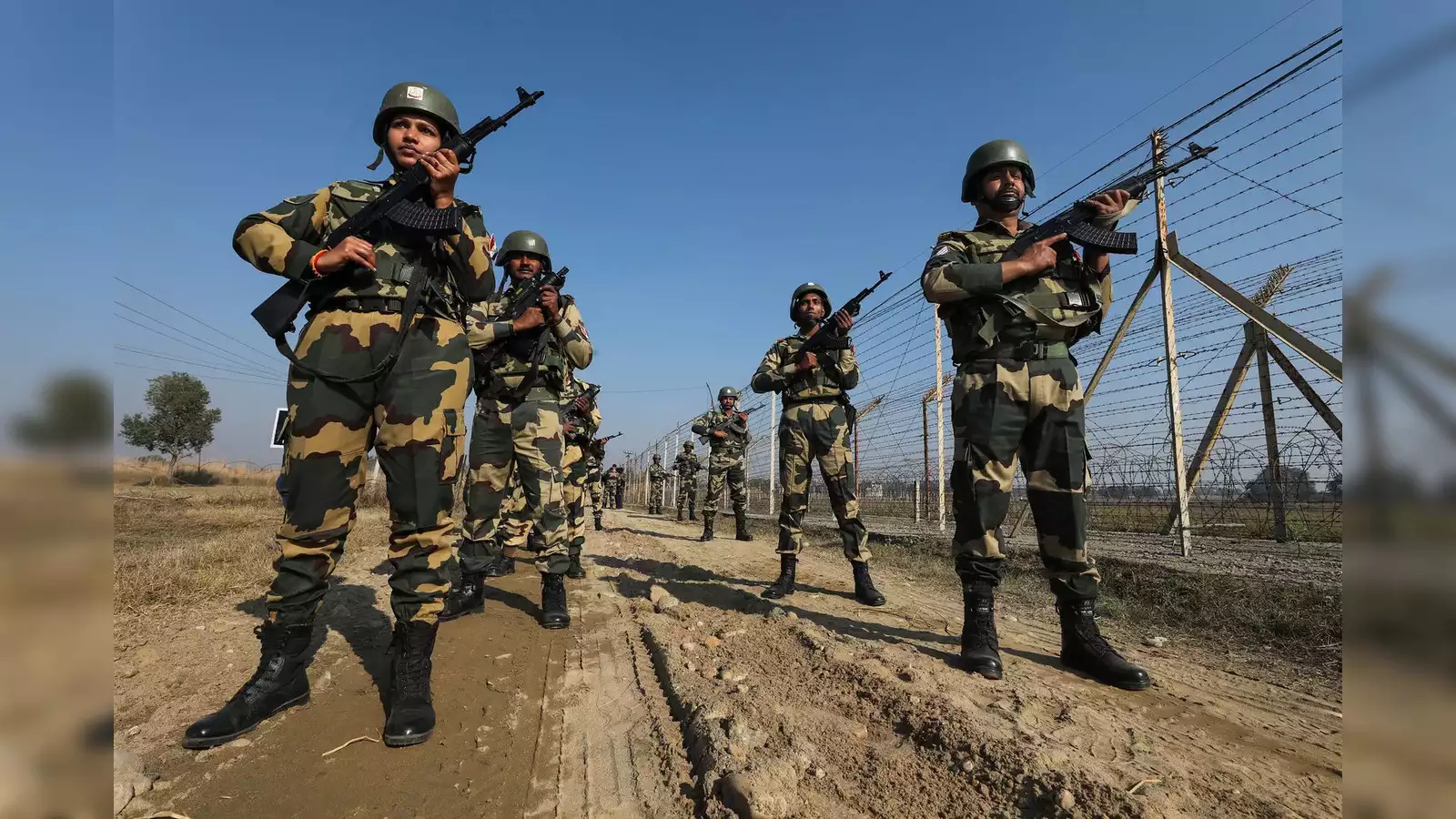
    The Border Security Force (BSF) in Jammu has delivered a decisive blow to cross-border terrorism, destroying a terrorist launch pad in Looni, Sialkot district, Pakistan, near the International Border, in a precision strike early Saturday morning. The operation, part of India’s ongoing response to escalating tensions with Pakistan, targeted a key facility used for launching tube-launched drones and coordinating militant infiltrations into Indian territory, according to defense sources.

    The strike follows a series of aggressive Pakistani drone and missile attacks on Indian military and civilian sites, including Jammu, Pathankot, and Udhampur, as part of the broader conflict sparked by the April 22 Pahalgam terror attack that killed 26 civilians. Indian authorities identified the Looni launch pad, located approximately 6-12 km from the border, as a critical hub operated by groups like Jaish-e-Mohammed (JeM) and Hizbul Mujahideen, responsible for recent drone incursions and terrorist activities in Jammu and Kashmir.

    “Acting on precise intelligence, BSF Jammu, in coordination with the Indian Army, neutralized the terrorist infrastructure in Looni, Sialkot, which was actively used to launch drones and facilitate infiltration,” a senior BSF official stated. The operation involved advanced counter-drone technology and artillery fire, ensuring no collateral damage to civilian areas, the official added. Posts on X celebrated the strike, with users like @AdityaRajKaul and @SikkimMedia hailing it as “yet another nail in the coffin of Pakistan” and a “precision strike eliminating a major threat.”

    Pakistan’s military has not officially commented on the Looni strike, but state media earlier claimed that Indian attacks targeted civilian areas, a charge India refutes. The destruction of the launch pad comes amid India’s broader Operation Sindoor, which has seen strikes on nine terrorist camps across Pakistan and Pakistan-occupied Kashmir (PoK), including facilities in Sialkot’s Sarjal and Mehmoona Joya camps, linked to JeM and Hizbul Mujahideen.

    The BSF’s action follows its successful thwarting of a major infiltration bid in Jammu’s Samba district on May 8, where alert personnel neutralized a group of Pakistani militants attempting to cross the border. The Looni strike is seen as a direct response to Pakistan’s persistent use of drone technology to drop arms, ammunition, and narcotics, as well as to facilitate terrorist crossings, with Sialkot’s proximity to the border making it a hotspot for such activities.

    Indian Foreign Secretary Vikram Misri, briefing the UN Security Council, reiterated that India’s actions are “focused, measured, and non-escalatory,” targeting only terrorist infrastructure. However, Pakistan’s convening of its National Command Authority, chaired by Prime Minister Shehbaz Sharif, has raised global concerns about nuclear escalation, with Sharif labeling Indian strikes “cowardly.” The G7 and UN have called for restraint, warning of a “nuclear flashpoint.”

    On the ground, Jammu remains on high alert, with surface-to-air missile systems activated and civilian flight operations suspended at 32 airports, including Jammu and Srinagar. Residents in border areas reported hearing explosions, with authorities enforcing blackouts and urging people to stay indoors. Jammu and Kashmir Chief Minister Omar Abdullah condemned Pakistan’s actions, criticizing the International Monetary Fund for disbursing funds to Pakistan amid the conflict, which he claimed fuels its military aggression.

    The destruction of the Looni launch pad marks a significant setback for Pakistan-based terrorist networks, but analysts warn that the tit-for-tat strikes risk further escalation. “India’s precision strikes are effective, but Pakistan’s nuclear signaling is a dangerous wildcard,” said a New Delhi-based security expert. As both nations remain locked in a volatile standoff, the international community continues to press for dialogue to prevent a broader regional conflict.