New Delhi, 28th April, 2023. A meeting of the Consultative Committee of Ministry of Civil Aviation held in New Delhi today. The subject for discussion was Sustainable Aviation Fuel (SAF).The meeting was chaired by Minister of Civil Aviation Shri Jyotiraditya M. Scindia and attended by several Hon’ble Members of Parliament.
International Civil Aviation Organization (ICAO) has been entrusted to facilitate to reduce the carbon emissions from international civil aviation as one of its focus areas. In order to mitigate carbon emissions from aviation sector and its impacts on climate change. ICAO has adopted the aspirational goals, viz. 2% annual fuel efficiency improvement through 2050, Carbon Neutral Growth from 2020 onwards, and net zero by 2050. A basket of measures has also been identified by ICAO to achieve these goals which include the Carbon Offfsetting and Reduction Scheme for International Aviation (CORSIA) and the Long Term Aspirational Goals (LTAG).
CORSIA is implemented in three phases, out of which participation is voluntary in the first two phases for (2021-2026). India has decided not to participate in the voluntary phases of CORSIA. Offsetting requirement under the CORSIA for Indian careers will start from 2027. This will enable airlines of the developing countries like India to get time to grow more and do not face any financial consequences due to CORSIA by joining voluntary phases. CORSIA is applicable to international flights originating from one country to another. Financial implications due to offsetting will be born by individual airlines depending upon their international operations as and when applicable.
India has committed to net zero by 2070 at COP26 to the United Nations Framework Convention on Climate Change (UNFCCC). The Ministry of Petroleum & Natural Gas (MoPNG) has notified a National Policy on Bio Fuels 2018 to realize the goal of de-carbonization of aviation sector. MoPNG constituted the Bio-Aviation Turbine Fuel Programme Committee to take forward the Bio-ATF Programme in the country to promote the use of clean fuel in aviation. The Committee has submitted its report which has now been circulated to various stakeholders.
India has also taken several steps like joining ICAO’s Assistance Capacity Building & Training for Sustainable Aviation Fuels Programme. The Bureau of Indian Standard has issued Indian Standard for Bio-Jet ATF in January 2019. Several meetings have been held with the Indian Carriers to sensitize them regarding the impact of CORSIA on airlines once the mandatory phase starts and the resultant needs to be prepared for the same.
DGCA has also granted approval to following:
M/s Spicejet operated a demonstration flight with 25% SAF (Biofuel produced from Jatropha seeds by Indian Institute of Petroleum, CSIR lab) blended with ATF from Dehradun to Delhi in August, 2018. The fuel is under process of ASTM approval.
M/s Indigo carried out its first international ferry flight with 10% blended fuel from Toulouse to Delhi on 17.02.2022.
M/s Vistara carried out 30% blended SAF ferry flight from Seattle to Delhi in March 2023
M/s Air Asia to carry out first commercial domestic flight with 0.57% SAF belnded fuel flight is yet to commence.
Indian Oil Corporation Ltd. (IOICL) has planned an 86.8 TMTPA plant at Panipat using LanzaJet ATJ (alcohol to jet) Technology. IOCL has also signed a MoU with Pune-based Praj Industries to set up a plant for developing ATJ fuels.
Mangalore Refinery and Petrochemicals Ltd. Is planning to build a bio-ATF pilot plant at Mangalore using CSIR-Indian Institute of Petroleum’s technology using non edible oils and used cooking oil as feedstock.
The meeting ended with the Union Minister thanking the participating Members of Parliament for their valuable suggestions.
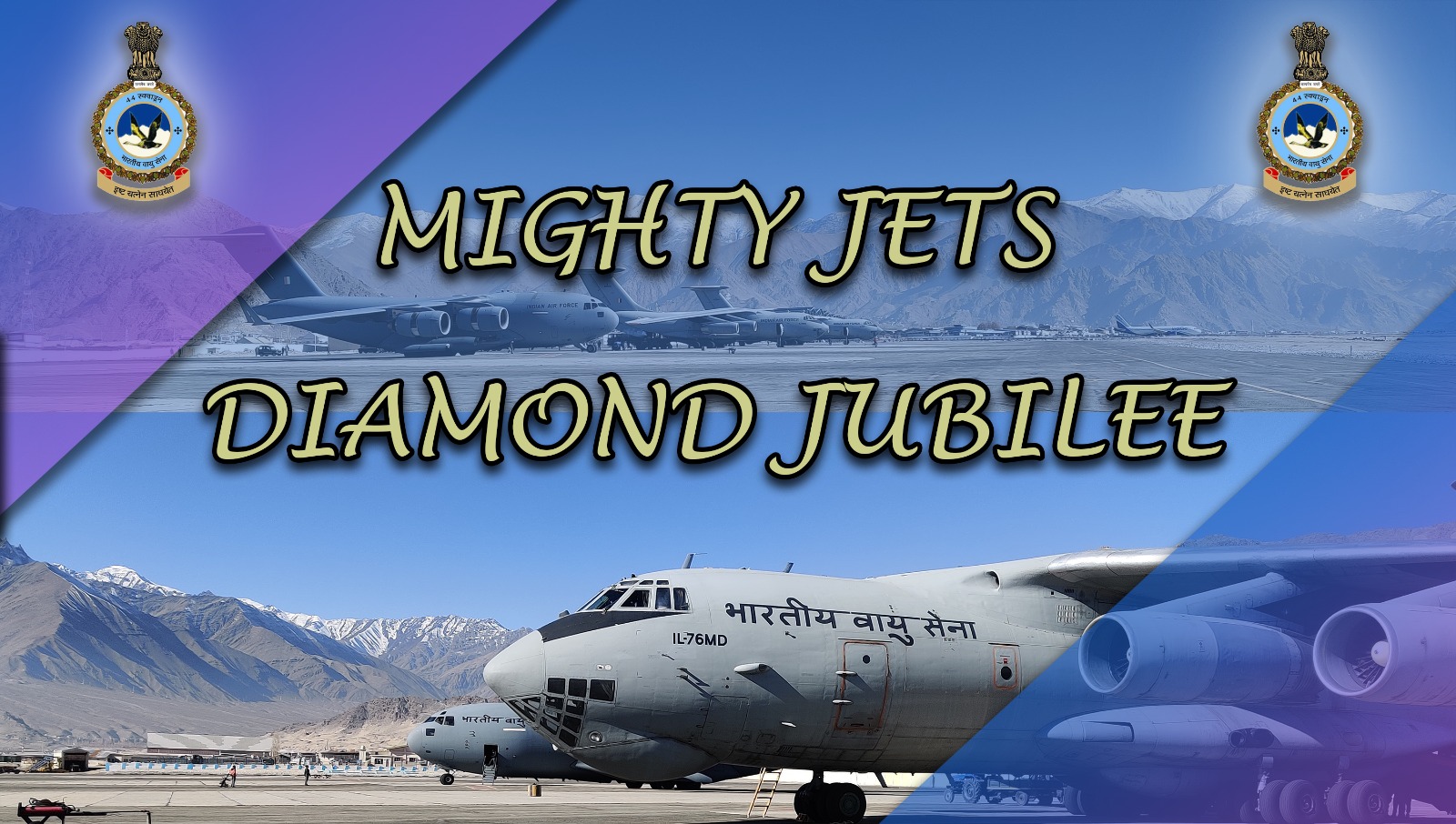
New Delhi, 22nd April, 2023. 44 Squadron of the Indian Air Force is celebrating its Diamond Jubilee this year at Chandigarh. The rich and glorious history of the Sqn is a kaleidoscope of military history and military diplomacy of modern-day India and filled with tales of fortitude, courage, daring, devotion and professionalism which encapsulates all that IAF stands for.
The Squadron was raised on 06 Apr 1961 and equipped with the AN-12 aircraft. It operated the AN-12 till 1985. In March 1985, it brought the IL-76 aircraft into India, which was formally inducted into IAF on 16 Jun 1985. The aircraft continues to in service today. The Diamond Jubilee celebrations due in 2021 had to be postponed due to COVID 19 pandemic.
The harbinger of strategic airlift in the IAF, the Squadron has been a part of all major military and HADR initiatives in the recent history of the nation, which not only saw the IAF and the nation evolve from a tactical to a strategic force, but also enhanced the military might of the sister Services. The Squadron provided succor in times of need to the citizens of the country as well as people all around the world, in keeping with the nation’s belief of “Vasudhaiva Kutumbakam”.
The Squadron has stayed true to its motto of ‘ISHTAM YATNEN SADHYET’ which means ‘ACHIEVE GOALS THROUGH PERSEVERANCE’. In 1985 the Squadron was renamed as the ‘MIGHTY JETS’.
Since its raising, No. 44 Sqn has been at the forefront of the airlift activities undertaken by IAF. The Squadron continues to remain ever ready to undertake any task that is entrusted to it.
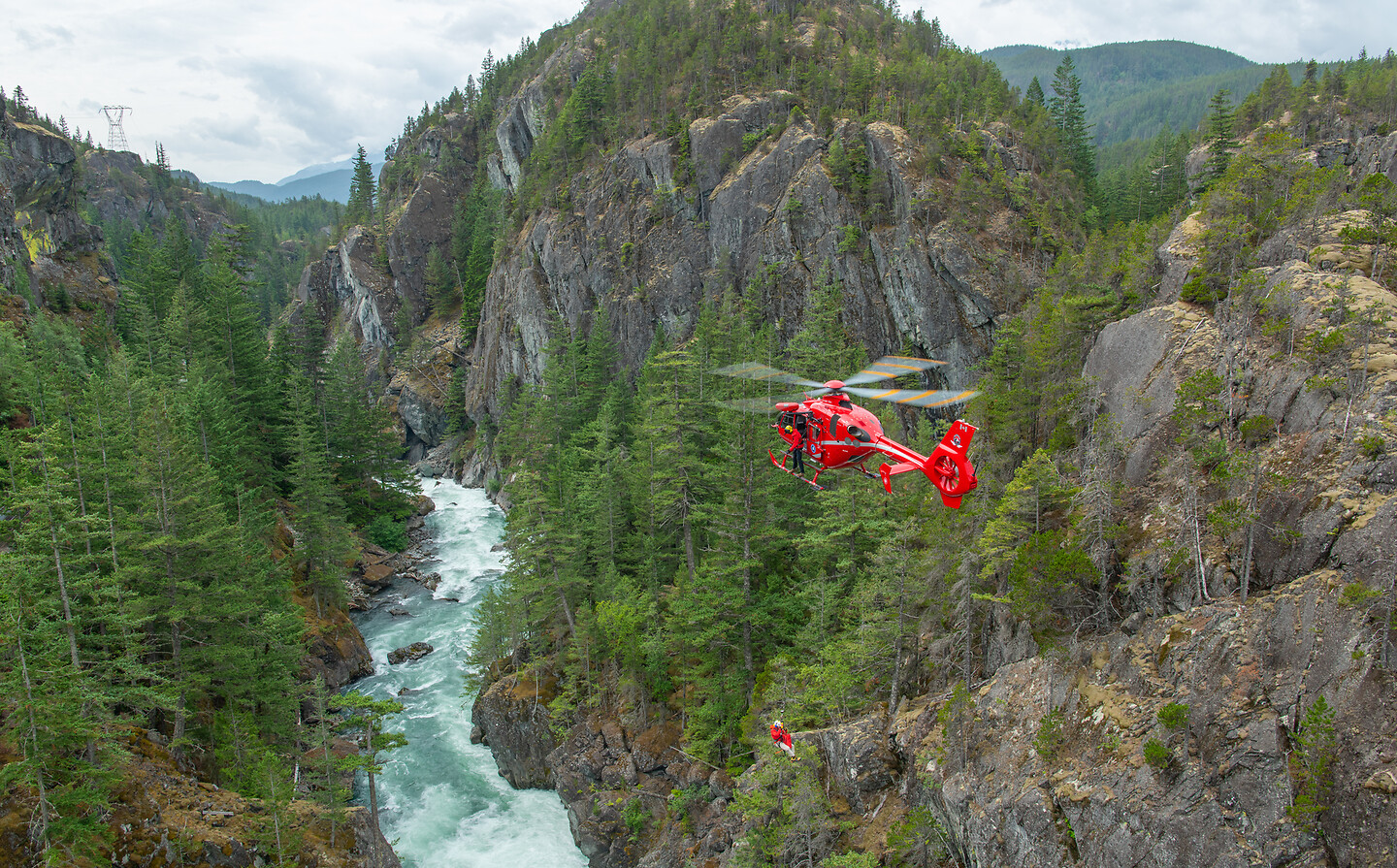
UK, 22nd April, 2023. Helicopters fly essential missions and can literally make life-saving interventions. With such an important role, there might be an assumption that their environmental impact might be less of a priority. Yet, in increasing numbers helicopter operators are committing themselves to reducing their emissions in a variety of ways.
Protecting the environment for future generations forms a key part of Airbus’ mission to make the world a safer and more united place. Exploring this commitment to preparing the future, we take a look at the three customers who are leading the way in investing in clean flight.
Pioneers for the Greater Good: ADAC Luftrettung
With 1.2 million missions in over 50 years of saving lives, air rescue operator ADAC Luftrettung is a true pioneer of Helicopter Emergency Medical Services (HEMS). However, as a non-profit organisation it also wants to break new ground in reducing CO2 emissions. CEO Frédéric Bruder explains why the company takes the responsibility for protecting the environment equally seriously.
When did ADAC Luftrettung first use Sustainable Aviation Fuel?
Frédéric Bruder: On June 7, 2021, an ADAC Luftrettung rescue helicopter flew on sustainable aviation fuel (SAF) for the first time, setting a new milestone in international aviation. The Airbus H145 rescue helicopter, with its Arriel 2E engines, was ceremonially refuelled with biofuel, a type of SAF, at the air rescue base at Munich’s Harlaching Hospital. The H145 used a second-generation biofuel for the first rescue helicopter flight worldwide.
We subsequently expanded our commitment and have initiated two scientific research projects: Since December 2021, we have been testing the use of SAF at our air rescue base “Christoph Rheinland” at Cologne/Bonn Airport. In cooperation with Safran Helicopter Engines, Airbus Helicopters and the National German Aerospace Center (DLR), we are investigating the long-term effects of bio-kerosene on the technology and engines of the Airbus H145 helicopter. In September 2022, we went into trial operation with another site: In Aachen, “Christoph Europa 1” is also flying rescue missions with bio-kerosene. An Airbus EC 135 with Pratt & Whitney engines is used there. The HEFA blend is currently between 31 and 35 %, which means that a CO2 reduction of 25 % can already be achieved by using SAF. With an increase in the proportion of biofuel, CO2 savings potentials of 80 % and more will be possible in the future. The goal is to accumulate 1,000 flight hours with SAF in each of the two research projects.
Why did you make this a priority?
Frédéric Bruder: We have always been pioneers at ADAC Luftrettung. Although our primary mission is to save lives with our rescue helicopters we are of course aware of the impact our type of operation has on the environment. By the way – not only in terms of emissions, also in terms of noise and many other aspects. Based on our by-laws and our statute as a non-profit organisation paired with our will to be pioneers for the greater good, we want to play an active part in achieving the ambitious climate targets in Germany and Europe. Sustainability is a central issue for ADAC Luftrettung, and we are increasingly aligning our company and our actions to it. We have set ourselves the ambitious goal of being a pioneer in CO2 reduction in air rescue on a global scale.
Offsetting CO2 strategy: Blackcomb Helicopters
Sustainable Aviation Fuel is not the only method operators can use to achieve a net reduction in emissions. Blackcomb Helicopters, who fly an array of missions in British Columbia, Canada, explains their CO2 offsetting strategy.
How do you measure the CO2 output of each helicopter in your fleet?
Blackcomb Helicopters: In order to do the best job of deciding how, how much and how to offset, we work with a partner out of Victoria and they apply a proven auditing system to our company, and they look at all aspects of operations. Obviously, the consumption of kerosene is our number one contributor to our carbon footprint. However, we also look at commercial flights that our crews take, repositioning, transport, ground transport and all aspects of our business from how we handle recycling to electric, providing charging for electric vehicles for our employees at our facilities and modernising our own fleet towards electric as well. So, with that process, we establish exactly as close as possible how many tons of carbon we’re emitting.
How do you offset your CO2 output?
We just completed an audit here in the last few weeks and our organisation had an output of 4,600 tonnes of CO2. And we will offset 100% of that. We work with the Nature Conservancy of Canada on a project in the West Kootenay Mountains, where a large area is referred to as the Dark Woods Conservancy, and it is setting aside this forest for the next 100 years minimum. This would have been logged. It is pristine forest that the logging industry was very interested in. The Nature Conservancy took the steps of protecting and managing that. So, for now, it’s the first step. We all know offsetting isn’t perfect, but it’s what’s available to us at this time. Of course, we’re looking forward to the availability of sustainable aviation fuel as our next step.
Investing in the future: aviation leasing company LCI
Jaspal Jandu, CEO of the aviation leasing company LCI explains how they are addressing sustainability challenges with efficient operations, awareness, and investments in the future.
As a lessor, what different sustainability elements does LCI consider when deciding on new helicopters?
Jaspal Jandu:LCI is an aviation leasing company and we are actively addressing sustainability challenges in three key areas. Number one, at a business level we are running our products, business and leasing platform as efficiently as we possibly can. Number two we are investing significant amount of capital in new technology aircraft and promoting the use of SAF and SAF-like fuels in such products. Number three we are raising awareness and engaging at a broader level to ensure that financiers and investors understand how important sustainability is – I think as a leasing company we are uniquely positioned to drive that message home.
In terms of asset investing, we have a broad range of assessment criteria. Of course, any near-term improvements in operating performance, particularly in payload or range, are attractive. However, we also take a longer-term view on how attractive an asset may or may not be in 25 or 30 years’ time. Over such horizons, it can be said that sustainability arguments will only get louder from their current volume and, therefore, they become even more important to us. For example, we have just recently made an order with Airbus Helicopters for the H175, which incorporates modern and incredibly fuel-efficient technology, and the helicopter can perform missions that older technology simply can’t match. In addition, we are part of Airbus Helicopters’ Sustainable Aviation Forum (SAF), which looks to provide feedback on how we’re going to use SAF in the technology products and what it means for a long-term residual value. So, I can only speak from experience by saying sustainability and general social consciousness is becoming a very important factor in how we allocate capital in this sector.
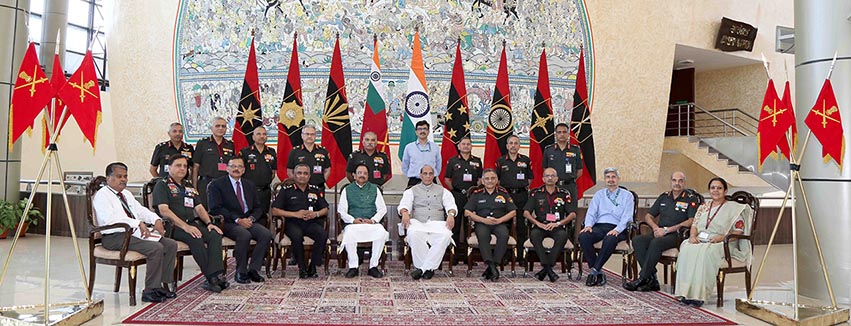
New Delhi, 19th April, 2023. The first Army Commanders’ Conference of year 2023, commenced in a hybrid format on 17 April 2023. During the event, Indian Army’s apex leadership is comprehensively deliberating upon all aspects of existing security scenarios, situation along the borders and in the hinterland and challenges for the present security apparatus. In addition, the conference is also focussing on issues pertaining to organisational restructuring, logistics, administration and human resource management. The main highlight of the third day of the conference was the address by the Hon’ble Raksha Mantri, Shri Rajnath Singh, to the senior leadership of the Indian Army, which was preceded by a brief on “IA contribution to Nation Building”
The Raksha Mantri reaffirmed the faith of the billion-plus citizens in the Indian Army as one of the most trusted and inspiring organisations in the country. He highlighted the stellar role played by the Army in guarding our borders and fighting terrorism apart from providing assistance to the civil administration whenever called for. The Raksha Mantri also remarked “The Army’s contribution is applaudable in every domain from Security, HADR, Medical Assistance to maintaining the stable internal situation in the country. The role of Indian Army is very important in Nation building as also in the overall national development”. He expressed his happiness to be present in the Army Commander’s conference and complimented the Army leadership for successfully taking ahead the ‘Defence and Security’ vision of the Nation and the Hon’ble Prime Minister.
The Hon’ble Raksha Mantri stressed upon the present complex world situation which effects everyone globally. He stated that “Unconventional and asymmetric warfare, including hybrid war will be part of the future conventional wars. Cyber, information, communication, trade and finance have all become an inseparable part of future conflicts. This necessitates that Armed Forces will have to keep all these facets in consideration while planning and formulating strategies”.
Commenting on the current situation along the Northern borders, the Hon’ble Raksha Mantri expressed full confidence in the Army for any contingency though, the ongoing talks for peaceful resolution will continue and disengagement and de-escalation, is the best way forward. Expressing his gratitude, he remarked “It is our ‘Whole of Government’ approach to ensure availability of best weapons, equipment and clothing to our troops braving extreme weather and hostile forces to defend our territorial integrity”. The Raksha Mantri complimented the efforts of BRO, which has led to the incomparable improvement of road communication in the borders both Western and Northern, while working under difficult conditions.
Referring to the situation along the Western borders, he complimented the Indian Army’s response to cross border terrorism, however the proxy war by the adversary continues. The Hon’ble Raksha Mantri said “I compliment the excellent synergy between the CAPF/ Police forces and the Army in tackling the menace of terrorism in Jammu and Kashmir. The synergised operations in the Union Territory of Jammu and Kashmir are contributing to increased stability and peace in the region and the same should continue, and for this I again compliment the Indian Army”.
The Raksha Mantri commended the Army for the high standard of operational preparedness and capabilities which he has always been experiencing first hand during his visits to forward areas. He also paid tributes to all the brave hearts for making the ultimate sacrifice in the defence of the motherland. He complimented the significant contributions made by the Army in military diplomacy to further our national security interests by creating sustainable cooperative relationships with foreign Armies. He also applauded Indian Army for its effort in providing Humanitarian Assistance and Disaster Relief Mission post earthquake in Turkey during ‘Operation Dost’.
The Hon’ble Raksha Mantri stressed upon the technological advancement taking place in every sphere of our life and applauded the Armed Forces for aptly incorporating them. He appreciated the Army’s efforts to develop niche technologies in collaboration with civil industries, including premier educational institutions and thereby progressing towards the aim of ‘Modernisation through Indigenisation’ or ‘Atam Nirbharta’. He also stressed that as user we must impose our faith in own Industries and technologies which would inturn motivate the Industry to produce the best as also would boost ‘Atam Nirbharta’.
The Raksha Mantri also complemented the Army for its dedicated efforts towards the national vision of ‘Women Empowerment’ by grant of Permanent Commission and induction of women officers in most of the streams of Indian Army. He also complemented the Army in the execution of newly formulated recruitment scheme ‘Agniveers’ in the army as also the exuberance displayed by the youth of the county for the same.
The Hon’ble Raksha Mantri released the second edition of Indian Army UN Journal titled ‘Blue Helmet Odessey- Changing Contours of Peacekeeping Operations in the 20th Century” which is a compilation of inputs from missions and perspectives by senior military leadership and diplomats and a commemorative postal stamp on the occasion of 75 years of Indian Army. The Hon’ble Raksha Mantri also reviewed an equipment display focusing on niche technology, innovation, solutions for surveillance, Artificial Intelligence, Training, Robotics, Virtual Reality, Operational Logistics etc.
He concluded by saying that issues related to “Defence diplomacy, indigenisation, information warfare, defence infrastructure and force modernisation should always be deliberated upon in such a forum. War preparedness should be a continuous phenomena and we should always be ready for unpredictables and uncertain events that may crop up any time. We should always be honing up our fighting skills and weapons technologies so as to act effectively whenever required for. The Nation is proud of its Army and the Government is committed to facilitate the Army in their forward movement, on the road to reforms and capability modernisation”.
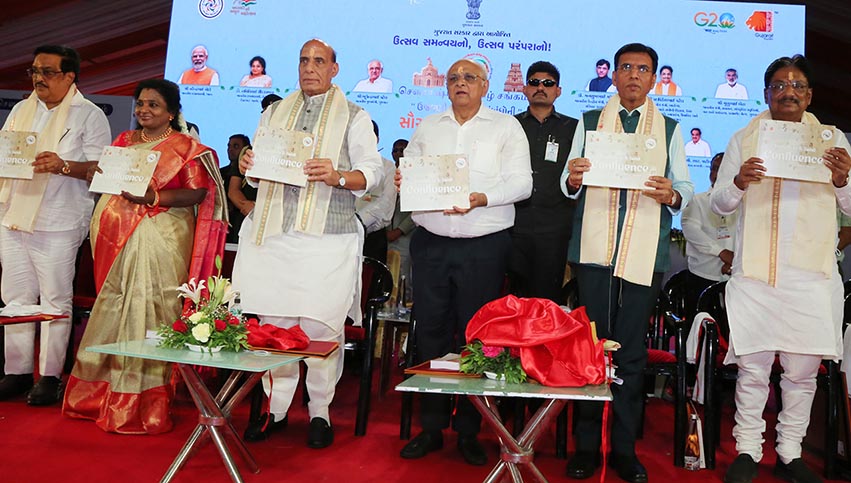
The Union Minister for Defence, Shri Rajnath Singh attends the event of Saurashtra-Tamil Sangamam at Somnath, in Gujarat on 17th April, 2023.
New Delhi, 17th April, 2023. India has ushered into the era of cultural renaissance under the leadership of Prime Minister Shri Narendra Modi. This was stated by Raksha Mantri Shri Rajnath Singh during his address at Saurashtra-Tamil Sangamam in Somnath, Gujarat on April 17, 2023. He stated that the Government is taking a number of steps to connect the people with the nation’s centuries-old traditions and cultures. He added that India’s deep-rooted traditions depict strength & unity, providing ability & capability to withstand any challenge.
The Raksha Mantri stressed the need to ensure ‘cultural security’, describing it as equally essential as security of the borders and other aspects such as food, energy, environment, cyber and space. He asserted that the Government is laying emphasis on cultural security and special attention is being paid towards maintaining cultural unity. He termed the event – a confluence of Saurashtra and Tamil Nadu – as a celebration of India’s cultural unity and a shining example of ‘Ek Bharat, Shrestha Bharat’.
On the cultural connect between Saurashtra and Tamil Nadu, Shri Rajnath Singh stated that the ties date back more than a thousand years. “Saurashtra was attacked several times by foreign invaders around the eleventh century. It was that period when a large number of people from Saurashtra migrated to South India. During that time the people of Tamil Nadu welcomed them and helped in starting a new life,” he said. He gave numerous examples of the centuries-old connect between Saurashtra and Tamil Nadu, describing it as one of the shining chapters of a unified India.
Governor of Telangana Dr Tamilisai Soundararajan, Minister of Health and Family Welfare Dr Mansukh Mandaviya and Gujarat Chief Minister Shri Bhupendra Patel were among the dignitaries present on the occasion.
New Delhi, 17th April, 2023. The Indian Army has transformed the procedure for recruitment of Agniveers, Junior Commissioned Officers and other categories with the introduction of a Computer Based Online Common Entrance Exam as the first step. The online CEE for eligible registered candidates has commenced at 375 Examination Centers in 176 pan-India locations today and will continue till 26th April, 2023.
The online exam is being conducted with assistance from Education Consultancy Services India Limited, a Mini Ratna Company under the Ministry of Education.
The technological threshold of youth in the nation has improved significantly and with enhanced network connectivity and the proliferation of smartphones, the youth is now empowered to undertake an online exam instead of traveling long distances to appear for physical exams. The changed methodology will ensure an increased focus on the cognitive aspect during selection and prevent chances of malpractice. It will have wider outreach across the country and also reduce the large crowds seen during recruitment rallies to make them more manageable & easier to conduct.
The new recruitment procedure will be carried out in three stages. In stage one, all candidates who have registered and applied online on www.joinindianarmy.nic.in will undergo Online Common Entrance Exam. In stage two, the shortlisted candidates will be called for recruitment rallies from June 2023 onwards in phases at locations decided by respective Army Recruitment Office where they will undergo Physical Fitness Test and Physical Measurement Test. Finally, in Stage three the selected candidates will undergo Medical Test. Thereafter, the final merit list of the successful candidates will be declared.
The modified recruitment system will make the recruitment process more streamlined, transparent and is designed to optimally exploit the latest IT infrastructure available in the nation.
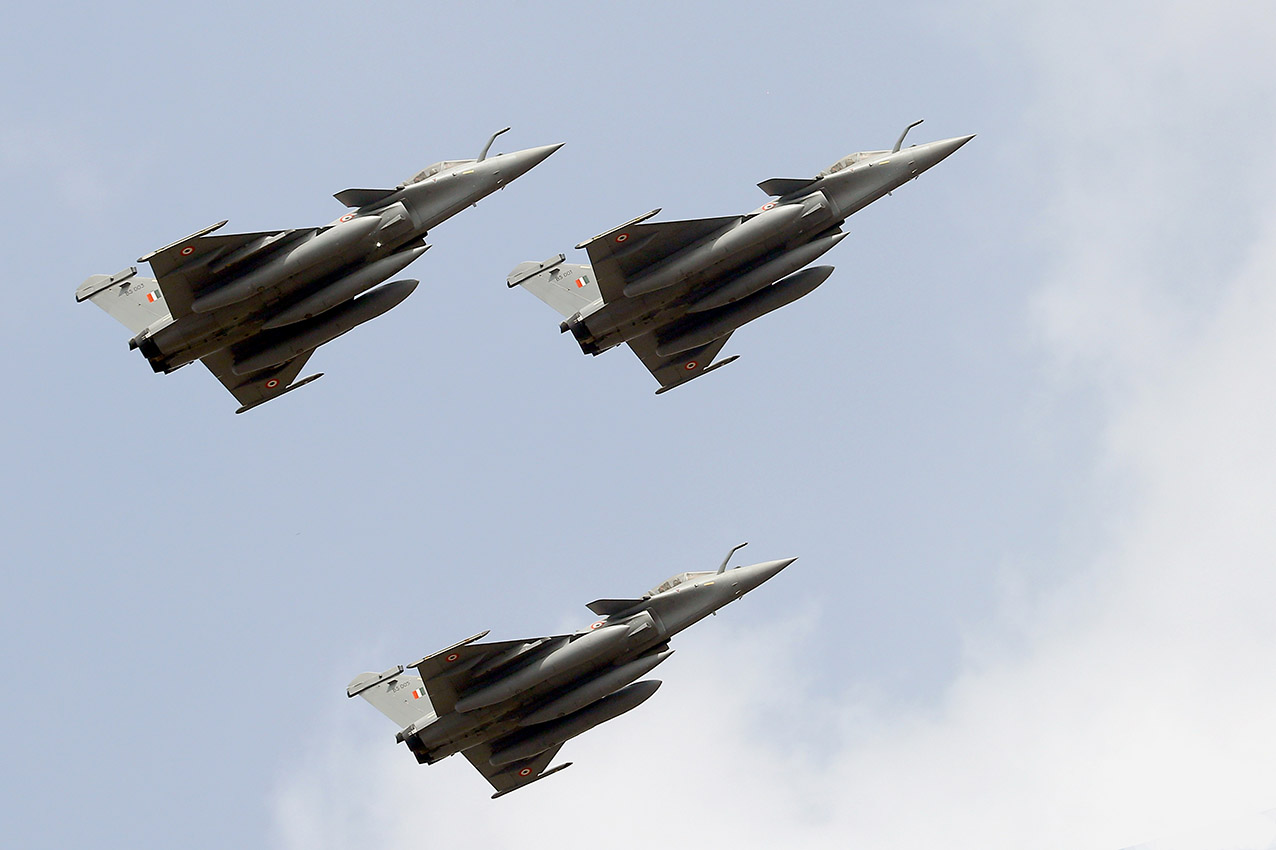
New Delhi, 13th April, 2023. An Indian Air Force (IAF) contingent will be departing tomorrow for France, to participate in Exercise Orion at Mont-de-Marsan, an Air Force base of the French Air and Space Force (FASF). The exercise will be conducted from 17 April to 05 May 2023, with the IAF Contingent comprising four Rafale, two C-17, two ll-78 aircraft and 165 air warriors. This would be the first overseas exercise for the IAF’s Rafale aircraft.
Besides the IAF and the FASF, Air Forces from Germany, Greece, Italy, Netherlands, United Kingdom, Spain and United States of America would also be flying in this multilateral exercise. Participation in this exercise would further enrich the employment philosophy of the India Air Force, by imbibing the best practices from other Air Forces.
Shri Rajnath Singh calls for judicious use of financial resources, advice based on sound economic analysis, internal audit and payment & accounting
“Rule of competitive bidding through open tender must be followed in defence procurement”
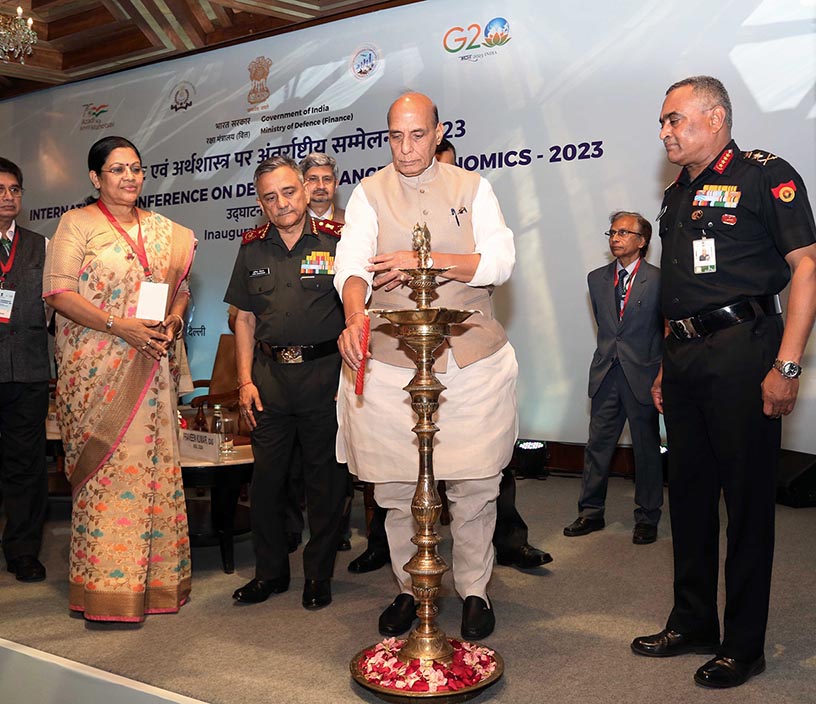
The Union Minister for Defence, Shri Rajnath Singh lighting the lamp at the inaugural session of three-day International Conference on Defence Finance & Economics 2023, in New Delhi on April 12, 2023.
New Delhi, 12th April, 2023. Raksha Mantri Shri Rajnath Singh has stressed on the need to devise innovative methods to maximise the value of money spent on the security needs of the country, terming a robust defence finance system as the backbone of a strong military. Inaugurating the three-day International Conference on Defence Finance & Economics in New Delhi on April 12, 2023, Shri Rajnath Singh asserted that a legal and procedural defence-finance framework is an integral part of a mature state system, which ensures prudent management of the defence expenditure.
The Raksha Mantri stated that such a framework, which includes expenditure control as per guidelines, financial advice by professionals, audit, payment authentication mechanism, etc., ensures that the defence spending is well within the allocated budget and the full value of money is realised. He emphasised that while the Armed Forces require a superstructure of defence ecosystem, involving R&D organisations, industries, soldier welfare organisations, etc., they also need a well-funded system with a robust architecture to ensure the optimum and judicious use of financial resources.
Shri Rajnath Singh was of the view that it is difficult to apply the economic concept of full value of money in defence expenditure, as in this sector, there is no visible revenue stream and no easily identifiable beneficiaries. To maximise the value of money spent, he stressed that the rule of competitive bidding through open tender must be followed in defence procurement.
“In the case of procurement of defence platforms/equipment, either under capital or revenue route, the gold standard of Open Tender should be adopted to the extent possible. A competitive bid based procurement process, which is open to all, is the best possible way to realise the full value of the public money being spent. There would be some rare cases when it may not be possible to go for an open tender process. Such instances should come under exceptions and exceptions should not become the rule,” the Raksha Mantri said.
Shri Rajnath Singh underscored the importance of comprehensive Blue Books, codifying the rules and procedures of procurement of defence equipment & systems for a fair and transparent system. He said, with this vision, the Government has formulated Blue books in the form of Defence Acquisition Procedure 2020 for capital acquisition; Defence Procurement Manual for revenue procurement and Delegation of Financial Powers to Defence Services. “These manuals play a very important role in ensuring that the process of defence procurement is rule-bound and follows the principles of financial propriety. Since these manuals are critical, they need to be carefully crafted by defence finance and procurement experts in consultation with all the stakeholders. This needs to be a continuous exercise, so that these documents are dynamically updated, incorporating new rules and procedures as and when required,” he said.
The Raksha Mantri also emphasised on the role of expert financial advice to the Service personnel in day-to-day financial matters. He said, the system of Integrated Financial Advisor (IFA) has been created to provide financial advice to the Competent Financial Authority (CFA) in order to help them in avoiding the wastage of public money. In this system, the IFA and CFA work as a team towards utilising public money in a prudent manner, he said.
Shri Rajnath Singh batted for a fool-proof system of internal and external audit which would tackle the instances of wastages, pilferage and corruption, if any, even after following the principles of financial prudence and propriety. The role of auditors is that of a watchdog or a sentinel, he said.
The Raksha Mantri also elaborated on the need for a sound system of accounting, passing of bills and payment, salary and pension disbursal, etc., as it frees the Armed Forces personnel to concentrate on their core jobs. He added that the separation of functions of defence finance from the core defence organisations has multiple advantages. “The chances of leakages, corruption, wastages are reduced. A positive public opinion is generated when there is a justified confidence that public money is being spent optimally and prudently. With greater public trust and confidence in the system of defence expenditure, the defence system benefits overall, as the chances of greater funding by legislature increases pari-passu (Latin for equal footing),” he said.
Shri Rajnath Singh asserted that the central idea is that defence establishments like Army, Navy, Air Force, Defence Research organisations etc. require a specialised agency, which is dedicated to defence finance and economics. In India, this work is being done competently by the Defence Accounts Department under the leadership of Financial Advisor (Defence Services), he said.
Before the international delegates, the Raksha Mantri also put forth the idea of shared security. “In the spirit of collective security of the whole world as one family, we are all partners in the path towards a secure and prosperous future for the entire humankind. We have a lot to learn from your experiences in the field of defence finance and economics and we are ready to share our learning with you,” he said.
The Raksha Mantri stated that the full potential of society’s development can be realised only when it is secure from external and internal threats. He described security of the people from external aggression and internal disruptions as the prime function of the state. Security is the bedrock on which the prosperity, arts and culture of any society flourish and prosper, he said.
Chief of Defence Staff General Anil Chauhan, Chief of the Army Staff General Manoj Pande, Secretary (Ex-Servicemen Welfare) Shri Vijoy Kumar Singh, Secretary, Department of Defence R&D & Chairman DRDO Dr Samir V Kamat, Financial Advisor (Defence Services) Smt Rasika Chaube, Additional CGDAs Shri Praveen Kumar & Shri SG Dastidar and delegates from within in the country & abroad were present on the occasion.
The three-day conference, organised by the Ministry of Defence (Finance), will witness the participation of eminent policy makers, academics and government officials from India and abroad, including from USA, UK, Japan, Australia, Sri Lanka, Bangladesh & Kenya. It will provide a platform to them to share their insights and experiences on Defence Finance and Economics in the context of evolving security challenges and policies globally.
The conference aims to foster dialogue and collaboration among the participants and contribute to the country’s defence readiness with optimum financial resources and effective implementation of the Defence Budget. The objective is to disseminate best practices, experiences & expertise of various countries and align processes in the Indian context with international standards. It also hopes to facilitate collaborations with foreign governments, international institutions and global leaders in the domain of Defence Finance and Economics to support the Government’s ongoing efforts on indigenisation and self-reliance in the Defence sector, and to advance transformative reforms.
The topics of discussion will include current challenges and opportunities in the areas of Defence Finance and Economics, such as how to allocate and use resources efficiently & effectively and how to manage logistics in a cost-conscious way. The participants will also deliberate upon different models and practices of finance and economics related to Defence Acquisition around the world as well as the latest developments and innovations in Defence Research and Development.
In addition, the discussions will address best practices on managing human resources in Defence, including issues related to pay, pensions and welfare of Defence Personnel and the role & functions of oversight mechanisms within defence ecosystems.
It is a matter of pride that India’s defence capabilities have expanded immensely to cover all the frontiers of land, air and sea: President Murmu
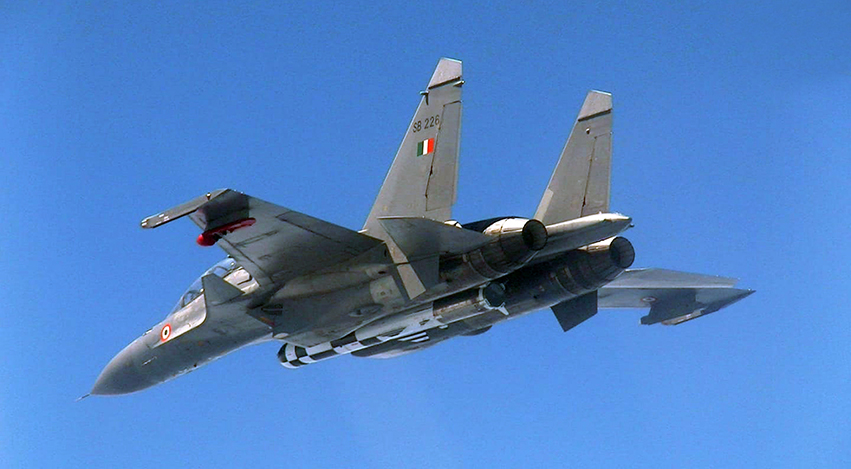
New Delhi, 8th April, 2023. The President of India, Smt Droupadi Murmu took a historic sortie in a Sukhoi 30 MKI fighter aircraft at the Tezpur Air Force Station in Assam on 8th April, 2023. The President, who is the Supreme Commander of the Indian Armed Forces, flew for approximately 30 minutes covering Brahmaputra and Tezpur valley with a view of Himalayas before returning to the Air Force Station.
The aircraft was flown by Group Captain Naveen Kumar, Commanding Officer of the 106 Squadron. The aircraft flew at a height of about two kilometers above sea level and at a speed of about 800 kilometers per hour. President Murmu is the third President and second woman President to undertake such a sortie.
Later in the visitor’s book, the President expressed her feelings by writing a brief note in which she said “It was an exhilarating experience for me to fly in the mighty Sukhoi-30 MKI fighter aircraft of the Indian Air Force. It is a matter of pride that India’s defence capabilities have expanded immensely to cover all the frontiers of land, air and sea. I congratulate the Indian Air Force and the entire team of Air Force Station Tezpur for organising this sortie.”
The President was also briefed on the operational capabilities of the aircraft and the Indian Air Force (IAF). She expressed satisfaction on the operational preparedness of the IAF.
The President’s sortie in the Sukhoi 30 MKI fighter aircraft is a part of her efforts to engage with the armed forces, as the Supreme Commander of the Indian Armed Forces. In March 2023, the President visited INS Vikrant and interacted with officers and sailors on board of the indigenously built aircraft.
New Delhi, 3rd April, 2023. Several policy initiatives and reforms have been taken by Government in the past few years to encourage indigenous design, development and manufacture of defence equipment, thereby promoting self-reliance in defence manufacturing in the country. These initiatives, inter-alia, include according priority to procurement of capital items from domestic sources under Defence Acquisition Procedure (DAP)-2020; Notification of four ‘Positive Indigenisation Lists’ of total 411 items of Services and three ‘Positive Indigenisation Lists’ of total 3,738 items of Defence Public Sector Undertakings (DPSUs), for which there would be an embargo on the import beyond the timelines indicated against them; Simplification of Industrial licensing process with longer validity period; Liberalisation of Foreign Direct Investment (FDI) policy allowing 74% FDI under automatic route; Simplification of Make Procedure; Launch of Mission DefSpace; Launch of Innovations for Defence Excellence (iDEX) scheme involving start-ups & Micro, Small and Medium Enterprises (MSMEs); Implementation of Public Procurement (Preference to Make in India) Order 2017; Launch of an indigenisation portal namely SRIJAN to facilitate indigenisation by Indian Industry including MSMEs; Reforms in Offset policy with thrust on attracting investment and Transfer of Technology (ToT) for Defence manufacturing by assigning higher multipliers; and Establishment of two Defence Industrial Corridors, one each in Uttar Pradesh and Tamil Nadu; Opening up of Defence Research & Development (R&D) for industry, start-ups and academia with 25 percent of defence R&D budget; Progressive increase in allocation of Defence Budget of military modernization for procurement from domestic sources, etc. These policy initiatives have given a push to the growth of Industries including MSMEs in defence sector which have created tremendous employment opportunities. However, no employment data is maintained by Ministry of Defence. The information cannot be shared being strategic and sensitive in nature.
The Aatmanirbhar Bharat initiative has helped the country by encouraging indigenous design, development and manufacture of defence equipment in the country, thereby reducing dependency on imports in long run. The expenditure on defence procurement from foreign sources has reduced from 46% of overall expenditure in 2018-19 to 36.7% in December, 2022. Moreover, the Indian defence export has risen by more than eight times since 2016-17. In 2016-17, the defence exports were worth Rs 1,522 crore which has gone up to Rs 13,800 crore till date.
This information was given by Raksha Rajya Mantri Shri Ajay Bhatt in a written reply to Shri Nalin Kumar Kateel and others in Lok Sabha on 3rd April, 2023.













 New Delhi, 3rd April, 2023. Several policy initiatives and reforms have been taken by Government in the past few years to encourage indigenous design, development and manufacture of defence equipment, thereby promoting self-reliance in defence manufacturing in the country. These initiatives, inter-alia, include according priority to procurement of capital items from domestic sources under Defence Acquisition Procedure (DAP)-2020; Notification of four ‘Positive Indigenisation Lists’ of total 411 items of Services and three ‘Positive Indigenisation Lists’ of total 3,738 items of Defence Public Sector Undertakings (DPSUs), for which there would be an embargo on the import beyond the timelines indicated against them; Simplification of Industrial licensing process with longer validity period; Liberalisation of Foreign Direct Investment (FDI) policy allowing 74% FDI under automatic route; Simplification of Make Procedure; Launch of Mission DefSpace; Launch of Innovations for Defence Excellence (iDEX) scheme involving start-ups & Micro, Small and Medium Enterprises (MSMEs); Implementation of Public Procurement (Preference to Make in India) Order 2017; Launch of an indigenisation portal namely SRIJAN to facilitate indigenisation by Indian Industry including MSMEs; Reforms in Offset policy with thrust on attracting investment and Transfer of Technology (ToT) for Defence manufacturing by assigning higher multipliers; and Establishment of two Defence Industrial Corridors, one each in Uttar Pradesh and Tamil Nadu; Opening up of Defence Research & Development (R&D) for industry, start-ups and academia with 25 percent of defence R&D budget; Progressive increase in allocation of Defence Budget of military modernization for procurement from domestic sources, etc. These policy initiatives have given a push to the growth of Industries including MSMEs in defence sector which have created tremendous employment opportunities. However, no employment data is maintained by Ministry of Defence. The information cannot be shared being strategic and sensitive in nature.