Category: Space

  • Chandrayaan-3 Vs Chandrayaan-2 : How Chandrayaan-3 is better than Chandrayaan-2

    Chandrayaan-3 Vs Chandrayaan-2 : How Chandrayaan-3 is better than Chandrayaan-2

    India’s third moon mission, Chandrayaan-3, was successfully launched onboard a Launch Vehicle Mark-3 (LVM-3) rocket from the second launch pad at the Satish Dhawan Space Centre in Sriharikota at 2.35 pm on July 14. Many Many Congratulations to India.

    Indian Space Research Organisation (ISRO) is gearing up for the highly anticipated launch of Chandrayaan-3, the country’s ambitious lunar mission. This mission marks India’s second attempt to achieve a soft landing on the Moon’s surface.

    Chandrayaan-3 follows in the footsteps of its predecessor, Chandrayaan-2, which encountered a partial failure during its landing phase, resulting in a crash landing. Drawing valuable lessons from that experience, ISRO has diligently incorporated a range of improvements and modifications into the Chandrayaan-3 mission, aiming to ensure a successful outcome this time around.

    With the goal of enhancing the mission’s chances of success, ISRO has meticulously analyzed the previous mission’s shortcomings and implemented critical adjustments. These enhancements encompass a broad spectrum, including crucial aspects such as navigation, landing protocols, and overall mission design. By building upon the knowledge gained from Chandrayaan-2, ISRO’s scientists and engineers are determined to overcome the challenges and achieve a smooth and controlled landing on the lunar surface.

    Key differences between Chandrayaan-2 and Chandrayaan-3

    1. While the mission architecture remains similar, there are notable differences between Chandrayaan-2 and Chandrayaan-3. One significant distinction is the payload carried by the GSLV-MkIII rocket. While Chandrayaan-2 consisted of a lander, rover, and orbiter, Chandrayaan-3 will be launched with only a lander and rover. The Chandrayaan-3 mission will leverage the existing orbiter from Chandrayaan-2 for communication and terrain mapping purposes.
    2. Chandrayaan-3’s lander mission features an enhanced capability with “lander hazard detection and avoidance cameras” to facilitate coordination with the orbiter and mission control during the landing process on the lunar surface. Unlike Chandrayaan-2, which had one such camera, Chandrayaan-3 is equipped with two cameras, as reported by India Today.
    3. The Vikram lander of Chandrayaan-3 has been equipped with stronger legs compared to its previous version. The landing velocity has been reduced from 3m/second to 2m/second, providing increased stability during touchdown, according to ISRO chairman S Somanath’s statement to Times of India.
    4. Additional fuel has been added to the Vikram lander, enhancing its travel capability and ability to handle dispersion. Furthermore, a new sensor called the laser Doppler velocity meter has been integrated, enabling the assessment of lunar terrain by measuring components of three velocity vectors. This redundancy in measurement adds to the existing instrument suite, as explained by Somanath to TOI.
    5. Learning from the experiences of Chandrayaan-2, the landing area for Chandrayaan-3 has been expanded from 500m x 500m to four km by 2.5 km, reducing the risks associated with a precise landing and providing more flexibility.
    6. The Vikram lander now features additional solar panels on multiple surfaces to ensure power generation regardless of its landing orientation. To test the spacecraft’s resilience to vibrations, it was flown over different terrains using a helicopter, while landing processes were assessed with the help of cranes.
    7. Chandrayaan-3’s propulsion module will host a single instrument called Spectro-polarimetry of Habitable Planetary Earth (SHAPE). This instrument aims to study the spectral and polarimetric measurements of Earth from the lunar orbit. In contrast, Chandrayaan-2’s orbiter carried nine in-situ instruments that are still operational in the Moon’s orbit.
    8. Another addition to the Chandrayaan-3 mission is the Laser Retroreflector Array (LRA) accompanying the lander. This passive experiment aims to understand the dynamics of the Moon system.
  • Unveiling the Enigmatic TR-3 Black Manta: Myth or Reality?

    Unveiling the Enigmatic TR-3 Black Manta: Myth or Reality?

    In the realm of aviation and conspiracy theories, few subjects capture the imagination quite like the TR-3 Black Manta. An elusive aircraft steeped in secrecy and mystery, the TR-3 Black Manta has become the stuff of legend, captivating the minds of enthusiasts and skeptics alike. However, it is crucial to note that the TR-3 Black Manta resides solely within the realms of speculation, with no concrete evidence to substantiate its existence in the real world. Join us as we embark on a journey to explore the enigmatic lore surrounding the TR-3 Black Manta.

    Unraveling the Legends:

    The TR-3 Black Manta is often shrouded in tales of advanced technology and clandestine military projects. One of its defining characteristics is its purported stealth capabilities, with rumors suggesting the integration of state-of-the-art radar-absorbing materials and design elements. The goal? To render the aircraft nearly invisible to enemy radar systems, enabling it to operate undetected in the shadows.

    Yet, the intrigue doesn’t stop at stealth. Proponents of the TR-3 Black Manta mythos describe an aircraft equipped with extraordinary propulsion systems that push the boundaries of conventional aviation. Speculations range from hypersonic engines to anti-gravity technology, implying unheard-of speeds and maneuverability that seem to defy the laws of physics.

    The TR-3 Black Manta’s alleged capabilities extend further into the realms of altitude and range. It is said to possess the ability to soar at near-space levels, as well as traverse vast distances with ease. This purported long-range reconnaissance and surveillance capacity, coupled with advanced sensor systems like cutting-edge infrared and electro-optical sensors, contribute to its image as an intelligence-gathering marvel.

    As conspiracy theories go, armaments and countermeasures are integral to the TR-3 Black Manta’s mystique. Theories suggest that it carries a formidable arsenal, encompassing directed energy weapons, missiles, and even electronic warfare systems. Such firepower would make it a formidable force in engagements, capable of both offense and defense.

    Separating Fact from Fiction:

    While the TR-3 Black Manta’s allure is undeniable, it is essential to approach its existence with a healthy dose of skepticism. The absence of concrete evidence and official acknowledgment from the authorities casts doubt on its reality. The TR-3 Black Manta remains firmly within the realm of conspiracy theories and fictional narratives, leaving enthusiasts to ponder the line between myth and truth.

    Impressive Features of the TR-3 Black Manta

    The TR-3 Black Manta is a fictional aircraft that has been the subject of much speculation and conspiracy theories. It is often associated with claims of advanced technology and secret military projects. However, it is important to note that the TR-3 Black Manta does not exist in reality and is purely a creation of conspiracy theories and fictional narratives.

    That being said, let’s delve into the impressive features often attributed to the TR-3 Black Manta in popular culture and conspiracy theories:

    • Stealth Capabilities: The TR-3 Black Manta is often described as a stealth aircraft, capable of evading radar detection. It is said to incorporate advanced radar-absorbing materials and design features to minimize its radar signature, making it difficult to detect by enemy radar systems.
    • Advanced Propulsion: The aircraft is often rumored to be equipped with advanced propulsion systems, such as a hypersonic engine or anti-gravity technology. These propulsion systems would provide the TR-3 Black Manta with exceptional speed and maneuverability, allowing it to outperform conventional aircraft.
    • High Altitude and Range: The TR-3 Black Manta is speculated to have the capability to operate at extremely high altitudes, reaching near-space levels. It is also believed to possess a long range, allowing it to conduct surveillance or engage targets over vast distances.
    • Advanced Sensor Systems: The TR-3 Black Manta is said to be equipped with cutting-edge sensor systems, including advanced infrared and electro-optical sensors. These sensors would enable the aircraft to gather detailed intelligence and perform reconnaissance missions with great accuracy.
    • Weaponry and Countermeasures: According to conspiracy theories, the TR-3 Black Manta is armed with a variety of advanced weapons and countermeasures. These may include directed energy weapons, missiles, or electronic warfare systems to engage or neutralize enemy threats.

    It is important to reiterate that the TR-3 Black Manta is not a real aircraft and there is no credible evidence to support the existence of such a craft in the real world. It has primarily gained attention through fictional accounts, conspiracy theories, and speculative discussions.

    Conclusion:

    The TR-3 Black Manta continues to captivate our collective imagination, tantalizing us with tales of cutting-edge technology and clandestine operations. However, it is crucial to approach these narratives with a critical eye, understanding that the TR-3 Black Manta remains firmly rooted in the realm of speculation and fiction. While we may indulge in the allure of such enigmatic aircraft, the TR-3 Black Manta’s existence, for now, remains a captivating mystery awaiting further evidence and substantiation.

  • MQ-9 Reaper vs Bayraktar TB2: A Comparison of Dominant UAVs

    MQ-9 Reaper vs Bayraktar TB2: A Comparison of Dominant UAVs

    Unmanned aerial vehicles (UAVs) have revolutionized the field of military and surveillance operations, offering enhanced capabilities and versatility. Among the most prominent UAVs in recent years are the MQ-9 Reaper and Bayraktar TB2. Developed by General Atomics Aeronautical Systems in the United States and Baykar in Turkey, respectively, these unmanned platforms have gained significant attention for their remarkable performance and operational effectiveness.

    In this blog post, we delve into a comprehensive comparison between the MQ-9 Reaper and the Bayraktar TB2, exploring their key specifications, features, and areas of application. While both UAVs share a common purpose of intelligence, surveillance, and reconnaissance (ISR), they possess distinct characteristics that set them apart. Understanding their similarities and differences is crucial for appreciating the advancements in UAV technology and their impact on modern warfare.

    MQ-9 Reaper vs Bayraktar TB2

    The MQ-9 Reaper and Bayraktar TB2 are both unmanned aerial vehicles (UAVs) that have gained significant attention in recent years for their capabilities. While they share some similarities, they also have distinct features and are operated by different countries. Here’s a brief comparison:

    Origin and Manufacturer:

    • MQ-9 Reaper: The MQ-9 Reaper is developed and manufactured by General Atomics Aeronautical Systems, an American company.
    • Bayraktar TB2: The Bayraktar TB2 is developed and manufactured by Baykar, a Turkish defense company.

    Size and Payload:

    • MQ-9 Reaper: It is a larger UAV, with a wingspan of around 20 meters (66 feet) and a maximum takeoff weight of 4,760 kilograms (10,500 pounds). The Reaper has a payload capacity of 1,746 kilograms (3,850 pounds).
    • Bayraktar TB2: The TB2 is a smaller UAV, with a wingspan of around 12 meters (39 feet) and a maximum takeoff weight of 650 kilograms (1,430 pounds). It has a payload capacity of 55 kilograms (121 pounds).

    Endurance and Range:

    • MQ-9 Reaper: The Reaper has an endurance of over 27 hours and can operate at a maximum altitude of 50,000 feet. It has a range of approximately 1,850 kilometers (1,150 miles).
    • Bayraktar TB2: The TB2 has an endurance of around 24 hours and can operate at a maximum altitude of 24,000 feet. It has a range of approximately 150 kilometers (93 miles).

    Weapon Systems:

    • MQ-9 Reaper: It is primarily used as a long-endurance surveillance and reconnaissance platform. However, it can also be armed with a variety of weapons, including Hellfire missiles, laser-guided bombs, and GBU-38 Joint Direct Attack Munitions (JDAM).
    • Bayraktar TB2: The TB2 is primarily designed for armed reconnaissance missions. It can carry and deploy MAM-L and MAM-C smart munitions, which are precision-guided munitions developed by Roketsan, a Turkish defense company.

    Operators:

    • MQ-9 Reaper: The Reaper is primarily operated by the United States Air Force, as well as other countries like the United Kingdom, Italy, and France.
    • Bayraktar TB2: The TB2 is primarily operated by the Turkish Armed Forces and has been exported to several other countries, including Ukraine, Qatar, and Azerbaijan.

    Here’s a data table comparing some key specifications of the MQ-9 Reaper and Bayraktar TB2:

    Specifications MQ-9 Reaper Bayraktar TB2
    Origin United States Turkey
    Manufacturer General Atomics Aeronautical Systems Baykar
    Wingspan Approximately 20 meters Approximately 12 meters
    Maximum Takeoff Weight 4,760 kilograms (10,500 pounds) 650 kilograms (1,430 pounds)
    Payload Capacity 1,746 kilograms (3,850 pounds) 55 kilograms (121 pounds)
    Endurance Over 27 hours Approximately 24 hours
    Maximum Altitude 50,000 feet 24,000 feet
    Range Approximately 1,850 kilometers (1,150 miles) Approximately 150 kilometers (93 miles)
    Primary Role Surveillance and reconnaissance Armed reconnaissance
    Weapon Systems Hellfire missiles, laser-guided bombs, GBU-38 JDAM MAM-L and MAM-C smart munitions
    Operators United States Air Force, United Kingdom, Italy, France Turkish Armed Forces, Ukraine, Qatar, Azerbaijan

    Similarity between MQ-9 Reaper vs Bayraktar TB2

    The MQ-9 Reaper and Bayraktar TB2, despite being developed by different countries and manufacturers, share some similarities. Here are a few key similarities between the two UAVs:

    • Unmanned Aerial Vehicles (UAVs): Both the MQ-9 Reaper and Bayraktar TB2 belong to the category of unmanned aerial vehicles. They are remotely piloted and operated without a human onboard.
    • Intelligence, Surveillance, and Reconnaissance (ISR): Both UAVs are equipped with advanced sensor systems and imaging capabilities, allowing them to perform intelligence, surveillance, and reconnaissance missions. They can gather real-time information and provide situational awareness to operators.
    • Long Endurance: Both the MQ-9 Reaper and Bayraktar TB2 have extended endurance capabilities, allowing them to remain airborne for long periods. This endurance is crucial for conducting prolonged surveillance missions and providing persistent coverage over an area of interest.
    • Weaponization: While surveillance is their primary role, both UAVs can be armed and carry various munitions. The MQ-9 Reaper and Bayraktar TB2 can be equipped with guided missiles and bombs, transforming them into armed platforms capable of engaging targets.
    • Ground Control Stations: Both UAVs require ground control stations (GCS) for remote piloting and mission control. These GCS provide operators with the interface to control and monitor the aircraft’s flight, payload operations, and mission execution.
    • International Operations: Both the MQ-9 Reaper and Bayraktar TB2 have seen international deployment and export to other countries. They have been utilized by various armed forces for different missions, showcasing their effectiveness and versatility.

    MQ-9 Reaper and Bayraktar TB2 : Who Wins

    Determining a winner between the MQ-9 Reaper and Bayraktar TB2 depends on the specific context, mission requirements, and operational objectives. Both UAVs have unique strengths and capabilities that make them effective in their respective roles. It’s important to note that evaluating the superiority of one UAV over the other is subjective and depends on the specific criteria being considered. Here are some factors to consider:

    • Size and Payload: The MQ-9 Reaper has a larger size and payload capacity compared to the Bayraktar TB2. This allows the Reaper to carry a wider array of weapons and sensors, making it suitable for missions requiring heavier payloads.
    • Endurance and Range: The MQ-9 Reaper has a longer endurance and range compared to the Bayraktar TB2, allowing it to stay airborne for extended periods and cover larger distances. This makes it well-suited for long-duration surveillance and reconnaissance missions.
    • Altitude Capability: The MQ-9 Reaper can operate at a higher maximum altitude compared to the Bayraktar TB2. This altitude advantage enables the Reaper to potentially avoid certain threats and provides a broader perspective for surveillance purposes.
    • Precision-Guided Munitions: The Bayraktar TB2 excels in its ability to carry and deploy precision-guided munitions, such as the MAM-L and MAM-C smart munitions. This makes it highly effective for engaging specific targets with accuracy.
    • Operators and Export: The MQ-9 Reaper has a wider international operator base, including the United States, the United Kingdom, Italy, and France. The Bayraktar TB2, on the other hand, has been adopted by the Turkish Armed Forces and exported to several other countries, such as Ukraine, Qatar, and Azerbaijan.

    It is crucial to consider that assessing the effectiveness and superiority of a UAV involves numerous factors beyond those listed above. Mission requirements, tactics, operational context, and the integration of the UAVs into a larger system all play significant roles in determining their overall performance and success.

    In summary, the MQ-9 Reaper and Bayraktar TB2 are both highly capable UAVs, and the determination of a “winner” depends on the specific operational needs and objectives.

  • Top Indian Fighter Jets Used by the Indian Air Force (IAF)

    Top Indian Fighter Jets Used by the Indian Air Force (IAF)

    The Indian Air Force (IAF) boasts a formidable fleet of fighter jets, equipped with cutting-edge technology and capabilities. These aircraft play a crucial role in safeguarding Indian airspace and maintaining national security. From indigenous marvels to collaborations with global partners, the IAF’s fighter jet lineup is a testament to India’s commitment to military strength and technological advancement.

    In this blog post, we will explore some of the top Indian fighter jets utilized by the IAF. These aircraft have proven their mettle in combat, demonstrating exceptional performance, versatility, and mission capabilities. Join us as we delve into the world of Indian fighter jets and unravel the engineering prowess that enables the IAF to defend the nation’s skies.

    Why Fighter Jets is important for India

    Fighter jets are of immense importance for India due to various reasons. Firstly, they are vital for maintaining national security, protecting Indian airspace, and deterring potential adversaries. Fighter jets play a critical role in defending the country’s territorial integrity and sovereignty.

    Secondly, fighter jets provide India with the capability to establish air superiority, ensuring dominance in the skies during times of conflict. They can intercept and engage enemy aircraft, neutralize airborne threats, and protect critical infrastructure and military assets.

    Furthermore, fighter jets enhance India’s ability to respond rapidly to emerging threats and crisis situations. Their speed, agility, and versatility allow for quick deployment and effective response to changing dynamics.

    Fighter jets also contribute to India’s regional influence and diplomatic relationships. Possessing advanced fighter aircraft showcases India’s military strength and fosters collaboration with partner nations, promoting strategic partnerships and interoperability.

    Lastly, fighter jets serve as a symbol of technological advancement and national pride, bolstering public support and fostering a sense of unity and identity within the country.

    Top Indian Fighter Jets Used by IAF

    • Sukhoi Su-30MKI
    • Dassault Mirage 2000
    • MiG-29
    • HAL Tejas
    • Rafale

    Sukhoi Su-30MKI

    The Sukhoi Su-30MKI is a critical asset used by India, playing a significant role in the Indian Air Force’s (IAF) operational capabilities. As one of India’s primary fighter jets, the Su-30MKI provides several advantages. Its twin-engine design, advanced avionics, and long-range strike capabilities make it a formidable air superiority fighter.

    The Su-30MKI offers exceptional maneuverability, allowing for superior control during air-to-air engagements. Its ability to engage multiple targets simultaneously gives India a tactical advantage. The aircraft’s operational range and endurance enable it to conduct missions across vast distances, enhancing India’s reach and influence.

    Additionally, the Su-30MKI’s integration with advanced weapons systems and avionics further enhances its combat effectiveness. The fighter jet’s partnership between Russia’s Sukhoi Corporation and India’s Hindustan Aeronautics Limited (HAL) reflects the collaboration in developing and upgrading this aircraft to meet India’s specific requirements.

    Overall, the Su-30MKI’s capabilities bolster India’s air defense capabilities, provide strategic reach, and serve as a symbol of the country’s commitment to technological advancement in the field of military aviation.

    • Role: Multirole air superiority fighter
    • Engines: Twin Saturn AL-31FP turbofans
    • Maximum Speed: Mach 2 (2,120 km/h or 1,320 mph)
    • Combat Range: 3,000 km (1,860 miles)
    • Maximum Takeoff Weight: 38,800 kg (85,600 lbs)
    • Armament: A wide array of air-to-air and air-to-surface missiles, bombs, and rockets
    • Notable Features: Advanced avionics, long-range strike capabilities, and ability to engage multiple targets simultaneously

    Dassault Mirage 2000

    The Dassault Mirage 2000 is a pivotal fighter jet used by the Indian Air Force (IAF), contributing significantly to India’s defense capabilities. The Mirage 2000 serves as a versatile multirole fighter, demonstrating exceptional agility, all-weather operational capability, and advanced avionics.

    India’s Mirage 2000 fleet has undergone upgrades to the Mirage 2000-5 Mk 2 standard, further enhancing its combat effectiveness. The aircraft’s SNECMA M53-P2 afterburning turbofan engines provide impressive speed and maneuverability, allowing for high-performance air-to-air and air-to-ground missions.

    With its sophisticated radar systems and weapons integration, the Mirage 2000 can carry a range of air-to-air and air-to-ground missiles, laser-guided bombs, and rockets. It offers India the capability to engage in precise strikes on ground targets and engage enemy aircraft in air combat scenarios.

    The Mirage 2000’s operational range and endurance enable it to perform missions across various terrains, bolstering India’s defense preparedness. As a French-built fighter jet, the Mirage 2000 showcases the success of international collaborations and India’s commitment to maintaining a modern and effective air force.

    • Role: Multirole fighter
    • Engines: SNECMA M53-P2 afterburning turbofan
    • Maximum Speed: Mach 2.2 (2,336 km/h or 1,451 mph)
    • Combat Range: 1,550 km (963 miles)
    • Maximum Takeoff Weight: 17,000 kg (37,500 lbs)
    • Armament: Air-to-air and air-to-ground missiles, laser-guided bombs, and rockets
    • Notable Features: Agility, all-weather operational capability, and extensive upgrade programs

    MiG-29

    The MiG-29, a renowned fighter jet, plays a crucial role in the Indian Air Force (IAF), bolstering India’s defense capabilities. As an air superiority fighter, the MiG-29 has proven its worth in India’s aerial operations.

    Equipped with twin Klimov RD-33 afterburning turbofan engines, the MiG-29 delivers exceptional speed and maneuverability. Its maximum speed of Mach 2.25 allows for quick response and engagement in air-to-air combat scenarios. The aircraft’s high maneuverability and advanced avionics make it a formidable opponent in the skies.

    India’s MiG-29 fleet has undergone upgrades to the MiG-29UPG (Upgrade) standard, enhancing its combat effectiveness. With its air defense capabilities and integration of air-to-air and air-to-ground missiles, rockets, and bombs, the MiG-29 ensures India’s aerial dominance and protection of critical assets.

    The operational range and endurance of the MiG-29 enable it to perform missions over vast distances, augmenting India’s air defense capabilities. The aircraft’s successful partnership between Russia and India exemplifies collaboration in defense technology and showcases India’s commitment to maintaining a modern and capable air force.

    • Role: Air superiority fighter
    • Engines: Twin Klimov RD-33 afterburning turbofans
    • Maximum Speed: Mach 2.25 (2,400 km/h or 1,491 mph)
    • Combat Range: 1,430 km (888 miles)
    • Maximum Takeoff Weight: 18,500 kg (40,785 lbs)
    • Armament: Air-to-air and air-to-ground missiles, rockets, and bombs
    • Notable Features: High maneuverability, advanced avionics, and air defense capabilities

    HAL Tejas

    The HAL Tejas, a remarkable indigenous fighter jet, holds immense significance in the Indian Air Force’s (IAF) operations. As a lightweight multirole aircraft, the Tejas showcases India’s technological advancements and self-reliance in defense manufacturing.

    Powered by the General Electric F404-GE-IN20 turbofan engine, the Tejas possesses impressive speed and agility. Its maximum speed of Mach 1.8 enables it to perform air-to-air and air-to-ground missions effectively. The aircraft’s advanced avionics, composite materials, and fly-by-wire flight control system contribute to its exceptional performance.

    India’s Tejas program demonstrates the country’s commitment to indigenous defense capabilities. Continuous upgrades and enhancements ensure that the Tejas remains at the forefront of technological advancements. Its integration of air-to-air and air-to-ground missiles, bombs, and rockets further enhances its combat effectiveness.

    The Tejas’ operational range allows it to operate in various terrains, supporting India’s defense requirements across the country. As an indigenous fighter jet, the Tejas represents India’s vision for self-sufficiency in defense production and strengthens its defense industry ecosystem. The Tejas stands as a testament to India’s engineering prowess and determination to build a modern and capable air force.

    • Role: Lightweight multirole fighter
    • Engine: General Electric F404-GE-IN20 turbofan
    • Maximum Speed: Mach 1.8 (2,205 km/h or 1,370 mph)
    • Combat Range: 500 km (311 miles)
    • Maximum Takeoff Weight: 13,500 kg (29,800 lbs)
    • Armament: Air-to-air and air-to-ground missiles, bombs, and rockets
    • Notable Features: Indigenous design, advanced avionics, and composite materials

    Rafale

    The Rafale, a state-of-the-art multirole fighter jet, holds immense significance in bolstering India’s defense capabilities. Inducted into the Indian Air Force (IAF), the Rafale brings a wide range of advanced features and combat capabilities.

    Powered by twin Snecma M88-2 afterburning turbofan engines, the Rafale offers exceptional speed, maneuverability, and range. With a maximum speed of Mach 1.8, it can swiftly engage in air-to-air and air-to-ground missions. The aircraft’s advanced avionics, stealth features, and extensive combat systems make it a formidable asset.

    The Rafale’s integration of a wide range of air-to-air and air-to-ground weapons, including long-range standoff missiles, further enhances its combat effectiveness. Its capability for precision strikes, reconnaissance, and air superiority missions contribute to India’s operational readiness and tactical flexibility.

    India’s acquisition of the Rafale reinforces the country’s commitment to advanced military technology and strategic partnerships. The Rafale showcases India’s ability to operate cutting-edge fighter jets and strengthens its defense preparedness, serving as a symbol of India’s commitment to maintaining a modern and capable air force.

    • Role: Multirole fighter
    • Engines: Twin Snecma M88-2 afterburning turbofans
    • Maximum Speed: Mach 1.8 (2,222 km/h or 1,380 mph)
    • Combat Range: 1,852 km (1,150 miles)
    • Maximum Takeoff Weight: 24,500 kg (54,000 lbs)
    • Armament: Wide range of air-to-air and air-to-ground weapons, including long-range standoff missiles
    • Notable Features: Advanced avionics, stealth features, versatility, and extensive combat capabilities

    Conclusion

    In conclusion, the Indian Air Force (IAF) operates a formidable fleet of fighter jets that showcase India’s commitment to national defense and technological advancement. These aircraft play a critical role in safeguarding Indian airspace, maintaining air superiority, and protecting the nation’s sovereignty.

    The top Indian fighter jets used by the IAF include the Sukhoi Su-30MKI, Dassault Mirage 2000, MiG-29, HAL Tejas, and Rafale. Each aircraft brings unique capabilities, such as advanced avionics, long-range strike capabilities, agility, and versatility, enabling the IAF to perform a wide range of missions with precision and effectiveness.

    These fighter jets provide essential benefits to India, including ensuring national security, establishing air dominance, rapid response capabilities, strike capabilities, regional influence, technological advancement, and fostering national pride. Their integration into the IAF’s fleet demonstrates India’s commitment to maintaining a strong defense infrastructure and nurturing indigenous defense capabilities.

    As the geopolitical landscape evolves, the IAF continues to upgrade its fleet, acquire new aircraft, and strengthen its capabilities. The top Indian fighter jets used by the IAF are a testament to India’s pursuit of air superiority, military strength, and commitment to protecting its interests at home and abroad.

  • Northrop Grumman Rapidly Prepares for Next-Generation Relay Ground Stations in the Pacific Region

    Northrop Grumman Rapidly Prepares for Next-Generation Relay Ground Stations in the Pacific Region

    BOULDER, Colo., 1st June 2023. Northrop Grumman Corporation recently completed a successful preliminary design review (PDR) of Relay Ground Station-Asia (RGS-A) for the U.S. Naval Information Warfare Center (NIWC) Pacific.

    Relay Ground Station-Asia (RGS-A) will be deployed in Guam and connect legacy and next-generation missile-warning and tracking satellites. Artist Rendering (Credit: Northrop Grumman)  
    • RGS-A will connect critical legacy and next-generation satellites and end users.
    • The successful PDR confirms the company is on track to transform the existing missile-warning system.
    • The review was completed a month ahead of schedule, demonstrating the company’s ability to rapidly meet changing customer requirements.

    Expert:

    Aaron Dann, vice president, strategic force programs, Northrop Grumman: “The preliminary design review exceeded our customers’ expectations and is the next step in delivering much-needed new capabilities to the Pacific region. Our advanced technologies will deliver what is needed to support missile-warning and missile-tracking satellites that protect our nation and its allies.”

    Details:

    The U.S. Space Force is working to transform the existing missile-warning system with the Future Operationally Resilient Ground Evolution (FORGE) system. A cornerstone of the FORGE architecture includes developing relay ground stations capable of supporting existing and new satellite constellations with the ability to handle changes in bandwidth and availability.

    Northrop Grumman was awarded a $99.6 million five-year contract from NIWC Pacific last year to design, develop, integrate, test and deliver the relay ground station. The majority of the work will take place at Northrop Grumman’s campus in Boulder, Colorado.

    NIWC Pacific will develop six antennas for RGS-A to enable the Space Systems Command (SSC) next generation Space-Based Infrared System (SBIRS) ground system which keeps legacy satellites in geosynchronous orbit. RGS-A will be deployed to Guam and is on schedule to be installed by late 2025.

    Northrop Grumman is a leading global aerospace and defense technology company. Our pioneering solutions equip our customers with the capabilities they need to connect and protect the world, and push the boundaries of human exploration across the universe. Driven by a shared purpose to solve our customers’ toughest problems, our 95,000 employees define possible every day.

  • Lockheed Martin To Collaborate With U.S. Army To Improve Space-Enabled Defense Systems

    Lockheed Martin To Collaborate With U.S. Army To Improve Space-Enabled Defense Systems

    • Team to Advance Technology for Beyond Line-of-Sight, In-flight Target Updates

    LITTLETON, Colo., 30th May 2023. Lockheed Martin signed a Cooperative Research and Development Agreement (CRADA) with the U.S. Army Combat Capabilities Development Command’s Aviation and Missile Center (AvMC) to advance Beyond Line of Sight (BLOS) connectivity. Under this CRADA, Lockheed Martin and AvMC will jointly develop and demonstrate space-enabled defense systems.
    What It Means: Through this CRADA, Lockheed Martin and the U.S. Army will conduct design, development, integration, and test risk reduction activities utilizing AvMC’s Redstone Arsenal, Alabama-based System Integration Lab (SIL) to identify and develop concepts of operations for linking ground-based platforms to the space domain.

    “Lockheed Martin brings a legacy of experience in supporting our tactical warfighters, and we recognize the importance of providing them with next generation capabilities,” said John Schierling, Lockheed Martin director for Tactical Space Programs. “Our collaboration with AvMC will assist in developing a more effective, survivable and affordable battlefield-connected 21st century security technology for our government customers and international allies by connecting platforms with space assets, helping deter future threats.”

    What Will Be Tested: The team will investigate capabilities that improve satellite communications (SATCOM) to defense systems, identify overlapping capabilities that can facilitate connectivity, look for capability gaps, conduct hardware-in-the-loop tests, test the connectivity between platforms at various speeds, explore ancillary use of communications systems and more.

    Where and When: As work begins, the team will leverage the SIL for its integration, test and analysis tools to support evolving prototypes. The SIL’s advanced modeling and simulation tool suite will enable the team to accelerate the delivery of experimental prototypes and align technical performers across government agencies and industry.

  • Northrop Grumman Advances the Frontier of Sensing Technology for Space Domain Awareness

    Northrop Grumman Advances the Frontier of Sensing Technology for Space Domain Awareness

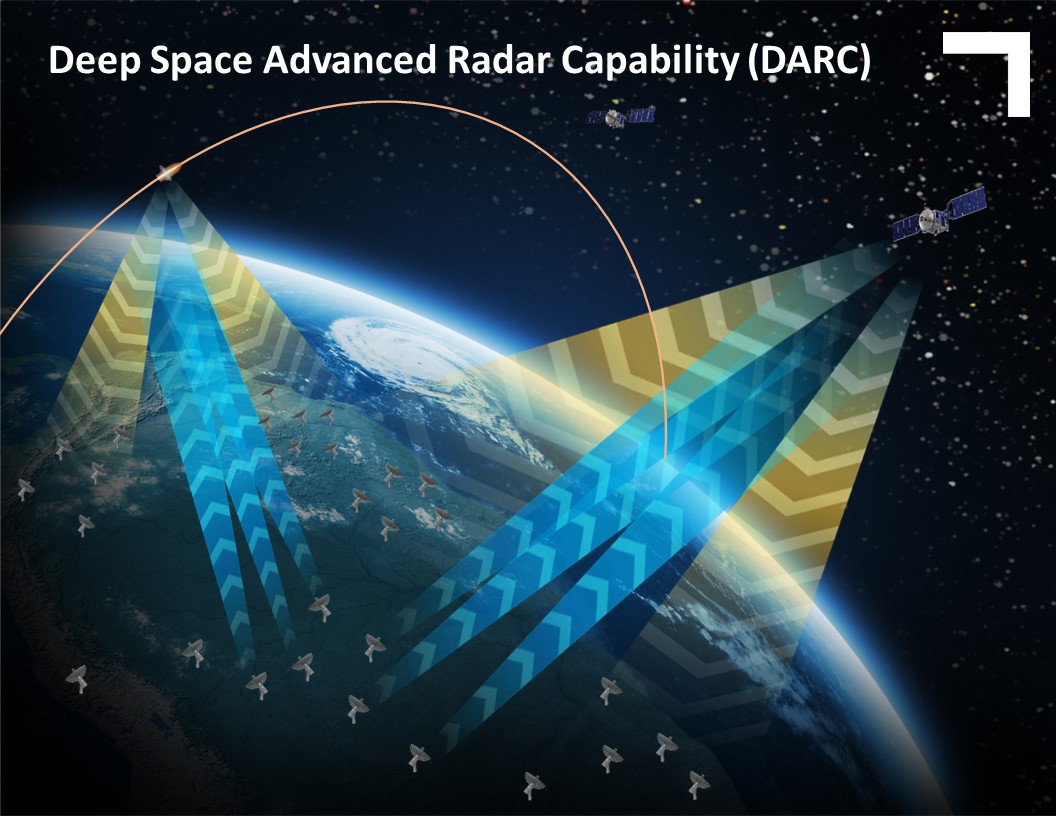
    Artist Rendering (Credit: Northrop Grumman) 

    COLORADO SPRINGS, Colo., 30th May 2023. Northrop Grumman Corporation continues to advance the frontiers of sensing technology, successfully completing the Critical Design Review (CDR) and software demonstration for the U.S. Space Force’s (USSF) Deep-Space Advanced Radar Capability Program (DARC).

    Key milestones completed within 12 months of contract award include:

    • Preliminary Design Review
    • Critical Design Review
    • Initial software demonstration

    Expert:

    “DARC will be the first to provide an all-weather, at all times capability in support of the space domain awareness mission that’s critical to national and global security,” said Pablo Pezzimenti, vice president, integrated national systems, Northrop Grumman. “The successful critical design review is demonstration of our ability to develop a complex, advanced system with agility and speed.”

    Details:

    Following the completion of CDR, the program now turns its focus to the Factory Acceptance Testing of key subsystems starting later this year.

    Current ground-based optical systems only operate at night and are impacted by weather conditions. DARC will deliver an all-weather, 24/7 capability to monitor the rapidly evolving geosynchronous orbital environment – providing the nation with enhanced space domain awareness. DARC will augment the military’s space surveillance network as an additional sensor to monitor deep space objects, eventually providing full global coverage.

    Northrop Grumman is a leading global aerospace and defense technology company. Our pioneering solutions equip our customers with the capabilities they need to connect and protect the world, and push the boundaries of human exploration across the universe. Driven by a shared purpose to solve our customers’ toughest problems, our 95,000 employees define possible every day.

  • Arabsat Badr-8 successfully launched: featuring Airbus’ innovative optical communications payload TELEO

    Arabsat Badr-8 successfully launched: featuring Airbus’ innovative optical communications payload TELEO

    Toulouse, 27th May 2023. The Airbus-built Arabsat Badr-8 telecommunications satellite has been successfully launched from Cape Canaveral, Florida. Based on Airbus’ latest geostationary Eurostar Neo satellite, Badr-8 will provide connectivity for users across Europe, Middle East, Africa, and central Asia.

    The spacecraft is also equipped with a world first, Airbus’ innovative space demonstrator TELEO to provide space to ground optical communications at gigabit speeds. The TELEO demonstrator payload is designed to facilitate very high capacity optical feeder link communications, playing a crucial role in Airbus’ development of a new generation of optical communications technology in space.

    Jean Marc Nasr, Head of Space Systems said: “Marking our third successful launch of the Eurostar Neo series and our eighth spacecraft built for Arabsat, Badr-8, equipped with the very innovative TELEO payload, is the latest major milestone for our telecoms business. Featuring increased payload capacity and more efficient power and thermal control systems, Badr-8 will replace and increase Arabsat’s capacity.

    Following the successful launch and separation, Badr-8 is using its electric propulsion system to reach geostationary orbit at 36,000 km. The satellite will then undergo a comprehensive testing period in geostationary orbit before entering full service. With a launch mass of 4.5 tons and 17.8 kW of power, the satellite is designed to operate in orbit for 15 years. Airbus’ ultra-reliable geostationary telecommunications satellites have achieved more than 1,300 years of service in orbit.

    Airbus’ Eurostar Neo platform has been developed in the frame of the European Space Agency’s (ESA) Partnership Projects, together with the French space agency CNES, and strongly supported by the UK Space Agency and other agencies across Europe. The TELEO demonstrator payload was developed with support from CNES.

  • Boeing Statement on Blue Origin’s National Team Lunar Lander Win

    Boeing Statement on Blue Origin’s National Team Lunar Lander Win

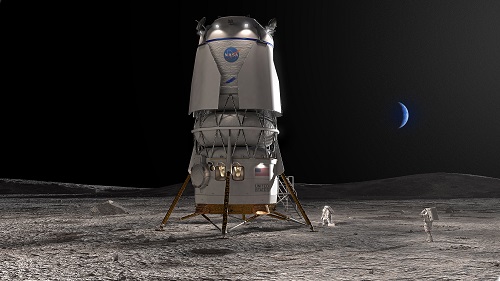
    A rendering of Blue Origin’s Blue Moon lander that will return astronauts to the Moon as part of NASA’s Artemis program. (Credit: Blue Origin)

    ARLINGTON, Va. On 19th May 2023, NASA announced that Blue Origin’s National Team won a contract award to provide services to land astronauts on the Moon for NASA’s Artemis program.

    “Boeing is honored to continue supporting NASA’s deep space mission objectives as a part of Blue Origin’s National Team for the NextSTEP2-BAA Appendix P contract. We believe our decades of experience maintaining a human spaceflight program, alongside our partners’ expertise, will ensure a vehicle that can provide transport to the Moon safely, quickly and sustainably.”

    For more information, see the National Team’s news release here.

    As a leading global aerospace company, Boeing develops, manufactures and services commercial airplanes, defense products and space systems for customers in more than 150 countries. As a top U.S. exporter, the company leverages the talents of a global supplier base to advance economic opportunity, sustainability and community impact. Boeing’s diverse team is committed to innovating for the future, leading with sustainability, and cultivating a culture based on the company’s core values of safety, quality and integrity.

  • Airbus selects UK National Satellite Test Facility for SKYNET 6A testing

    Airbus selects UK National Satellite Test Facility for SKYNET 6A testing

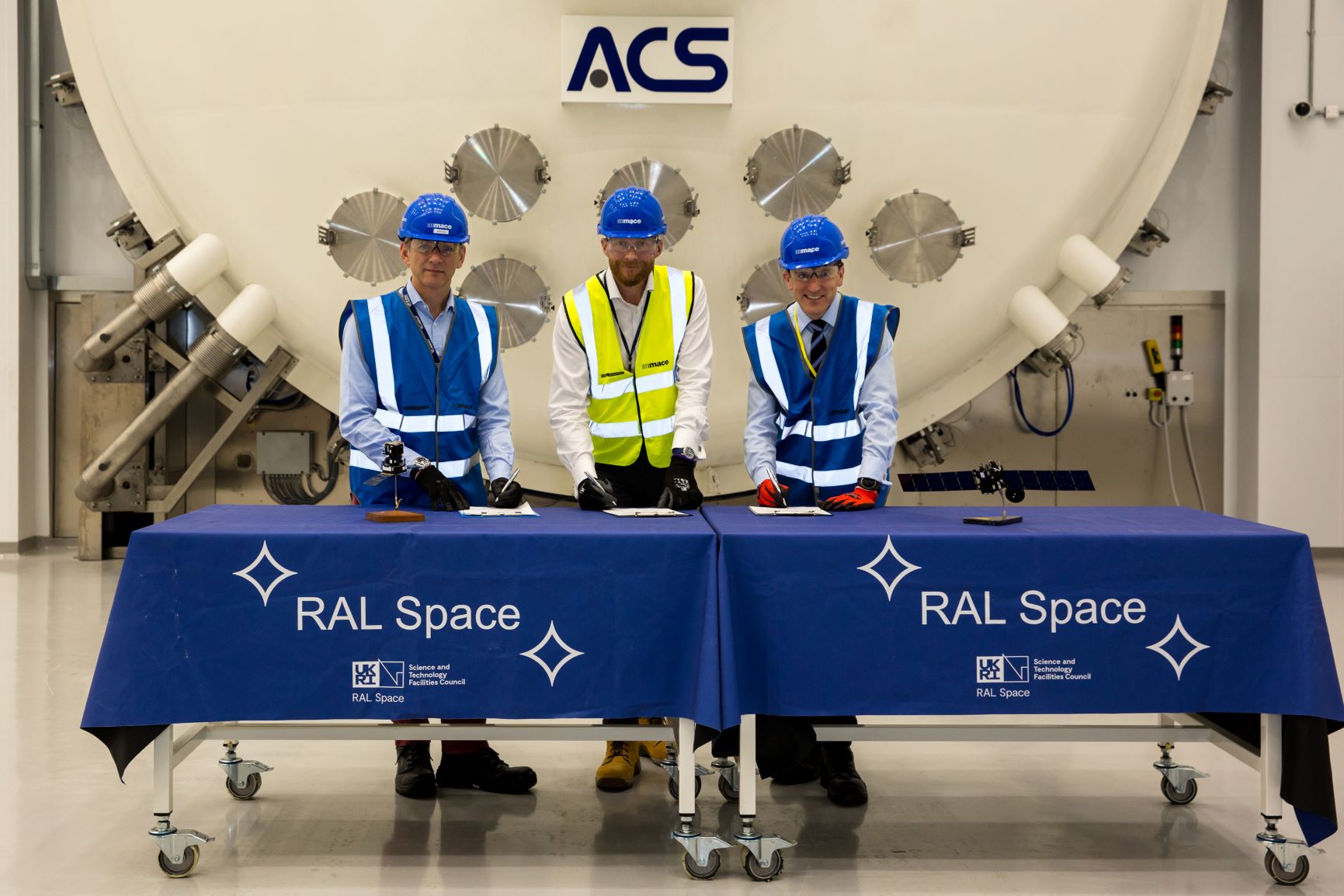
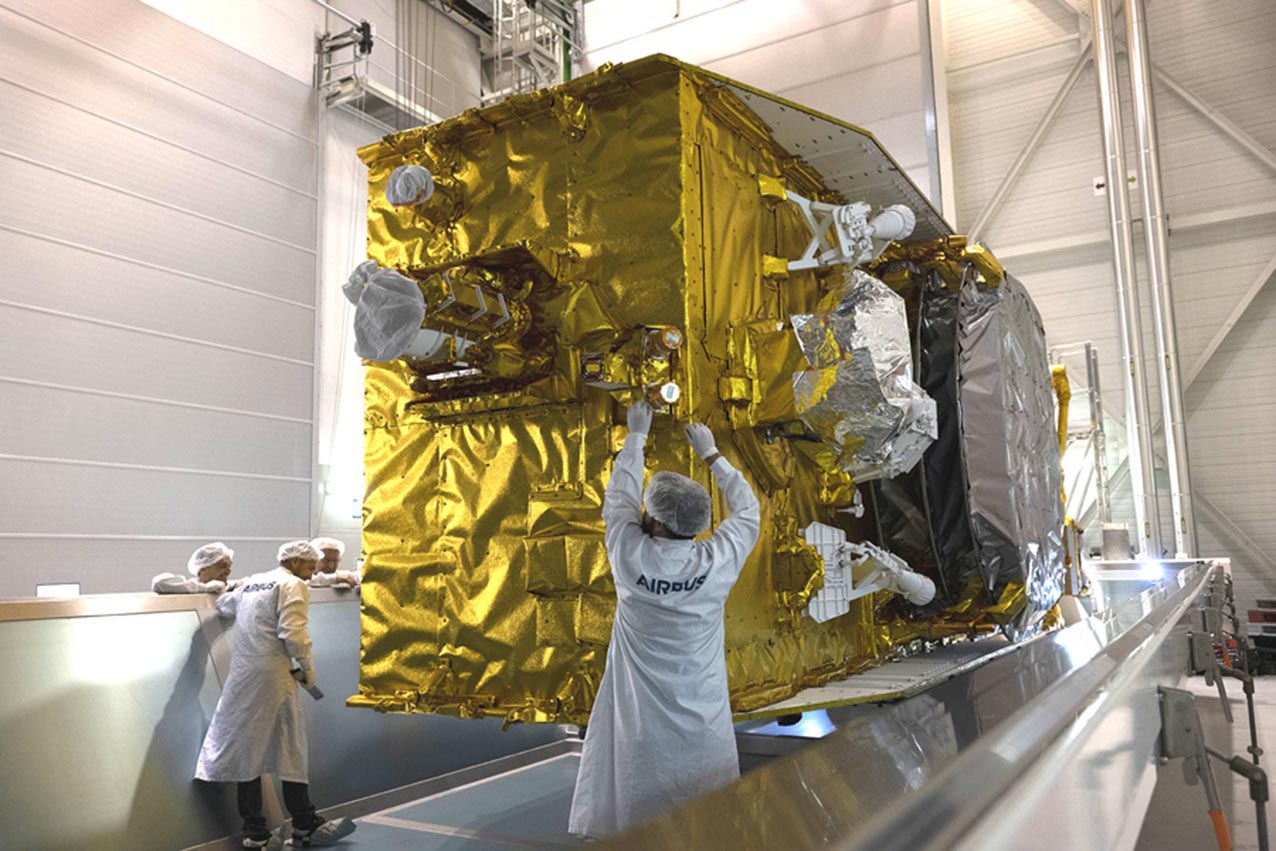
    Stevenage, 11th May 2023. Airbus has selected the National Satellite Test Facility (NSTF) at Harwell in Oxfordshire to carry out the comprehensive test campaign on the UK Ministry of Defence’s next generation secure communications satellite SKYNET 6A.

    The £116 million government-funded NSTF, operated by experts from the STFC RAL Space (Science and Technology Facilities Council), will carry out the SKYNET 6A test campaign, including electromagnetic compatibility, as well as acoustic and thermal vacuum testing, to replicate the harsh conditions of space.

    Richard Franklin, Managing Director of Airbus Defence and Space UK, said: “SKYNET 6A is designed and manufactured at our Stevenage and Portsmouth sites and will undergo its entire testing campaign at the new National Satellite Test Facility. It is fitting that the facility’s first testing contract is for Britain’s’ next generation SKYNET 6A, which will provide critical, secure-communications capability for our armed forces and will help further extend the UK’s space ecosystem and capability.”

    Ian Annett, Deputy CEO at the UK Space Agency, said: “The National Satellite Test Facility is a significant addition to the UK’s growing space infrastructure that will improve the support available for companies across the breadth of the UK space industry, which employ thousands of people across the country. The brand new facility, the first customer of which will be Airbus Defence and Space, will also help attract new businesses of all shapes and sizes to Harwell and the UK. This will catalyse investment and accelerate the development of new technologies for decades to come – from advanced satellite manufacturing to secure communications, navigation and Earth observation.”

    SKYNET 6A will be the first SKYNET milsatcom satellite to be entirely designed, built and tested in the UK. The programme involves a 500-strong team at Airbus and is being supported by more than 45 SMEs across the UK. This geostationary telecommunications satellite will provide secure communications services for the UK’s armed forces around the world following its launch in 2025.