Category: Space

  • PM praises ISRO conducting Reusable Launch Vehicle Autonomous Landing Mission

    New Delhi. The Prime Minister, Shri Narendra Modi has expressed happiness as ISRO conducts Reusable Launch Vehicle Autonomous Landing Mission.

    ISRO joined by DRDO and Indian Air Force successfully conducted the Reusable Launch Vehicle Autonomous Landing Mission (RLV LEX) at the Aeronautical Test Range (ATR), Chitradurga, Karnataka in the early hours on April 2, 2023.

    In reply to the tweet threads by ISRO, the Prime Minister tweeted;

    “A great team effort. This achievement takes us one step closer to realising an Indian Reusable Launch Vehicle.”


  • Crescent Space To Deliver Critical Services To A Growing Lunar Economy

    Crescent Space To Deliver Critical Services To A Growing Lunar Economy

    • Crescent’s Lunar Network Provides Customers with Game-Changing Communications and Navigation Capabilities

    DENVER. On March 28, 2023, Crescent Space Services LLC announced its entry into the lunar infrastructure sector. Crescent Space is a new commercial company launched by Lockheed Martin that provides infrastructure-as-a-service for lunar missions.

    Why Invest in Lunar Infrastructure?

    As humankind expands its presence beyond low-Earth orbit, one of the first key challenges is uninterrupted communications between Earth, the Moon, and the growing number of lunar missions. To do this seamlessly – especially on the far side of the Moon – customers need a network that helps them talk over vast distances, like what cell towers enable here on Earth.

    With its agile, services-based business model, Crescent directly responds to this need, offering an initial service called Parsec®: a cislunar communications and navigation network. Parsec uses a constellation of small lunar satellites that will collectively work to provide continuous connection between Earth and the people and assets in lunar orbit, as well as on the surface of the Moon. In addition to communications, Parsec will also provide critical position, timing and navigation services for lunar missions.

    Crescent will own and operate the Parsec network upon launch of its first nodes in 2025. Lockheed Martin will produce and deliver the Parsec spacecraft to Crescent, drawing upon its deep expertise developing exploration missions, communications satellites, software and GPS satellites.

    A Team of Trailblazers

    Crescent is led by CEO Joe Landon, who previously served as vice president of Advanced Programs Development for Lockheed Martin Space. In this role, Landon was responsible for Lockheed Martin’s space exploration strategy. As part of this, he led growth, strategy and research and development for the company’s Commercial Civil Space line of business. He was also instrumental in developing the concept for Crescent and launching the company. Before his time at Lockheed Martin, Landon was an early entrepreneur and investor in the commercial space sector.

    For Crescent, Landon has brought together a world-class team whose previous expertise supporting civil, commercial and military space missions makes them a perfect fit to lead the charge in providing services for the lunar economy.

    “Crescent is well positioned to serve the upcoming wave of lunar science and exploration missions, including NASA’s crewed Artemis moon landings,” said Landon. “With Lockheed Martin’s investment and access to its technical capabilities and deep space experience, Crescent is set up to ensure Parsec will be ready to provide reliable and affordable communications services for our customers.”

    Looking Ahead to the Future

    As a subsidiary of Lockheed Martin, Crescent aims to leverage reliable technical heritage from the company and combine that with the speed and agility of a commercial services platform to deliver an array of essential services for lunar operations.

    With momentum gaining around humanity’s return to the Moon, this is an immediate area of opportunity for Crescent. In the future, Crescent plans to offer additional services to further enable science, exploration and commerce at the Moon and in deep space.

    About Crescent

    Crescent is a commercial services company created by Lockheed Martin that provides infrastructure-as-a-service for lunar missions operated by both commercial and government customers. The company leverages Lockheed Martin’s deep technical heritage and reliability in space with the speed and agility of a commercial services platform to deliver critical services needed to operate on and around the moon. Visit www.crescentspace.com to learn more.

    SOURCE Lockheed Martin

  • Union Minister Dr Jitendra Singh informs that NASA and ISRO have jointly manufactured an earth science satellite, NISAR

    Union Minister Dr Jitendra Singh informs that NASA and ISRO have jointly manufactured an earth science satellite, NISAR

    23rd March, Mission objectives of the satellite are- Design, Develop and launch Dual Frequency (L and S band) Radar Imaging Satellite and to Explore newer applications areas using L & S Band microwave data especially in surface deformation studies, terrestrial biomass structure, natural resource mapping etc.: Dr Jitendra Singh

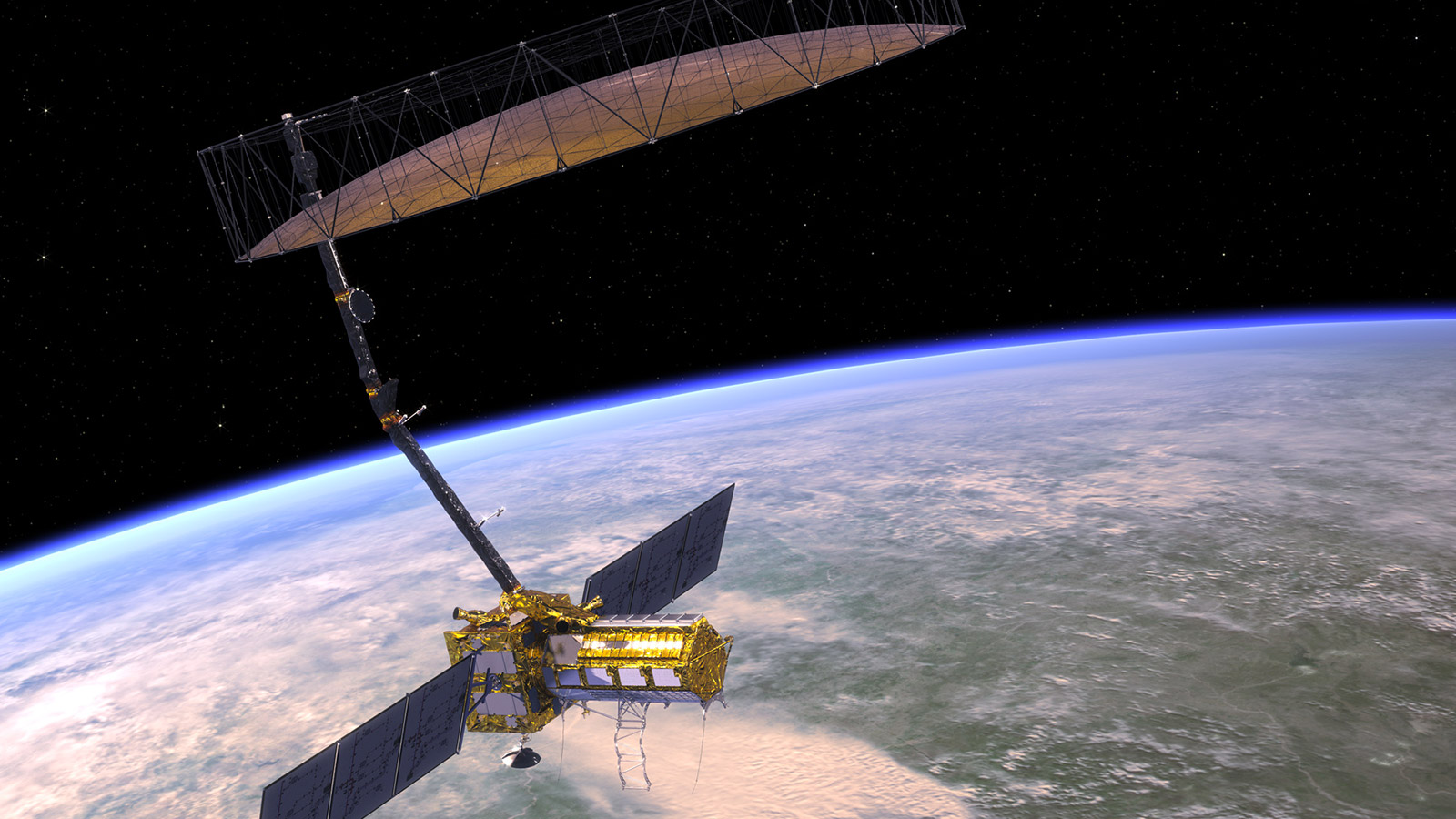
    Union Minister of State (Independent Charge) Science & Technology; Minister of State (Independent Charge) Earth Sciences; MoS PMO, Personnel, Public Grievances, Pensions, Atomic Energy and Space, Dr. Jitendra Singh today informed the Rajya Sabha that National Aeronautics and Space Administration (NASA) and the Indian Space Research Organization (ISRO) have jointly manufactured an earth science satellite named, NISAR (NASA-ISRO Synthetic Aperture Radar).

    Source: NASA

    In a written reply to a question in the Rajya Sabha, Dr Jitendra Singh said, the mission objectives of the satellite are- Design, Develop and launch Dual Frequency (L and S band) Radar Imaging Satellite and to Explore newer applications areas using L & S Band microwave data especially in surface deformation studies, terrestrial biomass structure, natural resource mapping and monitoring and studies related to dynamics of ice-sheets, glaciers, forests, oil slick etc.

    The Minister said, the satellite is configured with I-3K bus and the instrument identified for SAR is based on the innovative Sweep SAR technique configured in both L and S band in polarimetric configuration for wide swath and high resolution.

    The spacecraft will orbit the Earth in a sun synchronous orbit of 747 Km with an inclination of 98.4 degree for a 12-day repeat cycle.

    Dr Jitendra Singh said, while NASA is delivering the L-Band SAR payload, high precision GPS and 12m unfurlable antenna, ISRO is delivering S-band SAR payload, spacecraft bus and facilitating launch. The total expenditure incurred on realization of NISAR satellite by ISRO as on February, 2023 is Rs. 469.40 Crore, excluding launch cost.

  • Boeing Delivers Powerful Satellite Platform to Viasat

    Boeing Delivers Powerful Satellite Platform to Viasat

    • ViaSat-3 Americas is the first of three satellites to provide high-quality, affordable connectivity to global users
    • Boeing integrated Viasat’s ultra-high-capacity payload to its custom-designed 702MP+ platform, harnessing the most power ever on a communications satellite

    EL SEGUNDO, Calif., 20th March, 2023. Boeing delivered the most powerful satellite platform the company has built to date, the 702MP+, a custom-designed spacecraft for network provider Viasat.

    “Working with Boeing, we’re very excited to complete the ViaSat-3 Americas and bring us one step closer to providing higher speeds, more bandwidth, and greater value to our customers on a global scale whether they be on land, on the sea, or in the air,” said Dave Ryan, president Space & Commercial Networks, Viasat. “The innovation of this satellite allows us new levels of flexibility to dynamically allocate capacity to the most attractive and engaged geographic markets.”

    Upon embarking from the Boeing factory in California, ViaSat-3 Americas was flown to the Florida Space Coast where Boeing and Viasat teams will support launch and mission operations as the spacecraft prepares to travel to geostationary orbit, approximately 22,000 miles from Earth. Once in orbit, ViaSat-3 Americas will be the first of three 702MP+ satellites to make up the ultra-high-capacity ViaSat-3 satellite constellation, designed to provide high-quality, affordable global connectivity and coverage.

    “We designed, built and delivered the most powerful satellite platform we have ever provided to a customer. The result really is an engineering marvel,” said Michelle Parker, vice president of Space Mission Systems at Boeing Defense, Space & Security. “We expanded the boundaries of our design and the platform components to exceed Viasat’s demanding mission requirements, while ensuring alignment with Boeing’s proven qualification and reliability standards.”

    Based on the flight-proven 702 vehicle design hosting the U.S. Department of Defense’s Wideband Global Satellite (WGS) constellation, and more than 40 other high-performing satellites, including ViaSat-2, Boeing’s 702MP+ features all-electric propulsion for the first time aboard a 702MP, providing more sustained thrust and efficiency.

    Boeing improved the platform’s structure to support Viasat’s large payload. The platform also accommodates the largest commercial satellite solar arrays Boeing-subsidiary Spectrolab has ever produced, along with batteries and supporting electronics, which generate well over 30 kW of solar power.

    The satellite has some of the largest reflectors ever sent to space and will be significantly larger than most geostationary satellites, requiring highly-refined, highly reliable hardware and software to maintain optimal satellite control. In addition to designing and manufacturing the platform, Boeing worked with Viasat to integrate the payload.

  • UK Space Agency backs Rolls-Royce nuclear power for Moon exploration

    UK Space Agency backs Rolls-Royce nuclear power for Moon exploration

    UK. Rolls-Royce announces on 17th March, it has secured funding from UK Space Agency, as it backs research by Rolls-Royce into how nuclear power could be used to support a future Moon base for astronauts.

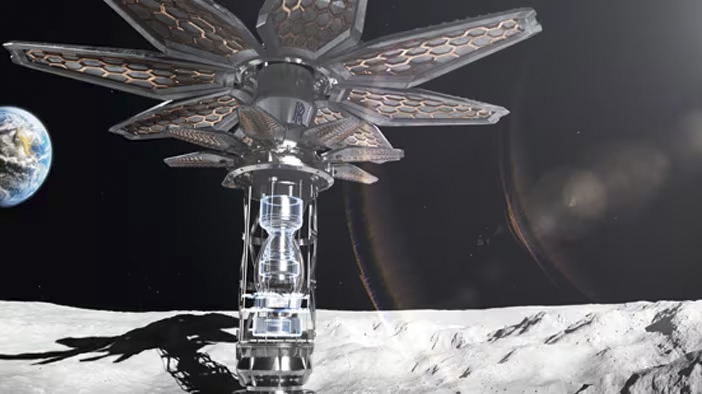
    Scientists and engineers at Rolls-Royce are working on the Micro-Reactor programme to develop technology that will provide power needed for humans to live and work on the Moon. All space missions depend on a power source, to support systems for communications, life-support and science experiments. Nuclear power has the potential to dramatically increase the duration of future Lunar missions and their scientific value.

    The UK Space Agency has announced £2.9 million of new funding for the project which will deliver an initial demonstration of a UK lunar modular nuclear reactor. This follows a £249,000 study funded by the UK Space Agency in 2022.

    Minister of State at the Department of Science, Innovation and Technology, George Freeman, said: “Space exploration is the ultimate laboratory for so many of the transformational technologies we need on Earth: from materials to robotics, nutrition, cleantech and much more.

    “As we prepare to see humans return to the Moon for the first time in more than 50 years, we are backing exciting research like this lunar modular reactor with Rolls-Royce to pioneer new power sources for a lunar base.

    “Partnerships like this, between British industry, the UK Space Agency and government are helping to create jobs across our £16 billion Space Tech sector and help ensure the UK continues to be a major force in frontier science.”

    Nuclear space power is anticipated to create new skilled jobs across the UK to support the burgeoning UK space economy. Rolls-Royce plan to have a reactor ready to send to the Moon by 2029.

    Relatively small and lightweight compared to other power systems, a nuclear micro-reactor could enable continuous power regardless of location, available sunlight, and other environmental conditions.

    Rolls-Royce will be working alongside a variety of collaborators including the University of Oxford, University of Bangor, University of Brighton, University of Sheffield’s Advanced Manufacturing Research Centre (AMRC) and Nuclear AMRC. The funding means Rolls-Royce can further strengthen its knowledge of these complex systems, with a focus on three key features of the Micro-Reactor; the fuel used to generate heat, the method of heat transfer and technology to convert that heat into electricity.

    The potential applications of Rolls-Royce Micro-Reactor technology are wide-ranging and could support commercial and defence use cases in addition to those in space. The aim is to create a world-leading power and propulsion capability for multiple markets and operator needs, alongside a clean, green and long-term power source.

    Abi Clayton, Director of Future Programmes for Rolls-Royce said: “The new tranche of funding from the UK Space Agency means so much for the Rolls-Royce Micro-Reactor Programme. We’re proud to work collaboratively with the UK Space Agency and the many UK academic institutions to showcase the best of UK innovation and knowledge in space.

    “This funding will bring us further down the road in making the Micro-Reactor a reality, with the technology bringing immense benefits for both space and Earth. The technology will deliver the capability to support commercial and defence use cases alongside providing a solution to decarbonise industry and provide clean, safe and reliable energy.”

    Dr Paul Bate, Chief Executive of the UK Space Agency, said: “We are backing technology and capabilities to support ambitious space exploration missions and boost sector growth across the UK. Developing space nuclear power offers a unique chance to support innovative technologies and grow our nuclear, science and space engineering skills base.

    “This innovative research by Rolls-Royce could lay the groundwork for powering continuous human presence on the Moon, while enhancing the wider UK space sector, creating jobs and generating further investment.”

    The partnership with Rolls-Royce comes after the UK Space Agency recently announced £51 million of funding available for UK companies to develop communication and navigation services for missions to the Moon, as part of the European Space Agency’s Moonlight programme, which aims to launch a constellation of satellites into orbit around the Moon.

    This will allow future astronauts, rovers, science experiments and other equipment to communicate, share large amounts of data including high-definition video, and navigate safely across the lunar surface.