Author: abhilash thakur

  • German Union Slams Expansion of Gulf Carrier Traffic Rights

    German Union Slams Expansion of Gulf Carrier Traffic Rights

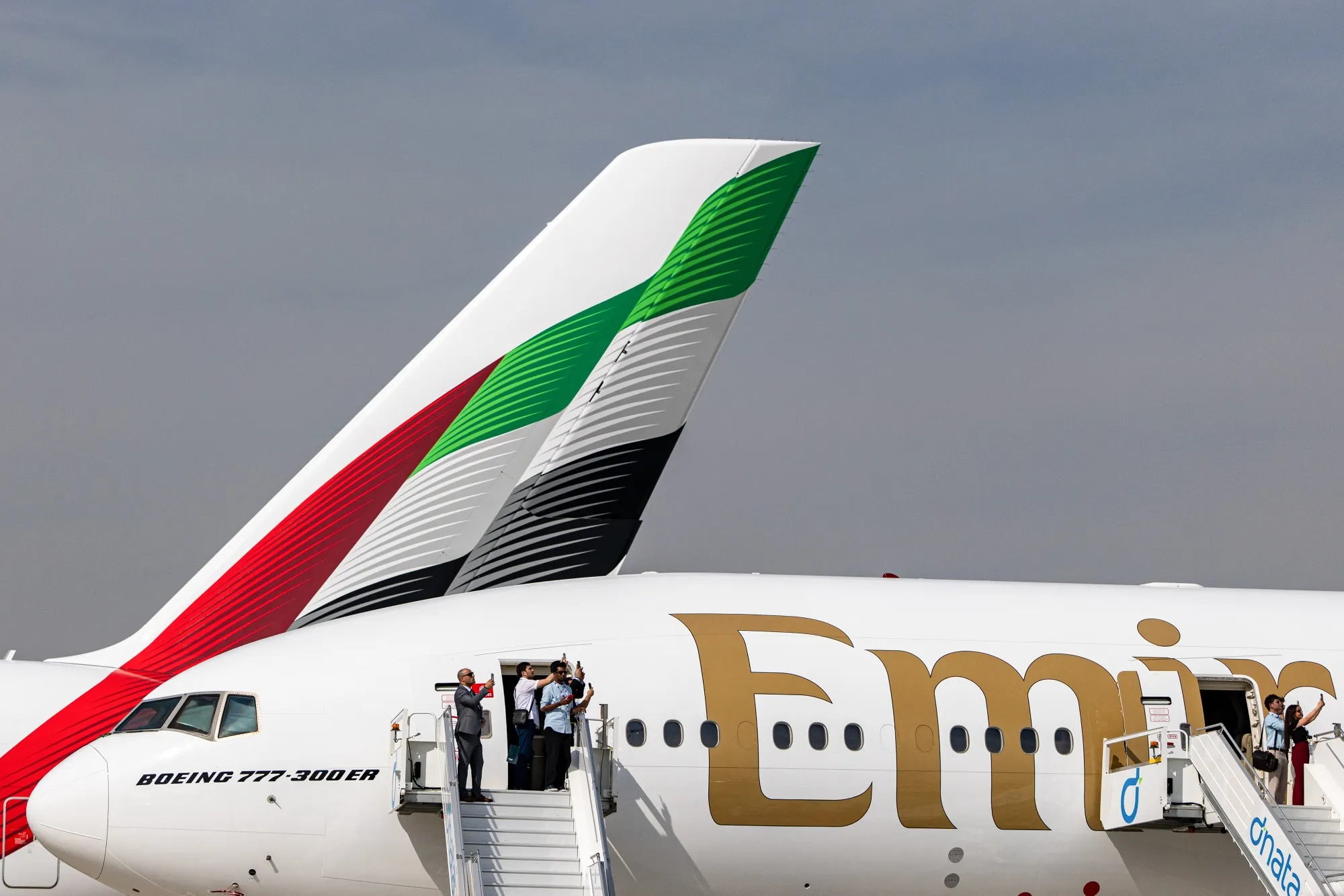
    The expansion of traffic rights for Gulf carriers—particularly Emirates—has triggered sharp criticism from Germany’s cabin crew union, Unabhängige Flugbegleiter Organisation (UFO). The union has condemned the German government’s reported openness to granting additional landing rights to Emirates, arguing that the move deepens what it calls an uneven competitive landscape in European aviation.

    The criticism comes shortly after Qatar Airways secured expanded access to the European Union market—an agreement that had already raised concerns among labor groups about fair competition and regulatory parity.

    Labor Standards and Regulatory Imbalance

    At the heart of UFO’s objections is the claim that Gulf carriers benefit from structural advantages unavailable to European airlines. According to the union, European carriers must comply with stringent EU rules on:

    Climate protection and emissions

    Labor rployment protectio

    Safety and operational oversightights and em

    nsMeanwhile, Gulf airlines are often perceived by critics as benefiting from state backing and operating under different regulatory frameworks, allowing for lower operating costs. UFO argues that this disparity creates a system in which European airlines are forced to compete at a structural disadvantage.

    Joachim Vázquez Bürger, Chairman of the Board of UFO, stated:

    “Equal conditions for all airlines are a necessary prerequisite for fair competition. Airlines that receive massive subsidies from their respective governments, are not bound to the same extent by the European Union’s strict climate protection regulations, and benefit from differing safety and social standards are massively distorting competition in Europe.”

    Berlin Airport in Focus

    The controversy intensified after reports that the German government, following discussions during Chancellor Friedrich Merz’s Gulf tour, is considering allowing Emirates expanded takeoff and landing rights at Berlin Brandenburg Airport. Although a final decision has yet to be announced, labor representatives argue that such an expansion would further shift market share toward Gulf carriers.

    The umbrella organization representing EU cabin crew unions, EurECCA, has echoed similar concerns, calling for greater transparency and political scrutiny of aviation agreements with non-EU states.

    Jobs and Market Impact

    UFO warns that continued liberalization without regulatory harmonization could result in:

    • Loss of European aviation jobs
    • Downward pressure on wages and working conditions
    • Erosion of established labor protections
    • Reduced competitiveness of EU-based airlines

    For cabin crew members in particular, the stakes are high. Increased market access for foreign carriers on lucrative long-haul routes could reduce capacity and hiring opportunities for European operators.

    A Broader Debate on Aviation Policy

    The dispute highlights a broader debate within Europe: how to balance open skies policies with the protection of domestic labor standards and environmental regulations.

    Supporters of expanded traffic rights argue that increased competition benefits consumers through lower fares and improved connectivity. Critics, however, insist that competition must be fair and reciprocal.

    As discussions continue, the outcome could shape not only Germany’s aviation landscape but also the EU’s broader approach to air service agreements with Gulf states. The call from labor groups is clear: if markets are to remain open, the rules governing them must be equally applied.

  • Israel’s F-16i Sufa is a Massively Modified F-16

    Israel’s F-16i Sufa is a Massively Modified F-16

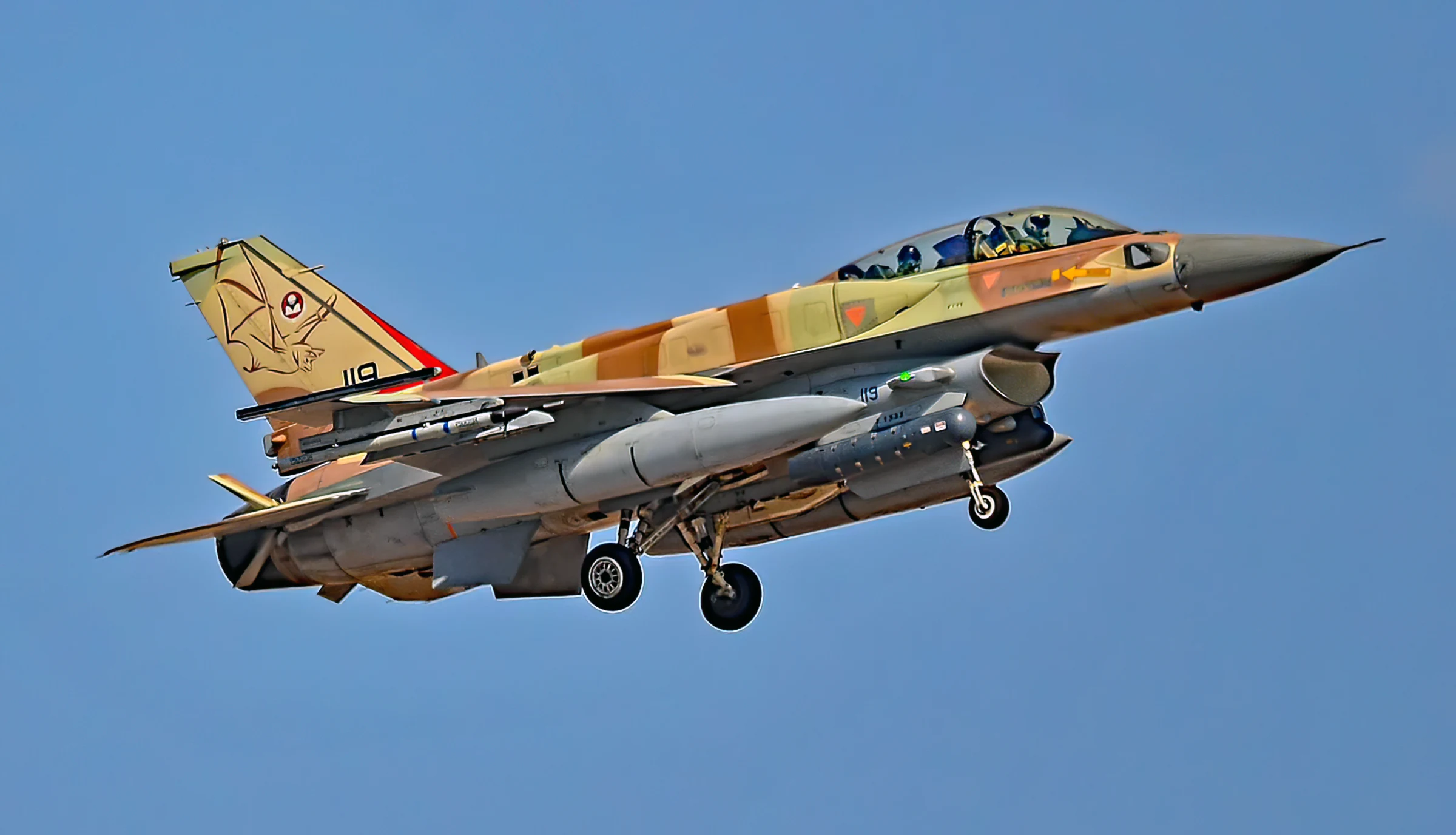
    At first glance, Israel’s F-16I Sufa (“Storm” in Hebrew) may look like just another version of the famous F-16 Fighting Falcon. But in reality, it is one of the most heavily modified and mission-customized F-16 variants ever built.

    Developed specifically for the Israeli Air Force (IAF), the F-16I is based on the F-16D Block 52 platform—but enhanced extensively with Israeli technology, avionics, and strike capabilities tailored for long-range, high-threat missions.

    What Makes the F-16I Sufa So Different?

    Conformal Fuel Tanks (CFTs) for Extended Range

    One of the most noticeable upgrades is the addition of conformal fuel tanks mounted along the upper fuselage. These tanks:

    • Significantly extend operational range
    • Reduce the need for external drop tanks
    • Preserve aerodynamic performance

    This is especially critical for Israel, which prioritizes long-range strike capability.

    Advanced Israeli Avionics Suite

    While the aircraft uses the AN/APG-68 radar from the Block 52 platform, much of the electronic warfare and mission systems are uniquely Israeli, including:

    • Indigenous electronic warfare systems
    • Advanced data links
    • Custom mission computers
    • Helmet-mounted targeting systems

    These systems allow integration with Israeli-developed weapons and battlefield networks.

    Two-Seat Strike Configuration

    Unlike single-seat variants, the F-16I is a two-seat aircraft, enabling:

    • Dedicated weapons systems officer (WSO)
    • Improved workload management on complex strike missions
    • Enhanced deep-penetration operational capability

    The second crew member is especially valuable in long-range or high-threat airspace operations.

    Precision Strike Capability

    The Sufa is optimized for precision air-to-ground missions. It can carry:

    • Precision-guided munitions
    • Stand-off weapons
    • Advanced air-to-air missiles
    • Indigenous Israeli weapon systems

    This makes it a flexible multirole platform capable of both defensive and offensive missions.

    Why Israel Needed Such Modifications

    Israel’s unique strategic environment demands:

    • Rapid response capability
    • Long-range strike reach
    • Survivability in heavily defended airspace
    • Deep precision engagement options

    The F-16I was tailored specifically to meet these operational realities, effectively transforming a standard multirole fighter into a strategic deep-strike platform.

    Operational Role Today

    Even with the induction of the F-35I Adir, the F-16I remains a backbone of Israeli strike capability. It complements stealth aircraft by providing:

    • Heavy payload capacity
    • Lon systemsng endurance
    • Mature, combat-prove

    Final Thoughts

    The F-16I Sufa is far more than a standard F-16. It represents a deeply customized, mission-specific evolution of the Fighting Falcon—integrating Israeli technology, extended range, and enhanced strike capabilities into one of the most advanced non-stealth F-16 variants in the world.

  • Indian Army Successfully validate “Advance 28-ft Heavy Drop System – 20T (Type V)” Configuration

    India, 26th February, 2026 – Airbornics Defence & Space Pvt. Ltd. (ADSL), Defence Division of JCBL Group, successfully tested its indigenously developed 28 ft Heavy Air Drop System at the Mahajan Field Firing Ranges on 17 February 2026. The Army Airborne Training School (AATS) carried out the testing, a meaningful step forward under the ‘Make in India’ initiative and a reflection of India’s continued push toward self-sufficiency in defence manufacturing.

    The 20T Heavy Air Drop System was designed and manufactured by JCBL (ADSL) with Aerial Delivery Research and Development Establishment (ADRDE), a DRDO laboratory. Building on earlier controlled trials conducted using standard 12-24ft platforms and dummy loads, the latest testing marks a significant technological progression with the introduction of an advanced 28-ft platform & parachute configuration. Notably, this trial marked the first use in India of a 28-ft platform with a pack of two 28-ft extractor configuration and a 4-point link system for strategic payload deployment, representing a shift from earlier standard configurations to a more advanced heavy drop operational system.

    Built to enable the aerial deployment of cargo and combat platforms, including BMP and other mechanized vehicles, the system is compatible with C-17 and C-130 aircraft, the backbone of India’s heavy-lift air logistics capability. It facilitates the controlled extraction and safe landing of heavy equipment across diverse terrain, from high-altitude zones to remote, otherwise inaccessible areas. Unlike earlier trials using dummy loads, this test involved deployment of an actual ~15-ton BMP – Armoured Personnel Carrier (APC) under near-realistic conditions, enabled by a twin 28-ft extractor configuration designed for heavier strategic loads. This capability enables the rapid deployment of heavy combat platforms into operationally critical zones where ground mobility is limited.

    This also demonstrated enhanced cross-platform deployment capability – enabling the aerial delivery of combat platforms across different aircraft classes. The ability to air-drop mechanised combat platforms gives the Armed Forces a genuine edge in readiness and ensures heavy equipment can reach forward areas quickly.

    Reflecting on the milestone, Rishi Aggarwal, Managing Director, JCBL Group, said, “The successful validation of this system is a proud milestone under the ‘Make in India’ initiative and a true reflection of India’s growing self-reliance in defence manufacturing. Contributing to the strength of the Armed Forces through a completely indigenous system is a matter of immense pride for the Group, and we are grateful for DRDO (ADRDE)’s continued trust and support.”

    Raj Kumar Pandey, Director & CEO, JCBL (ADSL), further emphasized that “every element of the system, from the platform to the extractor, main parachute systems, and all associated subsystems, has been designed, engineered, and manufactured entirely in India. “

    With the Heavy Drop System now officially deployed with the Indian Army for the first time, this achievement cements JCBL (ADSL)’s position as the only Indian company to have indigenized this technology in partnership with DRDO, and advanced it into a strategic payload-ready platform configuration through progressive system enhancements.

    The group remains committed to strengthening India’s defence preparedness, driving homegrown innovation, and serving the Armed Forces with the best manufacturing excellence.

  • Su-27 vs F-16 – Breaking Down the Battle in the Sky

    Su-27 vs F-16 – Breaking Down the Battle in the Sky

    Su-27 vs F-16: In the vast theater of aerial supremacy, two iconic fighter jets Sukhoi Su-27 & Martin F-16 have soared to prominence, each representing the pinnacle of their respective nations’ aeronautical prowess. The Sukhoi Su-27 “Flanker” and the Lockheed Martin F-16 Fighting Falcon stand as testaments to the engineering brilliance and strategic vision of Russia and the United States, respectively. As we embark on this journey into the realms of speed, agility, and firepower, let’s unravel the captivating narrative behind these aerial titans.

    The Russian Marvel: Sukhoi Su-27 “Flanker”

    Heralded as a symbol of Russian aeronautical excellence, the Su-27 emerged from the design halls of Sukhoi in the mid-1980s, answering the call for a versatile and formidable multirole fighter. With its distinctive twin-engine configuration, the Su-27 boasts a striking profile that mirrors its exceptional capabilities in the air. Its lineage can be traced to a pursuit of air superiority, and it has since evolved into a platform adept at air-to-ground missions and interception.

    From the cold expanses of the Soviet Union to the modern theaters of global conflict, the Su-27 has proven its mettle in the hands of skilled pilots, renowned for its remarkable agility, powerful radar systems, and a combat range that extends across vast distances. With a price tag that reflects its advanced capabilities, the Su-27 stands as a symbol of Russia’s commitment to maintaining aerial dominance.

    The American Icon: Lockheed Martin F-16 Fighting Falcon

    On the other side of the geopolitical spectrum, the Lockheed Martin F-16 Fighting Falcon, often dubbed the “Viper,” represents the epitome of American ingenuity in aerial warfare. Born in the late 1970s, the F-16 quickly became the backbone of the United States Air Force and found itself in the arsenals of numerous allied nations. Its single-engine design, combined with a sleek and agile frame, has made it a stalwart presence in the skies.

    As a true multirole fighter, the F-16’s versatility is reflected in its capability to excel in air-to-air combat, ground attack missions, and electronic warfare. The F-16’s legacy is etched in its adaptability, allowing it to evolve with technological advancements and remain a formidable force in the ever-changing landscape of aerial combat.

    Su-27 and F-16: A Comparative Odyssey

    In the forthcoming exploration, we will dissect the intricacies of these aerial behemoths—comparing their specifications, dissecting their design philosophies, and delving into their operational histories. From the thrust of their engines to the range of their missiles, the Su-27 and F-16 will go head-to-head in a virtual dogfight of attributes.

    As we ascend into the clouds of this comparative odyssey, fasten your seatbelts for an exhilarating journey through the skies, where the Su-27 and F-16 engage in a high-stakes duel for supremacy. The stage is set, the jets are fueled, and the only limit is the boundless expanse of the atmosphere. Welcome to the enthralling world of the Sukhoi Su-27 and Lockheed Martin F-16—a tale of two air giants.

    Su-27 vs F-16 Data Table

    Here’s a table comparing the Sukhoi Su-27 “Flanker” and the Lockheed Martin F-16 Fighting Falcon:

    Aspect Sukhoi Su-27 “Flanker” Lockheed Martin F-16 Fighting Falcon
    Country Russia United States
    Manufactured 1985 to Present 1978 to Present
    ICAO SU27
    Price $37 million $18 million
    Avionics Sukhoi Search and Track Radar / Fire Control, OEPS-27 IRST, OEPS-27 electro-optical targeting system Lockheed Martin Tactical Aircraft Systems
    Engine 2x Saturn/Lyulka AL-31F turbofans 1x Pratt & Whitney F100-PW-220
    Engine Type Turbofan
    Power 27,600 pound-force 29,160 pound-force
    Max Cruise Speed 1,546 knots (2,863 Km/h) 1,147 knots (2,124 Km/h)
    Approach Speed (Vref) 129 knots
    Travel Range 1,906 Nautical Miles (3,530 Kilometers) 2,280 Nautical Miles (4,223 Kilometers)
    Fuel Economy 0.62 nautical mile/gallon (0.303 kilometers/litre)
    Service Ceiling 62,000 feet 50,000 feet
    Rate of Climb 54,000 feet/minute (274.32 meters/second) 50,000 feet/minute (254.00 meters/second)
    Take Off Distance 450 meters (1,476.36 feet) 345 meters (1,131.88 feet)
    Landing Distance 620 meters (2,034.10 feet) 457 meters (1,499.33 feet)
    Max Take Off Weight 30,450 Kg (67,130 lbs) 19,187 Kg (42,300 lbs)
    Max Landing Weight 21,000 Kg (46,297 lbs)
    Max Payload 4,500 Kg (9,921 lbs) 7,167 Kg (15,800 lbs)
    Fuel Tank Capacity 3,080 gallons (11,659 litres) 845 gallons (3,199 litres)
    Wing Span/Rotor Diameter 14.7 meters (48.23 feet) 9.96 meters (32.68 feet)

    This table provides a side-by-side comparison of various specifications for the Sukhoi Su-27 and the Lockheed Martin F-16. Keep in mind that specific variants and upgrades may have different performance characteristics.

    Conclusion

    Both the Su-27 and F-16 are formidable fighters, and their effectiveness depends on factors such as mission requirements, pilot skill, and the specific variants involved. The Su-27’s larger size, twin-engine configuration, and exceptional agility give it certain advantages, while the F-16’s compact design, versatility, and widespread use contribute to its success on the global stage.

  • F-35 vs F-15 – Which Reigns Supreme?

    F-35 vs F-15 – Which Reigns Supreme?

    F-35 vs F-15: In the ever-evolving landscape of aerial warfare, two stalwarts stand out as icons of their respective generations — the F-35 Lightning II and the F-15 Eagle. As we delve into the intricacies of these formidable fighter jets, it becomes a journey through time and technology, exploring the evolution of air power and the relentless pursuit of sky dominance.

    The F-35 Lightning II, a fifth-generation marvel, emerges as a symbol of versatility and stealth. Designed for multi-role excellence, it embodies cutting-edge technology with a sleek exterior that defies detection. On the other side of the spectrum, the F-15 Eagle, a veteran of the skies, boasts a legacy rooted in air superiority. Its fourth-generation prowess lies in unmatched maneuverability and speed, forging a path through the annals of aerial combat history.

    In this blog, we embark on a comparative journey, pitting these aerial titans against each other — a clash of generations, capabilities, and strategic visions. From the silent grace of the F-35’s stealthy advances to the thunderous roar of the F-15’s raw power, each aircraft has etched its own narrative in the blue canvas of the sky.

    F-35 Vs F-15 Eagle Detailed Comparison

    Design and Role:

    F-35:

    • Role: Multirole fighter designed for ground-attack, air superiority, electronic warfare, and reconnaissance.
    • Design Philosophy: Versatility and adaptability for various mission profiles.

    F-15:

    • Role: Originally designed as an air superiority fighter, later variants (e.g., F-15E Strike Eagle) adapted for ground-attack roles.
    • Design Philosophy: Emphasis on air superiority, high speed, and maneuverability.

    Stealth and Survivability:

    F-35:

    • Stealth Features: Incorporates stealth technology for reduced radar cross-section.
    • Survivability: Designed to operate in contested environments with reduced susceptibility to enemy radar.

    F-15:

    • Stealth Features: Lacks inherent stealth capabilities.
    • Survivability: Relies on speed, altitude, and advanced electronic countermeasures for self-defense.

    Variants and Configurations:

    F-35:

    • Variants: F-35A (Conventional Takeoff and Landing – CTOL), F-35B (Short Takeoff and Vertical Landing – STOVL), F-35C (Carrier-Based Catapult Launch – CBCL).
    • International Cooperation: Joint program with multiple partner countries.

    F-15:

    • Variants: Original F-15A/B/C/D models, F-15E Strike Eagle (multirole), and other specialized variants.
    • Upgrades: Continuous upgrades to enhance capabilities and extend operational life.

    Maneuverability and Performance:

    F-35:

    • Maneuverability: Good, but not as agile as some dedicated air-to-air fighters.
    • Performance: Balanced for various mission requirements.

    F-15:

    • Maneuverability: Exceptional agility and high thrust-to-weight ratio, excelling in dogfights.
    • Performance: High-speed and high-altitude capabilities.

    Cost:

    F-35:

    • Cost: US$108.8 million, Generally more expensive, with variations among the three main variants.
    • Operating Costs: Considered relatively high.

    F-15:

    • Cost: $93.95 million, Generally less expensive than the F-35.
    • Operating Costs: Can vary but often considered lower than more advanced platforms.

    Global Adoption:

    F-35:

    • International Participation: Joint program with various partner nations.
    • Global Usage: Widely adopted globally across different continents.

    F-15:

    • Global Usage: Historically used by numerous air forces, with some countries still operating and upgrading them.

    Deployment and Future Prospects:

    F-35:

    • Deployment: Actively deployed by various air forces globally.
    • Future Prospects: Continual updates and improvements, with ongoing procurement and deployment.

    F-15:

    • Deployment: Many countries continue to use F-15s, and upgraded versions remain relevant.
    • Future Prospects: Upgrades to existing fleets, but new production is limited.

    F-35 vs F-15 Data Table

    Feature Lockheed Martin F-35 Lightning II McDonnell Douglas F-15 Eagle
    Country United States United States
    Manufactured 2011 to Present 1972 to Present
    ICAO F35 F15
    Price $115.5 million $29.9 million
    Avionics JSF Cooperative Avionics F15 HUD, APG-63 and 70 pulse-Doppler radar
    Engine 1x Pratt & Whitney F135-PW-100 2x Pratt & Whitney F100-PW-220
    Engine Type Turbofan Turbofan
    Power 43,000 pound-force 23,770 pound-force
    Max Cruise Speed 1043 knots (1,932 Km/h) 1630 knots (3,019 Km/h)
    Approach Speed (Vref) 250 knots 250 knots
    Travel Range 1,500 Nautical Miles (2,778 Km) 3,000 Nautical Miles (5,556 Km)
    Fuel Economy 0.94 nautical mile/gallon (0.460 km/l)
    Service Ceiling 65,000 feet 65,000 feet
    Rate of Climb 40,000 feet/minute (203.20 m/s) 50,000 feet/minute (254.00 m/s)
    Take Off Distance 168 meters (551.17 feet) 275 meters (902.22 feet)
    Landing Distance 213 meters (698.81 feet) 1,100 meters (3,608.88 feet)
    Max Take Off Weight 31,751 Kg (69,998 lbs) 30,844 Kg (67,999 lbs)
    Max Landing Weight 20,185 Kg (44,500 lbs)
    Max Payload 8,160 Kg (17,990 lbs) 10,659 Kg (23,499 lbs)
    Fuel Tank Capacity 2,760 gallons (10,448 liters) 4,345 gallons (16,448 liters)
    Seats – Economy 1 seat 1 seat
    Exterior Length 15.7 meters (51.51 feet) 19.43 meters (63.75 feet)
    Tail Height 4.48 meters (14.70 feet) 5.64 meters (18.50 feet)
    Wing Span / Rotor Diameter 10.7 meters (35.10 feet) 13.06 meters (42.85 feet)

    Conclusion

    In conclusion, the comparison between the F-35 Lightning II and the F-15 Eagle underscores the evolution of aerial combat technology over the years. The F-35, with its multirole capabilities, stealth technology, and international collaboration, represents a paradigm shift in modern air warfare. Its adaptability to various mission profiles, from air-to-air combat to ground-attack operations, positions it as a versatile asset on the global stage.

    On the other hand, the F-15 Eagle, a venerable air superiority fighter, has stood the test of time with its exceptional speed, agility, and proven combat record. While lacking the inherent stealth features of the F-35, the F-15’s unmatched maneuverability and continuous upgrades make it a formidable force in air-to-air engagements.

    Ultimately, the choice between the F-35 and F-15 depends on the strategic priorities of a nation’s air force. The F-35 represents a leap into the future, offering a comprehensive solution for modern warfare scenarios, while the F-15, with its rich legacy, continues to excel in specific roles. Together, they showcase the diverse approaches to aerial dominance, combining cutting-edge technology with the proven prowess of a classic fighter.

  • Sukhoi SU-27 vs F-22 Raptor – A Comparative Analysis

    Sukhoi SU-27 vs F-22 Raptor – A Comparative Analysis

    Sukhoi SU-27 vs F-22 Raptor: The F-22 Raptor, an American marvel of engineering, and the SU-27 Flanker, a Russian powerhouse, represent the epitome of aerial technology for their respective nations. Their comparisons are not only about technological advancements but also serve as a symbol of the Cold War rivalry that lingers in the background.

    In this blog, we will delve into the fascinating world of aerial warfare, as we explore the design, capabilities, and the sheer prowess of these two iconic fighter jets. Whether you’re an aviation enthusiast or a military buff, this showdown between the F-22 Raptor and the SU-27 Flanker is sure to captivate your imagination and ignite your passion for these aerial marvels. Let’s embark on a journey to understand the strengths and weaknesses of these aircraft, and perhaps gain some insight into the age-old debate of which one truly rules the skies.

    Sukhoi SU-27 vs F-22 Raptor

    Design and Development:

    SU-27 Flanker: The Sukhoi SU-27 Flanker is a product of Soviet-era engineering and was developed in the 1970s as a response to the evolving needs of the Soviet Air Force. Its design emphasizes aerodynamic agility and the ability to operate in diverse environments. The SU-27 features a twin-engine layout, a large wing area, and an overall rugged design.

    F-22 Raptor: The F-22 Raptor, on the other hand, is a more recent addition to the U.S. Air Force’s arsenal, entering service in the early 2000s. It was designed with stealth and situational awareness as top priorities. The F-22’s design includes advanced stealth features, a supercruise capability (the ability to fly at supersonic speeds without afterburners), and a highly maneuverable thrust vectoring system.

    Stealth and Radar Capabilities:

    SU-27 Flanker: The SU-27 relies on its agility and speed to evade enemy radar and missiles. While it does have some electronic countermeasures, it lacks the advanced stealth features of the F-22. This makes the SU-27 more vulnerable to detection by modern radar systems.

    F-22 Raptor: Stealth is a defining feature of the F-22. Its carefully designed shape and advanced materials make it difficult to detect on radar. The F-22 can get closer to its targets without being detected, giving it a significant advantage in a combat scenario.

    Avionics and Sensors:

    SU-27 Flanker: The SU-27 features a mix of Soviet-era and more modern avionics. Its radar and sensor suite, while capable, are not as advanced as the F-22’s. It can engage multiple targets but with limitations compared to the F-22.

    F-22 Raptor: The F-22 is equipped with cutting-edge avionics and sensors, providing unparalleled situational awareness. Its AN/APG-77 AESA radar and electronic warfare capabilities give it a significant edge in target tracking and engagement.

    Performance and Maneuverability:

    SU-27 Flanker: The SU-27 is known for its exceptional maneuverability and can perform impressive aerobatics. It can outmaneuver most contemporary fighter aircraft, but it does not match the F-22 in terms of overall performance.

    F-22 Raptor: The F-22’s combination of speed, stealth, and advanced thrust vectoring allows it to outperform almost any adversary in air-to-air combat. It can engage in supercruise, maintain high speeds, and perform extreme maneuvers while maintaining situational awareness.

    Armament and Payload:

    SU-27 Flanker: The SU-27 can carry a variety of air-to-air and air-to-ground munitions, but it lacks the internal bays for stealthy carriage. Its primary focus is air superiority.

    F-22 Raptor: The F-22 has internal bays for munitions, reducing its radar cross-section. It is highly versatile and can engage both air and ground targets with precision.

    Cost and Availability:

    SU-27 Flanker: The SU-27 is a more cost-effective option compared to the F-22 Raptor. The price is US$30 million per unit. It has been exported to various countries, making it more widely available on the global market.

    F-22 Raptor: The F-22 is an expensive and complex aircraft, and it has not been offered for export, making it exclusive to the United States. The Price is US$125 million per aircraft. The limited production run has also impacted its availability.

    Range and Endurance:

    SU-27 Flanker: The SU-27 has a longer combat radius than the F-22, allowing it to stay on station for extended periods. This can be advantageous in certain scenarios, especially for missions that require loitering.

    F-22 Raptor: While the F-22 has shorter combat radius, it can supercruise at high speeds to reach its targets quickly. It relies on its stealth and situational awareness to mitigate the need for extended endurance.

    Export and Global Impact:

    SU-27 Flanker: The SU-27 has been exported to numerous countries, including China, India, and Vietnam. It has contributed to the global balance of military power and influenced the design of other fighter aircraft.

    F-22 Raptor: The F-22 has not been exported, largely due to U.S. restrictions on its advanced technology. As a result, it has not had the same global impact as the SU-27.

    Role and Doctrine:

    SU-27 Flanker: The SU-27 was designed primarily for air superiority, with a focus on engaging enemy aircraft. Its doctrine emphasizes agility and the ability to defend airspace.

    F-22 Raptor: The F-22 was designed with a broader role in mind, capable of air-to-air and air-to-ground missions. Its doctrine includes deep strike and electronic warfare capabilities, making it a versatile asset in modern conflicts.

    Operational History:

    SU-27 Flanker: The SU-27 has seen action in various conflicts, including the Balkans, the Middle East, and ongoing border skirmishes. It has demonstrated its combat effectiveness over several decades.

    F-22 Raptor: The F-22 has not seen extensive combat usage due to its limited deployment and the absence of adversaries with comparable capabilities. Its combat record is limited to domestic exercises and training.

    Sukhoi SU-27 vs F-22 Raptor Table

    Category Sukhoi SU-27 F-22 Raptor
    Country Russia United States
    Manufactured 1985 to Present 2005 to 2011
    ICAO Code SU27 F22
    Price $37 million $139 million
    Avionics Sukhoi Search and Track Radar, OEPS-27 IRST, OEPS-27 electro-optical targeting system Lockheed F/A-22 Integrated avionics, AN/AAR-56 Missile Launch Detector (MLD)
    Engine 2x Saturn/Lyulka AL-31F turbofans 2x Pratt & Whitney F119-PW-100
    Engine Type Turbofan Turbofan
    Power 27,600 pound-force 35,000 pound-force
    Max Cruise Speed 1546 knots, 2,863 Km/h 1963 knots, 3,635 Km/h
    Approach Speed (Vref) 129 knots
    Travel Range 1,906 Nautical Miles, 3,530 Kilometers 1,600 Nautical Miles, 2,963 Kilometers
    Fuel Economy 0.62 nautical mile/gallon, 0.303 kilometers/litre 1.1 nautical mile/gallon, 0.538 kilometers/litre
    Service Ceiling 62,000 feet 65,000 feet
    Rate of Climb 54,000 feet/minute, 274.32 meters/second 68,897 feet/minute, 350.00 meters/second
    Take Off Distance 450 meters, 1,476.36 feet 480 meters, 1,574.78 feet
    Landing Distance 620 meters, 2,034.10 feet 200 meters, 656.16 feet
    Max Take Off Weight 30,450 Kg (67,130 lbs) 38,000 Kg (83,775 lbs)
    Max Landing Weight 21,000 Kg (46,297 lbs)
    Max Payload 4,500 Kg (9,921 lbs) 1,776 Kg (3,915 lbs)
    Fuel Tank Capacity 3,080 gallons, 11,659 liters 2,400 gallons, 9,085 liters
    Seats – Economy 1 seat 1 seat

    This table provides a clear comparison of various aspects of the Sukhoi SU-27 and the F-22 Raptor, including their specifications, performance, and capabilities.

    Sukhoi SU 27 & F-22 Raptor :Size Comparison Table

    Here’s a table for the size comparison between the F-22 Raptor and the Sukhoi SU-27:

    Category F-22 Raptor Sukhoi SU-27
    Length 18.9 m (62.0 ft) 21.9 m (72.9 ft)
    Wingspan 13.6 m (45 ft 0 in) 14.7 m (48.2 ft)
    Wing Area 78.0 m² (840 sq ft) 62 m² (667 sq ft)
    Height 5.08 m (16.8 ft) 5.92 m (19 ft 6 in)
    Weight 19,700 kg (43,500 lb) 16,380 kg (36,100 lb)
    Power 2 x 153 kN (35k lbf) 2 x 123 kN (27.3k lbf)

    Similarity Between Sukhoi SU-27 and F-22 Raptor

    While the Sukhoi SU-27 and the F-22 Raptor are distinct in many ways, there are a few similarities between these two fighter aircraft:

    • Air Superiority: Both the SU-27 and F-22 are primarily designed for air superiority missions, meaning they are optimized for engaging and defeating enemy aircraft in aerial combat.
    • Twin-Engine Layout: Both aircraft feature a twin-engine layout. Having two engines provides redundancy and enhances the aircraft’s ability to continue operating even if one engine encounters issues.
    • Supersonic Speed: Both the SU-27 and the F-22 can fly at supersonic speeds. The F-22, in particular, is capable of supercruise, meaning it can sustain supersonic flight without the use of afterburners, allowing for increased fuel efficiency.
    • Versatility: While the primary focus of both aircraft is air superiority, they are designed to be versatile and can carry a variety of air-to-air and air-to-ground munitions. This versatility allows them to adapt to different mission requirements.
    • Advanced Avionics: Both aircraft are equipped with advanced avionics and sensor systems that provide pilots with situational awareness, target tracking, and enhanced combat capabilities.
    • Capability for Beyond Visual Range (BVR) Engagement: The SU-27 and F-22 are equipped to engage targets at beyond visual range using radar-guided and infrared-guided missiles, making them formidable adversaries in modern aerial warfare.
    • High Altitude Operations: Both aircraft are capable of operating at high altitudes, with service ceilings well above 60,000 feet. This allows them to gain tactical advantages in various combat scenarios.
    • Modernization: Over the years, both the SU-27 and F-22 have undergone modernization efforts to keep them relevant and competitive in a changing threat environment. These modernization programs enhance their capabilities and extend their operational lifespans.

    Conclusion

    In this detailed comparison, we’ve seen that the SU-27 Flanker and F-22 Raptor are impressive fighter jets, each with its own strengths and weaknesses. The SU-27 excels in maneuverability and has been a proven platform for decades. In contrast, the F-22 Raptor boasts advanced stealth, superior avionics, and unmatched situational awareness. The SU-27 is known for its maneuverability and cost-effectiveness, while the F-22 excels in stealth, avionics, and situational awareness.

    The choice between these aircraft depends on the specific mission and operational needs, and they are often compared in the context of the technology and tactics of the nations employing them. These two aircraft represent the culmination of their respective countries’ aerospace capabilities, making them fascinating subjects for aviation enthusiasts and military strategists alike.