Author: admin

  • F-22 Vs. F-16: A Detailed Aerial Duel

    F-22 Vs. F-16: A Detailed Aerial Duel

    F-22 Vs. F-16: In the ever-evolving realm of aerial warfare, two iconic fighter jets stand out as symbols of technological prowess and combat excellence—the F-22 Raptor and the F-16 Fighting Falcon. These formidable aircraft, developed by the United States, have played crucial roles in shaping modern air dominance and have become the stuff of aviation legends.

    In this blog post, we embark on a journey into the world of fighter aircraft, exploring the key characteristics, capabilities, and unique features that distinguish the F-22 Raptor and the F-16 Fighting Falcon. As we delve into the nuances of their design, missions, and performance, we’ll uncover what makes these jets stand out in their own right and how they contribute to the diverse tapestry of military aviation.

    F-22 Raptor vs F-16 Fighting Falcon: A Detailed Aerial Duel

    In the dynamic landscape of military aviation, the F-22 Raptor and the F-16 Fighting Falcon emerge as titans, each with its unique set of capabilities and design philosophies. As we dissect their specifications, roles, and combat attributes, we unravel the distinct characteristics that set these two fighter jets apart.

    Design and Origins:

    F-22 Raptor:

    • Stealth Dominance: The F-22 boasts a radar-evading design, employing advanced stealth technology to minimize its radar cross-section and enhance survivability in contested environments.
    • Fifth-Generation Wonder: As a fifth-generation fighter, the F-22 integrates cutting-edge avionics, sensor fusion, and unmatched maneuverability, making it a formidable adversary in both air-to-air and air-to-ground missions.

    F-16 Fighting Falcon:

    • Agile Maverick: The F-16, known as the “Viper,” embraces a design emphasizing agility and versatility. It relies on its speed, maneuverability, and a single-engine configuration to excel in dogfights and ground attack missions.
    • Multirole Excellence: Originally conceived as a lightweight day fighter, the F-16 has evolved into a multirole platform, adept at executing a diverse range of missions, from air superiority to close air support.

    Avionics and Sensor Systems:

    F-22 Raptor:

    • Sensor Fusion: The F-22 integrates radar, electronic warfare systems, and sensor fusion capabilities, enabling the pilot to receive a comprehensive and real-time battlefield picture.
    • AN/APG-77 Radar: Featuring an advanced AESA (Active Electronically Scanned Array) radar, the F-22 can simultaneously track and engage multiple targets with remarkable accuracy.

    F-16 Fighting Falcon:

    • Versatile Radar: Depending on the variant, the F-16 may be equipped with different radars, such as the AN/APG-68 or AN/APG-80, providing solid air-to-air and air-to-ground capabilities.
    • Targeting Pods: Modern F-16s often incorporate targeting pods like the LITENING or Sniper, enhancing precision strike capabilities.

    Performance and Speed:

    F-22 Raptor:

    • Supercruise: The F-22 can sustain supersonic speeds without the need for afterburners, giving it a strategic edge in terms of fuel efficiency and extended mission range.
    • High Altitude Dominance: Exceptional high-altitude performance allows the F-22 to operate with an advantage in aerial engagements.

    F-16 Fighting Falcon:

    • Speed Demon: With a top speed exceeding Mach 2, the F-16 is renowned for its impressive acceleration and speed, attributes that contribute to its effectiveness in both interception and ground attack roles.

    Role in Air Operations:

    F-22 Raptor:

    • Air Superiority: The primary mission of the F-22 is to establish and maintain air superiority. It excels in countering enemy aircraft, ensuring control of the airspace.
    • Limited Ground Attack: While capable of ground attack, the F-22 is primarily designed for air-to-air combat and lacks the extensive ground attack capabilities of the F-16.

    F-16 Fighting Falcon:

    • Multirole Versatility: The F-16’s adaptability allows it to undertake a multitude of roles, including air-to-air combat, ground attack, and suppression of enemy air defenses (SEAD).
    • Cost-Effective Solution: The F-16’s lower acquisition and operational costs contribute to its widespread use among various air forces globally.

    Future Prospects:

    F-22 Raptor:

    • Limited Production: The F-22 production line has been closed, and the existing fleet is limited. The focus has shifted towards the development of the next-generation air dominance platform.

    F-16 Fighting Falcon:

    • Continued Evolution: Various nations continue to upgrade and modernize their F-16 fleets, ensuring its relevance well into the future. The F-16V variant, equipped with modern avionics, is an example of this ongoing evolution.

    F-22 vs. F-16 Data Table

    Below is a simplified data table comparing key specifications of the F-22 Raptor and the F-16 Fighting Falcon. Please note that specific values can vary between different variants of each aircraft.

    Category F-22 Raptor F-16 Fighting Falcon
    Role Air Superiority Multirole
    First Flight 1997 1974
    Top Speed Mach 2.25 (estimated) Mach 2.0
    Range Approx. 1,600 nautical miles Approx. 2,000 nautical miles
    Service Ceiling Above 65,000 feet Above 50,000 feet
    Engines Two F119-PW-100 turbofans One F110-GE-129 or F100-PW-229
    Thrust Approximately 35,000 lbs each Approximately 29,000 lbs (F110) or 28,000 lbs (F100)
    Maximum Takeoff Weight Approximately 83,500 lbs Approximately 42,300 lbs
    Length 62 feet 1 inch 49 feet 5 inches
    Wingspan 44 feet 6 inches 32 feet 8 inches
    Height 16 feet 8 inches 16 feet 0 inches
    Crew One One
    Stealth Technology Yes No (relies on tactics and electronic warfare)
    Radar AN/APG-77 AESA Various (e.g., AN/APG-68, AN/APG-80)
    Combat Radius (Air Superiority) Not publicly disclosed Approximately 340 nautical miles
    Cost (per unit) Approx. $150 million (as of the last production) Approx. $50-70 million (varies by variant)

    This table provides a snapshot of key characteristics, but it’s important to note that the effectiveness of each aircraft depends on various factors, including the mission requirements and the specific operational context.

    FAQs About F 22 Raptor F16 Fighting Falcon

    1. What is the primary role of the F-22 Raptor and the F-16 Fighting Falcon?

    • F-22 Raptor: The primary role of the F-22 is air superiority. It is designed to establish and maintain control of the airspace by countering enemy aircraft.
    • F-16 Fighting Falcon: The F-16 is a multirole fighter, meaning it can perform various roles, including air-to-air combat, ground attack, and suppression of enemy air defenses (SEAD).

    2. How do the stealth capabilities of the F-22 compare to the F-16?

    • F-22 Raptor: The F-22 is equipped with advanced stealth technology, making it highly difficult for enemy radar to detect. Its design minimizes radar cross-section, enhancing survivability in contested environments.
    • F-16 Fighting Falcon: The F-16 does not have inherent stealth features. Its survivability relies on factors such as speed, maneuverability, and electronic warfare systems.

    3. Which aircraft is faster, the F-22 or the F-16?

    • F-22 Raptor: The F-22 is known for its high-speed capabilities. It can sustain supersonic speeds without the need for afterburners, giving it a significant advantage.
    • F-16 Fighting Falcon: The F-16 is also fast, with a top speed exceeding Mach 2. However, the F-22’s ability to sustain supersonic speeds without afterburners gives it an edge in certain scenarios.

    4. How do the roles of these aircraft influence their design?

    • F-22 Raptor: The F-22 is specifically designed for air superiority. Its design emphasizes stealth, advanced avionics, and maneuverability for air-to-air combat.
    • F-16 Fighting Falcon: The F-16’s design is more versatile to accommodate its multirole nature. It is designed for agility and speed, allowing it to excel in a variety of missions, including air-to-ground attacks.

    5. Can the F-16 carry more diverse weapons compared to the F-22?

    • F-22 Raptor: While the F-22 has a primary focus on air-to-air combat, it is also capable of carrying precision air-to-ground weapons. However, its air-to-ground capabilities are more limited compared to the F-16.
    • F-16 Fighting Falcon: The F-16 is known for its versatility in carrying a wide range of weapons. It can deploy air-to-air missiles, precision-guided bombs, and other munitions, making it suitable for various mission types.

    6. What is the future outlook for these aircraft?

    • F-22 Raptor: The F-22 production line has been closed, and the focus has shifted toward the development of next-generation air dominance platforms.
    • F-16 Fighting Falcon: The F-16 continues to be upgraded and modernized by various nations. Newer variants, such as the F-16V, equipped with advanced avionics, ensure its relevance in modern air forces.
  • Indian Coast Guard Ship Sachet Visit to Zanzibar, Tanzania

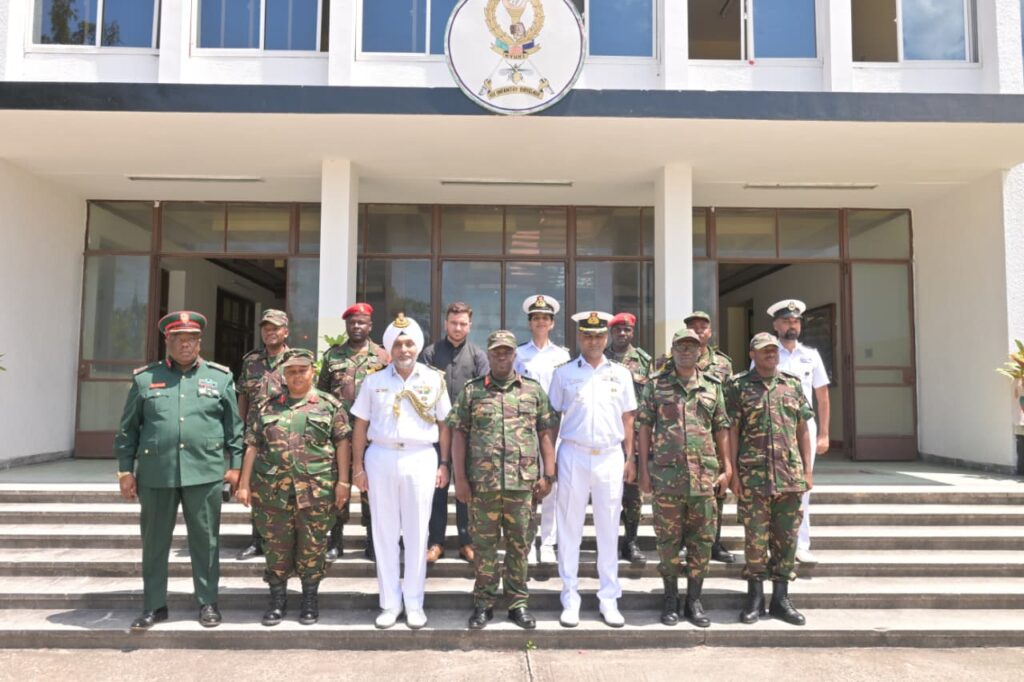
    Indian Coast Guard Ship Sachet Visit to Zanzibar, Tanzania

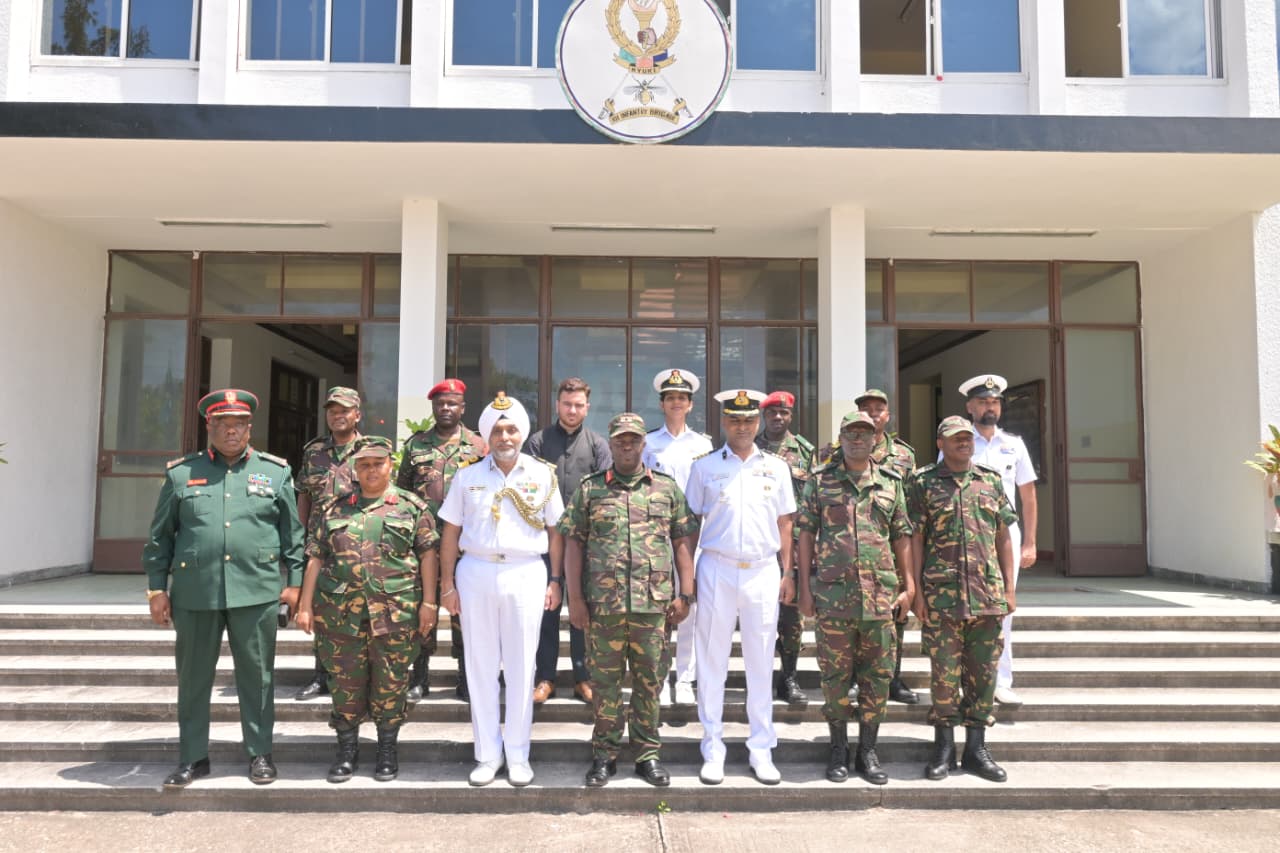
    New Delhi, October 21. Indian Coast Guard Ship (ICGS) Sachet, an indigenously built Offshore Patrol Vessel (OPV), entered Zanzibar, Tanzania on October 20, 2025, marking another milestone in the Indian Coast Guard’s overseas deployment to Africa. The visit underscores India’s commitment to strengthening maritime cooperation and fostering regional partnerships under the Government of India’s SAGAR (Security and Growth for All in the Region) vision.

    During its stay in Zanzibar, ICGS Sachet will engage with Tanzanian People’s Defence Force and Maritime Agencies through a series of professional interactions aimed at enhancing cooperation in areas such as Maritime Search and Rescue (M-SAR), Marine Pollution Response (MPR), and Maritime Law Enforcement. These engagements are focused on capacity building, sharing of best practices, and exploration of avenues for future collaboration between the maritime forces of both nations. The visit also serve to showcase India’s shipbuilding capabilities, supporting the concept of “Atmanirbhar Bharat.”

    As part of community outreach initiatives, the crew of ICGS Sachet will participate in a Walkathon and Beach Clean-up Drive organised under the Government of India’s “Puneet Sagar Abhiyan”. The activity aims to raise awareness regarding marine pollution and promote environmental conservation through joint participation of local youth and community organisations in Zanzibar.

    To promote cultural exchange and wellness, a joint yoga session was conducted by ICGS Sachet on October 21, 2025. Continuing its efforts and to strengthen people-to-people connect, a Community Support Programme is also planned wherein the ship’s crew will conduct outreach and welfare activities in coordination with local institutions. The ship will also be open to visitors, including members of the Tanzanian Defence Forces, students, and the Indian community based in Zanzibar, offering them guided tours to familiarise themselves with the capabilities and technological features of ICGS Sachet.

    The visit of ICGS Sachet to Zanzibar is a testament to India’s growing maritime engagement in the Western Indian Ocean Region. It highlights the Indian Coast Guard’s commitment to regional cooperation, maritime safety, and environmental stewardship, further promoting peace, goodwill, and friendship between India and Tanzania, in line with the shared vision of prosperity and security in the region.

  • MiG 21 vs Tejas: India’s Fighter Jet Evolution

    MiG 21 vs Tejas: India’s Fighter Jet Evolution

    MiG 21 vs Tejas: The story of the Indian Air Force is incomplete without the MiG-21 and the HAL Tejas. While one symbolizes India’s dependence on foreign technology during the Cold War era, the other reflects the nation’s progress toward self-reliance in defense manufacturing. Comparing the MiG-21 with the Tejas is not just about aircraft specifications—it’s about contrasting two generations of India’s air power.

    In this blog, we will delve deeper into the specifications, combat histories, and the ongoing debates surrounding the MiG-21 and Tejas. Stay tuned as we unravel the tale of these aerial warriors and explore the intricate dance of past and future in the skies.

    In News

    The prolonged existence of the aging MiG fleet within the Indian Air Force has been a persistent concern spanning several decades. This issue has ignited discussions regarding the safety of these fighter jets, coupled with inquiries into the reasons behind their continued operation despite being associated with tragic incidents that claimed the lives of numerous Air Force pilots.

    To address these challenges and modernize its air defenses, the Indian Air Force has formulated plans to retire the aging MiG fleet, which includes the MiG-21, MiG-23, and MiG-27. In a strategic move, the Air Force intends to replace these aging aircraft by procuring 100 new Light Combat Aircraft (LCA) Tejas Mark-1A fighter jets from Hindustan Aeronautics Limited (HAL). This ambitious initiative signifies a significant step towards rejuvenating and bolstering the country’s air capabilities.

    The MiG-21: Cold War Relic or Timeless Warrior?

    The Mikoyan-Gurevich MiG-21, a product of the Soviet Union’s aerospace ingenuity, stands as a living testament to the tumultuous era of the Cold War. Nicknamed the “Fishbed,” this supersonic interceptor played a pivotal role in countless conflicts and aerial skirmishes, earning a reputation for its agility and speed. With its delta wing design and sleek aerodynamics, the MiG-21 became a symbol of Soviet air power during the latter half of the 20th century.

    Tejas: India’s Leap into the Future

    In stark contrast to the MiG-21’s Cold War roots, the Tejas, meaning “Radiant” in Sanskrit, represents India’s foray into modern, indigenous fighter aircraft development. Conceived and developed by the Aeronautical Development Agency (ADA) and manufactured by Hindustan Aeronautics Limited (HAL), the Tejas is a result of years of research, innovation, and a commitment to reducing dependency on foreign military hardware.

    Clash of Design Philosophies

    As these two aircraft prepare to share the same airspace, their differences in design philosophies become glaringly apparent. The MiG-21, with its tried-and-tested Soviet engineering, boasts a simplicity that emphasizes raw performance. On the other hand, the Tejas showcases a more intricate design, incorporating composite materials, fly-by-wire technology, and modern avionics. The clash between these design philosophies underscores the evolution of aerial combat technology over the decades.

    Operational Realities: MiG-21’s Legacy vs Tejas’ Ascent

    Examining the operational histories of these aircraft sheds light on the shifting dynamics of air forces around the world. The MiG-21, having served in over sixty countries, played a crucial role in numerous conflicts, from the Vietnam War to the Indo-Pakistani wars. Meanwhile, the Tejas, in its nascent years, has already begun to assert its capabilities as the backbone of the Indian Air Force, marking a shift towards self-reliance and technological advancement.

    MiG 21 vs Tejas Detailed Comparison

    The MiG-21, a veteran of Cold War skies, faces off against the Tejas, a symbol of India’s commitment to indigenous technological prowess. Let’s delve into a detailed comparison of these two iconic aircraft.

    Design and Aerodynamics:

    MiG-21:

    • The MiG-21, designed in the 1950s, features a delta wing design for high-speed performance and agility.
    • Known for its simplicity, the MiG-21 relies on aerodynamic efficiency and a powerful engine for maneuverability.
    • The aircraft has a distinctive nose-up attitude on the ground due to its delta wing configuration.

    Tejas:

    • The Tejas, a more recent design, incorporates a delta wing with leading-edge extensions for improved control and stability.
    • Its design includes composite materials, contributing to reduced radar cross-section and increased stealth capabilities.
    • The Tejas features a modern fly-by-wire control system, enhancing its agility and responsiveness.

    Avionics and Technology:

    MiG-21:

    • The MiG-21, a product of its era, features basic avionics with limited electronic warfare and radar capabilities.
    • Its radar systems are comparatively rudimentary, reflecting the technology available during its development.

    Tejas:

    • The Tejas is equipped with state-of-the-art avionics, including an advanced multi-mode radar, electronic warfare suite, and modern communication systems.
    • A glass cockpit with a hands-on throttle and stick (HOTAS) system enhances pilot situational awareness and control.

    Speed and Performance:

    MiG-21:

    • Renowned for its impressive speed, the MiG-21 can attain speeds exceeding Mach 2.
    • Its high thrust-to-weight ratio contributes to its exceptional climb rate and interception capabilities.

    Tejas:

    • While the Tejas may not match the MiG-21 in absolute top speed, it compensates with advanced avionics, agility, and maneuverability.
    • The Tejas is designed for both air-to-air and air-to-ground missions, showcasing versatility in its performance.

    Armament and Mission Capabilities:

    MiG-21:

    • Traditionally configured for air-to-air combat, the MiG-21 has been equipped with a variety of missiles, cannons, and bombs.
    • Its role has evolved over the years, adapting to changing military requirements.

    Tejas:

    • The Tejas is designed as a multi-role fighter, capable of carrying a diverse range of weapons, including beyond-visual-range missiles, precision-guided munitions, and air-to-surface missiles.
    • Its mission capabilities encompass air superiority, ground attack, and reconnaissance.

    Operational History:

    MiG-21:

    • The MiG-21 has an extensive operational history, having served in numerous conflicts worldwide.
    • While it earned a reputation for its agility and speed, it also faced challenges, particularly in the context of evolving aerial warfare technologies.

    Tejas:

    • The Tejas is in the early stages of its operational history but has already demonstrated its capabilities in various training exercises.
    • Its induction into the Indian Air Force marks a significant step towards reducing dependency on foreign-made fighter aircraft.

    MiG 21 vs Tejas Data Table

    Here’s a simplified data table comparing some key specifications of the MiG-21 and Tejas:

    Parameter MiG-21 Tejas
    Origin Soviet Union India
    First Flight 1955 2001
    Role Interceptor, Fighter-Bomber Multirole Fighter
    Wingspan 7.15 m (23 ft 5 in) 8.2 m (26 ft 11 in)
    Length 14.7 m (48 ft 3 in) 13.2 m (43 ft 4 in)
    Height 4.1 m (13 ft 7 in) 4.4 m (14 ft 9 in)
    Maximum Speed Mach 2.1 Mach 1.8
    Range 1,215 km (755 mi) 3,000 km (1,864 mi)
    Service Ceiling 17,000 m (55,775 ft) 16,500 m (54,130 ft)
    Engine Tumansky R-25 General Electric F404-GE-IN20
    Thrust 40.21 kN (9,040 lbf) 53.22 kN (11,982 lbf)
    Crew 1 1
    Avionics Basic Advanced Multi-Mode Radar, HOTAS
    Weapons Missiles, Bombs, Cannons Beyond-Visual-Range Missiles, Precision-Guided Munitions
    First Operational Year 1959 2016 (Initial Operational Clearance)

    Please note that the specifications provided are general figures and might vary based on specific variants and upgrades.

    The MiG-21, once the pride of the Indian Air Force, served as a reliable workhorse for decades despite its limitations. It represents an era when India relied heavily on imports to secure its skies. On the other hand, the HAL Tejas marks a new chapter—light, agile, and equipped with modern avionics, it reflects India’s capability to design and build advanced fighter jets indigenously.

    Conclusion:

    As the MiG-21 and Tejas share the same airspace, it’s not merely a battle of two aircraft but a clash of eras and philosophies. The MiG-21, with its storied past, faces a modern contender in the Tejas, representing the present and future of India’s aerospace industry. This detailed comparison serves as a prelude to unraveling the intricacies of these aerial warriors in the upcoming segments of our exploration. Stay tuned for a deeper dive into their specifications, combat histories, and the ongoing debates within the aviation community.

  • Pakistani Diaspora Members Scream “Shame on You, Asim Munir” in Protests Across U.S.

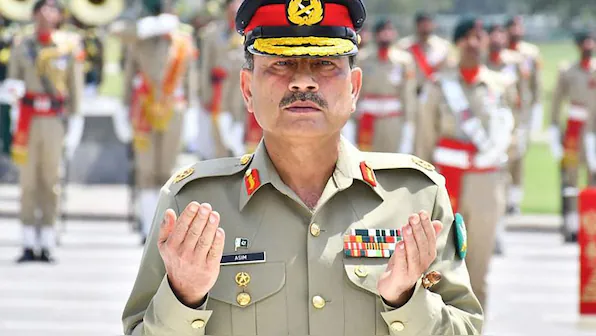
    Pakistani Diaspora Members Scream “Shame on You, Asim Munir” in Protests Across U.S.

    Washington, D.C., June 17, 2025 Pakistan’s Army Chief, Field Marshal Syed Asim Munir, faced intense public backlash from members of the Pakistani diaspora during his visit to the United States for the 250th anniversary celebrations of the U.S. Army. Protesters, largely supporters of the Pakistan Tehreek-e-Insaf (PTI) party led by jailed former Prime Minister Imran Khan, gathered outside the Pakistani Embassy in Washington, D.C., chanting “Shame on you, Asim Munir!” and branding him a “mass murderer” and “Islamabad ka Qaatil” (Killer of Islamabad). The demonstrations, which included digital vans and posters, were part of a broader wave of diaspora-led protests reflecting deep discontent with Munir’s leadership and Pakistan’s military establishment.

    The protests coincided with Munir’s high-profile visit to attend a U.S. military parade and hold meetings with State Department and Pentagon officials, following praise from U.S. Central Command head Gen. Michael Kurilla, who called Pakistan a “phenomenal partner” in counterterrorism efforts. However, the diaspora’s anger stemmed from Munir’s controversial role in Pakistan’s domestic politics, particularly his alleged suppression of PTI and the crackdown on protests following Khan’s arrest in May 2023. Demonstrators accused Munir of orchestrating the “Islamabad Massacre” in November 2024, where security forces allegedly used live rounds against PTI supporters, prompting a case against him with London’s Metropolitan Police for torture and crimes against humanity.

    Viral footage shared on X captured the intensity of the protests, with slogans like “Failed Marshal” and “Liar” echoing sentiments from a recent Times Square billboard campaign that labeled Munir a “Fraud Marshal” alongside former President Asif Ali Zardari and Prime Minister Shehbaz Sharif. The billboard, widely shared by Indian journalist Aditya Raj Kaul, accused Munir of military failures during India’s Operation Sindoor in May 2025, which targeted terror camps in Pakistan after the Pahalgam attack that killed 26 civilians.

    PTI’s Secretary for Overseas Affairs, Sajjad Burki, rallied Pakistani-Americans to protest, stating on X, “Let the White House know that any deal with this government is not acceptable to the people of Pakistan.” The diaspora’s grievances also highlighted Munir’s inflammatory rhetoric, particularly his April 2025 speech invoking the “two-nation theory” and calling Kashmir Pakistan’s “jugular vein,” which Indian officials linked to the Pahalgam attack.

    The protests underscore a growing rift between Pakistan’s military leadership and its diaspora, particularly in the U.S. and UK, where similar demonstrations have occurred. In February 2025, British Pakistanis protested Munir’s visit to London, and a legal case was filed against him for alleged human rights violations. Analysts like Michael Kugelman noted that Munir’s U.S. visit, while aimed at strengthening counterterrorism ties, has instead amplified diaspora dissent, reflecting Pakistan’s internal political crisis and the military’s faltering public image.

    As Munir’s visit continues, the Pakistani Embassy has not commented on the protests, but the diaspora’s vocal opposition signals a deepening legitimacy crisis for Pakistan’s military leadership on the global stage.

  • Trump to Leave G7 Summit Early Amid of Fear Of Narendra Modi

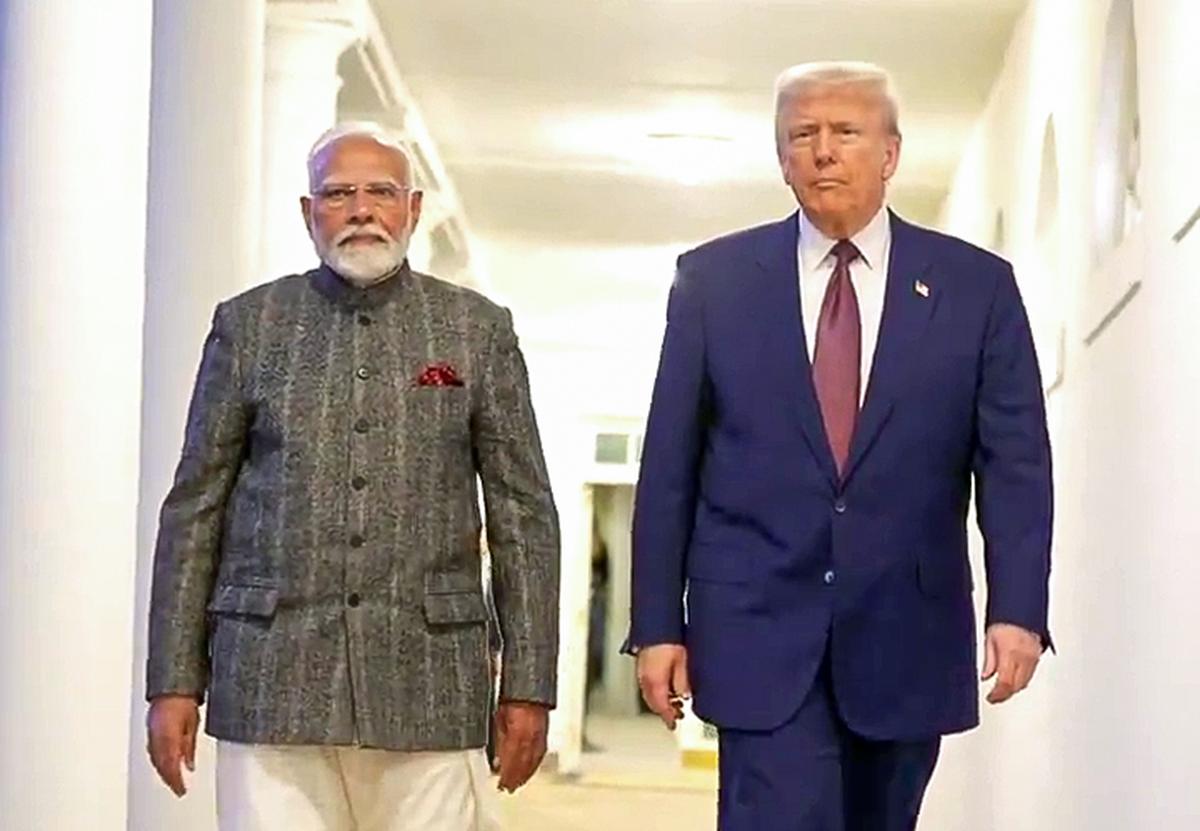
    Trump to Leave G7 Summit Early Amid of Fear Of Narendra Modi

    Kananaskis, Canada, June 17, 2025 U.S. President Donald Trump abruptly departed the G7 Summit in Kananaskis, Alberta, a day earlier than planned, citing the escalating Israel-Iran conflict as the primary reason for his return to Washington. However, posts on X and regional media have fueled speculation that Trump’s early exit was motivated by a fear to face-to-face meeting with Indian Prime Minister Narendra Modi, who arrived in Calgary on Monday evening to attend the summit’s outreach session.

    The White House, through Press Secretary Karoline Leavitt, confirmed Trump’s departure on Monday night after a dinner with G7 leaders, stating, “Much was accomplished, but because of what’s going on in the Middle East, President Trump will be leaving tonight.” Trump had been scheduled to meet Ukrainian President Volodymyr Zelenskyy and Mexican President Claudia Sheinbaum on Tuesday, but these engagements were canceled. The president’s decision followed his controversial Truth Social post urging Tehran’s 10 million residents to “immediately evacuate” amid Israel’s ongoing strikes on Iran’s nuclear and military infrastructure.

    Social media platforms, particularly X, have been abuzz with unverified claims suggesting Trump’s exit was strategically timed to avoid Modi. Posts allege that Trump was wary of confronting Modi over recent U.S. statements on India-Pakistan tensions and his push for a ceasefire in the Israel-Iran conflict, which New Delhi has not endorsed. One user claimed, “Trump can’t face Modi after his ceasefire shenanigans which have no takers in New Delhi,” while another suggested Trump feared Modi’s “loser face” after diplomatic disagreements. These claims remain unconfirmed, and no official statements from the White House or Indian government support the narrative of personal or diplomatic friction between the leaders.

    The G7 Summit, hosted by Canadian Prime Minister Mark Carney, was overshadowed by the Israel-Iran conflict, with discussions on trade, Ukraine, and energy security taking a backseat. Modi, attending as a guest alongside leaders from Mexico, Ukraine, and others, was set to address global issues like energy security and the priorities of the Global South. His arrival in Canada, however, sparked protests in Calgary by members of the Indian diaspora, particularly supporters of the Khalistan movement, who displayed flags and effigies criticizing Modi’s government.

    Trump’s early departure has drawn mixed reactions. Some G7 leaders, including French President Emmanuel Macron and German Chancellor Friedrich Merz, expressed frustration over the lack of unity, particularly after Trump refused to sign a joint statement urging de-escalation in the Israel-Iran conflict. Macron noted that Trump had floated a ceasefire proposal, but the U.S. president’s absence hindered consensus. Meanwhile, Trump’s supporters argue his focus on the Middle East crisis, where Israel’s “Operation Rising Lion” has killed 224 in Iran and Iran’s “Operation True Promise 3” has caused 24 deaths in Israel, justifies his exit.

    Despite the speculation, Trump and Modi share a history of cordial relations, with Trump previously inviting Modi to a G7 Summit in 2020 and describing their ties as “exceptional.” The Indian Ministry of External Affairs emphasized Modi’s agenda in Canada, stating he would engage with G7 leaders on critical global issues, with no mention of a planned bilateral meeting with Trump.

    As the G7 continues without Trump, the remaining leaders are working to salvage discussions, with Modi expected to hold bilateral talks with Carney, Zelenskyy, and German Chancellor Merz. The unverified claims circulating on X highlight the polarized sentiment around Trump’s exit, but the official narrative remains centered on the Middle East crisis as the driving factor. Whether Trump’s departure was influenced by Modi’s presence or purely by geopolitical priorities remains a matter of speculation, with no concrete evidence supporting the former.

  • Israel strikes Iranian state TV, warns people to evacuate Tehran after accusing Iran of targeting civilians

    Israel strikes Iranian state TV, warns people to evacuate Tehran after accusing Iran of targeting civilians

    Israel intensified its military campaign against Iran on Monday, striking the headquarters of the Islamic Republic of Iran Broadcasting (IRIB) during a live broadcast, as the ongoing conflict entered its fifth day. The attack, part of Israel’s “Operation Rising Lion,” followed accusations by Israeli officials that Iran deliberately targeted civilians in missile and drone strikes, killing at least 24 people in Israel. Israel’s military also issued an urgent evacuation warning to approximately 330,000 residents in central Tehran’s District 3, where IRIB and key government facilities are located, citing imminent airstrikes on military targets.

    The strike on IRIB’s fortified complex in northern Tehran disrupted a live broadcast by anchor Sahar Emami, who denounced the “aggression against the homeland” moments before an explosion sent debris and smoke into the studio, forcing her to flee. The broadcast briefly switched to prerecorded programming before resuming from another studio. Iran’s Foreign Ministry spokesman, Esmaeil Baghaei, condemned the attack as a “war crime” and a “direct assault on press freedom,” alleging Israel’s history of targeting media, including Al Jazeera and Hezbollah-affiliated Al-Manar. The Committee to Protect Journalists reported 178 journalists killed in Gaza by Israel since October 2023, calling the IRIB strike “appalling.”

    Israeli Defense Minister Israel Katz justified the attack, claiming IRIB was a “propaganda and incitement mouthpiece” used by Iran’s military under civilian cover. The Israel Defense Forces (IDF) stated the strike targeted a “communications center” linked to the Quds Force, an elite arm of Iran’s Revolutionary Guard, and destroyed 10 command centers in Tehran, killing four officials, including IRGC Intelligence Chief Mohammad Kazemi. The IDF also claimed to have established “full aerial superiority” over Tehran, destroying over 120 surface-to-surface missile launchers—one-third of Iran’s total arsenal.

    The evacuation warning, affecting an area with hospitals, police headquarters, and IRIB, sparked panic in Tehran, a city of nearly 10 million. Long lines at gas stations and traffic jams were reported as residents fled, with metro stations and mosques converted into bomb shelters. Iran’s Health Ministry reported 224 deaths, 90% civilians, and over 1,200 injuries since Israel’s strikes began on June 13, though Human Rights Activists documented a higher toll of 406 deaths, including 197 civilians. Iran’s retaliatory “Operation True Promise 3” targeted Israeli cities like Tel Aviv and Haifa, with a missile strike in Bat Yam killing three and injuring dozens.

    Israeli Prime Minister Benjamin Netanyahu claimed the strikes have set Iran’s nuclear program back “a very long time,” targeting sites like Natanz and Isfahan, though Iran insists its nuclear ambitions are peaceful. U.S. President Donald Trump, attending the G7 summit in Canada, posted on Truth Social, urging Tehran’s immediate evacuation and warning that Iran “cannot have a nuclear weapon.” Trump also claimed Iran missed a chance to sign a nuclear deal, predicting a potential resolution to the conflict.

    The attack on IRIB, a symbolic target tied to Iran’s government, has heightened fears of a broader regional war. Iran’s Foreign Minister Abbas Araghchi vowed a “powerful response,” while the U.S., G7 leaders, and regional powers like Saudi Arabia and Qatar called for de-escalation. Pakistan, organizing evacuations for its citizens in Iran, rejected Iran’s claim of a nuclear pact against Israel, underscoring regional tensions. As both sides exchange threats and strikes, the conflict risks further destabilizing the Middle East, with global energy markets and civilian lives hanging in the balance.

  • Pakistan Rejects Iran’s Claim of Nuclear Pact Against Israel

    Pakistan Rejects Iran’s Claim of Nuclear Pact Against Israel

    Pakistan has categorically dismissed claims by a senior Iranian Revolutionary Guard Corps (IRGC) commander that the two nations had agreed to a nuclear pact to counter Israel amid the ongoing Israel-Iran conflict. The assertion, made by IRGC Aerospace Force Commander Amir Ali Hajizadeh on Monday, suggested Pakistan would support Iran with nuclear capabilities in response to Israel’s “Operation Rising Lion,” which targeted Iran’s military and nuclear sites. Pakistan’s swift rebuttal underscores its intent to maintain neutrality in the escalating West Asian crisis.

    Defence Minister Khawaja Asif, addressing the claim on X, stated, “Pakistan has made no such commitment. Our nuclear capability is solely for the defence of our people, not for advancing hegemonic policies.” Asif also criticized Israel’s undeclared nuclear arsenal, warning of its “catastrophic consequences for the region.” The Foreign Office echoed this stance, emphasizing Pakistan’s policy of non-interference and calling for de-escalation to prevent further destabilization.

    The controversy arises as Iran faces intensified Israeli strikes, with Tehran retaliating through “Operation True Promise 3,” involving missile and drone attacks. Iran’s claim of a nuclear pact with Pakistan appears to be an attempt to project strength amid domestic pressure and significant casualties—224 reported deaths in Iran compared to 24 in Israel. However, analysts suggest the statement may also reflect Iran’s frustration with Pakistan’s cautious diplomacy, as Islamabad balances ties with Iran, Saudi Arabia, and Western powers.

    Pakistan’s nuclear arsenal, estimated at 170 warheads, is a cornerstone of its defence policy, primarily aimed at deterring India. Experts, including Michael Kugelman of the Wilson Center, argue that Pakistan would avoid entanglement in the Israel-Iran conflict due to its economic dependence on Gulf states like Saudi Arabia, a key rival of Iran. “Pakistan’s nuclear program is for strategic deterrence, not for lending to others,” Kugelman noted.

    The rejection comes amid Pakistan’s closure of border crossings with Iran, including Taftan and Gabd-Rimdan, due to security concerns. The Foreign Office has activated a Crisis Management Unit to evacuate Pakistani nationals, including 450 pilgrims and 200 students, from Iran and Iraq. While expressing “moral and diplomatic solidarity” with Iran, Pakistan has urged all parties to pursue dialogue to avert a broader conflict that could disrupt regional trade and energy supplies, particularly through the Strait of Hormuz.

    As tensions persist, Pakistan’s firm denial of Iran’s claim reinforces its commitment to strategic autonomy, even as it navigates the complex geopolitics of a volatile region.

  • Israel-Iran War: Pakistan shuts border crossings with Iran

    Israel-Iran War: Pakistan shuts border crossings with Iran

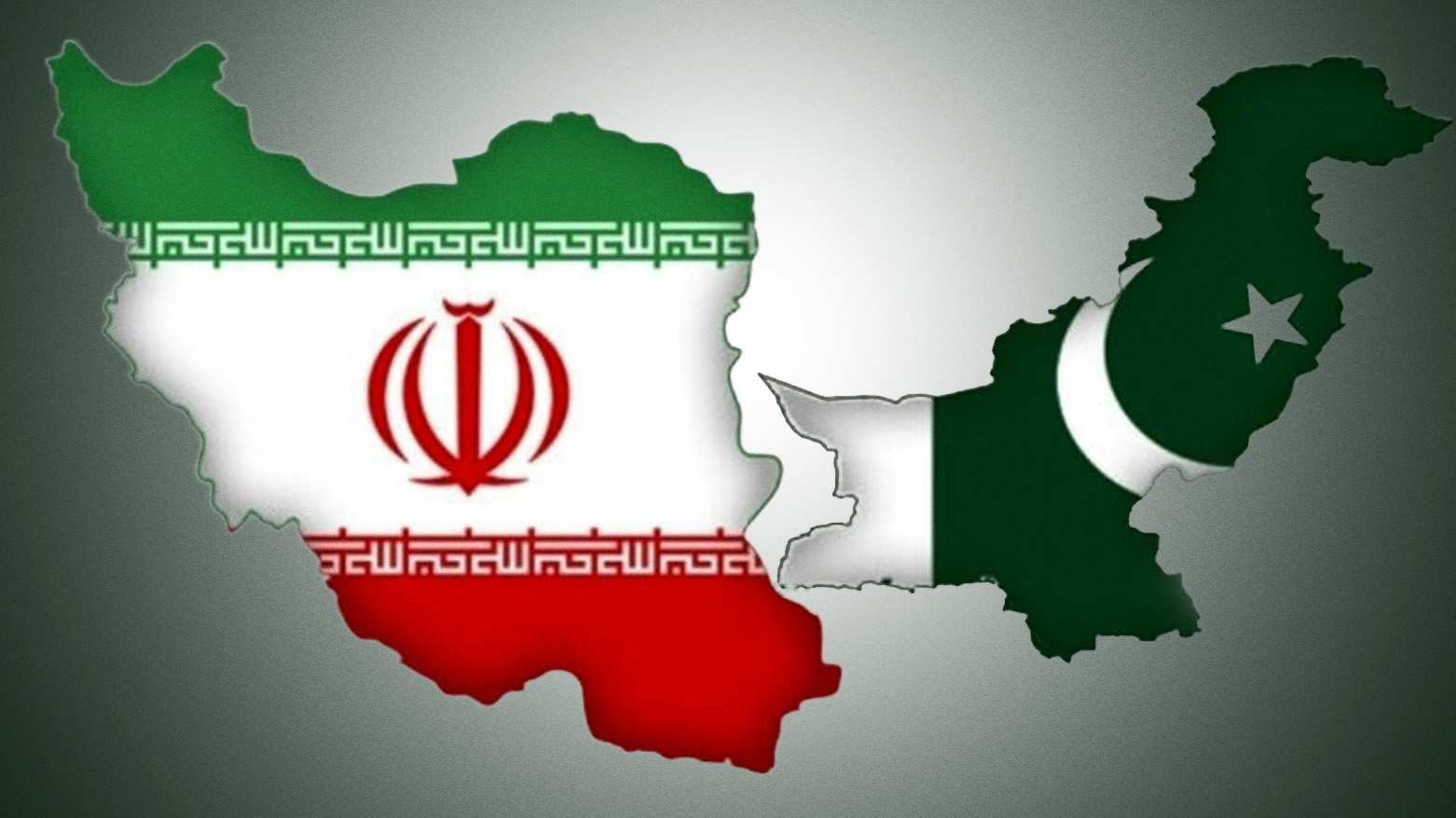
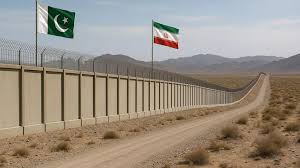
    Pakistan has indefinitely closed all border crossings with Iran, citing security concerns amid the escalating conflict between Israel and Iran, now in its fifth day. The decision, announced by provincial authorities in Balochistan, affects key crossing points in Chaghi, Washuk, Panjgur, Kech, and Gwadar districts, including the critical Taftan and Gabd-Rimdan crossings, which facilitate cross-border trade and travel. The move follows Iran’s closure of its side of the border and comes as Israel’s “Operation Rising Lion” and Iran’s “Operation True Promise 3” intensify, raising fears of regional instability.

    According to Qadir Bakhsh Pirkani, a senior official in Balochistan, “Border facilities in all five districts have been suspended until further notice due to the volatile situation created by Israel’s strikes.” While pedestrian and vehicular movement into Iran has been halted, limited trade activities continue, and Pakistani nationals, including an estimated 200 students, are being allowed to return from Iran. On Sunday, Foreign Minister Ishaq Dar confirmed the evacuation of 450 Pakistani pilgrims from Iran, with additional evacuations planned from Iran and Iraq, home to sacred Shiite sites.

    The border closure threatens to disrupt local economies in Balochistan, where districts like Turbat, Gwadar, and Panjgur rely heavily on Iranian food supplies and smuggled oil. Residents, such as Basham Baloch from Gwadar, expressed concerns to Anadolu Agency about potential shortages, stating, “If the border remains closed for weeks, we could face serious oil and food shortages.” Balochistan’s government spokesman, Shahid Rind, downplayed immediate fuel scarcity claims, asserting that most petrol pumps in Quetta remain operational, but locals report rising prices and supply chain disruptions.

    Pakistan’s decision reflects its delicate balancing act in the region. While expressing “moral and diplomatic solidarity” with Iran against Israeli strikes, Islamabad has denied claims by an Iranian Revolutionary Guard Corps commander that Pakistan would support Tehran militarily, including with nuclear retaliation. Defence Minister Khawaja Asif clarified on X, “Pakistan has made no such commitment. Our nuclear capability is for the defence of our people, not for hegemonic policies.” Asif also criticized Israel’s undeclared nuclear arsenal, warning of its “catastrophic consequences.”

    The closure impacts bilateral trade, valued at $3 billion annually, with ambitions to reach $10 billion. Iran supplies 100 megawatts of electricity to Balochistan’s border towns, and disruptions could exacerbate local challenges. Pakistan’s Foreign Office has activated a 24/7 Crisis Management Unit to assist nationals, urging pilgrims to reconsider travel to Iran and Iraq. As the Israel-Iran conflict rages, Pakistan’s border shutdown underscores its cautious stance, prioritizing citizen safety and regional stability while navigating complex ties with Iran and Saudi Arabia.

  • Indians Evacuated from Tehran as Iran-Israel Tensions Escalate

    Indians Evacuated from Tehran as Iran-Israel Tensions Escalate

    New Delhi, June 17, 2025 – In a swift response to the escalating conflict between Iran and Israel, India has initiated the evacuation of its citizens from Tehran, prioritizing the safety of approximately 10,000 Indian nationals, including 6,000 students, residing in Iran. The Ministry of External Affairs (MEA) announced on Tuesday that Indian students in Tehran have been relocated to safer locations, with many facilitated to cross into Armenia via land routes due to Iran’s sealed airspace.
    The Indian Embassy in Tehran has been actively coordinating with local authorities and universities, including Tehran University of Medical Sciences, Shahid Beheshti University, and Urmia Medical University, to ensure the safe movement of students. A batch of 110 students from Urmia Medical University crossed the Armenian border on Monday evening, with a flight to New Delhi scheduled for Wednesday. Additionally, around 600 students from Tehran have been bussed to Qom, a city 140 kilometers south of the capital, identified as a safer location.
    The evacuation efforts come amid intensified hostilities, now in their fifth day, following Israel’s “Operation Rising Lion,” launched on June 13 to target Iran’s nuclear facilities. Iran retaliated with “Operation True Promise 3,” firing missiles and drones at Israeli targets, resulting in significant casualties—224 reported deaths in Iran and 24 in Israel. The conflict has triggered widespread panic in Tehran, with Israeli warnings urging residents, including 300,000 in central districts, to evacuate immediately.
    The Indian Embassy issued an urgent advisory, urging all Indian nationals and Persons of Indian Origin (PIOs) in Tehran to contact the embassy and move to safer areas if possible. Emergency helplines (+98 901044557, +98 9128109115, +98 9128109109) and a 24×7 control room have been established to assist citizens. External Affairs Minister Dr. S. Jaishankar has engaged with regional counterparts, including Armenia’s Foreign Minister, to facilitate safe passage.
    Reports indicate that five Indian students sustained injuries in recent Israeli strikes, amplifying anxiety among the Indian community. Students like Imtisal Mohidin, a third-year MBBS student at Shahid Beheshti University, described living in fear, with explosions occurring near hostels. “We trust in India’s power and really want to be evacuated,” Mohidin told media outlets.
    The operation marks one of India’s largest evacuation efforts in Iran, drawing comparisons to previous missions like Operation Ajay (Israel-Hamas conflict, 2023) and Operation Kaveri (Sudan, 2023). With contingency plans exploring additional border crossings, New Delhi is bracing for a complex operation to bring its citizens home safely amidst the volatile West Asian crisis.
    [Sources: Business Standard, The Indian Express, News18, The Tribune, India Today]
  • Israel Vs Iran: Comparison Of Armies, Air Forces, And Nuclear Capabilities Of Middle East’s Strongest Nations

    Israel Vs Iran: Comparison Of Armies, Air Forces, And Nuclear Capabilities Of Middle East’s Strongest Nations

    Israel vs Iran Military Power: In the tumultuous landscape of the Middle East, two nations stand out for their military might and strategic importance: Israel and Iran. Both countries boast formidable armies, advanced air forces, and, in the case of Iran, a controversial nuclear program. As regional powers, they play significant roles in shaping the geopolitical dynamics of the region.

    In this blog, we delve into the military capabilities of Israel and Iran, examining the factors that contribute to their power, the technological advancements that define their armed forces, and the strategic considerations that underpin their defense postures. As both countries navigate a delicate equilibrium of deterrence and preparedness, understanding the nuances of their military capabilities becomes imperative for comprehending the broader regional dynamics.

    Israel vs Iran Military Power

    Defense Budget

    Israel’s Defense Budget:

    Defense Budget (2023): 24341.00 USD Million

    Israel, surrounded by a challenging neighborhood and having faced multiple conflicts since its establishment, has consistently invested a significant portion of its GDP in defense. The Israeli Defense Forces (IDF) are renowned for their technological advancements, intelligence capabilities, and agility. Understanding Israel’s defense budget involves delving into its commitment to maintaining qualitative military superiority, innovation in defense technologies, and the capability to swiftly respond to emerging threats.

    Iran’s Defense Budget:

    Defense Budget (2023): 24.6 USD billion

    On the other side of the spectrum, Iran, a regional power with aspirations for influence beyond its borders, allocates substantial resources to its military. The Islamic Republic sees its military strength as a deterrent and a tool for safeguarding its national interests. The examination of Iran’s defense budget involves considering its paramilitary forces, ballistic missile program, and regional proxy networks, shedding light on the multifaceted nature of its military strategy.

    Army Comparison

    Here’s a data table comparing the armies of Israel and Iran based on the information provided:

    Category Israel (IL) Iran (IR)
    Active Personnel 169,500 610,000
    Reserve Personnel 465,000 350,000
    Available for Military Service 1,797,960 23,619,215
    Tanks 1,650 2,842
    Armoured Fighting Vehicles 6,135 3,555
    Total Artillery 1,000 4,873
    Self-Propelled Artillery 650 1,030
    Rocket Artillery 48 1,755

    This table offers a comparison of key military statistics for the armies of Israel and Iran.

    Air Power Comparison

    Here’s a data table comparing the air forces of Israel and Iran:

    Category Israel (IL) Iran (IR)
    Total Aircraft 618 973
    Fighter Aircraft 41 112
    Multirole Aircraft 230 75
    Attack Aircraft 0 23
    Helicopters 128 519
    UCAV (Combat Drones) 15 83

    This table provides an overview of key aircraft categories in the air forces of Israel and Iran.

    Naval Power Comparison

    Here’s a data table summarizing the naval power of Israel and Iran based on the information provided:

    Category Israel (IL) Iran (IR)
    Total Naval Assets 74 272
    Aircraft Carriers 0 0
    Destroyers 0 0
    Frigates 0 6
    Corvettes 7 3
    Submarines 6 19

    This table provides a comparative overview of key naval assets for Israel and Iran.

    Military Service

    Israel:

    • Compulsory military service in Israel begins at 18 years of age for Jews and Druzes.
    • Voluntary military service starts at 17 years of age for Christians, Muslims, and Circassians.
    • Both genders are required to serve in the military.
    • Enlisted men serve for 36 months, enlisted women for 21 months, and officers for 48 months.
    • Pilots commit to 9 years of service.
    • Reserve obligation extends to age 41-51 for men and up to age 24 for women.

    Iran:

    • Compulsory military service in Iran starts at 18 years of age.
    • Volunteers can join at 16 years of age.
    • Law Enforcement Forces enlist at 17 years of age.
    • Basij Forces (Popular Mobilization Army) allow enrollment at 15 years of age.
    • Conscript military service obligation lasts for 18 months.
    • Women are exempt from mandatory military service.

    Israel and Iran War

    The relationship between Iran and Israel has undergone distinct phases:

    Period of Initial Hostility: 1947-1953

    • Iran was an early opponent of the establishment of Israel, voting against its formation in 1947.
    • In 1949, Iran abstained from voting for Israel’s admission to the UN.
    • Despite these initial stances, Iran recognized Israeli sovereignty in 1950, making it the second Muslim-majority nation to do so.

    Period of Cold Peace: 1953-1979

    • After the ascent of the pro-western Mohammad Reza Pahlavi to power as the Shah of Iran in 1953, there was a phase of relative peace in Israel-Iran relations.

    Period After Iranian Revolution: 1979-1990s

    • The Iranian Revolution in 1979 led to the establishment of a theocratic government in Iran.
    • The Supreme Leader, Ayatollah Khomeini, declared Israel as ‘the enemy of Islam.’
    • Diplomatic ties were severed, and embassies were closed down as Iran refused to recognize the legitimacy of Israel.

    These phases reflect the complex and often tumultuous history of relations between Iran and Israel, shaped by geopolitical shifts and ideological changes in both countries.

    Conclusion 

    Comparing the military power of Israel and Iran involves considering various aspects beyond just numbers. Here are some key takeaways:

    Israel’s Strengths:

    • Israel has a highly advanced and technologically sophisticated military, with a focus on quality over quantity.
    • The Israel Defense Forces (IDF) benefit from robust training and coordination.
    • Israel’s air force is well-equipped and includes modern fighter aircraft.
    • The country possesses a substantial number of submarines, which can play a strategic role in maritime security.

    Iran’s Strengths:

    • Iran maintains a large standing military and a significant pool of reserve personnel.
    • Iran has a diverse arsenal of ballistic missiles and rocket artillery.
    • Its air defense capabilities have been developed to counter potential threats.
    • Iran’s military strategy includes asymmetric warfare and a focus on regional influence through proxy groups.

    Key Considerations:

    • Israel’s military is tailored for defense and regional deterrence, with a strong emphasis on rapid response.
    • Iran’s military strategy includes regional influence and supporting allies in conflicts such as Syria and Yemen.
    • Israel has a qualitative edge in technology and training, but Iran has greater numerical strength.
    • The balance of power also depends on regional dynamics, alliances, and diplomatic relations.

    It’s important to note that military power is just one aspect of a country’s overall strength. Both Israel and Iran have unique geopolitical situations, regional interests, and alliances that influence their military postures. Additionally, the ability to effectively project power and the willingness to engage in conflicts are critical factors in assessing military capabilities.