
Author: admin

  • Pakistan Violates Ceasefire Hours After India-Pakistan Agreement, Escalating Tensions
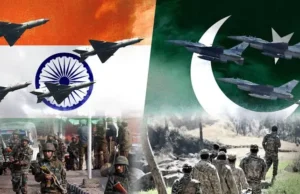
    Pakistan Violates Ceasefire Hours After India-Pakistan Agreement, Escalating Tensions

    Just hours after India and Pakistan announced a US-mediated ceasefire to halt escalating military hostilities, Pakistan violated the agreement with unprovoked shelling and air raids in multiple border regions, including Barmer in Rajasthan and Baramulla, Rajouri, and Akhnoor in Jammu and Kashmir, according to Indian officials. The breach has reignited fears of a broader conflict between the nuclear-armed neighbors, undermining the fragile truce.

    The ceasefire, effective from 5:00 PM IST on May 10, 2025, was confirmed by India’s Foreign Secretary Vikram Misri and Pakistan’s Foreign Minister Ishaq Dar, following a call between the Directors General of Military Operations (DGMOs) of both nations. The agreement aimed to stop all military actions on land, air, and sea, with further talks scheduled for May 12. US President Donald Trump claimed credit for brokering the deal, though Indian sources emphasized it was a bilateral understanding.

    However, reports of Pakistani artillery fire and drone activity emerged soon after. Jammu and Kashmir Chief Minister Omar Abdullah posted a video on X, showing explosions in Srinagar, stating, “This is no ceasefire. The air defence units in the middle of Srinagar just opened up.” Indian air defense systems shot down drones in Pokhran, Rajasthan, and Rajouri, while heavy shelling was reported in the Palanwalla sector.

    The Indian Army responded “promptly and proportionately,” with the Border Security Force ordered to retaliate with full force, defense sources said. No casualties have been reported so far, but civilian infrastructure in border villages has been damaged.

    The violations follow a pattern of Pakistani aggression since the April 22 Pahalgam terror attack, which killed 26 civilians and prompted India to suspend the Indus Waters Treaty and launch Operation Sindoor, targeting terrorist infrastructure in Pakistan. Since April 24, Pakistan has repeatedly violated the 2021 ceasefire agreement, with firing reported across multiple sectors of the Line of Control (LoC).

    External Affairs Minister S. Jaishankar reiterated India’s “firm and uncompromising stance against terrorism,” stating that measures like the Indus Waters Treaty suspension and visa bans on Pakistani nationals remain in place. Government sources clarified that the ceasefire does not alter India’s punitive actions against Pakistan’s support for terrorism.

    Congress leader Shashi Tharoor welcomed the ceasefire but cautioned, “India wanted to teach terrorists a lesson, and that lesson has been taught. Peace is essential, but we must remain vigilant.” AIMIM chief Asaduddin Owaisi urged the government to pursue the Pahalgam attack’s perpetrators, warning, “As long as Pakistan uses its territory for terrorism, there can be no permanent peace.”

    Pakistan’s Foreign Ministry has not officially commented on the violations, but former Prime Minister Nawaz Sharif described Pakistan as “peace-loving” yet capable of self-defense, congratulating the military and Prime Minister Shehbaz Sharif.

    International reactions have been cautious. The UK’s Foreign Secretary David Lammy called the ceasefire “hugely welcome,” while Bangladesh’s Muhammad Yunus expressed support for diplomatic resolutions. China reaffirmed its backing of Pakistan’s sovereignty, raising concerns about regional alignments.

    The Indian government has lifted some restrictive orders in border districts like Barnala and Hoshiarpur but maintained a ban on civilian drone flights. Prime Minister Narendra Modi chaired a high-level meeting with service chiefs to assess the situation, signaling heightened preparedness.

    Analysts warn that Pakistan’s swift violation—reminiscent of past breaches after the 2003 and 2021 understandings—indicates aggressive intent, possibly to cover terrorist infiltrations or provoke India. “These actions suggest Pakistan is testing India’s resolve while maintaining plausible deniability,” said Major General (Retd) Harsha Kakkar.

    As tensions simmer, the international community urges restraint, but the repeated ceasefire violations threaten to unravel the delicate truce, keeping the region on edge.

  • Former Pakistan Prime Minister Imran Khan Reportedly Murdered in Jail

    Former Pakistan Prime Minister Imran Khan Reportedly Murdered in Jail

    Rawalpindi, Pakistan – May 10, 2025: In a shocking development, unverified reports circulating on social media claim that former Prime Minister of Pakistan and leader of the Pakistan Tehreek-e-Insaf (PTI) party, Imran Khan, has been murdered in Adiala Jail, Rawalpindi. The news, which first emerged through posts on X, has sparked widespread outrage and speculation, though no official confirmation has been issued by Pakistani authorities or credible media outlets at this time.

    According to posts on X, Khan’s body was allegedly found in cell no. 804 of Adiala Jail, with some sources claiming signs of brutal torture and sexual assault. One post attributed to a user named @Ranjan_zeh stated, “IMRAN KHAN’s lifeless body found in the cell no 804 of Adiala Jail. Signs of brutal torture and sexual assault according to sources. Imran Khan’s legacy will be debatable but can’t be ignored. RIP.” Another post by @Kiraaydaar claimed, “Imran Khan beaten to death by Pakistani Army in Jail,” accompanied by unverified images. These posts have fueled hashtags such as #imrankhanPTI and #IndiaPakistanWar, amplifying the claims across social media platforms.

    Imran Khan, 72, has been incarcerated since August 2023, facing multiple charges ranging from corruption to inciting violence, which he and his party have consistently denounced as politically motivated. His detention followed a tumultuous political career, marked by his ouster as prime minister in April 2022 via a no-confidence vote and subsequent legal battles, including a 14-year sentence in a corruption case linked to the Al-Qadir Trust. Khan’s supporters have long alleged that he was targeted by Pakistan’s military establishment, a claim that gained traction after his arrest sparked nationwide protests in 2023.

    The reports of Khan’s alleged murder come amid heightened political tensions in Pakistan. His party, PTI, has faced a severe crackdown, with thousands of supporters arrested and allegations of rigged elections in 2024, where PTI-backed candidates won significant seats but were unable to form a government. Khan’s vocal criticism of the military and calls for transparent elections had made him a polarizing figure, with many viewing his imprisonment as an attempt to silence dissent.

    However, the claims of Khan’s murder remain unverified and highly controversial. Earlier this year, a fabricated medical report alleging sexual assault against Khan in jail was debunked by Pakistani officials, who confirmed that his medical evaluations were conducted by the Pakistan Institute of Medical Sciences (PIMS) and showed no such findings. The timing of the current claims, coupled with discrepancies in some posts (such as a report dated after its alleged leak), raises questions about their authenticity.

    Pakistani authorities have not issued an official statement addressing the allegations, and major news outlets like Geo News, ARY News, and Dawn have yet to report on the incident. The PTI has not released an official response, though supporters have taken to social media to demand clarity and justice. Protests are reportedly being organized in Islamabad and Lahore, with fears of escalating unrest if the claims are substantiated.

    The international community is closely monitoring the situation, given Khan’s global prominence as a former cricket star and political leader. The United States and United Kingdom previously called for adherence to the rule of law during Khan’s 2023 arrest, and human rights organizations have criticized his detention as politically driven.

    As the situation develops, the lack of verified information underscores the need for caution. The claims of Imran Khan’s murder, if proven false, could be part of a disinformation campaign amid Pakistan’s volatile political climate. Conversely, if confirmed, they could trigger a major crisis with far-reaching implications for the country’s stability.

  • Any Act Of Terror Will Be Considered An Act of War: India’s Warning To Pakistan

    Any Act Of Terror Will Be Considered An Act of War: India’s Warning To Pakistan

    New Delhi, May 10, 2025 — In a bold and unprecedented statement, the Indian government has declared that any future terrorist attack on its soil will be considered an “act of war,” promising a swift and decisive response. The announcement, made by the Ministry of Defence, underscores India’s hardening stance against cross-border terrorism and signals a potential shift in its national security policy.

    Speaking at a press conference, Defence Minister Rajnath Singh stated, “India has always exercised restraint in the face of provocation, but our patience must not be mistaken for weakness. Any further terror attack orchestrated or supported from beyond our borders will be treated as an act of war, and India will respond accordingly with the full might of its armed forces.”

    The statement comes amid heightened tensions in the region, following a series of intelligence reports indicating potential threats from terrorist groups allegedly backed by hostile neighboring states. While the government did not name any specific country, analysts suggest the warning is primarily directed at Pakistan, given the history of cross-border militancy in Jammu and Kashmir.

    The Ministry of External Affairs further clarified that India would reserve the right to take preemptive or retaliatory actions, including military strikes, to neutralize threats. “We will not hesitate to act in self-defense to protect our citizens and sovereignty,” a ministry spokesperson said.

    International reactions have been mixed. The United States and several European nations expressed support for India’s right to defend itself but urged restraint to avoid escalation in an already volatile region. Meanwhile, Pakistan’s Foreign Ministry denounced the statement as “provocative” and called for dialogue to address mutual concerns.

    Security experts view the announcement as a significant escalation in India’s counterterrorism strategy. “This is a clear message that India is prepared to raise the costs for any state or non-state actor involved in terrorism,” said Dr. Ankit Sharma, a defense analyst at the Institute for Strategic Studies in New Delhi. “It also puts pressure on the international community to act against terror financing and safe havens.”

    The Indian armed forces have been placed on high alert, with increased surveillance along the Line of Control (LoC) and international borders. The government has also vowed to strengthen its intelligence-sharing mechanisms with allied nations to preempt potential attacks.

  • BSF Jammu Destroys Terrorist Launch Pad in Looni, Sialkot, Pakistan in Precision Strike

    BSF Jammu Destroys Terrorist Launch Pad in Looni, Sialkot, Pakistan in Precision Strike

    The Border Security Force (BSF) in Jammu has delivered a decisive blow to cross-border terrorism, destroying a terrorist launch pad in Looni, Sialkot district, Pakistan, near the International Border, in a precision strike early Saturday morning. The operation, part of India’s ongoing response to escalating tensions with Pakistan, targeted a key facility used for launching tube-launched drones and coordinating militant infiltrations into Indian territory, according to defense sources.

    The strike follows a series of aggressive Pakistani drone and missile attacks on Indian military and civilian sites, including Jammu, Pathankot, and Udhampur, as part of the broader conflict sparked by the April 22 Pahalgam terror attack that killed 26 civilians. Indian authorities identified the Looni launch pad, located approximately 6-12 km from the border, as a critical hub operated by groups like Jaish-e-Mohammed (JeM) and Hizbul Mujahideen, responsible for recent drone incursions and terrorist activities in Jammu and Kashmir.

    “Acting on precise intelligence, BSF Jammu, in coordination with the Indian Army, neutralized the terrorist infrastructure in Looni, Sialkot, which was actively used to launch drones and facilitate infiltration,” a senior BSF official stated. The operation involved advanced counter-drone technology and artillery fire, ensuring no collateral damage to civilian areas, the official added. Posts on X celebrated the strike, with users like @AdityaRajKaul and @SikkimMedia hailing it as “yet another nail in the coffin of Pakistan” and a “precision strike eliminating a major threat.”

    Pakistan’s military has not officially commented on the Looni strike, but state media earlier claimed that Indian attacks targeted civilian areas, a charge India refutes. The destruction of the launch pad comes amid India’s broader Operation Sindoor, which has seen strikes on nine terrorist camps across Pakistan and Pakistan-occupied Kashmir (PoK), including facilities in Sialkot’s Sarjal and Mehmoona Joya camps, linked to JeM and Hizbul Mujahideen.

    The BSF’s action follows its successful thwarting of a major infiltration bid in Jammu’s Samba district on May 8, where alert personnel neutralized a group of Pakistani militants attempting to cross the border. The Looni strike is seen as a direct response to Pakistan’s persistent use of drone technology to drop arms, ammunition, and narcotics, as well as to facilitate terrorist crossings, with Sialkot’s proximity to the border making it a hotspot for such activities.

    Indian Foreign Secretary Vikram Misri, briefing the UN Security Council, reiterated that India’s actions are “focused, measured, and non-escalatory,” targeting only terrorist infrastructure. However, Pakistan’s convening of its National Command Authority, chaired by Prime Minister Shehbaz Sharif, has raised global concerns about nuclear escalation, with Sharif labeling Indian strikes “cowardly.” The G7 and UN have called for restraint, warning of a “nuclear flashpoint.”

    On the ground, Jammu remains on high alert, with surface-to-air missile systems activated and civilian flight operations suspended at 32 airports, including Jammu and Srinagar. Residents in border areas reported hearing explosions, with authorities enforcing blackouts and urging people to stay indoors. Jammu and Kashmir Chief Minister Omar Abdullah condemned Pakistan’s actions, criticizing the International Monetary Fund for disbursing funds to Pakistan amid the conflict, which he claimed fuels its military aggression.

    The destruction of the Looni launch pad marks a significant setback for Pakistan-based terrorist networks, but analysts warn that the tit-for-tat strikes risk further escalation. “India’s precision strikes are effective, but Pakistan’s nuclear signaling is a dangerous wildcard,” said a New Delhi-based security expert. As both nations remain locked in a volatile standoff, the international community continues to press for dialogue to prevent a broader regional conflict.

  • Pakistan PM Sharif Slams Indian Strikes as ‘Cowardly,’ Signals Nuclear Readiness with NCA Meeting

    Pakistan PM Sharif Slams Indian Strikes as ‘Cowardly,’ Signals Nuclear Readiness with NCA Meeting

    Pakistani Prime Minister Shehbaz Sharif condemned India’s recent air strikes on Pakistani air bases as “cowardly and unprovoked,” vowing a robust response as he convened an emergency meeting of the National Command Authority (NCA), the body overseeing Pakistan’s nuclear arsenal. The provocative rhetoric and nuclear posturing have heightened global fears of a potential nuclear escalation between the two South Asian rivals, following intense military exchanges sparked by a deadly attack in India-administered Kashmir on April 22.

    Speaking at a press conference in Islamabad, Sharif accused India of targeting civilian infrastructure and killing dozens in Pakistan-administered Kashmir and Punjab province. “These are not the actions of a responsible state but a cowardly attempt to destabilize Pakistan,” he declared, referencing India’s Operation Sindoor, which reportedly destroyed key Pakistani Air Force facilities, including Nur Khan Airbase in Rawalpindi and Rafiqi Air Base in Shorkot. India claims the strikes targeted “terrorist camps” linked to groups like Jaish-e-Mohammed, a charge Pakistan vehemently denies.

    The NCA meeting, attended by top civilian and military leaders, including Chief of Army Staff General Asim Munir, was described by officials as a strategic review of Pakistan’s defense posture. While no official statement detailed the agenda, Sharif’s remarks about “all necessary measures” to protect national sovereignty have been widely interpreted as a signal of nuclear readiness. Posts on X amplified the alarm, with users calling the NCA’s involvement “a chilling escalation” and others accusing Sharif of “playing a dangerous game” to rally domestic support.

    Pakistan’s military, under Operation Bunyan-un-Marsoos, launched retaliatory strikes on Saturday, targeting Indian military sites, including a missile storage facility in northern India, according to the Inter-Services Public Relations (ISPR). The ISPR also claimed to have downed Indian drones and repelled missile attacks, though India insists its strikes caused significant damage to Pakistan’s air defenses. Independent verification remains limited, with conflicting reports fueling propaganda on both sides.

    International reactions have been swift and alarmed. The G7 nations, in a statement issued Saturday, urged both countries to cease hostilities and pursue dialogue, warning of a “nuclear flashpoint.” U.S. Secretary of State Marco Rubio pressed Sharif in a call to avoid further escalation, but sources suggest Pakistan views Western mediation with skepticism, citing perceived bias toward India. China, a key Pakistani ally, called for “calm and restraint” but stopped short of condemning India’s actions.

    Sharif’s remarks also included a nod to domestic unity, with the Prime Minister appealing to Pakistanis to stand firm against “external aggression.” Former Prime Minister Nawaz Sharif, his brother, reportedly advised a diplomatic approach behind closed doors, according to The Express Tribune, but public sentiment on X shows strong support for a hardline stance, with hashtags like #PakistanStrikesBack trending.

    The conflict’s roots lie in the April 22 Pahalgam attack, which killed 26 civilians and prompted India to blame Pakistan-based militants. Since then, tit-for-tat strikes have displaced thousands along the Line of Control, with Pakistan reporting blackouts in border areas and India alleging civilian deaths from Pakistani shelling in Poonch. As commercial airlines avoid regional airspace and the UN scrambles to convene a Security Council session, the international community faces mounting pressure to avert a broader conflict.

    Analysts warn that Sharif’s nuclear signaling, coupled with India’s aggressive military posture, risks a catastrophic miscalculation. “The NCA meeting is a clear message: Pakistan is prepared to escalate if pushed,” said a security expert in Islamabad. With both nations entrenched and global diplomacy struggling to gain traction, the specter of nuclear conflict looms larger than ever.

  • G7 Urges Immediate Restraint as India-Pakistan Conflict Risks Nuclear Flashpoint

    G7 Urges Immediate Restraint as India-Pakistan Conflict Risks Nuclear Flashpoint

    The Group of Seven (G7) nations issued an urgent call for restraint on Saturday, warning that the escalating conflict between India and Pakistan risks spiraling into a nuclear catastrophe. The statement, released after an emergency virtual meeting of G7 foreign ministers, comes as both nuclear-armed nations intensify military operations, with India’s Air Force striking Pakistani air bases and Pakistan convening its National Command Authority (NCA) to discuss nuclear readiness.

    G7 table flags, 3d render. Flags of Group of Seven around podium, countries: Canada, France, Germany, Italy, Japan, the United Kingdom, USA.

    The G7, comprising the United States, Canada, France, Germany, Italy, Japan, and the United Kingdom, expressed “grave concern” over the rapidly deteriorating situation, which has seen heavy exchanges of missile and drone strikes since a deadly April 22 attack in India-administered Kashmir killed 26 civilians. India accuses Pakistan of orchestrating the attack, a charge Islamabad denies, prompting India’s Operation Sindoor, which obliterated key Pakistani air bases, including Nur Khan in Rawalpindi and Rafiqi in Shorkot, according to Indian defense sources. Pakistan retaliated with Operation Bunyan-un-Marsoos, targeting Indian military sites and claiming to have downed Indian jets.

    “We urge India and Pakistan to exercise maximum restraint, cease all military actions, and engage in direct dialogue to prevent a catastrophic escalation,” the G7 statement read. “The risk of miscalculation between two nuclear-armed states threatens not only regional but global stability.” The group called for an immediate ceasefire and offered to facilitate diplomatic talks, though no concrete mediation plan was outlined.

    The G7’s warning follows reports of significant civilian casualties, with Pakistan alleging Indian strikes killed dozens in Pakistan-administered Kashmir, while India claims Pakistani shelling in Jammu and Poonch claimed 15 civilian lives. Posts on X reflect global alarm, with users describing the situation as “a nuclear powder keg” and criticizing the lack of decisive international intervention. Others noted Pakistan’s NCA meeting, chaired by Prime Minister Shehbaz Sharif, as a signal of heightened nuclear alertness, with some calling it “terrifying posturing.”

    U.S. Secretary of State Marco Rubio, representing the G7’s lead voice, held separate calls with Indian Foreign Secretary Vikram Misri and Pakistani Foreign Minister Ishaq Dar, pressing both sides to de-escalate. However, U.S. influence appears limited, with sources citing President Donald Trump’s reported dismissal of the conflict as “not our problem,” according to NPR. France and Germany echoed the G7’s concerns, with French Foreign Minister Jean-Noël Barrot warning that “a single misstep could unleash unimaginable consequences.”

    India’s Ministry of External Affairs responded cautiously, asserting that its strikes targeted “terrorist infrastructure” and were a direct response to Pakistan’s alleged support for groups like Jaish-e-Mohammed. Pakistan’s Foreign Ministry, in turn, condemned India’s “unprovoked aggression” and defended its retaliatory strikes as “self-defense,” while denying civilian targeting.

    The United Nations, in a parallel statement, called for an emergency session of the Security Council to address the crisis, with Secretary-General António Guterres urging both nations to respect international humanitarian law. Meanwhile, commercial airlines have rerouted flights to avoid Pakistani and Indian airspace, and border regions in Kashmir report mass evacuations amid relentless artillery fire.

    Analysts warn that the G7’s call, while significant, may fall short without robust mediation. “The G7’s words are strong, but both India and Pakistan are entrenched,” said a South Asia expert at the Brookings Institution. “Without a clear de-escalation mechanism, the nuclear risk grows by the hour.” As global attention remains riveted on the region, the international community faces mounting pressure to prevent a conflict that could redefine the global security landscape.

  • India Destroys Pakistani Air Bases! COMPLETE DOMINATION BY IAF!

    India Destroys Pakistani Air Bases! COMPLETE DOMINATION BY IAF!

    The Indian Air Force (IAF) has delivered a stunning blow to Pakistan’s military infrastructure, targeting and severely damaging multiple air bases in a meticulously executed operation on Saturday morning. Sources confirm that the IAF’s strikes hit key Pakistani Air Force (PAF) facilities, including Nur Khan Airbase in Rawalpindi, PAF Rafiqi Air Base in Shorkot, Murid Air Base in Chakwal, and drone launchpad sites, significantly disrupting Pakistan’s air defense capabilities. The operation, an extension of India’s “Operation Sindoor,” is being hailed as a demonstration of the IAF’s unmatched dominance in the region.

    The strikes come amid escalating tensions following a terrorist attack on April 22 in India-administered Kashmir, which killed 26 civilians, mostly tourists. India has accused Pakistan of supporting the attack, a charge Islamabad denies. According to Indian defense sources, the IAF deployed advanced Rafale jets, armed with precision-guided SCALP missiles and AASM Hammer glide bombs, to neutralize strategic targets. Posts on X and reports from India Today indicate that India also destroyed Pakistani air defense systems and drone launch facilities, further crippling Pakistan’s ability to respond.

    Pakistan’s military, however, claims that all PAF assets remain safe, with Director General Inter-Services Public Relations (DG ISPR) asserting that Indian missiles failed to cause significant damage. Despite these claims, visuals verified by The Washington Post and other outlets show debris consistent with Indian fighter jets, suggesting Pakistan may have downed some IAF aircraft during earlier engagements on May 7. India has not confirmed these losses, maintaining that its strikes were “focused and measured” to avoid civilian casualties.

    Indian Foreign Secretary Vikram Misri described the operation as a necessary response to Pakistan’s alleged support for terrorist groups like Jaish-e-Mohammed and Lashkar-e-Taiba. “India will not tolerate threats to its sovereignty,” Misri said in a press briefing. The strikes targeted nine locations, including militant camps in Pakistan-administered Kashmir and Punjab province, with no Pakistani military facilities directly hit, according to India’s Ministry of Defense.

    The operation has sparked mixed reactions. On X, Indian users celebrated the IAF’s prowess, with posts declaring “Jai Hind” and praising the strikes as a decisive blow to Pakistan’s military. Others expressed concern over the risk of escalation, noting Pakistan’s retaliatory operation, “Bunyan al-Marsus,” launched on Saturday, which targeted Indian military sites, including a missile storage facility in northern India. International leaders, including the G7 and U.S. Secretary of State Marco Rubio, have urged both nations to exercise restraint and pursue dialogue to prevent a full-scale conflict.

    Analysts warn that the destruction of Pakistani air bases, if confirmed, could shift the regional power balance, with India’s advanced weaponry and strategic planning outmatching Pakistan’s defenses. However, Pakistan’s reported use of Chinese-made J-10 jets to down Indian aircraft earlier in the week suggests a resilient counter-capability. As both nations exchange accusations of drone and missile attacks, the situation remains volatile, with commercial airlines avoiding Pakistani airspace and civilians on both sides bracing for further hostilities.

    The IAF’s operation underscores India’s resolve to counter perceived threats, but the specter of nuclear escalation looms large. As Prime Minister Shehbaz Sharif convenes Pakistan’s National Command Authority to discuss its nuclear arsenal, the world watches anxiously, hoping diplomacy can avert a broader catastrophe.

  • Pakistan PM Shehbaz Sharif Convenes Emergency National Command Authority Meeting Amid Escalating Tensions

    Pakistan PM Shehbaz Sharif Convenes Emergency National Command Authority Meeting Amid Escalating Tensions

    Pakistani Prime Minister Shehbaz Sharif has called an urgent meeting of the National Command Authority (NCA), the country’s apex body responsible for overseeing its nuclear arsenal, as tensions with neighboring India reach a critical point. The announcement, made early Saturday, follows a series of military engagements between the two nuclear-armed nations, raising global concerns about the potential for further escalation.

    According to state broadcaster PTV and military officials, the NCA meeting is set to discuss Pakistan’s strategic response to recent Indian missile and drone strikes, which Pakistan claims targeted its air bases and civilian infrastructure. The Pakistani military has reported launching retaliatory strikes under Operation Bunyan-un-Marsoos, targeting Indian military sites, including airbases and a missile storage facility. The operation was described as a response to Indian attacks that killed dozens in Pakistan and Pakistan-administered Kashmir earlier this week.

    The NCA, chaired by the Prime Minister and comprising top civilian and military leaders, holds the authority to make decisions regarding the deployment and use of Pakistan’s nuclear weapons. The convening of this meeting has sparked alarm, with analysts interpreting it as a signal of heightened readiness amid the ongoing conflict. “This is a significant escalation,” said a security expert based in Islamabad, speaking on condition of anonymity. “The NCA meeting underscores the gravity of the situation and Pakistan’s intent to keep all options on the table.”

    The current hostilities trace back to a deadly attack in India-administered Kashmir on April 22, which killed 26 people, mostly tourists. India accused Pakistan of orchestrating the attack, a charge Islamabad denies. Since then, both nations have engaged in tit-for-tat strikes, with India claiming to have targeted “terrorist infrastructure” and Pakistan alleging civilian casualties from Indian aggression. On Saturday, Pakistan reported neutralizing Indian military targets, while India claimed to have repelled Pakistani drone and missile attacks.

    International leaders have urged restraint, with the Group of Seven (G7) calling for direct dialogue between the two nations. U.S. Secretary of State Marco Rubio held separate talks with Pakistani and Indian officials, pressing for de-escalation. However, posts on X reflect public anxiety, with some users describing the NCA meeting as “insane escalation” and others accusing Pakistan of “sabre-rattling” to draw global attention.

    Former Pakistani Prime Minister Nawaz Sharif, brother of Shehbaz Sharif, has reportedly advised a diplomatic approach to defuse the crisis, according to local media. Meanwhile, Pakistan’s Deputy Prime Minister and Foreign Minister Ishaq Dar emphasized that the country has exercised “maximum restraint” to preserve regional peace.

    As the NCA meeting unfolds, the international community watches closely, aware that any miscalculation between these nuclear powers could have catastrophic consequences. Both nations have been urged to prioritize dialogue to prevent further loss of life and avert a broader conflict.

  • Jammu Under Drone Attack: City Plunges into Blackout

    Jammu Under Drone Attack: City Plunges into Blackout

    The city of Jammu is reeling under a sudden and alarming assault as unidentified drones were spotted traversing the night sky, triggering a citywide blackout. Reports indicate that the drones, suspected to be part of a coordinated attack, prompted immediate action from Indian air defense systems, with explosions heard in the airspace over the city.

    According to eyewitnesses and local sources, the blackout began shortly after 9:00 PM, with authorities urging residents to switch off lights and minimize movement. The Indian Army and local administration have advised civilians to remain indoors and cooperate with security protocols as defense systems work to intercept the drones. “A full blackout is being observed across Jammu and nearby areas. People are cooperating well, with very little movement across the city,” a local resident posted on X.

    The Ministry of External Affairs, in a press briefing earlier today, revealed that Pakistan attempted to engage multiple military targets across northern and western India, including Jammu, using drones and missiles on the intervening night of May 7-8. Official sources confirmed that military installations in Jammu, Srinagar, Pathankot, and other cities were targeted, though Indian forces successfully foiled most attempts. The ongoing situation in Jammu suggests an escalation, with drones breaching airspace and causing widespread alarm.

    The blackout, a precautionary measure to reduce visibility for aerial attacks, has plunged the city into darkness, with residents reporting an eerie silence punctuated by distant explosions. Schools, colleges, and other institutions in Jammu and surrounding districts like Samba, Kathua, Rajouri, and Poonch have been closed in response to the heightened security threat, as per orders from the Divisional Commissioner of Jammu.

    Tensions between India and Pakistan have been simmering since the Pahalgam terror attack on April 22, which claimed 26 lives, mostly tourists. India’s precision strikes on terror camps in Pakistan and Pakistan-occupied Jammu and Kashmir on May 6-7, under Operation Sindoor, have further escalated the conflict. Pakistan’s alleged use of drones and artillery shelling along the Line of Control (LoC) in response has raised fears of a broader confrontation.

    As of now, no official casualty reports have emerged from the drone activity in Jammu, but the situation remains fluid. The Indian Air Force and Army are on high alert, with additional reinforcements reportedly deployed to the region. Residents are urged to stay vigilant and follow updates from credible sources.

  • Outrage in India as #BoycottTurkeyAzerbaijan Trends on X Over Support for Pakistan

    Outrage in India as #BoycottTurkeyAzerbaijan Trends on X Over Support for Pakistan

    New Delhi, May 8, 2025 – A wave of anger has swept across Indian social media, with the hashtag #BoycottTurkeyAzerbaijan trending on X, as netizens call for a boycott of tourism and economic ties with Turkey and Azerbaijan. The campaign, which gained significant traction on Thursday, stems from allegations that both nations are supporting Pakistan, particularly in the wake of heightened tensions following India’s Operation Sindoor, a precision missile strike on terrorist bases in Pakistan and Pakistan-occupied Kashmir (PoK).

    The outrage was initially sparked by reports of Turkish military aircraft landing in Pakistan with cargo, perceived by many in India as support for Pakistan’s stance against India. Geopolitical commentator Swasti Rao fueled the sentiment, posting on X, “Turkey has been arming Pakistan, with an openly anti-India rhetoric,” urging Indians to boycott Turkish tourism and airlines. Similarly, Azerbaijan’s backing of Pakistan on the Kashmir issue has drawn ire, with X users highlighting that both nations benefit significantly from Indian tourism.

    According to posts on X, approximately 3.3 lakh Indians traveled to Turkey and 2.4 lakh to Azerbaijan in 2024, contributing significantly to their economies. Influential voices on the platform, including @TimesAlgebraIND and @SureshNakhua, called for redirecting tourism to India-friendly nations like Armenia and Greece, which have expressed support for India on international issues. “Why boost their economies?” one post read, garnering thousands of likes and reposts.

    The campaign has also reignited memories of India’s swift aid to Turkey during the 2023 earthquake under Operation Dost, with users like @PawanDurani expressing disappointment: “India was the first to send relief teams, yet Turkey supports Pakistan.” Others, including @ayusshsanghi, emphasized the need to hit back economically, stating, “A complete boycott of tourist destinations like Istanbul and Baku by Indians is required right now.”

    While the hashtag has unified many in expressing nationalist sentiment, some voices on X cautioned against blanket generalizations, urging dialogue over economic retaliation. However, these were drowned out by the overwhelming support for the boycott, with #BoycottTurkeyAzerbaijan trending at the top of X India charts by Thursday afternoon.

    The Indian government has not officially commented on the boycott calls, but the sentiment aligns with recent diplomatic measures against Pakistan, including the suspension of the Indus Waters Treaty and visa cancellations for Pakistani nationals following the Pahalgam terror attack that killed 26 people.

    As the hashtag continues to trend, it underscores the growing role of social media in shaping public opinion and mobilizing economic actions in response to geopolitical developments. Whether the boycott will translate into tangible economic impact remains to be seen, but for now, it has captured the attention of millions across India.