Author: Defence Street Editor

  • Boeing Chief Engineer Greg Hyslop to Retire; New Engineering Leaders Named

    Boeing Chief Engineer Greg Hyslop to Retire; New Engineering Leaders Named

    • Boeing Commercial Airplanes’ chief engineer assumes enterprise role
    • 777X engineering leader steps up to Commercial Airplanes position
    • Hyslop to transition to emeritus role and serve as advisor to CEO

    ARLINGTON, Va. Boeing announced on 1st March that Greg Hyslop, the company’s chief engineer and executive vice president of Engineering, Test & Technology, will retire this June after a 41-year career that spanned Boeing’s aerospace and defense portfolio.

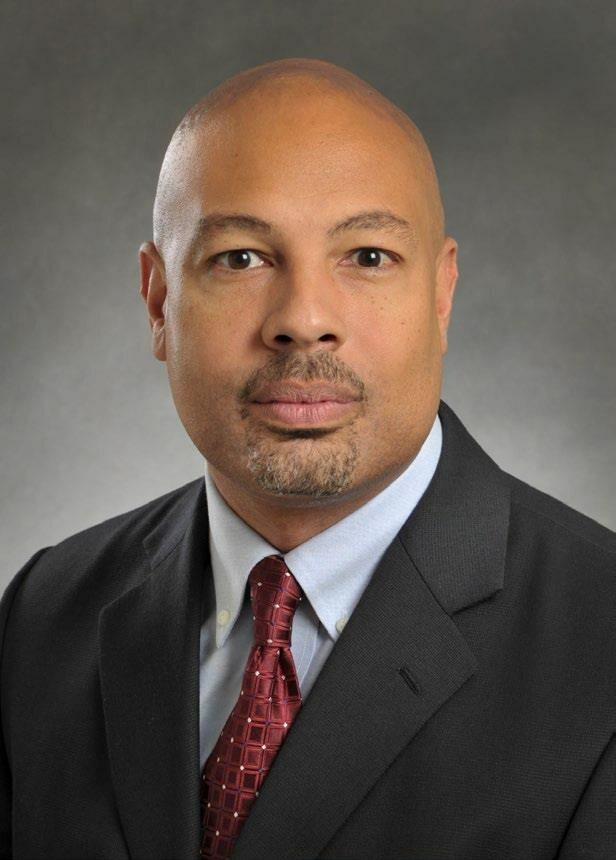
    Greg Hyslop

    Hyslop, who has been on Boeing’s Executive Council since 2016 and assumed the top engineering position in 2019, has worked to strengthen Boeing’s engineering function. He led the realignment of the company’s engineers under one organization, championed changes to empower engineers and instituted next-generation design practices.

    “Greg has modeled Boeing’s commitment to engineering excellence throughout his four decades here,” said Dave Calhoun, Boeing president and CEO. “As we reshaped our company, Greg played an instrumental role in strengthening our engineering organization, positioning our engineers to innovate a future that is more digital, autonomous and sustainable, and always with a focus on safety, quality and integrity.”

    Howard McKenzie

    Howard McKenzie, the top engineer at Boeing’s commercial airplanes unit, succeeds Hyslop as chief engineer and executive vice president, Engineering, Test & Technology. Effective today, McKenzie takes over leadership of the company’s 57,000 engineers worldwide, overseeing all aspects of safety and technical integrity of Boeing products and services. McKenzie also assumes oversight of Boeing’s technology vision, strategy and investment, while reporting to Calhoun and joining the company’s executive council.

    Prior to his recent role at Boeing Commercial Airplanes (BCA), McKenzie was vice president and chief engineer of Boeing Global Services, the company’s services and support business. A 35-year veteran of the company, McKenzie has also served as vice president of Boeing Test & Evaluation, the group responsible for testing, evaluating and certifying new products.

    David Loffing

    David Loffing, chief program engineer of Boeing’s new 777X airplane, takes over as vice president and chief engineer of BCA. Loffing has held roles of increasing responsibility since joining Boeing nearly 20 years ago, with engineering leadership positions across the company’s single- and twin-aisle jet families and future airplane concepts.

    “Howard and David are brilliant engineering minds who bring strong technical expertise and deep program experience to their new roles. They will join together with Chief Technology Officer Todd Citron and Chief Aerospace Safety Officer Michael Delaney to lead our function into the future and help us tackle the engineering challenges of today and tomorrow,” said Calhoun.

    Greg Hyslop will support the leadership transition through June as he assumes the role of chief engineer emeritus, reporting to Calhoun. He will assist with program management, leadership development and university relations efforts.

    “When I think about the impact Boeing has on the world, I feel incredibly lucky to have worked with the talented people who take on the aerospace industry’s most difficult problems,” said Hyslop. “That’s what engineers do. We solve problems. We happily accept challenges and find solutions that change the world.  I will always be proud to call myself a Boeing Engineer.”

    As a leading global aerospace company, Boeing develops, manufactures and services commercial airplanes, defense products and space systems for customers in more than 150 countries. As a top US exporter, the company leverages the talents of a global supplier base to advance economic opportunity, sustainability and community impact. Boeing’s diverse team is committed to innovating for the future, leading with sustainability, and cultivating a culture based on the company’s core values of safety, quality and integrity.

  • Rolls-Royce has begun testing F130 engines for the United States Air Force B-52 fleet

    Rolls-Royce has begun testing F130 engines for the United States Air Force B-52 fleet

    • Rolls-Royce has begun testing F130 engines for the United States Air Force B-52 fleet at the NASA Stennis Space Center. F130 engines were selected to replace existing engines as part of the B-52 modernization program, with over 600 engine deliveries expected

    Rolls-Royce announces on March 1st that it has launched F130 engine testing at the company’s outdoor test facility at the NASA Stennis Space Center in Mississippi, US Rolls-Royce F130 engines were selected by the United States Air Force to replace the existing powerplants in the B-52 fleet, with over 600 new engine deliveries expected. This milestone test program is the first time F130 engines have been tested in the dual-pod engine configuration of the B-52 aircraft. Each B-52 aircraft has eight engines in four pods.

    The engine testing will focus on crosswind aerodynamic flow as well as confirming the successful operation of the engine’s digital controls system. Early results from the testing have been very positive with additional test data to be analyzed over the next several months.

    Rolls-Royce is collaborating very closely with the Air Force and Boeing, which is managing the overall engine integration and B-52 aircraft modernization program. The new engines will extend the life of the B-52 aircraft for 30 years. F130 engines are so durable they are expected to remain on wing for the remainder of the aircraft life.

    Candice Bineyard, Director, Programs – Defence, said, “We are excited to begin this milestone testing program, the first step for what will be decades of successful engine operation for the United States Air Force B-52 fleet. Rolls-Royce continues to work very closely with the Air Force and Boeing to ensure the engine testing and integration process run smoothly. This will result in higher fuel efficiency, reduced air refueling requirements, and significantly lower maintenance costs for the B-52 fleet. We look forward to sharing test results with the Air Force and Boeing as the test plan progresses at the NASA Stennis Space Center.”

    F130 engines will be manufactured, assembled and tested at Rolls-Royce facilities in Indianapolis, the company’s largest production facility in the U.S. Rolls-Royce has invested $1 Billion in recent years to completely modernize manufacturing and testing facilities in Indiana, as well as for advanced technology.

    F130 engines were selected for the B-52 by the Air Force in September 2021 following a competitive selection process. The F130 is derived from the Rolls-Royce BR family of commercial engines, with over 30 million hours of operation and a high reliability rate. It’s a proven, dependable engine with a fuel-efficient design.

  • GA-ASI Establishes New Collaboration Agreement with Leidos in Australia

    GA-ASI Establishes New Collaboration Agreement with Leidos in Australia

    • Represents a Continuation of Business Relationship With Cobham Australia

    SAN DIEGO, 1st March. General Atomics Aeronautical Systems, Inc. (GA-ASI) and Leidos have agreed to continue the successful business relationship previously held between GA-ASI and Cobham Australia. With Leidos’ acquisition of the Cobham Special Mission business in October 2022, Leidos has now assumed the role of GA-ASI’s primary Australian industry collaborator for defence and security business.

    The arrangement will support discussions relating to a Defence Armed Remotely Piloted Aircraft System, and the Australian Border Force future crewed/uncrewed aircraft system under the Civil Maritime Capability Program.

    Discussions are also underway between Leidos and GA-ASI for cooperation on further defence projects in Australia and opportunities in the U.S.

    “GA-ASI is delighted to establish a collaboration agreement with Leidos that continues the successful business relationship previously held with Cobham since 2006,” said Ken Loving, GA-ASI Regional Vice President for Indo-Pacific. “The broader and deeper capabilities that Leidos brings to the relationship, including its impressive capability within Australia, combined with GA-ASI’s substantial global experience in remotely piloted and autonomous aircraft systems, will provide an impressive capability for Australia’s future defence and security needs.”

    Leidos Australia Chief Executive Paul Chase said, “We are delighted to continue and build upon the terrific partnership that Cobham Special Mission has developed with GA-ASI over the past 17 years. When we acquired Special Mission last year, we recognised the huge potential for both advancing current capabilities and services and pursuing new opportunities in Australia and globally. General Atomics has excellent technology and by collaborating with them, our complementary capabilities and experience will combine to provide world-class solutions for current and future customers.”