Author: Defence Street Editor

  • Sir Ben Key, First Sea Lord and Chief Of Naval Staff, Royal Navy Visit To India

    Sir Ben Key, First Sea Lord and Chief Of Naval Staff, Royal Navy Visit To India

    New Delhi, 3rd March. Sir Ben Key First Sea First Sea Lord and Chief of Naval Staff, Royal Navy is visiting India on a two-day official visit from 02 – 03 Mar 23 to participate in Raisina Dialogue at Delhi. During the visit, on 02 Mar 23, Sir Ben Key paid homage at National War Memorial and laid a wreath. He also interacted with Adm R Hari Kumar, Chief of the Naval Staff on 02 Mar 23. The discussions encompassed various issues of common interest and included maritime capability development and greater naval cooperation to further enhance the interoperability between the two navies to address emerging threats. The discussions emphasized on the significance accorded by both countries for a collaborative approach towards maritime security in Indo-Pacific.


    The bilateral relationship between India and UK was upgraded to a ‘Strategic Partnership’ in 2004 and was further strengthened through reciprocal visits by the Hon’ble Prime Ministers of both countries. The Indian Navy – Royal Navy cooperation have been steered in accordance UK-India Joint statement announced during PM Boris Johnson’s visit to India in April 2022, in the joint statement both Prime Ministers had reiterated their commitment to transform defence and security cooperation as a key pillar of the India-UK Comprehensive Strategic Partnership.

    The engagements between Indian Navy and Royal Navy include operational interactions such as the Bilateral Exercise KONKAN and Joint Services Exercise Konkan Shakti, training exchanges and exchange of Maritime Information and Subject Matter Experts in various fields. In addition, warships from both Navies regularly make port calls at each other’s ports, especially after the increased significance of the Indo-Pacific region. The Visit of the First Sea Lord Sir Ben Key is another noteworthy aspect of the Navy to Navy relations and is a consolidation of growing engagements between both the navies.
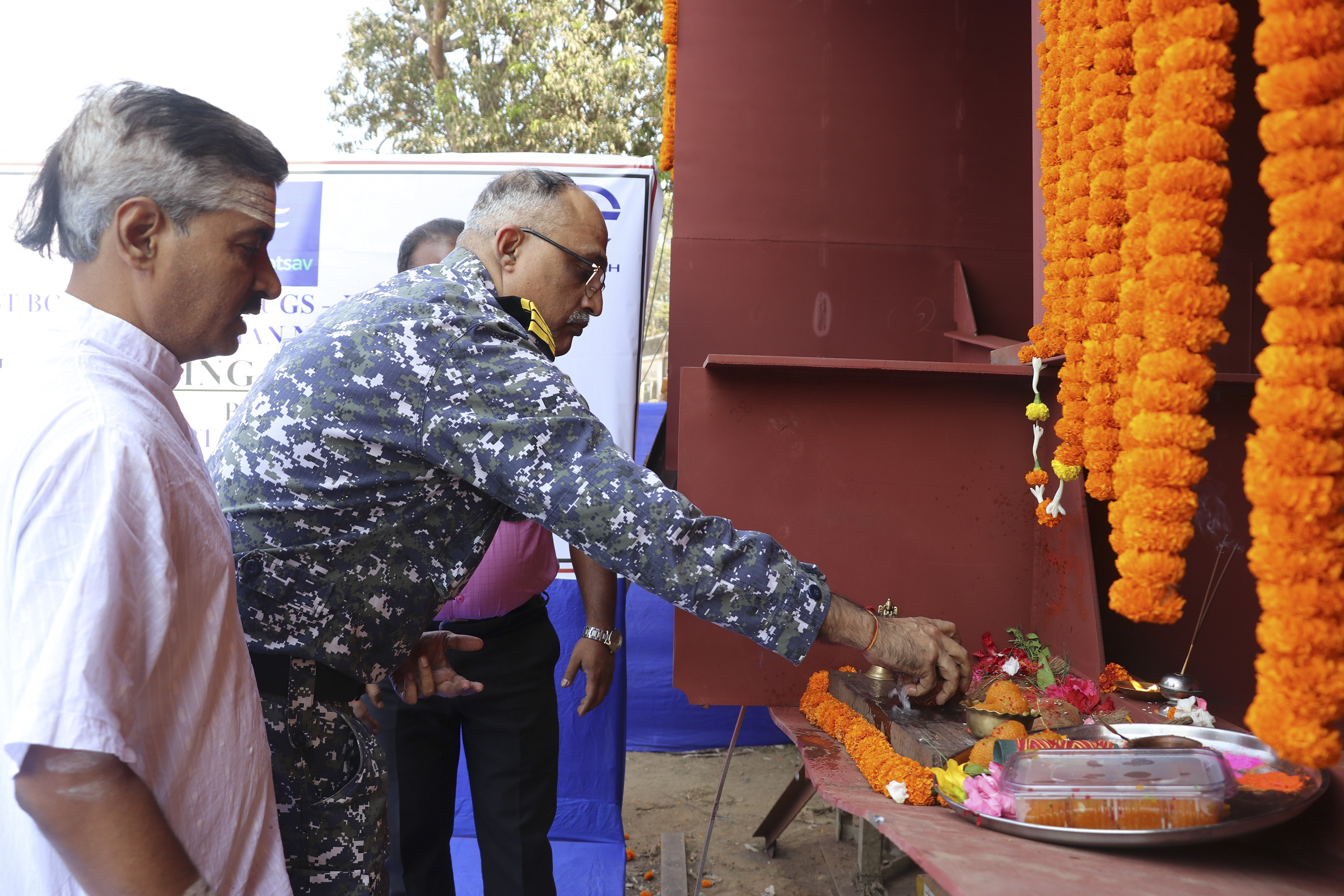
  • Keel Laying Of Third 25T BP Tug, Yard 337(Ashva) at M/s Titagarh  Wagons Pvt Ltd, Kolkata

    Keel Laying Of Third 25T BP Tug, Yard 337(Ashva) at M/s Titagarh Wagons Pvt Ltd, Kolkata

    New Delhi, 3rd March. Keel for third 25T Bollard Pull (BP) Tug, Yard 337 (Ashva) was laid by Capt VS Bawa, WPS (Kol) on 03 Mar 23 at M/s Titagarh Wagons Pvt Ltd, Kolkata. With all major and auxiliary equipment/systems sourced from indigenous manufacturers, this Tug is proud flag bearer of “Make in India” initiative of Ministry of Defence.

    Contract for construction of six 25 Ton Bollard Pull Tugs was concluded with M/s Titagarh Wagons Ltd, Kolkata, in consonance with “Aatmanirbhar Bharat” initiatives of the Government of India. This Tug is being built with a service life of 30 years. The availability of Tugs will provide impetus to Operational commitments of IN by facilitating assistance to naval ships and submarines in berthing and un-berthing, turning and manoeuvering in confined waters. The Tugs will also provide afloat firefighting assistance to ships alongside and at anchorage and will have capability for limited Search and Rescue Operations.

  • First Ever Privately Manufactured Indigenised Fuze Of ASW Rocket Handed Over To Indian Navy

    First Ever Privately Manufactured Indigenised Fuze Of ASW Rocket Handed Over To Indian Navy

    New Delhi, 3rd March. Indian Navy today received a fully indigenised fuze YDB-60 for underwater Rocket RGB 60 manufactured for the first time by a private Indian industry.

    In order to provide major boost to AatmaNirbharta in Armament and Ammunition, Indian Navy received for the first time a fully indigenised fuze YDB-60 for underwater Anti Submarine Warfare (ASW) Rocket RGB-60 used from major warships, through a private manufacturer M/s Economic Explosives Limited (EEL), Nagpur. This would be the first time the Indian Navy has placed supply order for underwater ammunition fuze on an Indian Private industry.

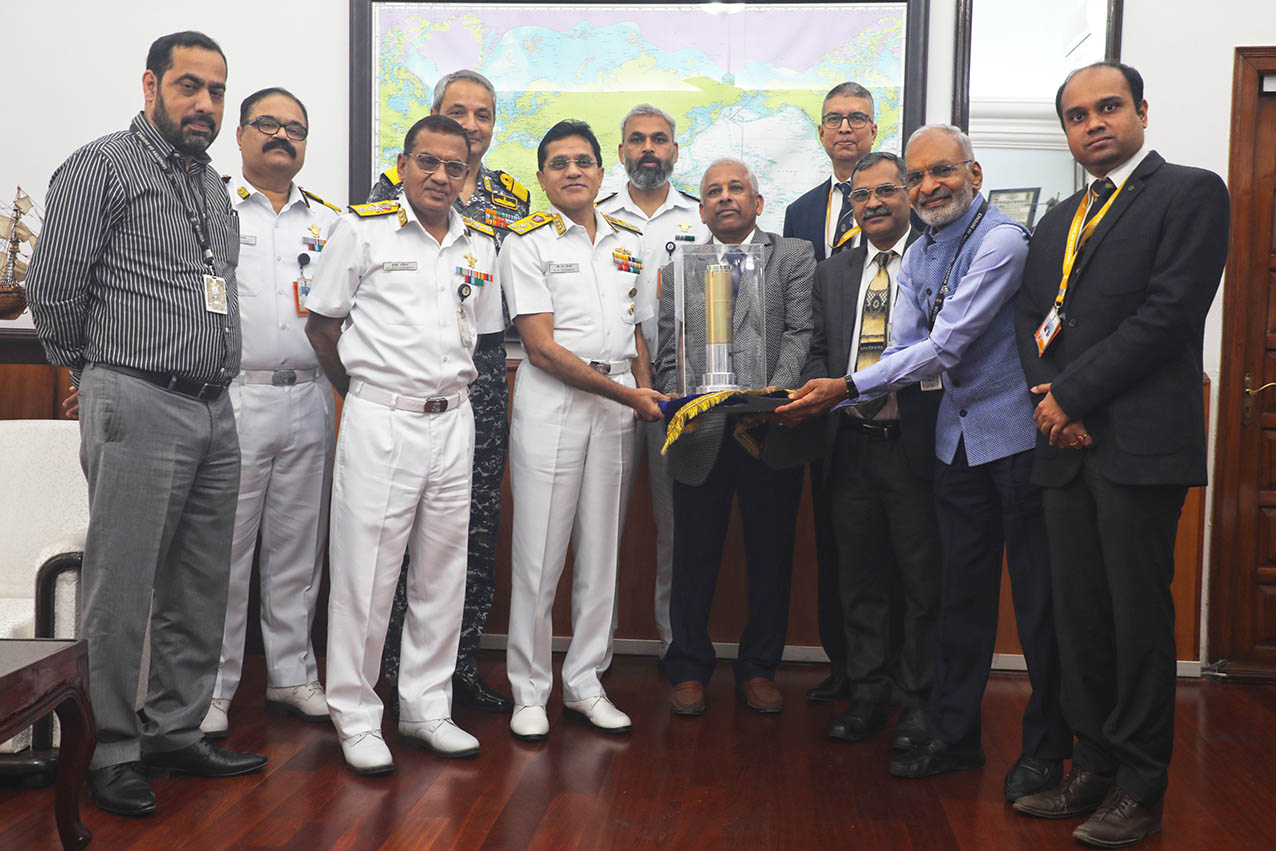
    Shri Satyanarayan Nuwal, the CMD of M/s EEL, Nagpur handed over the first consignment of the fuze to Vice Admiral SN Ghormade, Vice Chief of Naval Staff (VCNS),

    Speaking on this occasion, VAdm Ghormade stated that “The growing participation of private industries in manufacture of armament and ammunition is appreciable and this is providing a major boost in the AatmaNirbharta of Armed Forces. Development and Manufacture of such a fuze by private industry for the first time, using simulated dynamic trial facilities is a major achievement for the country“.

    All technical assistance to the manufacturer towards creating a vibrant ecosystem for manufacture of ammunition and fuze in India in pursuit of AatmaNirbharta’ has been provided by the Directorate General of Naval Armament (DGONA) and Directorate General of Naval Armament Inspection (DGNAI), Indian Navy.

  • Greater Bay Airlines Announces Order for 15 737-9 Airplanes

    Greater Bay Airlines Announces Order for 15 737-9 Airplanes

    • 737 MAX model to form the backbone of new airline’s future fleet
    • Single-aisle jet with “unmatched economics” will expand regional routes

    HONG KONG. On 3rd March, Greater Bay Airlines (GBA) and Boeing announced an order for 15 737-9 airplanes. The agreement also includes a commitment for five 787 Dreamliners to support GBA’s long-term plan to launch international long-haul service.

    The new Hong Kong-based carrier said the 737-9 will form the backbone of its future fleet as it seeks to operate more flights between Hong Kong and major cities in Asia and Mainland China. GBA plans to leverage the 737-9’s enhanced capacity and range to lower trip costs and expand its network.

    “The 737-9 will allow GBA to open up new routes from Hong Kong with unmatched economics,” said Wong Cho Bau, chairman of GBA. “The new order will bring fantastic growth possibilities to GBA and enable us to strive for excellence in an innovative way for our valued customers.”

    GBA is an all-Boeing carrier currently operating a fleet of three 737-800 jets with flights to four destinations, including Bangkok, Taipei, Tokyo and Seoul. The airline also plans to bring in a number of additional 737-800s to meet its expansion needs before the arrival of the 737-9.

    “GBA’s commitment for 737-9s is a major endorsement of our 737 MAX family and its ability to serve new markets,” said Stan Deal, president and CEO of Boeing Commercial Airplanes. “The 737-9 will provide GBA with unmatched efficiency and reliability and lower operating costs, while continuing to provide a premium on-board experience for its passengers.”

    The 737-9 is designed to seat more than 190 passengers in a two-class configuration with a range of 3,300 nautical miles, providing operators added capacity and increased profitability within their network.

    The 737 MAX family delivers enhanced efficiency, improved environmental performance and increased passenger comfort to the single-aisle market, while offering excellent economics and reducing fuel use and emissions by 20% compared to the airplanes it replaces. Since the 737 MAX was launched in 2011, more than 100 customers around the world have placed firm orders for more than 5,300 airplanes.

    Greater Bay Airlines is a Hong Kong-based carrier offering scheduled passenger and cargo services. The airline, which commenced scheduled service in July 2022, has a plan to develop an extensive network of air services to major cities in Asia and Mainland China from Hong Kong, riding on the back of the opening of the three-runway system at Hong Kong International Airport in late 2024.

  • GA-ASI Signs New Memorandum of Understanding with Conflux

    GA-ASI Signs New Memorandum of Understanding with Conflux

    • UAS Leader Continues Its Collaboration With Longtime Australian Industry Partner

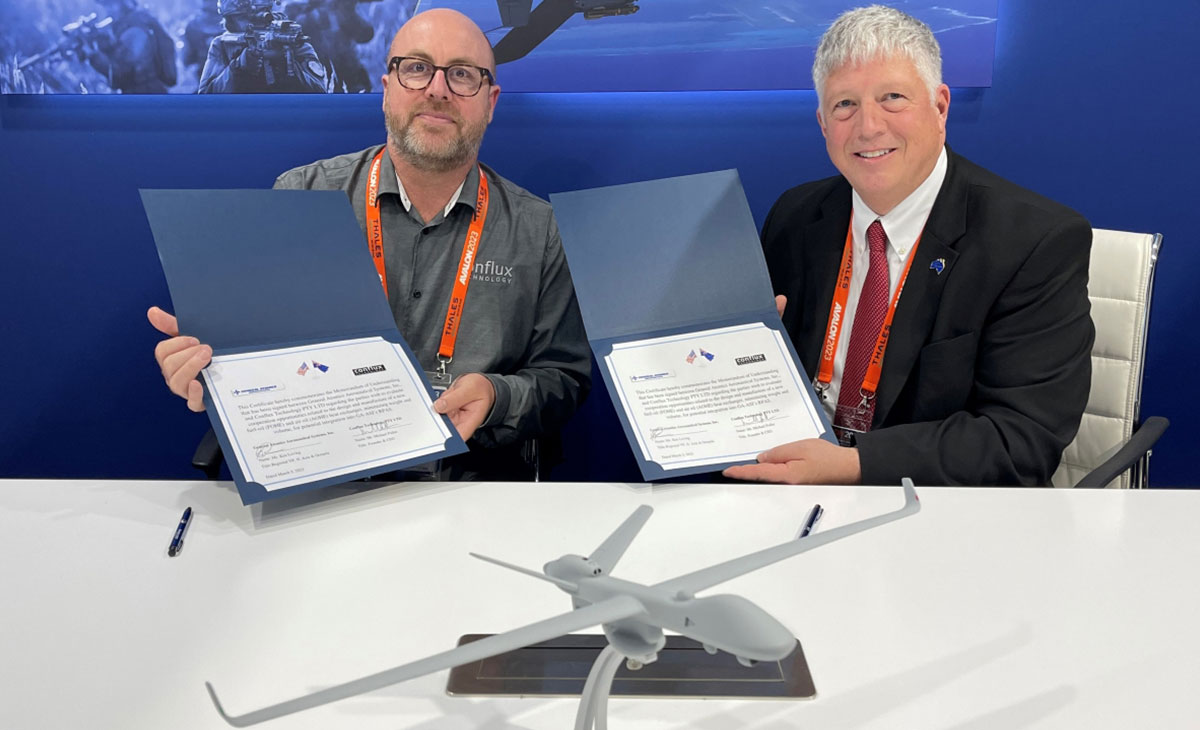
    SAN DIEGO, 2nd March. In an effort to further advance its Additive Manufacturing capability, General Atomics Aeronautical Systems, Inc. (GA-ASI) has established a new Memorandum of Understanding (MOU) with its longtime partner Conflux Technology. The new MOU, signed this week at the AVALON 2023 Australian International Airshow and Aerospace & Defence Exposition, is the culmination of several years of collaborative work between GA-ASI and Conflux to build a flight-qualified Fuel Oil Heat Exchanger (FOHE) for GA-ASI platforms.

    “We continue to work closely with Conflux on the design and manufacture of FOHE for our aircraft,” said Ken Loving, GA-ASI Regional Vice President for Indo-Pacific. “Through this new MOU, we will establish a clear path to production for the heat exchanger components used by multiple GA-ASI production lines.”

    GA-ASI is a leading developer of unmanned aircraft, and Conflux is a thermal management system solution company headquartered in Australia. Conflux is an industry-leading expert, mastering Additive Manufacturing (AM) for heat exchanger applications.

    “Our continued partnership with General Atomics is a milestone for the commercialization of additively manufactured heat exchangers within the aerospace and defence markets, carrying the significant weight and performance benefits offered by these technologies towards production,” said Abe Masoud, Conflux Business Development Manager – North America.

    General Atomics Aeronautical Systems, Inc. (GA-ASI), an affiliate of General Atomics, is a leading designer and manufacturer of proven, reliable remotely piloted aircraft (RPA) systems, radars, and electro-optic and related mission systems, including the Predator® RPA series and the Lynx® Multi-mode Radar. With more than seven million flight hours, GA-ASI provides long-endurance, mission-capable aircraft with integrated sensor and data link systems required to deliver persistent flight that enables situational awareness and rapid strike. The company also produces a variety of ground control stations and sensor control/image analysis software, offers pilot training and support services, and develops meta-material antennas.

  • Boeing Nominates Sabrina Soussan to Board of Directors

    Boeing Nominates Sabrina Soussan to Board of Directors

    • Soussan brings strong engineering, manufacturing and sustainability leadership
    • Based in France, Soussan would become Boeing’s first board member outside the United States

    ARLINGTON, Va. The Boeing Company Board of Directors announced on 2nd March that it has nominated Sabrina Soussan to be elected as a new director at the company’s upcoming annual meeting of shareholders.

    Sabrina Soussan

    Soussan, 53, currently serves as chair and CEO of SUEZ SA, a Paris-based global utility company specializing in water and waste management with a focus on sustainability. Over a more than a 20-year career at Siemens AG, she held multiple leadership positions as Division CEO, Business Unit CEO and as an engineer in transportation, automation and energy management sectors. Prior to joining SUEZ, she was CEO of Swiss dormakaba, a global leader in access and security solutions.

    “Sabrina is a proven leader who brings a global mindset with extensive engineering and senior leadership experience in manufacturing, safety, sustainability, transportation and digitalisation,” said Boeing Chair Larry Kellner. “With a track record of success and a shared commitment to our values, Sabrina will add essential perspective to our Board.”

    Soussan, who is German and French, earned a master’s degree in mechanical and aeronautical engineering from the École Nationale Supérieure de Mécanique et d’Aérotechnique and a master’s degree in business administration from I.A.E. Poitiers and University of Dublin, Ireland.

    Subject to her election at the company’s annual meeting of shareholders on April 18, Soussan would become the eighth independent director to join the Board since April 2019. These eight directors collectively bring significant experience in aerospace, safety, engineering, manufacturing, cyber, software, risk oversight, audit, supply chain management, sustainability and finance. Based in France, Soussan would also become Boeing’s first board member based outside the United States and she would join the Board’s audit and finance committees.

    “Sabrina is an ideal leader to join the Boeing board as we continue to restore our operational strength, guided by our focus on safety, quality and transparency,” said Dave Calhoun, Boeing President and CEO. “Her global expertise, strong engineering credentials and deep experience leading complex manufacturing operations with safety at the forefront will be vital to our business.”

  • Boeing, U.S. Army Apaches Achieve 5 Million Flight Hours

    Boeing, U.S. Army Apaches Achieve 5 Million Flight Hours

    • Five million hours equates to flying an AH-64 nonstop for more than 208,333 days
    • The Apache continues to prove its reliability and versatility with worldwide customers

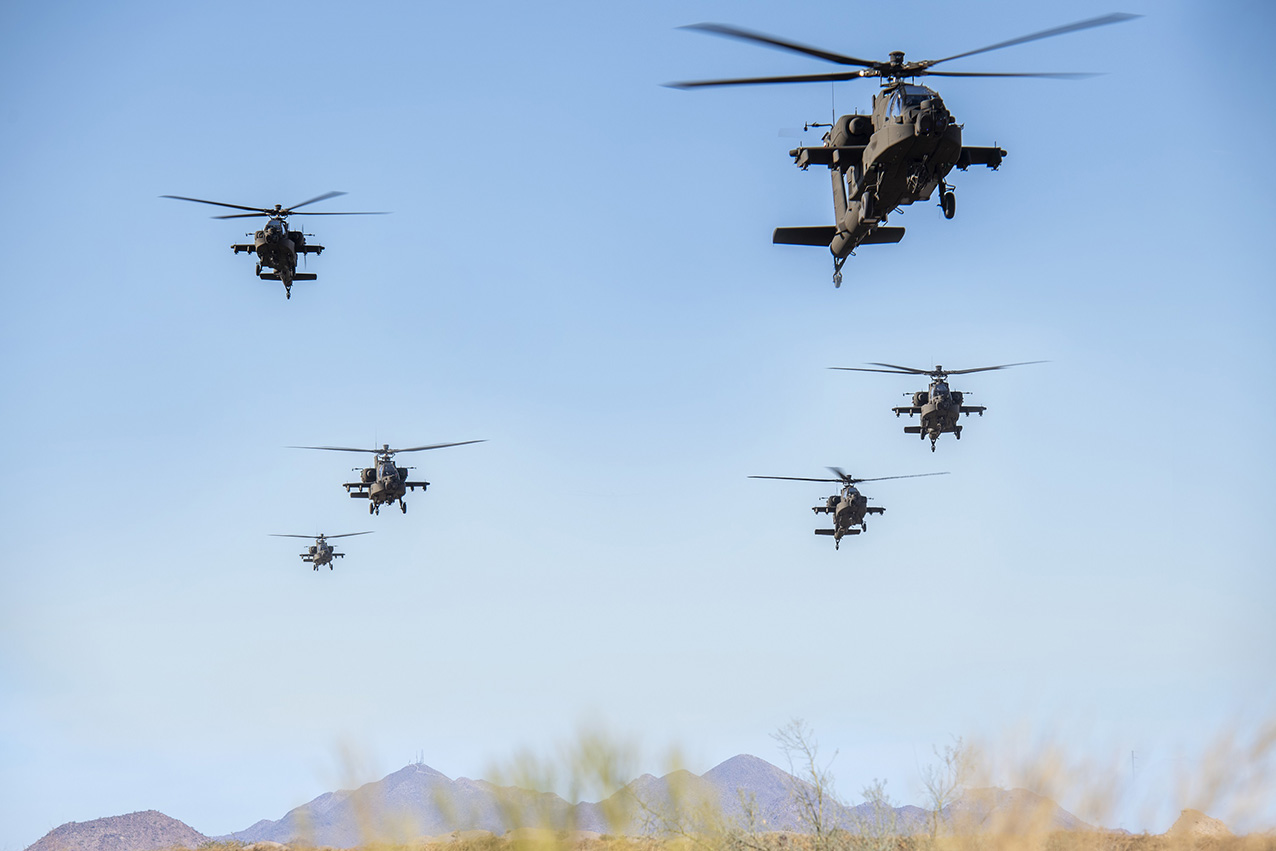
    MESA, Ariz., 2nd March. Boeing and the AH-64 team are observing a unique milestone as the U.S. Army’s AH-64 Apache attack helicopters have officially reached five million flight hours. The accomplishment is equivalent to flying nonstop for more than 208,333 days or 570 years and nine months. Additionally, 1.3 million of those five million flight hours were accomplished during combat.

    “With more than five million flight hours, the Apache continues to be reliable, versatile and lethal,” said Katie Yursky, interim vice president of Attack Helicopter Programs and senior Mesa site executive. “Congratulations to the U.S. Army and its Apache aviators on reaching this incredible milestone. Every hour counts, and we look forward to supporting our soldiers on their next milestone and beyond.”

    Since 1984 when the first AH-64 took flight, the U.S. Army has operated A, D and E-model Apaches. The U.S. Army currently operates D-model Apaches in addition to the AH-64E Apache.

    “It is such a great privilege and an honor to be a part of the Apache program,” Col. John (Jay) Maher, U.S. Army Apache Project Manager, said. “The five million flight hours milestone is a testament to the reliability and availability of the Apache in some of the world’s most demanding conditions. Supporting the Soldiers who fly and maintain the Apache is priority one.”

    Boeing is upgrading the E-model to Version 6.5, which will include updated software, and integrating the Army’s new improved turbine engine. Additionally, the company announced the Modernized Apache in October 2022, a Boeing concept aligned with the U.S. Army’s future modernization efforts, keeping the AH-64 a relevant, multi-domain lethal combat-multiplier for U.S. warfighters and international customers.

    Built by Boeing in Mesa, Ariz., the AH-64 is the attack aircraft of choice for 19 defense forces around the globe, with additional international interest. In September 2022, Poland announced the selection of Boeing’s AH-64E Apache for the Polish Armed Forces’ new attack helicopter fleet.

  • Lufthansa orders 10 Airbus A350-1000 and 5 more A350-900 aircraft

    Lufthansa orders 10 Airbus A350-1000 and 5 more A350-900 aircraft

    Toulouse, 2nd March. Lufthansa Group has signed an agreement with Airbus to expand its fleet by 10 Airbus A350-1000s and 5 Airbus A350-900s. With this firm order for the latest generation widebody aircraft, the airline will continue its decarbonisation trajectory. Compared to the previous generation of aircraft, the A350 consumes significantly less fuel, with a corresponding reduction in emissions. Passengers will benefit from the latest state-of-the-art cabin amenities and comfort on board.

    In addition to the agreement on the purchase of the new aircraft, Airbus and Lufthansa have also signed a Memorandum of Understanding (MOU) to further strengthen their cooperation in the field of sustainability and future technologies. This includes the intensified use of sustainable aviation fuels, the further optimisation of operations through a more efficient flight management and exploration into the use of hydrogen.

    “We are honoured to see Lufthansa topping up its A350 order book to a total of 60 aircraft, joining the increasing number of A350-1000 customers around the world. With economic and sustainability pressures becoming a measurable reality as international flying increases again, so do the massive advantages of the A350 as the only clean sheet design and therefore the most efficient solution,” said Christian Scherer, Airbus Chief Commercial Officer and Head of International.“By  adding the largest A350 family member to its fleet, Lufthansa will benefit from Airbus’ full fleet commonality, offering unmatched operational flexibility and vast economic benefits.”

    With its latest order Lufthansa reinforces its long standing relationship with Airbus. Since the A300 in the 1970’s, Lufthansa Group has operated all members of the Airbus product family, from the A220, A320-Family, A330 / A340, A350 and the A380.

    The A350 is the world’s most modern and efficient widebody aircraft and the long range leader in the 300-410 seater category. The A350’s clean sheet design includes state-of-the-art technologies and aerodynamics delivering unmatched standards of efficiency and comfort. Its new generation engines and use of lightweight materials make it the most fuel efficient large widebody aircraft. The A350 is the quietest aircraft in its class with 50 percent noise footprint reduction vs the previous generation aircraft, making it a good airport neighbour wherever it flies.

    The A350’s Airspace cabin is the quietest of any twin-aisle and offers passengers and crews the most modern in-flight products for the most comfortable flying experience.

    At the end of January 2023, the A350 Family had won 925 firm orders from 54 customers worldwide, making it one of the most successful wide-body aircraft ever.

  • Elbit Systems Awarded Two Contracts in An Aggregate Amount of $ 252 Million to Supply ATMOS and PULS Artillery Systems to a NATO Member Country

    Elbit Systems Awarded Two Contracts in An Aggregate Amount of $ 252 Million to Supply ATMOS and PULS Artillery Systems to a NATO Member Country

    Haifa, Israel. Elbit Systems Ltd. announced on 2nd March that it was awarded two contracts with an aggregate value of $252 million to supply artillery rocket systems to a European NATO member country.

    Under the first contract in an amount of $119 million, Elbit Systems will supply a battalion’s worth of ATMOS (Autonomous Truck Mounted Howitzer) 155mm/52 caliber truck-mounted howitzers systems. The contract will be performed over a period of two years.

    Under the second contract in an amount of $133 million, Elbit Systems will provide two batteries worth of PULSartillery rocket-launcher systems including a package of rockets and missiles. The contract will be performed over a period of three years.

    The ATMOS modular artillery system is a combat proven wheeled Howitzer solution, capable of firing all NATO-certified 155mm projectiles that has an effective range of over 40 km with standard projectiles and offers extended range with Rocket-Assisted Projectiles (RAP). The ATMOS is designed for rapid deployment and operation enabling provision of fire support for a broad range of missions.

    Elbit Systems’ PULS launcher supports firing both free-flying rockets and precision guided rockets and missiles ranged form 12km and up to 300km. The PULS launcher is fully adaptable to existing wheeled and tracked platforms, enabling a significant reduction in maintenance and training costs.

    Bezhalel (Butzi) Machlis, President and CEO of Elbit Systems:“We are witnessing a trajectory of an increased demand for advanced artillery solutions from militaries around the world, including European countries and NATO members as part of their efforts to increase the effectiveness of their armed forces. Our operationally proven systems provide an advanced cost effective solution to meet that demand.”

  • Elbit Systems Awarded a $120 Million Follow-on Contract to Supply Unmanned Turrets, Weapon Stations and Mortar Systems to the Romanian Armed Forces

    Elbit Systems Awarded a $120 Million Follow-on Contract to Supply Unmanned Turrets, Weapon Stations and Mortar Systems to the Romanian Armed Forces

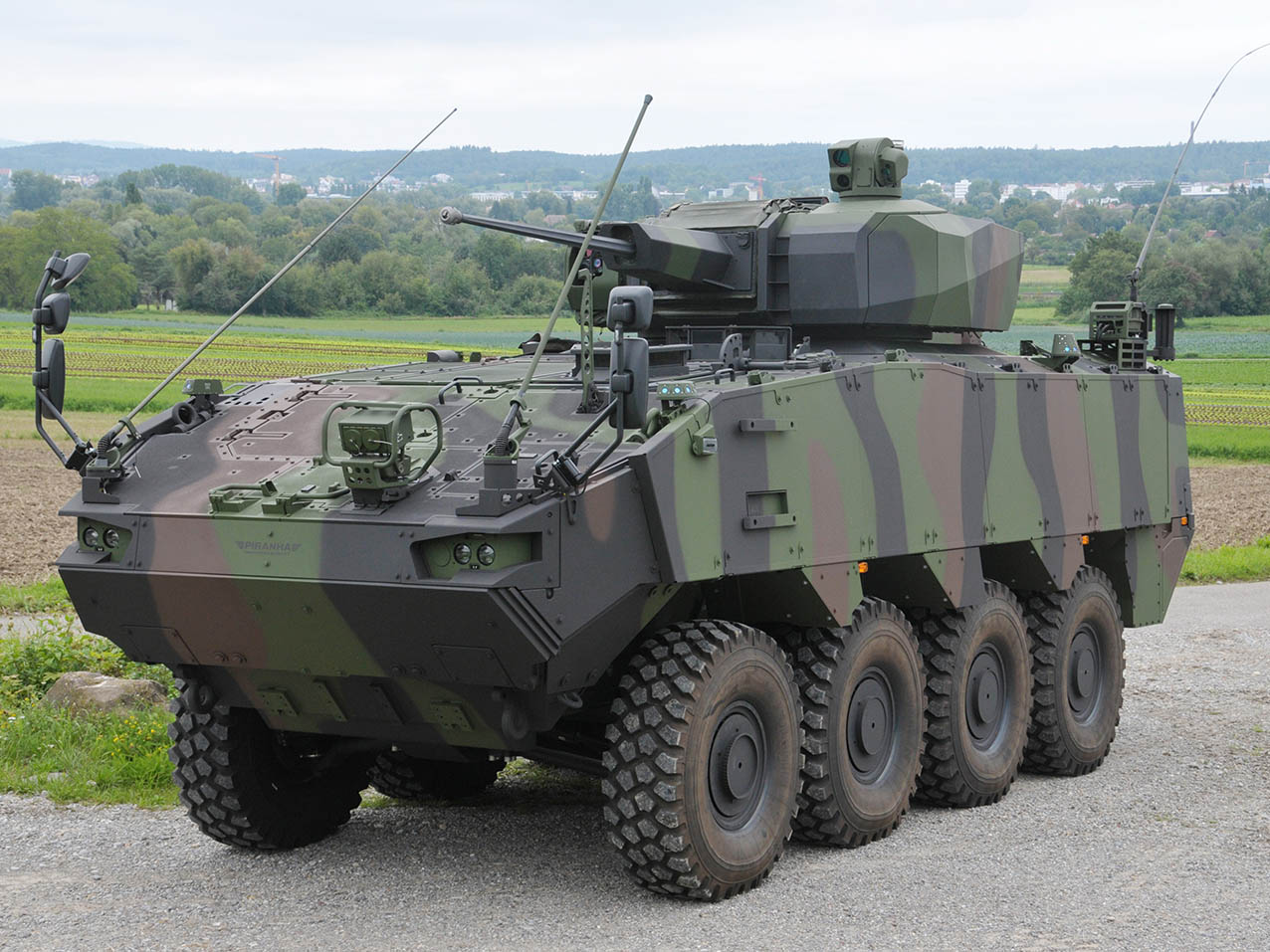
    Haifa, Israel. Elbit Systems Ltd. announced on 2nd March that its Romanian subsidiary, Elmet International SRL., was awarded a follow-on contract valued at $120 million from General Dynamics European Land Systems (GDELS) to supply unmanned turrets, Remote Controlled Weapon Stations (RCWS) and mortar systems for the ‘Piranha V’ Armored Personnel Carrier (APC) of the Romanian Armed Forces. The work will be performed in Romania over a three-year period. 

    Under the follow-on contract, Elbit Systems will supply UT30 MK2 turrets, RCWS and the SPEAR mortar systems, all fully integrated onboard the GDELS’ ‘Piranha V’ APC. Elbit Systems’ UT30 MK2 is a 30mm unmanned light turret that integrates weapon systems, fire control systems, sensors and display systems for enhanced combat effectiveness, situational awareness and target acquisition capabilities.

    The Company’s RCWS is a light weight high accuracy 12.7mm weapon station. The SPEAR is a 120mm computerized autonomous vehicular mortar system. In addition to Romania, Elbit Systems’ turrets, RCWS and mortar systems have been selected to date by dozens of customers across the world including Israel, U.S.A, Denmark, Austria, Belgium, Brazil, and Croatia.

    Bezhalel (Butzi) Machlis, Elbit Systems President & CEO: “This follow-on contract award is yet another vote of confidence in Elbit Systems’ portfolio of solutions for armoured platforms. I believe that the expansion of our integration and production capacity in Europe strengthens our ability to address the growing demand for advanced and proven capabilities for armoured platforms.”