Category: Fighter Jets

  • Turkish Kızılelma vs. F-35 Lightning II Everything You Need To Know

    Turkish Kızılelma vs. F-35 Lightning II Everything You Need To Know

    Kızılelma vs. F-35: In a daring initiative to establish its autonomy in defense capabilities, Turkey is actively progressing in the development of its indigenous fifth-generation stealth fighter, the Kızılelma. Positioned as a formidable contender against the US-manufactured F-35 Lightning II, the Kızılelma, also recognized as the National Combat Aircraft (MMU), emerges as a notable achievement by Turkish Aerospace Industries (TAI). This milestone underscores Turkey’s aspirations to emerge as a key player in the aerospace industry.

    The Kizilelma’s Journey

    Following its expulsion from the F-35 program due to the acquisition of the Russian S-400 missile system, Turkey has expedited the progress of the Kızılelma project. This endeavor seeks to address the vacuum created by the absence of F-35s, intending to equip the Turkish Air Force with an advanced, versatile stealth fighter. Anticipated to take its inaugural flight in 2023, the Kızılelma is scheduled for full-scale production in the latter part of the 2020s.

    During an interview, Selcuk Bayraktar, the Chief Technical Officer (CTO) of Baykar Makina, a prominent drone manufacturer in Turkey, asserted that the Kızılelma supersonic unmanned fighter jet from Turkey would surpass the capabilities of the American F-35 and pose a significant challenge to traditional fifth-generation aviation. This statement was widely covered by Russian media.

    “‎We plan to produce a supersonic version of an unmanned fighter. Kizilelma will revolutionize aviation; it can be used in aerial combat against classic combat aircraft. Perhaps, after the drone’s first flight, it would be wrong to compare it with aircraft used in many countries, but when it is fully ready, it will surpass the same F-35 in several respects,” Bayraktar said.

    He additionally emphasized that the Kızılelma is classified as a fifth-generation fighter, comparable to the United States’ F-35. However, a notable distinction between the two aircraft lies in the fact that the Kızılelma is operated remotely, deviating from the traditional piloted approach of the F-35.

    Kizilelma Vs F-35 Lightning II

    The National Unmanned Combat Aerial Vehicle System (MIUS), known by the codename Kızılelma (Red Apple), represents a highly significant and strategic undertaking by Baykar. This initiative is particularly noteworthy as Baykar’s combat drones have already generated substantial global interest.

    Turkish drones, exemplified by the TB2, have convincingly demonstrated their combat capabilities in conflicts such as those in Ukraine and Azerbaijan. This success has intensified the anticipation and interest surrounding the upcoming next-generation Kızılelma.

    As per the manufacturer’s statements, the unmanned fighter jet is anticipated to undertake an extensive array of military operations, encompassing tasks such as close air support (CAS), missile offensives, suppression of enemy air defenses (SEAD), and destruction of enemy air defenses (DEAD).

    On the flip side, the F-35, produced by the American defense contractor Lockheed Martin, stands as a fifth-generation manned aircraft equipped with sophisticated stealth features. Functioning as a versatile multi-role fighter, it excels in diverse operations, including but not limited to suppression of enemy air defenses (SEAD) and destruction of enemy air defenses (DEAD), strategic attacks, close air support, air superiority, intelligence, surveillance, reconnaissance (ISR), and electronic warfare.

    The Turkish Kızılelma unmanned aircraft is projected to have a flight endurance of five hours and achieve speeds of up to 800 kilometers per hour or Mach 0.64. Featuring a maximum take-off weight of 6 tons, the drone is designed to accommodate a payload capacity of 1,500 kilograms. Additionally, the manufacturer has disclosed plans to develop a supersonic variant of the aircraft.

    Boasting a maximum speed of Mach 1.6, the F-35 stands as a long-range, supersonic fighter, maintaining this capability even with a full load of internal weapons and fuel. The aircraft is characterized by an exceptionally low radar signature, and it possesses the versatility to carry weapons both internally and externally.

    The Turkish drone shows significant promise. As indicated by Baykar, the Kızılelma will be satellite-controlled through a SATCOM antenna. Its propulsion is facilitated by Ukraine’s Ivchenko-Progress AI-322F turbofan engines.

    The aircraft is set to feature an AESA radar manufactured by Aselsan and will have the capability to launch indigenous air-to-air missiles, including Bozdoğan and Gökdoğan. Additionally, the forthcoming unmanned aircraft will be outfitted with Roketsan-produced MAM family guided bombs, designed for small-scale attack missions, and SOM-J cruise missiles, boasting a range exceeding 250 kilometers for surface warfare.

    Designed for short runway takeoffs and landings, the drone is expected to have carrier capabilities. The TCG Anadolu amphibious assault ship, currently undergoing cruise tests, is slated to become its operational base in the future.

    FAQs

    1. What is the Kızılelma?

    The Kızılelma is a fifth-generation unmanned fighter jet developed by Turkey’s Baykar. It distinguishes itself with satellite control via a SATCOM antenna and propulsion by Ukraine’s Ivchenko-Progress AI-322F turbofan engines.

    2. What are the key specifications of the Kızılelma?

    The Kızılelma is anticipated to have a flight endurance of five hours, reaching speeds of up to 800 kilometers per hour or Mach 0.64. It boasts a maximum take-off weight of 6 tons and a payload capacity of 1,500 kilograms.

    3. How does the F-35 compare to the Kızılelma in terms of speed and capabilities?

    The F-35, with a top speed of Mach 1.6, is a long-range supersonic fighter known for its low radar signature. It can carry weapons internally and externally, showcasing versatility in various operations.

    4. What weapons will the Kızılelma be equipped with?

    The Kızılelma is set to be armed with Aselsan-built AESA radar and can launch domestic Bozdoğan and Gökdoğan air-to-air missiles. For small attack missions, it will utilize Roketsan-made MAM family guided bombs and SOM-J cruise missiles for surface warfare.

    5. How is the Kızılelma drone designed for carrier capabilities?

    The Kızılelma is engineered for short runway takeoffs and landings, a crucial feature for carrier operations. The TCG Anadolu amphibious assault ship, currently undergoing cruise tests, is slated to serve as its operational base.

  • Eurofighter Typhoon Vs. F-16 Fighting Falcon Comparison, BVR & Dogfight

    Eurofighter Typhoon Vs. F-16 Fighting Falcon Comparison, BVR & Dogfight

    Eurofighter Typhoon Vs. F-16: The Eurofighter Typhoon and the F-16 Fighting Falcon are both multi-role fighter jets that are designed for air-to-air and air-to-ground combat.

    The Eurofighter Typhoon is a twin-engine, delta-wing fighter aircraft developed by a consortium of European countries, including the United Kingdom, Germany, Italy, and Spain. It entered service in 2003 and has since been used by several air forces, including the Royal Air Force (RAF), the German Air Force, the Italian Air Force, and the Spanish Air Force. The Typhoon is designed for air superiority missions and is equipped with advanced avionics, radar, and weapons systems.

    The F-16 Fighting Falcon, also known as the “Viper,” is a single-engine supersonic fighter aircraft developed by General Dynamics (now Lockheed Martin). It entered service with the US Air Force in 1979 and has since been used by several other countries. The F-16 is highly maneuverable and versatile, and it is used for air-to-air combat, air-to-ground attack, and reconnaissance missions. It is equipped with advanced avionics, radar, and weapons systems and has been continually upgraded over the years to maintain its effectiveness.

    Both the Eurofighter Typhoon and the F-16 Fighting Falcon are highly capable fighter jets that have been used extensively in various missions around the world. Each has its strengths and weaknesses, and the choice of which aircraft to use in a particular situation will depend on a range of factors, including the mission requirements, the available resources, and the specific capabilities of each aircraft. In this blog post, we will compare these two aircraft in terms of design, capabilities, performance, and armament.

    Eurofighter Typhoon Vs. F-16 Fighting Falcon

    Design and Capabilities:

    The Eurofighter Typhoon is a twin-engine, canard-delta wing, multirole fighter aircraft developed by a consortium of European countries, including Germany, Italy, Spain, and the United Kingdom. It was designed as a highly agile, highly maneuverable aircraft with a high thrust-to-weight ratio, making it well-suited for both air-to-air combat and ground attack missions. The Typhoon is equipped with advanced avionics and weapons systems, including an active electronically scanned array (AESA) radar, infrared search and track (IRST) system, and helmet-mounted display (HMD) system. It also has a highly advanced defensive suite, including chaff and flare dispensers, radar warning receiver, and electronic countermeasures (ECM) systems.

    The F-16 Fighting Falcon is a single-engine, multirole fighter aircraft developed by General Dynamics, which is now part of Lockheed Martin. It was designed as a highly maneuverable aircraft with a low radar cross-section and advanced avionics and weapons systems. The F-16 is equipped with a high-resolution radar, infrared search and track system, and HMD. It also has a highly advanced defensive suite, including chaff and flare dispensers, radar warning receiver, and ECM systems.

    Performance:

    The Eurofighter Typhoon has a top speed of Mach 2.0 and a range of approximately 2,900 kilometers (1,800 miles). It has a service ceiling of 19,800 meters (65,000 feet) and a climb rate of 315 meters per second (62,000 feet per minute). The Typhoon’s highly agile design and advanced engines give it excellent maneuverability and acceleration, making it well-suited for dogfighting and air-to-air combat.

    The F-16 Fighting Falcon has a top speed of Mach 2.0 and a range of approximately 4,200 kilometers (2,600 miles). It has a service ceiling of 15,000 meters (50,000 feet) and a climb rate of 254 meters per second (50,000 feet per minute). The F-16’s lightweight design and powerful engines give it excellent maneuverability and acceleration, making it well-suited for dogfighting and air-to-air combat.

    Armament:

    The Eurofighter Typhoon is equipped with a wide range of weapons, including air-to-air missiles, air-to-ground missiles, and bombs. Its armament includes the Meteor beyond-visual-range air-to-air missile, which is one of the most advanced missiles in the world. The Typhoon is also equipped with a 27 mm Mauser BK-27 cannon.

    The F-16 Fighting Falcon is also equipped with a wide range of weapons, including air-to-air missiles, air-to-ground missiles, and bombs. Its armament includes the AIM-120 AMRAAM beyond-visual-range air-to-air missile and the AGM-65 Maverick air-to-ground missile. The F-16 is also equipped with a 20 mm M61 Vulcan cannon.

    Defensive Suite:

    Both the Eurofighter Typhoon and the F-16 Fighting Falcon are equipped with highly advanced defensive suites, which include chaff and flare dispensers, radar warning receiver, and electronic countermeasures (ECM) systems. Additionally, the Typhoon is equipped with an infrared search and track (IRST) system, while the F-16 is equipped with a high-resolution radar.

    Production and Service:

    The Eurofighter Typhoon has been produced since the 1990s and is currently in service with several air forces around the world, including the Royal Air Force (UK), the German Air Force, the Italian Air Force, and the Spanish Air Force. As of 2021, over 600 Typhoons have been built, with more in production.

    The F-16 Fighting Falcon has been in production since the 1970s and is currently in service with air forces around the world, including the United States Air Force.

    Eurofighter Typhoon Vs. F-16 Data Table

    Here’s a brief data table comparing key specifications of the Eurofighter Typhoon and the F-16 Fighting Falcon:

    Feature Eurofighter Typhoon F-16 Fighting Falcon
    Origin Europe (UK, Germany, Italy, Spain) United States
    First Flight 1994 1974
    Introduction to Service Early 2000s 1978
    Role Multi-role (Air-to-Air, Air-to-Ground) Multi-role (Air-to-Air, Air-to-Ground)
    Stealth Technology Non-stealthy Non-stealthy
    Primary Users Multiple European countries, including UK, Germany, Italy USAF and numerous international users
    Variants Single variant Numerous variants for different roles
    Powerplant Twin Eurojet EJ200 turbofans General Electric F110 or Pratt & Whitney F100 turbofans
    Max Speed (Mach) Mach 2 Mach 2+
    Range (miles) 1,389 2,280 (F-16C Block 50/52)
    Service Ceiling (feet) 65,000 50,000
    Empty Weight (lbs) 24,250 18,900 (F-16C Block 50/52)
    Max Takeoff Weight (lbs) 51,809 42,300 (F-16C Block 50/52)
    Length (ft) 52.36 49.32
    Wingspan (ft) 35.93 32.83
    Cost (approximate unit cost) $90-150 million (depending on variant) $18.8-34 million (depending on variant)

    It’s important to note that these values are approximate and can vary based on specific variants and configurations.

    Conclusion

    In conclusion, the Eurofighter Typhoon and the F-16 Fighting Falcon are both highly capable aircraft that are well-suited for dogfighting. Both aircraft are highly maneuverable, agile, and equipped with advanced avionics and weapons systems that give them an edge in air-to-air combat.

    While it is impossible to predict the outcome of a dogfight between these two aircraft, it is clear that both the Eurofighter Typhoon and the F-16 Fighting Falcon are formidable opponents in air-to-air combat. The Typhoon’s advanced flight control systems, canard-delta wing configuration, and twin engines give it exceptional speed, maneuverability, and range, while the F-16’s lightweight design and advanced systems also make it highly maneuverable and agile.

    Ultimately, the outcome of a dogfight between the Eurofighter Typhoon and the F-16 Fighting Falcon will depend on a range of factors, including pilot skill, tactics, and the specific circumstances of the engagement. However, both aircraft are highly capable and well-suited for dogfighting, and any engagement between the two would undoubtedly be an intense and exciting battle.

  • F-22 Raptor vs F-35 Lightning II  Comparison, BVR, Dogfight, Everything To Know

    F-22 Raptor vs F-35 Lightning II Comparison, BVR, Dogfight, Everything To Know

    From the vault of the immense military arsenal of the US Air Force, F-22 Raptor and F-35 Lightening are two very advanced Fighter Jets developed by Lockheed Martin.

    Stealth multirole Jets equipped with latest technology and advanced avionics, these jets have similar capabilities but were designed for different objectives and mission sets and have key differences in their design and competence.

    F-22 Raptor vs F-35 Lightning II Comparison

    The F-22 Raptor and the F-35 Lightning II are two of the most advanced fighter jets in the world. While both aircraft are designed for stealth and superior air-to-air and air-to-ground capabilities, they have different roles and capabilities that make them unique.

    The F-22 Raptor was designed primarily as an air superiority fighter, with the ability to engage enemy aircraft at long ranges and high speeds. The F-35 Lightning II, on the other hand, was designed as a multirole fighter, capable of performing air-to-air, air-to-ground, and intelligence, surveillance, and reconnaissance (ISR) missions.

    In terms of performance, the F-22 Raptor has a higher top speed (approximately Mach 2.25) and can climb higher and faster than the F-35 Lightning II. The F-35, however, has a longer range and a more advanced sensor and communications suite, making it better suited for network-centric warfare and joint operations with other aircraft and ground forces.

    Both aircraft are highly maneuverable, but the F-22 Raptor has a slight edge in terms of agility and the ability to perform tight turns and high-G maneuvers. The F-35, however, has a smaller radar cross-section and more advanced stealth technology, making it harder to detect and track by enemy radar systems.

    Another key difference between the two aircraft is their cost. The F-22 Raptor is significantly more expensive than the F-35 Lightning II, with a unit cost of approximately $150 million compared to the F-35’s unit cost of approximately $89 million. The F-22 also has a smaller production run, with only 195 aircraft produced compared to the F-35’s planned production run of over 3,000 aircraft.

    F-22 Raptor vs F-35 Lightning II

    Here’s a data table comparing the F-22 Raptor and the F-35 Lightning II:

    F-22 Raptor F-35 Lightning II
    Manufacturer Lockheed Martin Lockheed Martin
    Role Air superiority fighter Multirole fighter
    First flight 1997 2006
    Introduction 2005 2015
    Unit cost US$150 million (flyaway cost, as of 2009) US$89.2 million (F-35A, as of 2021)
    US$115.5 million (F-35B, as of 2021)
    US$108.8 million (F-35C, as of 2021)
    Maximum speed Mach 2.25 (1,500 mph, 2,410 km/h) Mach 1.6 (1,200 mph, 1,930 km/h)
    Range 1,600 nautical miles (2,900 km) with 2 external tanks 1,200 nautical miles (2,220 km)
    Service ceiling 65,000 feet (20,000 m) 50,000 feet (15,000 m)
    Engines 2 × Pratt & Whitney F119-PW-100 turbofans 1 × Pratt & Whitney F135-PW-100 turbofan
    (F-35A and F-35C)
    1 × Pratt & Whitney F135-PW-600 turbofan
    (F-35B, Short Takeoff and Vertical Landing)
    Thrust 35,000 lbf (156 kN) each 43,000 lbf (191 kN) (F-35A)
    40,000 lbf (178 kN) (F-35B)
    43,000 lbf (191 kN) (F-35C)
    Armament 1 × 20 mm M61A2 Vulcan Gatling gun Internal and external hardpoints for
    missiles, bombs, and other munitions
    (F-35A: 4 internal, F-35B/C: 2 internal)
    Air-to-air and air-to-ground ordnance
    (AIM-120, AIM-9X, GBU-12, GBU-31, etc.)
    Crew 1 1
    Length 62 feet 1 inch (18.92 m) 51 feet 4 inch (15.67 m)
    Wingspan 44 feet 6 inch (13.56 m) 35 feet 0 inch (10.7 m)
    Height 16 feet 8 inch (5.08 m) 14 feet 8 inch (4.42 m)

    Please note that the cost figures provided are approximate and may vary depending on the specific variant and year. Additionally, the performance characteristics mentioned are approximate values and can vary based on configuration, loadout, and other factors.

    Size Comparison Of F-22 and F-35

    CATEGORY F-22 Raptor F-35 Lightning II
    Length 18.9 m – 62.0 ft 15.6 m – 50.0 ft
    Height 5.08 m – 16.8 ft 4.33 m – 14.2 ft
    Wingspan 13.6 m – 45 ft 0 in 10.7 m – 35 ft 0 in
    Wing Area 78.0 m² – 840 sq ft 42.0 m² – 460 sq ft
    Power 2 x 153 kN – 35k lbf 1 x 190 kN – 43k lbf
    Weight 19,700 kg – 43,5k lb 13,200 kg – 30,2k lb

    F-22 and F-35 Dogfight Rating

    CATEGORY F-22 Raptor F-35 Lightning II
    Cannon GAU-22/A GAU-22/A
    Caliber (mm) 20 mm 20 mm
    Muzzle Velocity 1000 m/s 1000 m/s
    Maneuverability 9,4 8,5
    Rate of Fire (rpm) 4200 rpm 4200 rpm
    Size Point 10%-30% 20% 20%
    Thrust/Weight Ratio 1,26 1,07
    AAM (first) AIM-9X AIM-9X
    Operational range 0.2 – 50 km 0.2 – 50 km
    AAM (second) AIM-9X IRIS-T
    Operational range 0.2 – 50 km 0.5 – 30 km
    Dogfight Rating 86% 70%

    Similarity Between F-22 vs F-35

    The F-22 and F-35 are both advanced, fifth-generation fighter jets developed by Lockheed Martin for the United States military. While they share some similarities, they also have distinct differences. Here are some points of similarity between the F-22 and F-35:

    • Stealth capabilities: Both aircraft incorporate stealth technology to reduce their radar signatures and enhance survivability in hostile environments.
    • Sensor fusion: Both jets utilize advanced sensor fusion systems that gather and integrate data from various sensors, allowing pilots to have a comprehensive situational awareness and make informed decisions.
    • Advanced avionics: The F-22 and F-35 feature advanced avionics systems, including sophisticated radar systems, electronic warfare capabilities, and network-centric warfare capabilities.
    • Supersonic speeds: Both aircraft are capable of flying at supersonic speeds, with the F-22 being capable of sustained supersonic flight and the F-35 having a limited supersonic capability.
    • Precision strike capabilities: They both possess precision strike capabilities, allowing them to engage ground targets with a variety of weapons, including guided bombs and missiles.
    • Multirole capabilities: The F-22 and F-35 are designed as multirole fighters, capable of performing air-to-air combat, air-to-ground strikes, intelligence gathering, and electronic warfare missions.

    Difference Between F-22 vs F-35

    Despite these similarities, there are several key differences between the F-22 and F-35:

    • Design and purpose: The F-22 is primarily an air superiority fighter, optimized for air-to-air combat, whereas the F-35 is a multirole fighter intended for both air-to-air and air-to-ground missions.
    • Cost: The F-22 is a more expensive aircraft compared to the F-35, with a higher per-unit cost and a more limited production run.
    • Production status: The F-22 production line has been closed, meaning that no new F-22s are being produced, while the F-35 program is ongoing, with production and development still active.
    • Performance: The F-22 possesses superior maneuverability, speed, and altitude capabilities compared to the F-35. It has a higher thrust-to-weight ratio and can achieve higher speeds and altitudes.
    • Payload and range: The F-35 has a larger internal weapons payload and greater range compared to the F-22, allowing it to carry more weapons and operate over longer distances.
    • International participation: The F-35 program involves multiple international partners, with several countries participating in its development and procurement. The F-22, on the other hand, is exclusively used by the United States Air Force.

    In summary, while the F-22 and F-35 share some similarities, such as stealth capabilities, advanced avionics, and multirole capabilities, they also have notable differences in design, purpose, cost, performance, and international participation.

    What makes the F-22 better than the F-35?

    The F-22 and the F-35 complement each other, each serving distinct roles. In terms of air-to-air combat, the F-22 stands unrivaled with its exceptional features such as high speed, maneuverability, and a stealthy design, making it a formidable dogfighting machine.

    The F-22 boasts powerful twin-engines, providing it with a substantial take-off weight of approximately 83,500 lb, surpassing the F-35’s maximum takeoff weight of around 70,000 lb. This notable weight difference allows the F-22 to effortlessly carry heavier and more weapons, enhancing its combat capabilities.

    A key advantage of the F-22 is its 3D Thrust Vectoring Control (TVC) nozzles, which significantly enhance maneuverability—an aspect lacking in the F-35. This feature makes the F-22 exceptionally lethal in air-to-air warfare scenarios. Despite its 80s design, the F-22 maintains optimal aerodynamics and stealth while accommodating a substantial payload.

    What makes the F-35 better than the F-22?

    The F-35 outshines the F-22 in terms of cost, weight, and size. With lower operational costs and maintenance requirements, the F-35 proves to be a more cost-effective option, facilitating the maintenance of larger fleets.

    The F-35’s reasonable flight per hour is a notable advantage, especially when compared to the F-22, which incurs high operational costs, partly due to its twin fuel-hungry engines. The F-35’s higher combat readiness rate is a decisive factor in its favor.

    In terms of electronic technology, the F-35’s avionics are nearly a decade ahead of the F-22. Additionally, the F-35 program is still in its early stages, providing the opportunity for frequent software upgrades and configurations in the near future, whereas the F-22 program has concluded.

    Conclusion

    Being indispensable assets to the United States Air Force, both F-22 Raptor and F-35 Lightning have and provide critical capabilities and services to National Protection. While the F-22 Raptor is dedicated specially to Air Superiority with its manoeuvrability and weapon systems comparable to no other fighter jet, F-35 is a multirole fighter jet with a wide range of capabilities. Mission requirements and resources available to operate and maintain the aircraft defines the choice that must be made between these two heavy weights.

    Fighters are also a very important type of military equipment, so more and more cutting-edge technologies are applied to them. For pilots who fly fighter jets, they not only have superb flying skills, but also have excellent psychological and physical qualities, which are excellent and brave. Military challenge coins are a great way to express our recognition and praise for these airmen. Because challenge coins are a symbol of honor. Challenge coins can be customized based on elements such as the pilot’s name and the type of aircraft they fly. Giving these military coins to pilots will encourage them to continue to work hard and fight for the country’s air force cause!

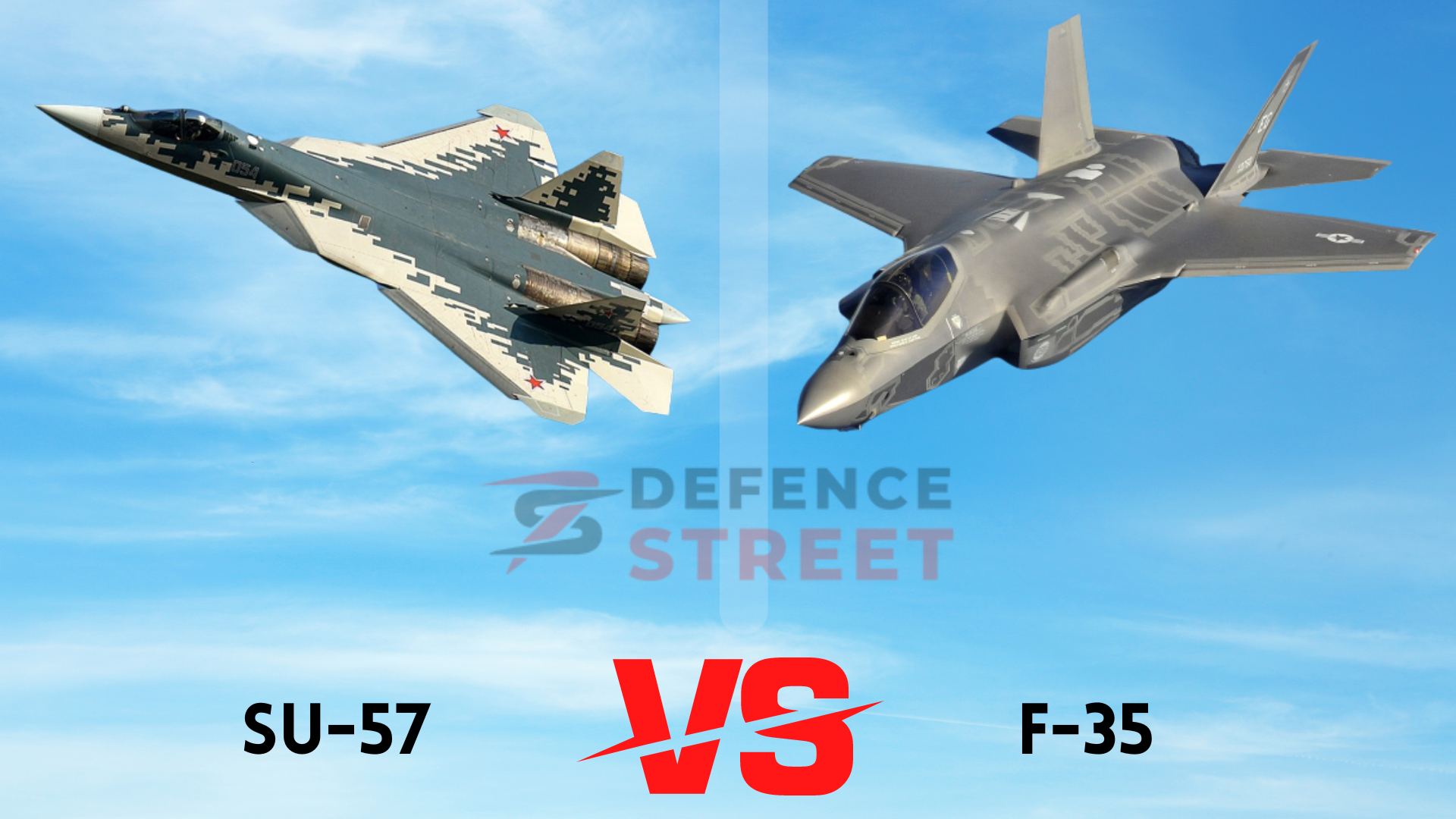
  • Su-57 Vs F-35 – Is Russia’s Su-57 warplane better than the US F-35 stealth fighters?

    Su-57 Vs F-35 – Is Russia’s Su-57 warplane better than the US F-35 stealth fighters?

    Su-57 Vs F-35: In the dynamic landscape of modern military aviation, two formidable contenders have taken center stage – Russia’s Su-57 and the United States’ F-35. As the world witnesses rapid advancements in technology and the evolution of warfare strategies, the comparison between these two cutting-edge aircraft has ignited fervent discussions among aviation enthusiasts, defense analysts, and global policymakers.


    The Su-57, developed by Russia’s aerospace industry, and the F-35, a product of American engineering prowess, represent the pinnacle of stealth, maneuverability, and multirole capabilities. Beyond their impressive specifications, these aircraft embody the strategic ambitions and priorities of their respective nations, each aiming to secure dominance in the skies.

    In this blog, we delve deep into the intricacies of the Su-57 and F-35. Through a comprehensive analysis of their design philosophies, technological innovations, combat effectiveness, and potential impact on the future of aerial warfare, we aim to shed light on the critical question: Which of these aviation marvels truly holds the upper hand in this high-stakes rivalry?

    Su-57 Vs F-35

    let’s delve into a detailed comparison of the Su-57 and F-35 across various key aspects:

    Design and Stealth Technology:

    Su-57: The Su-57 features advanced stealth characteristics, such as reduced radar cross-section, serrated edges, and radar-absorbent materials. Its design incorporates a blend of stealth and aerodynamic efficiency.

    F-35: The F-35 boasts a highly sophisticated stealth profile with a combination of angles, materials, and coatings to minimize radar reflection. Its design prioritizes reduced observability across a wide range of radar frequencies.

    Performance and Maneuverability:

    Su-57: The Su-57 is renowned for its supermaneuverability, allowing it to perform complex aerial maneuvers and maintain high agility in combat scenarios. It integrates thrust-vectoring nozzles for enhanced control.

    F-35: The F-35 focuses on a balance between agility and stability. Its fly-by-wire controls and advanced avionics provide excellent handling characteristics, enabling it to excel in a variety of mission profiles.

    Avionics and Sensors:

    Su-57: The Su-57 features a powerful and versatile radar system, the N036 Byelka, capable of tracking multiple targets simultaneously and engaging both air and ground threats. It also includes advanced electronic warfare systems.

    F-35: The F-35 incorporates the AN/APG-81 AESA radar, offering excellent target tracking and electronic warfare capabilities. Its Distributed Aperture System (DAS) provides unparalleled situational awareness.

    Multirole Capabilities:

    Su-57: The Su-57 is designed for air superiority and multirole missions, including air-to-air combat, air-to-ground strikes, and reconnaissance.

    F-35: The F-35 is a true multirole platform, available in three variants (A, B, and C) tailored for air force, navy, and marine requirements. It can perform air-to-air combat, ground attacks, intelligence, surveillance, and reconnaissance (ISR), and electronic warfare.

    Weaponry and Payload:

    Su-57: The Su-57 can carry a wide array of air-to-air and air-to-ground missiles, precision-guided bombs, and anti-ship weapons. It offers a significant payload capacity.

    F-35: The F-35 has internal weapon bays to maintain its stealth profile and can carry a variety of guided munitions and missiles, both internally and externally.

    Operational Range and Endurance:

    Su-57: The Su-57 has a substantial operational range, supported by in-flight refueling capabilities, enabling it to cover longer distances.

    F-35: The F-35 also has respectable operational range and endurance, particularly the F-35A variant. In-flight refueling extends its reach.

    Cost and Affordability:

    Su-57: The exact cost of the Su-57 remains a topic of debate due to limited production and development challenges.

    F-35: The F-35 has faced scrutiny for its initial high costs, but efforts have been made to reduce expenses through economies of scale and continuous improvements.

    Global Adoption and Influence:

    Su-57: The Su-57 has garnered interest from select countries, including Turkey and India, but has yet to achieve widespread international adoption.

    F-35: The F-35 is poised to become one of the most widely used fighter aircraft, with numerous partner and customer nations integrating it into their air forces and navies.

    Su-57 Vs F-35 Data Table

    Here’s a simplified data table comparing some key attributes of the Su-57 and F-35:

    Aspect Su-57 F-35A
    Country of Origin Russia United States
    First Flight 2010s 2006 (F-35A)
    Role Air superiority, multirole Multirole
    Stealth Technology Advanced stealth features Highly advanced stealth
    Maneuverability Superb agility and maneuverability Balanced agility
    Radar N036 Byelka AESA radar AN/APG-81 AESA radar
    Avionics Advanced systems and sensors Cutting-edge avionics
    Payload Air-to-air, air-to-ground missiles Wide variety of munitions
    Operational Range Considerable with in-flight refueling Respectable operational range
    In-Flight Refueling Yes Yes
    Variants Single variant (Su-57) Three variants (A, B, C)
    Global Adoption Limited international adoption Widespread international use
    Cost Cost challenges and debates Initial high costs, ongoing reductions
    Notable Features Thrust-vectoring nozzles Distributed Aperture System
    Advanced electronic warfare systems Network-centric warfare

    Please note that this table provides a simplified comparison and does not cover all aspects or variations of the Su-57 and F-35 aircraft. Additionally, specific details and capabilities can vary based on different versions of these aircraft.

    Similarity Between Su-57 Vs F-35

    Despite being developed by different countries and having distinct design philosophies, the Su-57 and F-35 do share several similarities in their capabilities and features. Here are some key similarities between the two advanced fighter aircraft:

    • Stealth Technology: Both the Su-57 and F-35 incorporate advanced stealth technology to reduce their radar cross-section and enhance their survivability in contested environments. Their designs aim to minimize radar reflections and improve their ability to evade detection by enemy radar systems.
    • Multirole Capabilities: While the primary focus of the Su-57 is air superiority with multirole capabilities, the F-35 is explicitly designed as a multirole platform. Both aircraft can perform a wide range of missions, including air-to-air combat, air-to-ground strikes, reconnaissance, and electronic warfare.
    • Advanced Avionics: Both aircraft feature cutting-edge avionics systems that provide enhanced situational awareness, target tracking, and communication capabilities. These avionics contribute to improved pilot effectiveness and mission success rates.
    • Data Sharing and Network-Centric Warfare: The Su-57 and F-35 are designed to operate within network-centric environments, enabling them to share data and communicate with other friendly assets in real time. This capability enhances their ability to coordinate and execute complex joint missions.
    • Internal Weapons Bays: Both aircraft are equipped with internal weapons bays to maintain their stealth profiles and reduce radar visibility. This feature allows them to carry a significant payload of weapons internally while minimizing their radar cross-section.
    • Variants and Adaptability: While the Su-57 has a single primary variant, the F-35 comes in three distinct variants (F-35A for the Air Force, F-35B for the Marines, and F-35C for the Navy). This adaptability allows the F-35 to meet the specific requirements of various branches of the U.S. military.
    • Modern Cockpit Design: Both the Su-57 and F-35 feature modern cockpit designs with advanced displays, controls, and human-machine interfaces. These features enhance pilot situational awareness and reduce workload during high-stress missions.
    • In-Flight Refueling Capability: Both aircraft are equipped with in-flight refueling capabilities, allowing them to extend their operational range and endurance through aerial refueling.
    • Focus on Future Warfare: The Su-57 and F-35 are designed to be relevant in the evolving landscape of modern warfare, where technology, network connectivity, and adaptability play crucial roles.

    What’s better about the F-35?

    Despite recent criticisms regarding cost and delays, the F-35 remains a highly commendable advanced fighter jet, with several noteworthy features:

    1. Stealth capabilities: The F-35’s distinctive shape and materials render it nearly invisible to radar, enabling it to approach enemies covertly without detection.
    2. Latest technology: Equipped with cutting-edge sensors and weapons systems, the F-35 stands out as one of the most technologically advanced and lethal fighter jets globally.
    3. Supersonic speed: With engines that propel it at speeds exceeding 1,200 miles per hour, the F-35 ranks among the fastest fighter jets, enhancing its agility and responsiveness.
    4. Amazing maneuverability: Thanks to its vectored thrust system, the F-35 displays remarkable maneuverability in combat situations, executing tight turns and cuts with precision.

    What’s better about the Su-57?

    1. 5th Generation: The Su-57, a 5th generation jet fighter developed by the Russian aerospace company Sukhoi, conducted its inaugural flight in 2010 and is presently undergoing further development under the Russian military.
    2. Fly-By-Wire Control System: Distinguishing itself, the Su-57 is the sole jet fighter globally to employ a fly-by-wire control system, wherein computers, rather than conventional mechanical controls, manage the aircraft.
    3. AESA radar: Enhancing its technological prowess, the Su-57 features an AESA radar, an electronic scanning radar variant utilized for target detection and tracking. This inclusion establishes the Su-57 as one of the most advanced jet fighters globally.
    4. Stealth capabilities: Additionally, the Su-57 boasts stealth capabilities attributable to its design, rendering it challenging for radar systems to detect. This characteristic heightens the difficulty for enemy forces to target the aircraft.

    Conclusion

    In conclusion, the F-35 and Su-57 present distinct approaches to modern air warfare. The F-35 excels with its advanced stealth, multirole adaptability, and widespread global integration, fostering collaborative operations. Its technology-driven design and network-centric capabilities contribute to enhanced situational awareness and interoperability.

    Conversely, the Su-57 shines through super maneuverability, potent radar systems, and raw agility, positioning it as a formidable force in dynamic engagements. Its thrust-vectoring nozzles offer a tactical advantage in aerial maneuvers. While limited in international adoption, the Su-57’s potential future advancements warrant attention.

    Choosing between the F-35 and Su-57 depends on nuanced factors: mission requirements, coalition strategies, cost-effectiveness, and geopolitical considerations. Both aircraft epitomize innovation and symbolize the priorities of their respective nations. As air warfare evolves, these platforms will continue to shape the future of aerial operations, proving their worth in an ever-changing global landscape.

  • Rafale vs F-18: Clash of the Titans in Modern Air Warfare

    Rafale vs F-18: Clash of the Titans in Modern Air Warfare

    Rafale vs F-18: When it comes to modern military aviation, two names stand out as prominent contenders: the Dassault Rafale and the Boeing F-18 Hornet. These cutting-edge fighter jets represent the pinnacle of technological achievement and have been at the forefront of aerial combat for several decades.

    In this blog post, we will delve into the world of military aircraft, comparing the key features and capabilities of the Rafale and F/A-18. As we explore their origins, design philosophies, and performance characteristics, you will gain a deeper understanding of the strengths and unique qualities that set these two remarkable aircraft apart.

    Rafale vs F-18

    Here’s a detailed comparison between the Dassault Rafale and the Boeing F/A-18 in various aspects:

    Origin:

    • Rafale: The Rafale is a French-made multirole fighter aircraft designed and produced by Dassault Aviation. It was developed in the late 1980s and has been in service with the French military since the early 2000s.
    • F/A-18: The F/A-18, primarily designed by McDonnell Douglas (now Boeing) and produced by various manufacturers, is an American twin-engine, carrier-capable fighter/attack aircraft. It first entered service in the late 1970s.

    Variants:

    • Rafale: The Rafale comes in several variants, including the Rafale C (single-seat air superiority), Rafale B (twin-seat training), Rafale M (naval variant), and more.
    • F/A-18: The F/A-18 has variants such as the F/A-18A/B (single-seat and twin-seat), F/A-18C/D, F/A-18E/F Super Hornet, and the EA-18G Growler (electronic warfare variant).

    Role:

    • Rafale: The Rafale is a multirole fighter capable of performing air superiority, ground-attack, and reconnaissance missions. It’s used by the French Air Force and Navy and has been exported to other countries.
    • F/A-18: The F/A-18 is also a multirole aircraft with variants designed for both land-based and carrier-based operations. It serves with the U.S. Navy and Marine Corps and is widely used by various international air forces.

    Engine:

    • Rafale: The Rafale is powered by two Snecma M88 turbofan engines, providing excellent thrust-to-weight ratio and maneuverability.
    • F/A-18: The F/A-18 Super Hornet is equipped with two General Electric F414 turbofan engines, offering superior performance and range.

    Speed and Range:

    • Rafale: The Rafale has a top speed of approximately Mach 1.8 and a combat radius of around 1,000 kilometers (620 miles).
    • F/A-18: The F/A-18 Super Hornet can reach speeds of Mach 1.8 and has a combat radius of approximately 722 kilometers (449 miles).

    Armament:

    • Rafale: The Rafale can carry a wide range of air-to-air and air-to-ground weapons, including Meteor, MICA, and Scalp missiles. It’s known for its versatility in weapon selection.
    • F/A-18: The F/A-18 can carry an array of munitions, including AIM-9 Sidewinder and AIM-120 AMRAAM air-to-air missiles, as well as various precision-guided bombs and AGM-88 HARM anti-radiation missiles.

    Avionics and Technology:

    • Rafale: The Rafale is equipped with advanced avionics and radar systems, including the RBE2 AESA radar, SPECTRA electronic warfare suite, and a glass cockpit with hands-on throttle and stick (HOTAS) controls.
    • F/A-18: The F/A-18 Super Hornet features the AN/APG-79 AESA radar, advanced electronic countermeasures, and a digital flight control system for improved handling.

    Carrier Operations:

    • Rafale: The Rafale M is specifically designed for carrier-based operations and is used by the French Navy on their aircraft carriers.
    • F/A-18: The F/A-18 is well-suited for carrier operations and has been a key component of U.S. Navy carrier air wings.

    Rafale vs F-18 Data Table

    Here’s a data table comparing the Dassault Rafale and the F-18 Super Hornet:

    CATEGORY DASSAULT RAFALE F/A-18E/F SUPER HORNET
    Length 15.27 m (50 ft 1 in) 18.4 m (60.1 ft)
    Wingspan 10.80 m (35 ft 4 in) 13.65 m (45 ft 0 in)
    Wing Area 45.7 m² (492 sq ft) 46.5 m² (500 sq ft)
    Height 5.30 m (17 ft 3 in) 4.88 m (16.0 ft)
    Weight 10,100 kg (22,600 lb) 14,500 kg (32,000 lb)
    Power 2 x 75 kN (17,000 lbf) 2 x 97 kN (22,000 lbf)
    BVR Rating 90% 83%
    Armament 8.6/10 7.9/10
    Technology 8.5/10 8.9/10
    Avionics 8.4/10 9.0/10
    Maneuverability 9.3/10 7.8/10
    Rate of Climb Max. 300 m/s (60,000 ft/min) Max. 228 m/s (44,000 ft/min)
    Thrust/Weight 1.13 1.03
    Service Ceiling 17 km (55,000 ft) 15 km (50,000 ft)
    Speed 2.00 Mach 1.80 Mach
    Fuel Economy 0.70 km/l (1.65 NM/gallon) 0.60 km/l (1.21 NM/gallon)
    Unit Cost $130,000,000 USD $80,000,000 USD
    Overall Rating Excellent Very Good

    This table provides a side-by-side comparison of various attributes and capabilities of the Dassault Rafale and the F-18 Hornet, helping readers to understand their differences and strengths.

    Conclusion

    In conclusion, the comparison between the Dassault Rafale and the F-18 Super Hornet reveals that both aircraft are exceptional in their own right, each with its unique set of advantages. The Rafale impresses with its superior maneuverability, armament options, and performance in beyond-visual-range (BVR) combat. Its smaller size, higher BVR rating, and speed make it a formidable contender in air-to-air engagements, and its rate of climb and service ceiling allow it to operate effectively at varying altitudes.

    On the other hand, the F-18 Super Hornet stands out for its advanced technology, avionics, and cost-effectiveness. It has a strong balance of capabilities, and its lower unit cost makes it an attractive option for air forces seeking modern multirole aircraft without breaking the bank.

    Ultimately, the choice between these two fighters hinges on specific mission requirements, budget constraints, and strategic considerations. The Rafale may be the preferred choice for nations seeking an edge in dogfights and air superiority, while the F-18 Super Hornet could be the practical option for countries looking for a versatile, cost-efficient platform capable of a wide range of missions. Both aircraft have proven their worth in modern air combat, making them vital assets for any nation’s defense.

    FAQs

    Here are some frequently asked questions (FAQs) related to the comparison between the Rafale and F-18:

    1. Which aircraft is faster, the Rafale or the F-18?

    The Rafale is faster, with a top speed of approximately 2.00 Mach, while the F-18 Super Hornet has a top speed of around 1.80 Mach.

    2. Which aircraft has better maneuverability?

    The Rafale is known for its superior maneuverability, with a rating of 9.3/10, while the F-18 Super Hornet has a maneuverability rating of 7.8/10.

    3. Are both aircraft capable of carrier-based operations?

    Yes, both the Rafale and the F-18 Super Hornet have carrier-based variants. The Rafale M is designed for naval operations, while the Super Hornet is used on U.S. Navy aircraft carriers.

    4. Which aircraft has a higher service ceiling?

    The Rafale has a higher service ceiling of 17 kilometers (55,000 feet) compared to the F-18 Super Hornet’s service ceiling of 15 kilometers (50,000 feet).

    5. How do their armament capabilities compare?

    The Rafale has a higher armament rating (8.6/10) and is known for its versatility in carrying a wide range of air-to-air and air-to-ground weapons. The F-18 Super Hornet also has a strong armament capability (7.9/10) but falls slightly behind the Rafale in this category.

    6. Which aircraft is more cost-effective?

    The F-18 Super Hornet is generally more cost-effective, with a lower unit cost of around $80 million USD, compared to the Rafale’s unit cost of approximately $130 million USD.

    7. How do their technology and avionics compare?

    The F-18 Super Hornet has a slight edge in technology and avionics with a rating of 8.9/10, while the Rafale is rated at 8.5/10 in this category.

    8. Which aircraft is better suited for beyond-visual-range (BVR) combat?

    The Rafale has a higher BVR rating of 90% compared to the F-18 Super Hornet’s rating of 83%, indicating its superiority in long-range air-to-air engagements.

    9. Can you summarize the key differences between the Rafale and F-18?

    The Rafale excels in maneuverability, BVR combat, and armament versatility, while the F-18 Super Hornet offers advanced avionics and technology, cost-effectiveness, and all-weather capability.

    10. Which aircraft is considered more versatile in terms of mission capabilities?

    Both the Rafale and the F-18 Super Hornet are highly versatile multirole aircraft, capable of performing a wide range of missions, including air superiority, ground-attack, and reconnaissance.

  • Su-57 Felon Vs Jas-39 Gripen – A Clash of Modern Fighter Jets

    Su-57 Felon Vs Jas-39 Gripen – A Clash of Modern Fighter Jets

    Su-57 Felon Vs Jas-39 Gripen: In the dynamic world of military aviation, the quest for supremacy in the skies never ceases. Two formidable contenders in this ever-evolving aerial arena are the Su-57 Felon and the JAS-39 Gripen. These aircraft represent the cutting edge of technology and engineering, each designed to excel in different aspects of aerial combat and strategic missions.

    The Su-57, also known as the Felon, is a Russian fifth-generation fighter jet that stands as a testament to the nation’s aerospace prowess. On the other side of the ring, we have the JAS-39 Gripen, a Swedish multirole fighter aircraft celebrated for its adaptability and cost-effectiveness. This blog post will delve into the key features, capabilities, and missions of these two extraordinary aircraft, shedding light on how they stack up against one another.

    As the Su-57 and JAS-39 Gripen engage in this virtual dogfight, we’ll explore their design philosophies, advanced technologies, and the roles they play in their respective air forces. Whether you’re a military enthusiast, an aviation aficionado, or simply intrigued by these marvels of engineering, this comparison will provide you with a comprehensive overview of the Su-57 Felon and JAS-39 Gripen, giving you a glimpse into the high-stakes world of contemporary fighter jets.

    Su-57 Felon Vs Jas-39 Gripen

    The Su-57 Felon and JAS-39 Gripen are two exceptional fighter jets, each designed to excel in specific areas of aerial warfare. In this detailed comparison, we will explore the intricate details of these aircraft, highlighting their design philosophies, capabilities, and roles in their respective air forces.

    Design and Origins:

    • Su-57 Felon: The Su-57 is a fifth-generation stealth fighter developed by Russia’s Sukhoi Corporation. It is designed to excel in air superiority and strike missions, boasting a sleek, stealthy design for reduced radar cross-section.
    • JAS-39 Gripen: The JAS-39 Gripen, produced by Sweden’s Saab Group, is a fourth-generation multirole fighter. It prioritizes versatility, affordability, and ease of maintenance, making it a popular choice among smaller nations.

    Stealth Capabilities:

    • Su-57 Felon: The Su-57 features advanced stealth technology, reducing its radar signature and making it challenging for adversaries to detect. This stealth capability enhances its survivability in contested airspace.
    • JAS-39 Gripen: While the Gripen does have certain stealth features, it is not a dedicated stealth aircraft like the Su-57. Its design emphasizes other factors, such as cost-effectiveness.

    Performance:

    • Su-57 Felon: The Su-57 is known for its high speed and agility. It can reach supersonic speeds without using afterburners, allowing for greater fuel efficiency during certain missions.
    • JAS-39 Gripen: The Gripen is known for its impressive agility and short takeoff and landing (STOL) capabilities. This makes it suitable for operations from shorter runways.

    Armament and Weapons Systems:

    • Su-57 Felon: The Su-57 is equipped with a wide range of air-to-air and air-to-ground missiles, including the advanced R-77 and K-77M air-to-air missiles, as well as precision-guided munitions for ground attack missions.
    • JAS-39 Gripen: The Gripen can carry a variety of air-to-air and air-to-ground missiles, including the Meteor long-range air-to-air missile and various guided bombs for ground attack roles.

    Avionics and Sensors:

    • Su-57 Felon: The Su-57 boasts advanced avionics and sensor systems, including an active electronically scanned array (AESA) radar and sophisticated electronic warfare capabilities.
    • JAS-39 Gripen: The Gripen is equipped with a modern AESA radar and a comprehensive sensor suite, making it suitable for both air-to-air and air-to-ground missions.

    Role and Mission Flexibility:

    • Su-57 Felon: The Su-57 is primarily designed for air superiority and deep strike missions. It can operate in highly contested environments and engage enemy aircraft and ground targets.
    • JAS-39 Gripen: The Gripen is a true multirole fighter, capable of air defense, ground attack, and reconnaissance. Its adaptability and cost-effectiveness make it an attractive choice for smaller air forces.

    Similarity between Su-57 Felon and Jas-39 Gripen

    Despite their differences in design, role, and capabilities, the Su-57 Felon and JAS-39 Gripen do share some similarities:

    • Advanced Avionics: Both aircraft are equipped with modern avionics and sensor systems. They feature AESA radars and state-of-the-art sensor suites that provide pilots with situational awareness and targeting capabilities.
    • Multirole Capabilities: While the primary focus of the Su-57 is air superiority and the Gripen is a multirole fighter, both aircraft can perform a variety of missions, including air-to-air combat, air-to-ground strikes, and reconnaissance.
    • Maneuverability: Both aircraft are known for their impressive maneuverability. The Su-57’s supermaneuverability allows it to perform agile maneuvers, and the Gripen’s delta-wing design contributes to its agility.
    • Electronic Warfare: Both aircraft have electronic warfare capabilities to jam enemy radar and communications systems, enhancing their survivability in contested airspace.
    • Compatibility with Western Weapons: The JAS-39 Gripen can be integrated with a wide range of Western-made weapons and systems, while the Su-57 Felon has the potential for similar integration, making them interoperable with NATO forces.
    • Operational Flexibility: Both the Su-57 and Gripen are designed to operate from a variety of airfields, including shorter runways, increasing their operational flexibility and ability to be deployed in different environments.
    • Global Export: Both aircraft have been marketed for export to other countries, allowing nations with diverse defense needs to consider them as potential solutions for their air forces.
  • Russia’s Su-57 vs. China’s J-20 – Decoding the Battle for Air Superiority

    Russia’s Su-57 vs. China’s J-20 – Decoding the Battle for Air Superiority

    Su57 vs J20: In the realm of modern military aviation, two names have risen to the forefront, capturing the imagination of defense enthusiasts and military strategists alike: Russia’s Su-57 and China’s J-20. These formidable fifth-generation fighter jets represent the pinnacle of aviation technology and are poised to reshape the dynamics of air combat in the 21st century.

    As nations worldwide seek to maintain air superiority and protect their interests in an increasingly contested global airspace, the Su-57 and J-20 have emerged as frontrunners, embodying the cutting edge of stealth, speed, and lethality. In this blog post, we embark on a high-flying journey, delving into the key features, capabilities, and critical differences between these two aerial titans.

    Su-57 vs J-20

    Development and Origins:

    Su-57: The Su-57, developed by Russia’s Sukhoi Corporation, is the culmination of Russia’s long-standing expertise in fighter aircraft design. It’s intended to succeed the aging Su-27 family of aircraft.

    J-20: China’s Chengdu J-20, developed by Chengdu Aerospace Corporation, is China’s first domestically produced fifth-generation fighter. It marks a significant step in China’s efforts to modernize its military and reduce its reliance on foreign technology.

    Stealth and Design:

    Su-57: The Su-57 incorporates advanced stealth features, including a reduced radar cross-section, internal weapon bays, and composite materials. Its design is optimized for agility and maneuverability.

    J-20: The J-20 also features stealth characteristics, such as a reduced radar cross-section and internal weapon bays. Its design is distinct, with a larger, more delta-wing configuration compared to the Su-57.

    Performance:

    Su-57: The Su-57 is highly maneuverable, thanks to its thrust-vectoring engines. It can perform advanced air combat maneuvers, making it a formidable dogfighter.

    J-20: The J-20 is also maneuverable, though it relies more on its speed and long-range engagement capabilities. It’s known for its impressive top speed and acceleration.

    Sensor Suite:

    Su-57: The Su-57 is equipped with an advanced Active Electronically Scanned Array (AESA) radar and an Infrared Search and Track (IRST) system. These sensors enhance its situational awareness and target tracking.

    J-20: The J-20 features its own AESA radar and IRST, both of which provide it with strong sensor capabilities. It also has a reportedly advanced electronic warfare suite.

    Armament:

    Su-57: The Su-57 can carry a wide range of air-to-air and air-to-surface weapons, including hypersonic missiles, precision-guided munitions, and advanced air-to-air missiles like the R-77 and R-73.

    J-20: The J-20 is capable of carrying a variety of air-to-air and air-to-surface munitions. It can be armed with PL-15 long-range air-to-air missiles, making it a formidable threat in aerial combat.

    Size and Payload:

    Su-57: The Su-57 is a medium-sized fighter, designed primarily for air superiority and multi-role missions. It has a somewhat limited internal weapons bay capacity.

    J-20: The J-20 is larger, allowing it to carry more fuel and potentially a larger payload. This flexibility makes it suitable for air superiority, strike, and electronic warfare roles.

    Export and International Relations:

    Su-57: Russia has offered the Su-57 for export, and it has garnered interest from countries like India. However, export prospects have been limited due to various factors, including cost.

    J-20: China has been somewhat secretive about the J-20’s export potential, and it’s not as widely available as the Su-57 on the global market.

    Pricing

    Su-57: $40-50 million USD per aircraft.

    J-20: $110 million USD per aircraft.

    Conclusion

    In conclusion, the Su-57 and J-20 represent two formidable contenders in the realm of fifth-generation fighter aircraft, showcasing remarkable engineering and innovation. While both aircraft share common attributes such as stealth capabilities, advanced sensor suites, and versatile mission profiles, it is challenging to definitively declare one as the superior platform.

    The outcome in any potential face-off would be influenced by a multitude of variables, including the tactics employed, pilot skill, numbers deployed, technological upgrades, and the geopolitical context in which they are used. Each aircraft caters to the specific needs and strategies of its respective operators, with the Su-57 excelling in agility and dogfighting capabilities, while the J-20 shines in speed and payload capacity.

    The future of air dominance belongs to those nations that can effectively harness the strengths of these aircraft while adapting to evolving threats and operational requirements. In essence, it is not a matter of one aircraft emerging as absolutely dominant but rather of each finding its niche and role in the complex and dynamic landscape of modern aerial warfare.

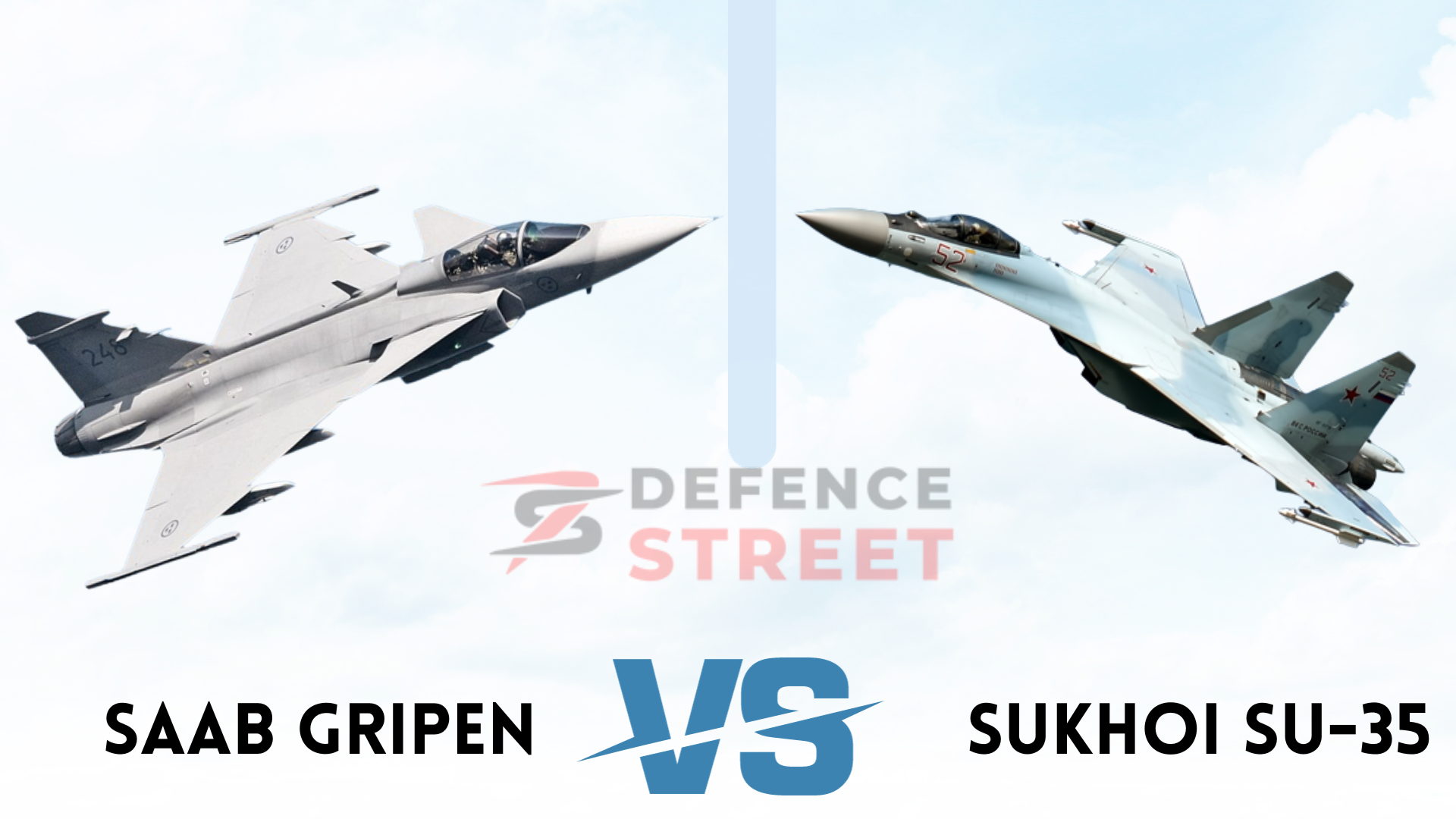
  • Saab Gripen vs. Sukhoi SU-35: A Clash of Titans in the Skies

    Saab Gripen vs. Sukhoi SU-35: A Clash of Titans in the Skies

    In the high-stakes world of military aviation, the quest for air superiority never ceases. Two formidable contenders in this arena are the Saab Gripen and the Sukhoi SU-35. These cutting-edge fighter jets represent the pinnacle of aeronautical engineering and have been developed by two of the world’s most renowned aerospace manufacturers, Saab Group from Sweden and Sukhoi from Russia. As military enthusiasts and aviation aficionados eagerly debate their merits, it’s essential to delve into the capabilities, specifications, and unique features that set the Saab Gripen and Sukhoi SU-35 apart.

    The Saab Gripen, known for its agility and versatility, has gained international acclaim for its exceptional performance in air combat scenarios. On the other hand, the Sukhoi SU-35, a formidable addition to Russia’s air force, boasts remarkable speed and firepower, making it a force to be reckoned with in modern aerial warfare.

    In this blog post, we will embark on a journey to compare and contrast these two aviation giants, exploring their design, technology, combat capabilities, and much more. By the end, you’ll have a clearer understanding of what makes the Saab Gripen and the Sukhoi SU-35 stand out in the fiercely competitive world of fighter aircraft, and how they may shape the future of aerial warfare. So, fasten your seatbelts and prepare for takeoff as we dive deep into the Saab Gripen vs. Sukhoi SU-35 showdown.

    Saab Gripen vs. Sukhoi SU-35

    When it comes to comparing the Saab Gripen and the Sukhoi SU-35, both fighter aircraft represent significant advancements in aeronautical engineering and serve their respective nations as formidable assets in the world of military aviation. To help you understand their differences and strengths, let’s take a closer look at various aspects of these aircraft.

    Origin and Manufacturers:

    Saab Gripen: The Saab Gripen is a product of Sweden’s Saab Group, known for its compact, agile, and versatile fighter jets. The Gripen was designed to be a cost-effective solution for modern air forces.

    Sukhoi SU-35: The Sukhoi SU-35, on the other hand, is a Russian-made aircraft, developed by Sukhoi, a renowned aerospace company. It is a part of Russia’s effort to modernize its air force.

    Design and Dimensions:

    Saab Gripen: The Gripen is known for its compact design and small size. Its wingspan is approximately 8.4 meters, and its length is around 14.1 meters. This compact design enhances its agility and maneuverability.

    Sukhoi SU-35: The SU-35 is significantly larger than the Gripen. It has a wingspan of about 15.3 meters and a length of approximately 21.9 meters, providing it with a larger combat radius and greater payload capacity.

    Performance:

    Saab Gripen: The Gripen is highly agile and boasts an impressive thrust-to-weight ratio. It is capable of supersonic flight and has a maximum speed of Mach 2.0. Its agility and maneuverability make it a formidable opponent in close combat scenarios.

    Sukhoi SU-35: The SU-35 is known for its incredible speed and power. It can reach a top speed of Mach 2.25, making it one of the fastest fighter aircraft in the world. Its supermaneuverability, enabled by thrust vectoring, allows it to perform jaw-dropping aerial acrobatics.

    Combat Capabilities:

    Saab Gripen: The Gripen is designed to be a versatile multi-role fighter. It can carry a wide range of weapons, including air-to-air missiles, air-to-ground munitions, and anti-ship missiles. Its small size and advanced avionics make it suitable for a variety of mission profiles.

    Sukhoi SU-35: The SU-35 is primarily an air superiority fighter. It boasts a formidable array of weapons, including long-range air-to-air missiles, guided bombs, and anti-ship missiles. Its advanced radar and sensor suite give it exceptional situational awareness.

    Avionics and Technology:

    Saab Gripen: The Gripen features modern avionics, including an active electronically scanned array (AESA) radar. It offers impressive situational awareness and data-sharing capabilities with other friendly forces.

    Sukhoi SU-35: The SU-35 is equipped with a powerful Irbis-E AESA radar, which provides long-range tracking and targeting capabilities. It also features a state-of-the-art electronic warfare suite, enhancing its survivability.

    Operational Range:

    Saab Gripen: The Gripen has a combat radius of approximately 800 kilometers, making it suitable for defensive and close-proximity missions.

    Sukhoi SU-35: The SU-35 boasts a much greater operational range, with a combat radius of around 1,600 kilometers. This allows it to cover larger areas and engage targets at extended distances.

    Cost and Affordability:

    Saab Gripen: One of the Gripen’s key selling points is its affordability compared to many other modern fighter jets. Its cost-effectiveness makes it an attractive option for nations with budget constraints.

    Sukhoi SU-35: The SU-35 is a more expensive option, both in terms of acquisition and maintenance. It is typically considered a high-end, top-tier fighter aircraft.

    Stealth Capabilities:

    Saab Gripen: The Gripen has some stealth features, making it more challenging for radar to detect. Its smaller size and radar-absorbing materials reduce its radar cross-section, improving its survivability in certain scenarios.

    Sukhoi SU-35: The SU-35 is not designed with stealth in mind. Its larger size and more conventional design result in a larger radar cross-section, making it more easily detectable by enemy radar.

    Operational Service:

    Saab Gripen: The Gripen has been adopted by several air forces, including the Swedish, Czech, Hungarian, and South African air forces. It is known for its reliability and ease of maintenance.

    Sukhoi SU-35: The SU-35 has primarily been used by the Russian Air Force, with limited export sales to other countries. It is known for its robustness and ability to operate in challenging environments.

    Size Comparison Table

    here’s a size comparison table of the Saab JAS-39 Gripen and Sukhoi SU-35:

    Category JAS-39 Gripen Sukhoi SU-35
    Length 14.10 m (46 ft 3 in) 21.9 m (72.9 ft)
    Wingspan 8.40 m (27 ft 7 in) 15.3 m (50.2 ft)
    Wing Area 30.1 m² (325 sq ft) 62 m² (667 sq ft)
    Height 4.50 m (14 ft 9 in) 5.90 m (19.4 ft)
    Weight 6,800 kg (12,600 lb) 18,400 kg (40,570 lb)
    Power 1 x 80 kN (18,000 lbf) 2 x 142 kN (31,400 lbf)

    Who is better?

    Determining whether the Saab Gripen or the Sukhoi SU-35 is “better” is not straightforward, as it depends on the specific needs and priorities of the air force or nation in question. The Saab Gripen is celebrated for its versatility, cost-effectiveness, and ease of maintenance, making it an excellent choice for countries with budget constraints and diverse operational requirements. On the other hand, the Sukhoi SU-35 is a powerhouse, excelling in air superiority missions with its incredible speed, range, and firepower. It is suited for nations prioritizing air dominance and longer-range operations.

    In essence, the choice between these two exceptional fighter jets depends on factors such as the nation’s strategic objectives, budget constraints, logistical support, and the intended mission profile. What makes one “better” than the other is context-specific and should align with the unique needs and goals of the air force or country acquiring these aircraft.

  • Sukhoi SU-27 vs F-22 Raptor – A Comparative Analysis

    Sukhoi SU-27 vs F-22 Raptor – A Comparative Analysis

    Sukhoi SU-27 vs F-22 Raptor: The F-22 Raptor, an American marvel of engineering, and the SU-27 Flanker, a Russian powerhouse, represent the epitome of aerial technology for their respective nations. Their comparisons are not only about technological advancements but also serve as a symbol of the Cold War rivalry that lingers in the background.

    In this blog, we will delve into the fascinating world of aerial warfare, as we explore the design, capabilities, and the sheer prowess of these two iconic fighter jets. Whether you’re an aviation enthusiast or a military buff, this showdown between the F-22 Raptor and the SU-27 Flanker is sure to captivate your imagination and ignite your passion for these aerial marvels. Let’s embark on a journey to understand the strengths and weaknesses of these aircraft, and perhaps gain some insight into the age-old debate of which one truly rules the skies.

    Sukhoi SU-27 vs F-22 Raptor

    Design and Development:

    SU-27 Flanker: The Sukhoi SU-27 Flanker is a product of Soviet-era engineering and was developed in the 1970s as a response to the evolving needs of the Soviet Air Force. Its design emphasizes aerodynamic agility and the ability to operate in diverse environments. The SU-27 features a twin-engine layout, a large wing area, and an overall rugged design.

    F-22 Raptor: The F-22 Raptor, on the other hand, is a more recent addition to the U.S. Air Force’s arsenal, entering service in the early 2000s. It was designed with stealth and situational awareness as top priorities. The F-22’s design includes advanced stealth features, a supercruise capability (the ability to fly at supersonic speeds without afterburners), and a highly maneuverable thrust vectoring system.

    Stealth and Radar Capabilities:

    SU-27 Flanker: The SU-27 relies on its agility and speed to evade enemy radar and missiles. While it does have some electronic countermeasures, it lacks the advanced stealth features of the F-22. This makes the SU-27 more vulnerable to detection by modern radar systems.

    F-22 Raptor: Stealth is a defining feature of the F-22. Its carefully designed shape and advanced materials make it difficult to detect on radar. The F-22 can get closer to its targets without being detected, giving it a significant advantage in a combat scenario.

    Avionics and Sensors:

    SU-27 Flanker: The SU-27 features a mix of Soviet-era and more modern avionics. Its radar and sensor suite, while capable, are not as advanced as the F-22’s. It can engage multiple targets but with limitations compared to the F-22.

    F-22 Raptor: The F-22 is equipped with cutting-edge avionics and sensors, providing unparalleled situational awareness. Its AN/APG-77 AESA radar and electronic warfare capabilities give it a significant edge in target tracking and engagement.

    Performance and Maneuverability:

    SU-27 Flanker: The SU-27 is known for its exceptional maneuverability and can perform impressive aerobatics. It can outmaneuver most contemporary fighter aircraft, but it does not match the F-22 in terms of overall performance.

    F-22 Raptor: The F-22’s combination of speed, stealth, and advanced thrust vectoring allows it to outperform almost any adversary in air-to-air combat. It can engage in supercruise, maintain high speeds, and perform extreme maneuvers while maintaining situational awareness.

    Armament and Payload:

    SU-27 Flanker: The SU-27 can carry a variety of air-to-air and air-to-ground munitions, but it lacks the internal bays for stealthy carriage. Its primary focus is air superiority.

    F-22 Raptor: The F-22 has internal bays for munitions, reducing its radar cross-section. It is highly versatile and can engage both air and ground targets with precision.

    Cost and Availability:

    SU-27 Flanker: The SU-27 is a more cost-effective option compared to the F-22 Raptor. The price is US$30 million per unit. It has been exported to various countries, making it more widely available on the global market.

    F-22 Raptor: The F-22 is an expensive and complex aircraft, and it has not been offered for export, making it exclusive to the United States. The Price is US$125 million per aircraft. The limited production run has also impacted its availability.

    Range and Endurance:

    SU-27 Flanker: The SU-27 has a longer combat radius than the F-22, allowing it to stay on station for extended periods. This can be advantageous in certain scenarios, especially for missions that require loitering.

    F-22 Raptor: While the F-22 has shorter combat radius, it can supercruise at high speeds to reach its targets quickly. It relies on its stealth and situational awareness to mitigate the need for extended endurance.

    Export and Global Impact:

    SU-27 Flanker: The SU-27 has been exported to numerous countries, including China, India, and Vietnam. It has contributed to the global balance of military power and influenced the design of other fighter aircraft.

    F-22 Raptor: The F-22 has not been exported, largely due to U.S. restrictions on its advanced technology. As a result, it has not had the same global impact as the SU-27.

    Role and Doctrine:

    SU-27 Flanker: The SU-27 was designed primarily for air superiority, with a focus on engaging enemy aircraft. Its doctrine emphasizes agility and the ability to defend airspace.

    F-22 Raptor: The F-22 was designed with a broader role in mind, capable of air-to-air and air-to-ground missions. Its doctrine includes deep strike and electronic warfare capabilities, making it a versatile asset in modern conflicts.

    Operational History:

    SU-27 Flanker: The SU-27 has seen action in various conflicts, including the Balkans, the Middle East, and ongoing border skirmishes. It has demonstrated its combat effectiveness over several decades.

    F-22 Raptor: The F-22 has not seen extensive combat usage due to its limited deployment and the absence of adversaries with comparable capabilities. Its combat record is limited to domestic exercises and training.

    Sukhoi SU-27 vs F-22 Raptor Table

    Category Sukhoi SU-27 F-22 Raptor
    Country Russia United States
    Manufactured 1985 to Present 2005 to 2011
    ICAO Code SU27 F22
    Price $37 million $139 million
    Avionics Sukhoi Search and Track Radar, OEPS-27 IRST, OEPS-27 electro-optical targeting system Lockheed F/A-22 Integrated avionics, AN/AAR-56 Missile Launch Detector (MLD)
    Engine 2x Saturn/Lyulka AL-31F turbofans 2x Pratt & Whitney F119-PW-100
    Engine Type Turbofan Turbofan
    Power 27,600 pound-force 35,000 pound-force
    Max Cruise Speed 1546 knots, 2,863 Km/h 1963 knots, 3,635 Km/h
    Approach Speed (Vref) 129 knots
    Travel Range 1,906 Nautical Miles, 3,530 Kilometers 1,600 Nautical Miles, 2,963 Kilometers
    Fuel Economy 0.62 nautical mile/gallon, 0.303 kilometers/litre 1.1 nautical mile/gallon, 0.538 kilometers/litre
    Service Ceiling 62,000 feet 65,000 feet
    Rate of Climb 54,000 feet/minute, 274.32 meters/second 68,897 feet/minute, 350.00 meters/second
    Take Off Distance 450 meters, 1,476.36 feet 480 meters, 1,574.78 feet
    Landing Distance 620 meters, 2,034.10 feet 200 meters, 656.16 feet
    Max Take Off Weight 30,450 Kg (67,130 lbs) 38,000 Kg (83,775 lbs)
    Max Landing Weight 21,000 Kg (46,297 lbs)
    Max Payload 4,500 Kg (9,921 lbs) 1,776 Kg (3,915 lbs)
    Fuel Tank Capacity 3,080 gallons, 11,659 liters 2,400 gallons, 9,085 liters
    Seats – Economy 1 seat 1 seat

    This table provides a clear comparison of various aspects of the Sukhoi SU-27 and the F-22 Raptor, including their specifications, performance, and capabilities.

    Sukhoi SU 27 & F-22 Raptor :Size Comparison Table

    Here’s a table for the size comparison between the F-22 Raptor and the Sukhoi SU-27:

    Category F-22 Raptor Sukhoi SU-27
    Length 18.9 m (62.0 ft) 21.9 m (72.9 ft)
    Wingspan 13.6 m (45 ft 0 in) 14.7 m (48.2 ft)
    Wing Area 78.0 m² (840 sq ft) 62 m² (667 sq ft)
    Height 5.08 m (16.8 ft) 5.92 m (19 ft 6 in)
    Weight 19,700 kg (43,500 lb) 16,380 kg (36,100 lb)
    Power 2 x 153 kN (35k lbf) 2 x 123 kN (27.3k lbf)

    Similarity Between Sukhoi SU-27 and F-22 Raptor

    While the Sukhoi SU-27 and the F-22 Raptor are distinct in many ways, there are a few similarities between these two fighter aircraft:

    • Air Superiority: Both the SU-27 and F-22 are primarily designed for air superiority missions, meaning they are optimized for engaging and defeating enemy aircraft in aerial combat.
    • Twin-Engine Layout: Both aircraft feature a twin-engine layout. Having two engines provides redundancy and enhances the aircraft’s ability to continue operating even if one engine encounters issues.
    • Supersonic Speed: Both the SU-27 and the F-22 can fly at supersonic speeds. The F-22, in particular, is capable of supercruise, meaning it can sustain supersonic flight without the use of afterburners, allowing for increased fuel efficiency.
    • Versatility: While the primary focus of both aircraft is air superiority, they are designed to be versatile and can carry a variety of air-to-air and air-to-ground munitions. This versatility allows them to adapt to different mission requirements.
    • Advanced Avionics: Both aircraft are equipped with advanced avionics and sensor systems that provide pilots with situational awareness, target tracking, and enhanced combat capabilities.
    • Capability for Beyond Visual Range (BVR) Engagement: The SU-27 and F-22 are equipped to engage targets at beyond visual range using radar-guided and infrared-guided missiles, making them formidable adversaries in modern aerial warfare.
    • High Altitude Operations: Both aircraft are capable of operating at high altitudes, with service ceilings well above 60,000 feet. This allows them to gain tactical advantages in various combat scenarios.
    • Modernization: Over the years, both the SU-27 and F-22 have undergone modernization efforts to keep them relevant and competitive in a changing threat environment. These modernization programs enhance their capabilities and extend their operational lifespans.

    Conclusion

    In this detailed comparison, we’ve seen that the SU-27 Flanker and F-22 Raptor are impressive fighter jets, each with its own strengths and weaknesses. The SU-27 excels in maneuverability and has been a proven platform for decades. In contrast, the F-22 Raptor boasts advanced stealth, superior avionics, and unmatched situational awareness. The SU-27 is known for its maneuverability and cost-effectiveness, while the F-22 excels in stealth, avionics, and situational awareness.

    The choice between these aircraft depends on the specific mission and operational needs, and they are often compared in the context of the technology and tactics of the nations employing them. These two aircraft represent the culmination of their respective countries’ aerospace capabilities, making them fascinating subjects for aviation enthusiasts and military strategists alike.

  • F-22 Raptor vs F-18 Super Hornet Comparison, BVR & Dogfight

    F-22 Raptor vs F-18 Super Hornet Comparison, BVR & Dogfight

    F-22 Raptor vs F-18 Super Hornet: In the ever-evolving realm of military aviation, two formidable fighters stand out as titans of the skies—the F-22 Raptor and the F-18 Super Hornet. These cutting-edge aircraft represent the pinnacle of modern technology, each designed with specific missions and capabilities that make them indispensable assets to their respective air forces.

    The F-22 Raptor, a product of Lockheed Martin, is a fifth-generation stealth fighter jet developed for the United States Air Force. Renowned for its unmatched speed, agility, and stealth capabilities, the F-22 has set a new standard for air superiority. On the other side of the spectrum, the F-18 Super Hornet, a creation of Boeing, serves as a versatile workhorse for the U.S. Navy and various international partners. Its adaptability and multi-role design make it a powerhouse in naval aviation.

    As we delve into the world of aerial supremacy, it becomes crucial to understand the unique characteristics that set these two aircraft apart. From stealth technology to maneuverability, range, and mission versatility, the F-22 Raptor and F-18 Super Hornet each bring a distinct set of strengths to the table.

    F-22 Raptor vs F-18 Super Hornet

    The F-22 Raptor and the F/A-18 Super Hornet are two distinct fighter aircraft used by the United States military, each with its own set of capabilities and roles. Here’s a detailed comparison of these two aircraft in various aspects:

    Role:

    • F-22 Raptor: The F-22 is primarily an air superiority fighter with the capability to perform air-to-air combat and air-to-ground attacks. Its primary mission is to gain and maintain control of the airspace.
    • F/A-18 Super Hornet: The F/A-18 Super Hornet is a multirole fighter designed to perform a wide range of missions, including air-to-air combat, air-to-ground strike, electronic warfare, and reconnaissance.

    Stealth:

    • F-22 Raptor: The F-22 is renowned for its advanced stealth capabilities, making it virtually invisible to enemy radar. Its design minimizes radar cross-section and maximizes its ability to operate in contested environments.
    • F/A-18 Super Hornet: The Super Hornet does not possess the same level of stealth as the F-22. While it has some radar-absorbing materials and design features, it is not a true stealth aircraft.

    Speed and Altitude:

    • F-22 Raptor: The F-22 is capable of flying at supersonic speeds without the use of afterburners (super cruise). It can reach altitudes of over 65,000 feet.
    • F/A-18 Super Hornet: The Super Hornet is also capable of supersonic flight but typically relies on afterburners for sustained supersonic speeds. It has a lower maximum altitude compared to the F-22.

    Weapons:

    • F-22 Raptor: The F-22 is equipped with a combination of air-to-air missiles and precision-guided munitions for air-to-ground missions. It can carry AIM-120 AMRAAM and AIM-9 Sidewinder missiles.
    • F/A-18 Super Hornet: The Super Hornet has a wider range of weapon options, including AIM-9 Sidewinder, AIM-120 AMRAAM, AGM-88 HARM, JDAM, and various other air-to-air and air-to-ground munitions.

    Avionics and Sensors:

    • F-22 Raptor: The F-22 features advanced avionics, including an AN/APG-77 radar and AN/ALR-94 electronic warfare suite. It also has advanced sensor fusion capabilities.
    • F/A-18 Super Hornet: The Super Hornet is equipped with an AN/APG-79 AESA radar and various sensor and targeting pods, such as the AN/ASQ-228 ATFLIR.

    Range and Endurance:

    • F-22 Raptor: The F-22 has a relatively limited combat radius, meaning it may require aerial refueling for extended missions.
    • F/A-18 Super Hornet: The Super Hornet has a larger combat radius compared to the F-22, giving it more endurance for longer missions.

    Cost and Availability:

    • F-22 Raptor: The F-22 program was relatively expensive, and production was limited to around 195 aircraft. It is no longer in production.
    • F/A-18 Super Hornet: The Super Hornet is less expensive than the F-22, and production continues to meet the needs of the U.S. Navy and international customers.

    F-22 Raptor vs F/A-18 Super Hornet Specifications Table

    Below is a simplified data table comparing key specifications of the F-22 Raptor and the F/A-18 Super Hornet:

    Attribute F-22 Raptor F/A-18 Super Hornet
    Role Air Superiority Fighter Multirole Fighter
    Stealth High Limited (not a stealth aircraft)
    Speed Supercruise capability, > Mach 2 High subsonic to supersonic speeds
    Altitude > 65,000 feet Lower than F-22
    Primary Mission Air-to-Air Combat Multirole (Air-to-Air and Air-to-Ground)
    Weapons AIM-120, AIM-9, Precision-guided munitions AIM-9, AIM-120, AGM-88, JDAM, etc.
    Avionics AN/APG-77 Radar, AN/ALR-94 EW Suite AN/APG-79 AESA Radar, Various sensors and pods
    Sensor Fusion Yes Advanced capabilities
    Combat Radius Relatively limited Longer range than F-22
    Endurance Limited without aerial refueling Longer endurance for various missions
    Cost around $143 million per aircraft. around $65 million per aircraft.
    Production Status No longer in production Ongoing production for U.S. Navy and export
    Primary Operator U.S. Air Force U.S. Navy, U.S. Marine Corps, and export

    FAQs

    Q: Which aircraft is better in air-to-air combat, the F-22 Raptor, or the F/A-18 Super Hornet?

    A: The F-22 Raptor is designed specifically for air superiority and is considered one of the most advanced air-to-air combat platforms in the world. Its superior stealth, speed, and agility make it highly effective in air-to-air engagements. The F/A-18 Super Hornet, while capable in air-to-air combat, is a multirole fighter with a broader mission scope.

    Q: Can the F-22 Raptor perform ground-attack missions like the F/A-18 Super Hornet?

    A: Yes, the F-22 Raptor has the capability to perform ground-attack missions in addition to air-to-air combat. It can carry precision-guided munitions and has the ability to strike ground targets. However, the F/A-18 Super Hornet is specifically designed for multirole missions and has a wider range of air-to-ground weapons and capabilities.

    Q: How do the stealth capabilities of the F-22 and F/A-18 compare?

    A: The F-22 Raptor has advanced stealth features, including a combination of design elements and radar-absorbing materials, making it highly effective in avoiding detection by enemy radar. The F/A-18 Super Hornet, while incorporating some stealth features, is not a true stealth aircraft, and its design does not provide the same level of radar signature reduction as the F-22.

    Q: Which aircraft has a longer range, the F-22 or the F/A-18 Super Hornet?

    A: The F/A-18 Super Hornet generally has a longer combat radius, allowing it to operate at greater distances from its base without refueling. The F-22 Raptor, on the other hand, has a more limited range and may require aerial refueling for extended missions.

    Q: Is the F-22 Raptor still in production, and can it be exported to other countries?

    A: The F-22 Raptor is no longer in production, and its production line has been closed. Additionally, due to security concerns, the United States has not allowed the export of the F-22 to other countries.

    Q: How do the costs of the F-22 and F/A-18 Super Hornet compare?

    A: The F/A-18 Super Hornet is generally less expensive than the F-22 Raptor. The F-22 program was known for its high cost, and production was limited. The F/A-18 Super Hornet, being a more versatile and cost-effective platform, continues to be produced for both the U.S. Navy and international customers.