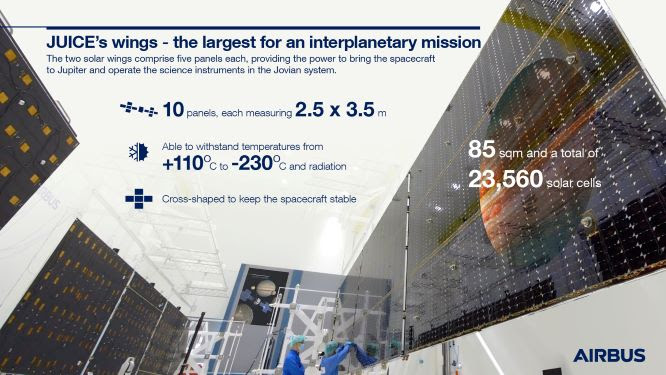
Kourou. On 14th April 2023, at 14:00 UTC, JUICE (JUpiter ICy moons Explorer) spread its wings following the Ariane 5 successful lift-off two hours earlier. The ESA spacecraft operations team at the European Space Operations Centre (ESOC) in Darmstadt, Germany, took control of the spacecraft and confirmed reception of the first telemetry and the smooth deployment of the solar arrays. The Airbus-built JUICE is now officially on its way to Jupiter!
Additional equipment and instruments will be progressively turned on in the next few days and the operations team will run tests to make sure they are all fully operational.
“After years of work, watching this launch live from our sites across Europe was a very emotional moment for all those who have worked on this incredible mission. This is the best of Europe coming together!” said Michael Schöllhorn, CEO Airbus Defence and Space from Kourou.“I’m eager to see the next big thing coming from the European space community.“
JUICE: a European shared success
Bringing together 80 partners across 23 countries and harnessing the brainpower of 2,000+ people, Airbus has designed and built JUICE under contract to the European Space Agency (ESA).
On its over 5 billion kilometre long journey, the 6.2 tonne JUICE spacecraft will make a series of flybys of Callisto, Ganymede and Europa, collecting data to try to understand whether there is any possibility that the moons and their subsurface oceans could host microbial life. Carrying 10 state-of-the-art scientific instruments, including cameras, spectrometers, an ice-penetrating radar, an altimeter, a radio-science experiment, a particle package and various magnetic and electric field sensors, the JUICE spacecraft will complete a unique 4-year tour of the Jupiter system.
JUICE is due to arrive at Jupiter in 2031 after a series of gravity slingshots from Venus and Earth to propel it on its way.
Airbus has a long legacy of supporting the European Space Agency with all its interplanetary missions. These missions present unique challenges which require pushing space technologies to the limit, and JUICE is no exception, with the largest solar arrays ever built for a science mission.
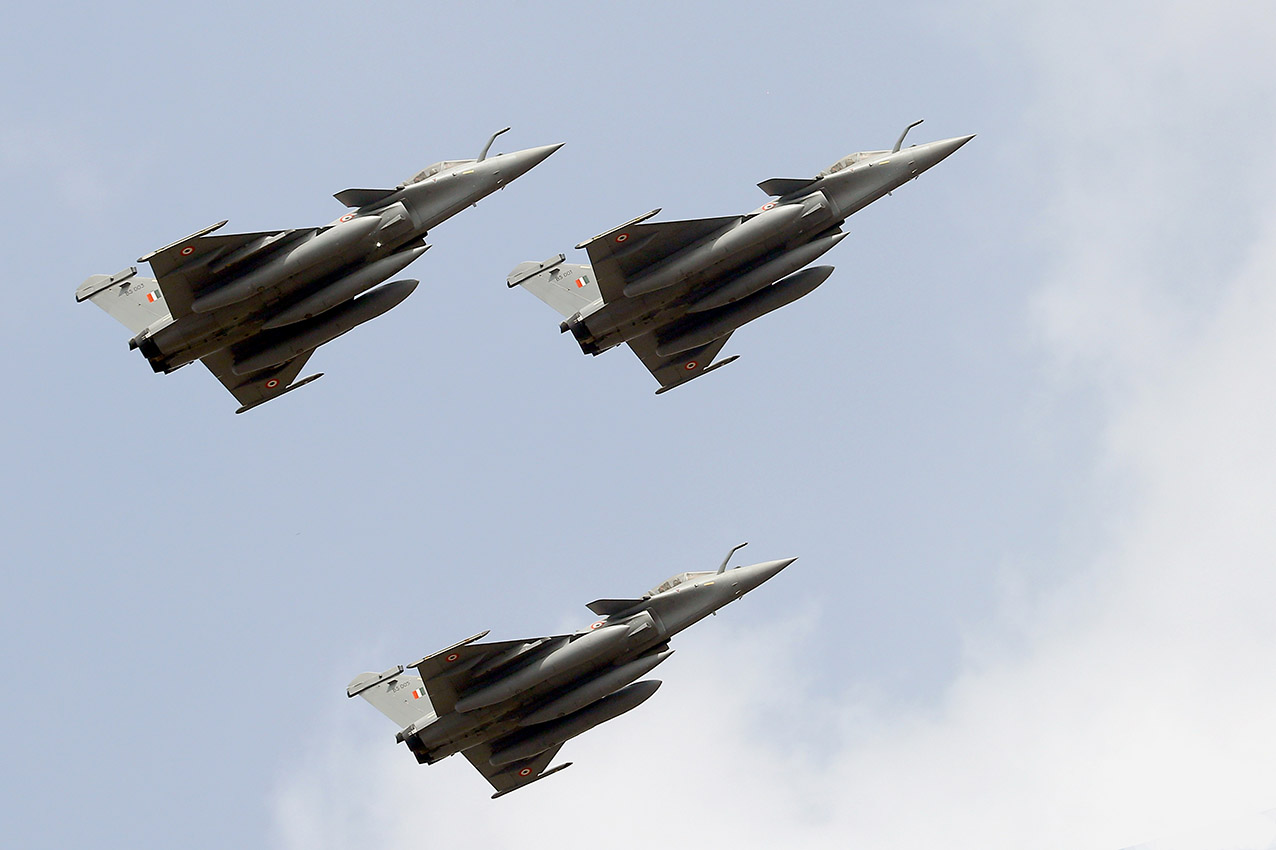
New Delhi, 13th April, 2023. An Indian Air Force (IAF) contingent will be departing tomorrow for France, to participate in Exercise Orion at Mont-de-Marsan, an Air Force base of the French Air and Space Force (FASF). The exercise will be conducted from 17 April to 05 May 2023, with the IAF Contingent comprising four Rafale, two C-17, two ll-78 aircraft and 165 air warriors. This would be the first overseas exercise for the IAF’s Rafale aircraft.
Besides the IAF and the FASF, Air Forces from Germany, Greece, Italy, Netherlands, United Kingdom, Spain and United States of America would also be flying in this multilateral exercise. Participation in this exercise would further enrich the employment philosophy of the India Air Force, by imbibing the best practices from other Air Forces.
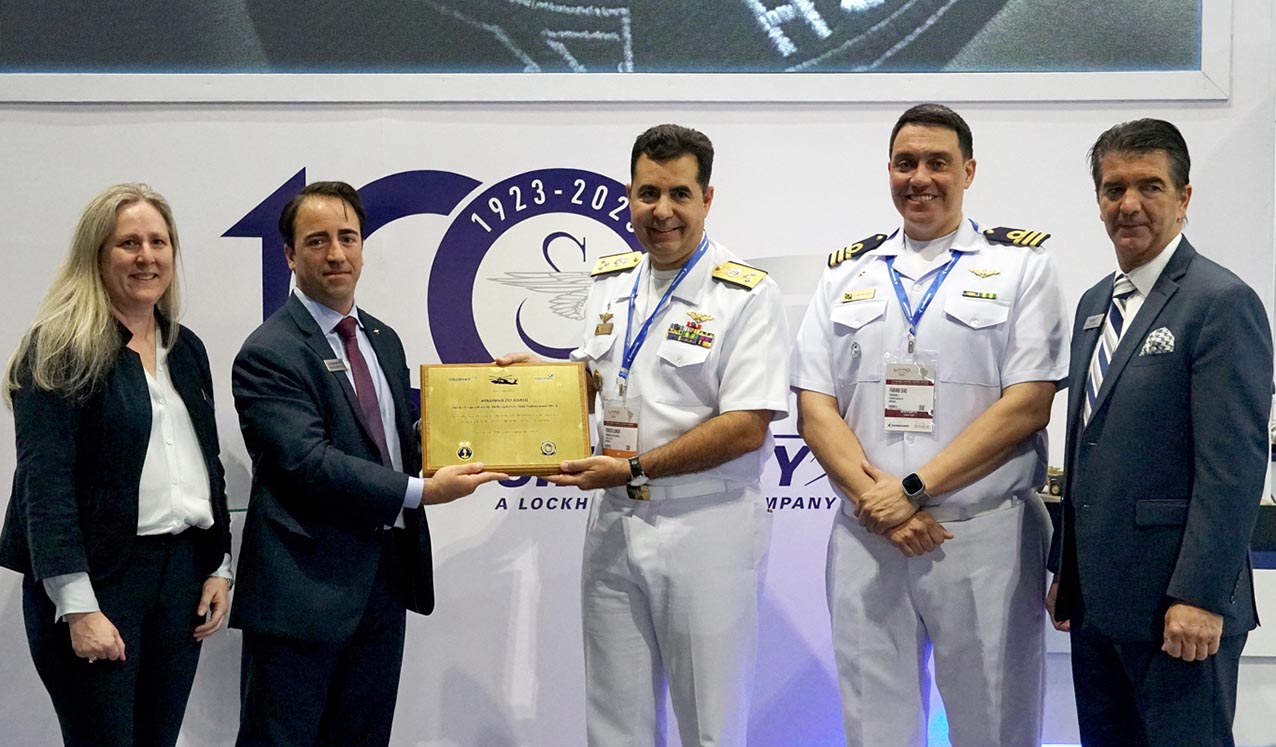
Sikorsky executives Dina Halvorsen, Felipe Benvegnu and Adam Schierholz stand with Brazilian Armed Forces representatives during LAAD 2023, 12th April. Sikorsky, a Lockheed Martin company, celebrates its 100th anniversary this year. (Photo: Lockheed Martin)
Rio de Janeiro, 12th April, 2023. Sikorsky, a Lockheed Martin company, celebrated its 100th anniversary alongside defence and industry partners at the biennial Latin America Aerospace and Defence and Security (LAAD) trade show today.
Sikorsky executives highlighted the longstanding partnership with Brazil’s armed forces and honored their ongoing accomplishments and contributions to vertical flight.
“2023 is a significant year for Sikorsky as we celebrate our 100th anniversary,” said Sikorsky Latin America regional executive Adam Schierholz.“Our founder, Igor Sikorsky, envisioned the helicopter becoming a powerful tool for saving lives and performing missions in the direst and most complex conditions. Our customers’ missions—especially here in Brazil and throughout Latin America—are a testament to that vision and motivate us to continue innovating and improving our aircraft and how we build them.”
Schierholz highlighted Sikorsky’s nearly 70-year relationship with Brazil, which dates back to 1958 when the Brazilian Air Force acquired four H-19D Chickasaw helicopters assigned to the 2nd/10th Aviation Group’s “Pelican Squadron” for search and rescue operations. From there, Sikorsky’s relationship with Brazil developed. In 1972, following a fire that engulfed a 26 story-building in Sao Paulo, Igor Sikorsky wrote his last correspondence commending the rescue operation that involved 20 helicopters saving the lives of 400 people, confirming his vision for the helicopter as an “outstanding vehicle for the greatest variety of life-saving missions.” That bond continues to this day with the Brazilian Army and Air Force’s fleet of UH-60L/M Black Hawks and the Navy’s operation of S-70B Seahawks.
“The multi-mission Hawk family of aircraft provides the Brazilian Armed Forces with critical capabilities that will continue to support their readiness, interoperability and security for decades to come,” said Schierholz. “We will continue to provide our operators with the support and competitive edge they need to stay ahead of 21st Century Security challenges.”
During the recognition ceremony, Schierholz and Felipe Benvegnu, Sikorsky Global Aftermarket Director, presented plaques to representatives from Brazil’s Army, Air Force and Navy to honor each service’s aerial achievements while operating Sikorsky aircraft, including:
Brazil’s Army Aviation forces received recognition for 25 years of Black Hawk operations;
The Air Force was commended for achieving its 50,000thflight hour with its UH-60L fleet; and
The Navy was recognized for reaching its 10,000thflight hour milestone with its S-70B Seahawk fleet.
“All of these aircraft have been an important part of search, rescue and relief missions, including the recent humanitarian operations supporting the Yanomami people in January,” said Benvegnu. “We are absolutely honored to support the courageous work of the Brazilian Army, Air Force and Navy, and we are thrilled to be here at LAAD to mark this occasion alongside such distinguished operators.”
Sikorsky continues to grow its business in Latin America. To ensure highest readiness rates of more than 300 fielded helicopters, Sikorsky established S-92 and S-76 rotor blade repair and parts stocking capabilities in Brazil to serve the offshore oil industry; and in Colombia, flight training, maintenance and repair operations facilities to support the region’s Black Hawk aircraft.
“We are committed in our support to all H-60 and S-70 operators and look forward to enduring partnerships on the Hawk program in the years to come,” added Dina Halvorsen, program director, Black Hawk Sustainment at Sikorsky.“It remains our top priority to fulfill customer requirements and meet the needs of current and future operational units. With unmatched versatility and global interoperability, Hawk aircraft continue to advance Combined and Joint All Domain Operations.”
SAN DIEGO. General Atomics Electromagnetic Systems (GA-EMS) announced on 12 April, 2023 that Thermal Vacuum Chamber commissioning has been completed at the company’s Centennial, CO space system development facilities. The commissioning completes GA-EMS’ process of bringing in-house the capability to perform testing under simulated space environmental conditions, and supports testing and qualification of components, subassemblies, payloads, and integrated spacecraft up to ESPA-Grande class satellites.
“The thermal vacuum chambers add yet another key component to our expanding space capabilities portfolio, allowing us to improve efficiencies and seamlessly transition spacecraft from production to environmental testing without the spacecraft ever having to leave our clean rooms or facilities,” said Scott Forney, president of GA-EMS.“The ability to test components, payloads and spacecraft in a controlled, simulated space environment is essential to evaluating their performance and ability to withstand the rigors of space, and address any issues that may arise prior to flight.”
“Having three fully commissioned thermal vacuum chambers in-house translates into tangible benefits for our customers, helping reduce program risks and added costs associated with transporting satellites to and from third party testing facilities. With a range of chambers readily available, our assembly, integration and test teams can complete component and system environmental testing and process the results in real-time and with greater efficiency,” said Gregg Burgess, vice president of GA-EMS Space Systems.
For satellites ranging from sub-U to 500kg ESPA-Grande class, GA-EMS offers broad expertise and experience in the design, manufacture, integration, and test of satellites and space systems. The three thermal vacuum chambers add to the company’s expanding space portfolio of design to on-orbit solutions to meet the mission requirements and growing needs of the military, intelligence community, civil and commercial satellite communities.
New agreement supports development and marketing of core assets
Project scope to be defined through close partnership
SEOUL, South Korea, 13th April, 2023. Boeing and the Defense Acquisition Program Administration (DAPA) of the Republic of Korea (ROK) signed a Memorandum of Understanding (MOU) to jointly research, develop, and market advanced weapons systems of mutual interest. Ted Colbert, President and CEO of Boeing Defense, Space and Security, signed the MOU with DAPA Minister Eom Donghwan.
“For over 70 years Boeing has been committed to its partnership with Korea,” said Colbert.“This agreement aligns with Boeing and DAPA’s common interest of establishing a strategic partnership to support the U.S.-ROK alliance.”
“This joint effort will have a positive impact on the Korean defense industry, especially small & medium sized companies, by creating large-scale value from the initial state as part of Boeing’s global value chain” said Eom.
Working with DAPA enables Boeing to partner with a global innovation leader, while expanding its presence in Korea. This effort also directly supports ROK President Yoon Suk Yeol’s national defense strategy in developing and securing Korean advanced military capabilities. DAPA has committed to support research, development, and export of the defense systems from this co-development initiative. The two parties will establish working committees to meet regularly and identify weapons systems of mutual interest.
Boeing is proud to be a key component of Korea’s rapidly growing aerospace sector, spending over U.S. $4 billion with suppliers in the past 15 years. In 2022, Boeing spent over $250 million with over 50 Korean companies who provide products and services for Boeing.
As a leading global aerospace company, Boeing develops, manufactures and services commercial airplanes, defense products and space systems for customers in more than 150 countries. As a top U.S. exporter, the company leverages the talents of a global supplier base to advance economic opportunity, sustainability and community impact. Boeing’s diverse team is committed to innovating for the future, leading with sustainability, and cultivating a culture based on the company’s core values of safety, quality and integrity.
Shri Rajnath Singh calls for judicious use of financial resources, advice based on sound economic analysis, internal audit and payment & accounting
“Rule of competitive bidding through open tender must be followed in defence procurement”
The Union Minister for Defence, Shri Rajnath Singh lighting the lamp at the inaugural session of three-day International Conference on Defence Finance & Economics 2023, in New Delhi on April 12, 2023.
New Delhi, 12th April, 2023. Raksha Mantri Shri Rajnath Singh has stressed on the need to devise innovative methods to maximise the value of money spent on the security needs of the country, terming a robust defence finance system as the backbone of a strong military. Inaugurating the three-day International Conference on Defence Finance & Economics in New Delhi on April 12, 2023, Shri Rajnath Singh asserted that a legal and procedural defence-finance framework is an integral part of a mature state system, which ensures prudent management of the defence expenditure.
The Raksha Mantri stated that such a framework, which includes expenditure control as per guidelines, financial advice by professionals, audit, payment authentication mechanism, etc., ensures that the defence spending is well within the allocated budget and the full value of money is realised. He emphasised that while the Armed Forces require a superstructure of defence ecosystem, involving R&D organisations, industries, soldier welfare organisations, etc., they also need a well-funded system with a robust architecture to ensure the optimum and judicious use of financial resources.
Shri Rajnath Singh was of the view that it is difficult to apply the economic concept of full value of money in defence expenditure, as in this sector, there is no visible revenue stream and no easily identifiable beneficiaries. To maximise the value of money spent, he stressed that the rule of competitive bidding through open tender must be followed in defence procurement.
“In the case of procurement of defence platforms/equipment, either under capital or revenue route, the gold standard of Open Tender should be adopted to the extent possible. A competitive bid based procurement process, which is open to all, is the best possible way to realise the full value of the public money being spent. There would be some rare cases when it may not be possible to go for an open tender process. Such instances should come under exceptions and exceptions should not become the rule,” the Raksha Mantri said.
Shri Rajnath Singh underscored the importance of comprehensive Blue Books, codifying the rules and procedures of procurement of defence equipment & systems for a fair and transparent system. He said, with this vision, the Government has formulated Blue books in the form of Defence Acquisition Procedure 2020 for capital acquisition; Defence Procurement Manual for revenue procurement and Delegation of Financial Powers to Defence Services. “These manuals play a very important role in ensuring that the process of defence procurement is rule-bound and follows the principles of financial propriety. Since these manuals are critical, they need to be carefully crafted by defence finance and procurement experts in consultation with all the stakeholders. This needs to be a continuous exercise, so that these documents are dynamically updated, incorporating new rules and procedures as and when required,” he said.
The Raksha Mantri also emphasised on the role of expert financial advice to the Service personnel in day-to-day financial matters. He said, the system of Integrated Financial Advisor (IFA) has been created to provide financial advice to the Competent Financial Authority (CFA) in order to help them in avoiding the wastage of public money. In this system, the IFA and CFA work as a team towards utilising public money in a prudent manner, he said.
Shri Rajnath Singh batted for a fool-proof system of internal and external audit which would tackle the instances of wastages, pilferage and corruption, if any, even after following the principles of financial prudence and propriety. The role of auditors is that of a watchdog or a sentinel, he said.
The Raksha Mantri also elaborated on the need for a sound system of accounting, passing of bills and payment, salary and pension disbursal, etc., as it frees the Armed Forces personnel to concentrate on their core jobs. He added that the separation of functions of defence finance from the core defence organisations has multiple advantages. “The chances of leakages, corruption, wastages are reduced. A positive public opinion is generated when there is a justified confidence that public money is being spent optimally and prudently. With greater public trust and confidence in the system of defence expenditure, the defence system benefits overall, as the chances of greater funding by legislature increases pari-passu (Latin for equal footing),” he said.
Shri Rajnath Singh asserted that the central idea is that defence establishments like Army, Navy, Air Force, Defence Research organisations etc. require a specialised agency, which is dedicated to defence finance and economics. In India, this work is being done competently by the Defence Accounts Department under the leadership of Financial Advisor (Defence Services), he said.
Before the international delegates, the Raksha Mantri also put forth the idea of shared security. “In the spirit of collective security of the whole world as one family, we are all partners in the path towards a secure and prosperous future for the entire humankind. We have a lot to learn from your experiences in the field of defence finance and economics and we are ready to share our learning with you,” he said.
The Raksha Mantri stated that the full potential of society’s development can be realised only when it is secure from external and internal threats. He described security of the people from external aggression and internal disruptions as the prime function of the state. Security is the bedrock on which the prosperity, arts and culture of any society flourish and prosper, he said.
Chief of Defence Staff General Anil Chauhan, Chief of the Army Staff General Manoj Pande, Secretary (Ex-Servicemen Welfare) Shri Vijoy Kumar Singh, Secretary, Department of Defence R&D & Chairman DRDO Dr Samir V Kamat, Financial Advisor (Defence Services) Smt Rasika Chaube, Additional CGDAs Shri Praveen Kumar & Shri SG Dastidar and delegates from within in the country & abroad were present on the occasion.
The three-day conference, organised by the Ministry of Defence (Finance), will witness the participation of eminent policy makers, academics and government officials from India and abroad, including from USA, UK, Japan, Australia, Sri Lanka, Bangladesh & Kenya. It will provide a platform to them to share their insights and experiences on Defence Finance and Economics in the context of evolving security challenges and policies globally.
The conference aims to foster dialogue and collaboration among the participants and contribute to the country’s defence readiness with optimum financial resources and effective implementation of the Defence Budget. The objective is to disseminate best practices, experiences & expertise of various countries and align processes in the Indian context with international standards. It also hopes to facilitate collaborations with foreign governments, international institutions and global leaders in the domain of Defence Finance and Economics to support the Government’s ongoing efforts on indigenisation and self-reliance in the Defence sector, and to advance transformative reforms.
The topics of discussion will include current challenges and opportunities in the areas of Defence Finance and Economics, such as how to allocate and use resources efficiently & effectively and how to manage logistics in a cost-conscious way. The participants will also deliberate upon different models and practices of finance and economics related to Defence Acquisition around the world as well as the latest developments and innovations in Defence Research and Development.
In addition, the discussions will address best practices on managing human resources in Defence, including issues related to pay, pensions and welfare of Defence Personnel and the role & functions of oversight mechanisms within defence ecosystems.
Boeing 702X satellite platform enables high-speed global connectivity from medium Earth orbit.
SES’s O3b mPOWER nears its six satellites needed for full global connectivity.
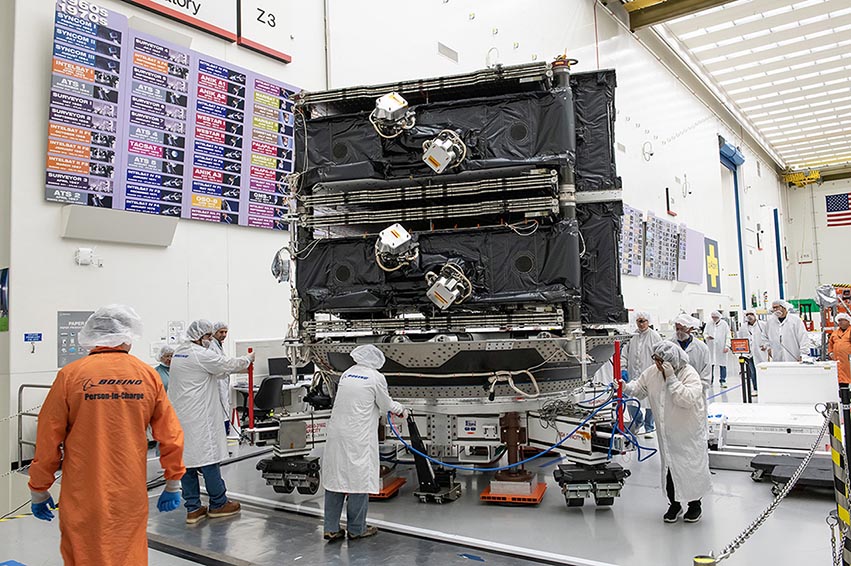
Boeing team members move the stacked O3b mPOWER satellites through the Boeing satellite factory to prepare the spacecraft for containerization.
EL SEGUNDO, Calif., 11th April, 2023. Boeing delivered the third and fourth O3b mPOWER satellites to content connectivity service provider SES, with the duo embarking for Cape Canaveral, Florida. The pair will launch to medium Earth orbit (MEO) to provide fiber-like broadband connectivity to people around the world, joining the first two satellites on orbit.
“As we get ready to launch the next pair of O3b mPOWER satellites in the coming weeks, we are excited to have them join the first two satellites which are currently undergoing rigorous testing as they arrive at their target medium earth orbit,” said Ruy Pinto, Chief Technology Officer at SES.“The early indications from our test program are that the O3b mPOWER system will more than fulfill the expectations of our customers. We will be delivering networks that offer the industry’s best throughput, high availability and predictable performance that are essential for our customers’ critical applications and creating new business opportunities for SES.”
Boeing is contracted to deliver 11 O3b mPOWER satellites to SES, but just 6 satellites are needed in equatorial MEO to provide global connectivity services. The O3b mPOWER satellites are all-digital with a 702X software-driven payload, providing customers the flexibility and unique advantage to change services and markets to meet data demands.
“We are proud to have successfully delivered the third and fourth O3b mPOWER satellites and are looking forward to delivering the remaining satellites in the constellation,” said Michelle Parker, vice president of Space Mission Systems at Boeing Defense, Space & Security.
With seven more satellites in production, Boeing teams are introducing efficiencies into the manufacturing process. The team has reduced the bus module build time by more than 50 percent, and delivered similar efficiency improvements for payload integration and test, demonstrating the producibility benefits of the highly integrated 702X architecture.
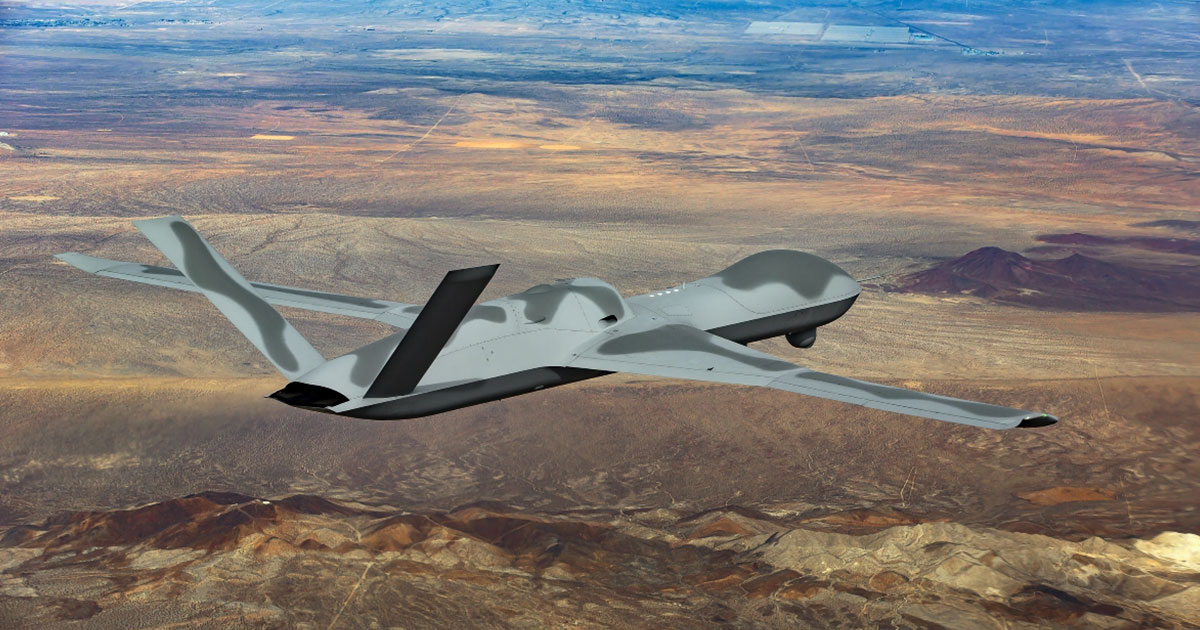
SAN DIEGO, 11th April, 2023. On 6th April, General Atomics Aeronautical Systems (GA-ASI) conducted live, tactical, air combat maneuvers using Artificial Intelligence (AI) pilots to control a company-owned MQ-20 Avenger® Unmanned Aircraft System. Collaborative maneuvers between human and AI pilots were conducted using GA-ASI’s Live, Virtual, Constructive (LVC) collaborative combat aircraft (CCA) ecosystem over a Low Earth Orbit (LEO) satellite communication (SATCOM) provider’s IP-based Mission Beyond Line of Sight (BLOS) datalink. The LEO SATCOM connection was also used to rapidly retrain and redeploy AI pilots while the aircraft was airborne, demonstrating GA-ASI’s ability to update AI pilots within minutes.
This marks the first deployment of a LEO SATCOM provider connections running on an operationally relevant unmanned combat aerial vehicle (UCAV) platform. The team used two L3Harris Technologies RASOR Multi-Functional Processors (MFPs) – one that housed the transceiver card and another that controlled the BLOS Active Electronically Scanned Array (AESA). The test aircraft was outfitted with a Ball Aerospace BLOS AESA system, capable of full duplex operation. The demonstration highlighted GA-ASI’s commitment to operationalizing CCA by fusing innovative future warfare technologies, such as GA-ASI’s AI pilots and LVC ecosystem, and L3Harris and Ball Aerospace BLOS datalink solutions.
“The flight demonstrated GA-ASI’s unmatched ability to fly autonomy on real, tactically relevant, unmanned combat aerial vehicles,” said GA-ASI Senior Director of Advanced Programs Michael Atwood.“It displayed effective BLOS Command and Control through the collaboration between three defense primes. This showcases our rapidly maturing CCA mission system suite and moves us one step closer to providing this revolutionary capability to the warfighter.”
GA-ASI leveraged its end-to-end CCA ecosystem for the flight that fused third-party capabilities, human-on-the-loop control, and autonomy to enable effective human-machine teaming for 21st century conflicts. Operator commands were captured via hands on throttle-and-stick (HOTAS) controls and were sent via LEO SATCOM to AI pilots running Reinforcement Learning (RL) algorithms. AI pilots autonomously tracked and maneuvered around dynamically, and updated entities specified via HOTAS. Operators were provided updates from AI pilots on a cockpit heads-up display and could dynamically re-task via HOTAS as the mission evolved. In addition, data from agent performance was collected and sent to the ground where agents were retrained to improve performance, and then redeployed via LEO SATCOM in a matter of minutes.
This is another in an ongoing series of technology insertion and autonomous flights performed using internal research and development funding to prove out important concepts for UAS.
New Delhi, 10th April, 2023. Exercise Cope India 23, a bilateral Air Exercise between the Indian Air Force (IAF) and the United States Air Force (USAF) is being held at Air Force Stations Arjan Singh (Panagarh), Kalaikunda and Agra. The exercise aims to enhance mutual understanding between the two Air Forces and share their best practices.
The first phase of exercise has commenced today. This phase of the exercise will focus on air mobility and will involve transport aircraft and Special Forces assets from both the Air Forces. Both sides will field the C-130J and C-17 aircraft, with the USAF operating an MC-130J, as well. The exercise also includes the presence of Japanese Air Self Defence Force aircrew, who will participate in the capacity of observers.
It is a matter of pride that India’s defence capabilities have expanded immensely to cover all the frontiers of land, air and sea: President Murmu
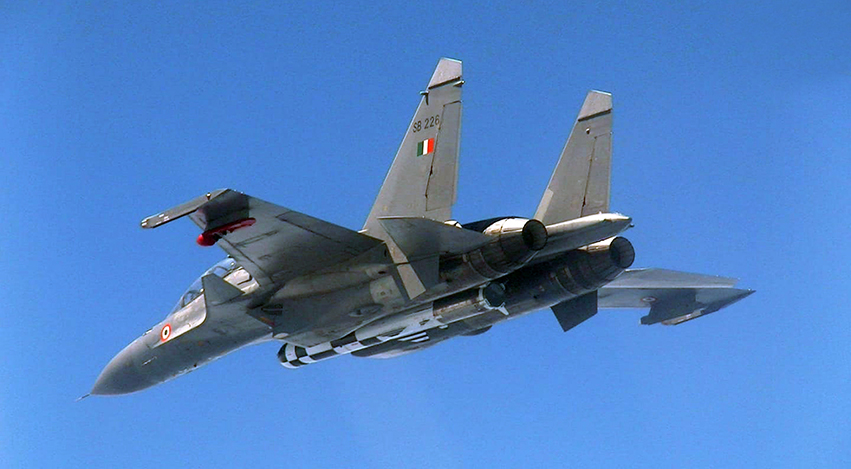
New Delhi, 8th April, 2023. The President of India, Smt Droupadi Murmu took a historic sortie in a Sukhoi 30 MKI fighter aircraft at the Tezpur Air Force Station in Assam on 8th April, 2023. The President, who is the Supreme Commander of the Indian Armed Forces, flew for approximately 30 minutes covering Brahmaputra and Tezpur valley with a view of Himalayas before returning to the Air Force Station.
The aircraft was flown by Group Captain Naveen Kumar, Commanding Officer of the 106 Squadron. The aircraft flew at a height of about two kilometers above sea level and at a speed of about 800 kilometers per hour. President Murmu is the third President and second woman President to undertake such a sortie.
Later in the visitor’s book, the President expressed her feelings by writing a brief note in which she said “It was an exhilarating experience for me to fly in the mighty Sukhoi-30 MKI fighter aircraft of the Indian Air Force. It is a matter of pride that India’s defence capabilities have expanded immensely to cover all the frontiers of land, air and sea. I congratulate the Indian Air Force and the entire team of Air Force Station Tezpur for organising this sortie.”
The President was also briefed on the operational capabilities of the aircraft and the Indian Air Force (IAF). She expressed satisfaction on the operational preparedness of the IAF.
The President’s sortie in the Sukhoi 30 MKI fighter aircraft is a part of her efforts to engage with the armed forces, as the Supreme Commander of the Indian Armed Forces. In March 2023, the President visited INS Vikrant and interacted with officers and sailors on board of the indigenously built aircraft.





 SAN DIEGO. General Atomics Electromagnetic Systems (GA-EMS) announced on 12 April, 2023 that Thermal Vacuum Chamber commissioning has been completed at the company’s Centennial, CO space system development facilities. The commissioning completes GA-EMS’ process of bringing in-house the capability to perform testing under simulated space environmental conditions, and supports testing and qualification of components, subassemblies, payloads, and integrated spacecraft up to ESPA-Grande class satellites.
 SEOUL, South Korea, 13th April, 2023. Boeing and the Defense Acquisition Program Administration (DAPA) of the Republic of Korea (ROK) signed a Memorandum of Understanding (MOU) to jointly research, develop, and market advanced weapons systems of mutual interest. Ted Colbert, President and CEO of Boeing Defense, Space and Security, signed the MOU with DAPA Minister Eom Donghwan.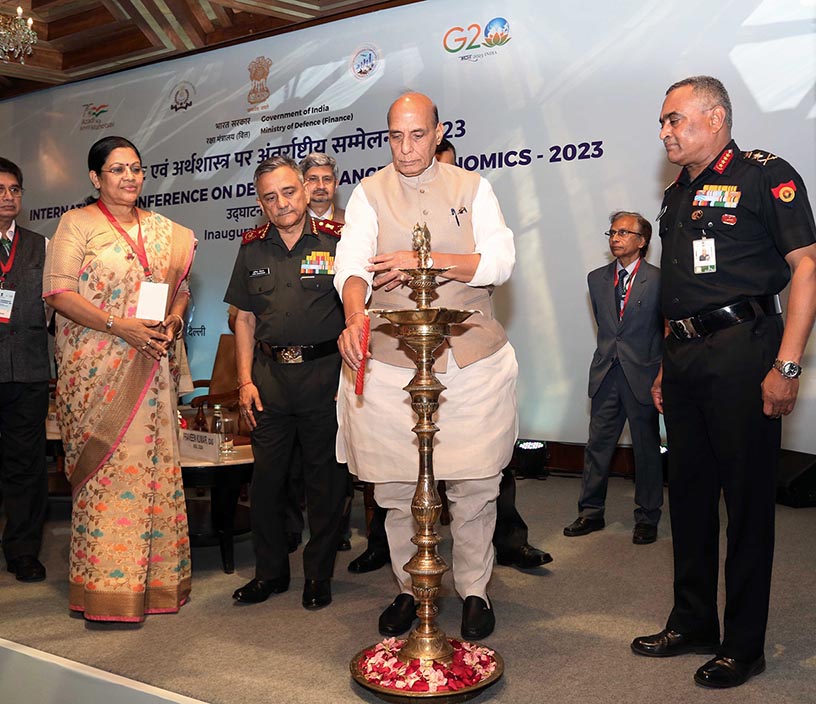



 New Delhi, 10th April, 2023. Exercise Cope India 23, a bilateral Air Exercise between the Indian Air Force (IAF) and the United States Air Force (USAF) is being held at Air Force Stations Arjan Singh (Panagarh), Kalaikunda and Agra. The exercise aims to enhance mutual understanding between the two Air Forces and share their best practices.