Author: Defence Street Editor

  • Boeing to Advance Aerospace Innovation through Korean Industry Partnerships

    Boeing to Advance Aerospace Innovation through Korean Industry Partnerships

    • Boeing expands R&D collaboration in Korea, including tech development on advanced production systems, urban air mobility, aerospace semiconductors
    • Agreement signed with the Korea Evaluation Institute of Industrial Technology and the Korea Institute for Advancement of Technology

    WASHINGTON, D.C., 25th April, 2023 — Boeing has signed a new partnering agreement with Korean industry to expand joint research and development activities and further develop critical aviation technologies.

    Boeing, the Korea Evaluation Institute of Industrial Technology (KEIT), and the Korea Institute for Advancement of Technology (KIAT), will collaborate on advanced production systems for commercial aircraft manufacturing, urban air mobility, aerospace semiconductors and cultivating industry talent in Korea.

    Boeing Korea President Eric John, KEIT President Chun Yoon-jong and KIAT President Min Byung-joo signed the Memorandum of Understanding during Korean President Yoon Seok Yeol’s visit to the United States.

    Through this collaboration, the company and research institutions will seek opportunities to cooperate across the private and public sectors. These efforts are intended to enhance the competitiveness of Korea’s aerospace industry and strengthen Boeing’s future aerospace capabilities.

    “We will continue to support the advancement of Korea’s rapidly growing aerospace sector by leveraging Boeing’s global aerospace expertise and Korea’s cutting-edge technologies,” said Eric John, Boeing Korea President. “We also expect this to benefit the country’s aerospace supply chain.” 

    KEIT will identify Korean companies with potential for participation, while KIAT will focus on defining areas for research, development and commercialization of advanced components for airplanes.

    Boeing continues to increase its presence and pursue opportunities to partner and advance aerospace technologies with Korea, spending more than $4 billion with over 50 Korean suppliers over the past 15 years. In 2019, Boeing opened the Boeing Korea Engineering & Technology Center, where it has been conducting strategic research on future technologies, including autonomous flight, artificial intelligence, avionics, embedded software, Linux, mobility platform, smart cabin and smart factory.

  • Culmination of Exercise Cope India-2023 at Air Force Station Kalaikunda

    Culmination of Exercise Cope India-2023 at Air Force Station Kalaikunda

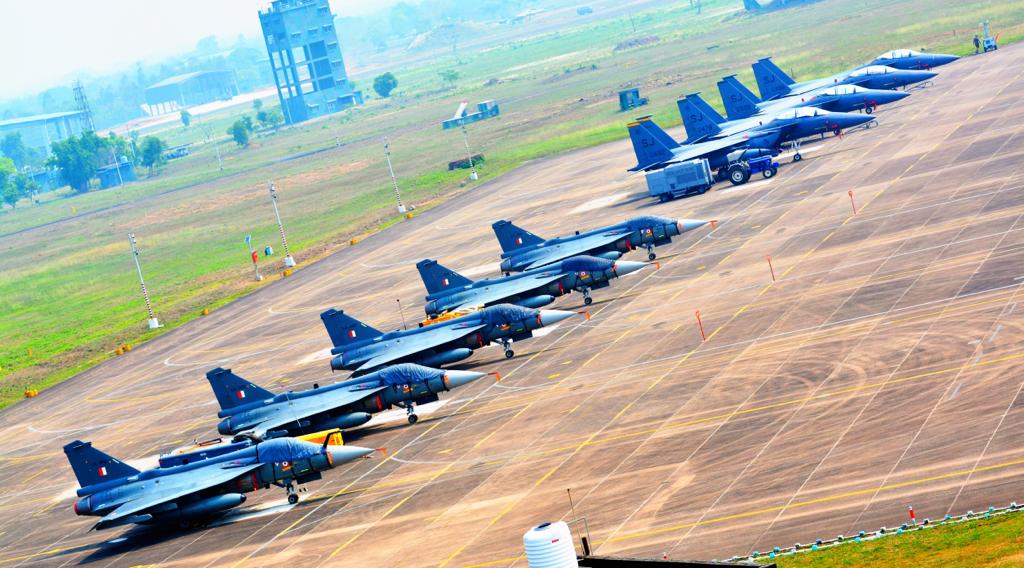
    New Delhi, 25th April, 2023. The sixth edition of Cope India-2023, an Air Exercise between the Indian Air Force (IAF) and United States Air Force (USAF), conducted over the last two weeks at Air Force Stations Kalaikunda, Panagarh and Agra, culminated on 24 Apr 2023.  The exercise involved participation of frontline IAF aircraft like Rafale, Tejas, Su-30MKI, Jaguar, C-17 and C-130.  The USAF in turn had fielded the F-15 ‘Strike Eagle’ fighter, C-130, MC-130J, C-17 and the B1B, strategic bomber aircraft.  Aircrew from the Japanese Air Self Defence Force also participated as observers.  This joint exercise provided valuable opportunity for the participants of all countries to exchange ideas and imbibe best practices through interactions, exchanges & combined missions.

    Cultural exchanges were also organised during the exercise to reinforce the bond of friendship and camaraderie. This exercise reaffirms the deep rooted commitment to maintain and strengthen the relationship between the two Air Forces boosting the inter-nation cooperation between the two largest democracies.

  • Airbus Helicopters introduces first American-made military versions of the H125

    Airbus Helicopters introduces first American-made military versions of the H125

    • MAG Aerospace to design and certify flexible weapons installation, allowing rapid reconfiguration

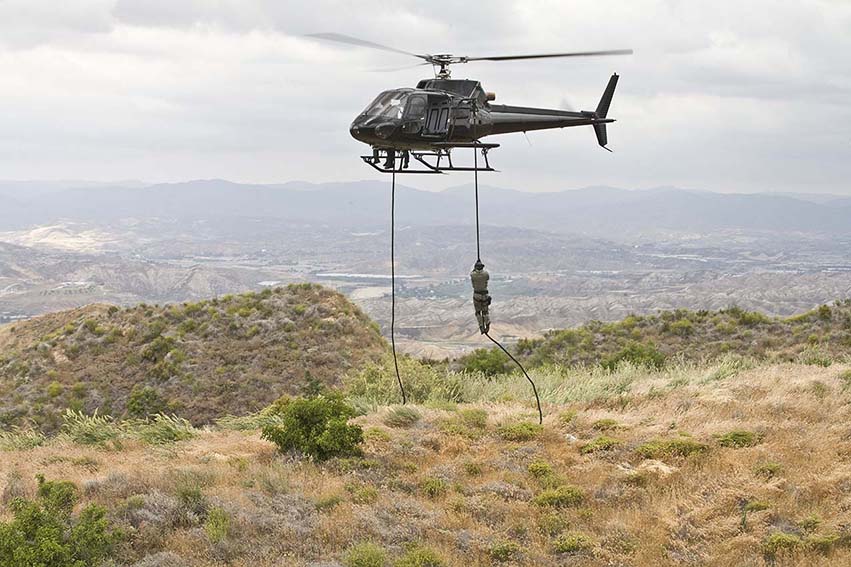
    GRAND PRAIRIE, Texas, 24th April, 2023. Airbus Helicopters is introducing the first U.S.-built H125 military configurations, known as AH-125 and MH-125 Ares, to the Airbus range of military helicopters. These combat-capable aircraft will feature militarized options that meet the needs of military and parapublic allies and partners around the world.

    The AH-125 Ares will be configured as the armed variant of the helicopter, while the MH-125 Ares will be configured as a multi-role helicopter capable of a wide range of operations. The new offerings complement the extensive line of military helicopters already produced by Airbus, including the H125M.

    “The AH-125 and MH-125 Ares helicopters will offer the capability, reliability and flexibility needed by America’s allies and partners as they perform an array of rotary wing missions, ranging from light attack to disaster response and other parapublic missions,” said Scott Tumpak, Vice President of Military Line of Business for Airbus U.S. Space and Defense. “They represent the latest evolution of Airbus’ H125 family of helicopters, and will be produced in the U.S. at Airbus Helicopters, Inc.’s facility in Columbus, Mississippi.”

    Globally, the H125 family accounts for almost 80% of the single-engine market and has the highest number of certified modifications (supplemental type certificates) available. With the new addition of a flexible weapons capability, the H125 helicopter will easily be re-configured between multiple mission sets in less than 30 minutes, ranging between light attack, air assault, search and rescue, casualty evacuation, and disaster response, as well as other combat and parapublic operations.

    MAG Aerospace will perform the weapons installation design, engineering, certification and manufacturing. The helicopter will accommodate a wide range of weapons such as a .50 cal (12.7 mm) gun and unguided rockets, and precision-guided weapons as a growth option. The installation allows for doors-on flight throughout the mission.

    “MAG Aerospace is thrilled to team with Airbus to combine our unique platform engineering and modification capabilities with the world-class leader in the single-engine helicopter market. It’s an honor to work with Airbus and expand our ability to serve our partners in the U.S. and around the world,” said Matt Bartlett, President of MAG Aerospace.

    The H125 is the world’s top-selling helicopter with a long history of use by U.S. law enforcement and government agencies. Currently, the H125 is the light enforcement helicopter used by U.S. Customs and Border Protection, with more than 100 H125 family aircraft in service, making the U.S. government the single largest customer and operator of the aircraft.

    Airbus provides a range of reliable and versatile helicopters to the U.S. government and military, enabling them to perform a wide variety of missions. More than 480 UH-72A and UH-72B Lakota helicopters have been delivered to the U.S. Army and National Guard since the program began in 2006. Airbus also continues to support the U.S. Coast Guard’s fleet of nearly 100 MH-65 helicopters, which play a critical role in the USCG’s homeland security, drug interdiction and lifesaving missions.

  • General Atomics’ iSCWO Process Tested, Verified by EPA For the Destruction of PFAS

    General Atomics’ iSCWO Process Tested, Verified by EPA For the Destruction of PFAS

    Credit to Getty Images

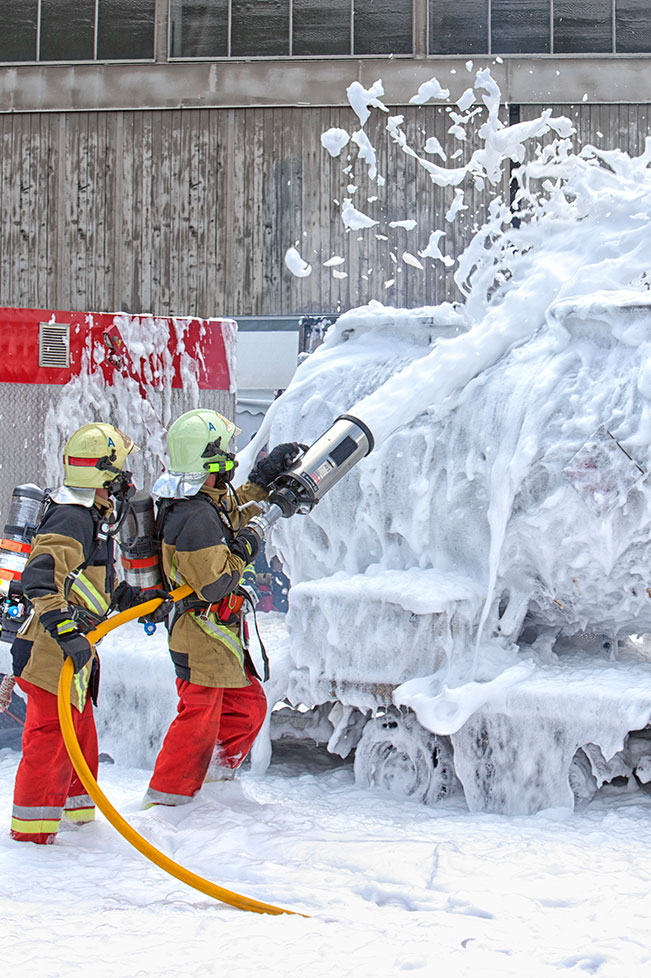
    SAN DIEGO. General Atomics Electromagnetic Systems (GA-EMS) announced on 24th April, 2023 that the Environmental Protection Agency (EPA) issued a detailed report (EPA/600/R-22/257) documenting test results and verifying GA-EMS’ commercial industrial Supercritical Water Oxidation (iSCWO) system’s effectiveness in the destruction of per-and polyfluoroalkyl substances (PFAS).  PFAS are a large class of “forever chemicals” present in the environment and associated with adverse health effects due to exposure to the chemicals. Testing was conducted by the EPA and GA-EMS using PFAS-containing firefighting foam. The test results documented in the EPA report verify the iSCWO system’s capability to effectively destroy PFAS with a destruction efficiency greater than 99.99%.

    “We are extremely excited to break this news. With the Pentagon’s recent ban on incinerating PFAS-containing items, including PFAS-ladened firefighting foam, there is now greater urgency to implement a more efficient, environmentally sound solution for the destruction of these chemicals,” stated Scott Forney, president of GA-EMS. “GA-EMS’ iSCWO is that solution. We are proud to have worked with the EPA to perform testing using our iSCWO system, and to validate the system’s effectiveness in destroying PFAS in a highly efficient, economical manner that is friendly and safe to the environment.”

    Testing was performed at GA-EMS’ San Diego facilities using various concentrations of aqueous film forming foam (AFFF), a specialized PFAS-containing firefighting foam used extensively for training and firefighting jet fuel and other types of fires. iSCWO technology mixes organic waste with water and processes it in a supercritical heat and pressure environment to efficiently destroy hazardous and non-hazardous waste. The result of this process is the breakdown of the waste into carbon dioxide, water, and very low amounts of benign salts, all of which can be released into a public-owned treatment works facility or the environment if applicable, without any post-treatment requirement.

    “We have been advancing SCWO technology since the 1990s, supplying systems to support the government, and since 2012, supplying iSCWO systems to commercial users for waste destruction purposes,” continued Forney. “iSCWO can be implemented at remote sites for environmental cleanup and remediation applications, to facilitate generate and destroy on-site capabilities and eliminate the need and expense of transporting PFAS waste off-site for treatment. One of the many advantages of our iSCWO system is that even if the PFAS waste contains other hazardous organic waste, iSCWO will simultaneously destroy the PFAS and the other waste with the same 99.99% or greater efficiency.”

    For information regarding iSCWO technology, please visit: www.ga.com/hazardous-waste-destruction.

  • 44 Sqn.,the Harbingers of “Strategic Airlift” in the IAF Celebrate their Diamond Jubilee

    44 Sqn.,the Harbingers of “Strategic Airlift” in the IAF Celebrate their Diamond Jubilee

    New Delhi, 22nd April, 2023. 44 Squadron of the Indian Air Force is celebrating its Diamond Jubilee this year at Chandigarh. The rich and glorious history of the Sqn is a kaleidoscope of military history and military diplomacy of modern-day India and filled with tales of fortitude, courage, daring, devotion and professionalism which encapsulates all that IAF stands for.

    The Squadron was raised on 06 Apr 1961 and equipped with the AN-12 aircraft.  It operated the AN-12 till 1985.  In March 1985, it brought the IL-76 aircraft into India, which was formally inducted into IAF on 16 Jun 1985.  The aircraft continues to in service today.  The Diamond Jubilee celebrations due in 2021 had to be postponed due to COVID 19 pandemic.

    The harbinger of strategic airlift in the IAF, the Squadron has been a part of all major military and HADR initiatives in the recent history of the nation, which not only saw the IAF and the nation evolve from a tactical to a strategic force, but also enhanced the military might of the sister Services. The Squadron provided succor in times of need to the citizens of the country as well as people all around the world, in keeping with the nation’s belief of “Vasudhaiva Kutumbakam”.

    The Squadron has stayed true to its motto of ‘ISHTAM YATNEN SADHYET’ which means ‘ACHIEVE GOALS THROUGH PERSEVERANCE’. In 1985 the Squadron was renamed as the ‘MIGHTY JETS’.

    Since its raising, No. 44 Sqn has been at the forefront of the airlift activities undertaken by IAF.  The Squadron continues to remain ever ready to undertake any task that is entrusted to it.

  • Helicopter flight paths to reduced emissions

    Helicopter flight paths to reduced emissions

    UK, 22nd April, 2023. Helicopters fly essential missions and can literally make life-saving interventions. With such an important role, there might be an assumption that their environmental impact might be less of a priority. Yet, in increasing numbers helicopter operators are committing themselves to reducing their emissions in a variety of ways.

    Protecting the environment for future generations forms a key part of Airbus’ mission to make the world a safer and more united place. Exploring this commitment to preparing the future, we take a look at the three customers who are leading the way in investing in clean flight.

    Pioneers for the Greater Good: ADAC Luftrettung

    With 1.2 million missions in over 50 years of saving lives, air rescue operator ADAC Luftrettung is a true pioneer of Helicopter Emergency Medical Services (HEMS). However, as a non-profit organisation it also wants to break new ground in reducing CO2 emissions. CEO Frédéric Bruder explains why the company takes the responsibility for protecting the environment equally seriously.

    When did ADAC Luftrettung first use Sustainable Aviation Fuel?

    Frédéric Bruder: On June 7, 2021, an ADAC Luftrettung rescue helicopter flew on sustainable aviation fuel (SAF) for the first time, setting a new milestone in international aviation. The Airbus H145 rescue helicopter, with its Arriel 2E engines, was ceremonially refuelled with biofuel, a type of SAF, at the air rescue base at Munich’s Harlaching Hospital. The H145 used a second-generation biofuel for the first rescue helicopter flight worldwide.

    We subsequently expanded our commitment and have initiated two scientific research projects: Since December 2021, we have been testing the use of SAF at our air rescue base “Christoph Rheinland” at Cologne/Bonn Airport. In cooperation with Safran Helicopter Engines, Airbus Helicopters and the National German Aerospace Center (DLR), we are investigating the long-term effects of bio-kerosene on the technology and engines of the Airbus H145 helicopter. In September 2022, we went into trial operation with another site: In Aachen, “Christoph Europa 1” is also flying rescue missions with bio-kerosene. An Airbus EC 135 with Pratt & Whitney engines is used there. The HEFA blend is currently between 31 and 35 %, which means that a CO2 reduction of 25 % can already be achieved by using SAF. With an increase in the proportion of biofuel, CO2 savings potentials of 80 % and more will be possible in the future. The goal is to accumulate 1,000 flight hours with SAF in each of the two research projects.

    Why did you make this a priority?

    Frédéric Bruder: We have always been pioneers at ADAC Luftrettung. Although our primary mission is to save lives with our rescue helicopters we are of course aware of the impact our type of operation has on the environment. By the way – not only in terms of emissions, also in terms of noise and many other aspects. Based on our by-laws and our statute as a non-profit organisation paired with our will to be pioneers for the greater good, we want to play an active part in achieving the ambitious climate targets in Germany and Europe. Sustainability is a central issue for ADAC Luftrettung, and we are increasingly aligning our company and our actions to it. We have set ourselves the ambitious goal of being a pioneer in CO2 reduction in air rescue on a global scale.

    Offsetting CO2 strategy: Blackcomb Helicopters

    Sustainable Aviation Fuel is not the only method operators can use to achieve a net reduction in emissions. Blackcomb Helicopters, who fly an array of missions in British Columbia, Canada, explains their CO2 offsetting strategy.

    How do you measure the CO2 output of each helicopter in your fleet? 

    Blackcomb Helicopters: In order to do the best job of deciding how, how much and how to offset, we work with a partner out of Victoria and they apply a proven auditing system to our company, and they look at all aspects of operations. Obviously, the consumption of kerosene is our number one contributor to our carbon footprint. However, we also look at commercial flights that our crews take, repositioning, transport, ground transport and all aspects of our business from how we handle recycling to electric, providing charging for electric vehicles for our employees at our facilities and modernising our own fleet towards electric as well. So, with that process, we establish exactly as close as possible how many tons of carbon we’re emitting.

    How do you offset your CO2 output?

    We just completed an audit here in the last few weeks and our organisation had an output of 4,600 tonnes of CO2. And we will offset 100% of that. We work with the Nature Conservancy of Canada on a project in the West Kootenay Mountains, where a large area is referred to as the Dark Woods Conservancy, and it is setting aside this forest for the next 100 years minimum. This would have been logged. It is pristine forest that the logging industry was very interested in. The Nature Conservancy took the steps of protecting and managing that. So, for now, it’s the first step. We all know offsetting isn’t perfect, but it’s what’s available to us at this time. Of course, we’re looking forward to the availability of sustainable aviation fuel as our next step.

    Investing in the future: aviation leasing company LCI 

    Jaspal Jandu, CEO of the aviation leasing company LCI explains how they are addressing sustainability challenges with efficient operations, awareness, and investments in the future. 

    As a lessor, what different sustainability elements does LCI consider when deciding on new helicopters?

    Jaspal Jandu: LCI is an aviation leasing company and we are actively addressing sustainability challenges in three key areas. Number one, at a business level we are running our products, business and leasing platform as efficiently as we possibly can.  Number two we are investing significant amount of capital in new technology aircraft and promoting the use of SAF and SAF-like fuels in such products. Number three we are raising awareness and engaging at a broader level to ensure that financiers and investors understand how important sustainability is – I think as a leasing company we are uniquely positioned to drive that message home.

    In terms of asset investing, we have a broad range of assessment criteria.  Of course, any near-term improvements in operating performance, particularly in payload or range, are attractive. However, we also take a longer-term view on how attractive an asset may or may not be in 25 or 30 years’ time. Over such horizons, it can be said that sustainability arguments will only get louder from their current volume and, therefore, they become even more important to us. For example, we have just recently made an order with Airbus Helicopters for the H175, which incorporates modern and incredibly fuel-efficient technology, and the helicopter can perform missions that older technology simply can’t match. In addition, we are part of Airbus Helicopters’ Sustainable Aviation Forum (SAF), which looks to provide feedback on how we’re going to use SAF in the technology products and what it means for a long-term residual value. So, I can only speak from experience by saying sustainability and general social consciousness is becoming a very important factor in how we allocate capital in this sector.

  • Airbus hands over first two H145 helicopters to Bavarian Police

    Airbus hands over first two H145 helicopters to Bavarian Police

    • Training to begin on these two helicopters, allowing a seamless transition to the H145 fleet
    • First fully equipped helicopter to be delivered mid-2024

    Donauwörth, 20th April, 2023. Airbus has delivered the first two of eight five-bladed H145s to the Bavarian Police. These first two helicopters will be used in the training of pilots and crews which will begin shortly, ensuring a smooth transition from the current H135 fleet which has been in service for more than twelve years, to the larger H145 helicopters. Delivery of the first fully equipped police helicopter is scheduled for the middle of next year.

    “We would like to thank Bavaria and its police force for their continued confidence in our helicopters,” said Stefan Thomé, Managing Director of Airbus Helicopters in Germany. “We are proud to equip the Bavarian police with the most advanced helicopters available for law enforcement missions, supporting them in keeping our communities safe.”

    “Our police forces have to deal with a wide range of scenarios: searching for missing persons, transporting special units, fighting forest fires or dealing with natural disasters. The H145, with its outstanding performance and mission capabilities, will provide our police forces with an essential tool to fulfill these diverse missions,” said Franz Muschick, Head of the Bavarian Police Helicopter Squadron.

    Bavaria’s fully-equipped H145s will feature some of the most advanced police equipment available. This includes a state of the art computer system with tactical police mission software, easily operated by a foldable flat-screen mission command station for an operator in the cabin and a stowable monitor for the copilot. The crew will be aided by a modern lighting concept and leading-edge camera solutions, offering better situational awareness of the helicopter’s surroundings and events on the ground. The overall communication is facilitated due to customer-specific radio and data transfer means. A next-generation hoist and the capability to transport external loads as well as for allowing for firefighting, will further enhance police mission capabilities. Additional features, such as illuminated blade tips, improve the safety on board during essential police operations.

    The new version of Airbus’ best-selling H145 light twin-engine helicopter adds a new, innovative five-bladed rotor to the multi-mission aircraft, increasing the useful load of the helicopter by 150kg. The simplicity of the new bearingless main rotor design also eases maintenance operations, further improving the benchmark serviceability and reliability of the H145, while improving ride comfort for both passengers and crew.

    In total, there are more than 1,600 H145 family helicopters in service, logging a total of more than seven million flight hours. Powered by two Safran Arriel 2E engines, the H145 is equipped with full authority digital engine control (FADEC) and the Helionix digital avionics suite. It includes a high performance 4-axis autopilot, increasing safety and reducing pilot workload. Its particularly low acoustic footprint makes the H145 the quietest helicopter in its class, while its CO2 emissions are the lowest amongst its competitors.

    More than 200 H145 helicopters are in service around the world in public service and law enforcement missions.

  • Rheinmetall Defence And Lockheed Martin Will Cooperate On Rocket Artillery System

    Rheinmetall Defence And Lockheed Martin Will Cooperate On Rocket Artillery System

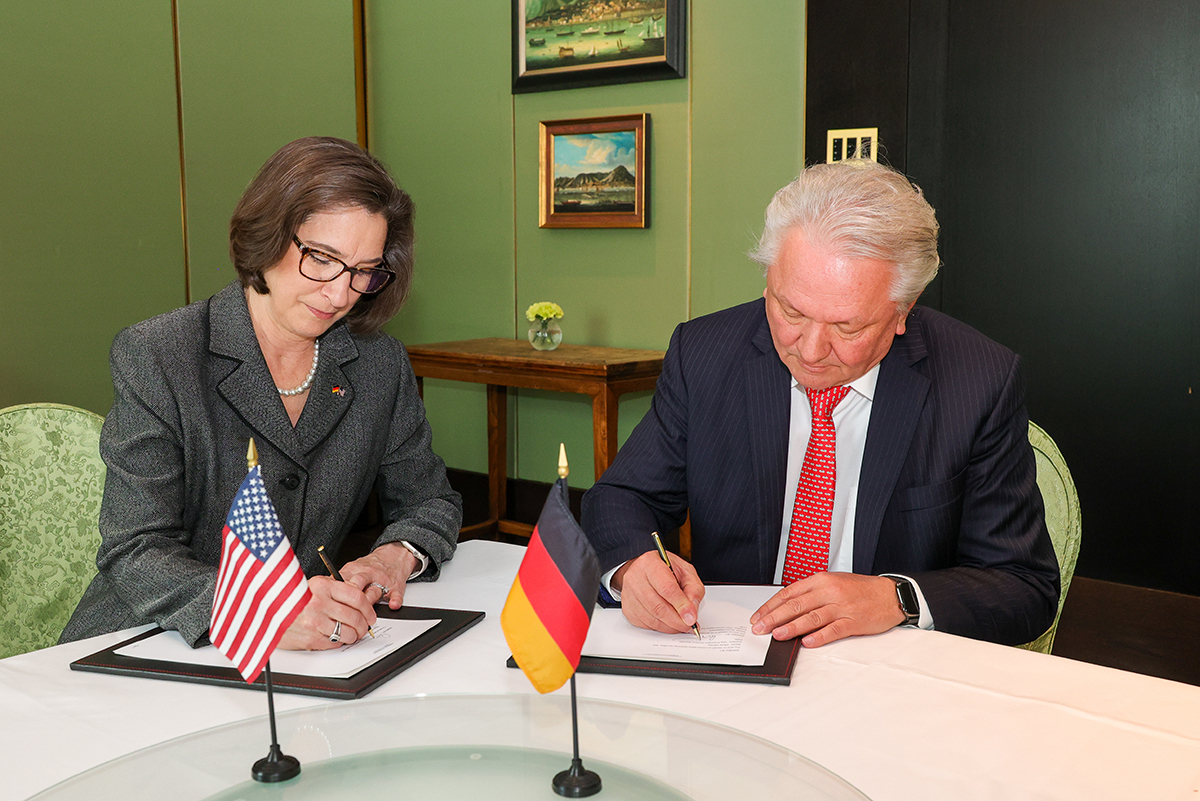
    Paula Hartley, Lockheed Martin Vice President Of Tactical Missiles, And Armin Papperger, Rheinmetall Defence CEO, Sign A Memorandum Of Understanding In Berlin.

    BERLIN, GM, 20th April 2023. Rheinmetall Defence and Lockheed Martin have entered into a Memorandum of Understanding (MOU) to collaborate on tailored solutions that will provide Germany with a unique rocket artillery system that maximizes existing and combat proven components, produced in Germany.

    “For us, the letter of intent signed today is an agreement of strategic significance. The combination of Lockheed Martin’s proven capabilities and extensive know-how with Rheinmetall’s experience in fabrication and production opens unique opportunities for both sides”, declares Armin Papperger, chief executive of Rheinmetall AG. “For Germany and Rheinmetall, the agreement offers the chance to secure key technologies and a significant share in the value added chain for Germany.”

    Under this collaboration, the companies will explore potential joint opportunities in areas such as research and development, production and other activities.

    “Lockheed Martin looks forward to collaborating and optimizing our combined resources to meet an immediate need for deterrence,” said Lockheed Martin Vice President of Tactical Missiles, Paula Hartley. “This is another step in our partnership with Rheinmetall bringing 21st Century Security solutions to Germany.”

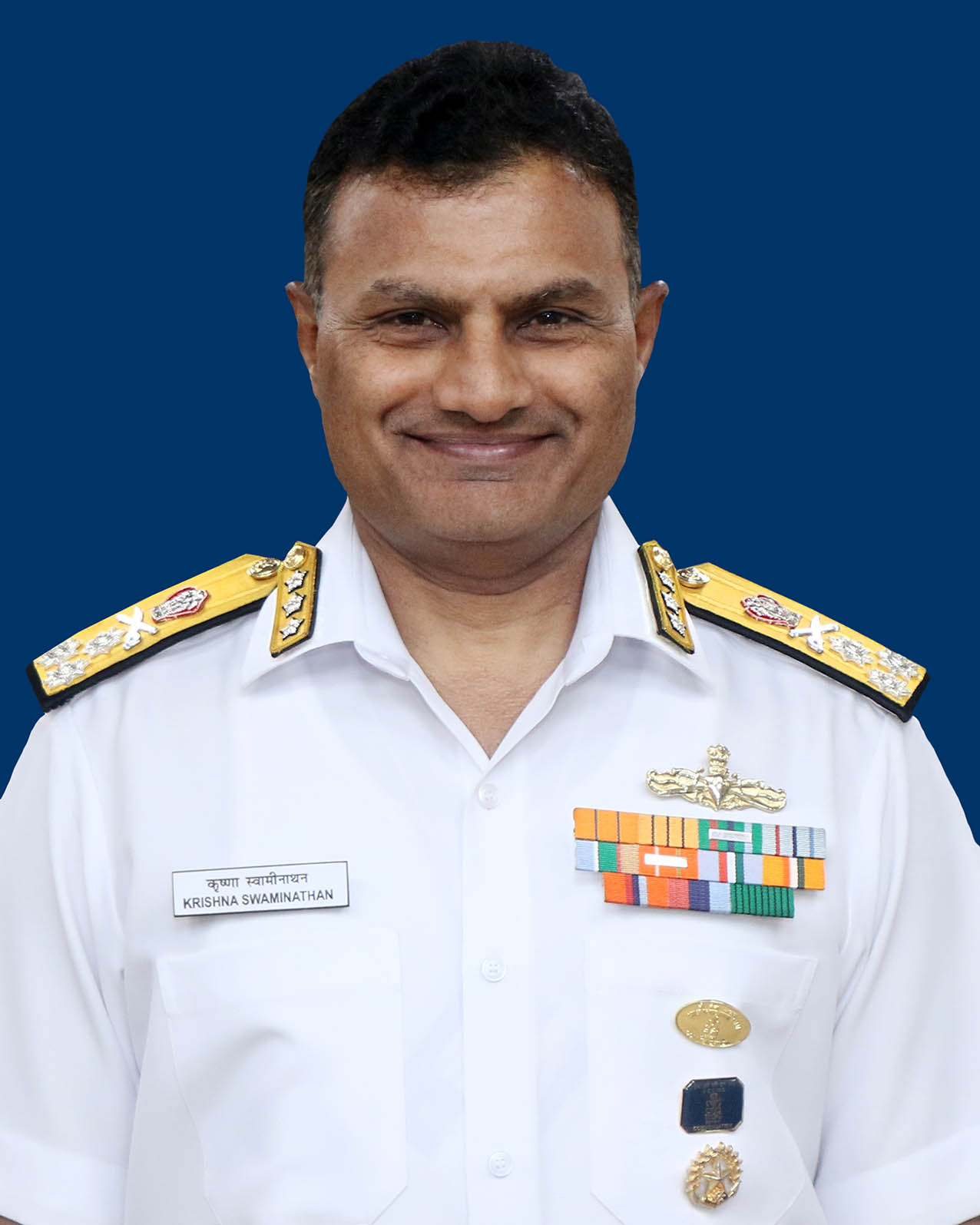
  • Vice Admiral Krishna Swaminathan, AVSM, VSM Assumes Charge as Controller of Personnel Services Indian Navy

    Vice Admiral Krishna Swaminathan, AVSM, VSM Assumes Charge as Controller of Personnel Services Indian Navy

    New Delhi, 18th April, 2023. Vice Admiral Krishna Swaminathan assumed charge as Controller of Personnel Services on 17 Apr 23. The Flag Officer was commissioned into the Indian Navy on 01 Jul 87 and is a specialist in Communication and Electronic Warfare. He is an alumnus of the National Defence Academy, Khadakwasla; the Joint Services Command and Staff College, Shrivenham, United Kingdom; the College of Naval Warfare, Karanja; and the United States Naval War College, Newport, Rhode Island, USA.

    A recipient of the Ati Vishisht Seva Medal and Vishisht Seva Medal, the Admiral has held several key operational, staff and training appointments in his naval career including the command of missile vessels INS Vidyut and INS Vinash; the missile corvette INS Kulish; the guided missile destroyer INS Mysore; and the aircraft carrier INS Vikramaditya.

    On promotion to the Flag rank, he served as the Chief Staff Officer (Training) at Headquarters Southern Naval Command, Kochi and played a key role in the conduct of all training in the Indian Navy. He was also instrumental in raising the Indian Navy Safety Team that oversees operational safety across all verticals of the Navy. He then went on to head the work up organisation of the Navy as the Flag Officer Sea Training, after which he was privileged to be chosen for the extremely prestigious appointment of Flag Officer Commanding Western Fleet. After commanding the Sword Arm, he tenanted the appointment of Flag Officer Offshore Defence Advisory Group and Advisor Offshore Security and Defence to the Government of India. He was later appointed as Chief of Staff of the Western Naval Command, a position he held till assuming his current assignment.

    Admiral Swaminathan’s educational qualifications include a BSc degree from Jawaharlal Nehru University, New Delhi; MSc in Telecommunications from Cochin University of Science and Technology, Kochi; MA in Defence Studies from King’s College, London; MPhil in Strategic Studies from Mumbai University; and PhD in International Studies from Mumbai University.

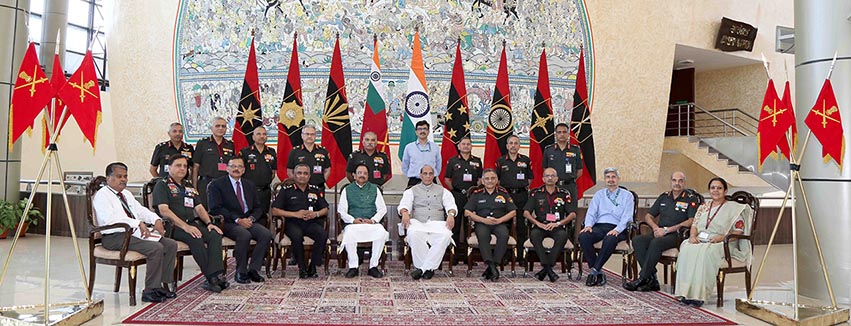
  • Raksha Mantri Addresses the Senior Leadership of Indian Army During Army

    Raksha Mantri Addresses the Senior Leadership of Indian Army During Army

    New Delhi, 19th April, 2023. The first Army Commanders’ Conference of year 2023, commenced in a hybrid format on 17 April 2023. During the event, Indian Army’s apex leadership is comprehensively deliberating upon all aspects of existing security scenarios, situation along the borders and in the hinterland and challenges for the present security apparatus. In addition, the conference is also focussing on issues pertaining to organisational restructuring, logistics, administration and human resource management. The main highlight of the third day of the conference was the address by the Hon’ble Raksha Mantri, Shri Rajnath Singh, to the senior leadership of the Indian Army, which was preceded by a brief on “IA contribution to Nation Building”

    The Raksha Mantri reaffirmed the faith of the billion-plus citizens in the Indian Army as one of the most trusted and inspiring organisations in the country. He highlighted the stellar role played by the Army in guarding our borders and fighting terrorism apart from providing assistance to the civil administration whenever called for.  The Raksha Mantri also remarked “The Army’s contribution is applaudable in every domain from Security, HADR, Medical Assistance to maintaining the stable internal situation in the country.  The role of Indian Army is very important in Nation building as also in the overall national development”.  He expressed his happiness to be present in the Army Commander’s conference and complimented the Army leadership for successfully taking ahead the ‘Defence and Security’ vision of the Nation and the Hon’ble Prime Minister.

    The Hon’ble Raksha Mantri stressed upon the present complex world situation which effects everyone globally. He stated that “Unconventional and asymmetric warfare, including hybrid war will be part of the future conventional wars. Cyber, information, communication, trade and finance have all become an inseparable part of future conflicts. This necessitates that Armed Forces will have to keep all these facets in consideration while planning and formulating strategies”.

    Commenting on the current situation along the Northern borders, the Hon’ble Raksha Mantri expressed full confidence in the Army for any contingency though, the ongoing talks for peaceful resolution will continue and disengagement and de-escalation, is the best way forward. Expressing his gratitude, he remarked “It is our ‘Whole of Government’ approach to ensure availability of best weapons, equipment and clothing to our troops braving extreme weather and hostile forces to defend our territorial integrity”. The Raksha Mantri complimented the efforts of BRO, which has led to the incomparable improvement of road communication in the borders both Western and Northern, while working under difficult conditions.

    Referring to the situation along the Western borders, he complimented the Indian Army’s response to cross border terrorism, however the proxy war by the adversary continues. The Hon’ble Raksha Mantri said “I compliment the excellent synergy between the CAPF/ Police forces and the Army in tackling the menace of terrorism in Jammu and Kashmir. The synergised operations in the Union Territory of Jammu and Kashmir are contributing to increased stability and peace in the region and the same should continue, and for this I again compliment the Indian Army”.

    The Raksha Mantri commended the Army for the high standard of operational preparedness and capabilities which he has always been experiencing first hand during his visits to forward areas. He also paid tributes to all the brave hearts for making the ultimate sacrifice in the defence of the motherland. He complimented the significant contributions made by the Army in military diplomacy to further our national security interests by creating sustainable cooperative relationships with foreign Armies.  He also applauded  Indian Army  for its effort in providing Humanitarian Assistance and Disaster Relief Mission post earthquake in Turkey during ‘Operation Dost’.

    The Hon’ble Raksha Mantri stressed upon the technological advancement taking place in every sphere of our life and applauded the Armed Forces for aptly incorporating them.  He appreciated the Army’s efforts to develop niche technologies in collaboration with civil industries, including premier educational institutions and thereby progressing towards the aim of ‘Modernisation through Indigenisation’ or ‘Atam Nirbharta’.  He also stressed that as user we must  impose our faith in own Industries and technologies  which would inturn motivate  the Industry to produce the  best as also would boost ‘Atam Nirbharta’.

    The Raksha Mantri also complemented the Army for its dedicated efforts towards the national vision of ‘Women Empowerment’ by grant of Permanent Commission and induction of women officers in most of the streams of Indian Army. He also complemented the Army in the execution of newly formulated recruitment scheme ‘Agniveers’ in the army as also the exuberance displayed by the youth of the county for the same.

    The Hon’ble Raksha Mantri released the second edition of Indian Army UN Journal titled ‘Blue Helmet Odessey- Changing Contours of Peacekeeping Operations in the 20th Century” which is a compilation of inputs from missions and perspectives by senior military leadership and diplomats and a commemorative postal stamp on the occasion of 75 years of Indian Army. The Hon’ble Raksha Mantri also reviewed an equipment display focusing on niche technology, innovation, solutions for surveillance, Artificial Intelligence, Training, Robotics, Virtual Reality, Operational Logistics etc.

    He concluded by saying that issues related to “Defence diplomacy, indigenisation, information warfare, defence infrastructure and force modernisation should always be deliberated upon in such a forum.  War preparedness should be a continuous phenomena and we should  always be ready for unpredictables and uncertain events that may  crop up any time. We should always be honing up our  fighting  skills and  weapons technologies  so as to act effectively whenever required for.  The Nation is proud of its Army and the Government is committed to facilitate the Army in their forward movement, on the road to reforms and capability modernisation”.