Author: Defence Street Editor

  • Chief of Defence Staff inaugurates DRDO’s two-day workshop on ‘Human Factors Engineering in Military Platforms’ in New Delhi

    Chief of Defence Staff inaugurates DRDO’s two-day workshop on ‘Human Factors Engineering in Military Platforms’ in New Delhi

    • Need to incorporate HFE at qualitative requirements & designs stage to make indigenous weapons suitable for soldiers: General Anil Chauhan

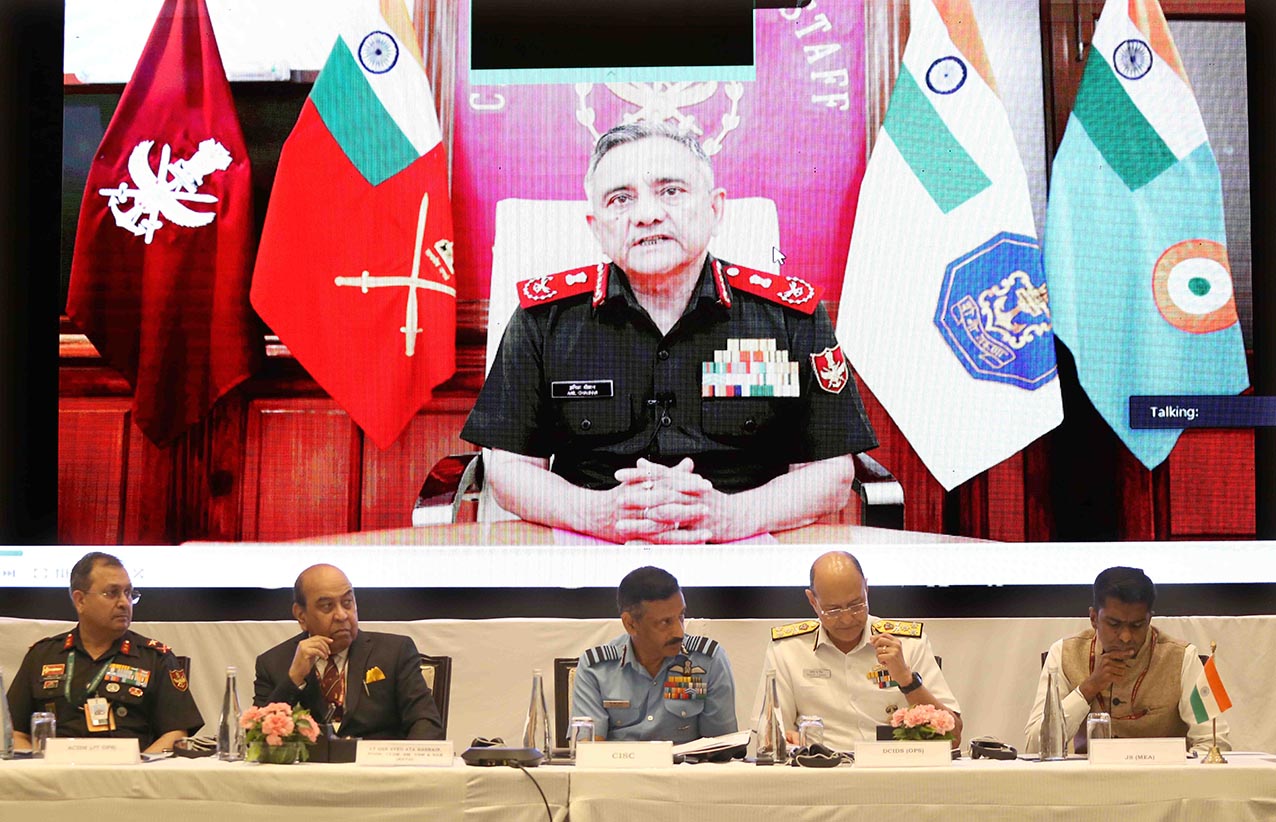
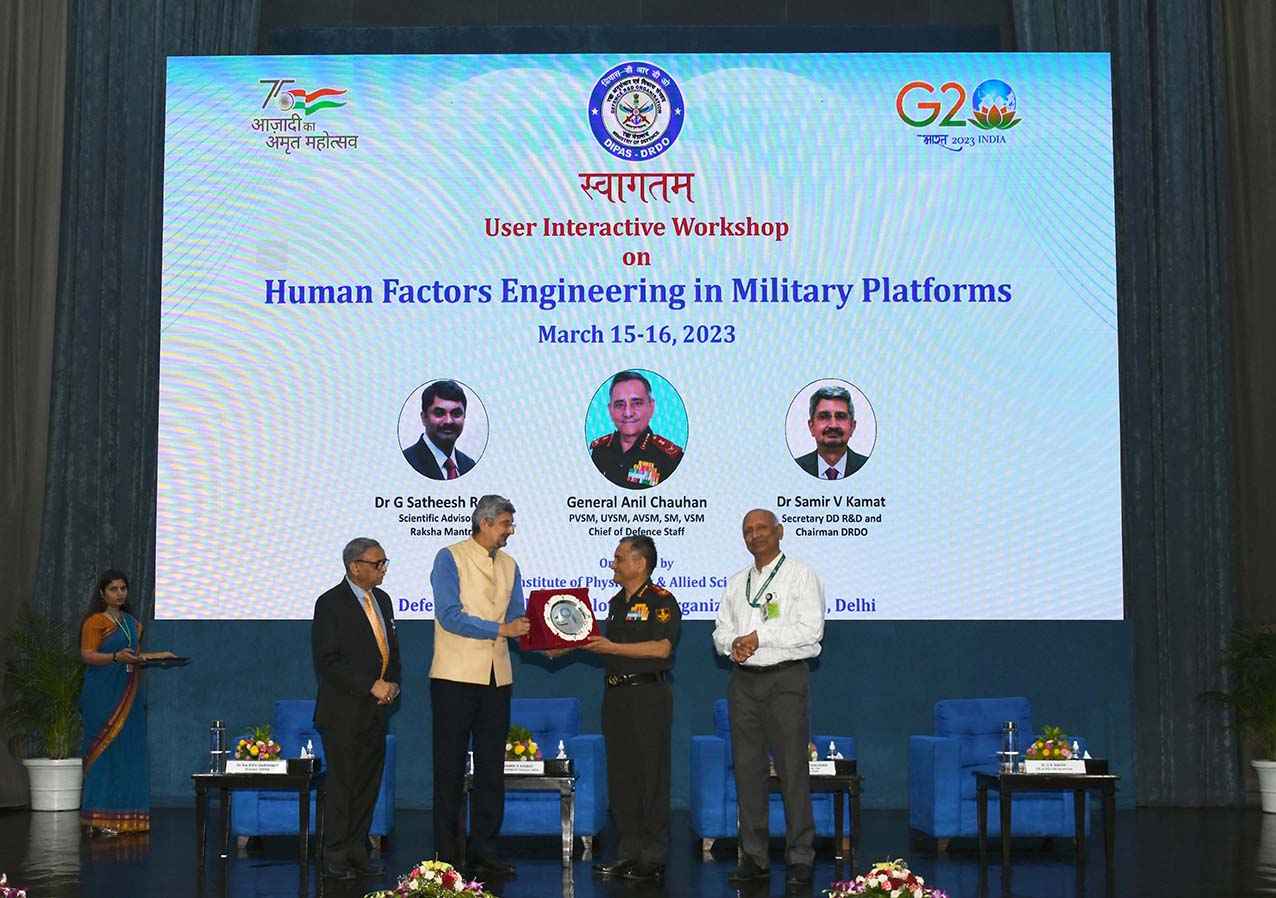
    New Delhi. Chief of Defence Staff General Anil Chauhan inaugurated a two-day workshop on ‘Human Factors Engineering in Military Platforms’ in New Delhi on 15th March. The workshop has been organised by Defence Institute of Physiology and Allied Sciences (DIPAS), a Delhi-based laboratory of Defence Research and Development Organisation (DRDO).

    The aim of the workshop is to evolve a policy framework and practices to ensure scientific implementation of Human Factors Engineering (HFE) in the defence sector, thereby providing an impetus to the vision of ‘Aatmanirbhar Bharat’. The HFE is a science concerned with the design of tools and systems by taking into account human capabilities & limitations for safe and effective use.

    In his address, the Chief of Defence Staff emphasised on the need for incorporation of the HFE right at the stage of qualitative requirements and designs to make indigenous weapons suitable for soldiers. He called for creating a synergistic approach and policy framework for the implementation of the HFE through the involvement of Integrated Defence Staff taking into consideration both long drawn battles and short duration special operations.

    Speaking on the occasion, Secretary Department of Defence R&D and Chairman DRDO Dr Samir V Kamat highlighted the initiatives taken by DRDO for implementation of the HFE as integral part of the product development cycle to ensure that the products are developed not only for Indian soldiers but are also available for export. He emphasised that in the age of Artificial Intelligence and system autonomy for defence equipment, the HFE will play an equally important role.

    Director Generals, Directors from DRDO Headquarters & laboratories working on futuristic defence technologies, senior scientists; representatives from Strategic Planning, Army Design Bureau, Armoured Corps, Infantry, Warship Design Bureau, Indian Air Force and senior officials of several defence industries & defence PSUs are attending the workshop.

  • Elbit Systems signs Memorandum of Understanding with Nippon Aircraft Supply and Itochu Aviation at DSEI Japan

    Elbit Systems signs Memorandum of Understanding with Nippon Aircraft Supply and Itochu Aviation at DSEI Japan

    15th March. Elbit Systems, Nippon Aircraft Supply (NAS) and Itochu Aviation have signed a strategic cooperation Memorandum of Understanding (MOU) to promote mutual cooperation for a range of solutions between the companies.

    As part of the MOU, Elbit Systems will provide the main components, technology and knowledge to NAS and Itochu. NAS will provide the capabilities for local integration, manufacturing, test and maintenance and Itochu will lead the marketing of the products in Japan.

    This cooperation will address the growing Japanese interest in the field of defense while fully aligned with the local requirements that Elbit Systems provides Japan-based production and qualities.

    The MOU signing ceremony took place during the DSEI Japan exhibition with Israel’s Ambassador to Japan Mr. Gilad Cohen, Mr. Osamu Matshushita President and COO of NAS, Mr.Mashahiro Takita of Itochu Aviation and Ran Kril Executive Vice President International Marketing and Business Development of Elbit Systems in attendance.

    Mr. Gilad Cohen, Ambassador of Israel to Japan: “The agreement between Elbit Systems, Itochu Aviation and NAS, demonstrates the recent process of deepening relations between Israel and Japan, relations that are based on mutual interests and shared values. This cooperation shows the unique synergy between the two countries and the integration of cutting-edge Israeli technologies and the impressive industrial abilities of Japan.”

    Mr. Osamu Matsushita, President and COO of Nippon Aircraft Supply: “It is a true honor to work with great partners, Elbit Systems and Itochu Aviation, were we will act in the role of integration, local production, testing and maintenance with the most advanced and combat-proven solutions developed by Elbit Systems. We will contribute to international peace and Japan’s defense by providing high-quality made-in Japan products. This achievement is a great milestone in our relationship.”

    Mr. Masahiro Takita, Executive Officer, Vice President Defense and Aerospace of Itochu Aviation: “We are excited to collaborate with Elbit Systems, that has advanced technology and combat proven systems especially in terms of autonomous capabilities and communication. Elbit Systems also has flexibilities that would fit with the establishment of a local capability to support Japan’s Ministry of Defense operations. I look forward to working with our partners.”

    Ran Kril, Executive Vice President International Marketing & Business Development of Elbit Systems: “We are pleased to team up with NAS and Itochu Aviation, two leading Japanese companies, in this important endeavor. Elbit Systems is in close contact with our local partners and offers them innovative and cutting-edge technological solutions.  We remain committed to the transfer of technology as well as the manufacturing of our solutions in the local market.”

  • Lockheed Martin Launches Commercial Ground Control Software For Satellite Constellations

    Lockheed Martin Launches Commercial Ground Control Software For Satellite Constellations

    • Company Commercializes Horizon™ and Compass™ Command and Control and Mission Planning Software Designed to Support Constellations of Any Size

    WASHINGTON, D.C., 14th March. To help future developers of commercial satellite constellations plan missions and operate their systems, Lockheed Martin is now offering commercial licenses to its proven Horizon™ Command & Control (C2) and Compass™ Mission Planning software.

    Lockheed Martin’s Compass™ mission planning software uses adaptable automation to optimize available satellite time overhead with space vehicle finite propulsion resources; this helps enable commercial satellite constellation customers to maximize operationss.

    Horizon and Compass leverage an integrated and scalable modular architecture designed to meet specific customer needs. They provide mission critical capability for small, medium or large constellations, which includes orbit management, autonomous operations and formation flying.

    Lockheed Martin has used versions of the Horizon and Compass software in more than 50 spacecraft, performing government, research and commercial space missions.

    “As more commercial companies start exploring services and capabilities from orbit, Lockheed Martin’s mission planning and command and control expertise is helpful to the developing space economy,” said Paul Koether, program director at Lockheed Martin Space. “Compass and Horizon offer the flexibility to meet a variety of constellation requirements, benefitting user companies in such a way that they can focus on providing services to their customer versus managing the complexities of flying their satellites.”

    Horizon: Flexible Mission Management

    Horizon is an extensible, cloud-enabled C2 jump-start kit built on industry and telemetry standards. It has been designed for customer flexibility, as its capabilities are extendable to any satellite bus and adaptable to any mission planner. It also includes a semi to full autonomous operations mode to enable “lights out” operations for periods where direct human engagement is not necessary.

    • Key Horizon features include commanding, telemetry processing, storage and analytics, scheduled execution and intuitive user displays.

    Compass: Making the Most of On-Orbit Time  

    Compass is a modularized, microservice-based software tool suite that enables customers to efficiently develop and deploy satellite bus, payload and communications mission planning. Its out-of-the-box, cloud-native, mission-adaptable, data-driven configuration uses mission-tailored automation to plan the most efficient missions. This helps customers maximize use of their space vehicles to make best use of satellite available time overhead and minimize on-orbit fuel usage.

    • Key Compass features include dashboard visualization, orbit management, feasibility assessment, downlink scheduling, altitude control, payload scheduling, rules-based planning and contact planning.

    For additional information about commercial licenses for Lockheed Martin’s Compass and Horizon software, contact: space-product-lines.fc-space@lmco.com .

  • Lockheed Martin and Royal Bahraini Air Force Celebrate Bahrain’s First F-16 Block 70 Aircraft in Greenville, South Carolina

    Lockheed Martin and Royal Bahraini Air Force Celebrate Bahrain’s First F-16 Block 70 Aircraft in Greenville, South Carolina

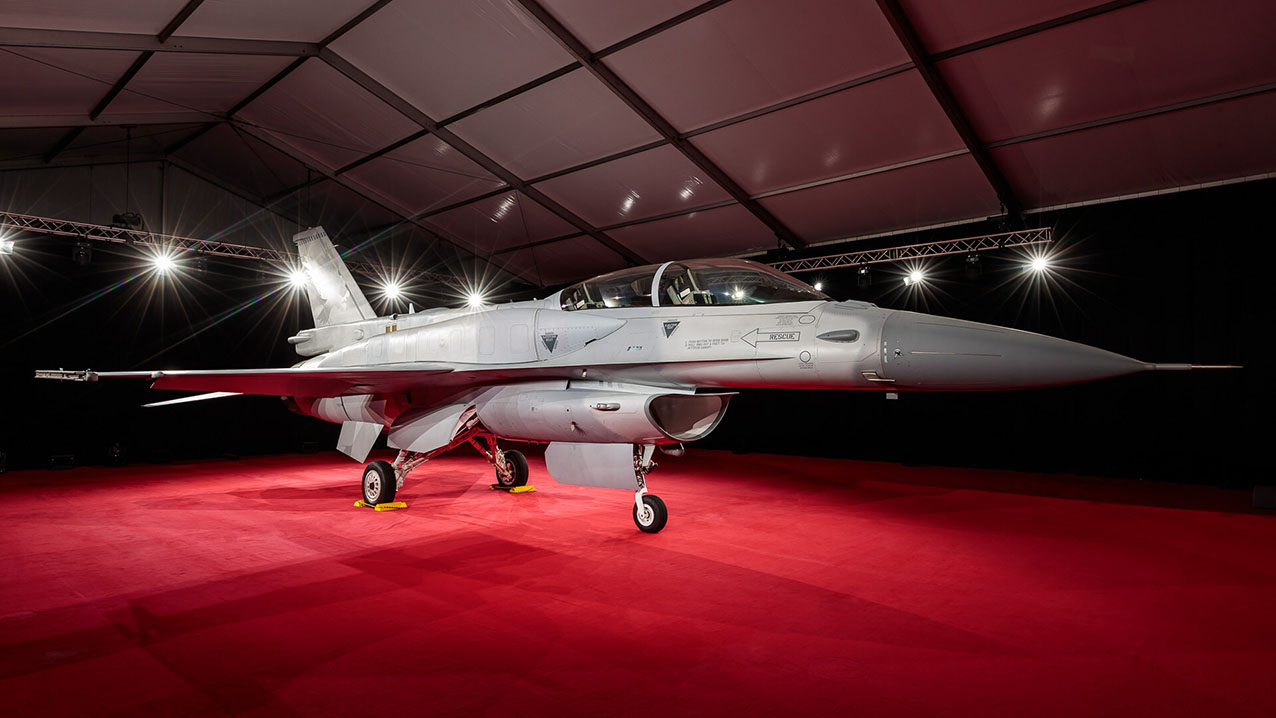
    The first Royal Bahraini Air Force F-16 Block 70 was celebrated at Lockheed Martin in Greenville, South Carolina on March 10. Lockheed Martin photo

    GREENVILLE, S.C. On 10th March Bahraini, American and Lockheed Martin officials celebrated the first F-16 Block 70 for the Royal Bahraini Air Force today at Lockheed Martin in Greenville, South Carolina.

    The Kingdom of Bahrain has a unique history with the F-16: It was the first F-16 operator in the Gulf Cooperation Council beginning in the early 1990s, and now is receiving the first F-16 Block 70.

    “Today’s ceremony represents the next generation of the powerful and proven legacy of the F-16, and demonstrates Lockheed Martin’s commitment to advancing this program and getting this much-needed aircraft and its advanced 21st Century Security capabilities to the warfighter,” said OJ Sanchez, vice president, Integrated Fighter Group, which includes the F-16 program. “With the Block 70 iteration, we are transforming 4th generation for the next generation for the Royal Bahraini Air Force and other partners and allies around the world.”

    This F-16 Block 70 jet is the first of 16 jets for Bahrain, and took its first flight on Jan. 24, 2023. From here, it will begin additional flight tests at Edwards Air Force Base before arriving in Bahrain in 2024.

    Six countries have selected Block 70/72 aircraft. In addition to the current official backlog of 127 jets to-date to be built in GreenvilleJordan has signed a Letter of Offer and Acceptance (LOA) for 12 jets and Lockheed Martin has received a contract to begin its long-lead activities. Bulgaria has also signed an LOA for an additional eight jets for its fleet. Once these are finalized, the backlog will increase to 147.

    “The F-16 celebrated today was built by our talented, committed workforce in Greenville,” said Danya Trent, vice president, F-16 Programs and Greenville site leader. “We are proud to call Greenville the global home of the F-16 and look forward to continuing to produce jets serving missions around the world.”

  • DRDO conducts two consecutive successful flight tests of Very Short Range Air Defence System missile off Odisha coast

    DRDO conducts two consecutive successful flight tests of Very Short Range Air Defence System missile off Odisha coast

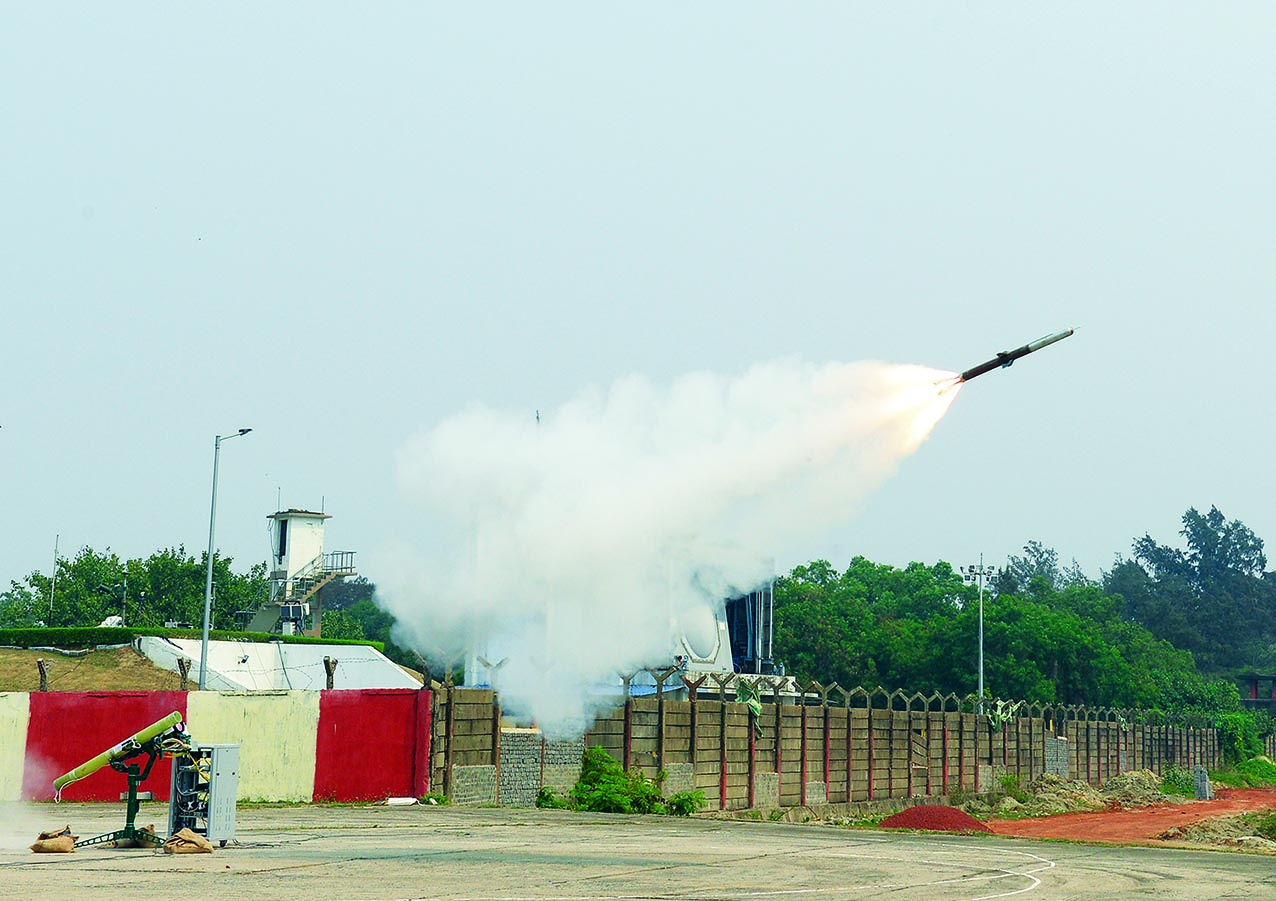
    New Delhi, 14th March. Defence Research and Development Organisation (DRDO) conducted two consecutive successful flight tests of Very Short Range Air Defence System (VSHORADS) missile at the Integrated Test Range, Chandipur off the coast of Odisha on March 14, 2023. The flight tests were carried out from a ground-based man portable launcher against high speed unmanned aerial targets, mimicking approaching and receding aircraft. The targets were successfully intercepted, meeting all mission objectives.

    VSHORADS is a Man Portable Air Defence System (MANPAD) meant for neutralising low altitude aerial threats at short ranges. It has been designed and developed indigenously by Research Centre Imarat, Hyderabad in collaboration with other DRDO laboratories and Indian Industry Partners. The missile incorporates many novel technologies including Dual-band IIR Seeker, miniaturised Reaction Control System and integrated avionics. The propulsion is provided by a dual thrust solid motor.

    Complimenting DRDO and industry partners, Raksha Mantri Shri Rajnath Singh said the missile equipped with novel technologies will give further technological boost to the Armed Forces.

    Secretary, Department of Defence R&D and Chairman DRDO Dr Samir V Kamat also congratulated the teams associated with the consecutive successful flight tests.

  • SAUDIA to Grow Long-Haul Fleet with up to 49 Boeing 787 Dreamliners

    SAUDIA to Grow Long-Haul Fleet with up to 49 Boeing 787 Dreamliners

    • Saudi Arabian flag-carrier to order 39 fuel-efficient 787-9 and 787-10 airplanes.
    • Announcement including options for 10 additional jets is part of Saudi Arabia’s broader investment to become a global aviation hub.
    Boeing and Saudi Arabian Airlines (SAUDIA) announced the national flag-carrier will grow its long-haul fleet with the selection of up to 49 787 Dreamliners.

    RIYADH, Saudi Arabia. On 14th March, Boeing and Saudi Arabian Airlines (SAUDIA) announced the national flag-carrier will grow its long-haul fleet with the selection of up to 49 787 Dreamliners. SAUDIA is set to purchase 39 787s, with a further 10 options, utilizing the outstanding efficiency, range and flexibility of the Dreamliner to sustainably grow its global operation. The agreement will include both 787-9 and 787-10 models.

    This agreement is part of Saudi Arabia’s wider strategic plan to transform the country into a global aviation hub. In total, Saudi Arabian carriers announced today their intent to purchase up to 121 787 Dreamliners in what will be the fifth largest commercial order by value in Boeing’s history. This will support the country’s goal of serving 330 million passengers and attracting 100 million visitors annually by 2030.

    “SAUDIA continues its expansion efforts in all aspects of the airline; whether it’s introducing new destinations or increasing the aircraft fleet,” His Excellency Engr. Ibrahim Al-Omar, Director General of SAUDIA Group. “The agreement with Boeing delivers on this commitment and the newly added aircraft will further enable SAUDIA to fulfill its strategic objective of bringing the world to the Kingdom”.

    SAUDIA currently operates more than 50 Boeing airplanes on its long-haul network, including the 777-300ER (Extended Range) and 787-9 and 787-10 Dreamliner. The additional 787s complement SAUDIA’s existing fleet, enabling it to effectively harness the value of the 777 and 787 families.

    “Adding to its 787 Dreamliner fleet will enable SAUDIA to expand its long-haul service with outstanding range, capacity and efficiency,” said Stan Deal, President and CEO of Boeing Commercial Airplanes. “After more than 75 years of partnership, we are honored by SAUDIA’s confidence in Boeing products and will continue to support Saudi Arabia’s goal to expand sustainable air travel.”

    Since revenue service began in 2011, the 787 family has launched more than 350 new nonstop routes around the world, including about 50 new routes since 2020. The Dreamliner reduces fuel use and emissions by 25% compared to the airplanes it replaces.

    This order will be posted to Boeing’s Orders and Deliveries website when finalized.

    As a leading global aerospace company, Boeing develops, manufactures and services commercial airplanes, defense products and space systems for customers in more than 150 countries. As a top U.S. exporter, the company leverages the talents of a global supplier base to advance economic opportunity, sustainability and community impact. Boeing’s diverse team is committed to innovating for the future, leading with sustainability, and cultivating a culture based on the company’s core values of safety, quality and integrity.

  • Manufacturing & marketing of a critical drug, developed under Technology Development Fund, for radiological & nuclear emergencies gets DCGI approval

    Manufacturing & marketing of a critical drug, developed under Technology Development Fund, for radiological & nuclear emergencies gets DCGI approval

    • Prussian blue insoluble formulations developed by the industry on a DRDO technology.

    New Delhi, 14th March. Manufacturing and marketing licenses for the commercial use of Prussian blue insoluble formulations, developed under the Technology Development Fund (TDF) scheme, have been granted to Scott-Edil Pharmacia Ltd, Baddi, Himachal Pradesh and Skanttr Lifescience LLP, Ahmedabad, Gujarat by Drugs Controller General of India (DCGI). The drug has been developed by the industry based on the technology of Institute of Nuclear Medicine & Allied Sciences (INMAS), Delhi, a laboratory of Defence Research & Development Organisation (DRDO).

    The drug will be available under the trade name of Pru-DecorpTM and PruDecorp-MG. The formulations are used for decontamination of Cesium & Thallium. It is one of the critical medicines listed by the World Health Organisation (WHO) for radiological and nuclear emergencies.

    Secretary, Department of Defence R&D and Chairman DRDO Dr Samir V Kamat has congratulated the Organisation as well as the industry on this achievement. He stated that the development of these drug formulations under the TDF project and the approval of DCGI is a successful endeavour of the DRDO for promoting the industry to achieve Prime Minister Shri Narendra Modi’s vision of ‘Aatmanirbhar Bharat’.

  • Joint India Singapore Exercise ‘Bold Kurukshetra’ Concludes at Jodhpur

    Joint India Singapore Exercise ‘Bold Kurukshetra’ Concludes at Jodhpur

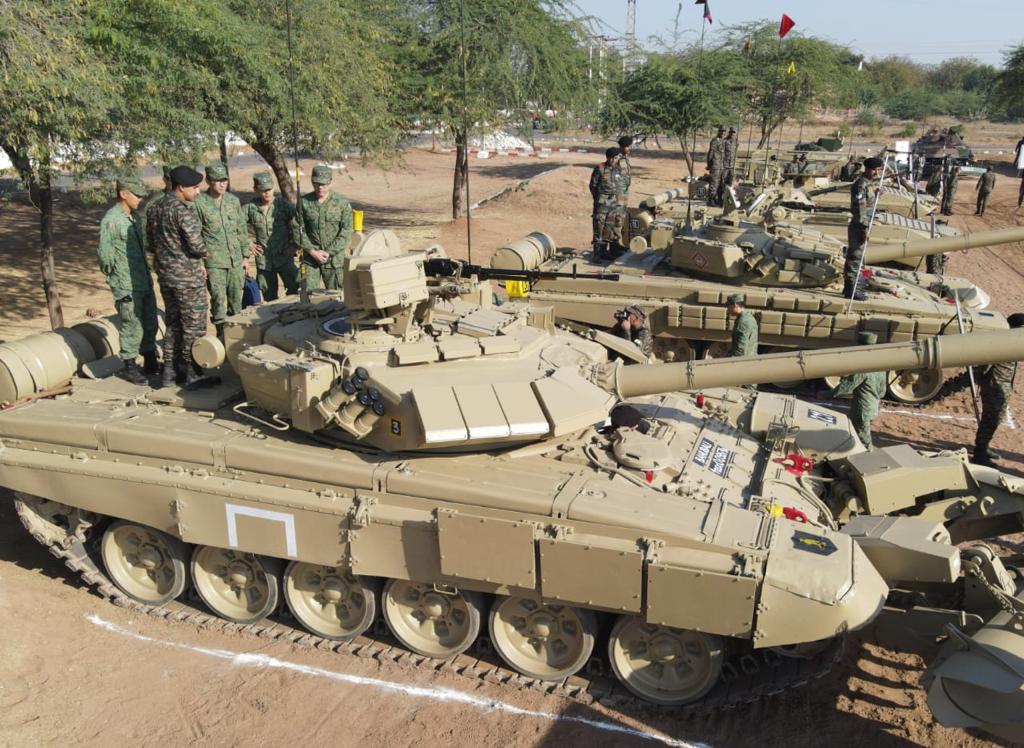
    New Delhi, 14th March. The Singapore Army and Indian Army participated in the 13th edition of Exercise Bold Kurukshetra, a bilateral armour exercise from 06-13 March 2023 at Jodhpur Military Station, India.

    For the first time in the exercise series, both armies participated in a command post Exercise, which involved Battalion and Brigade level planning elements and computer wargaming. Hosted by the Indian Army, the exercise involved soldiers from the 42nd Battalion, Singapore Armoured Regiment and an Armoured Brigade of Indian Army.

    The ten-day long joint training that commenced on 05th March fostered common understanding of mechanised warfare in emerging threats and evolving technologies, developing inter-operability through a computer simulation-based Wargame using joint operational and tactical procedures controlled through a joint command post. Both contingents not only learnt about each other’s operating drills and procedure, but also exchanged ideas and best practices being followed in a modern combat zone.

    Exercise Bold Kurukshetra is conducted under the ambit of the bilateral arrangement for the joint Army Training and exercises between the Singapore Army and the Indian Army. First conducted in 2005, this exercise underscores the strong and long-standing bilateral defence relationship between both countries and enhances cooperation between the two armies. Both defence establishments also interact regularly through high-level visits, policy dialogues, courses and other professional exchanges.

  • India has emerged as first responder in Humanitarian Assistance and Disaster Relief (HADR) at global level: CDS Gen. Anil Chauhan

    India has emerged as first responder in Humanitarian Assistance and Disaster Relief (HADR) at global level: CDS Gen. Anil Chauhan

    New Delhi, 14th March. India has emerged first responder in Humanitarian Assistance and Disaster Relief (HADR) at global level, said Chief of Defence Staff General Anil Chauhan, in his virtual message to a Workshop on Humanitarian Assistance, Disaster Relief, Risk Mitigation and Disaster Resilience organised under the aegis of Integrated Defence Staff (IDS), Ministry of Defence today on 14th March, 2023 at New Delhi. The workshop was organized as part of India’s Chairmanship of the Shanghai Cooperation Organization (SCO) and was attended by speakers from Kazakhstan, Kyrgyz Republic, Belarus, Mongolia, Pakistan and China along with speaker from Russia in the virtual mode. 

    “In keeping with our cultural beliefs of Vasudhaiva Kutumbakam – the whole world is one family, India has been playing an important role in providing HADR in the region and beyond”, he added, citing the instances such as Operation Maitri – rescue operations during earthquake in Nepal, Assistance to Sri Lanka in 2016 during Cyclone Roanu, earthquake in Indonesia in 2018, flooding in Madagascar in January 2020, Supply of Vaccines during the COVID 19 pandemic etc. He further said that timely launch of Operation Dost following the recent earthquake in Turkiye is a testimony to India’s willingness to extend help to all possible corners of the globe.

    The CDS further added that collective approach is essential to mitigate the consequences of disasters and with this objective India has been holding multilateral exercises with various countries and multi-lateral organisations such as the HADR exercise PANEX 21 for BIMSTEC members at Pune in 2021, SMANVAY 22 for ASEAN members at Agra in 2022 etc. “By strengthening multilateral partnerships through engagement via regional mechanisms, improved interoperability, and faster response, we have played our role as the first responder in the region” he said.

    CDS further said that Armed forces along with dedicated organizational structure are often the first responders in the event of any disaster. The ability to work in hostile environment, organizational skills and logistics know-hows make the Armed Forces most suited for HADR operations.

    Air Marshal BR Krishna, Chief of Integrated Defence Staff to the Chairman, Chiefs of Staff Committee inaugurated the workshop. He urged the member states to develop capability and capacities of their national organizations to make them capable of mitigating loss of life and property during natural calamities.

    The objective of the workshop on Humanitarian Assistance and Disaster Relief (HADR) is to exchange information and share the best practices on risk reduction and resilience, integration of Armed Forces in a regional response and disaster infrastructure and for promoting global collaboration among SCO members. The main goals of SCO are strengthening mutual trust and neighborliness among the member states, promoting the effective cooperation in politics, trade, economy, technology and culture as well as in education, energy, transport, tourism, environmental protection and other areas. Making joint efforts to maintain and ensure peace, security and stability in the region and moving towards the establishment of a democratic, fair and rational new international political and economic order.

  • Curtain Raiser – Award of President’s Colour to INS Dronacharya

    Curtain Raiser – Award of President’s Colour to INS Dronacharya

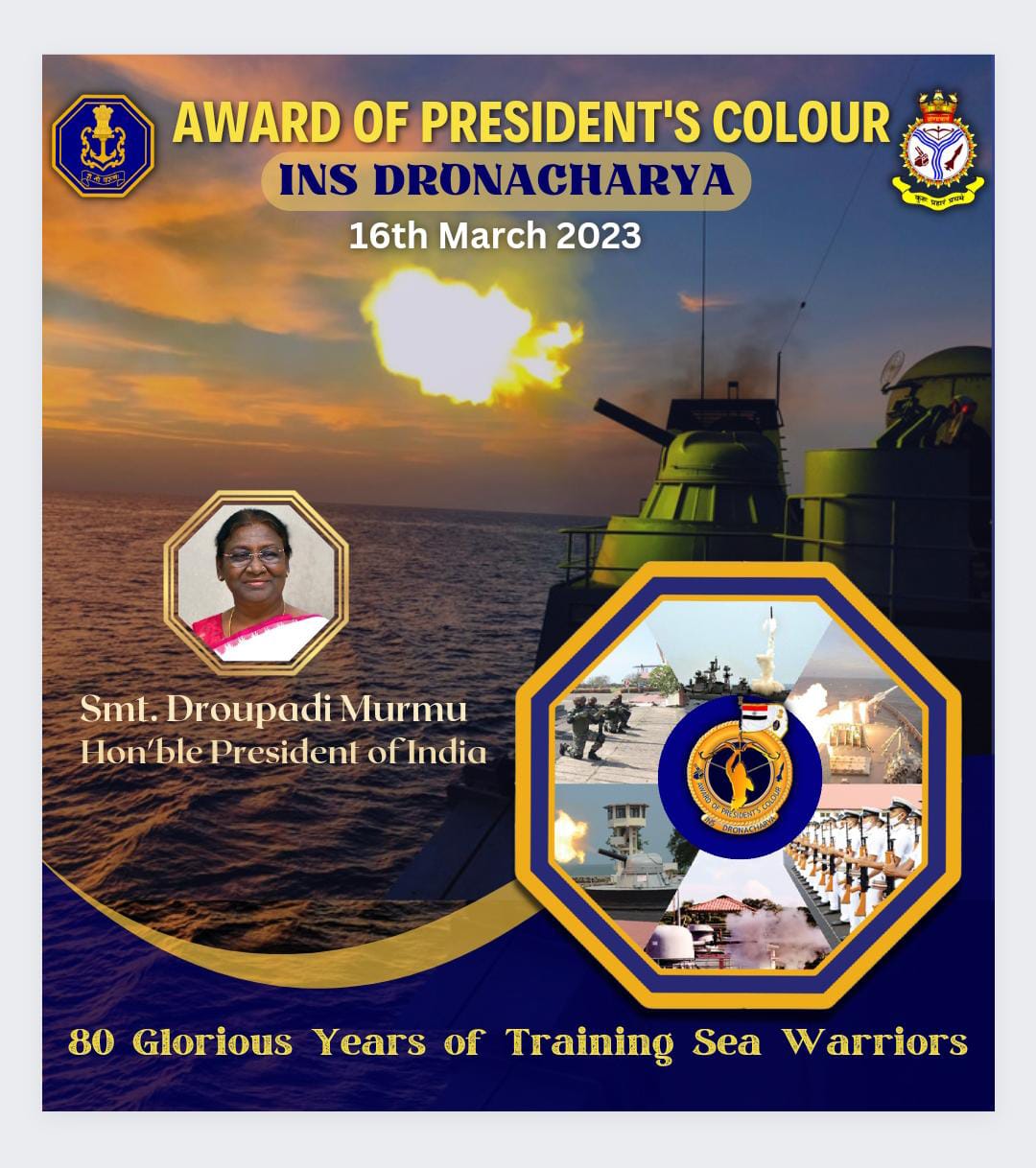
    New Delhi, 14th March. INS Dronacharya, the Gunnery School of the Indian Navy, is being awarded the prestigious President’s Colour on 16th March 2023 by the President of India, Smt. Droupadi Murmu. The President’s Colour or the Nishan is considered the highest honour that the Supreme Commander, President of India, bestows on a unit for its exceptional service to the Nation.

    INS Dronacharya is entrusted with the training of officers and sailors of the Navy, Coast Guard and friendly foreign maritime forces on all aspects of gunnery and missile warfare. Training of Officers and sailors to deliver ordnance on target effectively is the core focus of INS Dronacharya. It forges sea warriors and equips them with the professional acumen and unyielding spirit to man our powerful warships. The unit is also the nodal centre for training of Sagar Prahari Bal and Navy’s centre for training in constabulary operations for several Indian Ocean Region (IOR) Nations.

    The unit is also the training authority for drill and ceremonials in the Navy and Coast Guard. INS Dronacharya was designated as the Centre for Excellence in Gunnery and Missile Warfare in 2004. The unit is affiliated with the Indian Army School of Artillery in the spirit of jointmanship. The alumni of the institution have distinguished themselves in war and peace through exemplary acts of courage, unwavering commitment and impeccable professionalism. The alumni include one Mahavir Chakra, Kirti Chakra and Yudh Seva Medal, five Veer Chakra and seven Shaurya Chakra awardees.

    The Gunnery School has evolved over a period of time to become an institution of international repute providing training on all facets of gunnery and missile warfare. In recognition of the Gunnery School’s yeoman service to the nation, the President’s Colour is being awarded to INS Dronacharya on 16 Mar 2023. The ceremonial parade for the presentation of colours would be held at 1620 h and reviewed by the President of India. Governor of Kerala; Chief Minister of Kerala; Chief of the Naval Staff, Flag Officer Commanding in Chief, Southern Naval Command and other senior service and civilian dignitaries will also be present on the occasion. Live streaming of the parade will commence at 1550 h on DD National and Indian Navy YouTube channel.