Author: Defence Street Editor

  • Northrop Grumman Rapidly Prepares for Next-Generation Relay Ground Stations in the Pacific Region

    Northrop Grumman Rapidly Prepares for Next-Generation Relay Ground Stations in the Pacific Region

    BOULDER, Colo., 1st June 2023. Northrop Grumman Corporation recently completed a successful preliminary design review (PDR) of Relay Ground Station-Asia (RGS-A) for the U.S. Naval Information Warfare Center (NIWC) Pacific.

    Relay Ground Station-Asia (RGS-A) will be deployed in Guam and connect legacy and next-generation missile-warning and tracking satellites. Artist Rendering (Credit: Northrop Grumman)  
    • RGS-A will connect critical legacy and next-generation satellites and end users.
    • The successful PDR confirms the company is on track to transform the existing missile-warning system.
    • The review was completed a month ahead of schedule, demonstrating the company’s ability to rapidly meet changing customer requirements.

    Expert:

    Aaron Dann, vice president, strategic force programs, Northrop Grumman: “The preliminary design review exceeded our customers’ expectations and is the next step in delivering much-needed new capabilities to the Pacific region. Our advanced technologies will deliver what is needed to support missile-warning and missile-tracking satellites that protect our nation and its allies.”

    Details:

    The U.S. Space Force is working to transform the existing missile-warning system with the Future Operationally Resilient Ground Evolution (FORGE) system. A cornerstone of the FORGE architecture includes developing relay ground stations capable of supporting existing and new satellite constellations with the ability to handle changes in bandwidth and availability.

    Northrop Grumman was awarded a $99.6 million five-year contract from NIWC Pacific last year to design, develop, integrate, test and deliver the relay ground station. The majority of the work will take place at Northrop Grumman’s campus in Boulder, Colorado.

    NIWC Pacific will develop six antennas for RGS-A to enable the Space Systems Command (SSC) next generation Space-Based Infrared System (SBIRS) ground system which keeps legacy satellites in geosynchronous orbit. RGS-A will be deployed to Guam and is on schedule to be installed by late 2025.

    Northrop Grumman is a leading global aerospace and defense technology company. Our pioneering solutions equip our customers with the capabilities they need to connect and protect the world, and push the boundaries of human exploration across the universe. Driven by a shared purpose to solve our customers’ toughest problems, our 95,000 employees define possible every day.

  • Boeing Begins First U.S. Air Force B-52 Radar Upgrades

    • The radar will increase the aircraft’s navigation accuracy, targeting and tracking while providing new, high-resolution mapping.
    The first U.S. Air Force B-52 aircraft to begin upgrades as part of the Radar Modernization Program arrives at Boeing San Antonio. (Boeing photo)

    SAN ANTONIO, 1st June 2023. The first U.S. Air Force B-52 aircraft has arrived at Boeing to begin upgrades as part of the Radar Modernization Program (RMP).

    The RMP program will give the B-52 “fighter-like” radar capabilities, increasing navigation accuracy, targeting and tracking and will provide new, high-resolution mapping. The new radar will also be able to engage multiple targets simultaneously.

    “The B-52 brings unique, critical capabilities to the U.S. Air Force as they move to a future two-bomber platform strategy,” said Jennifer Wong, director of Bomber Programs. “By modernizing the B-52 radar, we’re increasing the relevancy of the aircraft for the warfighter for close air support or strategic attack.”

    Following the on-schedule completion of the radar program Critical Design Review, Boeing began low-rate initial production of the new radar system for operational test and evaluation. Work on B-52 modernization takes place at Boeing sites in Oklahoma City and San Antonio.

    RMP program upgrades include a new, wide-band radome on the aircraft’s nose; two high-definition, touch-screen, large area displays; two display sensor system processors that will connect the radar with other B-52 systems; two hand controllers and a modern active electronically scanned array radar.

    As a leading global aerospace company, Boeing develops, manufactures and services commercial airplanes, defense products and space systems for customers in more than 150 countries. As a top U.S. exporter, the company leverages the talents of a global supplier base to advance economic opportunity, sustainability and community impact. Boeing’s diverse team is committed to innovating for the future, leading with sustainability, and cultivating a culture based on the company’s core values of safety, quality and integrity.

  • Air Algérie orders five A330-900s and two A350-1000s

    Air Algérie orders five A330-900s and two A350-1000s

    1st June 2023. Air Algérie, the national airline of Algeria, has signed a firm order for  seven widebody aircraft to support its commercial development.  

    This order will allow Air Algérie to take full advantage of the flexibility of the Airbus product  range, strengthen its regional services and offer an ambitious plan for transcontinental  destinations. By operating the A330neo alongside the A350-1000, Air Algérie will also benefit  from operational savings such as a 25 percent lower fuel burn per seat and greater flexibility  resulting from the unique commonality between members of the Airbus aircraft Family.

    The A330neo and the A350 also feature the award-winning Airspace cabin, which offers  passengers a high level of comfort, ambience, and design. This includes more individual  space, enlarged overhead bins, a new lighting system and access to the latest in-flight  entertainment and connectivity systems.

    The A330neo and the A350 are the latest generation of Airbus widebody aircraft:

    The A330neo Family is powered by the latest generation Rolls-Royce Trent 7000 engines, the  A330-900 is capable of flying 7,200 nm / 13,334 km non-stop. By the end of April 2023, the  A330 Family had 1,775 firm orders from 130 customers worldwide. This makes it the most  popular widebody family ever, dominating the short-and medium-haul market.

    The A350 Family is the world’s most modern and market-leading long-haul aircraft family,  powered by Rolls-Royce’s new Trent XWB engines, the world’s most efficient widebody  aircraft to date capable of flying 8,700 nautical miles or 16,100 kilometers non-stop. By the  end of April 2023, the A350 Family had received 967 firm orders from 54 customers worldwide,  making it one of the most successful widebody aircraft ever.

  • Air Marshal Rajesh Kumar Anand VSM takes over as Air Officer-in-Charge Administration (AOA)

    Air Marshal Rajesh Kumar Anand VSM takes over as Air Officer-in-Charge Administration (AOA)

    New Delhi, 1st June 2023. Air Marshal Rajesh Kumar Anand, Vishisht Seva Medal took over as Air  Officer-in-Charge Administration (AOA) on 1 June 2023. An alumnus of National Defence Academy, the Air Marshal was commissioned in Administrative Branch of the Indian Air Force as an Air Traffic Controller on 13 June 1987. He has undergone the Higher Air Command Course from College of Air Warfare and Area Control Course from the Singapore Aviation Academy.

    In a career spanning over 36 years, the Air Marshal has held various field and staff appointments. Prior to his present appointment, he was Director General (Administration) at Air Headquarters, New Delhi.

    For his distinguished service, he was awarded Vishisht Seva Medal in January 2022 by the President of India.

  • Shri P Upadhyay INAS takes over as Director General of Naval Armament

    Shri P Upadhyay INAS takes over as Director General of Naval Armament

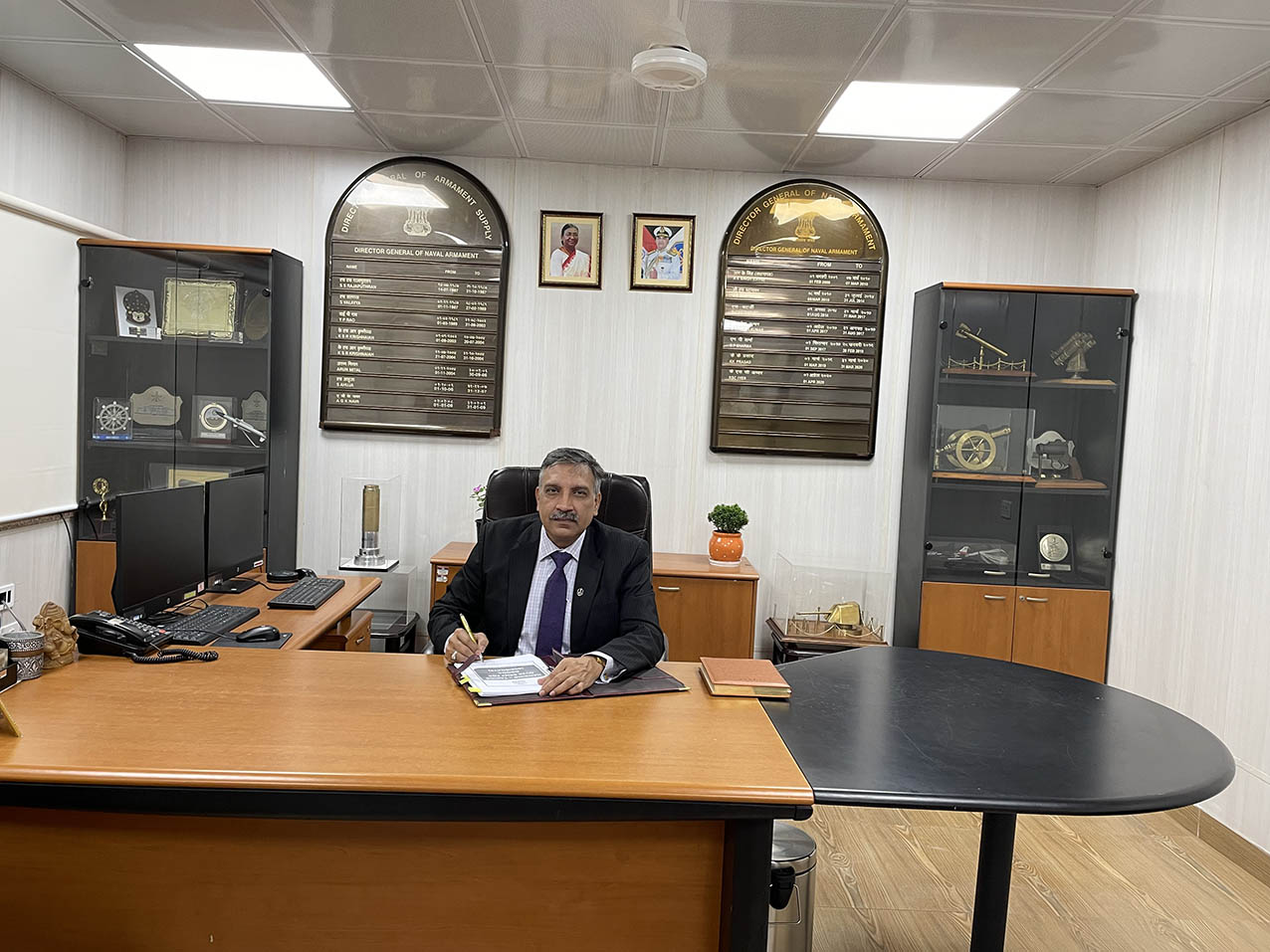
    New Delhi, 1st June 2023. Shri P Upadhyay, INAS has taken over as Director General of Naval Armament (DGONA) at IHQ MoD (Navy) from Shri KSC lyer, who superannuated on 31 May 23. Shri P Upadhyay, belongs to 1987 batch of Indian Naval Armament Service. He joined Naval Armament Organization of Indian Navy on 12 Jul 1989. An Electrical Engineering Graduate from SGSITS Indore, he earned his Post Graduate degrees from Devi Ahilya University in Electrical Engineering with specialization in ‘Digital Techniques and Instrumentation’ in 1988 and in Mechanical Engineering from University of Pune with specialisation in ‘Guided Missiles’, in 1995. In a span of 34 years, he has held various important assignments at NAD (Visakhapatnam), NAD (Karanja), NAD (Trombay), NAD (Alwaye) and IHQ, MoD(N). He is an alumnus of Naval Defence College of NDC-53.

    The officer specialises in Missile and Torpedo Maintenance besides having vast knowledge on disposal of ammunition.

    He assumes the charge of Director General of Naval Armament on 01 Jun 2023.

  • Boeing Partners on Roadmap for Sustainable Aviation Fuel Production in Southeast Asia

    Boeing Partners on Roadmap for Sustainable Aviation Fuel Production in Southeast Asia

    • Boeing contracts with the Roundtable on Sustainable Biomaterials to study sustainable feedstocks in the region
    • SAF to play a key role in reducing aviation’s carbon emissions

    SINGAPORE, 1st June 2023. Boeing and the Roundtable on Sustainable Biomaterials (RSB) will conduct a joint study to scale sustainable aviation fuel (SAF) production in Southeast Asia. SAF will play a critical role in enabling sustainable growth and meeting commercial aviation’s goal to reach net-zero emissions by 2050.  

    SAF has the potential to reduce carbon emissions over the fuel’s life cycle by up to 80% compared to petroleum jet fuel. While the current global SAF supply accounts for only around 0.1% of jet fuel consumption, the Asia-Pacific region can play a crucial role in SAF production with a potential of 40% of global feedstock supply.

    Phase one of the study will evaluate whether SAF production could scale sustainably in Southeast Asia based on the availability and sustainability of feedstocks across the region. The study will also assess the sustainable feedstock policy environment, as well as the technical and economic viability of main SAF production pathways. Findings and recommendations will be published in the first quarter of 2024.

    “We are excited to start a new partnership with Boeing in Southeast Asia, looking at supporting the regional aviation sector to decarbonize in a way that goes beyond emission reductions and also considers wider sustainability impact on the environment and society,” said Arianna Baldo, programme director for RSB.

    Boeing is acting on its commitment to deliver 100% SAF-compatible airplanes by 2030 and expand the SAF supply it’s scaling regionally and globally.

    “It’s imperative to expand the supply of SAF to decarbonize aviation, as they are safe and used every day as a drop-in replacement for fossil-based jet fuel,” said Jacqueline Lam, sustainability lead for Boeing in Southeast Asia. “The findings of the study will provide an evidence-based, data-driven set of recommendations for promoting the SAF industry in Southeast Asia.”

    Boeing and RSB have established an advisory group of key stakeholders including policymakers, companies and environmental and financial institutions to provide subject matter expertise. Additional stakeholders will be consulted as the study progresses. This project builds on the long-standing partnership between Boeing and RSB to explore SAF feedstock opportunities in different regions of the world including in Ethiopia, South Africa and Brazil.

    As a leading global aerospace company, Boeing develops, manufactures and services commercial airplanes, defense products and space systems for customers in more than 150 countries. As a top U.S. exporter, the company leverages the talents of a global supplier base to advance economic opportunity, sustainability and community impact. Boeing’s diverse team is committed to innovating for the future, leading with sustainability, and cultivating a culture based on the company’s core values of safety, quality and integrity. Join our team and find your purpose at boeing.com/careers.

    The Roundtable on Sustainable Biomaterials (RSB) is a global, non-profit and multi-stakeholder organisation that drives the development of a sustainable bio-circular economy. RSB has the world’s most trusted, peer-reviewed, global certification standard for sustainable bio-based and circular fuels and materials, from which it provides credible tools and solutions for sustainability that mitigate business risk and contribute to achieving the UN’s Sustainable Development Goals. www.rsb.org

  • Lockheed Martin To Collaborate With U.S. Army To Improve Space-Enabled Defense Systems

    Lockheed Martin To Collaborate With U.S. Army To Improve Space-Enabled Defense Systems

    • Team to Advance Technology for Beyond Line-of-Sight, In-flight Target Updates

    LITTLETON, Colo., 30th May 2023. Lockheed Martin signed a Cooperative Research and Development Agreement (CRADA) with the U.S. Army Combat Capabilities Development Command’s Aviation and Missile Center (AvMC) to advance Beyond Line of Sight (BLOS) connectivity. Under this CRADA, Lockheed Martin and AvMC will jointly develop and demonstrate space-enabled defense systems.

    What It Means: Through this CRADA, Lockheed Martin and the U.S. Army will conduct design, development, integration, and test risk reduction activities utilizing AvMC’s Redstone Arsenal, Alabama-based System Integration Lab (SIL) to identify and develop concepts of operations for linking ground-based platforms to the space domain.

    “Lockheed Martin brings a legacy of experience in supporting our tactical warfighters, and we recognize the importance of providing them with next generation capabilities,” said John Schierling, Lockheed Martin director for Tactical Space Programs. “Our collaboration with AvMC will assist in developing a more effective, survivable and affordable battlefield-connected 21st century security technology for our government customers and international allies by connecting platforms with space assets, helping deter future threats.”

    What Will Be Tested: The team will investigate capabilities that improve satellite communications (SATCOM) to defense systems, identify overlapping capabilities that can facilitate connectivity, look for capability gaps, conduct hardware-in-the-loop tests, test the connectivity between platforms at various speeds, explore ancillary use of communications systems and more.

    Where and When: As work begins, the team will leverage the SIL for its integration, test and analysis tools to support evolving prototypes. The SIL’s advanced modeling and simulation tool suite will enable the team to accelerate the delivery of experimental prototypes and align technical performers across government agencies and industry.

  • Raksha Mantri Shri Rajnath Singh interacts with Indian diaspora in Nigeria during his visit to Abuja

    • Emphasises on Government’s focus on ‘Make in India, Make for the World’; Lauds the Armed Forces for protecting the nation from adversaries
    FILE PICTURE

    New Delhi, 30th May 2023. Raksha Mantri Shri Rajnath Singh interacted with the Indian diaspora in Nigeria, at an event organised by the Indian High Commission in Abuja on May 29, 2023. The event was attended by the Indian community not just from Abuja, but also from other cities of Nigeria such as Lagos.

    The Raksha Mantri spoke about the increasing importance of India on the world stage owing to its fast-expanding economy and progressive government actions. The members of the community erupted in joy when the Raksha Mantri highlighted the growing stature of the Indian diaspora abroad. He appreciated the positive contribution made by the Indian community in Nigeria and expressed confidence that they will continue to keep the Indian flag flying high.

    Shri Rajnath Singh emphasised on the Government’s focus on ‘Aatmanirbharta’ and the significant progress made in defence exports in recent years towards achieving the objective of ‘Make in India, Make for the World’. He also lauded the capabilities of the Armed Forces in effectively countering any threat or challenge from adversaries.

    Later, the Raksha Mantri interacted with the senior Nigerian dignitaries, including the Chief Justice and Acting Minister of Defence, at the dinner hosted by the Indian High Commissioner.

    Shri Rajnath Singh was in Abuja to attend the swearing-in ceremony of the President of Nigeria Mr Bola Tinubu. Nigeria is home to more than 50,000 Indians. Indian owned/operated companies and businesses are among the largest employers in Nigeria.

  • Chief of the Naval Staff to Present Gallantry & Distinguished Service Medals during Naval Investiture Ceremony at Visakhapatnam

    New Delhi, 30th May 2023. The Naval Investiture Ceremony – 2023 will be held at Naval Base, Visakhapatnam on 31 May 2023 to felicitate Naval personnel who have demonstrated gallant acts, leadership, professional achievements and distinguished service of a high order. Admiral R Hari Kumar, Chief of the Naval Staff (CNS) will confer Gallantry and Distinguished Service awards on behalf of the President of India to the recipients.

    This would also be the first time that the Naval Investiture Ceremony is being conducted in the evening.

    33 awards will be presented during the ceremony, including two Nao Sena Medal (Gallantry), 13 Nao Sena Medal (Devotion to Duty), 16 Vishisht Seva Medal and two Jeevan Raksha Padak.

    https://pib.gov.in/PressReleasePage.aspx?PRID=1893744

    The CNS will also give away the Lt VK Jain Memorial Gold Medal for pioneering research in the field of weapon improvement and Electrical Engineering, and the Capt Ravi Dhir Memorial Gold Medal for promoting Flight Safety.

    The Unit Citations to Operational Units & Shore Units will also be presented.

    The event would commence with a ceremonial parade and will be witnessed by the spouses and family members of awardees along with several senior dignitaries of the Indian Navy.

    The NIC will be live streamed over the ‘IN Youtube’ Channel from 5:00 PM onwards on 31 May 2023.

  • General Atomics and Tokamak Energy Announce Collaboration Regarding High Temperature Superconducting Magnet Technologies

    General Atomics and Tokamak Energy Announce Collaboration Regarding High Temperature Superconducting Magnet Technologies

    • Companies to cooperate on HTS technologies for fusion energy and other applications

    San Diego, USA & Oxford, UK, 30th May 2023..US headquartered General Atomics (GA) and UK headquartered Tokamak Energy Ltd have signed a memorandum of understanding to collaborate in the area of High Temperature Superconducting (HTS) technology for fusion energy and other industry applications. The collaboration would leverage GA’s world-leading capabilities for manufacturing large-scale magnet systems and Tokamak Energy’s pioneering expertise in HTS magnet technologies.

    Creating clean, sustainable fusion energy requires strong magnetic fields to confine and control hydrogen fuel, which becomes a plasma several times hotter than the sun. Fusion power stations will provide safe and secure clean energy to towns and cities, and heat to industrial factories. One kilogram of fusion fuel releases the same amount of energy as burning around 10 million kilograms of coal, with no harmful emissions.

    “GA is excited to collaborate with Tokamak Energy on HTS magnets. Tokamak Energy is a leader in HTS magnet modelling, design and prototyping and GA has expertise in developing and fabricating large-scale superconducting magnets for fusion applications.” said Anantha Krishnan, Senior Vice President at General Atomics.

    Warrick Matthews, Managing Director at Tokamak Energy, said: “GA has significant experience, knowledge and facilities to produce large superconducting magnets at scale. Tokamak Energy has been developing HTS technologies for fusion for over a decade. The integration of these complementary capabilities promises to accelerate the development and production of HTS technologies in additional fields, such as aviation, naval, space and medical applications.”

    HTS Magnet Applications to Fusion Energy

    Magnetic fusion is the most thoroughly researched path to fusion energy. The approach utilizes a device known as a tokamak, which use several sets of powerful electromagnets to shape and confine superheated hydrogen gas – known as plasma. To achieve fusion conditions relevant for energy production, tokamaks must heat the gas to temperatures exceeding 100 million degrees Celsius—more than ten times the temperature at the center of the sun. This is the threshold required for fusion to be a commercially viable energy source.

    Strong magnetic fields are generated by passing large electrical currents around arrays of electromagnet coils that circle the plasma. The magnets are wound from ground-breaking HTS tapes, multi-layered conductors with a crucial internal coating of ‘rare earth barium copper oxide’ (REBCO) superconducting material. Developing more powerful HTS magnets will allow fusion power plants to use thinner magnetic coils while generating plasmas at greater densities. This would enable the facilities to operate with greater efficiency and smaller footprints, thereby improving their cost effectiveness.

    Fusing hydrogen atoms in a tokamak produces approximately ten million times more energy than comparable chemical reactions, such as the burning of coal or natural gas, without producing any carbon emissions or long-lasting waste. When deployed at scale, fusion will serve as a nearly limitless source of clean, safe, and always-available energy.

    World-leading Capabilities

    Tokamak Energy has been a pioneer in recognizing the opportunity to apply and develop HTS magnet technology for fusion energy. It is also the only private fusion company to have more than 10 years’ experience of designing, building, and operating privately-owned tokamaks.

    Tokamak Energy is a world-leader in the development of HTS magnets for fusion and other applications, with a proven track record:

    • 2019: First conduction-cooled all REBCO magnet to exceed 22 Tesla at 20 Kelvin.
    • 2020: 26.2T HTS magnet tested at CERN.
    • 2022: Built world-first set of HTS magnet coils for Demo4 to be assembled and tested in power plant-relevant scenarios.
    • 2023: Gamma radiation testing at U.S. Department of Energy’s Sandia Laboratories to prove HTS magnet lifetime durability.
    • 2024: Demo4 spherical tokamak magnet device to start operations.

    GA established its first fusion research and development programs in the 1950s and has over five decades of experience operating tokamaks. Following GA’s successful Doublet I and II tokamak experiments, the United States Atomic Energy Commission selected GA to construct the Doublet III (DIII) tokamak, which achieved its first plasma in early 1978. The DIII system was later modified to utilize a D-shaped cross section and established as the DIII-D National Fusion Facility. GA has operated DIII-D on behalf of the U.S. Department of Energy since the program’s inception. The facility has played a significant role in advancing fusion science and technologies and is strongly positioned to provide key capabilities in support of the U.S. Decadal Vision to commercialize fusion energy.

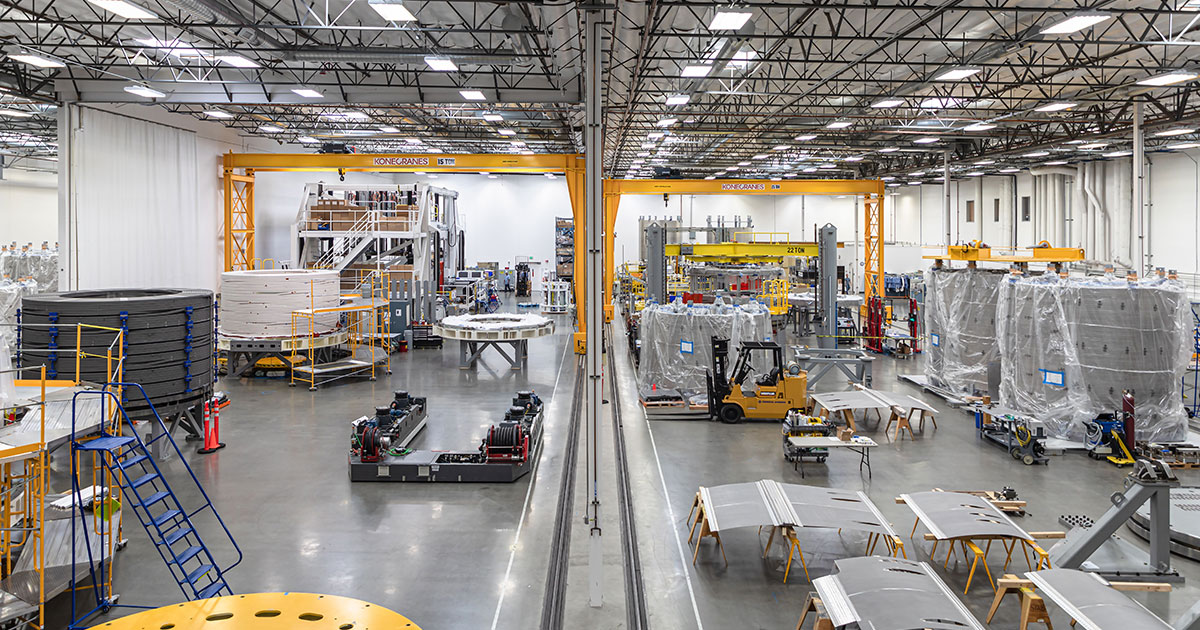
    GA began working on superconducting magnet technologies in the 1980s. In 2015, GA established its state-of-the-art Magnet Technologies Center (MTC) to fabricate the Central Solenoid modules for the international ITER experiment. When assembled, the 5-story, 1,000-ton Central Solenoid will drive 15 million amperes of electrical current in ITER’s fusion plasma. GA is developing a range of other technologies for ITER, including high-power microwave transmission line components, real-time plasma control software, and custom-made specialty diagnostic systems.

    About Tokamak Energy: Tokamak Energy is a leading British commercial fusion energy company. It is pursuing the global deployment of commercial fusion through the combined development of spherical tokamaks with high temperature superconducting (HTS) magnets.

    The company, founded in 2009 as a spin-off from UK Atomic Energy Authority (UKAEA), employs a growing team of over 250 people with talent from the UK and experts from around the world.

    It combines world leading scientific, engineering, industrial and commercial capabilities. The company has 70 families of patent applications and has raised $250 million, comprising $200m from private investors and $50m from the UK and US governments.

    About General Atomics: Since the dawn of the atomic age, General Atomics innovations have advanced the state of the art across the full spectrum of science and technology – from nuclear energy and defense to medicine and high-performance computing. Behind a talented global team of scientists, engineers, and professionals, GA’s unique experience and capabilities continue to deliver safe, sustainable, economical, and innovative solutions to meet growing global demands.