Author: Defence Street Editor

  • Boeing Statement on Blue Origin’s National Team Lunar Lander Win

    Boeing Statement on Blue Origin’s National Team Lunar Lander Win

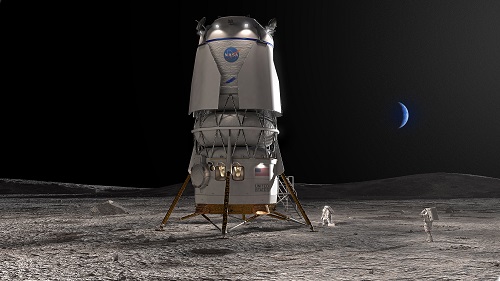
    A rendering of Blue Origin’s Blue Moon lander that will return astronauts to the Moon as part of NASA’s Artemis program. (Credit: Blue Origin)

    ARLINGTON, Va. On 19th May 2023, NASA announced that Blue Origin’s National Team won a contract award to provide services to land astronauts on the Moon for NASA’s Artemis program.

    “Boeing is honored to continue supporting NASA’s deep space mission objectives as a part of Blue Origin’s National Team for the NextSTEP2-BAA Appendix P contract. We believe our decades of experience maintaining a human spaceflight program, alongside our partners’ expertise, will ensure a vehicle that can provide transport to the Moon safely, quickly and sustainably.”

    For more information, see the National Team’s news release here.

    As a leading global aerospace company, Boeing develops, manufactures and services commercial airplanes, defense products and space systems for customers in more than 150 countries. As a top U.S. exporter, the company leverages the talents of a global supplier base to advance economic opportunity, sustainability and community impact. Boeing’s diverse team is committed to innovating for the future, leading with sustainability, and cultivating a culture based on the company’s core values of safety, quality and integrity.

  • Rolls-Royce announces successful first tests of UltraFan technology demonstrator in Derby, UK

    Rolls-Royce announces successful first tests of UltraFan technology demonstrator in Derby, UK

    UK. On 18th May 2023. Rolls-Royce announces that it has successfully completed the first tests of its UltraFan technology demonstrator at its facility in Derby, UK. The first tests were conducted using 100% Sustainable Aviation Fuel (SAF).

    This is a historic moment for Rolls-Royce – it’s the first time in 54 years the aero-engine manufacturer has tested a brand-new engine architecture and is proof of what can be achieved when industry and Governments work together.

    Confirming the capability of the suite of technologies incorporated in the demonstrator is a big step towards improving the efficiency of current and future aero-engines. UltraFan delivers a 10% efficiency improvement over the Trent XWB, which is already the world’s most efficient large aero engine in service.

    In the nearer term, there are options to transfer technologies from the UltraFan development programme to current Trent engines, providing our customers with even greater availability, reliability and efficiency.

    In the longer term, UltraFan’s scalable technology from ~25,000-110,000lb thrust offers the potential to power new narrowbody and widebody aircraft anticipated in the 2030s.

    Tufan Erginbilgic, CEO, Rolls-Royce plc, said: “The UltraFan demonstrator is a game changer – the technologies we are testing as part of this programme have the capability to improve the engines of today as well as the engines of tomorrow. That is why this announcement is so important – we are witnessing history in the making; a step-change in engine efficiency improvement. When combined with Sustainable Aviation Fuels, more efficient gas turbine engines will be key to hitting the industry’s target of Net Zero flight by 2050. Today we are closer to achieving this ambition.

    “Collaboration is key in driving the decarbonisation of air travel and the UltraFan programme is a great example of what can be achieved when government and industry come together with a common purpose.”

    The tests took place in the world’s largest and smartest indoor aero-engine testing facility – Testbed 80. The 100% SAF, derived primarily from waste-based sustainable feedstocks such as used cooking oils, was provided by Air bp.

    Testing the demonstrator is the culmination of many years work, which has been supported by the UK Government through the Aerospace Technology Institute (ATI), Innovate UK; the EU’s Clean Sky programmes plus LuFo and the State of Brandenburg in Germany.

    UK Business and Trade Secretary, Kemi Badenoch, said: “This cutting-edge technology will help the transition towards a greener future for aviation while attracting further investment into the UK’s aerospace industry, helping grow the economy.

    “I’m proud that the Government has backed this initiative through our Aerospace Technology Institute programme, and we will continue to work with manufacturers like Rolls-Royce as we seek to grow the UK’s share of the global aerospace market.”

    Gary Elliott, Chief Executive Officer, Aerospace Technology Institute, said: “Rolls-Royce’s UltraFan programme has achieved a huge step forward in terms of the fuel efficiency of aircraft engines. The technology developed within the programme has greatly improved our understanding of how to increase engine performance while reducing environmental impact.

    “It is a programme that puts the UK at the forefront of the global market, and is absolutely critical for the future of the UK aircraft engine industry. Our congratulations to the Rolls-Royce team for the successful tests of this exciting technology demonstrator.”

    Axel Krein, Executive Director of Clean Aviation, added: “Congratulations to the talented team for reaching this significant milestone in shaping aviation’s net-zero sustainable future. The UltraFan® technology demonstrator, a flagship project of the Clean Sky 2 programme, showcases the power of innovation and collaboration in driving our journey forwards. This architecture will be further developed through Clean Aviation’s HEAVEN project.”

    UltraFan has been a decade in the making, with the concept unveiled publicly in 2014. It is a fundamentally different design architecture to that within the approximately 4,200 Rolls-Royce Civil large engines currently in service, as it incorporates a geared design that no other industry player has produced at this size before. Demonstrating at this scale gives us the flexibility to scale down as required by our customers. It will also put us in the unique position of being able to offer a portfolio of two-shaft, three-shaft, direct drive and geared propulsion solutions to power future aircraft.

    Key engineering features of the demonstrator include:

    • A new, proven, Advance3 core architecture, combined with our ALECSys lean burn combustion system, to deliver maximum fuel burn efficiency and low emissions
    • Carbon titanium fan blades and a composite casing
    • A geared design that delivers efficient power for the high-thrust, high bypass ratio engines of the future. The power gearbox has run at 64MW, an aerospace record
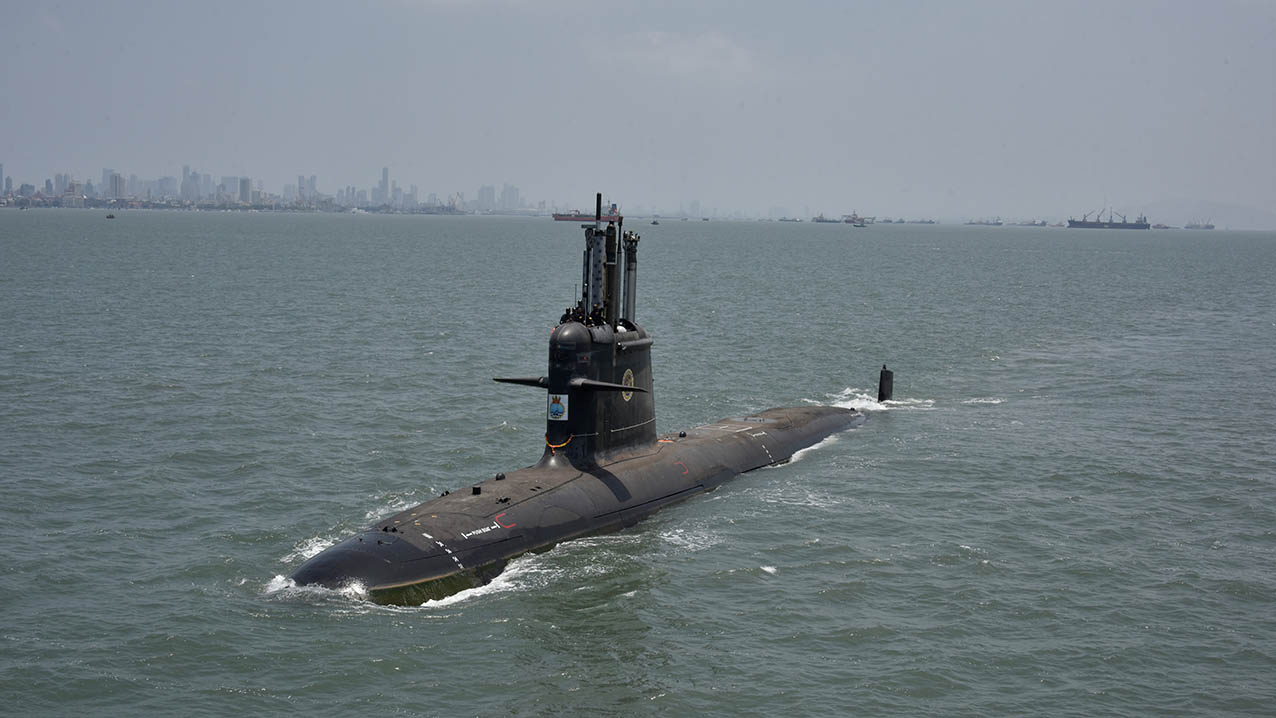
  • First Sea Sortie of Sixth Scorpene Submarine ‘Vaghsheer’

    First Sea Sortie of Sixth Scorpene Submarine ‘Vaghsheer’

    New Delhi, 19th May 2023. The sixth submarine of Project 75, Yard 11880, Indian Navy’s Kalvari class commenced her sea trials on 18th May 2023.  The submarine was launched in 20th April 2022 from the Kanhoji Angre Wet Basin of Mazagon Dock Shipbuilders Limited (MDL). Vaghsheer is scheduled for Delivery to the Indian Navy in early 2024 after completion of these trial.

    MDL has ‘Delivered’ three submarines of the Project – 75 in 24 months and the commencement of sea trials of the sixth submarine is a significant milestone. This is indicative of the boost towards AatmaNirbharBharat.

    The submarine will now undergo intense trials of all its systems at sea, these include propulsion systems, weapons and sensors.

  • Defence production crosses Rs 1 lakh crore mark for the first time ever

    Defence production crosses Rs 1 lakh crore mark for the first time ever

    • Stands at almost Rs 1.07 lakh crore in Financial Year 2022-23, an increase of more than 12% over 2021-22

    New Delhi, 19th May 2023. As a result of the consistent efforts of Ministry of Defence, the value of defence production in Financial Year (FY) 2022-23 has crossed the figure of Rs one lakh crore for the first time ever. The value currently stands Rs 1,06,800 crore and it will go further up once the data is received from the remaining private defence industries. The current value of defence production in FY 2022-23 is a rise of more than 12 per cent over FY 2021-22, when the figure was Rs 95,000 crore.

    The Government is continuously working with defence industries and their associations to remove the challenges faced by them and promote defence production in the country. A number of policy reforms have been taken to achieve the objective of ease of doing business, including the integration of MSMEs and start-ups into the supply chain.

    Due to these policies, the industries, including MSMEs and start-ups, are forthcoming in defence design, development and manufacturing and there is almost a 200 per cent increase in the number of defence licenses issued to the industries in the last 7-8 years by the Government. These measures have given a boost to the defence industrial manufacturing ecosystem in the country and generated tremendous employment opportunities.

  • SeaGuardian Used by USN in Support of Integrated Battle Problem

    SeaGuardian Used by USN in Support of Integrated Battle Problem

    • Series of ASW and MUM-T Exercises Showcase Advantages of UAS

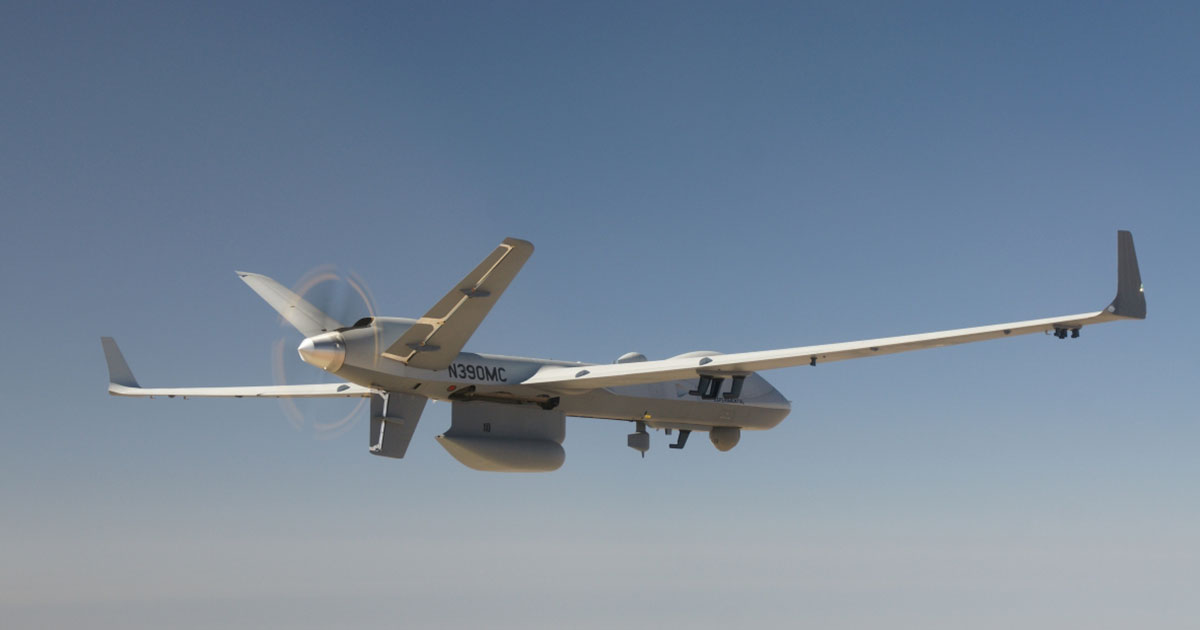
    SAN DIEGO, 18th May 2023. In support of the U.S. Navy’s (USN) Integrated Battle Problem 2023 (IBP-23) exercise in May, General Atomics Aeronautical Systems, Inc. (GA-ASI) conducted a series of Anti-Submarine Warfare (ASW) exercises cooperatively with the USN Helicopter Maritime Strike Squadrons (HSM) 38, 49, 71, and 75. GA-ASI flew a company-owned MQ-9B SeaGuardian® Unmanned Aircraft System (UAS) under a USN Flight Clearance. The HSM squadrons flew the MH-60R Seahawk helicopter flown out of Naval Air Station North Island off the coast of San Diego, Calif., on 24th-25th April, 2023.

    The exercise was focused on Manned-Unmanned Teaming (MUM-T) to conduct Cooperative ASW in the Southern California Offshore ASW range. During the two-day event, MH-60s dropped sonobuoys to detect a mobile training target. Using the combined SeaGuardian and MH-60R teaming concept, correlation and location of the target was expeditiously achieved and tactical reports – known as TACREPs – were then transmitted to Commander, Task Force (CTF) 34 Theater ASW Center at Naval Station Pearl Harbor via the MQ-9B crew. The CTF then directed a coordinated constructive “kill” of the simulated submarine with notional torpedoes dropped from the MH-60s. The ASW payload on the SeaGuardian uses the latest version of General Dynamics Mission Systems’ Sonobuoy Processor.

    “These advanced tactics, techniques, and procedures utilizing MUM-T further reinforce the advantages to unmanned aircraft in combat with less risk to force,” said GA-ASI Vice President of DoD Strategic Development Patrick Shortsleeve. The IBP-23 exercise is the third time GA-ASI’s MQ-9B SeaGuardian has supported this annual event. These exercises generate warfighting advantages for the Fleet by providing the operational environment to work through tactics, techniques, procedures, and command and control to refine and enhance warfighting. The Fleet IBP series is led by Commander, U.S. Pacific Fleet and executed by Commander, U.S. 3rd Fleet and will continue throughout May 2023.

    About GA-ASI

    General Atomics Aeronautical Systems, Inc. (GA-ASI), an affiliate of General Atomics, is a leading designer and manufacturer of proven, reliable Remotely Piloted Aircraft (RPA) systems, radars, and electro-optic and related mission systems, including the Predator® RPA series and the Lynx® Multi-mode Radar. With more than seven million flight hours, GA-ASI provides long-endurance, mission-capable aircraft with integrated sensor and data link systems required to deliver persistent flight that enables situational awareness and rapid strike. The company also produces a variety of ground control stations and sensor control/image analysis software, offers pilot training and support services, and develops meta-material antennas.

  • Pratt & Whitney GTF™ Engines Power Breeze Airways’ Longest Airbus A220 Flight

    Pratt & Whitney GTF™ Engines Power Breeze Airways’ Longest Airbus A220 Flight

    Pratt & Whitney GTF™ Engines Power Breeze Airways Longest Flight

    EAST HARTFORD, Conn., 17th May 2023. Pratt & Whitney, a Raytheon Technologies business, joined Breeze Airways (“Breeze”) on 17th May in announcing the launch of the airline’s longest nonstop route, a more than 2,250 nautical-mile, Airbus A220 flight powered by GTF engines between Rhode Island’s T.F. Green International Airport and Los Angeles International Airport. The celebration began on Tuesday at a first-ever airline employee town hall hosted at Pratt & Whitney’s East Hartford, Conn. Customer Training Center for Breeze founder and CEO, David Neeleman and Breeze president, Tom Doxey.

    “GTF engine technology for the A220 has been foundational to the growth and success of Breeze over the past two years,” said Neeleman. “We’ve been able to link new city pairs while reducing operating costs and environmental impact.”

    The GTF engine is the exclusive powerplant for the Airbus A220 family, which reduces fuel consumption and CO2 emissions up to 25% per seat, NOx emissions by up to 50% and noise footprint by up to 75%.* Certified for operation on 50% sustainable aviation fuel (SAF) and successfully tested on 100% SAF, GTF engines are capable of further reductions in carbon emissions, which will help the aviation industry meet its goal of net zero emissions by 2050.

    “GTF engines enable airlines like Breeze fly long, thin, transcontinental routes with game-changing aircraft like the A220,” said Rick Deurloo, president of Commercial Engines at Pratt & Whitney. “The inauguration of service between Providence to Los Angeles marks a major milestone in the airline’s rapid growth.”

    Located in Salt Lake City, Utah, Breeze was founded in 2018 and launched flight operations in May of 2021. The airline operates 12 Airbus A220-300 aircraft, with the 13th to be delivered soon, and has an additional 66 A220-300s on order. Breeze also operates a fleet of Embraer E190 and E195 aircraft, each equipped with an APS2300 auxiliary power unit (APU) from Pratt & Whitney.

    The Pratt & Whitney GTF™ engine, featuring Collins Aerospace nacelle and accessories, delivers industry-leading fuel efficiency and sustainability benefits for single-aisle aircraft. The engine’s revolutionary geared fan architecture is the foundation for more sustainable aviation technologies in the decades ahead. Learn more at pwgtf.com.

    *Reductions vs. prior-generation aircraft, based on 75 dB noise contour and ICAO CAEP/6 emissions regulations.

    SOURCE Raytheon Technologies

  • Raksha Rajya Mantri Flags Off 85th NCC Cadets Mountaineering Expedition

    Raksha Rajya Mantri Flags Off 85th NCC Cadets Mountaineering Expedition

    • Youth should be nurtured with strong sense of purpose and passion: Shri Ajay Bhatt

    New Delhi. Raksha Rajya Mantri Shri Ajay Bhatt today on May 17, 2023 urged the youth to foster strong sense of purpose and passion to meet the challenges of life. He was addressing the National Cadets Corps (NCC)cadets after flagging off the 85th NCC Boys & Girls Mountaineering Expedition 2023 in New Delhi.

    Commending NCC on its role in nation building, Raksha Rajya Mantri said: “The role of NCC in nation building is well known to all of us. The qualities of discipline, leadership, camaraderie and adventure being inculcated among the student community of the nation by the NCC will surely prepare them to take on greater challenges of life”.

    The team of NCC Mountaineering Expedition to Mt Yunum in Himachal Pradesh constitutes of 4 Officers, 10 PI Staff and 18 NCC Cadets out of which 11 are Girls. These cadets have been selected from various NCC Directorates of the country.

    This is the 85th NCC Cadets Expedition since 1970.The team will be attempting to scale Mt Yunum (6111m) located in the Lahaul District of Himachal Pradesh by 1st week of June 2023.

  • Defence Secretary & US Under Secretary of Defence for Policy co-chair 17th India-US Defence Policy Group meeting in Washington DC

    Defence Secretary & US Under Secretary of Defence for Policy co-chair 17th India-US Defence Policy Group meeting in Washington DC

    • Focus on enhancing defence industrial cooperation & co-production in India

    New Delhi, 17th May 2023. Defence Secretary Shri Giridhar Aramane and US Under Secretary of Defence for Policy Dr Colin Kahl co-chaired the 17th meeting of India-US Defence Policy Group (DPG) in Washington DC on May 17, 2023. The meeting was cordial and productive. The two sides reviewed the progress made in furthering defence industrial cooperation and operationalising the India-US Major Defence Partnership. Important aspects such as military-to-military cooperation, implementation of foundational defence agreements, exercises and the ongoing & future cooperative activities in the Indian Ocean Region were discussed.

    Considerable focus was given on the ways and means to enhance defence industrial cooperation, including technology partnership, long-term research & development and improving supply chain security. The meeting also discussed promoting co-development and co-production in India including potential areas and projects where Indian and US defence companies could work together. They agreed to encourage both the private and government stakeholders to utilise the innovation ecosystems and promote defence start-ups.

    The DPG is the apex official-level mechanism between Ministry of Defence, India and US Department of Defence. It comprehensively reviews and guides all aspects of bilateral defence cooperation with a focus on policy.

  • Elbit Systems Awarded $305 Million Contract to Supply PULS Rocket Artillery Systems to the Royal Netherlands Army

    Elbit Systems Awarded $305 Million Contract to Supply PULS Rocket Artillery Systems to the Royal Netherlands Army

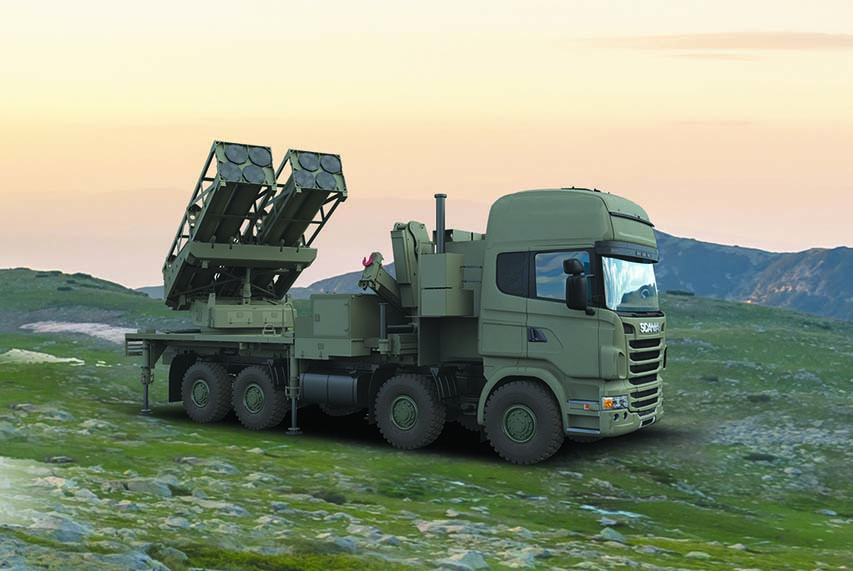
    Elbit Systems PULS – Precise and Universal Launching System

    Haifa, Israel. On May 18th 2023, Elbit Systems Ltd. announced that as part of an agreement between the Israeli Ministry of Defense and the Netherlands Ministry of Defense, it was awarded a contract worth $305 million to supply Precise & Universal Launching System (PULS) artillery rocket systems to the Royal Netherlands Army. The contract will be performed over a period of five years.

    Under the contract, Elbit Systems will supply 20 PULS artillery rocket systems integrated on the COMMIT (previously DMO) selected truck platform, as well as rockets and missile of various ranges and training and support services.

    Elbit PULS is a system designed with an open architecture approach, supporting future growth, the ability to integrate legacy C4i solutions, and the flexibility to adapt to specific customer requirements.

    PULS provides a comprehensive, cost-effective solution, supporting the firing of both free-flying rockets and precision guided rockets and missiles ranging from 12km and up to 300km. The PULS launcher is a fully adaptable launching system and can be mounted on a broad range of wheeled and tracked platforms, providing a significant reduction in maintenance and training costs for legacy fleets.

    Bezhalel (Butzi) Machlis, President and CEO of Elbit Systems: “The acquisition of Elbit Systems’ PULS solution will enhance the Royal Netherland Army’s ability to provide effective indirect fire support. It will also provide interoperability with NATO customers that have acquired these systems. This contract further validates Elbit Systems’ cutting edge military technology and our strong partnerships with NATO countries across Europe.”

  • Boeing Publicly Launches “Cascade” to Support Aviation’s Net Zero Goal

    • Data modeling tool quantifies strategies, enables collaboration on decarbonization solutions
    • Cascade findings underscore importance of SAF, fleet renewal, technology development and life-cycle emissions
    • NASA, IATA and Cambridge and MIT researchers join new Cascade User Community
    Members of the new Cascade User Community attend a demo of the data modeling tool. Boeing publicly launched Cascade today in support of aviation’s net zero goal. Photo credit: Boeing

    SEATTLE, 17th May 2023. In support of commercial aviation’s path toward net zero carbon emissions, on 17th May Boeing released the Boeing Cascade Climate Impact Model for public use. Cascade, a data modeling tool that identifies the effects of a range of sustainability solutions to reduce aviation’s carbon emissions, is accessible on Boeing’s new Sustainable Aerospace Together hub, www.sustainabilitytogether.aero.

    Cascade examines the full life cycle of alternate energy sources for aviation – from production through distribution and use – and quantifies the ability to cut aviation’s carbon emissions. Data modeling also measures airplane fleet renewal, operational efficiency, renewable energy sources, future aircraft and market-based measures as pathways to decarbonization.

    “We created Cascade to serve as an industry tool that creates a common framework among aviation, energy, finance and policy,” said Boeing Chief Sustainability Officer Chris Raymond. “By putting data first and sharing this model with the public, we are enabling collaboration, feedback and alignment across industry, government and others who work together to achieve a more sustainable aerospace future.”

    Key findings from Cascade’s assessments include:

    • The journey to net zero is dependent on the overall energy transition. Whether using sustainable aviation fuel (SAF), hydrogen or electricity, the energy and emissions associated with the production, distribution and storage of fuels must be minimized to achieve the most sustainable outcome.
    • SAF will be the biggest contributor to reducing carbon emissions because it can be used in commercial airplanes flying today – both new and old. Since many jets flying today will be in service into and even beyond the 2040s, it is imperative to abate their emissions with SAF.
    • While electric- and potentially hydrogen-powered aircraft will emerge in future decades, their contribution to emissions reduction will likely be limited through 2050 due to long timeframes for development and deployment and the magnitude of related infrastructure changes for airports and pipelines.
    • Renewing fleets with best-in-class, fuel-efficient airplanes will significantly reduce emissions in coming years.

    “Cascade helps airline operators, industry partners and policymakers see when, where and how different fuel sources affect their sustainability goals,” said Neil Titchener, Cascade Program Leader. “Our industry has really hard questions ahead of us, we’re going to have to make difficult choices. Cascade can be the conversation starter for how each decarbonization pathway can help us reach a more sustainable future.”

    Boeing announced the public release of Cascade at its first Sustainable Aerospace Together Forum, a conference convening leaders from commercial aviation, government and the energy and finance sectors. The event was streamed by FT Live and recorded sessions will be made available following the event.

    Boeing also introduced the Cascade User Community, a working group that will provide feedback on new features, functionalities and application programming interfaces. The founding members of the Community are IATA, NASA, University of Cambridge’s Aviation Impact Accelerator and the MIT Laboratory for Aviation and the Environment.

    “The Cascade User Community will ensure the tool and data sources continue to get feedback and evolve for informed and effective discussions towards achieving net zero emissions by 2050,” said Raymond.

    In addition to hosting Cascade, the Sustainable Aerospace Together website provides resources and industry insights on aviation pathways to decarbonization. Try Cascade at www.sustainabilitytogether.aero.

    As a leading global aerospace company, Boeing develops, manufactures and services commercial airplanes, defense products and space systems for customers in more than 150 countries. As a top U.S. exporter, the company leverages the talents of a global supplier base to advance economic opportunity, sustainability and community impact. Boeing’s diverse team is committed to innovating for the future, leading with sustainability, and cultivating a culture based on the company’s core values of safety, quality and integrity.