Category: Aviation

  • Kanpur Airport to get a new Civil Enclave with an enhanced passenger capacity on 26th May 2023

    Kanpur Airport to get a new Civil Enclave with an enhanced passenger capacity on 26th May 2023

    • Inauguration to be done by UP CM & Union Minister of Civil Aviation
    • The New Terminal Building’s area is 16 times bigger than the existing terminal

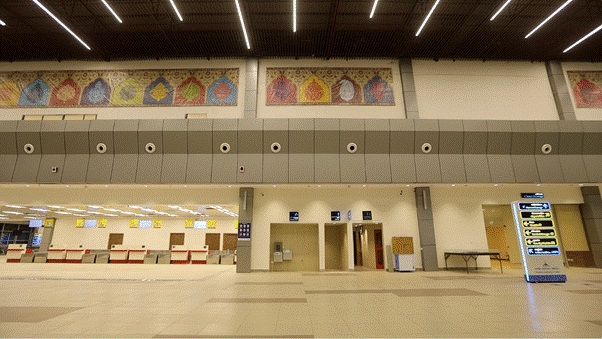
    New Delhi, 24th May 2023. In line with the Government’s commitment to ushering in ‘development through connectivity,’ Kanpur – the commercial capital of Uttar Pradesh is all set to get a new Civil Enclave. The new Civil Enclave at Kanpur Airport will be inaugurated on May 26 by Shri Yogi Adityanath, Chief Minister, Uttar Pradesh, and Shri Jyotiraditya M. Scindia, Union Minister for Civil Aviation and Steel.

    Shri Yogi Adityanath, Chief Minister, Uttar Pradesh, and Shri Jyotiraditya Scindia, Union Minister for Civil Aviation and Steel will proceed to Kanpur airport for the inauguration of the new terminal together after unveiling the statue of Late Madhavrao Jivajirao Scindia in Mainpuri.

    Key features of the New Terminal Building include:

    • The New Terminal Building is built in an area of 6243 sqm (16 times bigger than the existing terminal) at a project cost of Rs. 150 Crore.
    • Equipped to handle 400 passengers during peak hours, as compared to 50 passengers earlier.
    • 08 check-in counters, ensuring efficient and expedited check-in processes for passengers.
    • 03 conveyor belts, with one located in the Departure Hall and two in the Arrival Hall, facilitating smooth baggage handling and collection.
    • A spacious concessionaire area covering 850 square meters, offering a diverse range of retail and dining options for travellers.
    • Tactile path provisions have been made, ensuring accessibility and ease of navigation for passengers with visual impairments.
    • On the city side of the terminal, there are 150 car parking spaces and 02 bus parking spaces, ensuring ample parking facilities for commuters.
    • Newly developed apron is suitable for parking three A-321/ B-737 types of aircraft along with a new link Taxi Track of 713m X 23m.

    General (Dr.) V. K. Singh (Retd.), Union Minister of State for Civil Aviation and Road Transport and Highways, Shri. Satish Mahana, Speaker, Uttar Pradesh Legislative Assembly, Shri Nand Gopal Gupta ‘Nandi,’ Minister for Industrial Development, Export Promotion, NRI and Investment Promotion and Members of Parliament, Government of Uttar Pradesh, Shri Devendra Singh, MP (Lok Sabha) Shri. Satyadev Pachauri, MP (Lok Sabha) and Smt. Pramila Pandey, Mayor, Kanpur Municipal Corporation, and other senior dignitaries will also be present at the event.

    Kanpur is a prominent hub for leather, textile, and defense production industries, has many historical and holy spots, and houses various premier educational institutions like IIT Kanpur, National Sugar Institute, UP Leather and Textile Technology Institute that attract air travelers in large numbers. At present, Kanpur Airport is directly connected to Mumbai and Bengaluru. With improved facilities, Kanpur, which is often referred to as ‘the Manchester of Uttar Pradesh,’ is likely to be connected to more cities of Uttar Pradesh and other parts of the country.

    The terminal Building of the new civil enclave at Kanpur Airport is equipped with various sustainability features like a double insulated roofing system, provision of canopies for energy saving, LED lighting, low heat gain double glazing unit, rainwater harvesting to recharge the groundwater table, water treatment plant, sewage treatment plant and use of recycled water for landscaping, a solar power plant with capacity of 100 KWp and has been provided to meet GRIHA–IV ratings, a national green building rating system in the country denoting sustainable development and responsible resource management.

    The façade of the Terminal Building in both the city and the airside depicts the temple architecture of the famous JK Temple of Kanpur. The interiors of the Terminal Building are based on various local themes such as textiles, leather industries and the city’s renowned public figures like poet Shyamlal Gupta and sage Maharishi Valmiki. The terminal has been designed to integrate the culture and heritage of Kanpur, and the state of Uttar Pradesh, thereby, creating a sense of the culture and history of the region for the visitors.

  • Indian delegation, led by Additional Secretary (Defence Production), attends Langkawi International Maritime & Aerospace Exhibition 2023 in Malaysia

    Indian delegation, led by Additional Secretary (Defence Production), attends Langkawi International Maritime & Aerospace Exhibition 2023 in Malaysia

    The Additional Secretary (Defence Production), Shri T Natarajan with the Malaysian Minister of Defence Dato Seri Mohamad Hasan at the 16th Langkawi International Maritime and Aerospace Exhibition (LIMA 23) at Langkawi, in Malaysia on May 23, 2023.

    New Delhi, 23rd May 2023. An Indian delegation, led by Additional Secretary (Defence Production) Shri T Natarajan, attended the 16th Langkawi International Maritime and Aerospace Exhibition (LIMA 23), being held at Langkawi, Malaysia between May 22-25, 2023. The Additional Secretary (Defence Production) also called on Malaysian Minister of Defence Dato’ Seri Mohamad Hasan on the sidelines of the exhibition.

    Established in 1991 and held biennially, LIMA is one of the largest maritime & aerospace exhibitions in the Asia-Pacific. This year’s edition involves over 600 exhibitors from more than 30 countries, including India.

  • Pratt & Whitney Canada Launches PW545D Engine to Power New Cessna Citation Ascend

    Pratt & Whitney Canada Launches PW545D Engine to Power New Cessna Citation Ascend

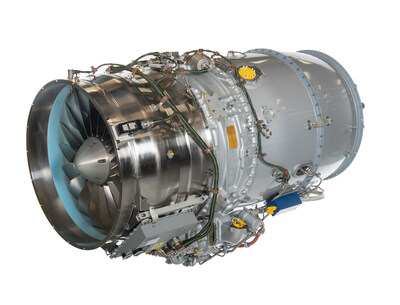
    P&WC launches new PW545D engine.

    GENEVA, 22nd May 2023. Pratt & Whitney Canada, a business unit of Pratt & Whitney, on 22nd May announced that its new PW545D engine will power the Cessna Citation Ascend, the latest addition to Textron Aviation’s business jet family. The engine was designed and enhanced for Textron Aviation to deliver improved specific fuel consumption (SFC), thrust and time between overhauls (TBO).

    “The PW500 turbofan family has established itself as the engine of choice for light to mid-size business jets thanks to its proven safety, reliability and durability, attractive operating economics and comprehensive maintenance plans,” stated Nicholas Kanellias, vice president, General Aviation. “The PW545D is the latest engine in this family. We injected all we’ve learned from the more than 4,600 PW500 engines produced to-date, which have accumulated over 22 million flying hours. This new engine is even more fuel-efficient, offers greater thrust and an increased TBO of up to 6,000 hours for eligible customers.”

    Building on the success of the PW545C, the PW545D incorporates new materials and technology. These include:

    • A more efficient high-pressure compressor for increased flow,
    • An enhanced single-stage, high-pressure turbine module, and
    • An advanced exhaust mixer to reduce fuel consumption and noise.

    The new engine is also equipped with Full Authority Digital Engine Control (FADEC) technology, which is included with many PW500 models. This enables the Citation Ascend to integrate new auto-throttle technology that simplifies control, maximizes efficiency and reduces pilot workload.

    The engine supports digitally driven advanced health monitoring and diagnostics, in combination with the FAST™ (Flight, Acquisition, Storage and Transmission) system. With FAST™, the engine’s full-flight data is downloaded, stored and analyzed by experts, enabling deep insights and predictive diagnostics to optimize engine performance and maintenance requirements. Customers with FAST™ installed who are enrolled in Pratt & Whitney’s Eagle Service™ Plan (ESP™) pay-per-hour maintenance program may take advantage of the 6,000-hour TBO option.

    The PW545D engine will help provide Citation Ascend operators with the flexibility to accomplish a variety of missions, including charter services, personal transportation and corporate flights. It also delivers the impressive reliability for which the PW500 has become known over the decades, with an excellent track record of dispatch availability and reliability, complemented by our comprehensive plans that lock in maintenance costs.

    Along with other members of the PW500 family, the PW545D features a compact, accessible design that facilitates installation and on-wing maintenance. It is supported by Pratt & Whitney’s industry-leading global service network. This includes over 50 Pratt & Whitney -owned and -designated facilities, more than 100 Field Support Managers on all major continents, a 24/7 Customer First Centre for rapid expert support and the largest pool of Pratt & Whitney Canada rental and exchange engines on the market.

    The PW545D can operate on blends of up to 50% SAF with conventional Jet A kerosene. This is part of Pratt & Whitney Canada’s ongoing efforts – in collaboration with public and private parties – to lead the way in developing sustainable solutions that will help the industry reach its target of net-zero CO2 emissions by 2050.

    This year, Pratt & Whitney Canada is celebrating 1 billion hours of flight for its entire engine fleet. for which 350 million flying hours can be attributed to powering Textron Aviation’s fleet of aircraft.

    About Pratt & Whitney

    Pratt & Whitney is a world leader in the design, manufacture and service of aircraft and helicopter engines, and auxiliary power units.

    (SOURCE: Raytheon Technologies)

  • VIP customers order up to four Boeing Business Jets

    VIP customers order up to four Boeing Business Jets

    • New deals include BBJ 737 MAX, BBJ 787 Dreamliner and BBJ 777X
    • Boeing’s family of efficient business jets offers globe-spanning range and best-in-class economics
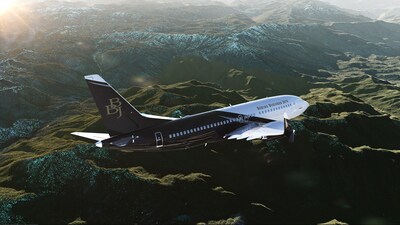
    BBJ 737-7. Image credit: Boeing.

    GENEVA, 22nd May 2023. Boeing announced on 22nd May that orders for up to four premium, ultra-long-range Boeing Business Jets (BBJ). The orders to undisclosed VIP customers include two BBJ 787-8s, one BBJ 737-7 jet and an option to purchase a BBJ 777-9. The company shared the 2023 orders at the European Business Aviation Convention & Exhibition (EBACE) in Switzerland.


    “With the right combination of comfort, performance and best-in-class operating economics, the BBJ family offers VIP customers all the features they are looking for in a business jet,” said Joe Benson, BBJ president. “Designed on the platforms of Boeing’s best-selling commercial airframes, customers recognize the value in operating the most reliable and capable jets in world.”

    Equipped with the latest innovations and technologies of Boeing’s commercial airplanes, the enhanced environmental performance of the BBJ family reduces fuel use compared to previous generations of each aircraft. The jets provide customers with a unique combination of globe-spanning range, efficiency and passenger comfort.

    • BBJ 737-7: As the longest-range, non-widebody business jet in its class, the BBJ 737 MAX can fly 6,600 nautical miles (12,200 km) nonstop to connect global hubs such as Geneva and Singapore. With enhanced efficiency, the BBJ 737-7 reduces emissions and fuel use while lowering operating costs.
    • BBJ 787-8: With its visionary composite airframe, the BBJ 787 Dreamliner delivers fuel savings with a range up to 9,945 nautical miles (18,420 km). Along with improved environmental performance, the Dreamliner’s lower cabin altitude, increased cabin air humidity and advanced smooth ride technology to counter the effects of turbulence, work together to significantly enhance passenger comfort.
    • BBJ 777-9: The BBJ 777X is the first business jet capable of connecting any two cities in the world nonstop, flying up to 11,025 nautical miles (20,418 km). Engineering design improvements and innovative new technologies, including a new carbon-fiber composite wing and all-new engines, improve environmental performance. Like the BBJ 787 Dreamliner, the BBJ 777X offers leading-edge cabin comfort technologies.

    The best-in-class operating economics of the BBJ family strongly position the jets in the business aviation market. Designed to fly upwards of 4,000 hours per year, BBJs provide far higher reliability and retain more residual value compared to competitors. Supported by Boeing’s global network of services, parts and maintenance, the jets can also be serviced globally with customers benefitting from reduced parts and training costs.

    For BBJ imagery, access the EBACE 2023 Media Kit.

  • Rolls-Royce announces successful first tests of UltraFan technology demonstrator in Derby, UK

    Rolls-Royce announces successful first tests of UltraFan technology demonstrator in Derby, UK

    UK. On 18th May 2023. Rolls-Royce announces that it has successfully completed the first tests of its UltraFan technology demonstrator at its facility in Derby, UK. The first tests were conducted using 100% Sustainable Aviation Fuel (SAF).

    This is a historic moment for Rolls-Royce – it’s the first time in 54 years the aero-engine manufacturer has tested a brand-new engine architecture and is proof of what can be achieved when industry and Governments work together.

    Confirming the capability of the suite of technologies incorporated in the demonstrator is a big step towards improving the efficiency of current and future aero-engines. UltraFan delivers a 10% efficiency improvement over the Trent XWB, which is already the world’s most efficient large aero engine in service.

    In the nearer term, there are options to transfer technologies from the UltraFan development programme to current Trent engines, providing our customers with even greater availability, reliability and efficiency.

    In the longer term, UltraFan’s scalable technology from ~25,000-110,000lb thrust offers the potential to power new narrowbody and widebody aircraft anticipated in the 2030s.

    Tufan Erginbilgic, CEO, Rolls-Royce plc, said: “The UltraFan demonstrator is a game changer – the technologies we are testing as part of this programme have the capability to improve the engines of today as well as the engines of tomorrow. That is why this announcement is so important – we are witnessing history in the making; a step-change in engine efficiency improvement. When combined with Sustainable Aviation Fuels, more efficient gas turbine engines will be key to hitting the industry’s target of Net Zero flight by 2050. Today we are closer to achieving this ambition.

    “Collaboration is key in driving the decarbonisation of air travel and the UltraFan programme is a great example of what can be achieved when government and industry come together with a common purpose.”

    The tests took place in the world’s largest and smartest indoor aero-engine testing facility – Testbed 80. The 100% SAF, derived primarily from waste-based sustainable feedstocks such as used cooking oils, was provided by Air bp.

    Testing the demonstrator is the culmination of many years work, which has been supported by the UK Government through the Aerospace Technology Institute (ATI), Innovate UK; the EU’s Clean Sky programmes plus LuFo and the State of Brandenburg in Germany.

    UK Business and Trade Secretary, Kemi Badenoch, said: “This cutting-edge technology will help the transition towards a greener future for aviation while attracting further investment into the UK’s aerospace industry, helping grow the economy.

    “I’m proud that the Government has backed this initiative through our Aerospace Technology Institute programme, and we will continue to work with manufacturers like Rolls-Royce as we seek to grow the UK’s share of the global aerospace market.”

    Gary Elliott, Chief Executive Officer, Aerospace Technology Institute, said: “Rolls-Royce’s UltraFan programme has achieved a huge step forward in terms of the fuel efficiency of aircraft engines. The technology developed within the programme has greatly improved our understanding of how to increase engine performance while reducing environmental impact.

    “It is a programme that puts the UK at the forefront of the global market, and is absolutely critical for the future of the UK aircraft engine industry. Our congratulations to the Rolls-Royce team for the successful tests of this exciting technology demonstrator.”

    Axel Krein, Executive Director of Clean Aviation, added: “Congratulations to the talented team for reaching this significant milestone in shaping aviation’s net-zero sustainable future. The UltraFan® technology demonstrator, a flagship project of the Clean Sky 2 programme, showcases the power of innovation and collaboration in driving our journey forwards. This architecture will be further developed through Clean Aviation’s HEAVEN project.”

    UltraFan has been a decade in the making, with the concept unveiled publicly in 2014. It is a fundamentally different design architecture to that within the approximately 4,200 Rolls-Royce Civil large engines currently in service, as it incorporates a geared design that no other industry player has produced at this size before. Demonstrating at this scale gives us the flexibility to scale down as required by our customers. It will also put us in the unique position of being able to offer a portfolio of two-shaft, three-shaft, direct drive and geared propulsion solutions to power future aircraft.

    Key engineering features of the demonstrator include:

    • A new, proven, Advance3 core architecture, combined with our ALECSys lean burn combustion system, to deliver maximum fuel burn efficiency and low emissions
    • Carbon titanium fan blades and a composite casing
    • A geared design that delivers efficient power for the high-thrust, high bypass ratio engines of the future. The power gearbox has run at 64MW, an aerospace record
  • Pratt & Whitney GTF™ Engines Power Breeze Airways’ Longest Airbus A220 Flight

    Pratt & Whitney GTF™ Engines Power Breeze Airways’ Longest Airbus A220 Flight

    Pratt & Whitney GTF™ Engines Power Breeze Airways Longest Flight

    EAST HARTFORD, Conn., 17th May 2023. Pratt & Whitney, a Raytheon Technologies business, joined Breeze Airways (“Breeze”) on 17th May in announcing the launch of the airline’s longest nonstop route, a more than 2,250 nautical-mile, Airbus A220 flight powered by GTF engines between Rhode Island’s T.F. Green International Airport and Los Angeles International Airport. The celebration began on Tuesday at a first-ever airline employee town hall hosted at Pratt & Whitney’s East Hartford, Conn. Customer Training Center for Breeze founder and CEO, David Neeleman and Breeze president, Tom Doxey.

    “GTF engine technology for the A220 has been foundational to the growth and success of Breeze over the past two years,” said Neeleman. “We’ve been able to link new city pairs while reducing operating costs and environmental impact.”

    The GTF engine is the exclusive powerplant for the Airbus A220 family, which reduces fuel consumption and CO2 emissions up to 25% per seat, NOx emissions by up to 50% and noise footprint by up to 75%.* Certified for operation on 50% sustainable aviation fuel (SAF) and successfully tested on 100% SAF, GTF engines are capable of further reductions in carbon emissions, which will help the aviation industry meet its goal of net zero emissions by 2050.

    “GTF engines enable airlines like Breeze fly long, thin, transcontinental routes with game-changing aircraft like the A220,” said Rick Deurloo, president of Commercial Engines at Pratt & Whitney. “The inauguration of service between Providence to Los Angeles marks a major milestone in the airline’s rapid growth.”

    Located in Salt Lake City, Utah, Breeze was founded in 2018 and launched flight operations in May of 2021. The airline operates 12 Airbus A220-300 aircraft, with the 13th to be delivered soon, and has an additional 66 A220-300s on order. Breeze also operates a fleet of Embraer E190 and E195 aircraft, each equipped with an APS2300 auxiliary power unit (APU) from Pratt & Whitney.

    The Pratt & Whitney GTF™ engine, featuring Collins Aerospace nacelle and accessories, delivers industry-leading fuel efficiency and sustainability benefits for single-aisle aircraft. The engine’s revolutionary geared fan architecture is the foundation for more sustainable aviation technologies in the decades ahead. Learn more at pwgtf.com.

    *Reductions vs. prior-generation aircraft, based on 75 dB noise contour and ICAO CAEP/6 emissions regulations.

    SOURCE Raytheon Technologies

  • Boeing Publicly Launches “Cascade” to Support Aviation’s Net Zero Goal

    • Data modeling tool quantifies strategies, enables collaboration on decarbonization solutions
    • Cascade findings underscore importance of SAF, fleet renewal, technology development and life-cycle emissions
    • NASA, IATA and Cambridge and MIT researchers join new Cascade User Community
    Members of the new Cascade User Community attend a demo of the data modeling tool. Boeing publicly launched Cascade today in support of aviation’s net zero goal. Photo credit: Boeing

    SEATTLE, 17th May 2023. In support of commercial aviation’s path toward net zero carbon emissions, on 17th May Boeing released the Boeing Cascade Climate Impact Model for public use. Cascade, a data modeling tool that identifies the effects of a range of sustainability solutions to reduce aviation’s carbon emissions, is accessible on Boeing’s new Sustainable Aerospace Together hub, www.sustainabilitytogether.aero.

    Cascade examines the full life cycle of alternate energy sources for aviation – from production through distribution and use – and quantifies the ability to cut aviation’s carbon emissions. Data modeling also measures airplane fleet renewal, operational efficiency, renewable energy sources, future aircraft and market-based measures as pathways to decarbonization.

    “We created Cascade to serve as an industry tool that creates a common framework among aviation, energy, finance and policy,” said Boeing Chief Sustainability Officer Chris Raymond. “By putting data first and sharing this model with the public, we are enabling collaboration, feedback and alignment across industry, government and others who work together to achieve a more sustainable aerospace future.”

    Key findings from Cascade’s assessments include:

    • The journey to net zero is dependent on the overall energy transition. Whether using sustainable aviation fuel (SAF), hydrogen or electricity, the energy and emissions associated with the production, distribution and storage of fuels must be minimized to achieve the most sustainable outcome.
    • SAF will be the biggest contributor to reducing carbon emissions because it can be used in commercial airplanes flying today – both new and old. Since many jets flying today will be in service into and even beyond the 2040s, it is imperative to abate their emissions with SAF.
    • While electric- and potentially hydrogen-powered aircraft will emerge in future decades, their contribution to emissions reduction will likely be limited through 2050 due to long timeframes for development and deployment and the magnitude of related infrastructure changes for airports and pipelines.
    • Renewing fleets with best-in-class, fuel-efficient airplanes will significantly reduce emissions in coming years.

    “Cascade helps airline operators, industry partners and policymakers see when, where and how different fuel sources affect their sustainability goals,” said Neil Titchener, Cascade Program Leader. “Our industry has really hard questions ahead of us, we’re going to have to make difficult choices. Cascade can be the conversation starter for how each decarbonization pathway can help us reach a more sustainable future.”

    Boeing announced the public release of Cascade at its first Sustainable Aerospace Together Forum, a conference convening leaders from commercial aviation, government and the energy and finance sectors. The event was streamed by FT Live and recorded sessions will be made available following the event.

    Boeing also introduced the Cascade User Community, a working group that will provide feedback on new features, functionalities and application programming interfaces. The founding members of the Community are IATA, NASA, University of Cambridge’s Aviation Impact Accelerator and the MIT Laboratory for Aviation and the Environment.

    “The Cascade User Community will ensure the tool and data sources continue to get feedback and evolve for informed and effective discussions towards achieving net zero emissions by 2050,” said Raymond.

    In addition to hosting Cascade, the Sustainable Aerospace Together website provides resources and industry insights on aviation pathways to decarbonization. Try Cascade at www.sustainabilitytogether.aero.

    As a leading global aerospace company, Boeing develops, manufactures and services commercial airplanes, defense products and space systems for customers in more than 150 countries. As a top U.S. exporter, the company leverages the talents of a global supplier base to advance economic opportunity, sustainability and community impact. Boeing’s diverse team is committed to innovating for the future, leading with sustainability, and cultivating a culture based on the company’s core values of safety, quality and integrity.

  • Boeing Expands Market-leading Education Benefits for Employees

    Boeing Expands Market-leading Education Benefits for Employees

    • Learning Together Program’s unique, generous funding feature pays schools upfront to remove financial barriers for employees
    • New features include expanded flight certifications, more school choices, online college and high school courses, and language support

    ARLINGTON, Va., 16th May 2023. Boeing is expanding its market-leading Learning Together Program (LTP), the company’s education benefits program offered to employees around the globe. The expansion is part of the company’s commitment to drive employee innovation and attract and retain top talent. LTP is celebrating its 25th year and nearing $2 billion of investment in employees.

    “Our Learning Together Program enables us to attract and retain a talented workforce that develops groundbreaking technology, state-of-the-art products and services, and advanced business processes,” said Mike D’Ambrose, Boeing chief Human Resources officer and executive vice president, Human Resources. “What’s unique about Boeing is that we pay up to $25,000 per year, and even more for select STEM programs, directly to the employee’s school – upfront. With that strong support, we enable employees to start their degrees without financial barriers, confident they’ll complete them. Plus, our program is global, allowing us to support employee growth around the world.”

    Employees are now eligible to participate in Boeing’s LTP immediately upon hire. In addition to more than 300 Boeing partner schools, employees have access to hundreds of schools that offer discounts and waived fees. New program offerings for eligible employees include:

    • Expanded flight certifications
    • Personalized academic coaching
    • College and high school online schooling availability
    • Dedicated support for non-native English speakers

    “Investing in capabilities for Boeing’s future is one of the company’s key priorities. Our people are essential for Boeing to innovate and grow. That’s why we place high importance on providing benefits that make a difference in their lives and careers. As Boeing employees innovate and excel, they enable us to deliver the support our customers rely on each day,” D’Ambrose added.

    Providing more than $70 million for the program annually, Boeing supports up to $25,000 per year for graduate degree programs and up to $15,000 for bachelor degree programs for tuition and eligible expenses, while also providing funding toward non-degree programs. Select STEM programs do not have funding limits.

    Driven by strong employee interest in the program’s First Solo and Private Pilot’s License incentives, LTP’s expanded flight certifications now include:

    • Commercial Pilot license
    • Instrument rating
    • Aircraft Multi-Engine Land (AMEL)
    • Airline Transport Pilot (ATP)
    • Certified Flight Instructor (CFI)
    • Certified Flight Instructor Instrument (CFII)

    Launched in 1998, LTP has supported 225,000 Boeing employees in pursuing educational goals pertaining to their current role or in a different field to grow personally and professionally. In addition to academic courses, certificate programs and degrees, Boeing reimburses exam fees for hundreds of professional industry certifications and provides flight incentives.

    As a leading global aerospace company, Boeing develops, manufactures and services commercial airplanes, defense products and space systems for customers in more than 150 countries. As a top U.S. exporter, the company leverages the talents of a global supplier base to advance economic opportunity, sustainability and community impact. Boeing’s diverse team is committed to innovating for the future, leading with sustainability, and cultivating a culture based on the company’s core values of safety, quality and integrity.

  • Textron Aviation brings Peace-of-Mind Technology to the Beechcraft Denali Cockpit

    Textron Aviation brings Peace-of-Mind Technology to the Beechcraft Denali Cockpit

    Beechcraft Denali DJVJ0054.jpeg
    The Beechcraft Denali aircraft is designed and will be manufactured by  Textron Aviation Inc., a Textron Inc. company.

    WICHITA, Kan., 8th May 2023. With customer input at the forefront of its product investments, Textron Aviation today announced it is bringing the revolutionary Garmin Emergency Autoland system to its new clean-sheet design Beechcraft Denali single-engine turboprop. The new feature is being implemented into the aircraft’s development and flight test program and will be available as a standard feature at time of entry into service.

    The Garmin Emergency Autoland system is the world’s first certified system of its kind. It provides a means for the aircraft to land automatically in the unlikely event of pilot incapacitation. A passenger can activate the Emergency Autoland system by pressing a dedicated button in the cockpit. Once activated, the system immediately takes control of the aircraft and informs ATC of the emergency. It then calculates a flight path to the most suitable airport or runway, while avoiding terrain and adverse weather, initiates a stabilized approach and automatically lands the aircraft, bringing it to a stop before shutting down the engine.

    “The Autoland system is an excellent addition to the Beechcraft Denali and the G3000 avionics suite, and we’ve included it in the program as a direct response to continued conversations with our customers,” said Lannie O’Bannion, senior vice president, Sales & Flight Operations. “The feature makes the Denali even more desirable to a wider audience as it adds yet another element of assurance and peace of mind for pilots and passengers.”

    Beechcraft Denali Z72_4991.jpg

    s aligning the Beechcraft Denali aircraft certification timing, which is expected in 2025, to the certification timeline for the new Catalyst engine, a product of Avio Aero – part of GE Aerospace. The Denali is the first aircraft powered by the new, more efficient engine.

    “We continue to experience great progress with the Denali development program, and we believe the aircraft will be a game changer in the single-engine, high-performance turboprop segment,” said Chris Hearne, senior vice president, Engineering. “Our customers are excited for the Emergency Autoland feature on the Denali and, while our goal is to achieve type certification as quickly as possible, it is of greatest importance to assure that every detail is completed with the highest quality.”

    The Denali flight test certification program features three flight test articles. The three flight test aircraft have surpassed 1,300 flight hours.

    Beechcraft Denali 220-Iqaluit.png

    About the Beechcraft Denali 

    Engineered to achieve cruise speeds of 285 knots and full fuel payload of 1,100 pounds, the Beechcraft Denali is designed to have a range of 1,600 nautical miles at high-speed cruise with one pilot and four passengers and will be able to fly from Los Angeles to Chicago, New York to Miami or London to Athens.

    The Catalyst engine – a more efficient, FADEC-equipped, 1,300 shaft horsepower (SHP)-rated turboprop engine – eases pilot workload with its single-lever power and propeller control. Like the company’s other aircraft, the Denali can also use sustainable aviation fuel.

    The airplane is also equipped with McCauley’s new 105-inch diameter composite, 5-blade, constant speed propeller, which is full feathering with reversible pitch and ice protection.

    The cockpit features the Garmin G3000 intuitive avionics suite with high-resolution screens and touchscreen controllers. An integrated Garmin autothrottle interfaces with the Automatic Flight Control System (AFCS) and Flight Management System (FMS) provides easy speed control throughout all regimes of flight from takeoff to touchdown.

    Class-leading passenger experience 

    The Beechcraft Denali’s flat-floor cabin is designed to be the largest in its segment and offers the versatility to easily convert between passenger and cargo configurations. The cabin features a standard seating configuration of six individual reclining seats and offers a nine-place high density seating option. Passengers will also enjoy large cabin windows, a forward refreshment cabinet and an in-flight accessible baggage compartment. An optional externally serviceable belted lavatory in the rear of the cabin is also available.

  • Philippine Airlines selects A350-1000 for future long haul fleet

    Philippine Airlines selects A350-1000 for future long haul fleet

    Toulouse, 10th May 2023. Philippine Airlines (PAL) has signed a Memorandum of Understanding (MoU) with Airbus for the purchase of nine A350-1000s. Under the Philippine carrier’s Ultra Long Haul Fleet project, the A350-1000 will be operated on non-stop services from Manila to North America, including to the East Coast of the US and Canada.

    The new aircraft will join two A350-900s already in service at the airline and currently flying to destinations in North America, Asia and Australia. As with the A350-900, the PAL A350-1000s will be configured in a premium layout with separate Business Class, Premium Economy and Economy Class cabins.

    Captain Stanley K. Ng, President and Chief Operating Officer of Philippine Airlines, said that the range of the A350-1000 would enable the airline to fly non-stop transpacific and transpolar routes in both directions all year. These will include some of the longest commercial flights in the world, such as those linking the Philippines with New York and Toronto. With an expanded A350 fleet, PAL will have the ability to once again provide a direct link from the Philippines to Europe.

    “The A350-1000 combines greater range capability with the higher capacity we need to serve future demand. It’s the perfect aircraft to enable PAL to meet its expansion plans in a sustainable way, while offering passengers the highest levels of onboard comfort. We are committed to offering our passengers the best possible travel experience, and these state-of-the-art aircraft will enable us to do just that as we carry out our mission to connect the world, and grow trade and tourism.”

    Christian Scherer, Airbus Chief Commercial Officer, said: “Flying passengers farther and in greater comfort, the A350 brings a step-change in fuel efficiency and an immediate significant contribution to reduced emissions. These are the attributes that have made the A350 the choice of leading airlines worldwide. We look forward to working closely with our long-standing customer Philippine Airlines as it moves forward with its long haul fleet modernisation programme.” 

    The A350 is the world’s most modern and efficient widebody aircraft and has set new standards for intercontinental travel. It offers the longest range capability of any commercial airliner in production today and is capable of flying 8,700 nautical miles or 16,100 kilometres non-stop.

    At the end of April 2023, the A350 Family had won 928 firm orders from 54 customers worldwide, making it one of the most successful wide-body aircraft ever. Some 530 aircraft are currently in the fleets of 40 airlines, flying primarily on long haul routes.

    Philippine Airlines operates various Airbus types on its full service network. In addition to the A350 on long-haul intercontinental routes, PAL flies A330-300s on services to the Middle East, Australia and various points in Asia. The Philippine flag carrier also operates a fleet of A320 and A321 single aisle aircraft on its extensive domestic and regional network out of hubs in Manila and Cebu.