Category: Aviation

  • Her Royal Highness Princess Reema Visits Boeing South Carolina

    Her Royal Highness Princess Reema Visits Boeing South Carolina

    • Ambassador of The Kingdom of Saudi Arabia to the United States joins leadership from Saudi carriers SAUDIA and Riyadh Air to celebrate recent 787 Dreamliner announcement with teammates at Boeing South Carolina
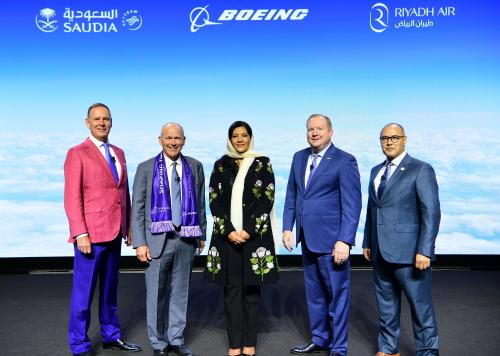
    (From left to right): Tony Douglas, CEO of Riyadh Air; Dave Calhoun, president and CEO of The Boeing Company; Her Royal Highness Princess Reema, Ambassador of The Kingdom of Saudi Arabia to the United States; Stan Deal, president and CEO of Boeing Commercial Airplanes; Captain Ibrahim Koshy, CEO of SAUDIA. Photo: Boeing

    NORTH CHARLESTON, S.C., On 5th May 2023, Boeing celebrated with Her Royal Highness Princess Reema Bandar Al-Saud, Ambassador of The Kingdom of Saudi Arabia to the United States, and leaders from Saudi carriers SAUDIA and Riyadh Air at Boeing South Carolina, following the March announcement for the two airlines to purchase a combined total of up to 121 787 Dreamliners.

    Her Royal Highness Princess Reema Bandar Al-Saud, Captain Ibrahim Koshy, CEO of SAUDIA, and Tony Douglas, CEO of Riyadh Air, addressed more than 3,000 Boeing teammates and toured the 787 final assembly building.

    The fleet orders will be among the fifth largest commercial order by value in Boeing’s history, supporting American aerospace manufacturing jobs at Boeing and across its supply chain. The purchase is part of Saudi Arabia’s strategic Vision 2030, with the goal of serving 330 million passengers and attracting 100 million visitors by 2030.

    As a leading global aerospace company, Boeing develops, manufactures and services commercial airplanes, defense products and space systems for customers in more than 150 countries. As a top U.S. exporter, the company leverages the talents of a global supplier base to advance economic opportunity, sustainability and community impact. Boeing’s diverse team is committed to innovating for the future, leading with sustainability, and cultivating a culture based on the company’s core values of safety, quality and integrity.


  • Bombardier announced that it has completed a thorough analysis of the Global 5500 and Global 6500 in order to publish Environmental Product Declarations (EPDs) for two of its large aircraft

    • Environmental Product Declarations (EPDs) provide detailed information about each aircraft’s environmental footprint across its life cycle 
    • Bombardier’s unique Product Sustainability and Strategy team analyzed environmental incidence of over 140K aircraft parts per program to create holistic and transparent public reports 
    • Long-range Global 5500 and Global 6500 aircraft join Global 7500 and Challenger 3500 as world’s only business jets carrying an EPD  
    • Global 5500 and Global 6500 EPDs contribute to Bombardier’s long-term view EcoJet research platform  

    Montreal. On 2nd May, 2023, Bombardier announced that it has completed a thorough analysis of the Global 5500 and Global 6500 in order to publish Environmental Product Declarations (EPDs) for two of its large aircraft. They join the Global 7500 aircraft and the Challenger 3500 aircraft as business aviation’s only EPD-designated jets.  

    For over a decade, Bombardier dedicated a full-time internal team of experts to the development of standardizable key metrics, data gathering, validation and analysis. Bringing together industry players and 45 tier-1 suppliers, Bombardier assessed 200K aircraft parts over the development of the Global 7500 aircraft program, gaining valuable insights on the environmental impact of this business jet and leading to a third-party verified public report.

    The industry-leading, high-performance Global 7500 aircraft became the first business aircraft to receive an EPD designation for this report in 2020 and was followed by the Challenger 3500 EPD in 2022. The holistic methodology was replicated in analyzing the Global 5500 and Global 6500 programs, where 280K parts were assessed.

    “The publication of the Global 5500 and Global 6500 aircraft EPDs are the results of years of scientific effort,” said Michel Ouellette, Executive Vice President, Engineering and Product Development, Bombardier. “These declarations are more than brochures: they are tools for the aviation industry to drive sustainable innovations across its activities spectrum. They are also the outcome of the thoroughness, mindfulness and ingenuity of a uniquely skilled internal team of experts. As a company, we are immeasurably proud that the reputation of our products and exciting opportunities attract the best minds in the world.” 

    Thanks to the colossal groundwork done by Bombardier’s dedicated team in establishing environmental requirements at the design phase of future programs, the Global 5500 and Global 6500 business jets possess strong sustainability elements. From a design perspective, they feature up to 13% better fuel efficiency than their predecessors with redesigned wings and new purpose-built Rolls-Royce Pearl engines. The high-speed transonic wing on these aircraft also cuts down on drag, reducing fuel burn, and lowering emissions, offering a smooth ride, excellent short-field and high-speed performance. Bombardier also currently offers sustainable cabin material options for the interior of all aircraft.

    “Bombardier has the influence and expertise to change the future of aviation,” said Michel Ouellette, “We made the decision over 10 years ago to tackle the industry’s most urgent challenge in the long run with our EcoJet research platform; in the short run by encouraging the increased use of Sustainable Aviation Fuels (SAF); and in the medium run by adopting a sustainability mindset when designing all our aircraft; before the first piece of sheet metal is cut. With our business jets EPDs, we have equipped ourselves with a comprehensive and replicable methodology to ensure environmental risks and impacts across our value chain are identified now, and effectively managed through our continuous innovation and improvement approach.” 

    The extensive data gleaned in the development of Bombardier’s product life cycle analysis, which is available for the industry and the public to consult, help key players reevaluate how current aircraft are designed and built. Bombardier’s sustainable cabin interiors materials offering is one example of how this life cycle analysis led to tangible product improvement. Meanwhile, in working towards inventing the future of sustainable aviation with its long-term view EcoJet research platform, these EPDs are already influencing decisions at the supply chain level, by mapping a clear strategy for sustainable sourcing and product development processes.

    Bombardier’s overall environmental, social and governance (ESG) plan also supports the industry-wide aspiration to achieve net zero emissions by 2050, by actively advocating for the adoption of Sustainable Aviation Fuels, enhancing aircraft recoverability and sustainable sourcing, improving energy efficiency in its operations, optimizing carbon offsets, and more.

  • JetBlue now using Raytheon Technologies’ InteliSight™ and GlobalConnect to improve aircraft data retrieva

    JetBlue now using Raytheon Technologies’ InteliSight™ and GlobalConnect to improve aircraft data retrieva

    • Operational efficiencies achieved through aircraft data transmission

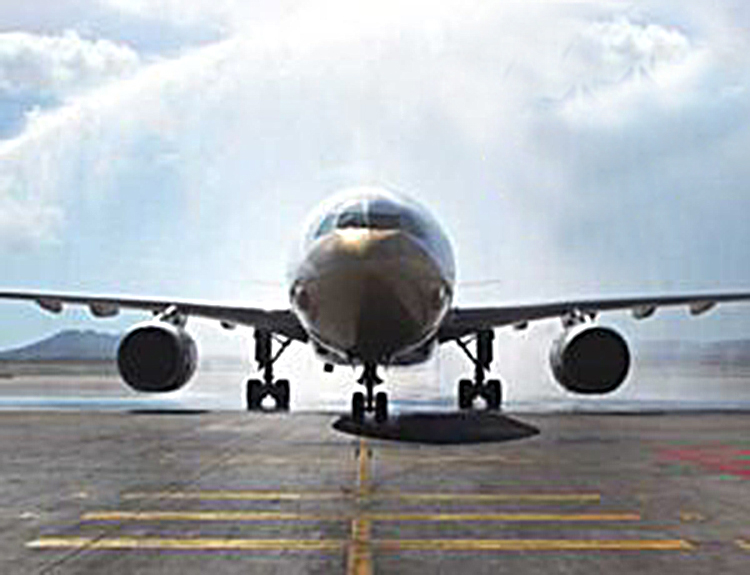
    ANNAPOLIS, Md. On 3rd May, 2023 Raytheon Technologies’ announced a Collins Aerospace’s InteliSight Aircraft Interface Device will be installed on more than 200 of JetBlue’s Airbus A320s. The device captures, records, stores, encrypts, and securely transmits aircraft data to Collins’ robust and secure cloud platform, GlobalConnect.
    “After an extensive review process, we chose the Collins Aerospace solution,” said JetBlue’s Captain Chuck Cook, director communications, navigation, surveillance, and technical programs. “Real-time access to data will allow JetBlue to adjust service schedules and increase the sustainability of these select aircraft.”

    Providing an offload of the data after each flight ensures the data is available for analysis, operational insights, and improvements. Collins Aerospace’s InteliSight solution helps flight crews, ground crews and airline operations teams optimize cost and improve customer service.

    “JetBlue will see immediate and quantifiable benefits from the digital transformation of these aircraft,” said Jennifer Schopfer, president of Connected Aviation Solutions at Collins Aerospace. “The InteliSight data, passed via GlobalConnect, will give JetBlue’s flight operations, engineers, and maintenance teams the information they need to ensure an even more efficient travel experience for their passengers.”

    InteliSight solutions can be customized based on their unique, modular structure to address customers’ different needs and are supported 24/7 by a worldwide network. At least one carrier has reported a substantial increase in their data capture rates, up to more than 99%, after equipping its aircraft with InteliSight solutions.

  • Meeting of the Consultative Committee of Ministry of Civil Aviation held

    Meeting of the Consultative Committee of Ministry of Civil Aviation held

    New Delhi, 28th April, 2023. A meeting of the Consultative Committee of Ministry of Civil Aviation held in New Delhi today. The subject for discussion was Sustainable Aviation Fuel (SAF).The meeting was chaired by Minister of Civil Aviation Shri Jyotiraditya M. Scindia and attended by several Hon’ble Members of Parliament.

    International Civil Aviation Organization (ICAO) has been entrusted to facilitate to reduce the carbon emissions from international civil aviation as one of its focus areas. In order to mitigate carbon emissions from aviation sector and its impacts on climate change. ICAO has adopted the aspirational goals, viz. 2% annual fuel efficiency improvement through 2050, Carbon Neutral Growth from 2020 onwards, and net zero by 2050.  A basket of measures has also been identified by ICAO to achieve these goals which include the Carbon Offfsetting and Reduction Scheme for International Aviation (CORSIA) and the Long Term Aspirational Goals (LTAG).

    CORSIA is implemented in three phases, out of which participation is voluntary in the first two phases for (2021-2026). India has decided not to participate in the voluntary phases of CORSIA. Offsetting requirement under the CORSIA for Indian careers will start from 2027. This will enable airlines of the developing countries like India to get time to grow more and do not face any financial consequences due to CORSIA by joining voluntary phases. CORSIA is applicable to international flights originating from one country to another. Financial implications due to offsetting will be born by individual airlines depending upon their international operations as and when applicable.

    India has committed to net zero by 2070 at COP26 to the United Nations Framework Convention on Climate Change (UNFCCC). The Ministry of Petroleum & Natural Gas (MoPNG) has notified  a National Policy  on Bio Fuels 2018 to realize the goal of de-carbonization of aviation sector. MoPNG constituted the Bio-Aviation Turbine Fuel Programme Committee to take forward the Bio-ATF Programme in the country to promote the use of clean fuel in aviation. The Committee has submitted its report which has now been circulated to various stakeholders.

    India has also taken several steps like joining ICAO’s Assistance Capacity Building & Training for Sustainable Aviation Fuels Programme. The Bureau of Indian Standard has issued Indian Standard for Bio-Jet ATF in January 2019. Several meetings  have been held with the Indian Carriers to sensitize them regarding the impact of CORSIA on airlines once the mandatory phase starts and the resultant needs to be prepared for the same.

    DGCA has also granted approval to following:

    1. M/s Spicejet operated a demonstration flight with 25% SAF (Biofuel produced from Jatropha seeds by Indian Institute of Petroleum, CSIR lab) blended with ATF from Dehradun to Delhi in August, 2018. The fuel is under process of ASTM approval.
    2. M/s Indigo carried out its first international ferry flight with 10% blended fuel from Toulouse to Delhi on 17.02.2022.
    3. M/s Vistara carried out 30% blended SAF ferry flight from Seattle to Delhi in March 2023
    4. M/s Air Asia to carry out first commercial domestic flight with 0.57% SAF belnded fuel flight is yet to commence.

    Indian Oil Corporation Ltd. (IOICL) has planned an 86.8 TMTPA plant at Panipat using LanzaJet ATJ (alcohol to jet) Technology. IOCL has also signed a MoU with Pune-based Praj Industries to set up a plant for developing ATJ fuels.

    Mangalore Refinery and Petrochemicals Ltd. Is planning to build a bio-ATF pilot plant at Mangalore using CSIR-Indian Institute of Petroleum’s technology using non edible oils and used cooking oil as feedstock.

    The meeting ended with the Union Minister thanking the participating Members of Parliament for their valuable suggestions.

  • Airbus, Safran and Tikehau Capital finalise acquisition of Aubert & Duval

    Airbus, Safran and Tikehau Capital finalise acquisition of Aubert & Duval

    Paris. The holding company owned equally by Airbus, Safran and Tikehau Capital has finalised the acquisition of Aubert & Duval from Eramet on 28th April, 2023.

    Aubert & Duval is a strategic supplier of critical parts and materials to high-precision customers, notably the aerospace, defence, nuclear and medical industries. The company generates annual revenues in the region of €550 million and employs 3,700 people, mostly in France. Its cutting-edge know-how in specialty steels and superalloys, and its more recently acquired expertise in titanium are crucial to the aerospace, transportation, energy, defence and medical markets.

    Bruno Durand has been appointed CEO of Aubert & Duval by the holding company’s Board of Directors and will be managing its operations.

    Safran CEO Olivier Andriès commented: “The acquisition of Aubert & Duval will ensure the national and European sovereignty of our strategic programs developing disruptive civil and military engines, and secure our critical parts and materials supply chain. I am confident the new team will carry through the transformation project to get this leading French industry player back on track.”

    “Completion of this acquisition represents a crucial step towards the creation of a leading European player in critical parts and materials, equipped to compete globally and to support the aerospace and defence industry, thereby reducing geopolitical risks of supply”, said Airbus CEO Guillaume Faury. “Airbus will provide its full support to Aubert & Duval as it executes its ambitious transformation plan.”

    “The acquisition of Aubert & Duval reflects the quickening pace of transformation and consolidation in the aerospace sector. Tikehau Capital is proud to be aiding the company’s recovery and the development of its industrial expertise alongside Airbus and Safran. Aubert & Duval is a strategic player vital to maintaining France and Europe’s industrial independence,” added Marwan Lahoud, Chairman Private Equity, Tikehau Capital.

    This operation marks the latest in a series of initiatives in recent years to support and strengthen France’s aerospace sector, notably through the Ace Aéro Partenaires investment fund set up in 2020 and handled by alternative asset management firm Tikehau Capital with the backing of the French government, which retains a golden share in Aubert & Duval company in order to protect its strategic interests.

  • Azerbaijan Airlines Expands Long-Haul Fleet, Finalizing Order for More Boeing 787 Dreamliners

    Azerbaijan Airlines Expands Long-Haul Fleet, Finalizing Order for More Boeing 787 Dreamliners

    • Eight new Dreamliners will help Azerbaijani flag carrier provide more service and new routes
    Boeing and Azerbaijan Airlines today announced the national flag carrier has ordered eight 787-8 Dreamliners to support the growth of its long-haul fleet. The super-efficient jets will enable the Central Asian carrier to profitably open up new routes from Azerbaijan and boost capacity for inbound tourism. Image credit: Boeing

    BAKU, Azerbaijan. Boeing and Azerbaijan Airlines announced on 28th April, 2023 that the national flag carrier has ordered eight 787-8 Dreamliners to support the growth of its long-haul fleet. The super-efficient jets will enable the Central Asian carrier to profitably open up new routes from Azerbaijan and boost capacity for inbound tourism.

    Leaders from both companies, including Jahangir Asgarov, president of Azerbaijan Airlines, and Stan Deal, president and CEO of Boeing Commercial Airplanes, celebrated the order at a signing ceremony at the airline’s hub in Baku. In July 2022, Boeing and the carrier announced a commitment to purchase four 787s; since then, the order was finalized for eight airplanes and unidentified on Boeing’s Orders and Deliveries website.

    “The successful development of the country’s civil aviation has become possible thanks to the continuous support and attention of the President of Azerbaijan, Ilham Aliyev. The signing of a contract with Boeing for the purchase of modern wide-body Boeing 787 Dreamliners is an important step in modernizing the fleet and increasing the level of AZAL air transportation,” said Asgarov.

    More than 85 customers around the world have placed orders for more than 1,600 787 Dreamliners, making the 787 the fastest selling twin-aisle airplane in history. Since entering service in 2011, the 787 family’s fuel efficiency, flexibility and range have enabled airlines to open more than 350 new nonstop routes, such as Azerbaijan Airlines’ recent connection between Baku and New Delhi.

    “The 787 has helped position Azerbaijan Airlines as the leading carrier across Central Asia, with the airplane’s flexibility and capability opening Azerbaijan up to increased tourism and economic growth,” said Deal. “For more than 20 years we have enjoyed a tremendous partnership with Azerbaijan Airlines and this order for Dreamliners is a testament to the strength of our product family and the relationship between our companies.”

    Built with lightweight composite materials and powered by advanced engines, the 787 Dreamliner can fly up to 20% more passengers while reducing fuel use and emissions by 25% compared to the airplanes it replaces. The 787-8’s range reaches up to 13,530 km in a typical two-class configuration, enabling Azerbaijan Airlines to grow its network across Europe, Asia and beyond.

    Azerbaijan Airlines is one of the largest carriers in Central Asia, serving 40 destinations across 25 countries, with a fleet that includes Boeing 757, 767 and 787 jets.

  • Boeing Expands ecoDemonstrator Flight Testing with ‘Explorer’ Airplanes, Announces 2023 Plan

    Boeing Expands ecoDemonstrator Flight Testing with ‘Explorer’ Airplanes, Announces 2023 Plan

    • Accelerating technology development for sustainability with multiple airplanes
    • Boeing will use first Boeing ecoDemonstrator Explorer, a 787-10 Dreamliner, to partner with four countries on operational efficiency testing
    • Flagship ecoDemonstrator will test 19 new technologies in 2023
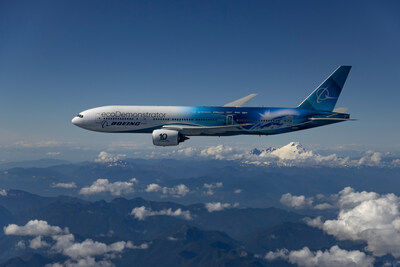
    Boeing is expanding its ecoDemonstrator program to include “Explorer” platforms that will focus on short-term testing of a specific technology. The first Boeing ecoDemonstrator Explorer, a Boeing 787-10 Dreamliner, will participate in an operational efficiency exercise in June 2023.

    SEATTLE. Boeing is expanding its ecoDemonstrator flight-test program to further accelerate innovation for sustainability and safety. On April 27, 2023, the company announced its 2023 plan to assess 19 technologies on the Boeing 777 ecoDemonstrator, while also adding “Explorer” airplanes that will focus tests on specific technologies.

    The first ecoDemonstrator Explorer, a 787-10 Dreamliner, will conduct flight tests in June from Seattle to TokyoSingapore and Bangkok to demonstrate how coordinating navigation across global airspace jurisdictions can improve operational efficiency, which can reduce an airplane’s fuel use and emissions by up to 10%. Utilizing today’s onboard capabilities, Boeing and air navigation service providers (ANSPs) in the U.S., JapanSingapore and Thailand will collectively sequence the airplane’s routes to achieve the optimal flight path across multiple regions, factoring in conditions such as weather, air traffic and airspace closures. The airplane will fly on the highest available blend of sustainable aviation fuel (SAF) at each location.

    The 2023 Boeing ecoDemonstrator kicks off its second year of testing on a Boeing-owned 777-200ER with more than a dozen technologies.

    “To support our industry’s goal for net zero carbon emissions by 2050, Boeing is expanding our ecoDemonstrator program with Explorer airplanes to test even more sustainability-focused technologies,” said Stan Deal, president and CEO of Boeing Commercial Airplanes. “We continue to invest in innovation that reduces fuel use, emissions and noise on our products and to partner with governments and industry to make progress on sustainability during each phase of flight.”

    “The industry will need continued fleet renewal, efficiency gains, renewable energy carriers such as sustainable aviation fuel and advanced technology to meet the civil aviation industry’s commitment to achieve net zero carbon emission by 2050,” said Boeing Chief Sustainability Officer Chris Raymond. “Our initial Explorer testing in partnership with aviation stakeholders in four countries is a great example of how we can work together to optimize operational efficiency and reduce emissions.”

    In 2023, Boeing also will use its current flagship ecoDemonstrator airplane, a 777-200ER (Extended Range), to test 19 technologies including:

    • Sustainable wall panels in the cargo hold that are made of 40% recycled carbon fiber and 60% resin made from a bio-based feedstock
    • A fiber optic fuel quantity sensor compatible with 100% SAF
    • An Electronic Flight Bag application featuring Smart Airport Maps, a component of Jeppesen FliteDeck Pro, which reduces operational costs and supports safe taxi operations with the depiction of contextual airport data
    • For all flight tests, the airplane will fly on the highest available blend of SAF locally

    Since its initial flights in 2012, the Boeing ecoDemonstrator program has accelerated innovation by taking new technologies out of the lab and testing them in an operational environment. Including the 2023 plan, the program will have tested about 250 technologies to help decarbonize aviation, improve operational efficiency and enhance safety and the passenger experience. Approximately a third of tested technologies have progressed onto Boeing’s products and services.

    More information about the 2023 ecoDemonstrator and previous ecoDemonstrator airplanes is available at boeing.com/ecoDemonstrator. Boeing’s sustainability commitments, partnerships and efforts are available at https://www.boeing.com/principles/sustainability.

  • Boeing to Advance Aerospace Innovation through Korean Industry Partnerships

    Boeing to Advance Aerospace Innovation through Korean Industry Partnerships

    • Boeing expands R&D collaboration in Korea, including tech development on advanced production systems, urban air mobility, aerospace semiconductors
    • Agreement signed with the Korea Evaluation Institute of Industrial Technology and the Korea Institute for Advancement of Technology

    WASHINGTON, D.C., 25th April, 2023 — Boeing has signed a new partnering agreement with Korean industry to expand joint research and development activities and further develop critical aviation technologies.
    Boeing, the Korea Evaluation Institute of Industrial Technology (KEIT), and the Korea Institute for Advancement of Technology (KIAT), will collaborate on advanced production systems for commercial aircraft manufacturing, urban air mobility, aerospace semiconductors and cultivating industry talent in Korea.

    Boeing Korea President Eric John, KEIT President Chun Yoon-jong and KIAT President Min Byung-joo signed the Memorandum of Understanding during Korean President Yoon Seok Yeol’s visit to the United States.

    Through this collaboration, the company and research institutions will seek opportunities to cooperate across the private and public sectors. These efforts are intended to enhance the competitiveness of Korea’s aerospace industry and strengthen Boeing’s future aerospace capabilities.

    “We will continue to support the advancement of Korea’s rapidly growing aerospace sector by leveraging Boeing’s global aerospace expertise and Korea’s cutting-edge technologies,” said Eric John, Boeing Korea President. “We also expect this to benefit the country’s aerospace supply chain.” 

    KEIT will identify Korean companies with potential for participation, while KIAT will focus on defining areas for research, development and commercialization of advanced components for airplanes.

    Boeing continues to increase its presence and pursue opportunities to partner and advance aerospace technologies with Korea, spending more than $4 billion with over 50 Korean suppliers over the past 15 years. In 2019, Boeing opened the Boeing Korea Engineering & Technology Center, where it has been conducting strategic research on future technologies, including autonomous flight, artificial intelligence, avionics, embedded software, Linux, mobility platform, smart cabin and smart factory.

  • Airbus Helicopters and China’s GDAT sign for 50 H160 helicopters

    Airbus Helicopters and China’s GDAT sign for 50 H160 helicopters

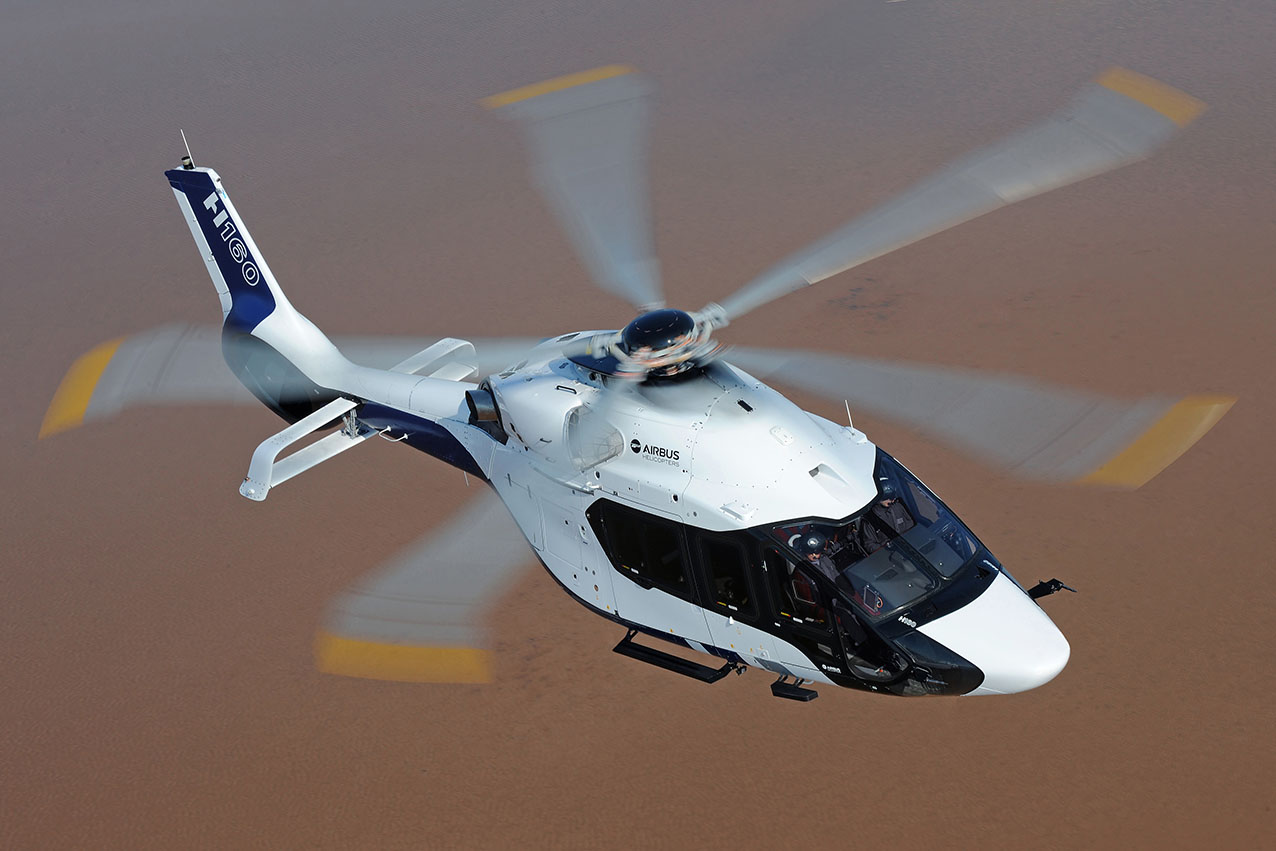
    Beijing, 7th April, 2023. During French President Macron’s visit to China, Airbus Helicopters has signed a contract with GDAT, one of China’s most prominent helicopter lessors and operators, for 50 H160 helicopters. This contract is the largest single order for the H160 on the civil and parapublic market since the helicopter was unveiled in 2015. The aircraft will be used notably for the energy sector, including offshore transportation for oil and gas platforms, wind farms and harbour piloting, as well as emergency medical services and other municipal public service missions. The companies also signed a strategic cooperation agreement related to topics such as support and services capabilities, amongst others, in order to ensure the long term success of the H160 in China.

    “We are honoured GDAT has decided to bolster their all-Airbus fleet of 26 helicopters with the addition of 50 H160 helicopters. The H160 has been designed at the outset as a multi-mission helicopter and is, therefore, well suited to the multiple segments that lessors provide for,” said Bruno Even, CEO of Airbus Helicopters.

    “This contract is a great example of the importance of economic and trade cooperation between France and China. The innovative H160 is the perfect addition to our fleet and will enable us to continue our success story on the Chinese market that began with our 21 H225 helicopters. We see a lot of potential for the H160 in China, in particular for the energy sector” said Peter Jiang, Chairman of GDAT.

    GDAT is China’s leading innovative general aviation service provider specialising in helicopter sales and leasing, maintenance and modifications, as well as emergency rescue flights, and other government services. The Group is headquartered in Shanghai and has four wholly-owned subsidiaries across China as well as operating bases in Suzhou and Ningbo, and an overseas branch in London.

    Designed as a multi-role helicopter capable of performing a wide range of missions, the H160 integrates Airbus’ latest technological innovations. The helicopter provides passengers with superior comfort thanks to the sound-reducing Blue Edge blades and superb external visibility that benefits both passengers and pilots. With its light maintenance plan aligned between engine and aircraft, the H160 optimises operating costs and offers a new standard in availability. The H160 is already certified to fly with as much as 50% sustainable aviation fuel and is powered by two of the latest Arrano engines from Safran Helicopter Engines that offer a 15% reduction in fuel burn.

    Airbus Helicopters has been a key partner in the Chinese helicopter sector for over 50 years. Today, there are more than 300 Airbus helicopters flying over China, serving more than 90 customers.

  • Azerbaijan Airlines orders 12 A320neo Family aircraft

    Azerbaijan Airlines orders 12 A320neo Family aircraft

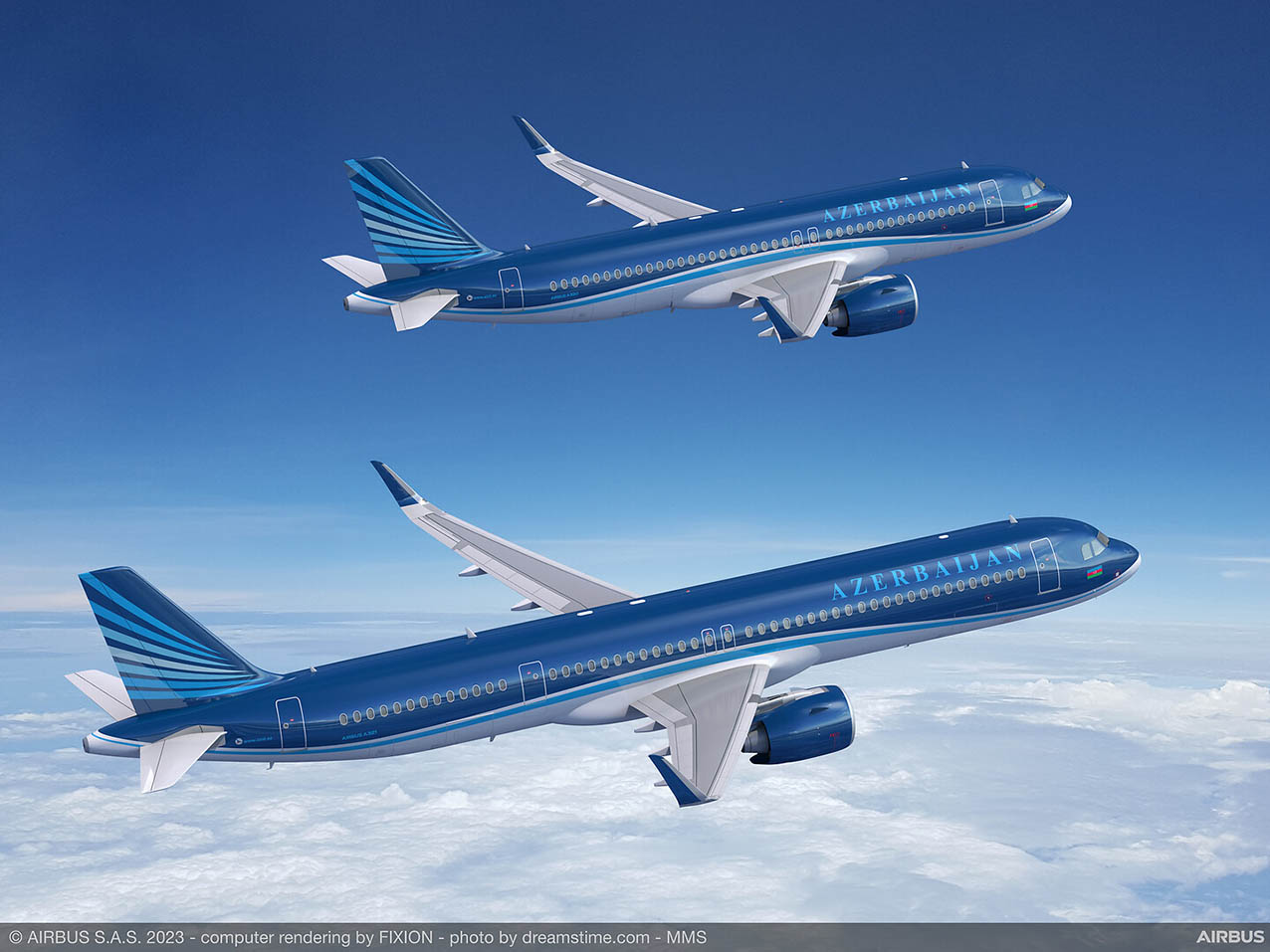
    Baku, 6th April. 2023. The Azerbaijan flag carrier, Azerbaijan Airlines, has placed a firm order with Airbus for 12 A320neo Family aircraft including A320neo and A321neo. The contract was signed at a ceremony held in Baku.

    These latest generation A320neo Family aircraft are part of the company’s fleet renewal strategy to operate the most modern and fuel efficient aircraft, increase operational efficiency and competitiveness while offering passengers excellent comfort throughout its fleet. The engine choice will be announced by the airline at a later stage.

    “We are pleased to continue mutually beneficial cooperation with Airbus on the modernization program of our fleet and intend to strengthen the bilateral partnership. The signed contract will provide our passengers with the most modern and comfortable single-aisle aircraft,” First Vice-President of AZAL CJSC Samir Rzayev said.

    This order marks an important milestone in the fruitful relationship between Airbus and Azerbaijan Airlines,” said Christian Scherer, Airbus Chief Commercial Officer and Head of International. “The A320neo Family continues to be a top choice for airlines looking for fuel-efficient and cost-effective fleet solutions. This order is a testament to the trust our customers have in the performance and reliability of our aircraft. We are confident that this choice will further boost the sustainable growth of Azerbaijan Airlines.”

    Currently Azerbaijan Airlines operates a fleet of 15 Airbus aircraft (4 A319ceo, 6 A320ceo,
    2 A340s and since the beginning of the year, 3 new generation A320neo). The airline plans. to deploy efficient A320neo Family aircraft to further develop its domestic and international route network.

    The A320neo Family incorporates the very latest technologies including new generation engines and Sharklets, which together deliver at least 20 percent fuel burn and CO2 emission saving. With some 8,700 orders from 135 customers, the A320neo Family is the world’s most popular aircraft.