Category: Featured

Featured posts

  • MiG-29 Vs. JF-17 Thunder – Comparison, BVR & Dogfight

    MiG-29 Vs. JF-17 Thunder – Comparison, BVR & Dogfight

    MiG-29 Vs. JF-17 Thunder: In the dynamic realm of military aviation, the skies are often dominated by a range of formidable fighter aircraft, each designed to meet specific strategic objectives and operational needs. Among the many aircraft that have captured the attention of aviation enthusiasts and military analysts alike, the MiG-29 and the JF-17 Thunder stand out as two iconic fighters, each with its unique set of characteristics and capabilities.

    The MiG-29, a product of the Soviet Union’s aerospace prowess during the Cold War era, has earned a reputation for its agility and air-to-air combat capabilities. On the other hand, the JF-17 Thunder, developed through a collaboration between Pakistan and China, has emerged as a cost-effective multi-role fighter designed to meet the diverse requirements of modern air forces.

    In this blog, we will delve into the world of military aviation and explore the key features, strengths, and weaknesses of these two fighter jets. As we embark on this comparative journey, we will gain insight into their historical contexts, technological advancements, and the roles they play in today’s complex global security landscape. Join us as we take a closer look at the MiG-29 and the JF-17 Thunder, assessing their potential in the ever-evolving theater of aerial combat.

    MiG-29 Vs. JF-17 Thunder

    The world of military aviation is rife with fierce competition, as nations strive to equip their air forces with the most capable and versatile fighter jets. In this detailed comparison, we will explore two prominent contenders: the MiG-29, a Russian classic, and the JF-17 Thunder, a joint endeavor between Pakistan and China. Each of these fighter aircraft brings its own unique strengths to the table, making for an intriguing matchup.

    MiG-29: A Soviet Legend

    The MiG-29, developed during the Cold War era, has become synonymous with Soviet and later Russian air power. Known as the “Fulcrum” in NATO terminology, this agile fighter was designed primarily for air superiority missions.

    JF-17 Thunder: A Collaborative Effort

    The JF-17 Thunder, short for “Joint Fighter-17,” represents a collaboration between Pakistan and China. This lightweight, multi-role fighter was conceived to offer cost-effective versatility, making it attractive to a range of air forces, particularly those with budget constraints.

    Now, let’s dive deeper into the comparison:

    Performance and Agility:

    • MiG-29: The MiG-29 boasts exceptional maneuverability, thanks to its thrust-to-weight ratio and aerodynamic design. It can reach Mach 2.25 and has a combat radius of around 1,000 kilometers.
    • JF-17 Thunder: While not as agile as the MiG-29, the JF-17 is no slouch. It can achieve Mach 1.6 and has a combat radius of approximately 1,352 kilometers.

    Avionics and Radar:

    • MiG-29: The MiG-29’s radar systems have seen various upgrades over the years, with modern variants sporting advanced AESA (Active Electronically Scanned Array) radar. It offers good situational awareness and target tracking capabilities.
    • JF-17 Thunder: The JF-17 Thunder is equipped with a pulse-Doppler radar, with plans for AESA radar upgrades. It provides adequate tracking and targeting capabilities.

    Armament and Payload:

    • MiG-29: The MiG-29 can carry a wide array of air-to-air and air-to-ground munitions, including R-73 and R-77 air-to-air missiles and a variety of precision-guided munitions.
    • JF-17 Thunder: The JF-17 is designed to carry a diverse range of munitions, including AIM-120 air-to-air missiles and various air-to-ground weapons, enhancing its multi-role capabilities.

    Cost and Maintenance:

    • MiG-29: While the MiG-29 is a potent fighter, it can be costly to maintain due to its age and complexity, which might deter budget-conscious air forces.
    • JF-17 Thunder: The JF-17’s affordability and ease of maintenance make it an attractive option for countries seeking modernization without breaking the bank.

    Export Success:

    • MiG-29: The MiG-29 has found buyers in various countries, but its export success has waned in recent years, partly due to concerns over parts availability and maintenance.
    • JF-17 Thunder: The JF-17 Thunder has enjoyed success in the export market, with several countries opting for this cost-effective fighter.

    MiG-29 Vs. JF-17 Thunder Data Table

    Here’s a data table comparing the MiG-29 and the JF-17 Thunder across various key parameters:

    Parameter MiG-29 (Fulcrum) JF-17 Thunder
    Origin Russia (Soviet Union) Pakistan and China
    Role Air superiority fighter Multi-role fighter
    First Flight 1977 2003
    Maximum Speed Mach 2.25 Mach 1.6
    Combat Radius Approx. 1,000 kilometers Approx. 1,352 kilometers
    Thrust-to-Weight Ratio High Moderate
    Radar AESA (varies by version) Pulse-Doppler (AESA upgrades planned)
    Avionics Modernized systems Developing capabilities
    Armament Air-to-air and air-to-ground missiles Versatile munitions selection
    Export Success Declining due to age and maintenance Growing with affordability and demand
    Cost and Maintenance 25–32 million $
    High maintenance costs
    29 million $
    Affordable and relatively low

    Please note that specific performance and capability details may vary depending on the variant and upgrades of each aircraft.

    Similarity between MiG-29 & JF-17 Thunder

    While the MiG-29 and JF-17 Thunder are distinct fighter aircraft with different origins and design philosophies, they do share some similarities:

    • Multi-Role Capabilities: Both the MiG-29 and the JF-17 Thunder are designed to be multi-role fighters, meaning they can perform a variety of mission types. They are not limited solely to air-to-air combat but can also engage in air-to-ground missions, making them versatile assets for air forces with diverse operational requirements.
    • Cost-Effectiveness: One of the key design principles behind the JF-17 Thunder was affordability. Similarly, some variants of the MiG-29, particularly those offered for export, have been marketed as cost-effective options for countries seeking modern fighter aircraft without a prohibitively high price tag. This cost-effectiveness has contributed to their appeal to budget-conscious air forces.
    • Export Success: Both aircraft have had some success in the international arms market. The JF-17 Thunder has been exported to several countries, and various versions of the MiG-29 have been sold to numerous nations. Their export potential is partly driven by their affordability and adaptability to different operational needs.
    • Upgradability: Both aircraft have seen upgrades and modernization efforts to keep them relevant in the ever-evolving landscape of modern air warfare. These upgrades often include improvements in avionics, radar, and weapons systems.
    • Relatively Compact Size: Both the MiG-29 and JF-17 Thunder are relatively compact fighter aircraft, which can be advantageous for operations in environments with limited runway facilities or on aircraft carriers, where space is at a premium.
    • External Fuel Tanks: Both aircraft have the capability to carry external fuel tanks, extending their operational range. This feature is especially important for missions that require flying long distances or patrolling large areas.
    • Operational Service: Both the MiG-29 and the JF-17 Thunder have been in active service with various air forces around the world, contributing to their operational experience and proven track records.

    Conclusion

    In the comparison between the MiG-29 and the JF-17 Thunder, we’ve explored two distinct fighter aircraft with their own unique attributes and roles in the world of military aviation. These two fighters, despite their differences, both bring strengths to the table that cater to the operational needs and budgets of various air forces.

    The MiG-29, with its origins in the Soviet Union and a legacy of air superiority, remains a highly maneuverable and potent aircraft. Its advanced variants boast modern avionics and radar systems, making it a capable platform for air-to-air combat and air-to-ground missions. However, the MiG-29’s maintenance costs and aging airframes have led some air forces to explore alternatives.

    On the other hand, the JF-17 Thunder, born from a collaborative effort between Pakistan and China, offers a cost-effective solution for air forces seeking versatility on a budget. While it may not match the MiG-29 in terms of raw agility, it compensates with affordability and the ability to carry a diverse range of munitions. The JF-17 Thunder’s export success and upgradability make it an attractive option for many nations.

    Ultimately, the choice between the MiG-29 and the JF-17 Thunder depends on a nation’s specific requirements, budget constraints, and strategic priorities. The MiG-29, with its established reputation, may still find favor among air forces looking for a high-performance fighter, while the JF-17 Thunder appeals to those seeking a capable multi-role platform without breaking the bank.

    Frequently Asked Questions (FAQs)

    Here are some frequently asked questions (FAQs) about the MiG-29 and the JF-17 Thunder:

    1. What are the origins of the MiG-29 and the JF-17 Thunder?

    • The MiG-29 originates from the Soviet Union (now Russia) and was developed during the Cold War.
    • The JF-17 Thunder is a joint venture between Pakistan and China, with the aircraft’s development beginning in the early 2000s.

    2. What is the primary role of the MiG-29 and the JF-17 Thunder?

    • The MiG-29 is primarily designed as an air superiority fighter, focused on air-to-air combat.
    • The JF-17 Thunder is a multi-role fighter, capable of performing air-to-air and air-to-ground missions.

    3. How do their speeds and ranges compare?

    • The MiG-29 can reach speeds of up to Mach 2.25 and has a combat radius of approximately 1,000 kilometers.
    • The JF-17 Thunder can achieve speeds of Mach 1.6 and has a combat radius of about 1,352 kilometers.

    4. What types of radar do they use?

    • The MiG-29’s radar systems have evolved over the years, with modern variants featuring advanced AESA (Active Electronically Scanned Array) radar.
    • The JF-17 Thunder is equipped with a pulse-Doppler radar, with plans for AESA radar upgrades in some versions.

    5. How do their armament and payload capabilities compare?

    • The MiG-29 can carry a wide range of air-to-air and air-to-ground munitions, including advanced missiles and precision-guided weapons.
    • The JF-17 Thunder is designed to carry various air-to-air and air-to-ground weapons, making it versatile for different mission profiles.

    6. Which aircraft is more cost-effective?

    • The JF-17 Thunder is generally considered more cost-effective in terms of acquisition and maintenance costs, making it attractive to air forces with budget constraints.

    7. Have they been successful in the export market?

    • While the MiG-29 has been exported to several countries, its export success has declined in recent years due to concerns about maintenance and parts availability.
    • The JF-17 Thunder has enjoyed growing success in the export market, particularly among countries seeking affordable and capable fighter aircraft.

    8. Are there plans for future upgrades for these aircraft?

    • Both the MiG-29 and the JF-17 Thunder have seen upgrades and modernization efforts to keep them relevant. Future upgrades are expected to enhance their capabilities further.
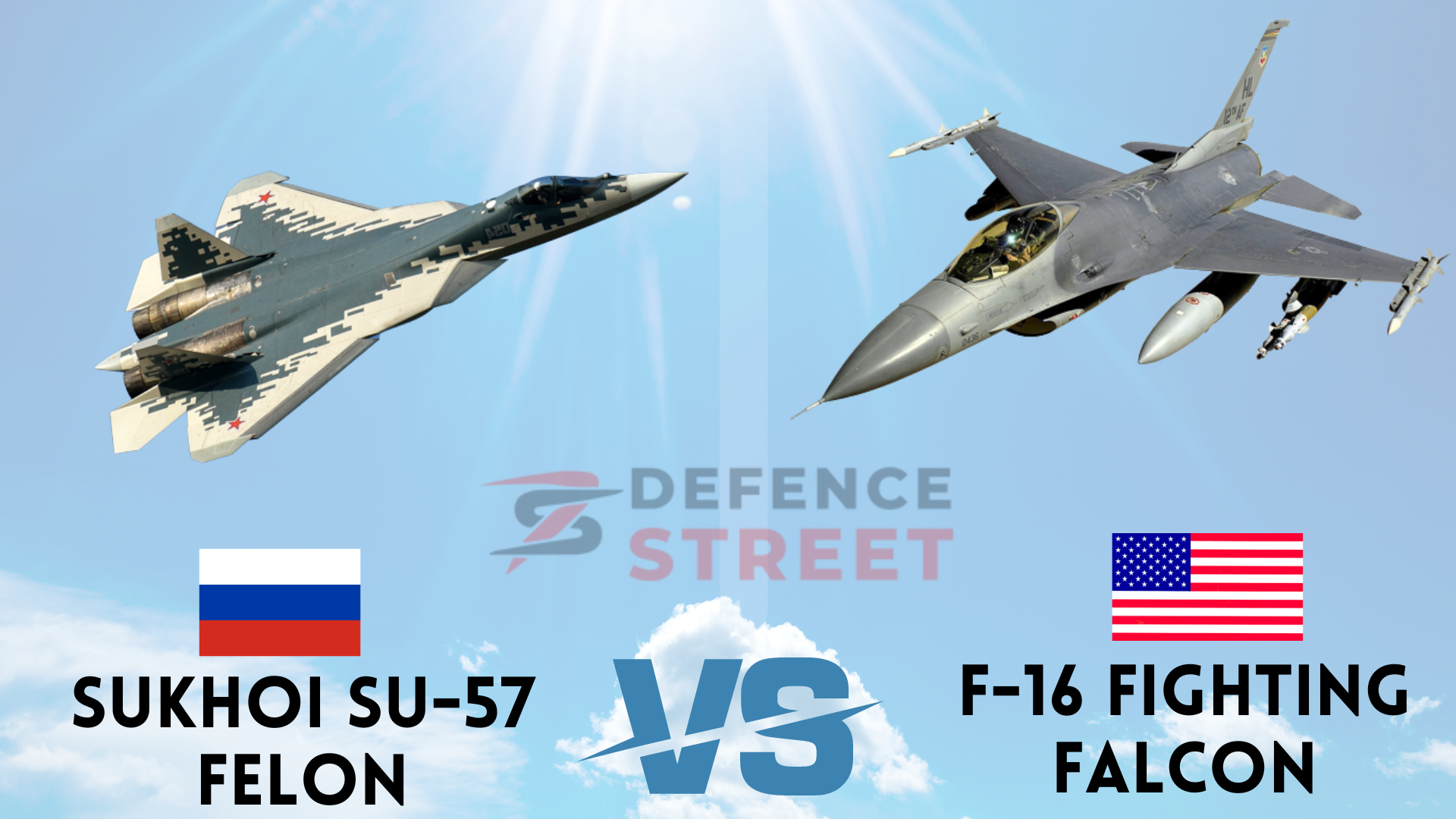
  • Su-57 Felon Vs. F-16 Fighting Falcon Comparison, BVR & Dogfight

    Su-57 Felon Vs. F-16 Fighting Falcon Comparison, BVR & Dogfight

    In the midst of the turbulent and complex geopolitical landscape of the 21st century, military aviation plays a pivotal role in shaping the outcome of conflicts and ensuring the security of nations. At the heart of this ever-evolving arena are two formidable fighter jets: the Sukhoi Su-57 and the Lockheed Martin F-16. These aircraft are not only symbols of cutting-edge technology but also protagonists in the ongoing drama that is the Russia-Ukraine war.

    As the Russia-Ukraine conflict rages on, the world watches closely, not only for its immediate implications but also for the broader contest between military powers. The Su-57 and F-16 represent the pinnacle of their respective nations’ aerospace capabilities, and their roles in this conflict are a microcosm of the broader global struggle for influence and dominance.

    As we dissect the Su-57 and F-16, we cannot ignore the stark contrast between their origins. The Su-57 is the product of Russian engineering, reflecting the nation’s desire to maintain its status as a major player in the global defense industry. On the other hand, the F-16, an iconic American creation, has been embraced by numerous countries worldwide, symbolizing the United States’ commitment to military partnerships and alliances

    In this blog, we will embark on a comprehensive exploration of the Su-57 and F-16, delving into their histories, design philosophies, technological advancements, and combat capabilities.

    Su-57 vs. F-16 Detailed Comparison

    A detailed comparison between the Sukhoi Su-57 and the Lockheed Martin F-16 involves evaluating various aspects of these two fighter jets, including their design, capabilities, performance, and roles. Here’s an in-depth analysis:

    Design and Origin:

    • Su-57: The Su-57, also known as the PAK FA (Prospective Airborne Complex of Frontline Aviation), is a fifth-generation stealth fighter aircraft developed by Russia. It is designed to excel in air superiority and strike missions and is intended to replace older Russian fighter aircraft, such as the Su-27 and MiG-29.
    • F-16: The F-16, also known as the Fighting Falcon, is a fourth-generation multirole fighter developed by the United States. It was originally designed as a lightweight and cost-effective fighter with a focus on versatility and adaptability. The F-16 has been widely exported and used by many countries around the world.

    Stealth and Survivability:

    • Su-57: The Su-57 features advanced stealth capabilities, with a reduced radar cross-section (RCS), internal weapon bays, and advanced radar-absorbent materials. It incorporates sensor fusion and electronic warfare systems for improved situational awareness and survivability.
    • F-16: The F-16 is not a stealth aircraft and relies on speed, agility, and electronic countermeasures for survivability. While it can carry jamming pods and chaff/flare dispensers, it lacks the low observability features of a true stealth aircraft.

    Performance:

    • Su-57: The Su-57 boasts impressive speed, maneuverability, and supercruise capability (the ability to sustain supersonic speeds without afterburners). It features advanced avionics, including an AESA radar, and is equipped with the cutting-edge Izdeliye 30 engines for enhanced performance.
    • F-16: The F-16 is known for its exceptional agility, especially in dogfighting scenarios. It has a high thrust-to-weight ratio, which allows it to accelerate quickly and maintain energy in aerial combat. However, it lacks supercruise capability.

    Armament and Weaponry:

    • Su-57: The Su-57 can carry a wide range of air-to-air and air-to-ground munitions, including advanced missiles like the R-77 and the K-77M, as well as precision-guided bombs and anti-ship missiles. It can also carry hypersonic missiles for long-range engagements.
    • F-16: The F-16 is known for its versatility and can be armed with a variety of air-to-air and air-to-ground weapons, including AIM-120 AMRAAM and AIM-9 Sidewinder missiles. It can perform precision strike missions, SEAD (Suppression of Enemy Air Defenses), and close air support.

    Role and Mission:

    • Su-57: The Su-57 is primarily designed for air superiority and air dominance missions, making it a key asset in protecting Russian airspace. It can also conduct precision strikes against ground and naval targets.
    • F-16: The F-16 is a multirole fighter, capable of performing a wide range of missions, including air-to-air combat, air-to-ground strikes, reconnaissance, and electronic warfare. It has been used in various conflicts around the world and is highly adaptable to different operational requirements.

    Export and Global Presence:

    • Su-57: The Su-57 has been marketed for export, with potential buyers including India and Turkey. However, its export success has been limited compared to the F-16.
    • F-16: The F-16 has been exported to over 25 countries and has a significant global presence. It has been involved in numerous international conflicts and has a proven track record in combat.

    Su-57 vs. F-16 Data Table

    Here’s a data table comparing key attributes of the Sukhoi Su-57 and the Lockheed Martin F-16:

    Attribute Sukhoi Su-57 Lockheed Martin F-16
    Design and Origin Russian fifth-generation stealth American fourth-generation multirole
    fighter fighter
    Stealth and Survivability Advanced stealth capabilities, Not a stealth aircraft; relies on
    reduced RCS, internal weapon bays speed and agility
    Performance High-speed, supercruise capability, High agility, quick acceleration,
    advanced avionics, AESA radar limited supersonic capability
    Engines Izdeliye 30 engines Various engine options, including
    General Electric and Pratt &
    Whitney
    Maximum Speed Estimated Mach 2 (supercruise) Mach 2+
    Combat Radius Approximately 1,500 kilometers Varies based on mission and fuel
    configuration
    Armament and Weaponry Wide range of air-to-air and Versatile, can carry various air-
    air-to-ground munitions, to-air and air-to-ground weapons
    including hypersonic missiles
    Role and Mission Air superiority, air dominance, Multirole, air-to-air combat, air-
    precision strikes to-ground strikes, reconnaissance,
    electronic warfare
    Export and Global Presence Limited export success, potential Exported to over 25 countries,
    buyers include India and Turkey widely used globally

    Please note that the information provided here is based on general characteristics and capabilities of these aircraft, and specific attributes may vary depending on individual variants and upgrades. Additionally, the Su-57 is a fifth-generation fighter, while the F-16 is a fourth-generation fighter, which inherently affects their capabilities and technology levels.

    Conclusion

    In conclusion, the comparison between the Sukhoi Su-57 and the Lockheed Martin F-16 reveals that these two fighter aircraft serve different roles and excel in distinct areas. The “better” choice between them depends on the specific operational requirements and strategic objectives of the nation or organization using them.

    The Su-57, as a fifth-generation stealth fighter, is designed for air superiority and air dominance missions in high-threat environments. Its advanced stealth capabilities, supercruise capability, and cutting-edge sensor systems make it a formidable choice for contested airspace scenarios. Additionally, the Su-57 has the potential to carry hypersonic missiles, further enhancing its offensive capabilities.

    On the other hand, the F-16, a fourth-generation multirole fighter, is renowned for its versatility and adaptability. It can perform a wide range of missions, including air-to-air combat, air-to-ground strikes, reconnaissance, and electronic warfare. With a proven track record in various conflicts and a broad global user base, the F-16 is a reliable workhorse suitable for a variety of operational scenarios.

    Ultimately, the decision between the Su-57 and F-16 hinges on the specific needs and priorities of the military or organization. If air superiority and advanced stealth capabilities are paramount, the Su-57 may be preferred. However, for versatility, cost-effectiveness, and the ability to tackle a diverse set of missions, the F-16 remains a compelling choice.

    In the complex landscape of modern warfare, having a mix of specialized and adaptable aircraft is often the most strategic approach. Therefore, the “better” choice may not be an either/or scenario but rather a matter of incorporating the right blend of capabilities to meet the evolving challenges of defense and security.

    Frequently Asked Questions (FAQs)

    Here are some frequently asked questions (FAQs) about the Sukhoi Su-57 and the Lockheed Martin F-16:

    1. What are the primary roles of the Su-57 and the F-16?

    • The Su-57 is primarily designed for air superiority and air dominance missions. It is intended to excel in scenarios where stealth and advanced sensor fusion are crucial. It can also perform precision strikes against ground and naval targets.
    • The F-16 is a multirole fighter capable of performing various missions, including air-to-air combat, air-to-ground strikes, reconnaissance, and electronic warfare. Its versatility makes it suitable for a wide range of roles.

    2. Which aircraft has better stealth capabilities?

    • The Su-57 has advanced stealth capabilities, including a reduced radar cross-section (RCS) and internal weapon bays, making it harder to detect by enemy radar systems. The F-16 lacks stealth features and relies more on other survivability measures.

    3. Can the Su-57 carry hypersonic missiles?

    • Yes, the Su-57 has the potential to carry hypersonic missiles, which can greatly enhance its offensive capabilities for long-range engagements.

    4. Is the F-16 a supersonic aircraft?

    • Yes, the F-16 is a supersonic aircraft capable of reaching speeds greater than Mach 2, depending on the specific variant and mission configuration.

    5. How many countries operate the F-16, and how widespread is its use?

    • The F-16 has been exported to over 25 countries, and it is one of the most widely used fighter aircraft globally. It has been involved in numerous international conflicts and has a proven track record in combat.

    6. Is the Su-57 in active service with the Russian military?

    • As of my last knowledge update in September 2021, the Su-57 was still in the process of being introduced into the Russian military. It was undergoing testing and evaluation, and initial deliveries had been made. However, the exact status may have evolved since then.

    7. Which aircraft is more cost-effective?

    • Generally, the F-16 is considered more cost-effective in terms of acquisition and maintenance compared to the Su-57. This cost-effectiveness has contributed to its widespread use and export success.

    8. Can the F-16 be upgraded with modern technologies?

    • Yes, the F-16 can undergo various upgrades to incorporate modern technologies, such as advanced avionics, radar systems, and weapon capabilities. These upgrades can extend the lifespan and enhance the performance of existing F-16 fleets.


  • Green Berets vs. Navy SEALs – Everything you want to know about These US Special Forces

    Green Berets vs. Navy SEALs – Everything you want to know about These US Special Forces

    Green Berets vs. Navy SEALs: In the world of elite military units, two names stand out prominently: the Green Berets and the Navy SEALs. These two specialized forces are revered for their exceptional training, skills, and unwavering dedication to protecting their nation. The Green Berets, officially known as the United States Army Special Forces, and the Navy SEALs, short for Sea, Air, and Land Teams, represent the pinnacle of American special operations. Their roles and missions may overlap in some areas, but each force brings a unique set of capabilities to the table.

    In this in-depth exploration, we will delve into the captivating realm of these remarkable warriors, uncovering their origins, training regimens, areas of expertise, and the pivotal roles they play in safeguarding the United States and its interests around the world. From their intense training programs to their daring operations, we will compare and contrast the Green Berets and Navy SEALs, shedding light on what truly sets them apart.

    Green Berets vs. Navy SEALs

    Fast Facts Green Berets vs. Navy SEALs

    Here’s a concise facts table comparing the Green Berets and Navy SEALs across various key aspects:

    Aspect Green Berets (United States Army Special Forces) Navy SEALs (Sea, Air, and Land Teams)
    Origins Cold War era; established in 1952 Emerged during WWII as Naval Combat Demolition Units (NCDUs); established in 1962
    Motto “De Oppresso Liber” (To Free the Oppressed) “The Only Easy Day Was Yesterday”
    Official Headgear Green Beret Trident Emblem
    Selection Process – Special Forces Assessment and Selection (SFAS) – Qualification Course (Q Course) – Naval Special Warfare Assessment and Selection (NSWAS) – Basic Underwater Demolition/SEAL (BUD/S) – SEAL Qualification Training (SQT)
    Training Emphasis – Unconventional warfare – Foreign internal defense – Special reconnaissance – Language and cultural skills – Direct action missions – Counter-terrorism – Covert reconnaissance – Maritime operations – Jungle and desert training
    Training Duration Approximately 1.5 to 2 years Approximately 1.5 to 2 years
    Training Intensity Highly intensive and physically demanding Intense physical and mental challenges
    Physical Fitness Requirements Rigorous and demanding Exceptionally high standards
    Notable Training Phase Special Forces Qualification Course (SFQC) Basic Underwater Demolition/SEAL (BUD/S)
    Primary Role Unconventional warfare and special operations Direct action, special reconnaissance, counter-terrorism, and more
    Deployment Focus Long-term deployments in politically sensitive regions Worldwide deployments with varying mission objectives
    Operational Reach Global deployments, often in partnership with indigenous forces Global operations, with a focus on rapid response and precision
    Operational Variety Unconventional warfare, training foreign forces, and humanitarian missions Counter-terrorism, direct action, reconnaissance, and more
    Ethos and Values Quiet Professionals; emphasis on humility and competence Loyalty, integrity, teamwork; adaptability and perseverance
    Iconic Trait Cultural immersion and relationship-building High-speed, high-impact operations
    Notable Historical Mission Liberation of Kuwait during the Gulf War Operation Neptune Spear (Osama bin Laden raid)
    Notable Modern Missions Various operations in the War on Terror Operation Red Wings (Lone Survivor)
    Operational Flexibility Adaptable to a range of unconventional missions Able to operate in diverse environments
    Headquarters United States Army John F. Kennedy Special Warfare Center and School Naval Special Warfare Command

    Please note that both the Green Berets and Navy SEALs are highly respected and skilled special forces units, and this table provides a general overview of their characteristics. Each force’s contributions to national security and their respective roles are vital and valued.

    Requirements

    Here’s a breakdown of the general requirements for individuals aspiring to become Green Berets or Navy SEALs:

    Green Berets (United States Army Special Forces):

    1. Age: Typically, candidates should be between 20 and 30 years old, although waivers can be granted.
    2. Citizenship: U.S. citizenship is required.
    3. Education: A high school diploma or equivalent is necessary. Further education can be advantageous.
    4. ASVAB Scores: Candidates need to achieve a minimum Armed Services Vocational Aptitude Battery (ASVAB) score.
    5. Physical Fitness: Candidates must meet specific physical fitness standards.
    6. Medical Standards: Candidates must meet medical and vision requirements.
    7. Selection Process: Candidates undergo the Special Forces Assessment and Selection (SFAS) process.
    8. Qualification Course: Those who pass SFAS proceed to the Special Forces Qualification Course (SFQC), which includes specialized training.
    9. Attributes: Candidates should possess qualities such as adaptability, leadership potential, and the ability to work under pressure.

    Navy SEALs (Sea, Air, and Land Teams):

    1. Age: Typically, candidates should be between 17 and 28 years old, although waivers can be granted.
    2. Citizenship: U.S. citizenship is required.
    3. Education: A high school diploma or equivalent is necessary. Further education can be advantageous.
    4. ASVAB Scores: Candidates need to achieve a minimum ASVAB score.
    5. Physical Fitness: Candidates must meet specific physical fitness standards.
    6. Medical Standards: Candidates must meet medical and vision requirements.
    7. Selection Process: Candidates undergo the Naval Special Warfare Assessment and Selection (NSWAS) process.
    8. Training Phases:
      • Basic Underwater Demolition/SEAL (BUD/S): Candidates complete a rigorous training program, including the infamous Hell Week.
      • SEAL Qualification Training (SQT): Successful BUD/S graduates proceed to SQT, focusing on more advanced skills.
    9. Attributes: Candidates should possess qualities such as mental toughness, teamwork, and the ability to perform under stress.

    It’s important to note that these requirements can change, and candidates should refer to official military sources for the most up-to-date information.

    Training

    Here’s an overview of the training processes for both the Green Berets (United States Army Special Forces) and the Navy SEALs (Sea, Air, and Land Teams):

    Green Berets Training:

    • Special Forces Assessment and Selection (SFAS): This is the initial phase of training, lasting about three weeks. It assesses candidates’ physical fitness, mental resilience, and ability to work in a team under stress.
    • Special Forces Qualification Course (SFQC): This phase is divided into several stages and can last up to two years. It includes specialized training in the following areas:
      • Small Unit Tactics: Candidates learn the skills required for unconventional warfare, including guerrilla tactics, sabotage, and raids.
      • Survival, Evasion, Resistance, and Escape (SERE): Training in survival skills, evading capture, and resisting interrogation.
      • Language and Cultural Training: Green Berets must learn a foreign language and gain cultural understanding to work effectively with indigenous forces.
      • Robin Sage: A culminating exercise involving real-world scenarios to test candidates’ skills in unconventional warfare.
      • MOS (Military Occupational Specialty) Training: Specialization in specific roles such as weapons sergeant, medical sergeant, communications sergeant, or engineer sergeant.

    Navy SEALs Training:

    • Naval Special Warfare Assessment and Selection (NSWAS): This is the first phase of SEAL training, commonly referred to as “BUD/S Prep.” It lasts about a month and focuses on physical conditioning, water competency, and preparing candidates for the demands of BUD/S.
    • Basic Underwater Demolition/SEAL (BUD/S): This intense training is divided into three phases:
      • First Phase: Focuses on physical conditioning, water competency, and team building. The infamous “Hell Week” occurs during this phase.
      • Second Phase: Emphasizes dive training, open-circuit diving, and combat swimmer skills.
      • Third Phase: Covers land warfare skills, including weapons training, small unit tactics, and navigation.
    • SEAL Qualification Training (SQT): Graduates of BUD/S proceed to SQT, which is a comprehensive training program that lasts about 26 weeks. It covers advanced combat skills, including marksmanship, medical training, and mission planning.

    Both the Green Berets and Navy SEALs training programs are designed to push candidates to their physical and mental limits. The training is intentionally challenging to select individuals who can excel in high-stress and complex operational environments. These programs forge not only exceptional physical capabilities but also the mental toughness and adaptability required to succeed in the most demanding situations.

    Missions

    Here’s a comparison of the typical missions and areas of focus for both the Green Berets (United States Army Special Forces) and the Navy SEALs (Sea, Air, and Land Teams):

    Green Berets Missions:

    • Unconventional Warfare (UW): Green Berets excel in training and leading foreign unconventional warfare forces. They work with local populations to support and advise resistance groups, guerrilla forces, and insurgent elements in their fight against hostile regimes or occupying forces.
    • Foreign Internal Defense (FID): Green Berets train and assist foreign militaries to build their capacity to defend themselves. They provide expertise in areas like tactics, logistics, and leadership to enhance the capabilities of partner nations’ armed forces.
    • Special Reconnaissance: Special Forces teams conduct deep reconnaissance and intelligence-gathering missions behind enemy lines. They provide critical information about enemy activities and terrain for larger military operations.
    • Direct Action: While not their primary focus, Green Berets are capable of conducting direct action missions, such as raids against high-value targets, to disrupt enemy operations.
    • Counterinsurgency (COIN): Green Berets engage in efforts to win the support of local populations, providing security, infrastructure support, and humanitarian assistance to counter insurgent influence.

    Navy SEALs Missions:

    • Direct Action: SEALs are experts in direct action missions, which involve capturing or killing high-value targets, conducting raids, and executing precision strikes.
    • Special Reconnaissance: SEALs gather intelligence through covert reconnaissance missions, often involving surveillance and intelligence collection in hostile environments.
    • Counter-terrorism: SEALs are capable of counter-terrorism operations, such as hostage rescue, counter-piracy operations, and responding to terrorist threats both domestically and internationally.
    • Unconventional Warfare: SEALs may engage in unconventional warfare alongside partner forces, utilizing their adaptability to train and support indigenous populations.
    • Underwater Demolition: While their role has evolved, SEALs maintain their underwater demolition heritage by conducting underwater operations, including demolitions and clearing obstacles.
    • Covert Operations: SEALs conduct covert operations to gather information, disrupt enemy activities, and conduct sensitive missions without being detected.

    Both the Green Berets and Navy SEALs are specialized forces that contribute uniquely to U.S. military objectives. The Green Berets focus on building relationships, training foreign forces, and conducting unconventional warfare, while the Navy SEALs excel in direct action, special reconnaissance, and counter-terrorism operations. Each force’s capabilities are critical components of the United States’ ability to respond to a wide range of challenges and threats.

    History

    Here’s a brief overview of the history of the Green Berets (United States Army Special Forces) and the Navy SEALs (Sea, Air, and Land Teams):

    Green Berets History:

    • 1952: The Green Berets were officially established as the United States Army Special Forces. Their creation was prompted by the need for a specialized force capable of unconventional warfare and counterinsurgency during the Cold War.
    • 1950s – 1960s: Green Berets played a significant role in Vietnam, training and leading indigenous forces in unconventional warfare against the Viet Cong and North Vietnamese Army.
    • 1980s: Green Berets were involved in various conflicts, including Central and South America, supporting counterinsurgency efforts and providing training to local militaries.
    • 1990s – 2000s: The Green Berets took part in peacekeeping operations and counter-terrorism efforts worldwide. They were actively engaged in the Gulf War, Afghanistan, Iraq, and other areas as part of the War on Terror.
    • Present: Green Berets continue to deploy to various regions around the world, participating in training foreign forces, building relationships, and conducting a wide range of special operations.

    Navy SEALs History:

    • 1942: The roots of the Navy SEALs trace back to World War II, when specialized underwater demolition teams were created to clear obstacles on the beaches during amphibious landings.
    • 1960s: The modern Navy SEALs were established in response to unconventional warfare needs during the Vietnam War. SEAL Teams One and Two were the initial units formed.
    • 1960s – 1970s: SEALs conducted reconnaissance, direct action, and covert missions in Vietnam, often working behind enemy lines to gather intelligence and disrupt enemy operations.
    • 1980s: SEALs gained prominence with their role in Operation Urgent Fury in Grenada and Operation Just Cause in Panama.
    • 2000s: SEALs were heavily involved in the War on Terror, conducting high-profile missions such as the rescue of Captain Richard Phillips from Somali pirates and the raid that led to the death of Osama bin Laden.
    • Present: SEALs continue to be a vital component of U.S. special operations, focusing on counter-terrorism, direct action, special reconnaissance, and other critical missions worldwide.

    Both the Green Berets and Navy SEALs have rich histories of service, evolving to meet the changing demands of warfare and security challenges. Their contributions to national security, as well as their legacy of excellence, have solidified their reputation as elite special forces units.

    Conclusion

    In the realm of elite military forces, the Green Berets and Navy SEALs shine as paragons of excellence and valor. Rooted in storied histories, they represent the pinnacle of specialized training and unwavering dedication to national security. The Green Berets, shaped by the Cold War, excel in unconventional warfare and building partnerships in politically sensitive regions. Their cultural acumen and quiet professionalism define their ethos.

    In contrast, the Navy SEALs, forged in the crucible of World War II, are renowned for their direct action mastery, swift precision, and unyielding commitment to “The Only Easy Day Was Yesterday.” As the world evolves, these forces adapt, whether Green Berets training foreign allies or SEALs countering modern threats. Their divergent paths converge in shared values—courage, integrity, and selfless service. Their legacy resonates as a testament to human potential and dedication. In a world of uncertainty, the Green Berets and Navy SEALs stand firm, a reminder that even amid turmoil, the pursuit of excellence remains unwavering.

    FAQs

    Here are some frequently asked questions about the Green Berets vs. Navy SEALs:

    Q1: What are the Green Berets and Navy SEALs?

    A1: The Green Berets are the United States Army Special Forces, specializing in unconventional warfare, foreign internal defense, and building relationships with indigenous forces. Navy SEALs, or Sea, Air, and Land Teams, are maritime special operations forces renowned for direct action, special reconnaissance, and counter-terrorism missions.

    Q2: What is the main difference between Green Berets and Navy SEALs?

    A2: While both are elite special forces, their primary focus areas differ. Green Berets emphasize unconventional warfare, training foreign allies, and long-term operations. Navy SEALs specialize in direct action, counter-terrorism, and maritime operations.

    Q3: How are their training programs different?

    A3: Green Berets undergo the Special Forces Assessment and Selection (SFAS) followed by the Special Forces Qualification Course (SFQC). Navy SEALs go through the Naval Special Warfare Assessment and Selection (NSWAS), Basic Underwater Demolition/SEAL (BUD/S) training, and SEAL Qualification Training (SQT).

    Q4: What types of missions do they undertake?

    A4: Green Berets conduct unconventional warfare, foreign internal defense, special reconnaissance, and counterinsurgency missions. Navy SEALs execute direct action, special reconnaissance, counter-terrorism, and underwater demolition missions.

    Q5: What is the “Green Beret” and “Trident” emblem significance?

    A5: The Green Beret is a symbol of the specialized training and expertise of Green Berets. The Trident emblem signifies the qualification and identity of Navy SEALs as warriors skilled in sea, air, and land operations.

    Q6: What values do they uphold?

    A6: Green Berets emphasize the “Quiet Professionals” ethos, focusing on humility and competence. Navy SEALs live by “The Only Easy Day Was Yesterday,” embodying relentless pursuit of excellence, teamwork, and adaptability.

    Q7: What historical missions are notable for each force?

    A7: Green Berets participated in missions such as the liberation of Kuwait and engagements in the War on Terror. Navy SEALs were prominent in the Operation Neptune Spear (Osama bin Laden raid) and Operation Red Wings (Lone Survivor).

    Q8: How do they contribute to national security today?

    A8: Both forces play crucial roles in protecting national security, with Green Berets fostering partnerships and stability in sensitive regions, and Navy SEALs swiftly responding to high-risk situations.

    Q9: Can women join these forces?

    A9: Yes, both the Green Berets and Navy SEALs have opened their doors to qualified women, and gender integration efforts are ongoing.

    Q10: How do I join the Green Berets or Navy SEALs?

    A10: To join either force, individuals must meet specific requirements, undergo rigorous selection processes, and complete intense training programs. Details can be found through official military recruitment sources.

  • Chengdu J-20 vs. Saab JAS 39 Gripen Comparison, BVR & Dogfight

    Chengdu J-20 vs. Saab JAS 39 Gripen Comparison, BVR & Dogfight

    In the dynamic world of military aviation, technological advancements continue to push the boundaries of what is possible. The Chengdu J-20 and the Saab JAS 39 Gripen stand as two prominent examples of cutting-edge fighter aircraft that have garnered international attention. Representing the aviation prowess of their respective nations, China and Sweden, these aircraft showcase distinct design philosophies and capabilities that reflect the diverse priorities of modern air forces.

    In this introductory blog post, we embark on a journey to explore the key features, roles, and strategic significance of the Chengdu J-20 and the Saab JAS 39 Gripen. We’ll delve into the background of each aircraft, highlighting their unique origins, design principles, and intended missions. As the aviation industry continues to evolve, understanding these two fighters is essential for grasping the intricate interplay between technological innovation, national defense strategies, and global security dynamics.

    Chengdu J-20 vs. Saab JAS 39 Gripen Comparison

    Performance Attributes:

    Chengdu J-20:

    • Origin and Design: Developed by China’s Chengdu Aerospace Corporation, the J-20 is a fifth-generation stealth fighter designed for air superiority and ground attack missions. Its sleek, angular design incorporates radar-absorbent materials and internal weapon bays, contributing to its low radar cross-section.
    • Speed and Range: The J-20 boasts impressive speed and range, with estimates of a top speed exceeding Mach 2 and a combat radius of around 1,200 kilometers. This allows it to cover large distances swiftly and engage targets effectively.
    • Avionics and Sensors: Equipped with advanced avionics and sensor systems, the J-20 features a cutting-edge AESA (Active Electronically Scanned Array) radar and integrated electronic warfare suites. These systems enhance situational awareness and contribute to its effectiveness in complex scenarios.

    Saab JAS 39 Gripen:

    • Agility and Versatility: Designed by Sweden’s Saab Group, the Gripen embodies a philosophy of adaptability and cost-effectiveness. Its delta-wing configuration and fly-by-wire controls grant it exceptional agility and maneuverability, making it suitable for both air-to-air combat and ground attack missions.
    • Speed and Range: The Gripen is known for its impressive performance in its weight class. With a top speed of Mach 2 and a combat radius of approximately 800 kilometers, it excels in operations that require rapid response and flexibility.
    • Modularity and Upgradability: The Gripen’s modular design allows for easy integration of new systems and upgrades. This feature enables operators to stay current with emerging technologies, enhancing the aircraft’s capabilities over time.

    Capabilities and Roles:

    Chengdu J-20:

    • Air Superiority: The J-20’s primary role is to establish air superiority by engaging enemy aircraft and intercepting incoming threats. Its stealth features and advanced radar systems contribute to its effectiveness in this role.
    • Ground Attack: The J-20’s internal weapon bays allow it to carry a range of precision-guided munitions for ground attack missions, enabling it to strike targets with accuracy and minimize its radar signature.
    • Strategic Deterrence: With its long range and advanced capabilities, the J-20 can contribute to a nation’s strategic deterrence posture, projecting power across vast distances.

    Saab JAS 39 Gripen:

    • Multirole Capability: The Gripen is renowned for its versatility, excelling in air-to-air combat, ground attack, and reconnaissance missions. This multirole capability makes it a cost-effective option for air forces with diverse operational needs.
    • Interoperability: The Gripen’s systems are designed to enable smooth integration with allied forces and coalition partners, enhancing joint operational effectiveness.
    • Counterinsurgency Operations: The Gripen’s agility, coupled with its ability to carry a variety of munitions, makes it well-suited for counterinsurgency operations and close air support missions.

    Chengdu J-20 vs. Saab JAS 39 Gripen Data Table

    Here’s a simplified data table comparing some key specifications of the Chengdu J-20 and the Saab JAS 39 Gripen:

    Specification Chengdu J-20 Saab JAS 39 Gripen
    Origin China Sweden
    Generation 5th 4th (with some 5th-gen features)
    Role Air Superiority, Ground Attack, Strategic Deterrence Multirole (Air-to-Air, Ground Attack, Reconnaissance)
    Maximum Speed Mach 2+ Mach 2
    Combat Radius ~1,200 km ~800 km
    Stealth Capabilities High Moderate
    Radar System Advanced AESA AESA
    Weapon Bays Internal External (can be configured for internal carriage)
    Maneuverability Moderate High
    Avionics Upgradability Yes Yes
    Maximum Takeoff Weight Approximately 37,000 kg Approximately 16,500 kg
    Primary Armament Air-to-Air Missiles, Precision-Guided Munitions Air-to-Air Missiles, Precision-Guided Munitions
    Secondary Armament Internal and External Gun Pods External Hardpoints for Various Munitions
    Crew Single Pilot Single Pilot
    Cost-effectiveness Lower Cost per Unit Relatively Lower Cost per Unit

    Conclusion

    As we conclude this detailed comparison, it’s evident that the Chengdu J-20 and the Saab JAS 39 Gripen represent two distinct approaches to modern fighter aircraft design. The J-20 focuses on stealth, advanced technology, and strategic reach, while the Gripen prioritizes agility, adaptability, and cost-effectiveness. Each aircraft is tailored to address specific operational requirements and strategic considerations, reflecting the priorities of their respective nations. In our next blog post, we will delve deeper into their weaponry and avionics systems, unraveling the technological prowess that drives their combat capabilities. Stay tuned for a closer look at the firepower and sensor suites that set these fighters apart on the battlefield.

  • S-500 Vs. S-400 : How is Russia’s S-500 missile defence system superior to S-400?

    S-500 Vs. S-400 : How is Russia’s S-500 missile defence system superior to S-400?

    S-500 Vs. S-400: In an ever-evolving landscape of global security and military technology, nations are continuously seeking to enhance their defensive capabilities to counter emerging threats. Among these nations, Russia has garnered significant attention for its prowess in developing advanced missile defense systems. While the S-400 Triumf system has already demonstrated its potency, a new player has entered the arena, promising even greater superiority – the S-500 missile defense system.

    The S-500, touted as a next-generation air and missile defense system, represents a quantum leap in Russia’s military capabilities. Building upon the foundation laid by its predecessor, the S-400, this new system showcases a host of improvements and innovations that are poised to redefine the dynamics of modern warfare. From its extended operational range to its unparalleled interception capabilities, the S-500 sets a new benchmark for missile defense systems worldwide.

    In this blog post, we will delve into the key advancements that position the S-500 as a superior counterpart to the S-400. By exploring its enhanced features, technological innovations, and potential strategic implications, we aim to shed light on the remarkable progression of Russia’s missile defense capabilities.

    S-500 Vs. S-400 Detailed Comparison

    Operational Range and Altitude Coverage:

    The S-400 set a high standard with its operational range of up to 400 kilometers and its ability to engage targets at altitudes of up to 30 kilometers. The S-500, however, takes a leap forward by extending its operational range to approximately 600 kilometers and reaching altitudes of around 40 kilometers. This improvement allows the S-500 to intercept threats at greater distances and higher altitudes, offering decision-makers more time and flexibility to respond to potential attacks.

    Target Engagement:

    While the S-400 system can engage up to 36 targets simultaneously, the S-500 raises the bar by boasting the ability to simultaneously engage a significantly larger number of targets – estimated to be around 80 to 100. This expanded target engagement capacity is a game-changer, especially in scenarios involving saturation attacks or multiple coordinated threats.

    Types of Threats:

    The S-400 has demonstrated its proficiency in countering a wide range of airborne threats, including aircraft, drones, cruise missiles, and ballistic missiles. Building upon this versatility, the S-500 introduces advanced capabilities to effectively counter hypersonic glide vehicles and intercontinental ballistic missiles (ICBMs). This enhancement is critical in a world where adversaries are increasingly focusing on hypersonic and advanced missile technologies.

    Interception Range and Speed:

    A notable improvement of the S-500 is its enhanced interception range and speed. The system’s new interceptor missiles reportedly have a range of around 600 kilometers, enabling it to intercept threats at a longer distance from defended assets. Additionally, the S-500’s interceptor missiles are equipped with improved propulsion systems, allowing them to reach higher speeds, making interception more effective against fast-moving targets.

    Multi-Object Tracking and Discrimination:

    The S-500 features an advanced multi-function radar system that enables it to track and discriminate between a larger number of targets simultaneously, including those with low radar cross-sections. This capability is crucial when dealing with modern stealth technologies and complex threat scenarios. The S-400’s radar systems, while effective, are relatively less sophisticated in comparison.

    How is Russia’s S-500 missile defence system superior to S-400?

    In the realm of missile defense systems, the S-500 emerges as a testament to Russia’s commitment to innovation and strategic superiority. With extended operational range, the ability to counter hypersonic and ballistic threats, and the capacity for multiple simultaneous target engagements, the S-500 elevates the benchmark set by the S-400. As this new system becomes operational, it has the potential to reshape the dynamics of modern warfare and influence global defense strategies.

    Advancement 1: Extended Operational Range

    One of the most remarkable improvements the S-500 brings to the table is its extended operational range. While the S-400 already boasts an impressive range, the S-500 pushes the envelope even further. This means that threats can be neutralized at greater distances, providing decision-makers with more time to assess and respond to potential attacks. This extended reach is a testament to Russia’s commitment to bolstering its defensive capabilities against a wider array of airborne threats.

    Advancement 2: Hypersonic and Ballistic Missile Defense

    As the international arms race continues to focus on hypersonic and ballistic missile technologies, the S-500 emerges as a formidable defense against these threats. With the ability to track and intercept hypersonic glide vehicles and ballistic missiles at various stages of their trajectory, the S-500 introduces a multi-layered defense strategy that significantly enhances Russia’s ability to counter modern and future missile threats.

    Advancement 3: Multiple Target Engagement

    Where the S-400 could engage a limited number of targets simultaneously, the S-500 takes this capability to an entirely new level. Through advanced networking, target prioritization algorithms, and improved radar systems, the S-500 can engage a substantially larger number of incoming threats simultaneously. This capability is of paramount importance in scenarios involving saturation attacks or coordinated missile salvos.

    FAQs

    Q1: What are the S-500 and S-400 missile defense systems?

    The S-500 and S-400 are advanced missile defense systems developed by Russia to counter a wide range of aerial threats, including aircraft, drones, cruise missiles, and ballistic missiles. The S-500 is the successor to the S-400 and incorporates advanced technologies to enhance its capabilities.

    Q2: How does the operational range of the S-500 compare to the S-400?

    The S-500 boasts an extended operational range of around 600 kilometers, whereas the S-400’s range is approximately 400 kilometers. This means the S-500 can intercept threats at greater distances from defended assets.

    Q3: Can the S-500 intercept hypersonic missiles?

    Yes, the S-500 is designed to counter hypersonic threats, which are extremely fast and maneuverable. It has the ability to track and intercept hypersonic glide vehicles, showcasing its advanced capability to handle modern missile technologies.

    Q4: What is the key advancement of the S-500 in terms of target engagement?

    The most significant advancement in target engagement is the S-500’s increased capacity to simultaneously engage multiple targets. While the S-400 can handle around 36 targets, the S-500 can reportedly engage up to 80 to 100 targets at the same time, making it more effective against saturation attacks.

    Q5: How does the S-500 address ballistic missile threats?

    The S-500 has the ability to intercept ballistic missiles at various stages of their trajectory, providing a multi-layered defense against such threats. This capability enhances Russia’s defense against potential missile attacks.

    Q6: Can the S-500 discriminate between stealthy targets?

    Yes, the S-500 features advanced radar systems that can track and discriminate between targets with low radar cross-sections, including stealthy aircraft and missiles. This is an improvement over the S-400’s radar capabilities.

    Q8: How do these systems impact global defense strategies?

    Both the S-400 and S-500 systems have implications for global defense strategies. The S-500’s advanced capabilities could potentially reshape how nations approach missile defense and influence the development of countermeasures against emerging threats.

    Q9: Are there geopolitical considerations associated with these systems?

    Yes, the deployment of these systems has geopolitical implications, as they can influence regional balances of power and affect military strategies. The presence of advanced missile defense systems could also impact arms races and deterrence dynamics.

    Q10: How do other countries respond to Russia’s S-500 and S-400 systems?

    Responses vary among nations. Some countries view the deployment of these systems as a potential threat and take measures to counterbalance their capabilities. Others may seek to acquire similar or more advanced missile defense systems themselves.

    Q11: Are there export restrictions on the S-500 and S-400 systems?

    Both systems have faced export restrictions due to their advanced technology and potential implications for regional stability. However, some countries have still managed to acquire the S-400 system despite these restrictions.


  • Israeli David’s Sling vs Russian S-400 : A Detailed Air Defense System Comparison

    Israeli David’s Sling vs Russian S-400 : A Detailed Air Defense System Comparison

    In an ever-evolving landscape of global security, the development of advanced air defense systems stands at the forefront of national defense strategies. Among the myriad of systems designed to counter airborne threats, two have garnered significant attention: the Israeli David’s Sling and the Russian S-400. These cutting-edge systems showcase the technological prowess of their respective nations and represent key players in the realm of missile defense.

    In this article, we embark on a comparative journey into the heart of these two formidable air defense systems. From their origins and intended purposes to their technological intricacies, we’ll delve into the unique features that set David’s Sling and the S-400 apart. As nations fortify their skies against an array of potential threats, understanding the capabilities of these systems sheds light on the ever-complex and high-stakes world of modern defense.

    Join us as we explore the Israeli David’s Sling and the Russian S-400, uncovering the innovations that make them exceptional and the strategic implications they hold in an era where air superiority is a paramount concern.

    David’s Sling vs. S-400

    As nations invest heavily in bolstering their defense capabilities, advanced air defense systems have taken center stage. Among the notable players in this arena are the Israeli David’s Sling and the Russian S-400. Let’s take an in-depth look at the features, capabilities, and strategic implications of these two cutting-edge systems.

    Origins and Purpose:

    David’s Sling: Originating in Israel, David’s Sling is an integral component of the country’s multi-layered missile defense strategy. Developed by Rafael Advanced Defense Systems and Raytheon, its primary purpose is to intercept and neutralize medium-range ballistic missiles, as well as cruise missiles, filling the operational gap between the short-range Iron Dome and the long-range Arrow system.

    S-400: Designed and manufactured by Russia’s Almaz-Antey, the S-400 Triumf is renowned for its versatile capabilities. It’s intended to counter a wide spectrum of airborne threats, including aircraft, drones, ballistic and cruise missiles. The S-400 operates as a comprehensive defense network, covering both short and long-range engagements.

    Engagement Range:

    David’s Sling: With an intercept range of approximately 70 to 300 kilometers, David’s Sling is optimized for medium-range threats. It excels at engaging ballistic missiles in their terminal phase and is equally effective against cruise missiles.

    S-400: The S-400’s superiority lies in its extended reach, boasting an intercept range of up to 400 kilometers. This capability enables it to engage targets farther away and detect threats at greater distances, enhancing its role as an area-denial system.

    Missile Types and Effectiveness:

    David’s Sling: David’s Sling employs two distinct interceptor missiles: the Stunner missile for medium-range targets and the Tamir missile for shorter-range threats. These missiles are equipped with advanced guidance systems for precision targeting and interception.

    S-400: The S-400’s arsenal consists of multiple missile types, each tailored for specific tasks. The long-range 40N6 missile is optimized for engaging high-altitude targets, while the medium-range 48N6 missile is versatile against a range of threats. The system’s varied missiles allow it to counter different types of airborne challenges effectively.

    Radar and Targeting Systems:

    David’s Sling: Utilizing sophisticated radar and tracking systems, David’s Sling can detect and identify incoming threats accurately. This enables it to make informed decisions about which interceptor to employ and ensures a high probability of interception.

    S-400: The S-400’s advanced radar systems contribute significantly to its reputation. Its multifunctional radar arrays provide excellent tracking capabilities, and the system can engage multiple targets simultaneously. The ability to track and engage different threats concurrently sets the S-400 apart.

    Mobility and Deployment:

    David’s Sling: Designed with mobility in mind, David’s Sling features mobile launchers that can be positioned strategically. This mobility enhances its adaptability to varying threat scenarios and deployment requirements.

    S-400: The S-400’s mobility is a defining factor in its operational effectiveness. Its transportable nature enables rapid deployment to critical areas, making it a potent tool for safeguarding national airspace and projecting defense capabilities.

    David’s Sling vs. S-400 Data Table

    Here’s a simplified data table comparing some key features of David’s Sling and the S-400:

    Feature David’s Sling S-400 Triumf
    Origin Israel Russia
    Purpose Intercept medium-range threats Counter diverse airborne threats
    Engagement Range 70 – 300 km Up to 400 km
    Missile Types Stunner (medium-range) and Tamir 40N6 (long-range), 48N6 (medium-range), and others
    Radar Systems Advanced radar and tracking systems Multifunctional radar arrays
    Target Tracking Accurate detection and identification Simultaneous tracking of multiple targets
    Mobility Mobile launchers for adaptability Transportable for rapid deployment

    Please note that this table provides a basic overview of certain key features and is not an exhaustive comparison.

    Similarity Between David’s Sling vs. S-400

    While the Israeli David’s Sling and the Russian S-400 are distinct air defense systems developed by different countries, there are a few notable similarities between them:

    • Advanced Air Defense Technology: Both systems represent cutting-edge advancements in air defense technology. They incorporate state-of-the-art radar, tracking systems, and missile interceptors to effectively counter a wide range of airborne threats.
    • Multi-Target Engagement: Both David’s Sling and the S-400 are designed to engage multiple targets simultaneously. This ability to track and intercept multiple threats enhances their overall effectiveness in defending against complex scenarios involving various types of incoming projectiles.
    • Mobile Deployment: Both systems feature mobility in their design, allowing for rapid deployment to various locations. This mobility is crucial for adapting to changing threat landscapes and providing protection where it’s needed most.
    • Ballistic Missile Defense: While the S-400 has a broader scope of engagement, both systems are capable of intercepting ballistic missiles. David’s Sling specifically focuses on medium-range ballistic missiles, while the S-400’s versatile missile types allow it to address various ballistic missile threats.
    • Enhancing National Security: Both systems contribute significantly to the national security of their respective countries. They play essential roles in safeguarding airspace, critical infrastructure, and populations against potential aerial threats.
    • Strategic Significance: Both systems hold strategic importance for their nations, projecting technological prowess and acting as deterrents to potential adversaries. Their deployment can influence the calculus of military and geopolitical considerations in their regions.
    • International Attention: Both David’s Sling and the S-400 have attracted international attention due to their capabilities and implications. Their effectiveness and utilization have implications for regional and global security dynamics.
    • Integrated Air Defense Networks: Both systems can be integrated into larger air defense networks, working in conjunction with other defense systems to create comprehensive layers of protection against different types of threats.

    Conclusion

    In the realm of air defense, both David’s Sling and the S-400 showcase the pinnacle of technological achievement. While David’s Sling focuses on bridging the gap between short and long-range threats with precision interception, the S-400’s expansive range and multi-target engagement capabilities present a comprehensive approach to safeguarding airspace.

    Understanding the nuances of these two systems not only highlights the innovation and engineering prowess of their respective nations but also sheds light on the intricate calculus of modern defense strategies. As global security continues to evolve, the choices nations make regarding air defense will play a pivotal role in shaping the geopolitical landscape.

    FAQs

    1. What is the main purpose of David’s Sling and the S-400?

    • David’s Sling: The primary purpose of David’s Sling is to intercept and neutralize medium-range ballistic missiles and cruise missiles, filling the operational gap between short-range and long-range threats in Israel’s missile defense strategy.
    • S-400 Triumf: The S-400 is designed to counter a wide array of airborne threats, including aircraft, drones, ballistic and cruise missiles. It serves as a comprehensive air defense system with both short and long-range engagement capabilities.

    2. How far can these systems intercept targets?

    • David’s Sling: It has an intercept range of approximately 70 to 300 kilometers.
    • S-400 Triumf: The S-400 boasts an intercept range of up to 400 kilometers.

    3. What types of missiles do they use?

    • David’s Sling: David’s Sling employs two main interceptor missiles: the Stunner missile for medium-range targets and the Tamir missile for shorter-range threats.
    • S-400 Triumf: The S-400 utilizes various missile types, including the long-range 40N6, medium-range 48N6, and others, each optimized for different threats.

    4. How do their radar and targeting systems work?

    • David’s Sling: David’s Sling uses advanced radar and tracking systems to detect and identify incoming threats accurately, enhancing its interception probability.
    • S-400 Triumf: The S-400 features multifunctional radar arrays that enable it to simultaneously track multiple targets with high precision.

    5. Can they engage multiple targets at once?

    • David’s Sling: Yes, David’s Sling is designed to engage multiple threats simultaneously.
    • S-400 Triumf: Absolutely, one of the S-400’s strengths is its ability to track and engage multiple targets simultaneously.

    6. How mobile are these systems?

    • David’s Sling: It features mobile launchers that can be positioned strategically for adaptable deployment.
    • S-400 Triumf: The S-400 is highly mobile and can be rapidly deployed to critical areas.

    7. Are these systems used exclusively for defense against missiles?

    • David’s Sling: While its primary focus is on intercepting medium-range ballistic missiles and cruise missiles, David’s Sling can also defend against other aerial threats.
    • S-400 Triumf: No, the S-400 is designed to counter a broader range of threats, including aircraft, drones, ballistic and cruise missiles.

    8. What impact do these systems have on national security?

    • Both David’s Sling and the S-400 significantly contribute to their nations’ national security by providing advanced protection against aerial threats. Their deployment acts as a deterrent and enhances the overall defense posture.

    9. How do these systems affect geopolitical considerations?

    • The deployment and capabilities of these systems can influence geopolitical dynamics by showcasing a country’s technological prowess and affecting the calculations of potential adversaries.

    10. Can they be integrated with other defense systems?

    • Yes, both David’s Sling and the S-400 can be integrated into larger air defense networks, working alongside other systems to create comprehensive layers of protection.
  • Agni-5 vs. Shaheen-3: Know how India’s ‘Agni V’ is way ahead of Pakistan’s ‘Shaheen III’

    Agni-5 vs. Shaheen-3: Know how India’s ‘Agni V’ is way ahead of Pakistan’s ‘Shaheen III’

    In an era where technological advancements wield immense power and shape global security dynamics, the realm of ballistic missiles holds a significant place. Two South Asian nations, India and Pakistan, have been engaged in an intriguing strategic race, developing long-range ballistic missiles that command attention on the global stage. The Agni-5 missile, an emblem of India’s prowess, faces off against Pakistan’s Shaheen-3, a symbol of its technological aspirations.

    As the world watches this unfolding competition with a mix of curiosity and concern, it is essential to delve into the intricacies of these two missile systems. Beyond the geographic rivalry lies a complex web of technological innovation, deterrence strategies, and regional security implications that deserve careful examination.

    In this blog, we will embark on a comprehensive exploration of the Agni-5 and Shaheen-3 missiles, shedding light on their origins, capabilities, and the broader strategic context. By comparing and contrasting these formidable weapons, we aim to provide readers with a nuanced understanding of the evolving military landscape in South Asia and the global implications that arise from this ballistic missile duel.

    Agni-5 vs. Shaheen-3

    This comprehensive comparison aims to dissect the intricacies of these two missile systems, delving into their origins, specifications, capabilities, and implications for regional and global security.

    Origins and Development:

    Agni-5: Originating from India’s Agni missile series, the Agni-5 is a result of India’s indigenous missile development program. Its evolution signifies India’s pursuit of self-reliance in defense technology and its aim to establish a credible nuclear deterrent.

    Shaheen-3: Hailing from Pakistan’s Shaheen missile series, the Shaheen-3 is a product of Pakistan’s efforts to bolster its strategic capabilities. Its development highlights Pakistan’s determination to maintain a credible deterrent posture.

    Range and Reach:

    Agni-5: With a reported range of approximately 5,000 to 5,500 kilometers, the Agni-5 classifies as an intercontinental ballistic missile (ICBM). This range grants India the ability to target distant regions, potentially reaching targets beyond its immediate neighborhood.

    Shaheen-3: The Shaheen-3 boasts a range of around 2,750 kilometers, positioning it as a medium-range ballistic missile. While its reach encompasses several neighboring countries, its scope remains regional compared to the Agni-5’s global potential.

    Payload and Warheads:

    Agni-5: Designed to carry both conventional and nuclear warheads, the Agni-5 offers India the flexibility to respond to various security scenarios. Its payload capacity contributes to its role as a robust deterrent against potential adversaries.

    Shaheen-3: Similar to the Agni-5, the Shaheen-3 is equipped to carry conventional and nuclear warheads. This feature underscores Pakistan’s commitment to maintaining a diverse and adaptable strategic arsenal.

    Accuracy and Guidance:

    Agni-5: While specific details about the Agni-5’s accuracy and guidance systems are limited, it is widely believed to possess a high degree of precision. This accuracy is essential for effectively striking intended targets.

    Shaheen-3: The accuracy of the Shaheen-3 is influenced by its guidance technology. While Pakistan has made strides in improving missile guidance, the details about Shaheen-3’s accuracy remain subject to official disclosure.

    Geopolitical Implications:

    Both missiles hold significant geopolitical implications for their respective nations and the region at large. The presence of these advanced ballistic missiles affects deterrence dynamics, strategic calculations, and diplomatic relationships. Their development and deployment have the potential to shape regional stability and global security paradigms.

    Similarity Between Agni-5 Vs Shaheen-3

    Despite being developed by different countries and having distinct strategic contexts, the Agni-5 and Shaheen-3 ballistic missiles share several similarities. These similarities highlight common technological trends and objectives in the development of long-range missile systems. Here are some key similarities between Agni-5 and Shaheen-3:

    Long-Range Capability: Both Agni-5 and Shaheen-3 are long-range ballistic missiles designed to cover substantial distances. While Agni-5 is classified as an intercontinental ballistic missile (ICBM) with a range of approximately 5,000 to 5,500 kilometers, Shaheen-3 falls into the medium-range category with a range of around 2,750 kilometers. Despite the difference in range, both missiles are intended to enable their respective countries to target distant locations, thereby extending their strategic reach.

    Dual-Use Payload: Both missile systems are capable of carrying both conventional and nuclear warheads. This dual-use capability allows for flexibility in responding to a range of security scenarios, from conventional military conflicts to deterrence against nuclear threats.

    Regional Security Concerns: The development and deployment of both Agni-5 and Shaheen-3 have implications for regional security dynamics. Both missiles contribute to the nuclear deterrence strategies of their respective countries and play a role in shaping the security calculations of neighboring nations.

    Technological Advancements: The development of both missiles underscores the technological advancements achieved by India and Pakistan in the field of missile technology. The engineering and scientific expertise required to design and build long-range ballistic missiles demonstrate the commitment of both nations to achieving self-reliance in defense capabilities.

    Strategic Significance: Both Agni-5 and Shaheen-3 carry significant strategic importance for their countries. They represent symbols of national pride, sovereignty, and security. The development of such advanced missile systems contributes to the strategic posturing and deterrence strategies of India and Pakistan on the global stage.

    Regional Rivalry: While the Agni-5 and Shaheen-3 missiles are not identical in terms of capabilities and range, their development is reflective of the broader strategic competition between India and Pakistan. Both countries have invested resources in developing their respective missile programs to enhance their deterrence capabilities and maintain strategic balance in the region.

    Conclusion:

    The Agni-5 and Shaheen-3 missiles represent the technological prowess and strategic ambitions of India and Pakistan, respectively. As we navigate an ever-evolving global landscape, understanding the nuances of these ballistic missile systems is paramount. This detailed comparative analysis sheds light on the capabilities, origins, and implications of the Agni-5 and Shaheen-3 missiles, contributing to a deeper comprehension of the complex dynamics at play in South Asia and beyond.

  • US Army Guns: 10 Most Popular Guns Used By the US Army

    US Army Guns: 10 Most Popular Guns Used By the US Army

    US Army Guns 2023: In the realm of military prowess, the United States Army stands tall as a symbol of excellence, fortified by a formidable array of weaponry that has shaped history’s most pivotal moments. At the forefront of this arsenal are firearms – the steadfast companions of soldiers in their pursuit of duty, defense, and victory. In this blog, we embark on an illuminating journey through time to uncover the 10 Most Popular Guns Used By the US Army.

    From the thundering echoes of revolutionary muskets to the sleek precision of cutting-edge modern rifles, these weapons represent more than just metal and mechanics; they are the embodiment of strategy, sacrifice, and skill. Our exploration delves into the strategic significance and battlefield impact of each firearm, tracing their evolution across epochs and conflicts.

    Through the haze of battlefields and the annals of history, these guns have borne witness to the bravery of soldiers and the evolution of warfare itself. From World War trenches to the deserts of Iraq and the mountains of Afghanistan, they have played pivotal roles in shaping outcomes and safeguarding freedom.

    Popular Guns Used By the US Army

    Barrett M107

    The Barrett M107 holds a significant place in the arsenal of the United States Army as a formidable long-range precision rifle. Adopted to fulfill a range of roles, including anti-materiel and counter-sniper operations, the M107 has proven its mettle in various conflicts and theaters of operation. With its .50 caliber firepower, the M107 is capable of engaging armored vehicles, fortified positions, and personnel targets with devastating effect.

    Designed for durability and accuracy, the M107’s recoil mitigation systems and ergonomic features enable soldiers to maintain control while delivering precise and powerful shots. Its deployment in the US Army signifies a commitment to maintaining an edge in long-range engagements, providing snipers and marksmen with a tool that excels in both reach and impact. As a symbol of advanced marksmanship and cutting-edge technology, the Barrett M107 reinforces the US Army’s position as a force equipped to face modern challenges head-on.

    Benelli M4 Super 90 (M1014 JSCS)

    The Benelli M4 Super 90, designated as the M1014 Joint Service Combat Shotgun (JSCS), is a versatile and reliable shotgun prominently featured in the arsenal of the United States Army. Renowned for its robust design and exceptional performance, the M4 Super 90 has earned a reputation as a dependable close-quarters combat weapon.

    Adopted to meet the demanding needs of military operations, the M1014 JSCS is a semi-automatic shotgun capable of delivering rapid and controlled firepower. Its gas-operated system ensures reliable cycling, even in adverse conditions, making it a dependable choice for a range of combat scenarios. Equipped with a variety of attachments and accessories, including optics and tactical stocks, the M4 Super 90 can be customized to suit different mission profiles.

    The M1014’s presence in the US Army’s arsenal reflects its adaptability and effectiveness in urban warfare, breaching operations, and other close-quarters engagements. As a reliable partner on the battlefield, the Benelli M4 Super 90 underscores the Army’s commitment to equipping its forces with versatile and capable firearms.

    Beretta M9

    The Beretta M9, a stalwart in the weaponry of the United States Army for decades, has left an enduring mark as the standard-issue sidearm. This semi-automatic pistol, chambered in 9mm, has been a faithful companion to countless soldiers since its adoption in the 1980s.

    Renowned for its reliability, ease of use, and accuracy, the M9 has proven itself in a variety of roles, from personal defense to close-quarters combat. Its design, featuring a double-action/single-action trigger system and ambidextrous safety, enhances versatility and user comfort.

    Having seen service in numerous conflicts, including the Gulf War and the War on Terror, the M9 has embodied the essence of a reliable sidearm. Its forthcoming replacement by newer models only underscores the pivotal role it played in the US Army’s history. As an emblem of military service, the Beretta M9 stands as a testament to the enduring partnership between soldier and firearm.

    Browning M2

    The Browning M2, an iconic heavy machine gun, stands as a testament to enduring reliability and battlefield dominance in the United States Army. Serving as a stalwart presence for over a century, the M2’s .50 caliber firepower has earned it a reputation as one of the most effective and versatile weapons in the military’s arsenal.

    Adopted during World War I, the M2’s exceptional durability and ability to deliver sustained and accurate fire have made it a staple in various roles – from infantry support to vehicle-mounted and aircraft-mounted applications. Its adaptability and power have contributed to its continued service through numerous conflicts, including World War II, the Korean War, and modern-day operations.

    The Browning M2’s legacy is etched in its pivotal contributions to ground and air warfare, and its continued deployment underscores its enduring importance. As an unwavering presence on the battlefield, the M2 remains an integral part of the US Army’s commitment to maintaining a force capable of meeting the challenges of an ever-evolving world.

    Brugger & Thomet APC9 (series)

    The Brugger & Thomet APC9, a compact and versatile submachine gun series, has earned recognition within the United States Army for its modern design and adaptability. Developed by the Swiss firearms manufacturer, the APC9 series offers a blend of compactness, firepower, and modularity.

    Deployed in specialized units, the APC9 has found favor due to its ease of handling, ergonomic design, and compatibility with various attachments. It boasts a modular construction that allows for quick configuration changes, enabling soldiers to tailor the weapon to specific mission requirements.

    Recognized for its reliability and performance, the APC9’s utilization in the US Army signifies the military’s appreciation for cutting-edge technology and its commitment to equipping its forces with advanced weaponry. As a compact and reliable firearm, the Brugger & Thomet APC9 series reinforces the Army’s readiness to address modern operational challenges with a modern, adaptable, and capable submachine gun.

    Carl-Gustav M4 (CGM4)

    The Carl-Gustav M4 (CGM4), a modern and versatile recoilless rifle, has secured a significant role within the United States Army’s arsenal. Developed by Saab Bofors Dynamics, this shoulder-fired weapon system offers a robust and portable solution for anti-armor and anti-personnel engagements.

    The CGM4’s adaptable design enables soldiers to engage a variety of targets effectively, from armored vehicles to fortified positions. Its lightweight construction and user-friendly features make it a valuable asset for infantry forces, providing a reliable means to neutralize threats on the battlefield.

    Deployed in specialized units, the CGM4’s presence in the US Army underscores the military’s commitment to maintaining a well-rounded and capable force. With its ability to deliver precision firepower and its compatibility with a range of munitions, the Carl-Gustav M4 exemplifies the Army’s dedication to equipping its troops with advanced and versatile weaponry to face the challenges of modern warfare.

    Colt / AAI M203

    The Colt / AAI M203, a renowned under-barrel grenade launcher, has held a pivotal role in the United States Army’s arsenal as a versatile and effective tool for infantry forces. Designed to attach to standard-issue rifles, such as the M16 and M4, the M203 provides soldiers with the ability to launch various types of grenades, enhancing their firepower and tactical capabilities.

    With a history dating back to the Vietnam War, the M203 has proven its worth in combat by offering a means to engage enemy personnel and fortifications from a safe distance. Its seamless integration with existing rifles ensures that soldiers can quickly transition from standard rifle engagements to grenade-launching tasks.

    The M203’s continued deployment within the US Army exemplifies its enduring utility and effectiveness in modern warfare. As a force multiplier, this under-barrel grenade launcher enhances soldiers’ ability to address a wide range of combat scenarios, solidifying its place as an indispensable asset on the battlefield.

    Colt M16 (Series)

    The Colt M16 series of rifles has played an integral role in shaping the modern United States Army, standing as a hallmark of innovation, reliability, and adaptability. Introduced during the 1960s, the M16 quickly became the standard-issue rifle, revolutionizing infantry tactics with its lightweight design and exceptional accuracy.

    Evolving through various iterations, including the M16A1 and subsequent models, the Colt M16 series has been at the forefront of military small arms technology. Its select-fire capabilities, combined with the 5.56mm NATO caliber, have provided soldiers with a versatile weapon capable of engaging both personnel and lightly armored targets.

    Having seen service in conflicts spanning from Vietnam to the present day, the M16’s legacy endures as a symbol of American military prowess. Its continued use reflects the Army’s commitment to equipping its troops with cutting-edge weaponry that embodies precision, reliability, and the capacity to succeed in an ever-changing combat landscape.

    Colt M4

    The Colt M4 carbine, a compact and adaptable derivative of the iconic M16, stands as a cornerstone of the United States Army’s modern arsenal. Renowned for its maneuverability and versatility, the M4 has become the standard-issue firearm for infantry and special operations forces.

    Designed to excel in close-quarters engagements, the M4’s shortened barrel and collapsible stock make it ideal for urban warfare and confined spaces. Its select-fire capabilities, chambered in 5.56mm NATO, provide soldiers with the means to effectively engage a spectrum of targets.

    Having proven its mettle in numerous conflicts and operational theaters, from Iraq to Afghanistan, the Colt M4 symbolizes the Army’s commitment to providing soldiers with a reliable and adaptable weapon system. Its incorporation of advanced optics, accessories, and ergonomic features underscores the military’s dedication to arming its forces with a firearm that combines precision, mobility, and tactical effectiveness to ensure mission success.

    Fabrique Nationale FN SCAR (Mk 16 / Mk 17)

    The Fabrique Nationale FN SCAR, encompassing both the Mk 16 and Mk 17 variants, has etched its name in the annals of the United States Army’s modern weaponry. Designed for adaptability and performance, the SCAR series offers a modular platform that caters to diverse mission profiles.

    The Mk 16, chambered in 5.56mm NATO, and the Mk 17, chambered in 7.62mm NATO, provide soldiers with options for engaging different targets. Built with ergonomic features, these rifles ensure user comfort and maneuverability.

    Selected for use by elite units, the FN SCAR series combines accuracy, firepower, and innovation. Its ability to accommodate various attachments and configurations aligns with the Army’s quest for versatile, mission-specific equipment. Deployed in theaters worldwide, from counterterrorism operations to combat zones, the SCAR series reinforces the military’s commitment to equipping its personnel with advanced weaponry designed to excel in the complexities of modern warfare.

    Conclusion

    These firearms have transcended their status as mere tools, becoming emblematic of the nation’s commitment to defense and security.

    These guns stand as a testament to the adaptability and innovation of the US Army, equipping its soldiers with the means to triumph over diverse challenges.

    As we bid farewell to this exploration, we acknowledge the brave men and women who have wielded these guns in service to their country. The legacy of these iconic firearms persists, a symbol of the Army’s enduring dedication to excellence, readiness, and safeguarding the values that define the United States of America.

  • Delta Force vs. SEAL Team 6: Everything you need to know about these Special Forces

    Delta Force vs. SEAL Team 6: Everything you need to know about these Special Forces

    In the shadowy world of special operations, two legendary elite forces stand tall as the epitome of excellence and precision: Delta Force and SEAL Team 6. These clandestine units, renowned for their unmatched skills and nerve, have captured the imagination of people worldwide, thanks in part to Hollywood’s portrayal of their daring missions.

    Behind their veiled mystique lies a rich history of covert operations and a commitment to defending freedom on the front lines. In this blog, we delve into the extraordinary world of Delta Force and SEAL Team 6, shedding light on their origin, training, missions, and the distinct qualities that set them apart.

    In the military, both the Delta Force and Navy SEALs hold esteemed positions as tier one special mission units. Despite their shared status, these elite forces also exhibit distinct characteristics and functions. In the following sections, we will explore and compare various aspects of their operations:

    • Mission
    • History
    • Organization & Structure
    • Recruitment
    • Training
    • Salary

    Delta Force vs SEAL Team 6

    We have compiled everything on Delta Force vs SEAL Team 6 here.

    Criteria Delta Force Navy SEALs
    Mission Focus Counter-terrorism, direct action, special reconnaissance Special reconnaissance, unconventional warfare, direct action, counterterrorism, underwater demolition
    Branch & Command United States Army United States Navy
    Selection & Recruitment Hand-picked from existing Special Operations units within the U.S. military Recruits from the U.S. Navy, candidates may apply or be selected from existing ranks
    Training Intense, secretive, specialized BUD/S, SQT, and additional specialized training based on roles
    Areas of Operation Worldwide, counter-terrorism focus Maritime emphasis, littoral, and land-based environments
    Organizational Structure 3 operational squadrons Multiple SEAL Teams and DEVGRU (SEAL Team SIX)
    Primary Strengths Precision, counter-terrorism capabilities Versatility, maritime expertise

    Mission:

    The Delta Force and Navy SEALs are elite special mission units within the U.S. military, each with unique and specialized missions.

    Delta Force (1st Special Forces Operational Detachment-Delta): The primary mission of the Delta Force is to conduct counter-terrorism operations, direct action missions, and special reconnaissance. They are tasked with executing high-risk missions to capture or eliminate high-value targets, rescue hostages, and gather critical intelligence related to global terrorist threats. Their expertise lies in precision operations and rapid response to emerging threats.

    Navy SEALs (United States Navy Sea, Air, and Land Teams): The Navy SEALs have a diverse and multi-faceted mission set. They are skilled in conducting special reconnaissance, unconventional warfare, direct action missions, counterterrorism, and underwater demolition operations. SEALs operate in maritime, land, and air environments, making them highly adaptable for a wide range of missions. Their capabilities also extend to specialized maritime operations, such as amphibious assaults and maritime interdiction.

    History:

    Delta Force: The history of the Delta Force dates back to the 1970s. It was established in 1977 by Colonel Charles Beckwith, a U.S. Army Special Forces officer, in response to a need for a highly specialized counter-terrorism unit. The inspiration for creating such a unit came from the successful hostage rescue operation conducted by the British SAS during the 1972 Munich Olympics. Delta Force was designed to be a direct action unit capable of conducting high-risk and complex missions, including hostage rescues and counterterrorism operations.

    Over the years, Delta Force has been involved in numerous high-profile and classified operations around the world. Some of their most notable missions include the capture of Manuel Noriega in Panama, the operation to eliminate Abu Musab al-Zarqawi in Iraq, and the raid that led to the death of Osama bin Laden in Pakistan. Due to the secretive nature of their operations, many details of their missions remain classified.

    Navy SEALs: The history of the Navy SEALs can be traced back to World War II when the United States Navy recognized the need for specialized maritime units capable of conducting reconnaissance and demolition operations in enemy-held territories. The U.S. Navy established the Naval Combat Demolition Units (NCDUs) and Underwater Demolition Teams (UDTs) during the war. These units played crucial roles in amphibious assaults and clearing obstacles on enemy beaches.

    After the war, the UDTs continued their existence and eventually evolved into the modern-day Navy SEALs. In 1962, President John F. Kennedy authorized the establishment of SEAL Teams ONE and TWO, and later, more SEAL teams were formed. During the Vietnam War, the SEALs gained significant experience in conducting unconventional warfare and special operations, further enhancing their reputation as a formidable special operations force.

    Since then, the Navy SEALs have been involved in various conflicts and operations worldwide, including the Korean War, the Gulf War, the Iraq War, the War in Afghanistan, and other counterterrorism missions. They have earned a reputation for their courage, versatility, and ability to perform challenging and sensitive missions in diverse environments.

    Organization & Structure:

    Delta Force: The Delta Force is a secretive and highly specialized unit within the United States Army. It operates under the United States Army Special Operations Command (USASOC) and is headquartered at Fort Bragg, North Carolina. The unit is officially known as 1st Special Forces Operational Detachment-Delta, but it is more commonly referred to as Delta Force or simply “The Unit.”

    The organizational structure of the Delta Force is classified, and specific details about its size and composition are not publicly disclosed. However, it is known to be divided into three operational squadrons, each specializing in different geographic regions and mission types. Each squadron is further divided into troops and smaller teams.

    The Delta Force is unique in that its members are drawn from various branches of the U.S. military, including the Army, Navy, Air Force, and Marines. The operators, commonly referred to as “operators” or “operators in the black,” are highly experienced and undergo extensive training to become part of this elite unit. The unit places a strong emphasis on cross-training to ensure its members are proficient in a wide range of skills and can adapt to different operational environments.

    Navy SEALs: The Navy SEALs are part of the Naval Special Warfare Command (NSWC) and are based primarily in Coronado, California (SEAL Team ONE) and Virginia Beach, Virginia (SEAL Team TWO). The Naval Special Warfare Command oversees all SEAL Teams, including SEAL Teams THREE, FOUR, FIVE, SEVEN, EIGHT, TEN, and DEVGRU (Development Group or SEAL Team SIX).

    Each SEAL Team is further divided into smaller units called platoons, which are composed of several squads. Each platoon specializes in different mission sets, such as direct action, special reconnaissance, and underwater demolition. SEAL Teams operate both independently and in conjunction with other special operations units, depending on the nature of the mission.

    Additionally, within the SEAL community, there is a specialized and highly classified unit known as DEVGRU or SEAL Team SIX. DEVGRU is tasked with conducting highly sensitive and covert counter-terrorism and direct action missions. It is composed of highly skilled operators from various SEAL Teams and is often deployed on high-profile missions.

    Recruitment:

    Delta Force: The recruitment process for the Delta Force is highly secretive and selective. Unlike other conventional military units, there is no official public recruiting process or open enlistment for the Delta Force. Instead, members are selected from existing U.S. Army Special Forces, Rangers, and other Special Operations units.

    Candidates for the Delta Force are usually experienced and accomplished operators who have already proven their skills and dedication in their respective units. They are often hand-picked based on their performance and reputation within the special operations community. The selection process involves a series of assessments, interviews, and evaluations conducted by Delta Force personnel.

    The first phase of the selection process is known as “Assessment and Selection” (SFAS). It is an intense and grueling evaluation that tests candidates physically, mentally, and emotionally. Only a small percentage of those who start the SFAS successfully complete it and move on to the next phase.

    Selected candidates who pass SFAS proceed to the “Operator Training Course” (OTC). The OTC is a comprehensive and demanding training program designed to prepare candidates for the unique challenges they will face as Delta Force operators. Successful completion of the OTC leads to becoming a full-fledged Delta Force operator.

    Due to the sensitive nature of their missions, much of the recruitment process and training details remain classified.

    Navy SEALs: The recruitment process for the Navy SEALs is rigorous and demanding, but it is more transparent compared to the Delta Force. SEAL candidates come from the U.S. Navy and are typically selected from the existing ranks or from new recruits who express an interest in joining the SEALs.

    Candidates who aspire to become Navy SEALs must first enlist in the U.S. Navy. To be eligible for SEAL training, they must meet specific physical fitness and performance standards. SEAL candidates are then required to pass a series of physical and mental assessments to demonstrate their suitability for the demanding training ahead.

    The initial phase of SEAL training is known as “Basic Underwater Demolition/SEAL” (BUD/S). It is a grueling and physically demanding program that includes rigorous physical conditioning, combat diving, land warfare training, and other specialized skills necessary for SEAL operations. The BUD/S training is designed to weed out candidates who do not possess the necessary attributes to become SEALs.

    After successfully completing BUD/S, candidates move on to additional specialized training in areas such as advanced weapons, parachuting, and more. Upon completion of the training pipeline, candidates are officially designated as Navy SEALs and are assigned to one of the SEAL Teams or to DEVGRU if selected.

    Training:

    Delta Force: The training for Delta Force operators is one of the most rigorous and demanding in the U.S. military. After being selected from their respective Special Operations units, candidates undergo an extensive and classified training pipeline to prepare them for the unique challenges they will face as Delta Force operators.

    The initial phase of training is the “Operator Training Course” (OTC). This course focuses on enhancing the candidates’ combat skills, marksmanship, close-quarters combat, and other tactical proficiencies. They also receive specialized training in reconnaissance and surveillance techniques. OTC emphasizes teamwork and the ability to operate effectively in high-stress, real-world scenarios.

    Following the OTC, Delta Force operators receive further training in various specialized areas to match their roles within the unit. This training can include advanced breaching techniques, demolitions, advanced communications, and intelligence gathering. Operators also receive instruction in foreign languages and cultural awareness to support their missions in diverse regions.

    In addition to technical skills, Delta Force operators undergo extensive physical training to maintain peak fitness and endurance levels. Physical conditioning is vital for their ability to carry out high-stakes missions in challenging environments.

    The training process for Delta Force is continuous and ongoing. Operators engage in regular exercises, simulations, and rehearsals to ensure they are prepared for any situation they might encounter during actual missions. The unit operates with a strong emphasis on constant improvement and adaptability.

    Navy SEALs: The training for Navy SEALs is renowned for its toughness and comprehensive nature. It is designed to produce versatile and highly skilled special operations personnel capable of excelling in a wide range of missions.

    The first phase of SEAL training is “Basic Underwater Demolition/SEAL” (BUD/S). BUD/S takes place in Coronado, California, and is a physically and mentally demanding program. Candidates undergo intense physical conditioning, combat swimming, dive physics, and various land warfare exercises. The goal is to test candidates’ determination, endurance, and ability to work effectively as part of a team.

    The next phase is called SEAL Qualification Training (SQT). During SQT, candidates receive specialized instruction in skills such as weapons handling, small unit tactics, and mission planning. SQT ensures that candidates are ready to operate as part of a SEAL team and can apply their skills in real-world scenarios.

    After completing BUD/S and SQT, Navy SEALs may undertake additional specialized training based on their designated roles within the teams. Some examples of specialized training include sniper training, breaching, combat medic training, and free-fall parachuting.

    Like Delta Force, SEALs engage in regular training exercises and simulations to maintain their proficiency and readiness. Physical fitness remains a key focus throughout their careers, as they are expected to be in top physical condition for their demanding missions.

    Salary:

    Delta Force: According to www.shmoop.com, Delta Force members make, on average, $68,000.

    Navy SEALs: According to www.payscale.com, a typical Navy SEAL makes over $72,000.

    Similarities between Delta Force & Navy SEALs

    Delta Force and Navy SEALs, being elite special mission units within the U.S. military, share several similarities:

    • Elite Special Operations Units: Both Delta Force and Navy SEALs are considered tier one special mission units, making them among the most elite and highly trained military forces in the world. They are specifically tasked with conducting high-risk and specialized missions that require exceptional skill, training, and courage.
    • Counterterrorism Expertise: Both units have a significant focus on counterterrorism operations. They are trained to conduct precision strikes, hostage rescue missions, and direct action against terrorist threats, whether domestically or internationally.
    • Selective Recruitment: The recruitment process for both Delta Force and Navy SEALs is highly selective. Candidates undergo rigorous assessments to determine their physical fitness, mental aptitude, and suitability for the demanding nature of their operations.
    • Intense Training: Both units undergo incredibly challenging and specialized training. Delta Force operators and Navy SEALs endure grueling physical conditioning, combat skills training, and specialized courses to prepare them for a variety of missions and environments.
    • Versatility: Both units are versatile and adaptable, capable of operating in diverse environments, such as land, sea, and air. They can conduct operations in different terrains and climates, making them highly effective in a wide range of scenarios.
    • Cross-Training: Members of both Delta Force and Navy SEALs receive cross-training in various skill sets to enhance their capabilities and versatility. This training ensures that they can perform multiple roles and functions within their units.
    • Secrecy and Classified Operations: Both units often operate in classified missions and maintain a high level of secrecy surrounding their activities. Due to the sensitive nature of their missions, many details about their operations remain undisclosed to the public.
    • High Level of Professionalism: Both Delta Force and Navy SEALs are known for their professionalism, discipline, and dedication to their missions. They are expected to uphold the highest standards of conduct and ethics in their operations.

    Conclusion

    In conclusion, Delta Force (1st Special Forces Operational Detachment-Delta) and Navy SEALs (United States Navy Sea, Air, and Land Teams) are elite special mission units within the U.S. military. While they share some similarities, they have distinct differences in their mission focus, history, organization, recruitment, training, and operational capabilities.

    Delta Force’s primary mission is counter-terrorism, direct action, and special reconnaissance, with a focus on high-risk operations to capture or eliminate high-value targets and conduct hostage rescue missions. Navy SEALs have a broader mission set, including special reconnaissance, unconventional warfare, direct action, counterterrorism, and underwater demolition. They excel in maritime operations and can operate in diverse environments.

    Their unique strengths and capabilities make them powerful in their respective roles. Delta Force’s precision and direct action capabilities, along with Navy SEALs’ versatility and maritime expertise, contribute significantly to the U.S. military’s special operations capabilities.

    Overall, both Delta Force and Navy SEALs play vital roles in safeguarding national security and conducting specialized military operations, and their contributions are crucial to the defense of the United States and its interests worldwide.

    FAQ

    1. What are Delta Force and Navy SEALs?

    Delta Force (1st Special Forces Operational Detachment-Delta) and Navy SEALs (United States Navy Sea, Air, and Land Teams) are elite special mission units within the U.S. military. They are considered tier one special operations forces and are tasked with conducting high-risk and specialized missions.

    2. What is the primary mission of Delta Force and Navy SEALs?

    • Delta Force: The primary mission of Delta Force is counter-terrorism, direct action, and special reconnaissance. They specialize in capturing or eliminating high-value targets and conducting hostage rescue operations.
    • Navy SEALs: The Navy SEALs have a broader mission set, including special reconnaissance, unconventional warfare, direct action, counterterrorism, and underwater demolition. They excel in maritime operations and are trained to operate in diverse environments.

    3. How are Delta Force and Navy SEALs different in their recruitment processes?

    • Delta Force: Recruits its members from existing Special Operations units within the U.S. military, primarily the U.S. Army Special Forces and Rangers. The selection process is highly secretive and invitation-only.
    • Navy SEALs: Recruit candidates from the U.S. Navy, who may apply to join the SEALs after enlisting or being selected from existing ranks. The selection process is rigorous and involves various physical and mental assessments.

    4. Where do Delta Force and Navy SEALs operate?

    • Delta Force: Operates worldwide, with a focus on counter-terrorism and direct action against global terrorist threats.
    • Navy SEALs: Have a strong emphasis on maritime operations and are particularly adept at operating in littoral environments and conducting missions from the sea.

    5. What is the training process for Delta Force and Navy SEALs like?

    • Delta Force: Training for Delta Force operators is intense, secretive, and specialized. It includes the Operator Training Course (OTC) and further training in various skills and techniques tailored to their roles within the unit.
    • Navy SEALs: Training starts with Basic Underwater Demolition/SEAL (BUD/S) and continues with SEAL Qualification Training (SQT) and additional specialized training for different mission types.

    6. How do Delta Force and Navy SEALs differ in their organization and structure?

    • Delta Force: Operates under the United States Army and falls under the United States Army Special Operations Command (USASOC). It comprises three operational squadrons.
    • Navy SEALs: Operate under the United States Navy and are part of the Naval Special Warfare Command (NSWC). They consist of multiple SEAL Teams, each specializing in different mission types.

    7. What makes Delta Force and Navy SEALs powerful in their respective roles?

    Delta Force is powerful in its precision and direct action capabilities, excelling in counter-terrorism and high-risk missions. Navy SEALs are powerful due to their versatility and maritime expertise, allowing them to conduct a wide range of missions in diverse environments.

    8. What types of missions do Delta Force and Navy SEALs undertake?

    Delta Force conducts missions such as counter-terrorism, direct action, and special reconnaissance. Navy SEALs undertake missions like special reconnaissance, unconventional warfare, direct action, counterterrorism, and underwater demolition.

    9. How are Delta Force and Navy SEALs funded and supported?

    Both units are funded and supported by the U.S. Department of Defense and operate under their respective branches of the military (Army for Delta Force and Navy for SEALs). They have access to advanced equipment, technology, and resources to accomplish their missions effectively.

    10. Can you join Delta Force or Navy SEALs directly?

    No, direct enlistment into Delta Force or Navy SEALs is not possible. Both units recruit their members from existing Special Operations units within the U.S. military, and the selection process is highly selective and secretive. Candidates must first serve in their respective branches and meet specific qualifications to be considered for these elite units.

  • Army Ranger vs. Green Beret: Unveiling the Distinctive World of Elite Special Ops Forces

    Army Ranger vs. Green Beret: Unveiling the Distinctive World of Elite Special Ops Forces

    Within the hallowed halls of the United States Army reside two revered and awe-inspiring special operations forces – the Army Ranger and the Green Beret. Though they share the same goal of safeguarding the nation’s interests and upholding freedom worldwide, these elite warriors are uniquely molded to tackle distinct challenges on the battlefield.

    In the high-stakes world of military prowess, the legendary reputation of both the Army Ranger and the Green Beret precedes them. But what sets them apart? What are the defining characteristics of each of these extraordinary forces? Join us as we delve into the enthralling world of these special operations units and unravel the secrets behind their renowned prestige.

    From daring direct action missions in hostile territories to covertly infiltrating foreign lands to liberate the oppressed, the Army Ranger and the Green Beret epitomize the epitome of excellence in their specialized fields. As we embark on this journey of discovery, we will unearth the rigorous training, unparalleled skills, and diverse missions that define each force’s unique role in the grand tapestry of military history.

    Get ready to immerse yourself in the heart-pounding tales of valor, unwavering commitment, and the indomitable spirit that drives these brave souls to push the boundaries of human capability. Prepare to explore the vital contributions of the Army Ranger and the Green Beret to safeguarding our nation’s freedom, peace, and security.

    Are you ready to stand shoulder-to-shoulder with these extraordinary warriors and witness firsthand the Army Ranger and Green Beret’s relentless pursuit of excellence? Join us as we unravel the enigmatic differences between these special operations forces and celebrate their indelible mark on the landscape of modern warfare.

    Army Ranger vs Green Beret

    The Army Ranger and the Green Beret, two elite special operations forces within the United States Army, are a testament to the pinnacle of military excellence. These distinct units are forged through rigorous training and unwavering commitment, each boasting unique skills and missions.

    The Army Ranger, a member of the renowned 75th Ranger Regiment, specializes in direct action missions. These warriors are experts in launching lightning-fast raids, ambushes, and offensive operations behind enemy lines. Their training emphasizes small-unit tactics, close-quarters combat, and air assault operations. Rangers endure the grueling Ranger School, one of the most challenging military training programs, earning them the privilege to don the tan beret symbolizing their exceptional capabilities.

    On the other hand, the Green Beret, or the U.S. Army Special Forces, is synonymous with unconventional warfare and foreign internal defense. These exceptional soldiers work closely with and train indigenous forces in diverse, politically sensitive environments worldwide. With expertise in special reconnaissance and counter-terrorism, the Green Berets undergo an arduous Special Forces Qualification Course that hones their language proficiency, cultural awareness, medical skills, and combat prowess. Their iconic green beret signifies their mastery in unconventional warfare.

    While both forces are adept at operating behind enemy lines, their primary missions and roles differ significantly. The Ranger’s domain lies in swift, precision attacks to neutralize threats, while the Green Berets excel in establishing rapport with local communities and building sustainable alliances to achieve strategic objectives.

    In times of global uncertainty and escalating threats, the Army Ranger and the Green Beret epitomize the embodiment of courage, resilience, and dedication. Their contributions to safeguarding the nation’s interests and preserving freedom have carved their names into the annals of military history.

    As the world continues to evolve, the legacy of these exceptional forces endures, inspiring future generations of soldiers to strive for greatness. Whether storming enemy strongholds or fostering relationships in distant lands, the Army Ranger and the Green Beret stand as formidable symbols of the United States’ commitment to peace and security worldwide. Their valor and expertise continue to inspire and protect, leaving an indelible mark on the world stage of modern warfare.

    Different training requirements of Army Ranger and Green Beret

    The training requirements for the Army Ranger and the Green Beret, two elite special operations forces within the United States Army, differ significantly due to their distinct missions and roles. Here’s an overview of the training each force undergoes:

    Army Ranger Training:

    • Basic Combat Training (BCT): All enlisted soldiers in the U.S. Army, including those aspiring to be Rangers, must complete BCT, which covers basic military skills and physical fitness.
    • Advanced Individual Training (AIT): After BCT, potential Rangers attend AIT, where they receive specialized training based on their chosen military occupational specialty (MOS), such as infantry or artillery.
    • Ranger Assessment and Selection Program (RASP): RASP is a highly demanding and selective process that identifies candidates suitable for the 75th Ranger Regiment. It includes physical and mental challenges, ruck marches, and tactical exercises.
    • Ranger School: While Ranger School is not a prerequisite to become an Army Ranger, many Rangers choose to attend this grueling leadership course. Ranger School is open to both enlisted soldiers and officers and focuses on small-unit tactics, leadership, and endurance.

    Green Beret Training:

    • Basic Combat Training (BCT): Like Army Ranger candidates, those aspiring to be Green Berets must first complete BCT, which covers essential military skills.
    • Special Forces Assessment and Selection (SFAS): SFAS is the initial selection process for the U.S. Army Special Forces. It assesses candidates’ physical fitness, mental acuity, and potential for unconventional warfare.
    • Special Forces Qualification Course (SFQC): The SFQC is an extensive and rigorous training program, lasting about a year. It consists of several phases, including:
      • Individual Skills Phase: Focuses on small unit tactics, marksmanship, and military skills.
      • MOS Training: Green Beret candidates receive specialized training in one of several Military Occupational Specialties (MOS), such as weapons, engineering, communications, or medical.
      • Robin Sage: This final exercise places candidates in a realistic, unconventional warfare scenario, working with local populations to achieve specific objectives.
    • Language and Cultural Training: Throughout their training, Green Berets also undergo language and cultural training relevant to the region they will operate in.

    Ranger Assessment and Selection Process (RASP)

    The Ranger Assessment and Selection Process (RASP) is a highly demanding and rigorous selection program designed to identify candidates suitable for service in the 75th Ranger Regiment, an elite special operations force within the United States Army. RASP is specifically geared toward selecting and preparing soldiers for assignments in the three Ranger battalions (1st Ranger Battalion, 2nd Ranger Battalion, and 3rd Ranger Battalion) and the Regimental Special Troops Battalion.

    RASP replaced the previous Ranger Indoctrination Program (RIP) in 2010, with the intent of better preparing candidates for the challenges they will face within the Ranger Regiment. The program is divided into two phases:

    RASP 1:

    • RASP 1 is the initial assessment phase and lasts approximately 8 weeks.
    • Candidates, including both officers and enlisted soldiers, must already possess a minimum level of fitness and proficiency in basic Army skills before attending RASP 1.
    • The program includes a series of physically and mentally demanding assessments, such as long-distance ruck marches, obstacle courses, combat water survival assessments, and fitness tests.
    • Candidates are evaluated on their ability to work as part of a team, their leadership potential, and their physical and mental endurance.
    • The attrition rate in RASP 1 can be high, with many candidates not making it through the demanding selection process.

    RASP 2:

    • RASP 2 is the second phase of the selection process, designed for candidates who successfully complete RASP 1 and are selected for assignments to the 75th Ranger Regiment.
    • RASP 2 focuses on advanced infantry tactics, small-unit operations, and the specialized skills required for Ranger Regiment assignments.
    • The training becomes more specialized and intense, preparing candidates for the challenges they will face as part of a Ranger unit.
    • The attrition rate in RASP 2 is typically lower than RASP 1, as candidates have already proven their capability to a certain extent during the initial phase.

    Special Forces Qualification Course (SFQC)

    The Special Forces Qualification Course (SFQC) is an extensive and demanding training program designed to prepare candidates for service in the United States Army Special Forces, commonly known as the Green Berets. The SFQC is one of the most challenging and prestigious military training courses in the world, and it focuses on developing the specialized skills and capabilities required for unconventional warfare and foreign internal defense missions.

    The SFQC consists of several phases, each with its own set of challenges and objectives:

    1. Special Forces Assessment and Selection (SFAS):
    • SFAS is the initial selection process for candidates aspiring to become Green Berets. It is a physically and mentally grueling course designed to identify individuals with the potential to excel in the Special Forces community.
    • Candidates are evaluated on their physical fitness, mental toughness, problem-solving abilities, and teamwork skills.
    1. Individual Skills Phase:
    • This phase focuses on building a solid foundation of military skills and includes weapons proficiency, land navigation, communications, medical training, and survival skills.
    • Candidates are trained to operate effectively in austere and challenging environments.
    1. MOS Training:
    • During this phase, candidates receive specialized training in one of several Military Occupational Specialties (MOS) offered within the Special Forces, such as weapons, engineering, communications, intelligence, or medical.
    • This training ensures that candidates gain expertise in their chosen area of specialization.
    1. Unconventional Warfare (UW) Phase:
    • The UW phase is the core of the SFQC, where candidates learn and practice the principles and techniques of unconventional warfare.
    • They are taught to work with and train indigenous forces in foreign countries, conducting guerrilla warfare, and building relationships with local populations.
    1. Language and Cultural Training:
    • Throughout the SFQC, candidates receive intensive language and cultural training specific to the region they are likely to be deployed to.
    • Green Berets are known for their ability to operate effectively in diverse and sensitive cultural environments.
    1. Robin Sage:
    • Robin Sage is the culminating exercise of the SFQC. It is an unconventional warfare exercise that places candidates in a realistic scenario where they work with local populations to achieve specific objectives.
    • This exercise evaluates candidates’ ability to apply their training and skills in a real-world scenario.

    Successful completion of the SFQC earns candidates the coveted Green Beret and qualifies them to serve as Special Forces soldiers.

    Final Words

    In conclusion, the Army Ranger and the Green Beret, two exceptional special operations forces within the United States Army, epitomize the epitome of military excellence. Through rigorous training, unwavering dedication, and indomitable spirit, these elite warriors have earned their place among the world’s most respected and formidable military units.

    The Army Ranger, with their swift and lethal direct action missions, exemplifies the tenacity and precision required to neutralize threats behind enemy lines. Their proficiency in small-unit tactics, close-quarters combat, and air assault operations showcases their versatility and readiness for rapid response in hostile environments.

    Meanwhile, the Green Beret’s expertise in unconventional warfare and foreign internal defense sets them apart as masters of building alliances and establishing rapport with local communities. Armed with language proficiency, cultural awareness, and a commitment to empower indigenous forces, the Green Beret stands as an ambassador of peace and stability in regions far from home.

    As we reflect on the legacy of these extraordinary forces, we are reminded of the courage and sacrifice they embody. Their valorous actions on and off the battlefield inspire admiration and respect, serving as a testament to the ideals they defend and protect.