Category: Featured

Featured posts

  • Top Indian Fighter Jets Used by the Indian Air Force (IAF)

    Top Indian Fighter Jets Used by the Indian Air Force (IAF)

    The Indian Air Force (IAF) boasts a formidable fleet of fighter jets, equipped with cutting-edge technology and capabilities. These aircraft play a crucial role in safeguarding Indian airspace and maintaining national security. From indigenous marvels to collaborations with global partners, the IAF’s fighter jet lineup is a testament to India’s commitment to military strength and technological advancement.

    In this blog post, we will explore some of the top Indian fighter jets utilized by the IAF. These aircraft have proven their mettle in combat, demonstrating exceptional performance, versatility, and mission capabilities. Join us as we delve into the world of Indian fighter jets and unravel the engineering prowess that enables the IAF to defend the nation’s skies.

    Why Fighter Jets is important for India

    Fighter jets are of immense importance for India due to various reasons. Firstly, they are vital for maintaining national security, protecting Indian airspace, and deterring potential adversaries. Fighter jets play a critical role in defending the country’s territorial integrity and sovereignty.

    Secondly, fighter jets provide India with the capability to establish air superiority, ensuring dominance in the skies during times of conflict. They can intercept and engage enemy aircraft, neutralize airborne threats, and protect critical infrastructure and military assets.

    Furthermore, fighter jets enhance India’s ability to respond rapidly to emerging threats and crisis situations. Their speed, agility, and versatility allow for quick deployment and effective response to changing dynamics.

    Fighter jets also contribute to India’s regional influence and diplomatic relationships. Possessing advanced fighter aircraft showcases India’s military strength and fosters collaboration with partner nations, promoting strategic partnerships and interoperability.

    Lastly, fighter jets serve as a symbol of technological advancement and national pride, bolstering public support and fostering a sense of unity and identity within the country.

    Top Indian Fighter Jets Used by IAF

    • Sukhoi Su-30MKI
    • Dassault Mirage 2000
    • MiG-29
    • HAL Tejas
    • Rafale

    Sukhoi Su-30MKI

    The Sukhoi Su-30MKI is a critical asset used by India, playing a significant role in the Indian Air Force’s (IAF) operational capabilities. As one of India’s primary fighter jets, the Su-30MKI provides several advantages. Its twin-engine design, advanced avionics, and long-range strike capabilities make it a formidable air superiority fighter.

    The Su-30MKI offers exceptional maneuverability, allowing for superior control during air-to-air engagements. Its ability to engage multiple targets simultaneously gives India a tactical advantage. The aircraft’s operational range and endurance enable it to conduct missions across vast distances, enhancing India’s reach and influence.

    Additionally, the Su-30MKI’s integration with advanced weapons systems and avionics further enhances its combat effectiveness. The fighter jet’s partnership between Russia’s Sukhoi Corporation and India’s Hindustan Aeronautics Limited (HAL) reflects the collaboration in developing and upgrading this aircraft to meet India’s specific requirements.

    Overall, the Su-30MKI’s capabilities bolster India’s air defense capabilities, provide strategic reach, and serve as a symbol of the country’s commitment to technological advancement in the field of military aviation.

    • Role: Multirole air superiority fighter
    • Engines: Twin Saturn AL-31FP turbofans
    • Maximum Speed: Mach 2 (2,120 km/h or 1,320 mph)
    • Combat Range: 3,000 km (1,860 miles)
    • Maximum Takeoff Weight: 38,800 kg (85,600 lbs)
    • Armament: A wide array of air-to-air and air-to-surface missiles, bombs, and rockets
    • Notable Features: Advanced avionics, long-range strike capabilities, and ability to engage multiple targets simultaneously

    Dassault Mirage 2000

    The Dassault Mirage 2000 is a pivotal fighter jet used by the Indian Air Force (IAF), contributing significantly to India’s defense capabilities. The Mirage 2000 serves as a versatile multirole fighter, demonstrating exceptional agility, all-weather operational capability, and advanced avionics.

    India’s Mirage 2000 fleet has undergone upgrades to the Mirage 2000-5 Mk 2 standard, further enhancing its combat effectiveness. The aircraft’s SNECMA M53-P2 afterburning turbofan engines provide impressive speed and maneuverability, allowing for high-performance air-to-air and air-to-ground missions.

    With its sophisticated radar systems and weapons integration, the Mirage 2000 can carry a range of air-to-air and air-to-ground missiles, laser-guided bombs, and rockets. It offers India the capability to engage in precise strikes on ground targets and engage enemy aircraft in air combat scenarios.

    The Mirage 2000’s operational range and endurance enable it to perform missions across various terrains, bolstering India’s defense preparedness. As a French-built fighter jet, the Mirage 2000 showcases the success of international collaborations and India’s commitment to maintaining a modern and effective air force.

    • Role: Multirole fighter
    • Engines: SNECMA M53-P2 afterburning turbofan
    • Maximum Speed: Mach 2.2 (2,336 km/h or 1,451 mph)
    • Combat Range: 1,550 km (963 miles)
    • Maximum Takeoff Weight: 17,000 kg (37,500 lbs)
    • Armament: Air-to-air and air-to-ground missiles, laser-guided bombs, and rockets
    • Notable Features: Agility, all-weather operational capability, and extensive upgrade programs

    MiG-29

    The MiG-29, a renowned fighter jet, plays a crucial role in the Indian Air Force (IAF), bolstering India’s defense capabilities. As an air superiority fighter, the MiG-29 has proven its worth in India’s aerial operations.

    Equipped with twin Klimov RD-33 afterburning turbofan engines, the MiG-29 delivers exceptional speed and maneuverability. Its maximum speed of Mach 2.25 allows for quick response and engagement in air-to-air combat scenarios. The aircraft’s high maneuverability and advanced avionics make it a formidable opponent in the skies.

    India’s MiG-29 fleet has undergone upgrades to the MiG-29UPG (Upgrade) standard, enhancing its combat effectiveness. With its air defense capabilities and integration of air-to-air and air-to-ground missiles, rockets, and bombs, the MiG-29 ensures India’s aerial dominance and protection of critical assets.

    The operational range and endurance of the MiG-29 enable it to perform missions over vast distances, augmenting India’s air defense capabilities. The aircraft’s successful partnership between Russia and India exemplifies collaboration in defense technology and showcases India’s commitment to maintaining a modern and capable air force.

    • Role: Air superiority fighter
    • Engines: Twin Klimov RD-33 afterburning turbofans
    • Maximum Speed: Mach 2.25 (2,400 km/h or 1,491 mph)
    • Combat Range: 1,430 km (888 miles)
    • Maximum Takeoff Weight: 18,500 kg (40,785 lbs)
    • Armament: Air-to-air and air-to-ground missiles, rockets, and bombs
    • Notable Features: High maneuverability, advanced avionics, and air defense capabilities

    HAL Tejas

    The HAL Tejas, a remarkable indigenous fighter jet, holds immense significance in the Indian Air Force’s (IAF) operations. As a lightweight multirole aircraft, the Tejas showcases India’s technological advancements and self-reliance in defense manufacturing.

    Powered by the General Electric F404-GE-IN20 turbofan engine, the Tejas possesses impressive speed and agility. Its maximum speed of Mach 1.8 enables it to perform air-to-air and air-to-ground missions effectively. The aircraft’s advanced avionics, composite materials, and fly-by-wire flight control system contribute to its exceptional performance.

    India’s Tejas program demonstrates the country’s commitment to indigenous defense capabilities. Continuous upgrades and enhancements ensure that the Tejas remains at the forefront of technological advancements. Its integration of air-to-air and air-to-ground missiles, bombs, and rockets further enhances its combat effectiveness.

    The Tejas’ operational range allows it to operate in various terrains, supporting India’s defense requirements across the country. As an indigenous fighter jet, the Tejas represents India’s vision for self-sufficiency in defense production and strengthens its defense industry ecosystem. The Tejas stands as a testament to India’s engineering prowess and determination to build a modern and capable air force.

    • Role: Lightweight multirole fighter
    • Engine: General Electric F404-GE-IN20 turbofan
    • Maximum Speed: Mach 1.8 (2,205 km/h or 1,370 mph)
    • Combat Range: 500 km (311 miles)
    • Maximum Takeoff Weight: 13,500 kg (29,800 lbs)
    • Armament: Air-to-air and air-to-ground missiles, bombs, and rockets
    • Notable Features: Indigenous design, advanced avionics, and composite materials

    Rafale

    The Rafale, a state-of-the-art multirole fighter jet, holds immense significance in bolstering India’s defense capabilities. Inducted into the Indian Air Force (IAF), the Rafale brings a wide range of advanced features and combat capabilities.

    Powered by twin Snecma M88-2 afterburning turbofan engines, the Rafale offers exceptional speed, maneuverability, and range. With a maximum speed of Mach 1.8, it can swiftly engage in air-to-air and air-to-ground missions. The aircraft’s advanced avionics, stealth features, and extensive combat systems make it a formidable asset.

    The Rafale’s integration of a wide range of air-to-air and air-to-ground weapons, including long-range standoff missiles, further enhances its combat effectiveness. Its capability for precision strikes, reconnaissance, and air superiority missions contribute to India’s operational readiness and tactical flexibility.

    India’s acquisition of the Rafale reinforces the country’s commitment to advanced military technology and strategic partnerships. The Rafale showcases India’s ability to operate cutting-edge fighter jets and strengthens its defense preparedness, serving as a symbol of India’s commitment to maintaining a modern and capable air force.

    • Role: Multirole fighter
    • Engines: Twin Snecma M88-2 afterburning turbofans
    • Maximum Speed: Mach 1.8 (2,222 km/h or 1,380 mph)
    • Combat Range: 1,852 km (1,150 miles)
    • Maximum Takeoff Weight: 24,500 kg (54,000 lbs)
    • Armament: Wide range of air-to-air and air-to-ground weapons, including long-range standoff missiles
    • Notable Features: Advanced avionics, stealth features, versatility, and extensive combat capabilities

    Conclusion

    In conclusion, the Indian Air Force (IAF) operates a formidable fleet of fighter jets that showcase India’s commitment to national defense and technological advancement. These aircraft play a critical role in safeguarding Indian airspace, maintaining air superiority, and protecting the nation’s sovereignty.

    The top Indian fighter jets used by the IAF include the Sukhoi Su-30MKI, Dassault Mirage 2000, MiG-29, HAL Tejas, and Rafale. Each aircraft brings unique capabilities, such as advanced avionics, long-range strike capabilities, agility, and versatility, enabling the IAF to perform a wide range of missions with precision and effectiveness.

    These fighter jets provide essential benefits to India, including ensuring national security, establishing air dominance, rapid response capabilities, strike capabilities, regional influence, technological advancement, and fostering national pride. Their integration into the IAF’s fleet demonstrates India’s commitment to maintaining a strong defense infrastructure and nurturing indigenous defense capabilities.

    As the geopolitical landscape evolves, the IAF continues to upgrade its fleet, acquire new aircraft, and strengthen its capabilities. The top Indian fighter jets used by the IAF are a testament to India’s pursuit of air superiority, military strength, and commitment to protecting its interests at home and abroad.

  • Top Pakistani Fighter Jets Used By PAF

    Top Pakistani Fighter Jets Used By PAF

    The Pakistan Air Force (PAF) has consistently demonstrated its commitment to maintaining a modern and capable air force. With a focus on enhancing its defensive capabilities and safeguarding its airspace, the PAF operates a formidable fleet of advanced fighter jets. These high-performance aircraft, built through international collaborations and indigenous efforts, serve as a testament to Pakistan’s dedication to its national security. In this blog post, we will delve into the top Pakistani fighter jets used by the PAF, showcasing their cutting-edge features and highlighting their contributions to the country’s defense.

    Features Of a Fighter Plane

    Fighter planes are advanced military aircraft designed for aerial combat and air superiority. They possess several key features that make them highly capable in combat situations. These features include high maneuverability, enabling quick turns and agile movements to outmaneuver opponents. Advanced avionics systems provide pilots with real-time data on radar, sensors, and communication, enhancing situational awareness. Fighter planes are built for speed and acceleration, allowing them to swiftly intercept and engage targets. They are equipped with a wide range of weapon systems, including missiles, guns, and bombs, for air-to-air and air-to-ground engagements. Some fighter planes incorporate stealth technology to reduce radar detection and enhance survivability. Electronic warfare systems help disrupt enemy radar and communications, providing a tactical advantage. Additionally, fighter planes often have air refueling capability to extend their operational range. These features collectively enable fighter planes to dominate the skies, establish air superiority, and carry out critical military missions with precision and effectiveness.

    List Of Pakistani Fighter Jets Currently In Service

    As of my knowledge Here’s the list of military aircraft that are currently in use by the Pakistan Air Force (PAF).

    • General Dynamics F-16 Fighting Falcon
    • CAC/PAC JF-17 Thunder
    • Dassault Mirage III
    • Dassault Mirage 5
    • Chengdu F-7P/PG (Pakistan F-7)
    • J-10C Fighter Jets

    Certainly! Here are the specifications of the Pakistani fighter jets operated by the PAF, highlighting their key distinguishing features:

    General Dynamics F-16 Fighting Falcon

    The General Dynamics F-16 Fighting Falcon, produced by Lockheed Martin, is a highly versatile multi-role fighter jet. Known for its exceptional performance, the F-16 features advanced avionics, a powerful engine, and excellent maneuverability. With a maximum speed of over Mach 2, the F-16 can reach speeds of more than 2,400 km/h.

    Equipped with a variety of air-to-air and air-to-ground weapons, including missiles and bombs, the F-16 can effectively engage targets in different scenarios. Its advanced radar and avionics systems provide superior situational awareness and target acquisition capabilities.

    The F-16 has been widely used by air forces worldwide, including the Pakistan Air Force, due to its proven combat performance and versatility. It has the ability to perform missions such as air superiority, close air support, interdiction, and precision strikes.

    The F-16 Fighting Falcon’s enduring success can be attributed to its advanced technology, reliability, and continuous upgrades, making it a formidable presence in modern aerial warfare.

    • Role: Multi-role fighter aircraft
    • Powerplant: Single Pratt & Whitney F100-PW-200/220/229 or General Electric F110-GE-100/129 turbofan engine
    • Maximum Speed: Mach 2+ (2,414 km/h)
    • Range: 4,220 km (with external fuel tanks)
    • Maximum Takeoff Weight: 19,187 kg
    • Armament: Can carry a wide range of air-to-air and air-to-ground weapons
    • Avionics: Advanced radar, avionics suite, and electronic warfare systems

    CAC/PAC JF-17 Thunder

    The CAC/PAC JF-17 Thunder, a jointly developed fighter aircraft by China and Pakistan, is a notable multi-role platform in the Pakistani Air Force (PAF). With advanced features and capabilities, the JF-17 Thunder has become a prominent component of Pakistan’s aerial defense.

    Powered by a single RD-93 turbofan engine, the JF-17 Thunder boasts a maximum speed of Mach 1.6 (around 1,960 km/h). Its range can be extended to 3,482 km with external fuel tanks. The JF-17 is known for its versatility, able to carry a wide range of air-to-air and air-to-ground weapons.

    Equipped with advanced avionics, radar systems, and electronic warfare capabilities, the JF-17 Thunder offers enhanced situational awareness and combat effectiveness. It serves as a multi-role fighter, capable of engaging in air-to-air combat and conducting air-to-ground missions with precision.

    The JF-17 Thunder’s successful integration of Chinese and Pakistani technologies showcases the strength of international collaboration. Its induction into the PAF has bolstered Pakistan’s defense capabilities, providing a cost-effective solution with modern features to protect its airspace.

    • Role: Multi-role fighter aircraft
    • Powerplant: Single RD-93 turbofan engine
    • Maximum Speed: Mach 1.6 (1,960 km/h)
    • Range: 3,482 km (with external fuel tanks)
    • Maximum Takeoff Weight: 12,700 kg
    • Armament: Can carry a variety of air-to-air and air-to-ground missiles, bombs, and rockets
    • Avionics: Advanced radar systems, integrated avionics, and electronic warfare capabilities

    Dassault Mirage III

    The Dassault Mirage III is a renowned French-built supersonic fighter aircraft that has been an integral part of the Pakistani Air Force (PAF) for several decades. It is a delta-winged aircraft known for its exceptional performance and versatility.

    Powered by a single SNECMA Atar turbojet engine, the Mirage III achieves a maximum speed of Mach 2.2 (approximately 2,712 km/h). It has a range of approximately 1,800 km and a maximum takeoff weight of 14,900 kg.

    The Mirage III’s multi-role capabilities make it suitable for both air-to-air and air-to-ground missions. Equipped with radar, navigation systems, and targeting capabilities, the Mirage III has been instrumental in various combat operations.

    While the Mirage III is an older aircraft, it has undergone upgrades over the years to enhance its combat capabilities and extend its service life. Its successful integration of French engineering and Pakistani operational requirements has made it a significant asset in the PAF’s fleet.

    • Role: Multi-role fighter aircraft
    • Powerplant: Single SNECMA Atar 9C turbojet engine
    • Maximum Speed: Mach 2.2 (2,712 km/h)
    • Range: 1,800 km
    • Maximum Takeoff Weight: 14,900 kg
    • Armament: Can carry air-to-air missiles, air-to-ground weapons, and rockets
    • Avionics: Radar, navigation, and targeting systems

    Dassault Mirage 5

    The Dassault Mirage 5, a variant of the Mirage III, is a French-built supersonic fighter aircraft that has served in the Pakistani Air Force (PAF) for several decades. It is known for its adaptability and strong performance in combat operations.

    Powered by a single SNECMA Atar turbojet engine, the Mirage 5 achieves a maximum speed of Mach 2.2 (approximately 2,712 km/h). It has a range of approximately 1,800 km and a maximum takeoff weight of 14,900 kg.

    The Mirage 5 is a multi-role fighter aircraft capable of engaging in both air-to-air and air-to-ground missions. It possesses advanced avionics, radar systems, and targeting capabilities, allowing for precise strikes and effective target acquisition.

    While the Mirage 5 is an older platform, it has undergone upgrades to enhance its combat capabilities and extend its operational lifespan. Its successful integration of French engineering and the PAF’s requirements has made it a reliable asset, contributing to Pakistan’s defense capabilities.

    • Role: Multi-role fighter aircraft
    • Powerplant: Single SNECMA Atar 9C turbojet engine
    • Maximum Speed: Mach 2.2 (2,712 km/h)
    • Range: 1,800 km
    • Maximum Takeoff Weight: 14,900 kg
    • Armament: Can carry air-to-air missiles, air-to-ground weapons, and rockets
    • Avionics: Radar, navigation, and targeting systems

    Chengdu F-7P/PG (Pakistan F-7)

    The Chengdu F-7P/PG, also known as the Pakistan F-7, is a Chinese-built fighter aircraft that has been extensively used by the Pakistani Air Force (PAF). Derived from the Soviet MiG-21, the F-7P/PG has proven to be a reliable asset in Pakistan’s air defense operations.

    Powered by a single WP-13B turbojet engine, the F-7P/PG achieves a maximum speed of Mach 2.2 (approximately 2,712 km/h). It has a range of approximately 1,376 km and a maximum takeoff weight of 10,500 kg.

    The F-7P/PG serves primarily as an air defense fighter, equipped with radar, avionics systems, and weapons suitable for engaging air targets. It can carry air-to-air missiles, rockets, and bombs to fulfill its role effectively.

    While the F-7P/PG is an older aircraft, it has been upgraded with modern avionics, radar, and weapon systems to enhance its combat capabilities. Its cost-effectiveness and reliability make it a significant component of the PAF’s air defense capabilities.

    • Role: Air defense fighter aircraft
    • Powerplant: Single WP-13B turbojet engine
    • Maximum Speed: Mach 2.2 (2,712 km/h)
    • Range: 1,376 km (with external fuel tanks)
    • Maximum Takeoff Weight: 10,500 kg
    • Armament: Can carry air-to-air missiles, rockets, and bombs
    • Avionics: Radar, avionics suite, and electronic warfare systems

    J-10C Fighter Jets

    The J-10C is a fourth-generation multi-role fighter aircraft developed by China, and it is also utilized by the Pakistan Air Force (PAF). It represents a highly advanced and capable platform in Pakistan’s aerial arsenal.

    Powered by a single Saturn AL-31FN or WS-10A Taihang turbofan engine, the J-10C can achieve speeds exceeding Mach 2 (over 2,200 km/h). It possesses a combat radius of approximately 1,850 km and a maximum takeoff weight of around 19,277 kg.

    Equipped with advanced avionics, radar systems, and weapon systems, the J-10C exhibits impressive air-to-air and air-to-ground capabilities. Its integrated avionics suite, including radar and electronic warfare systems, provides enhanced situational awareness and combat effectiveness.

    The J-10C is capable of carrying a wide range of weapons, including air-to-air missiles, air-to-ground munitions, and precision-guided bombs. With its advanced technology and maneuverability, the J-10C contributes significantly to the PAF’s air superiority and multi-role capabilities.

    • Role: Multi-role fighter aircraft
    • Powerplant: Single Saturn AL-31FN or WS-10A Taihang turbofan engine
    • Maximum Speed: Mach 2+ (2,200 km/h)
    • Range: 3,400 km (with external fuel tanks)
    • Maximum Takeoff Weight: 19,277 kg
    • Armament: Can carry a wide range of air-to-air and air-to-ground weapons
    • Avionics: Advanced radar systems, avionics suite, and electronic warfare capabilities

    Conclusion

    In conclusion, the Pakistani Air Force (PAF) operates a formidable fleet of fighter jets that showcase the nation’s commitment to maintaining a strong defense capability. These aircraft, including the JF-17 Thunder, F-16 Fighting Falcon, Mirage III/5, J-10, and F-7PG/J-7, possess advanced features and capabilities that enable them to excel in various combat scenarios.

    The JF-17 Thunder, a symbol of collaboration between Pakistan and China, stands out as a versatile and technologically advanced multi-role fighter. The F-16 Fighting Falcon, with its exceptional performance and versatility, serves as a cornerstone of the PAF’s air superiority. The Mirage III/5, a legacy of French engineering, brings decades of experience and multi-role capabilities to the PAF.

    The inclusion of the J-10, a Chinese-developed fighter aircraft, further strengthens Pakistan’s air power. The F-7PG/J-7, derived from the Soviet MiG-21, contributes to Pakistan’s air defense capabilities with its reliability and cost-effectiveness.

    With these top fighter jets, the PAF maintains a credible and capable air force, ready to protect Pakistan’s sovereignty and contribute to regional stability. These aircraft embody the nation’s commitment to technological advancement, international collaborations, and the safeguarding of its airspace.

  • Field Marshal Sam Manekshaw : India Salute Most Remembered Indian Soldier

    Field Marshal Sam Manekshaw : India Salute Most Remembered Indian Soldier

    Field Marshal Sam Manekshaw, a name that reverberates with honor, courage, and leadership, holds a special place in the heart of every Indian. This legendary figure carved an indelible mark in the annals of India’s military history. From his illustrious career to his instrumental role in the 1971 Indo-Pak war, Sam Manekshaw remains etched in the collective memory of the nation as one of India’s most esteemed soldiers.

    In this blog, we embark on a journey to explore the life and legacy of Field Marshal Sam Manekshaw, delving into the remarkable achievements that earned him the title of India’s most remembered soldier. Join us as we pay homage to this iconic figure, retracing his footsteps through the corridors of bravery, leadership, and unwavering commitment to the defense of our beloved country.

    From his early days in the British Indian Army, where he earned the Military Cross during World War II, to becoming the first Indian Army officer to be appointed as a Field Marshal, Manekshaw’s journey is a testament to his exemplary dedication and unmatched valor. We will examine the pivotal role he played in the liberation of Bangladesh during the 1971 war, which culminated in the surrender of Pakistani forces and the birth of a new nation.

    Beyond his military prowess, Sam Manekshaw’s charisma, wit, and compassionate nature set him apart as a leader who connected deeply with his soldiers. We will explore the qualities that endeared him to his troops and made him an inspiration for generations of military personnel.

    Through anecdotes, stories, and testimonies, we will uncover the lesser-known aspects of this iconic soldier’s life, shedding light on the values he embodied and the lessons we can learn from his extraordinary journey.

    Join us as we salute Field Marshal Sam Manekshaw, celebrating his indomitable spirit, leadership, and unwavering dedication to the service of our nation. Together, let us pay tribute to this remarkable soldier whose legacy continues to inspire and instill pride in every Indian heart.

    Early life

    Sam Manekshaw was born on April 3, 1914, in Amritsar, Punjab, which was part of British India at the time. His birth name was Sam Hormusji Framji Jamshedji Manekshaw. He belonged to a Parsi family, a Zoroastrian community known for their contributions to Indian society.

    Manekshaw’s father, Hormusji Manekshaw, was a doctor, and his mother, Hilla Manekshaw, was a homemaker. He had three siblings. From an early age, Manekshaw showed an inclination towards military life and expressed a desire to join the armed forces.

    He received his education at Sherwood College, Nainital, where he completed his schooling. Manekshaw then joined the Indian Military Academy (IMA) in Dehradun, Uttarakhand, in 1932. He underwent training at the IMA and was commissioned into the 2nd Battalion of the Royal Scots in 1934. Later, he transferred to the 12th Frontier Force Regiment.

    During his time at the IMA, Manekshaw displayed exceptional leadership qualities and was known for his sharp wit and sense of humor. These traits would later become hallmarks of his personality.

    Military Career

    Manekshaw’s military career took off from there, and he went on to serve in various capacities and participate in numerous conflicts, including World War II and the Indo-Pakistani wars. His early education and training laid the foundation for his remarkable journey as one of India’s most revered military leaders.

    Field Marshal Sam Manekshaw had a long and illustrious military career, spanning over four decades. He served in various capacities and participated in several conflicts, showcasing his exceptional leadership skills and strategic acumen. Here are some highlights of his military career:

    1. Commissioning and Early Service: Manekshaw was commissioned into the British Indian Army in 1934. He served with the 2nd Battalion of the Royal Scots and later transferred to the 12th Frontier Force Regiment. During World War II, he saw action in Burma (now Myanmar) and was awarded the Military Cross for his exemplary leadership and bravery.
    2. Post-Independence Service: After India gained independence in 1947, Manekshaw continued his service in the Indian Army. He held various command and staff positions, gradually rising through the ranks. He attended the Staff College, Quetta, and the Imperial Defence College, Camberley, in the United Kingdom, further enhancing his military knowledge and skills.
    3. 1962 Sino-Indian War: Manekshaw played a crucial role during the 1962 Sino-Indian War. As a brigadier, he was tasked with the defense of the northeastern region of India. Despite facing significant challenges, his leadership and tactical acumen helped minimize the impact of the Indian Army’s defeat in that conflict.
    4. 1965 Indo-Pakistani War: During the 1965 Indo-Pakistani War, Manekshaw served as the General Officer Commanding-in-Chief of the Western Command. He played a vital role in planning and executing military operations in the western theater. His leadership skills and strategic thinking contributed to India’s successful defense against Pakistani offensives.
    5. Indo-Pakistani War of 1971: The Indo-Pakistani War of 1971 was the defining moment of Manekshaw’s military career. As the Chief of the Army Staff, he led the Indian Army to a decisive victory against Pakistan. His meticulous planning and leadership played a crucial role in the creation of Bangladesh (formerly East Pakistan). His ability to inspire and motivate his troops during this conflict earned him immense respect and admiration.
    6. Promotion to Field Marshal: In recognition of his exceptional leadership and contributions to the nation, Manekshaw was promoted to the rank of Field Marshal on January 1, 1973. He became the first Indian Army officer to hold this prestigious rank.

    Field Marshal Sam Manekshaw’s military career was marked by his exceptional leadership, strategic prowess, and commitment to the welfare of his troops. His contributions to the Indian Army and his pivotal role in shaping India’s military history continue to be remembered and celebrated.

    Indo-Pakistani War of 1971

    Field Marshal Sam Manekshaw’s role in the Indo-Pakistani War of 1971 was pivotal and instrumental in India’s victory. The war was a result of the political and ethnic tensions between East Pakistan (present-day Bangladesh) and West Pakistan (present-day Pakistan).

    As the Chief of the Army Staff, Manekshaw played a critical role in planning and executing military operations during the war. He meticulously strategized and coordinated with other branches of the Indian Armed Forces to ensure a successful outcome.

    Under Manekshaw’s leadership, the Indian Army launched a two-pronged offensive against Pakistan. The Eastern Command, under Lieutenant General Jagjit Singh Aurora, conducted the main offensive in East Pakistan, while the Western Command, led by Lieutenant General Sagat Singh, launched diversionary attacks in the western theater.

    Manekshaw’s strategic planning and operational decisions proved to be decisive factors in India’s victory. He ensured the Indian Army had the necessary resources, intelligence, and logistical support to execute the operations effectively. Manekshaw also emphasized the importance of minimizing civilian casualties and maintaining the moral high ground.

    The Indian Army achieved significant gains and inflicted heavy losses on the Pakistani forces during the war. The Battle of Longewala, where a small Indian detachment held off a much larger Pakistani force, is one of the notable successes of the conflict.

    Manekshaw’s leadership and guidance were instrumental in the eventual surrender of the Pakistani forces on December 16, 1971. The war resulted in the creation of Bangladesh as an independent nation.

    Throughout the conflict, Manekshaw’s no-nonsense approach, strategic acumen, and exceptional leadership skills were widely recognized. His ability to inspire and motivate his troops, coupled with his tactical brilliance, played a crucial role in India’s success.

    Field Marshal Sam Manekshaw’s contributions in the Indo-Pakistani War of 1971 have secured his place in Indian military history. His leadership during this war further solidified his reputation as one of India’s greatest military commanders.

    Honours

    Sam Manekshaw, widely known as Field Marshal Sam Manekshaw, was one of the most distinguished military officers in the history of the Indian Armed Forces. He received several honors and accolades throughout his illustrious career. Here are some of the notable honors conferred upon Sam Manekshaw:

    1. Military Cross: During World War II, Sam Manekshaw received the Military Cross for his exceptional leadership and bravery as a Captain in the British Indian Army. He served in the Middle East and Southeast Asia during the war.
    2. Padma Vibhushan: In recognition of his outstanding service to the nation, Sam Manekshaw was awarded the Padma Vibhushan, the second-highest civilian award in India, in 1972.
    3. Field Marshal: In recognition of his exceptional military leadership and achievements, Sam Manekshaw was promoted to the rank of Field Marshal, the highest attainable rank in the Indian Army, in 1973. He became the first Indian Army officer to be appointed as Field Marshal.
    4. Maha Vir Chakra: Sam Manekshaw was awarded the Maha Vir Chakra, the second-highest military decoration in India, for his exceptional leadership during the 1971 Indo-Pak war.
    5. Bharat Ratna: Posthumously, Sam Manekshaw was honored with the Bharat Ratna, India’s highest civilian award, in 2008. This award recognized his invaluable contributions to the nation and his role in the liberation of Bangladesh.

    These honors and awards highlight the remarkable military career and significant contributions of Sam Manekshaw to the Indian Armed Forces and the nation as a whole. He is remembered as a legendary figure and a true patriot in India’s military history.

    Death

    Sam Manekshaw, born on April 3, 1914, passed away on June 27, 2008. He lived a long and accomplished life, making significant contributions to the Indian Armed Forces and the nation as a whole. After retiring from the army, he continued to be revered as a respected military leader and an influential figure. His death marked the end of an era, but his legacy and contributions continue to be remembered and celebrated in India.

    Nation Salute Field Marshal Sam Manekshaw

    Indeed, Sam Manekshaw, also known as Field Marshal Sam Manekshaw, deserves our utmost respect and admiration. He was a true hero and an exceptional leader who played a pivotal role in shaping the history of the Indian Armed Forces. Here’s to saluting Sam Manekshaw for his remarkable contributions and extraordinary service to our nation.

    Field Marshal Manekshaw’s strategic acumen, tactical brilliance, and indomitable spirit were instrumental in leading the Indian armed forces to victory during the 1971 Indo-Pak war. His outstanding leadership not only ensured the successful liberation of Bangladesh but also instilled a sense of pride and confidence in the Indian military.

    Manekshaw’s military career spanned over four decades, during which he demonstrated exemplary leadership and displayed a deep understanding of warfare. He was known for his fearless demeanor, impeccable integrity, and unwavering commitment to his troops.

    Beyond his military achievements, Manekshaw was also respected for his straightforwardness, wit, and ability to connect with his soldiers. He was known to be a caring and compassionate leader who genuinely cared for the well-being of his troops.

    His legacy continues to inspire generations of military personnel and civilians alike. Field Marshal Sam Manekshaw will always be remembered as an icon of courage, leadership, and dedication to the nation. Let us pay tribute to this great soldier and leader, saluting him for his invaluable service and unwavering commitment to the defense of our country.

  • Igor Sikorsky Inspires Generations Of Innovation On 134th Anniversary Of His Birth

    Igor Sikorsky Inspires Generations Of Innovation On 134th Anniversary Of His Birth

    STRATFORD, Conn., 25th May 2023. Igor Sikorsky came to America as a refugee, led the creation of the rotorcraft industry and spurred engineering progress. After 100 years, the aviation innovation company he created still inspires those who work here.

    Sikorsky, a Lockheed Martin company released a new video to celebrate the life of the aviation pioneer which began on his 25th May, 1889 in Kiev, Russian Empire (now Ukraine). The video features past and present Sikorsky employees commenting on his innovative spirit that continues to inspire them as they pursue their dreams supporting military and civil missions.

    “When you come into Sikorsky, you don’t feel like you’re in a generic homogeneous company,” said Paul Lemmo, President of Sikorsky. “You feel like you’re part of an innovative company that continues to want to carry on the work of its founder. And it’s just an incredible honor to be part of that.”

    Igor Sikorsky’s impact on the rotorcraft industry and the state of Connecticut has been profound, including tens of thousands of employees who embraced Igor’s vision at the company’s Connecticut facilities, locations in Florida, Texas, and Alabama, as well as international operations in Poland and Australia. The company currently employs more than 13,000 people in the U.S. and around the world.

    “The jet may have made the world smaller. The helicopter made it bigger by allowing mankind to live and work in areas that would have been inaccessible by any other vehicle,” Igor Sikorsky once said.

    Sikorsky is celebrating the 100th Anniversary of the company’s founding in 1923 by marking the company’s historic achievements, conducting events and sharing social media content which includes interviews with current and former employees, seldom seen historic footage, images and audio recordings.  You can learn more about Igor and the history of the company he built at the Sikorsky Archives.

  • Union Minister Dr Jitendra Singh informs that NASA and ISRO have jointly manufactured an earth science satellite, NISAR

    Union Minister Dr Jitendra Singh informs that NASA and ISRO have jointly manufactured an earth science satellite, NISAR

    23rd March, Mission objectives of the satellite are- Design, Develop and launch Dual Frequency (L and S band) Radar Imaging Satellite and to Explore newer applications areas using L & S Band microwave data especially in surface deformation studies, terrestrial biomass structure, natural resource mapping etc.: Dr Jitendra Singh

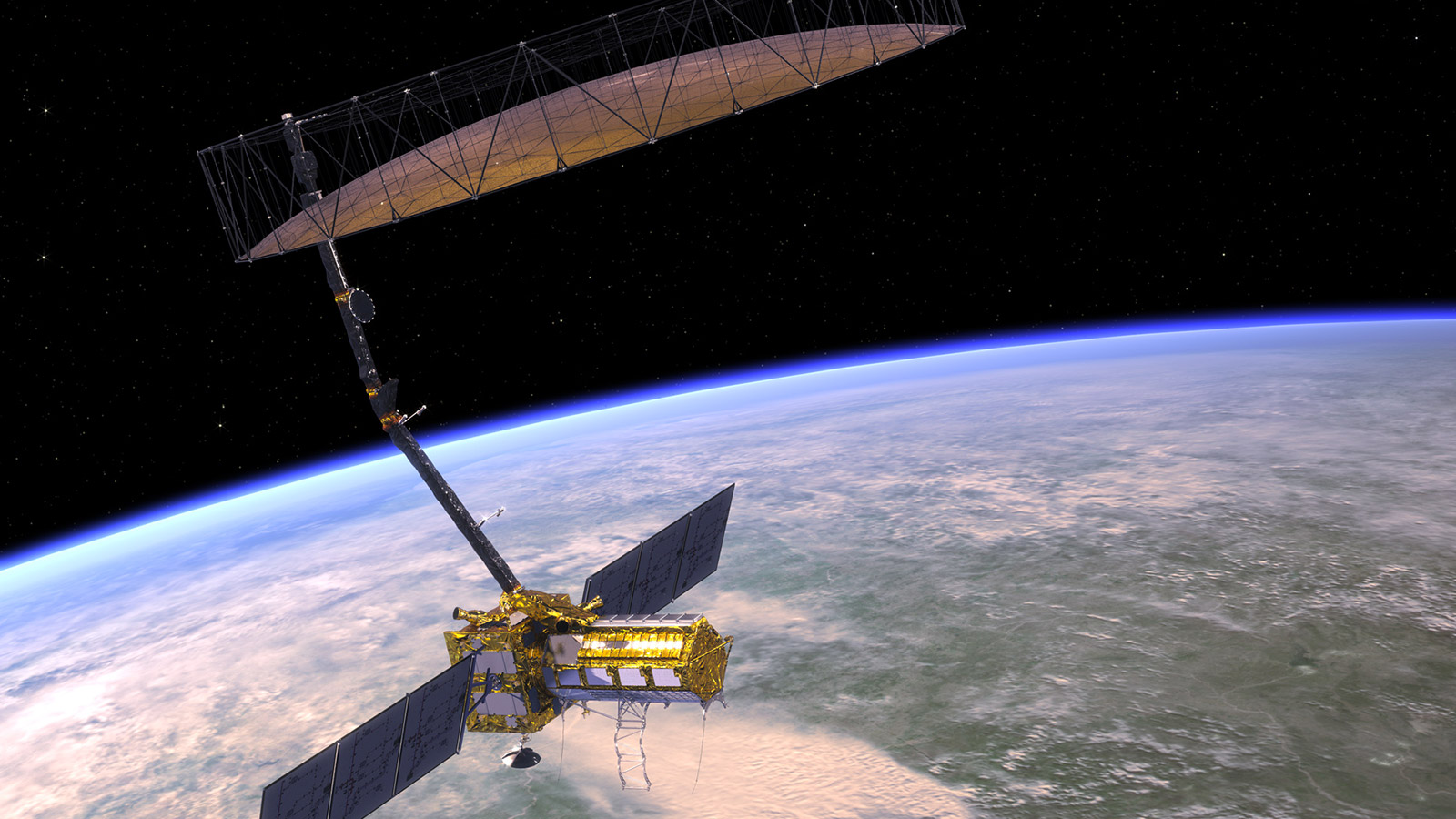
    Union Minister of State (Independent Charge) Science & Technology; Minister of State (Independent Charge) Earth Sciences; MoS PMO, Personnel, Public Grievances, Pensions, Atomic Energy and Space, Dr. Jitendra Singh today informed the Rajya Sabha that National Aeronautics and Space Administration (NASA) and the Indian Space Research Organization (ISRO) have jointly manufactured an earth science satellite named, NISAR (NASA-ISRO Synthetic Aperture Radar).

    Source: NASA

    In a written reply to a question in the Rajya Sabha, Dr Jitendra Singh said, the mission objectives of the satellite are- Design, Develop and launch Dual Frequency (L and S band) Radar Imaging Satellite and to Explore newer applications areas using L & S Band microwave data especially in surface deformation studies, terrestrial biomass structure, natural resource mapping and monitoring and studies related to dynamics of ice-sheets, glaciers, forests, oil slick etc.

    The Minister said, the satellite is configured with I-3K bus and the instrument identified for SAR is based on the innovative Sweep SAR technique configured in both L and S band in polarimetric configuration for wide swath and high resolution.

    The spacecraft will orbit the Earth in a sun synchronous orbit of 747 Km with an inclination of 98.4 degree for a 12-day repeat cycle.

    Dr Jitendra Singh said, while NASA is delivering the L-Band SAR payload, high precision GPS and 12m unfurlable antenna, ISRO is delivering S-band SAR payload, spacecraft bus and facilitating launch. The total expenditure incurred on realization of NISAR satellite by ISRO as on February, 2023 is Rs. 469.40 Crore, excluding launch cost.

  • Aatmanirbhar Bharat: MoD inks Rs 3,700 crore contracts with BEL for Medium Power Radars ‘Arudhra’ & 129 DR-118 Radar Warning Receivers

    Aatmanirbhar Bharat: MoD inks Rs 3,700 crore contracts with BEL for Medium Power Radars ‘Arudhra’ & 129 DR-118 Radar Warning Receivers

    • The projects to enhance surveillance, detection, tracking & Electronic Warfare capabilities of Indian Air Force

    Ministry of Defence, March 23, Delhi: signed two separate contracts with Bharat Electronics Limited (BEL), at a total cost of over Rs 3,700 crore, to enhance the operational capabilities of the Indian Air Force. The first contract, worth over Rs 2,800 crore, pertains to the supply of Medium Power Radars (MPR) ‘Arudhra’ for the Indian Air Force. The second contract, at an overall cost of approx. Rs 950 crore, relates to 129 DR-118 Radar Warning Receivers (RWR). Both projects are under Buy {Indian – IDMM (Indigenously Designed Developed and Manufactured)} category. These essentially embody the spirit of ‘Aatmanirbhar Bharat’ and will help facilitate the realisation of the country’s journey to achieve self-reliance in defence manufacturing.

    MPR (Arudhra)

    The radar has been indigenously designed and developed by Defence Research and Development Organisation (DRDO) and will be manufactured by BEL. Its successful trials have already been conducted by the Indian Air Force. It is a 4D multi-function phased array radar with electronic steering in both azimuth and elevation for surveillance, detection and tracking of aerial targets. The system will have target identification based on interrogations from co-located Identification Friend or Foe system.

    The project will act as a catalyst for development of manufacturing capability in the industrial ecosystem.

    DR-118 RWR

    The DR-118 Radar Warning Receiver will considerably enhance the Electronic Warfare (EW) capabilities of Su-30 MKI aircraft. Majority of sub-assemblies and parts will be sourced from indigenous manufacturers.  The project will boost and encourage active participation of Indian Electronics and associated industries, including MSMEs. It will generate employment of approx. two lakh man-days over a period of three and half years.

    The DR-118 RWR is a significant leap forward in developing indigenous EW capabilities and making the country ‘Aatmanirbharta’ in defence.

  • Launch of ‘Androth’, Second Ship of ASW SWC (GRSE) Project on 21 Mar 23 at M/s GRSE, Kolkata

    Launch of ‘Androth’, Second Ship of ASW SWC (GRSE) Project on 21 Mar 23 at M/s GRSE, Kolkata

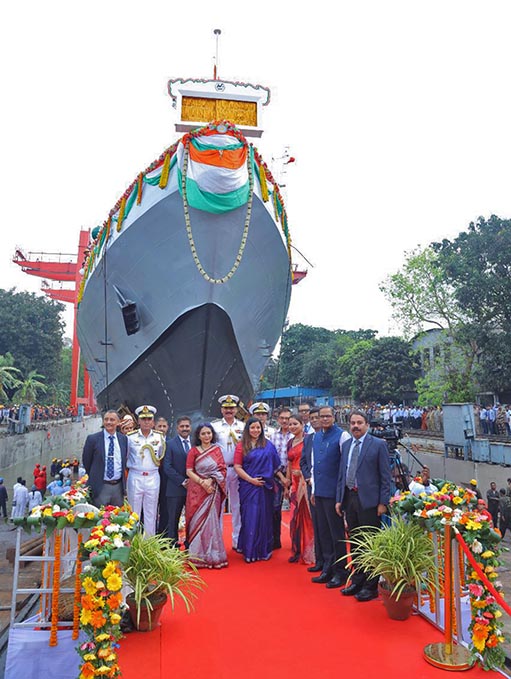
    New Delhi, 21st March, 2023. ‘Androth’, the second of 08 x ASW Shallow Water Craft (SWC) Project, being built by M/s GRSE for Indian Navy was launched on 21 Mar 23 at M/s GRSE, Kolkata. The ship made her first contact with water of Hooghly River at 1430 Hrs at the Launch Ceremony presided over by VAdm Dinesh K Tripathi, FOC-IN-C (West). In keeping with the Naval traditions, Smt Shashi Tripathi launched the ship to the chanting of invocation from Atharva Veda. Mr Arun Lal, former Indian cricketer and head coach of Bengal cricket team, was the Guest of Honour for the ceremony. The ship has been named Androth to signify the strategic maritime importance accorded to the island of Androth, located about 170 Nm north-west of Kochi, in the Union Territory of Lakshadweep.

    Contract for building eight ASW SWC ships was signed between MoD and Garden Reach Shipbuilders & Engineers (GRSE), Kolkata on 29 Apr 19. Arnala class of ships will replace the in-service Abhay class ASW Corvettes of Indian Navy and are designed to undertake anti-submarine operations in coastal waters, Low Intensity Maritime Operations (LIMO) and Mine Laying operations including subsurface surveillance in littoral waters. The ASW SWC ships are 77.6 m long, have a displacement of 900 tons with a maximum speed of 25 knots.

    Launch of two ships of the same class in a span of three months reinforces our resolve towards indigenous shipbuilding as part of Prime Minister’s vision of ‘AatmaNirbhar Bharat’. The first ship of the project is planned to be delivered to Indian Navy by Dec 23. The ASW SWC ships will have over 80% indigenous content, thereby ensuring that large scale defence production is executed by Indian manufacturing units, generating employment and capability enhancement within the country.

  • Garuda Aerospace Showcases its Drone Solutions at National Platform for Disaster Risk Reduction 2023

    Garuda Aerospace Showcases its Drone Solutions at National Platform for Disaster Risk Reduction 2023

    New Delhi, March 10. India’s most valuable drone startup, Garuda Aerospace showcases its drone solutions to Hon’ble Prime Minister Shri Narendra Modi and Minister of Home Affairs Amit Shah at National Platform for Disaster Risk Reduction (NPDRR) 2023.

    Garuda Aerospace, India’s leading drone manufacturing company showcases its disaster management drone solutions to Hon’ble Prime Minister Shri Narendra Modi Ji and Minister of Home Affairs Amit Shah at 3rd session of the National Platform for Disaster Risk Reduction (NPDRR) – 2023, held at Vigyan Bhawan in New Delhi. The theme for this year’s event is ‘Building local resilience in changing climate’. NPDRR is organised by the Ministry of Home Affairs to bring together stakeholders from the government, civil society, academia and the private sector to discuss strategies and solutions for disaster risk reduction in India.

    Garuda Aerospace’s disaster management drone includes aerial surveillance and reconnaissance, rapid damage assessment, payload delivery, search and rescue solutions. The drones are equipped with high-resolution cameras, thermal imaging sensors and other advanced technologies that enable them to operate in the most challenging environments while providing real-time data. The tethered drone flies non-stop for 24 hours and is used for disaster communication and rescue operations for NDRF. These are well connected with a 300m cable and are the longest in India. Garuda’s other disaster management drones include the Sanjeevani drone and Droni Drones used for tunnel inspection, underwater and for providing medicine and supplies during emergencies. Earlier Garuda Aerospace deployed their drones for rescue and relief operations to Chamoli glacier burst at Uttarakhand and supported the locust control operation in Rajasthan. Their disaster management drone was also used for surveillance and helped carry emergency medicines, supplies and food for victims of the Turkey earthquake. Garuda Aerospace’s drones have supported disaster management and rescue efforts including earthquakes and floods, especially in regions like Assam, Gujarat, Kerala and Andhra Pradesh. During the Covid-19 pandemic, Garuda Aerospace used emergency drones to deliver medicine and vaccinations to hospitals by partnering with Swiggy.

    Speaking on showcasing its drone solutions, Agnishwar Jayaprakash Founder and CEO, Garuda Aerospace, said, “We are honoured to showcase our disaster management drone solutions to the Honorable Prime Minister Modi Ji and Home Minister Amit Shah at NPDRR – 2023. Our drones have already proved their potential in past rescue operations. We believe that our cutting-edge drone solutions can revolutionize disaster management in India. We are committed to providing reliable and efficient technology to support the country in times of emergencies. It was a Historic Moment when both our Honorable Prime Minister Shri Narendra Modi Ji and Home Minister Shri Amit Shah Ji appreciated Garuda Aerospace Drones for disruption in Defence, Disaster Management, Industry 4.0 and Agriculture.”

    “I had the honor of sharing the heroic joint efforts of the NDRF and Garuda pilots with our Honorable Prime Minister. The incident took place on July 15th, 2022 in Navsari, Gujarat and Assam, during flood operations where delivery drones were used to transport food and medicine for our displaced citizens.”Agnishwar concluded.

    Anagh Singh, Lead (Defence, Aerospace, Internal Security and Cyber Security) AGNii Mission, Invest India, said, “The AGNii mission is working with the NDRF for their technology upgrade and strategic modernization. Drone technology has been critical in previous operations, which have been serviced by Garuda Aerospace, and we have enabled a tie-up between the two. Technology in the realm of disaster management will be a big force multiplier and will increase the efficiency of response going forward.”

    Garuda Aerospace is the first ever private drone company to sign an MOU with NDRF and provide emergency drone solutions across India.

  • Theatre Level Operational Readiness Exercise (TROPEX-23) Indian Navy’s Largest War Game

    Theatre Level Operational Readiness Exercise (TROPEX-23) Indian Navy’s Largest War Game

    New Delhi, 9th March. Indian Navy’s major Operational level exercise TROPEX for the year 2023, conducted across the expanse of IOR over a duration of four months from Nov 22 – Mar 23, culminated this week in the Arabian Sea. The overall exercise construct included Coastal Defence exercise Sea Vigil and the Amphibious Exercise AMPHEX. Together, these exercises also witnessed significant participation from the Indian Army, the Indian Air Force and the Coast Guard.

    Set in the Indian Ocean including the Arabian Sea and the Bay of Bengal, the theatre of operations for the exercise extended approximately 4300 nm from North to South upto 35 deg South Latitude and 5000 nm from Persian Gulf in the West to North Australia coast in the East, spanning an area of over 21 million square nautical miles. TROPEX 23 witnessed participation of approximately 70 Indian Navy ships, six submarines and over 75 aircraft.

    The culmination of TROPEX 23 brings to an end an intense operational phase for the Indian Navy that commenced in Nov 2022. As part of the final Joint Phase, the Hon’ble Raksha Mantri spent a day at sea onboard the newly commissioned Indigenous Aircraft Carrier Vikrant on 06 Mar 23. He reviewed the Indian Navy’s operational preparedness and material readiness wherein the Navy demonstrated operational manoeuvers and various facets of combat operations, including deck operations of indigenous LCA and live weapon firings. While addressing the Fleets, he lauded the Operational preparedness of the Indian Navy and emphasised that the country looks up to the Navy to ensure that the economic lifelines and military capabilities of our adversaries are disrupted to the extent where their warfighting endeavours can no longer be sustained.  He also stated that he is fully reassured that Indian Navy is wholly capable of safeguarding India’s national interests in the maritime domain and will thwart the diabolical designs of any potential adversaries who seek to threaten India’s peaceful existence. The Hon’ble RM complimented the Indian Navy for being at the forefront of the ‘Make in India’ Initiative and leveraging the path of Aatmanirbharta to be ‘Combat Ready, Credible, Cohesive and Future Proof’.

  • Exercise Desert Flag VIII: For first time, LCA Tejas to take part in a global air exercise

    Exercise Desert Flag VIII: For first time, LCA Tejas to take part in a global air exercise

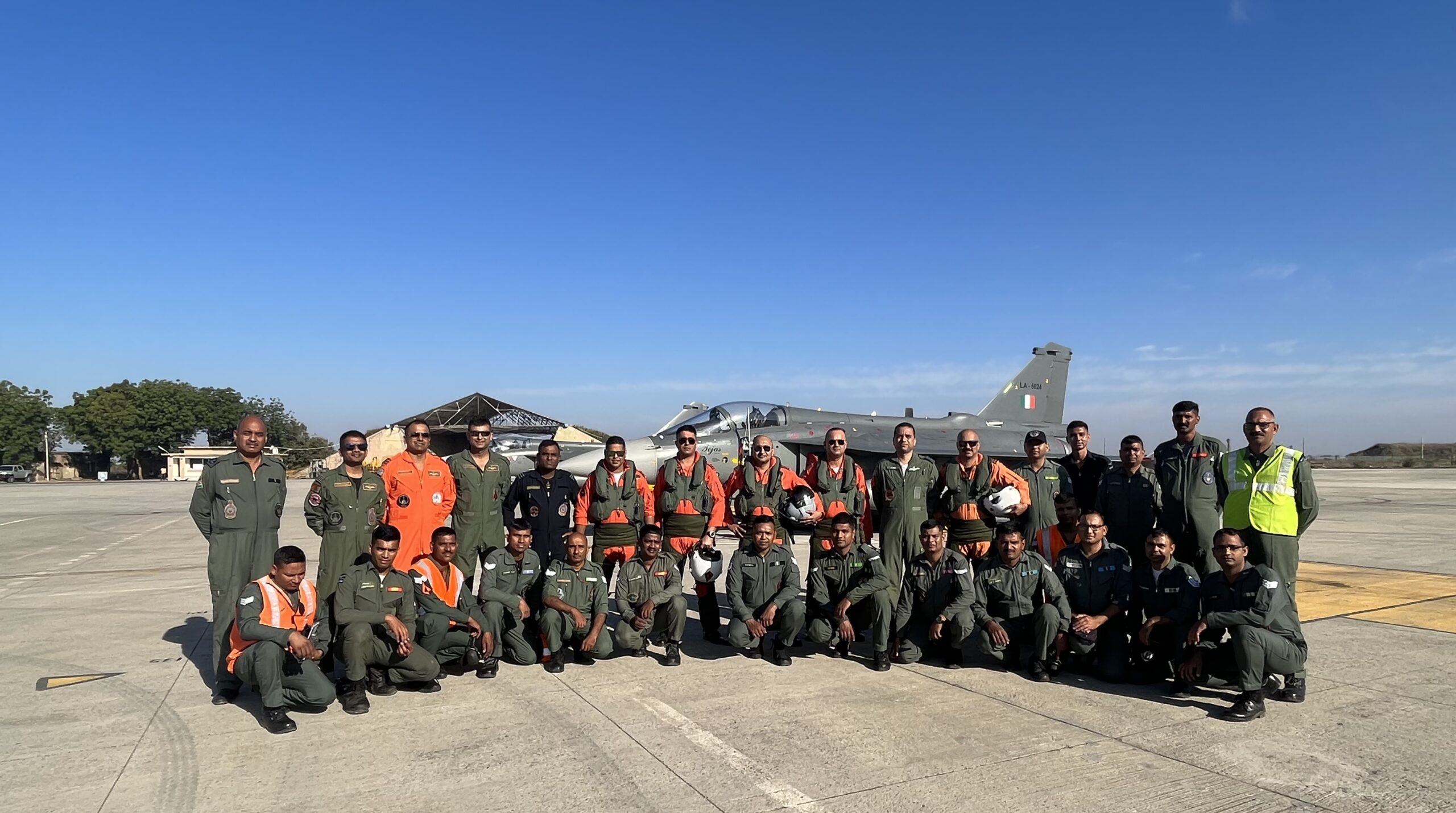
    Abu Dhabi. Indian Air Force is fielding five HAL-made Light Combat Aircraft (LCA) Tejas to take part in the multilateral Desert Flag VIII exercise being held Feb 27 to Mar 17.

    An IAF contingent comprising of 110 Air Warriors arrived at the Al Dahfra air base in the UAE to participate in the exercise, in which five LCA Tejas and two C-17 Globemaster III aircraft would take part, the IAF said Saturday.

    While the Tejas has taken part in the Dubai Airshow previously, this is the first time that the aircraft will be in the Gulf skies in a near realistic but simulated combat exercise with air forces from the host UAE, US, Kuwait, Australia, France, UK, Bahrain, Morocco, Spain and South Korea. Other aircraft likely to take part are F 35, F 16, Rafale, Mirage 2005 and Eurofighter, adding to the complexity of the exercise but imparting valuable lessons to the participants in network centric warfare (NCW) environment.

    IAF’s Su 30 MKIs have taken part in Desert Flag VI earlier in the annual exercise series but this time, significantly, IAF is fielding the Tejas, whose variants are set to replace the Soviet era Mig 21s, inducted first in the late 1960s. Variants of the 4th Gen Tejas, including Tejas Mk II, will eventually form nearly half the strength of IAF’s 30 to 40 Squadrons.

    Powered by US GE 404 engine, Tejas costs much less than the most competing fighter jets in the category, and the Indian Ministry of Defence has an ambitious target to export them to friendly nations.

    The aircraft (Tejas) had earlier participated in various air shows at Singapore, Malaysia, Bahrain and Dubai.