Category: Featured

Featured posts

  • India’s Modi Cancels Foreign Trip, Convenes Urgent Security Meeting Amid Pakistan Tensions

    India’s Modi Cancels Foreign Trip, Convenes Urgent Security Meeting Amid Pakistan Tensions

    Prime Minister Narendra Modi postponed a scheduled foreign trip to Croatia, the Netherlands, and Norway on Thursday to address escalating tensions with Pakistan following a thwarted missile attack and India’s retaliatory strikes. The decision came as Modi chaired a high-level Cabinet Committee on Security (CCS) meeting to assess the volatile situation along the Line of Control (LoC) and India’s northern borders.

    The CCS, comprising Defence Minister Rajnath Singh, Home Minister Amit Shah, External Affairs Minister S Jaishankar, and National Security Advisor Ajit Doval, reviewed India’s successful “Operation Sindoor,” which neutralized Pakistani missiles targeting 15 Indian cities and destroyed a Lahore-based air defence system. Sources confirmed Modi granted the armed forces “complete operational freedom” to counter any further aggression, signaling India’s resolve to safeguard its sovereignty.

    The meeting also addressed reports of heavy shelling along the LoC, which has resulted in civilian casualties, and unverified social media claims of a drone strike on Rawalpindi Cricket Stadium. Modi emphasized the need to counter misinformation and maintain national unity, urging citizens to rely on official channels for updates.

    “India remains fully prepared to respond to any misadventure while prioritizing the safety of its people,” a statement from the Prime Minister’s Office read. The cancellation of Modi’s foreign engagements, originally planned to strengthen bilateral ties and attend a climate summit, underscores the gravity of the ongoing conflict with Pakistan.

    International leaders, including UN Secretary-General António Guterres, have called for de-escalation, while Pakistan’s leadership vowed retaliation for India’s strikes. As both nations remain on high alert, Modi’s focus on domestic security is seen as a strategic move to project strength and unity in the face of mounting regional challenges.

  • Rawalpindi Cricket Stadium Allegedly Hit by Drones, Netizens Claim Amid India-Pakistan Tensions

    Rawalpindi Cricket Stadium Allegedly Hit by Drones, Netizens Claim Amid India-Pakistan Tensions

    Unverified reports circulating on social media platforms, particularly X, claim that the Rawalpindi Cricket Stadium was struck by drones on Thursday night, amid heightened military tensions between India and Pakistan. The alleged attack follows India’s successful neutralization of Pakistani missiles targeting 15 Indian cities and the destruction of a Pakistani air defence system in Lahore.

    Netizens shared videos and images purportedly showing smoke rising from the iconic cricket venue, with some claiming the strike was part of India’s retaliatory operations against Pakistan. Posts on X suggested that the drones targeted areas near the stadium, though no official confirmation from either the Pakistani or Indian authorities has been issued. One user wrote, “Rawalpindi Cricket Stadium hit by Indian drones! This is unreal escalation!” while another shared a grainy video alleging to show the aftermath.

    The claims remain unverified, and Pakistani officials have not commented on the alleged incident. The Pakistan Cricket Board (PCB) also remained silent, with no reports of damage or casualties at the stadium, which has hosted numerous international matches. Indian Defence Ministry sources dismissed the claims as “speculative” and urged the public to rely on official channels for accurate information.

    The social media buzz comes in the context of India’s “Operation Sindoor,” which thwarted a Pakistani missile and drone assault on Thursday. India’s precision strikes also targeted terrorist facilities in Pakistan and Pakistan-occupied Jammu and Kashmir, escalating tensions between the nuclear-armed neighbors. The alleged drone strike on Rawalpindi Cricket Stadium, if true, would mark a significant escalation, given the site’s cultural and symbolic importance.

    Analysts caution that unverified social media reports can fuel misinformation during such volatile times. “Claims of a drone strike on a civilian landmark like Rawalpindi Cricket Stadium need rigorous verification,” said defence expert retired Lt. Gen. Anil Bhatt. “Both nations must avoid actions that could spiral into broader conflict.”

    Global attention remains focused on the region, with calls for de-escalation from the United Nations and other international bodies. As the situation develops, authorities are expected to clarify the status of the alleged incident at Rawalpindi Cricket Stadium.

  • India Neutralises Pak Missiles Aimed At 15 Cities, Destroys Air Defence System

    India Neutralises Pak Missiles Aimed At 15 Cities, Destroys Air Defence System

    In a decisive and high-stakes operation, the Indian armed forces successfully neutralized a major Pakistani missile and drone assault targeting military installations across 15 cities in northern and western India on Thursday night. The Indian Defence Ministry also confirmed that a Pakistani air defence system in Lahore was destroyed, marking a significant blow to Pakistan’s military capabilities.

    Dubbed “Operation Sindoor,” the Indian response showcased the country’s advanced air defence systems, including the Russian-made S-400 Triumf, which effectively intercepted and neutralized incoming threats. The targeted cities included Srinagar, Jammu, Pathankot, Amritsar, Ludhiana, Chandigarh, and Bhuj, among others. The Integrated Counter UAS Grid and Air Defence systems were instrumental in thwarting the attack, ensuring no damage to Indian military infrastructure.

    According to the Ministry of Defence, Pakistan’s attempt to escalate tensions followed India’s earlier precision strikes on May 7, which targeted nine terrorist facilities in Pakistan and Pakistan-occupied Jammu and Kashmir. These strikes were in retaliation for the April 22 terror attack in Pahalgam, which claimed 26 lives. Indian officials described Pakistan’s attempted strikes as a desperate bid to retaliate, which was swiftly and effectively countered.

    In a press briefing, Defence Minister Rajnath Singh stated, “India’s response was focused, measured, and non-escalatory, aimed at protecting our sovereignty and neutralizing threats. Our forces remain fully prepared to respond to any further misadventures.” The ministry also debunked false claims circulating on social media, including allegations of Pakistani strikes hitting Srinagar Airbase or an Indian Army Brigade Headquarters.

    Sources revealed that India’s operation targeted Pakistan’s Chinese-made HQ-9 missile defence system in Lahore, exposing vulnerabilities in Pakistan’s air defence network. The use of advanced electronic warfare techniques, including decoys and signal suppression, ensured Pakistan’s radar systems, such as the LY-80 and HQ-9/P, failed to detect incoming Indian strikes.

    The escalation has heightened tensions between the nuclear-armed neighbors, with Pakistan’s leadership vowing retaliation. Pakistan’s National Security Committee authorized “corresponding actions,” and its airspace has been closed to Indian airlines, with trade suspended. Indian Foreign Secretary Vikram Misri reiterated that India’s actions were aimed at dismantling terrorist infrastructure linked to groups like Lashkar-e-Taiba and Jaish-e-Muhammad, which India holds responsible for the Pahalgam attack.

    Global powers have urged restraint, with China’s foreign ministry stating it was “not familiar” with the conflict’s details. The United Nations has expressed concern over the rising tensions in Kashmir, a long-standing flashpoint between the two nations.

    As India activates its S-400 systems and strengthens its defence posture, the nation remains on high alert. Prime Minister Narendra Modi, in a high-level meeting, reaffirmed the armed forces’ “complete operational freedom” to safeguard national security. The Indian armed forces’ swift and precise response has been widely praised, with citizens expressing gratitude for their vigilance and bravery.

  • Heavy Shelling Along Line of Control Deepens Kashmir Crisis, Claims Dozens of Lives

    Heavy Shelling Along Line of Control Deepens Kashmir Crisis, Claims Dozens of Lives

    Intense artillery exchanges and shelling along the Line of Control (LoC) dividing Indian-administered and Pakistan-administered Kashmir have escalated the ongoing conflict between India and Pakistan, claiming at least 43 lives and displacing hundreds of families. The relentless barrages, which intensified following India’s Operation Sindoor missile strikes on May 7, have plunged the region into one of its deadliest crises in decades, raising fears of a broader war between the nuclear-armed neighbors.

    Indian authorities reported that 12 civilians, including four children, were killed in the districts of Kupwara, Baramulla, and Poonch in Indian-administered Jammu and Kashmir due to Pakistani shelling over the past 48 hours. Over 60 others have been injured, with hospitals in Srinagar overwhelmed. India’s Border Security Force (BSF) stated that Pakistani forces targeted civilian areas and forward posts in violation of a 2021 ceasefire agreement, prompting retaliatory fire. “Our response has been proportionate but firm to protect our people,” said a BSF spokesperson.

    Pakistan, meanwhile, claimed that Indian shelling across the LoC killed 31 people, including 19 civilians, in Pakistan-administered Kashmir and parts of Punjab. The Pakistani military’s Inter-Services Public Relations (ISPR) accused India of deliberately targeting villages, with images of damaged homes and schools circulating on X. Prime Minister Shehbaz Sharif condemned the attacks as “barbaric,” vowing that Pakistan’s armed forces would respond decisively to defend its sovereignty.

    The latest violence follows India’s Operation Sindoor, which struck nine alleged terrorist sites in Pakistan and Pakistan-administered Kashmir, targeting groups India blames for a April 22 attack in Pahalgam that killed 26 civilians. Pakistan denies harboring terrorists and has labeled India’s strikes an “act of aggression,” citing civilian deaths and damage to infrastructure. The shelling along the LoC, coupled with a reported explosion near Lahore’s Walton Airport on May 8, has heightened panic and fueled calls for retaliation on both sides.

    Civilians on both sides of the LoC are bearing the brunt of the conflict. In Indian-administered Kashmir, thousands have fled border villages, seeking shelter in makeshift camps. “We can’t sleep at night; the shelling doesn’t stop,” said a resident of Uri, near the LoC. In Pakistan-administered Kashmir, similar scenes of displacement have emerged, with schools and markets shuttered. The UN Office for the Coordination of Humanitarian Affairs (OCHA) estimates that over 15,000 people have been displaced since the violence surged.

    Global leaders have expressed alarm, with UN Secretary-General António Guterres calling for an immediate cessation of hostilities. “The people of Kashmir have suffered enough. Both sides must prioritize de-escalation and dialogue,” he said. The United States, China, and the European Union have echoed the call, while U.S. President Donald Trump offered to mediate, describing the situation as “very dangerous.”

    On X, posts reflect the growing despair and anger, with hashtags like #KashmirBleeds and #StopTheWar trending. Some users shared videos of burning homes and crying families, though misinformation, including recycled footage from past conflicts, has complicated efforts to verify casualty figures. Nobel laureate Malala Yousafzai also weighed in, urging both nations to protect civilians and pursue peace.

    As the LoC remains a flashpoint, analysts warn that the tit-for-tat shelling risks spiraling into a full-scale military confrontation. Both India and Pakistan have reinforced their military presence along the border, with reports of troop movements and artillery deployments. The international community is pressing for a return to the 2021 ceasefire, but with trust at an all-time low, the path to peace remains fraught.

  • Pakistan Claims Downing 5 Indian Jets in Retaliation; India Rejects Claims as Unsubstantiated

    Pakistan’s military has claimed that it shot down five Indian Air Force jets and a drone in response to India’s missile strikes on alleged terrorist infrastructure, escalating tensions between the nuclear-armed neighbors. India has categorically denied these claims, asserting that no aircraft were lost and labeling Pakistan’s assertions as part of a misinformation campaign.

    The Pakistani military, through its Inter-Services Public Relations (ISPR) wing, stated that the downed aircraft included three French-made Rafale jets, one MiG-29, and one Sukhoi Su-30, with debris from a combat drone reportedly falling in Indian territory. Prime Minister Shehbaz Sharif, addressing Parliament, lauded the Pakistan Air Force for its “swift response” to India’s Operation Sindoor, which targeted nine sites in Pakistan and Pakistan-administered Kashmir on May 7. Pakistani Defense Minister Khawaja Asif reiterated the claim, stating the jets were targeted in self-defense after violating Pakistani airspace. A video released by Pakistani officials showed smoke rising from an alleged crash site, though independent verification of the footage remains unavailable.

    India’s Ministry of Defense has dismissed Pakistan’s claims, stating that all aircraft involved in Operation Sindoor returned safely to their bases. Indian officials, including Foreign Secretary Vikram Misri, emphasized that the strikes were “focused, measured, and non-escalatory,” targeting terrorist camps linked to a April 22 attack in Pahalgam, Indian-administered Kashmir, which killed 26 civilians. The Indian government has accused Pakistan of spreading false narratives, with the Press Information Bureau (PIB) debunking viral images of a supposed Rafale jet crash near Bahawalpur as old and unrelated.

    Reports from Reuters noted that three Indian fighter jets crashed in Jammu and Kashmir on May 7, hours after the strikes, according to local government sources. However, India has not confirmed these incidents as combat losses, and no connection to Pakistan’s claims has been officially acknowledged. Social media posts on X have fueled speculation, with some citing French-language markings on debris as evidence of downed Rafale or Mirage 2000 jets, though BBC Verify and other fact-checkers have debunked related footage as misleading or outdated.

    The conflicting narratives have intensified the ongoing crisis, with Pakistan describing India’s strikes as an “act of war” that killed 31 civilians, including women and children, in Punjab and Pakistan-administered Kashmir. Pakistan’s National Security Committee has vowed a “befitting response” at a time and place of its choosing, while India maintains that no civilian or military infrastructure was targeted.

    International concern is mounting, with the UN, EU, China, and Russia urging restraint to avoid further escalation. U.S. President Donald Trump has offered to mediate, while analysts warn that unverified claims, such as Pakistan’s jet-downing assertions, risk fueling misinformation and public unrest. Posts on X reflect divided sentiments, with some Pakistani users celebrating the military’s claims and Indian users dismissing them as propaganda, pointing to a lack of concrete evidence.

    As both nations remain on high alert, the absence of independent confirmation of Pakistan’s claims and India’s steadfast denials underscore the volatile information war accompanying the physical conflict. The situation remains fluid, with fears of further retaliation looming large.

  • Malala Yousafzai Appeals for Peace Amid India-Pakistan Conflict, Urges Immediate De-escalation

    Malala Yousafzai Appeals for Peace Amid India-Pakistan Conflict, Urges Immediate De-escalation

    Nobel Peace Prize laureate Malala Yousafzai has issued a heartfelt plea for peace as tensions between India and Pakistan spiral into dangerous territory following a series of military engagements. In a statement released on Thursday, the Pakistani activist called on leaders of both nations to prioritize dialogue and protect civilians caught in the crossfire of the escalating conflict.

    The appeal comes in the wake of a powerful explosion near Lahore’s Walton Airport, which sparked panic across the city, and India’s recent missile strikes under Operation Sindoor, which Pakistan claims killed 31 civilians, including women and children. The strikes, targeting alleged terrorist infrastructure in Pakistan and Pakistan-administered Kashmir, have drawn international condemnation and heightened fears of a broader war between the nuclear-armed neighbors.

    “Hatred and violence are our common enemies,” Malala said in her statement, shared widely across social media platforms, including X. “The people of Pakistan and India deserve peace, safety, and the chance to live without fear. I urge the leaders of both nations to step back from the brink, engage in dialogue, and protect the lives of innocent civilians.”

    Malala, who survived a Taliban assassination attempt in 2012 and has since become a global advocate for education and peace, emphasized the devastating impact of the conflict on ordinary citizens. “Children are losing their homes, families are being torn apart, and communities are living in fear. This is not the future we want for South Asia,” she added, calling for an immediate ceasefire and diplomatic efforts to resolve the crisis.

    The ongoing conflict has seen heavy shelling along the Line of Control (LoC) in Kashmir, with at least 12 civilian deaths reported in Indian-administered Jammu and Kashmir and significant casualties in Pakistan. Pakistan’s authorization of retaliatory measures and claims of downing five Indian jets have further inflamed the situation, prompting global leaders, including U.S. President Donald Trump and UN Secretary-General António Guterres, to call for restraint.

    Malala’s statement also addressed the broader implications of the conflict, warning that continued escalation could have catastrophic consequences for the region and beyond. “South Asia cannot afford a war. The stakes are too high, and the cost will be borne by the most vulnerable—our children, our families, our future,” she said.

    Her call for peace has resonated widely, with thousands of users on X amplifying her message and urging both governments to heed her words. Civil society groups in Pakistan and India have echoed her appeal, organizing small peace vigils in cities like Lahore, Karachi, and New Delhi, though security concerns have limited their scale.

    However, the path to de-escalation remains uncertain. Pakistan’s leadership has vowed a “forceful response” to India’s strikes, while India maintains that its actions were aimed at neutralizing terrorist threats. Amid this volatile backdrop, Malala’s voice serves as a powerful reminder of the human cost of conflict and the urgent need for diplomacy.

    As the international community watches closely, Malala has urged global leaders to support mediation efforts and humanitarian aid for those affected by the violence. “The world must stand with the people of Pakistan and India in demanding peace,” she concluded.

    Her words, rooted in her own experience of surviving violence and advocating for resilience, have struck a chord in a region gripped by fear and uncertainty. Whether they will inspire meaningful action from the leaders of India and Pakistan remains to be seen.

  • Lahore Blast: Loud Explosion and Smoke Near Walton Airport Trigger Panic

    Lahore Blast: Loud Explosion and Smoke Near Walton Airport Trigger Panic

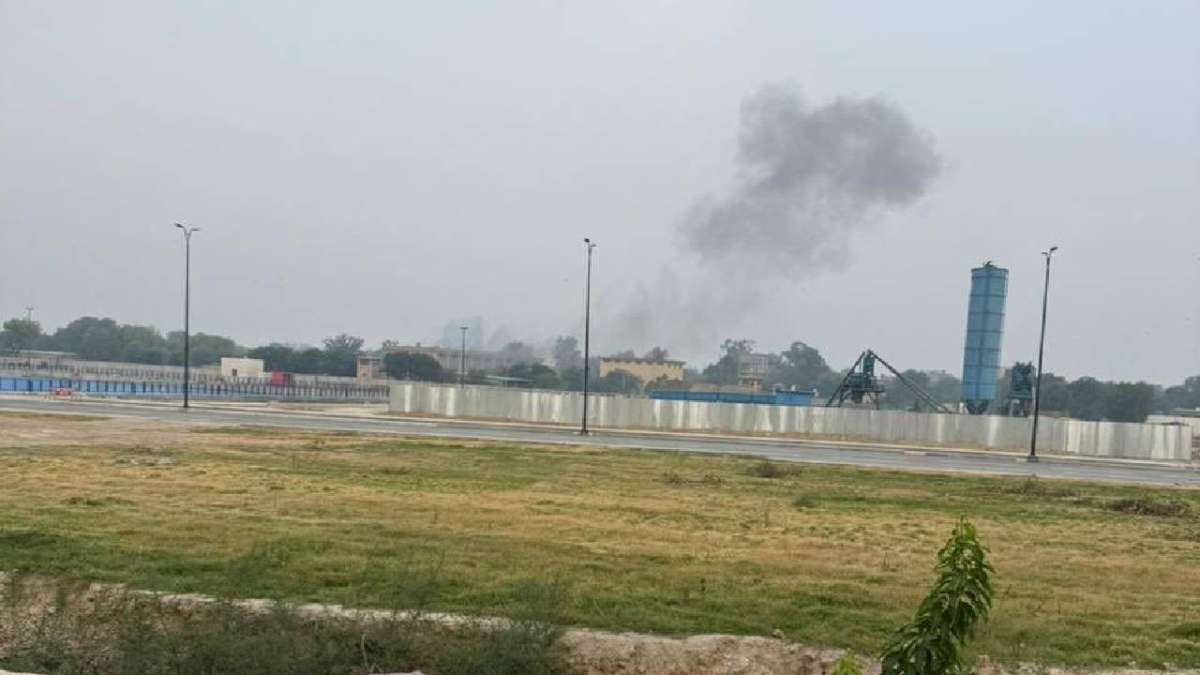
    A powerful explosion rocked Lahore’s Walton Road area near Walton Airport on Thursday morning, sending shockwaves through the city and sparking widespread panic among residents. The loud bang, followed by plumes of smoke, was reported around 8:00 AM, prompting locals to flee their homes in fear. According to multiple sources, including Geo TV and eyewitness accounts, the blast was significant enough to be heard across several neighborhoods, with some claiming it targeted the vicinity of Walton Airfield.

    Initial reports from ARY News indicated that three consecutive explosions occurred in the area, escalating concerns among residents and authorities. “The sound was deafening, and we saw smoke rising near the airport. People were running out of their homes, unsure of what was happening,” said a local resident. Police and emergency services swiftly cordoned off the area, and sirens echoed through the city as authorities scrambled to assess the situation.

    The cause of the blast remains unclear, with no official statement from the government or security agencies confirming whether it was an act of terrorism, an accident, or related to military activity. Speculation has been rife, with some local media outlets and social media posts suggesting a possible link to heightened tensions between Pakistan and India following recent cross-border incidents. On Wednesday, India conducted strikes on alleged “terrorist infrastructure” in Pakistan, which Islamabad claimed killed 31 civilians. However, no direct connection between these events and the Lahore blast has been established.

    Walton Airport, primarily used for general aviation and training, is located in a densely populated area of Lahore, amplifying the impact of the incident. The proximity to Allama Iqbal International Airport, which has experienced fire-related disruptions in the past, further fueled public anxiety. In April 2025, a fire at the international airport caused flight cancellations, though authorities later clarified it was due to a tire blaze on a military aircraft.

    Police officials have urged calm, stating that investigations are underway to determine the nature and source of the explosion. “We are ascertaining the cause of the blast and ensuring the safety of the public,” said a Lahore police spokesperson. No casualties or significant damage have been officially reported, but hospitals in the area have been placed on high alert.

    The incident comes at a time of heightened regional tensions, with Pakistan and India trading accusations over recent attacks. Social media platforms, particularly X, have been abuzz with unverified claims, with some users alleging the blast targeted military infrastructure near Walton Airport. Authorities have cautioned against spreading unconfirmed information, emphasizing the need for verified reports.

    As the situation develops, residents of Lahore remain on edge, with many awaiting official updates. The incident underscores the city’s vulnerability to sudden disruptions, particularly in light of its history of terror-related incidents. In January 2022, a bomb blast in Lahore’s Anarkali market killed three and injured 20, highlighting the persistent security challenges in Pakistan’s second-largest city.

    For now, authorities are focused on securing the area and providing clarity to a rattled public. Further details are expected as investigations progress.

  • India-Pakistan Tensions: Why Rafale Jets Were the Backbone of Operation Sindoor

    India-Pakistan Tensions: Why Rafale Jets Were the Backbone of Operation Sindoor

    As tensions between India and Pakistan escalate following India’s ‘Operation Sindoor,’ a precision strike operation targeting nine terrorist infrastructure sites in Pakistan and Pakistan-occupied Jammu and Kashmir (PoK), the Indian Air Force’s (IAF) Rafale jets have emerged as the centerpiece of the mission. Launched to avenge the April 22 Pahalgam terror attack that killed 26 people, the operation showcased the Rafale’s cutting-edge capabilities, underscoring why these French-made fighters were chosen for such a high-stakes mission.

    Why Rafale Jets Were Chosen for Operation Sindoor

    • Stealth and Precision Strike Capability
      The Rafale, a 4.5-generation omni-role fighter, is equipped with advanced stealth features, including a low radar cross-section and electronic countermeasures, making it ideal for penetrating hostile airspace undetected. During ‘Operation Sindoor,’ Rafale jets used Scalp cruise missiles and Hammer precision-guided munitions to strike terror camps in locations like Muzaffarabad, Bahawalpur, and Muridke with pinpoint accuracy. This minimized collateral damage, aligning with India’s objective of targeting terrorist infrastructure while avoiding civilian and military sites.
    • Advanced Avionics and Sensor Fusion
      The Rafale’s Active Electronically Scanned Array (AESA) radar and Spectra electronic warfare suite provided unparalleled situational awareness, enabling pilots to navigate Pakistan’s air defenses effectively. The jets’ sensor fusion technology integrated data from multiple sources, allowing real-time tracking of threats and targets. This was critical for the pre-dawn strikes on May 7, executed at 1:44 AM IST, where rapid decision-making was essential.
    • Long-Range and Standoff Capabilities
      With a combat radius exceeding 1,000 km and the ability to carry long-range standoff weapons like the Scalp missile (range: 560 km), Rafale jets could engage targets deep inside Pakistan and PoK without entering heavily defended airspace. This reduced the risk of interception by Pakistan’s air defenses, which include Chinese-supplied JF-17 jets and surface-to-air missiles. The IAF’s ability to strike from a distance was a key factor in ensuring all aircraft returned safely, debunking Pakistan’s claim of downing Indian planes.
    • Multi-Role Versatility
      The Rafale’s ability to perform air superiority, reconnaissance, and ground attack roles simultaneously made it the ideal choice for a complex operation like Sindoor. During the mission, Rafales conducted suppression of enemy air defenses (SEAD), delivered precision strikes, and provided real-time intelligence to ground command. Their versatility allowed the IAF to execute a tri-services operation seamlessly, coordinating with the Army and Navy.
    • Proven Performance in High-Intensity Scenarios
      Since their induction into the IAF in 2020, the 36 Rafale jets stationed at Ambala (No. 17 Squadron) and Hasimara (No. 101 Squadron) have been tailored for India-specific enhancements, including Meteor beyond-visual-range missiles and integration with Indian satellites. Their performance in exercises like ‘Tarang Shakti’ and prior operations, such as the 2019 Balakot airstrike simulation, gave the IAF confidence in their reliability for ‘Operation Sindoor.’ The jets’ ability to operate in contested environments was critical, given Pakistan’s reported air defense upgrades.
    • Psychological and Strategic Impact
      The Rafale’s deployment sent a strong message to Pakistan about India’s technological superiority and resolve. As a state-of-the-art platform, the Rafale outclasses Pakistan’s aging F-16s and JF-17s in most combat scenarios, deterring potential escalatory responses. The successful execution of ‘Operation Sindoor,’ neutralizing approximately 80 terrorists without IAF losses, reinforced India’s military dominance in the region.

    Context of the Operation

    ‘Operation Sindoor,’ named symbolically after the red vermilion worn by married Hindu women, was a response to the Pahalgam attack, which targeted Hindu tourists. The Rafale jets’ role in dismantling terror hubs linked to Lashkar-e-Taiba and Jaish-e-Mohammed underscored their strategic importance. Pakistan’s claims of civilian casualties and downed aircraft were dismissed by India as “propaganda,” with the IAF confirming all assets returned safely.

    Post-Operation Developments

    Following the strikes, the IAF intensified border patrols with Rafale, Mirage 2000, and Sukhoi Su-30 MKI jets, supported by a NOTAM restricting airspace in Rajasthan, Punjab, and Jammu. The Rafale’s continued presence in these drills highlights its role in maintaining deterrence amid ongoing cross-border shelling and Pakistan’s missile tests.

  • India Refutes Pakistan’s Claims, Says No IAF Planes Hit in ‘Operation Sindoor’ Strikes

    India Refutes Pakistan’s Claims, Says No IAF Planes Hit in ‘Operation Sindoor’ Strikes

    India’s Ministry of Defence categorically denied Pakistan’s claims that its air defenses shot down or damaged Indian Air Force (IAF) aircraft during ‘Operation Sindoor,’ a series of precision strikes targeting nine terrorist infrastructure sites in Pakistan and Pakistan-occupied Jammu and Kashmir (PoK) early Wednesday. Labeling Pakistan’s assertions as “fake and baseless,” India reaffirmed that all IAF assets and pilots returned safely after the operation, which was launched to avenge the April 22 Pahalgam terror attack that killed 26 people.

    The IAF, in a statement, clarified that ‘Operation Sindoor’ involved Rafale jets deploying Scalp and Hammer munitions to strike terror camps linked to Lashkar-e-Taiba and Jaish-e-Mohammed in locations including Muzaffarabad, Bahawalpur, Kotli, and Muridke. “All aircraft executed their missions with precision and returned to base without incident,” Air Chief Marshal Amar Preet Singh said, adding that approximately 80 terrorists were neutralized. The operation, described as “targeted and non-escalatory,” avoided Pakistani military and civilian sites, India emphasized.

    Pakistan’s military, through its Inter-Services Public Relations (ISPR), claimed it downed five Indian aircraft, including a drone, and reported eight civilian deaths across six strike locations, including Bahawalpur and Kotli. India’s Defence Ministry dismissed these claims as “propaganda to deflect attention from the successful dismantling of terror infrastructure.” Sources in New Delhi suggested Pakistan’s narrative was an attempt to rally domestic support amid public criticism of its failure to counter the strikes.

    Tensions escalated post-operation, with heavy shelling reported along the Line of Control, particularly in Jammu and Kashmir’s Poonch and Rajouri sectors, where three Indian civilians were killed by Pakistani artillery fire. Pakistan closed its airspace, and India suspended operations at northern airports like Srinagar and Jammu. Social media posts from India celebrated the operation, with hashtags like #OperationSindoor and #BharatMataKiJai trending, while Pakistani accounts shared unverified images of alleged aircraft wreckage.

    Prime Minister Narendra Modi, who monitored the tri-services operation, is set to address an all-party meeting today to brief leaders on the strikes. Defence Minister Rajnath Singh praised the IAF’s “flawless execution,” while External Affairs Minister S. Jaishankar reiterated India’s right to self-defense against cross-border terrorism.

    The international community urged de-escalation. The U.S. acknowledged India’s briefing on the strikes but called for restraint, while the U.N. expressed alarm over the rising India-Pakistan tensions. Pakistan’s Prime Minister Shehbaz Sharif, vowing retaliation, conducted missile tests, signaling a volatile standoff.

    India plans to release further details on ‘Operation Sindoor’ later today, as both nations remain on high alert amid fears of further escalation.

  • Pakistan Claims Six Locations Hit, Eight Killed in India’s ‘Operation Sindoor’ Strikes

    Pakistan Claims Six Locations Hit, Eight Killed in India’s ‘Operation Sindoor’ Strikes

    Pakistan’s military reported that Indian forces struck six locations within its territory and Pakistan-occupied Jammu and Kashmir (PoK) early Wednesday, killing eight people and injuring dozens, in an operation India codenamed ‘Operation Sindoor.’ The strikes, which India described as targeting nine terrorist infrastructure sites to avenge the April 22 Pahalgam terror attack, have escalated tensions between the nuclear-armed neighbors.

    Pakistan’s Director General of Inter-Services Public Relations (DG ISPR), Lt. Gen. Ahmed Sharif Chaudhry, confirmed strikes in Bahawalpur, Kotli, Muzaffarabad, Muridke, Chak Amru, and Bhimber, alleging civilian casualties, including a 3-year-old child, and damage to civilian structures like a mosque in Bahawalpur. “This is an unprovoked act of war,” Chaudhry said, claiming Pakistan shot down five Indian aircraft, a claim India denied, asserting all assets and pilots were safe. Pakistan’s Prime Minister Shehbaz Sharif vowed a “robust response,” stating, “Pakistan will retaliate at a time and place of its choosing.”

    India’s Ministry of Defence, in a 1:44 AM IST statement, said ‘Operation Sindoor’ targeted nine sites linked to Lashkar-e-Taiba and Jaish-e-Mohammed, including their headquarters in Muridke and Bahawalpur, respectively. The tri-services operation, involving precision strikes by Rafale jets using Scalp and Hammer munitions, was described as “focused, measured, and non-escalatory,” avoiding Pakistani military facilities. India reported neutralizing around 80 terrorists and emphasized restraint in target selection. The operation was a direct response to the Pahalgam attack, which killed 25 Indian civilians and one Nepali citizen, an act India blamed on Pakistan-backed militants.

    Heavy cross-border shelling followed along the Line of Control, with Pakistan’s artillery fire in Poonch and Rajouri killing three Indian civilians, according to the Indian Army. Northern Indian airports, including Srinagar and Jammu, suspended operations, and Pakistan closed its airspace, impacting regional flights.

    The international community called for restraint. U.S. President Donald Trump, informed of the strikes, said, “I hope it ends very quickly,” while U.N. Secretary-General António Guterres expressed concern over a potential India-Pakistan confrontation. India’s National Security Advisor Ajit Doval briefed U.S., U.K., and other counterparts, asserting the strikes’ precision.

    Pakistan’s Foreign Ministry condemned the strikes as a violation of sovereignty, claiming they endangered commercial air traffic. Social media posts from Pakistan showed explosions in Bahawalpur, while Indian leaders, including Defence Minister Rajnath Singh and Uttar Pradesh CM Yogi Adityanath, hailed the operation, posting “Bharat Mata ki Jai” and “Jai Hind.”

    As both nations remain on high alert, India plans a detailed briefing on ‘Operation Sindoor’ later today, while Pakistan’s reported retaliatory measures, including missile tests, signal a volatile standoff.