Category: Indian Army

The Indian Army is the land-based branch of the Indian Armed Forces and is responsible for the defense of India’s territorial integrity and sovereignty. It is one of the largest standing armies in the world, with approximately 1.4 million active personnel and over 1 million reserve personnel.

The Indian Army is organized into various commands, each responsible for a specific geographic region of India. These commands are further divided into divisions, brigades, and battalions, each with its specific role and responsibilities.

The Indian Army is known for its professionalism, discipline, and dedication to duty. It has a rich tradition of valor and sacrifice, with several of its soldiers and officers awarded the highest gallantry awards for their bravery in battle.

Overall, the Indian Army is a vital institution that plays a critical role in maintaining India’s national security and safeguarding the country’s interests. It is an essential component of India’s defense establishment and is respected both at home and abroad for its capabilities and achievements.

  • Defence Acquisition Council approves proposals worth Rs 70,500 crore for the Armed Forces & Indian Coast Guard under Buy (Indian-IDDM) category

    Defence Acquisition Council approves proposals worth Rs 70,500 crore for the Armed Forces & Indian Coast Guard under Buy (Indian-IDDM) category

    • BrahMos missiles, Shakti EW systems & Utility Helicopters-Maritime, valued at Rs 56,000 crore, cleared for Indian Navy
    • Long Range Stand-Off Weapon for the Indian Air Force gets the nod; To be integrated on SU-30 MKI aircraft
    • 155mm/52 Caliber ATAGS, along with High Mobility & Gun Towing Vehicles, to be procured for Indian Army
    • Indian Coast Guard to get Advance Light Helicopters MK-III from HAL
    • Over Rs 2.71 lakh crore worth of procurement cleared in FY 2022-23; 99% to be sourced from Indian industries

    New Delhi, 16th March. A meeting of Defence Acquisition Council (DAC), held on March 16, 2023 under the chairmanship of Raksha Mantri Shri Rajnath Singh, has accorded Acceptance of Necessity (AoN) for capital acquisition amounting to over Rs 70,500 crore under Buy {Indian-IDDM (Indigenously Designed, Developed and Manufactured)}. Out of the total proposals, Indian Navy proposals constitute more than Rs 56,000 crore, which largely includes indigenous BrahMos missiles, Shakti Electronic Warfare (EW) systems, Utility Helicopters-Maritime etc.

    While this additional procurement of BrahMos missile system will enhance the maritime strike capabilities & Anti-Surface Warfare Operation, the addition of Utility Helicopters will multiply the operational readiness of the Indian Navy in the domain of Search & Rescue operations, Casualty Evacuation, Humanitarian Assistance Disaster Relief (HADR) etc. Similarly, Shakti EW systems will equip and modernise the frontline Naval ships to counter any Naval Operations by the adversaries.

    Accordance of AoN for Medium Speed Marine Diesel Engine under Make-I category is a significant step as, for the first time, India is venturing into the development & manufacturing of such engines indigenously to achieve self-reliance & leverage the capabilities of the Industries towards the goal of ‘Aatmanirbhar Bharat’. To keep pace with the emerging technologies and counter the adversaries in the Western and Northern front, the necessity of the new weapons and its integration with the delivery platforms was felt by the Government. To achieve the same objectives, the DAC accorded the approval to Indian Air Force’s proposal for Long Range Stand-Off Weapon (LRSOW) which will be indigenously designed, developed and integrated on SU-30 MKI aircraft.

    For Artillery modernisation, in addition to the ongoing Dhanush Gun System and K-9 Vajra-T Gun System, AoN for procurement of 155mm/52 Caliber Advanced Towed Artillery Gun System (ATAGS) along with High Mobility Vehicles (HMVs) and Gun Towing Vehicles (GTVs) for the Indian Army was accorded by the DAC. It also accorded AoN for procurement of Advance Light Helicopters (ALH) MK-III from Hindustan Aeronautics Limited (HAL) for the Indian Coast Guard. The Helicopter will be able to carry a suite of surveillance sensors which will enhance the surveillance capabilities. It will also give full night capability and Instrument Flight Rules (IFR) capability for operations of the Indian Coast Guard.

    Including today’s proposals, the total AoN granted for Capital Acquisition in the Financial Year 2022-23 is over Rs 2.71 lakh crore, out of which 99% of the procurement will be sourced from Indian industries. Such quantum of indigenous procurement will galvanise the Indian industries towards achieving the goal of ‘Aatmanirbhar Bharat’.

  • Two-day workshop on ‘Human Factors Engineering in Military Platforms’ organised by DRDO concludes in New Delhi

    Two-day workshop on ‘Human Factors Engineering in Military Platforms’ organised by DRDO concludes in New Delhi

    New Delhi. The two-day workshop on ‘Human Factors Engineering in Military Platforms’, organised by Defence Research & Development Organisation (DRDO) in New Delhi, concluded on March 16, 2023. The workshop was organised by Defence Institute of Physiology and Allied Sciences, a DRDO laboratory, to address the need and future roadmap for implementation of Human Factor Engineering in product life cycle of indigenous products.
    At the end of two days of deliberations by stakeholders from Armed Forces, CAPF, Industry and DRDO, a panel discussion was chaired by Scientific Advisor to Raksha Mantri Dr G Satheesh Reddy. Secretary Department of Defence R&D and Chairman DRDO Dr Samir V Kamat; DG Armoured Corps Lt Gen Karanbir Singh Brar; DG ITBP Shri Anish Dayal; ADG Infantry; ADG, Army Design Bureau; ADG, Warship Design Bureau; Director Generals of DRDO and senior officials from Tata Advanced Systems Limited (TASL), Larsen & Toubro (L&T), MKU, Hindustan Aeronautics Limited (HAL), Mazagon Dock Shipbuilders Limited and Hindustan Shipyard Limited (HSL) were also present.

    Recommendations related to inclusion of chapter on Human Factors Engineering (HFE) in design document for all indigenous products and formulation of policy with the involvement of users were made. Generation of Anthropometry database of Indian soldiers and creation of Indian Standards were emphasised by all the panel members.

    The Scientific Advisor to Raksha Mantri suggested inclusion of Human Factors Engineering (HFE), as desirable parameters in Preliminary Services Qualitative Requirements (PSQRs). DIPAS has been entrusted with the responsibility to drive implementation of HFE through interaction with stakeholders and formulation of required policies and standards.

    The DRDO Chairman emphasised that inclusion of HFE in design and development of indigenous products will be a leap forward towards realising the vision of ‘Aatmanirbharta’ in Defence.

  • Commemoration of Birth Anniversary: Late General Bipin Rawat

    Commemoration of Birth Anniversary: Late General Bipin Rawat

    New Delhi, 15th March. On the occasion of his 65th birth anniversary on 16th March, the Indian Navy fondly remembers Late General Bipin Rawat, the first Chief of Defence Staff of Indian Armed Forces. General Rawat, a visionary leader, a scholar soldier and a military reformer, was known for his professionalism, principles, conviction and decisiveness. In a distinguished career spanning over four decades, General Rawat’s achievements were remarkable in all spheres of military and national security affairs.

    As the first CDS and Secy DMA, General Rawat rallied for organisational and structural reforms to integrate the Armed Forces. Path-breaking transformational initiatives and civil-military synergy will remain his legacy. General Rawat’s enthusiasm lead the Armed Forces to turn Agnipath – the biggest HR transformation by the Armed Forces since Independence, from an idea to reality.

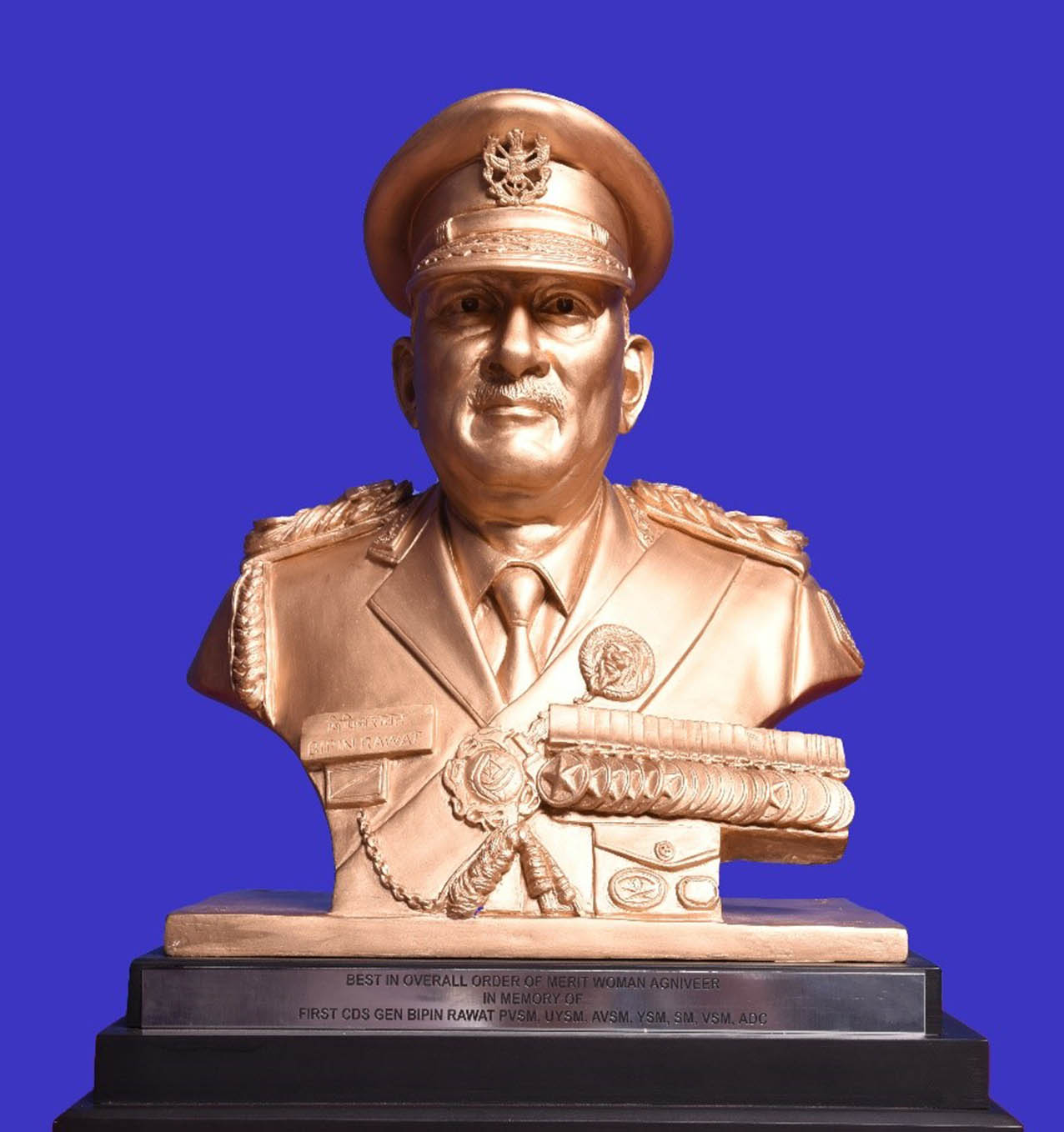
    To acknowledge and honour Gen Rawat’s contribution to the transformational Agnipath scheme and towards enhancement of Tri-Services synergy and jointmanship, following two trophies are being instituted by the Indian Navy:-

    (a) General Bipin Rawat rolling trophy for the ‘Women Agniveer Trainee standing First in Overall Order of Merit’. This trophy is scheduled to be presented by the Chief of the Naval Staff during the ‘Passing Out Parade’ of the first batch of Navy Agniveers on 28 March 2023 at its premier sailors training centre, INS Chilka.

    (b) General Bipin Rawat Rolling trophy for the ‘Most Spirited Officer’ undergoing the Naval Higher Command Course (NHCC) at Naval War College (NWC), Goa.

  • Joint India Singapore Exercise ‘Bold Kurukshetra’ Concludes at Jodhpur

    Joint India Singapore Exercise ‘Bold Kurukshetra’ Concludes at Jodhpur

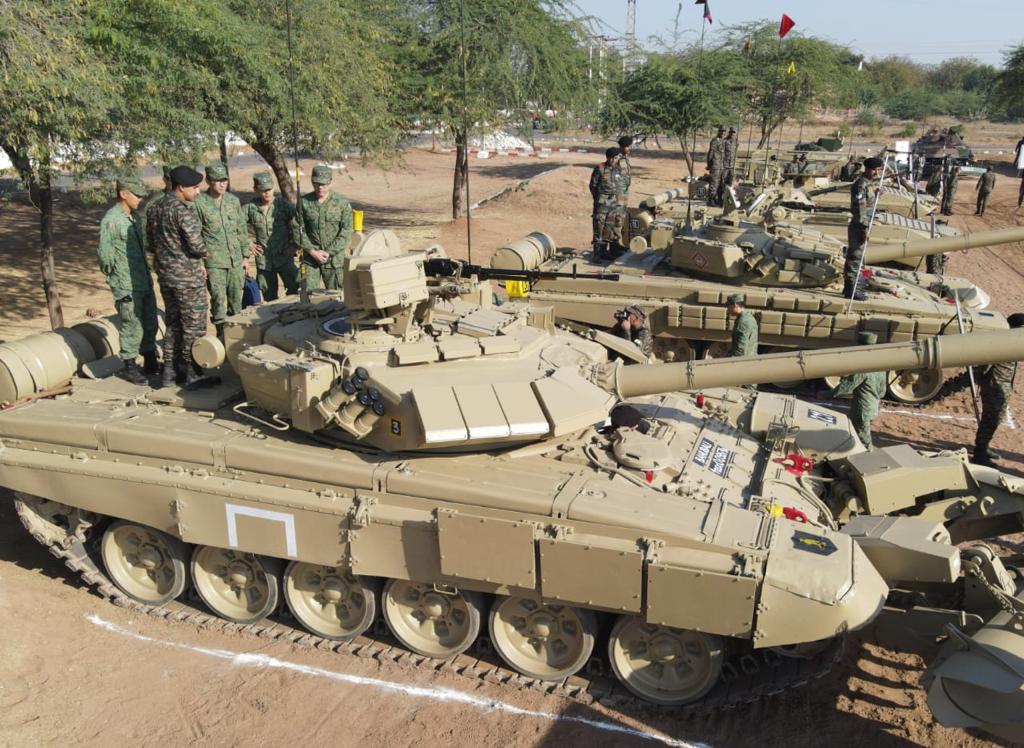
    New Delhi, 14th March. The Singapore Army and Indian Army participated in the 13th edition of Exercise Bold Kurukshetra, a bilateral armour exercise from 06-13 March 2023 at Jodhpur Military Station, India.

    For the first time in the exercise series, both armies participated in a command post Exercise, which involved Battalion and Brigade level planning elements and computer wargaming. Hosted by the Indian Army, the exercise involved soldiers from the 42nd Battalion, Singapore Armoured Regiment and an Armoured Brigade of Indian Army.

    The ten-day long joint training that commenced on 05th March fostered common understanding of mechanised warfare in emerging threats and evolving technologies, developing inter-operability through a computer simulation-based Wargame using joint operational and tactical procedures controlled through a joint command post. Both contingents not only learnt about each other’s operating drills and procedure, but also exchanged ideas and best practices being followed in a modern combat zone.

    Exercise Bold Kurukshetra is conducted under the ambit of the bilateral arrangement for the joint Army Training and exercises between the Singapore Army and the Indian Army. First conducted in 2005, this exercise underscores the strong and long-standing bilateral defence relationship between both countries and enhances cooperation between the two armies. Both defence establishments also interact regularly through high-level visits, policy dialogues, courses and other professional exchanges.

  • India has emerged as first responder in Humanitarian Assistance and Disaster Relief (HADR) at global level: CDS Gen. Anil Chauhan

    India has emerged as first responder in Humanitarian Assistance and Disaster Relief (HADR) at global level: CDS Gen. Anil Chauhan

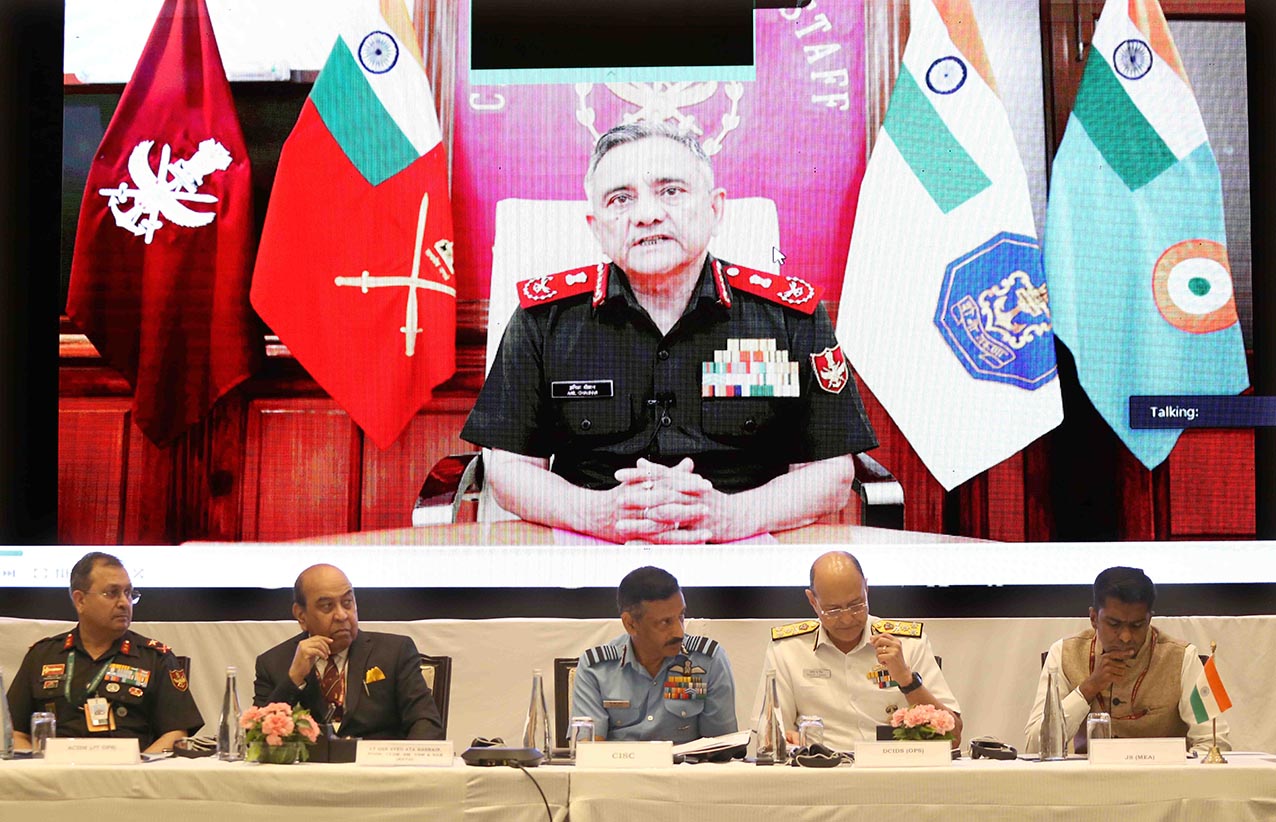
    New Delhi, 14th March. India has emerged first responder in Humanitarian Assistance and Disaster Relief (HADR) at global level, said Chief of Defence Staff General Anil Chauhan, in his virtual message to a Workshop on Humanitarian Assistance, Disaster Relief, Risk Mitigation and Disaster Resilience organised under the aegis of Integrated Defence Staff (IDS), Ministry of Defence today on 14th March, 2023 at New Delhi. The workshop was organized as part of India’s Chairmanship of the Shanghai Cooperation Organization (SCO) and was attended by speakers from Kazakhstan, Kyrgyz Republic, Belarus, Mongolia, Pakistan and China along with speaker from Russia in the virtual mode. 

    “In keeping with our cultural beliefs of Vasudhaiva Kutumbakam – the whole world is one family, India has been playing an important role in providing HADR in the region and beyond”, he added, citing the instances such as Operation Maitri – rescue operations during earthquake in Nepal, Assistance to Sri Lanka in 2016 during Cyclone Roanu, earthquake in Indonesia in 2018, flooding in Madagascar in January 2020, Supply of Vaccines during the COVID 19 pandemic etc. He further said that timely launch of Operation Dost following the recent earthquake in Turkiye is a testimony to India’s willingness to extend help to all possible corners of the globe.

    The CDS further added that collective approach is essential to mitigate the consequences of disasters and with this objective India has been holding multilateral exercises with various countries and multi-lateral organisations such as the HADR exercise PANEX 21 for BIMSTEC members at Pune in 2021, SMANVAY 22 for ASEAN members at Agra in 2022 etc. “By strengthening multilateral partnerships through engagement via regional mechanisms, improved interoperability, and faster response, we have played our role as the first responder in the region” he said.

    CDS further said that Armed forces along with dedicated organizational structure are often the first responders in the event of any disaster. The ability to work in hostile environment, organizational skills and logistics know-hows make the Armed Forces most suited for HADR operations.

    Air Marshal BR Krishna, Chief of Integrated Defence Staff to the Chairman, Chiefs of Staff Committee inaugurated the workshop. He urged the member states to develop capability and capacities of their national organizations to make them capable of mitigating loss of life and property during natural calamities.

    The objective of the workshop on Humanitarian Assistance and Disaster Relief (HADR) is to exchange information and share the best practices on risk reduction and resilience, integration of Armed Forces in a regional response and disaster infrastructure and for promoting global collaboration among SCO members. The main goals of SCO are strengthening mutual trust and neighborliness among the member states, promoting the effective cooperation in politics, trade, economy, technology and culture as well as in education, energy, transport, tourism, environmental protection and other areas. Making joint efforts to maintain and ensure peace, security and stability in the region and moving towards the establishment of a democratic, fair and rational new international political and economic order.

  • Why Is Indian Army’s Naga Regiment Called ‘Headhunters’?

    Why Is Indian Army’s Naga Regiment Called ‘Headhunters’?

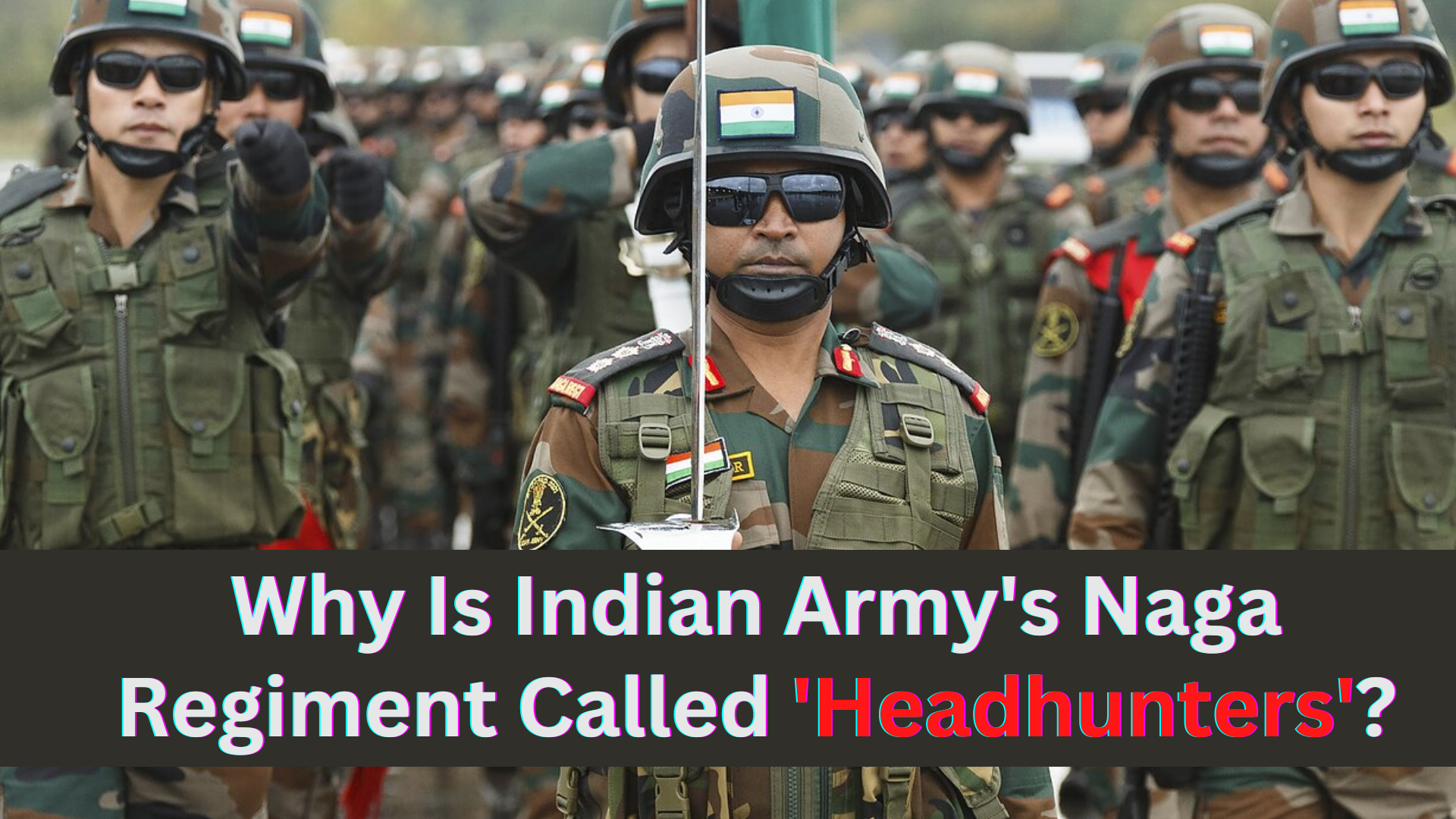
    The Naga Regiment of the Indian Army is sometimes referred to as the “Headhunters” because of the traditional practice of headhunting that was prevalent among some of the Naga tribes in the past.

    Headhunting was a practice in which warriors would collect the heads of their enemies as trophies. It was a ritualistic practice that was believed to bring prestige and honor to the warrior and his tribe. The practice of headhunting was prevalent among many tribal societies in the northeastern region of India, including the Naga tribes.

    The Naga Regiment has its roots in the Territorial Army unit raised in Nagaland in 1947, which was called the Naga Hills Battalion. The unit was composed of Naga tribesmen who were recruited to help maintain law and order in the region. The battalion was later disbanded, and the Naga Regiment was raised in 1970.

    The Naga Regiment has a proud history of serving the country in various conflicts, and its soldiers are respected and admired for their bravery, professionalism, and discipline. The nickname “Headhunters” is a nod to the martial traditions and rich cultural heritage of the Naga tribes, and it serves as a reminder of the sacrifices and contributions made by the soldiers of the regiment.

    Some Facts About Naga Regiment

    • Active: 1970
    • Role Type: Line Infantry
    • Military Role: Infantry
    • Battalion Size: 3 battalions
    • Battle cry: Ji Durga Naga
    • Regimental Centre: Ranikhet, Uttarakhand
    • Regimental Motto: “Parakramo Vijayate” (Victory to Valor)
    • Regimental Colours: The colours are gold that represents the rising sun, green stands for infantry while red stands for authority.
    • Regimental Insignia: A pair of crossed Naga spears and a dao( a cutting weapon used by the Nagas), with a shield bearing a mithun(bull) head

    Units

    • 1st Battalion
    • 2nd Battalion
    • 3rd Battalion
    • 164 Infantry Battalion (TA) (Jakhama, Nagaland)

    Decorations

    • 1 Maha Vir Chakra
    • 8 Vir Chakras
    • 1 Kirti Chakra (Major David Manlun), posthumous.
    • 6 Shaurya Chakras
    • 1 Yudh Seva Medal
    • 1 Vishist Seva Medal
    • 48 Sena Medals
  • DAC approves Acceptance of Necessity for three capital acquisition proposals worth Rs 4,276 crore

    DAC approves Acceptance of Necessity for three capital acquisition proposals worth Rs 4,276 crore

    PIB Delhi: A meeting of Defence Acquisition Council (DAC), held on January 10, 2023 under the chairmanship of Raksha Mantri Shri Rajnath Singh, accorded Acceptance of Necessity (AoN) for three capital acquisition proposals, amounting to Rs 4,276 crore. All the three proposals – two of the Indian Army and one of the Indian Navy – are under the Buy (Indian-IDDM) category.

    The DAC accorded AoN for procurement of HELINA Anti-Tank Guided Missiles, launchers and associated support equipment which will be integrated to the Advanced Light Helicopter (ALH). This missile is an essential part of weaponisation of ALH for countering enemy threat. Its induction will strengthen the offensive capability of Indian Army.

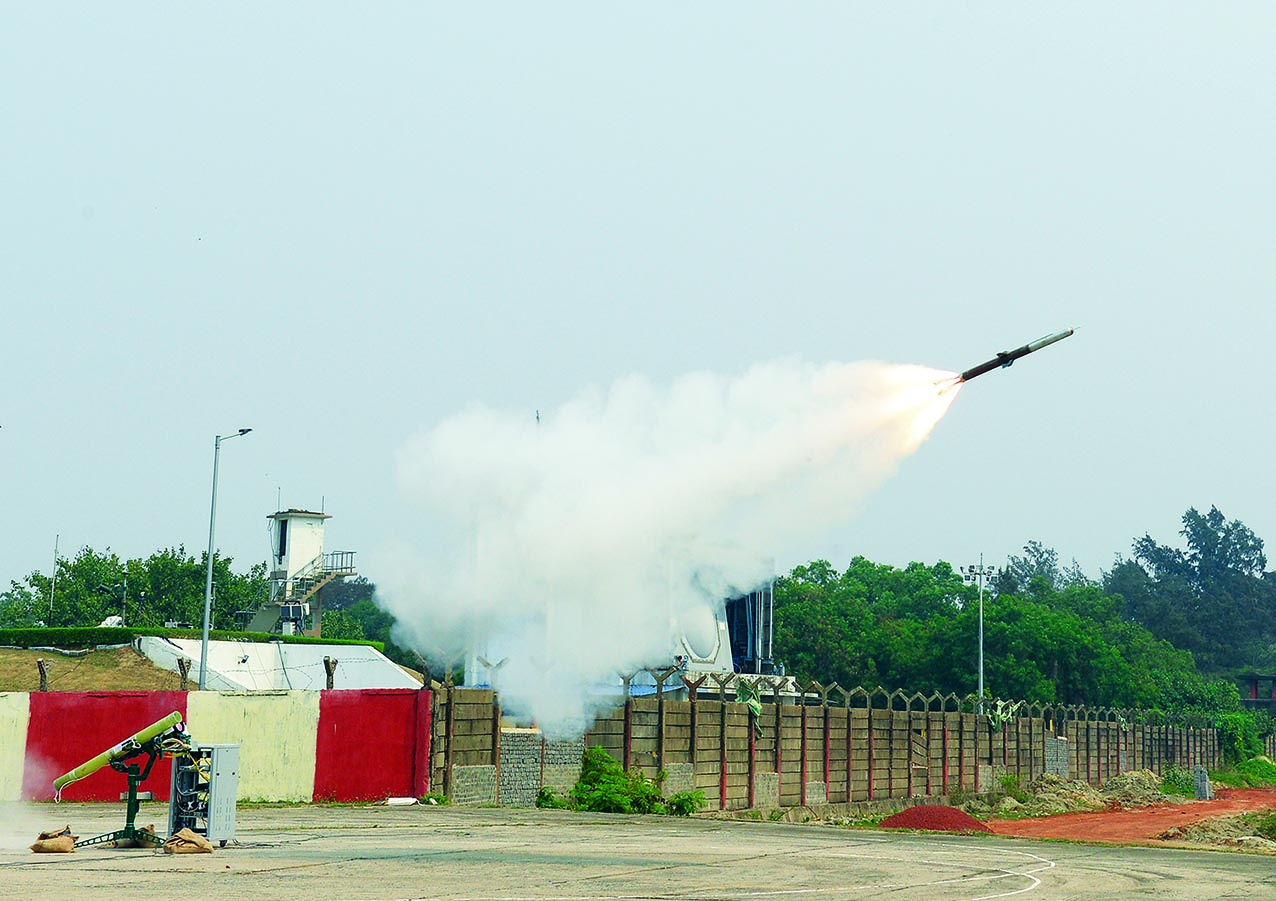
    The DAC also accorded AoN for procurement of VSHORAD (IR Homing) missile system under design and development by DRDO. In view of the recent developments along the Northern borders there is a need to focus on effective Air Defence (AD) weapon systems which are man portable and can be deployed quickly in rugged terrain and maritime domain. Procurement of VSHORAD, as a robust and quickly deployable system, will strengthen the Air Defence capabilities.

    Further, the DAC granted approval for procurement of Brahmos Launcher and Fire Control System (FCS) for the Shivalik class of ships & Next Generation Missile Vessels (NGMVs) for Indian Navy. With their induction, these ships would have enhanced capability of carrying out maritime strike operations, interdicting and destroying enemy’s warships and merchant vessels.

    This is the Press Release Of PIB.