Category: Indian Army

The Indian Army is the land-based branch of the Indian Armed Forces and is responsible for the defense of India’s territorial integrity and sovereignty. It is one of the largest standing armies in the world, with approximately 1.4 million active personnel and over 1 million reserve personnel.

The Indian Army is organized into various commands, each responsible for a specific geographic region of India. These commands are further divided into divisions, brigades, and battalions, each with its specific role and responsibilities.

The Indian Army is known for its professionalism, discipline, and dedication to duty. It has a rich tradition of valor and sacrifice, with several of its soldiers and officers awarded the highest gallantry awards for their bravery in battle.

Overall, the Indian Army is a vital institution that plays a critical role in maintaining India’s national security and safeguarding the country’s interests. It is an essential component of India’s defense establishment and is respected both at home and abroad for its capabilities and achievements.

  • Heavy Shelling Along Line of Control Deepens Kashmir Crisis, Claims Dozens of Lives

    Heavy Shelling Along Line of Control Deepens Kashmir Crisis, Claims Dozens of Lives

    Intense artillery exchanges and shelling along the Line of Control (LoC) dividing Indian-administered and Pakistan-administered Kashmir have escalated the ongoing conflict between India and Pakistan, claiming at least 43 lives and displacing hundreds of families. The relentless barrages, which intensified following India’s Operation Sindoor missile strikes on May 7, have plunged the region into one of its deadliest crises in decades, raising fears of a broader war between the nuclear-armed neighbors.

    Indian authorities reported that 12 civilians, including four children, were killed in the districts of Kupwara, Baramulla, and Poonch in Indian-administered Jammu and Kashmir due to Pakistani shelling over the past 48 hours. Over 60 others have been injured, with hospitals in Srinagar overwhelmed. India’s Border Security Force (BSF) stated that Pakistani forces targeted civilian areas and forward posts in violation of a 2021 ceasefire agreement, prompting retaliatory fire. “Our response has been proportionate but firm to protect our people,” said a BSF spokesperson.

    Pakistan, meanwhile, claimed that Indian shelling across the LoC killed 31 people, including 19 civilians, in Pakistan-administered Kashmir and parts of Punjab. The Pakistani military’s Inter-Services Public Relations (ISPR) accused India of deliberately targeting villages, with images of damaged homes and schools circulating on X. Prime Minister Shehbaz Sharif condemned the attacks as “barbaric,” vowing that Pakistan’s armed forces would respond decisively to defend its sovereignty.

    The latest violence follows India’s Operation Sindoor, which struck nine alleged terrorist sites in Pakistan and Pakistan-administered Kashmir, targeting groups India blames for a April 22 attack in Pahalgam that killed 26 civilians. Pakistan denies harboring terrorists and has labeled India’s strikes an “act of aggression,” citing civilian deaths and damage to infrastructure. The shelling along the LoC, coupled with a reported explosion near Lahore’s Walton Airport on May 8, has heightened panic and fueled calls for retaliation on both sides.

    Civilians on both sides of the LoC are bearing the brunt of the conflict. In Indian-administered Kashmir, thousands have fled border villages, seeking shelter in makeshift camps. “We can’t sleep at night; the shelling doesn’t stop,” said a resident of Uri, near the LoC. In Pakistan-administered Kashmir, similar scenes of displacement have emerged, with schools and markets shuttered. The UN Office for the Coordination of Humanitarian Affairs (OCHA) estimates that over 15,000 people have been displaced since the violence surged.

    Global leaders have expressed alarm, with UN Secretary-General António Guterres calling for an immediate cessation of hostilities. “The people of Kashmir have suffered enough. Both sides must prioritize de-escalation and dialogue,” he said. The United States, China, and the European Union have echoed the call, while U.S. President Donald Trump offered to mediate, describing the situation as “very dangerous.”

    On X, posts reflect the growing despair and anger, with hashtags like #KashmirBleeds and #StopTheWar trending. Some users shared videos of burning homes and crying families, though misinformation, including recycled footage from past conflicts, has complicated efforts to verify casualty figures. Nobel laureate Malala Yousafzai also weighed in, urging both nations to protect civilians and pursue peace.

    As the LoC remains a flashpoint, analysts warn that the tit-for-tat shelling risks spiraling into a full-scale military confrontation. Both India and Pakistan have reinforced their military presence along the border, with reports of troop movements and artillery deployments. The international community is pressing for a return to the 2021 ceasefire, but with trust at an all-time low, the path to peace remains fraught.

  • Pakistan Claims Downing 5 Indian Jets in Retaliation; India Rejects Claims as Unsubstantiated

    Pakistan’s military has claimed that it shot down five Indian Air Force jets and a drone in response to India’s missile strikes on alleged terrorist infrastructure, escalating tensions between the nuclear-armed neighbors. India has categorically denied these claims, asserting that no aircraft were lost and labeling Pakistan’s assertions as part of a misinformation campaign.

    The Pakistani military, through its Inter-Services Public Relations (ISPR) wing, stated that the downed aircraft included three French-made Rafale jets, one MiG-29, and one Sukhoi Su-30, with debris from a combat drone reportedly falling in Indian territory. Prime Minister Shehbaz Sharif, addressing Parliament, lauded the Pakistan Air Force for its “swift response” to India’s Operation Sindoor, which targeted nine sites in Pakistan and Pakistan-administered Kashmir on May 7. Pakistani Defense Minister Khawaja Asif reiterated the claim, stating the jets were targeted in self-defense after violating Pakistani airspace. A video released by Pakistani officials showed smoke rising from an alleged crash site, though independent verification of the footage remains unavailable.

    India’s Ministry of Defense has dismissed Pakistan’s claims, stating that all aircraft involved in Operation Sindoor returned safely to their bases. Indian officials, including Foreign Secretary Vikram Misri, emphasized that the strikes were “focused, measured, and non-escalatory,” targeting terrorist camps linked to a April 22 attack in Pahalgam, Indian-administered Kashmir, which killed 26 civilians. The Indian government has accused Pakistan of spreading false narratives, with the Press Information Bureau (PIB) debunking viral images of a supposed Rafale jet crash near Bahawalpur as old and unrelated.

    Reports from Reuters noted that three Indian fighter jets crashed in Jammu and Kashmir on May 7, hours after the strikes, according to local government sources. However, India has not confirmed these incidents as combat losses, and no connection to Pakistan’s claims has been officially acknowledged. Social media posts on X have fueled speculation, with some citing French-language markings on debris as evidence of downed Rafale or Mirage 2000 jets, though BBC Verify and other fact-checkers have debunked related footage as misleading or outdated.

    The conflicting narratives have intensified the ongoing crisis, with Pakistan describing India’s strikes as an “act of war” that killed 31 civilians, including women and children, in Punjab and Pakistan-administered Kashmir. Pakistan’s National Security Committee has vowed a “befitting response” at a time and place of its choosing, while India maintains that no civilian or military infrastructure was targeted.

    International concern is mounting, with the UN, EU, China, and Russia urging restraint to avoid further escalation. U.S. President Donald Trump has offered to mediate, while analysts warn that unverified claims, such as Pakistan’s jet-downing assertions, risk fueling misinformation and public unrest. Posts on X reflect divided sentiments, with some Pakistani users celebrating the military’s claims and Indian users dismissing them as propaganda, pointing to a lack of concrete evidence.

    As both nations remain on high alert, the absence of independent confirmation of Pakistan’s claims and India’s steadfast denials underscore the volatile information war accompanying the physical conflict. The situation remains fluid, with fears of further retaliation looming large.

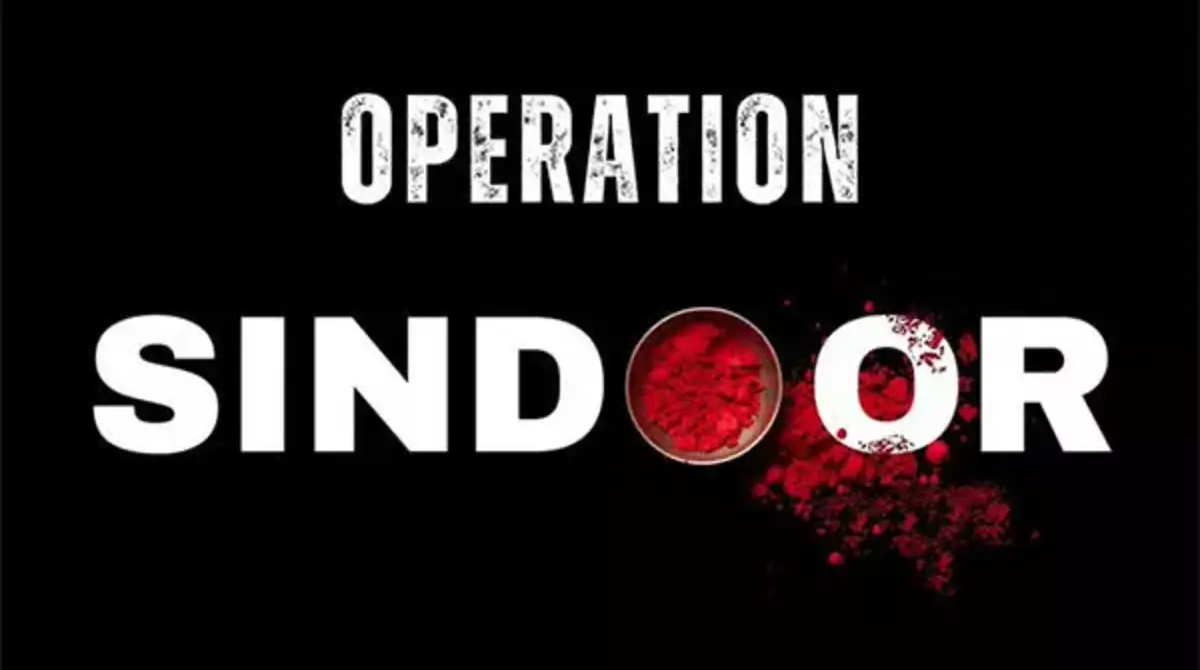
  • India Launches ‘Operation Sindoor’: Precision Strikes Hit Nine Terror Targets in Pakistan and PoK to Avenge Pahalgam Attack

    India Launches ‘Operation Sindoor’: Precision Strikes Hit Nine Terror Targets in Pakistan and PoK to Avenge Pahalgam Attack

    New Delhi, May 7, 2025 – In a bold and decisive response to the horrific Pahalgam terror attack that claimed 26 lives on April 22, the Indian Armed Forces launched ‘Operation Sindoor’ early Wednesday, targeting nine terrorist infrastructure sites in Pakistan and Pakistan-occupied Jammu and Kashmir (PoK). The meticulously planned tri-services operation, involving the Indian Army, Navy, and Air Force, struck terror camps linked to groups like Lashkar-e-Taiba and Jaish-e-Mohammed, delivering a strong message to those orchestrating cross-border terrorism.

    The strikes, executed at 1:44 AM IST, targeted locations including Muzaffarabad, Bahawalpur, Kotli, and Muridke, which Indian authorities identified as hubs for planning attacks against India. The operation was named ‘Sindoor,’ a symbolic reference to the red vermilion worn by married Hindu women, reflecting the April attack’s targeting of Hindu male tourists, leaving their wives widowed. “We are living up to the commitment that those responsible for this attack will be held accountable,” the Ministry of Defence stated, emphasizing the operation’s focus on terrorist infrastructure while avoiding civilian or military targets.

    Prime Minister Narendra Modi, who monitored the operation from a war room, had earlier granted the armed forces “complete operational freedom” to determine the timing, targets, and mode of retaliation. The Cabinet Committee on Security is set to meet today, followed by an all-party briefing to discuss the operation’s outcomes and next steps. Sources indicate that ‘Operation Sindoor’ is the first phase of India’s response, with further actions under consideration.

    Pakistan condemned the strikes, calling them a “blatant act of war,” and reported eight civilian deaths and dozens injured. Islamabad claimed to have shot down two Indian planes and a drone, though the Indian Air Force refuted this, stating all pilots and assets were accounted for. Pakistan’s Prime Minister Shehbaz Sharif convened an emergency meeting, and heavy cross-border shelling was reported along the Line of Control in Jammu and Kashmir’s Bhimber Gali sector, signaling heightened tensions.

    The Pahalgam attack, which killed 25 Indian civilians and one Nepali citizen in a brutal execution-style assault, had sparked nationwide outrage and calls for retaliation. India accused Pakistan of supporting the militants, a charge Islamabad denied. The strikes come after weeks of escalating tensions, including India’s suspension of the Indus Waters Treaty, a ban on Pakistani goods, and airspace restrictions for Pakistani airlines.

    Defence experts hailed the operation as a precise and proportionate response. “This is a clear signal that India will not tolerate terrorism,” said retired Air Chief Marshal RKS Bhadauria, noting that around 80 terrorists were reportedly killed. In Jammu and Kashmir, locals raised slogans of ‘Indian Army Zindabad’ and ‘Bharat Mata ki Jai,’ reflecting public support.

    The international community urged restraint. The U.S., while supporting India’s right to defend itself, called for de-escalation, with National Security Advisor Ajit Doval briefing his U.S. counterpart post-strikes. The United Nations expressed concern over rising tensions between the nuclear-armed neighbors.

    As India prepares for a detailed briefing on ‘Operation Sindoor’ later today, the subcontinent remains on edge. With Pakistan vowing retaliation and both nations on high alert, the coming days will be critical in determining whether this marks the end of India’s response or the beginning of a broader confrontation.

  • Bharat Dynamics Rockets to Success as All Three Military Branches Embrace Nirbhay Missiles

    Bharat Dynamics Rockets to Success as All Three Military Branches Embrace Nirbhay Missiles

    Bharat Dynamics, the reported manufacturer of the Nirbhay class of missiles, is poised for a significant boost as all three branches of the defense forces are reportedly set to incorporate these missiles designed for striking targets over a distance of 1,000 kilometers.

    “The government is actively reviewing a proposal to introduce the Nirbhay class cruise missiles into service,” ANI reported, citing sources. “The evaluation process is in an advanced stage, and upon approval, it will signify that all three defense forces will possess the capability to deploy subsonic cruise missiles for targeting.”

    The government granted approval for the inclusion of the missile in the inventory of the other two services approximately two years ago. Presently, there is a plan to extend this clearance to include the third service as well.

    The Nirbhay class cruise missiles serve as a complement to the supersonic BrahMos cruise missiles, which cover a shorter range. Developed domestically by the Defence Research and Development Organisation (DRDO), the Nirbhay class comprises long-range cruise missiles that travel at subsonic speeds.

  • Is India expected to join the group of 19 countries that allows transgender individuals to serve in the military?

    Is India expected to join the group of 19 countries that allows transgender individuals to serve in the military?

    India has significantly progressed in ensuring equal rights for the LGBTQ+ community, despite the recent Supreme Court decision not to legalize same-sex marriages. It appears that the country is continuing to advance in this direction.

    As per a report from the Indian Express, the Indian Armed Forces are exploring the potential recruitment of transgender individuals into the services. Additionally, a study group has been established to discuss the consequences of such a decision and outline the pathway for its implementation within the defense forces.

    Should India decide to allow the enlistment of transgender individuals in the Services, it would mark a significant stride toward equality. Nonetheless, it’s worth noting that India would not be the pioneer in this regard.

    India, transgenders and its military

    Currently, the Indian Armed Forces do not allow the inclusion of transgender individuals in their services. Nevertheless, following the admission of women into the military, the three branches are now considering the induction of transgender personnel.

    In light of this, a study group has been established to carefully consider this decision. According to the Indian Express report, numerous suggestions have been put forth on this matter, with a prevailing sentiment that, if transgender individuals were to be admitted, they should not receive any special concessions regarding training, selection standards, or assignments in challenging locations.

    Others have also outlined potential challenges, including housing and administrative issues, associated with the integration of transgender individuals into the military service.

    A military officer, addressing the publication, remarked, “The military should not be viewed solely as a job opportunity. There are administrative hurdles, such as the shortage of housing and toilets, especially in field locations where resources and space are limited.”

    “Limiting their assignments solely to peaceful stations would reduce opportunities for others after a field tenure,” stated the officer.

    In 2017, the Indian Navy discharged Sabi Giri, formerly known as Manish Kumar Giri. During her dismissal, the Navy issued a statement explaining, “The serving sailor underwent sex reassignment surgery at a private facility while on leave and was administratively discharged from the service. The individual voluntarily opted for irreversible gender reassignment, altering their gender status from the one they were recruited for at the time of induction.”

    However, she contested the Navy’s decision before the Delhi High Court. During that time, the Navy permitted her to participate in the examination for the ‘tradesman mate’ position, but subsequently reneged on their commitment.

    In 2020, officials from the Border Security Force (BSF), Central Reserve Police Force (CRPF), and Sashastra Seema Bal (SSB) informed the Union government of their intention to enlist transgender individuals for the officer cadre position of assistant commandants.

    It is noteworthy that Tamil Nadu appointed India’s inaugural transgender police officer in 2015, and Chhattisgarh was the first state to actively hire members of the transgender community into its police force.

  • PM Modi celebrates Diwali with soldiers in Himachal’s Lepcha near China border

    PM Modi celebrates Diwali with soldiers in Himachal’s Lepcha near China border

    PM Modi celebrates Diwali with soldiers: Prime Minister Narendra Modi maintained his annual tradition by celebrating Diwali this year with soldiers in Lepcha, Himachal Pradesh, situated near the Chinese border.

    On Sunday morning, the Prime Minister arrived at the isolated village and described the experience of celebrating Diwali with the “brave security forces” in Lepcha as “emotionally profound and prideful.” He expressed that these guardians of the nation, despite being away from their families, bring illumination to our lives through their unwavering dedication.

    “The courage of our security forces is unwavering. Stationed in the toughest terrains, away from their loved ones, their sacrifice and dedication keep us safe and secure. India will always be grateful to these heroes who are the perfect embodiment of bravery and resilience,” PM Modi wrote on X.

    Earlier in the day, Prime Minister Modi extended his Diwali wishes to the people of the country, expressing his hope for their “excellent health.”

    “Wishing everyone a Happy Diwali! May this special festival bring joy, prosperity and wonderful health to everyone’s lives,” he said.

    Prime Minister Narendra Modi has consistently upheld a tradition of commemorating Diwali with the soldiers stationed at the nation’s borders. Since assuming office in 2014, he has consistently prioritized spending the festival of lights with the armed forces, making it a practice to travel to distant locations to convey his appreciation for their sacrifices. In the preceding year, he observed the festival with soldiers in Kargil, Jammu and Kashmir.

    PM Modi celebrates Diwali with soldiers Photos gone viral

  • India-Canada Row: India Vs. Canada Military Power Comparison 2023

    India-Canada Row: India Vs. Canada Military Power Comparison 2023

    India Vs. Canada Military Power Comparison: In an increasingly interconnected and unpredictable world, the military capabilities of nations play a pivotal role in maintaining global stability and safeguarding their respective interests. India and Canada, although geographically distant and culturally diverse, are two nations that possess unique military strengths and strategic significance. Understanding the military power of these countries is not only crucial for their citizens but also for the international community as a whole.

    This blog aims to provide a comprehensive comparison of the military power of India and Canada. While Canada is known for its peacekeeping efforts and contributions to international security, India stands as one of the world’s largest military powers. Through a detailed analysis of various military aspects, we will delve into the capabilities, strengths, and challenges faced by both nations.

    From combat aircraft and armed forces personnel to defense budgets and global peace indices, we will explore key metrics that define a country’s military might. Additionally, we will examine each nation’s armed forces, weaponry, and military expenditures to gain a deeper insight into their military prowess.

    Moreover, we will shed light on recent developments and tensions between India and Canada that have brought their military capabilities into focus. These real-world events highlight the importance of understanding the military dynamics of these nations in today’s global landscape.

    India-Canada in News:

    In a recent development, tensions between India and Canada have intensified. This escalation was triggered when the Canadian Prime Minister made an accusation of Indian involvement in the assassination of a Khalistani leader, who had been labeled a terrorist by India. This incident took place in Surrey in June 2023.

    India promptly refuted these allegations and counterclaimed that Canada was providing shelter to Khalistani extremists, further exacerbating the strained relations between the two countries.

    What is the Khalistan Movement?

    The Khalistan movement is a campaign advocating for the establishment of an independent and sovereign Sikh state within the territory of present-day Punjab, encompassing both India and Pakistan.

    This demand has surfaced on numerous occasions, most notably during a violent insurgency in the 1970s and 1980s, which significantly disrupted the state of Punjab for more than a decade.

    While the movement was suppressed within India through military operations like Operation Blue Star in 1984 and Operations Black Thunder in 1986 and 1988, it still garners sympathy and support from certain segments of the Sikh population. This support is particularly prominent among the Sikh diaspora residing in countries such as Canada, the UK, and Australia.

    India Vs. Canada Military Power Comparison Data Table

    Here’s a table comparing various military and defense-related statistics between India and Canada:

    Aspect India Canada
    Population Approx. 1.45 billion Approx. 40 million
    Defense Budget (2023) Approx. $75 billion USD Approx. $37 billion USD
    Active Military Personnel Approx. 1.45 million Approx. 70,000
    Reserve Military Personnel Approx. 2.2 million Approx. 28,500
    Tanks Approx. 4,614 Approx. 82
    Aircraft Approx. 2,210 (including fighters and others) Approx. 200 (including fighters and others)
    Naval Vessels Approx. 295 (including major warships) Approx. 68 (including major warships)
    Nuclear Weapons Estimated nuclear warheads: 150-160 0

    India vs. Canada Defence Budget Comparison

    India’s Defence Budget:

    • Defence Budget (2023): Approx. $75 billion USD

    India, with its vast and diverse geopolitical landscape, faces a range of security challenges. As one of the world’s largest democracies, it has a significant responsibility to ensure the safety of its citizens and territorial integrity. India’s defense budget reflects these imperatives, consistently ranking among the top defense spenders globally.

    Canada’s Defense Budget:

    • Defense Budget (2023): Approx. $37 billion USD

    Canada, known for its peacekeeping efforts and commitment to international diplomacy, manages its defense budget with a focus on cooperative security and contributions to global peace. Its budgetary allocations aim to strike a balance between national security and international responsibilities.

    India vs. Canada Army Comparison

    comparing the armies of India and Canada reveals notable differences in terms of size, equipment, and roles.

    Indian Army:

    India boasts one of the largest standing armies globally, with approximately 1.4 million active personnel. Its size reflects the country’s vast territorial expanse and complex security challenges. The Indian Army is equipped with a diverse range of weaponry, including tanks, artillery, and infantry weapons. Additionally, India has made significant strides in modernizing its armed forces, with ongoing investments in indigenous weapon systems and foreign acquisitions. This modernization includes the development of new tanks, artillery systems, and infantry equipment. The Indian Army also maintains a substantial paramilitary and reserve force.

    Canadian Army:

    In contrast, the Canadian Army is relatively smaller, with around 68,000 active personnel. Canada’s military doctrine focuses on expeditionary operations, peacekeeping, and support for international missions. The army is well-equipped with modern infantry gear and armored vehicles but has a more limited inventory of heavy tanks and artillery compared to India. Canada’s military strategy emphasizes interoperability with NATO and allied forces, reflecting its role in collective security efforts.

    Both armies excel in specific areas due to their distinct operational contexts. India’s larger army provides the capability to address diverse threats across its vast territory, while Canada’s smaller force is designed for flexibility and international cooperation. Moreover, both nations maintain a commitment to professionalism and training.

    It’s crucial to note that military capabilities evolve over time, and geopolitical developments can shift priorities. For the most current and detailed information on the armies of India and Canada, it’s advisable to consult official government sources and defense analysis organizations.

    India and Canada Air Power Comparison

    Comparing the air power of India and Canada reveals distinct characteristics driven by their geopolitical contexts and strategic priorities.

    Indian Air Force (IAF): India’s air power, represented by the Indian Air Force (IAF), is one of the largest and most diverse in the world. With a vast fleet of aircraft, including fighter jets, transport planes, and helicopters, the IAF plays a pivotal role in defending India’s extensive borders and maintaining regional stability. The IAF operated a mix of domestically produced and imported fighter aircraft, with plans for modernization and expansion.

    Key components of the IAF include the Sukhoi Su-30MKI and Mirage 2000 fighters, as well as indigenous Tejas light combat aircraft. India has also invested in advanced air defense systems and is developing its fifth-generation fighter aircraft, the HAL AMCA. Additionally, India has an active transport and reconnaissance fleet, making it capable of power projection and humanitarian missions.

    Royal Canadian Air Force (RCAF): Canada’s air force, the Royal Canadian Air Force (RCAF), is smaller in comparison, focusing on a different set of priorities. The RCAF maintains a modern fleet of aircraft, including CF-18 Hornets, which are used for air defense, NORAD missions, and international deployments. Canada’s air power is primarily geared toward supporting its NATO and coalition commitments, including contributions to global peacekeeping efforts.

    Canada’s air force emphasizes interoperability with its allies, participating in joint exercises and operations. While it may not possess the scale of India’s air force, the RCAF’s capabilities are tailored to meet its international obligations effectively.

    India and Canada Naval Power Comparison

    Comparing the naval power of India and Canada reveals significant differences in terms of fleet size, capabilities, and strategic priorities, reflecting their unique geographical and geopolitical contexts.

    Indian Navy: India boasts one of the most formidable navies in the Indian Ocean region and beyond. The Indian Navy’s primary mission is to safeguard India’s extensive coastline, protect maritime interests, and project power in the Indian Ocean. The Indian Navy operated a diverse and modern fleet that included aircraft carriers, destroyers, frigates, submarines, and patrol vessels. Notably, India has two aircraft carriers, the INS Vikramaditya and the indigenous INS Vikrant (under construction), giving it significant power projection capabilities.

    India’s naval modernization efforts include the acquisition of advanced submarines, surface vessels, and naval aircraft, with a focus on enhancing its maritime surveillance, anti-submarine warfare, and anti-ship capabilities. India also places a strong emphasis on regional maritime cooperation and has been expanding its naval presence to counter piracy and support humanitarian missions in the Indian Ocean.

    Royal Canadian Navy: In contrast, Canada’s naval power is more modest in size but is well-suited to its strategic priorities. The Royal Canadian Navy (RCN) primarily focuses on protecting Canada’s vast coastlines, contributing to NATO missions, and supporting international peacekeeping efforts. As of my last update, the RCN operated a fleet of frigates, coastal defense vessels, and submarines. Canada’s naval strategy emphasizes its role in collective defense within the North Atlantic Treaty Organization (NATO) and cooperation with allied navies.

    Canada’s naval capabilities center on maritime surveillance, anti-submarine warfare, and mine countermeasures, reflecting its commitment to protecting its maritime interests and supporting global stability.

  • Boeing Begins Production on E-model Apaches for Indian Army

    Boeing Begins Production on E-model Apaches for Indian Army

    • First of six Apache helicopters ordered by the Indian Army
    • AH-64E fuselages are manufactured at Tata Boeing Aerospace Limited facility in Hyderabad

    New Delhi, Aug. 16, 2023 – Boeing [NYSE: BA] is starting production of the Indian Army’s Apaches in Mesa, Arizona. The company will deliver a total of six AH-64E Apaches fulfilling the Indian Army’s requirements.

    Earlier this year, Tata Boeing Aerospace Limited (TBAL) delivered the Indian Army’s first AH-64 Apache fuselage from its advanced facility in Hyderabad, India.

    “We are pleased to reach yet another significant milestone, highlighting Boeing’s unwavering commitment to support India’s defense capabilities,” said Salil Gupte, president, Boeing India. “The advanced technology and proven performance of the AH-64 will enhance the Indian Army’s operational readiness and strengthen its defense capabilities.”

    In 2020, Boeing completed delivery of 22 Indian Air Force E-model Apaches and signed a contract to produce six AH-64Es for the Indian Army. The delivery of the Indian Army’s Apaches is scheduled for 2024.

    “The AH-64E continues to be the world’s premier attack helicopter,” said Christina Upah, vice president of Attack Helicopter Programs and senior Boeing Mesa site executive. “The AH-64 provides customers with unparalleled lethality and survivability, and we are thrilled to provide those capabilities to the Indian Army.”

  • General Manoj Pande, the Chief of Army Staff Reviews Passing Out Parade at Indian Military Academy, Dehradun

    General Manoj Pande, the Chief of Army Staff Reviews Passing Out Parade at Indian Military Academy, Dehradun


    New Delhi, 10th June 2023. General Manoj Pande, the Chief of the Army Staff reviewed the Passing Out Parade (POP) of Gentleman Cadets at Indian Military Academy (IMA), Dehradun today. A total of 374 Gentleman Cadets of 152 Regular Course and 135 Technical Graduate Course, including 42 Gentleman Cadets (GCs) from seven friendly foreign countries successfully passed out from the portals of IMA. Parents and family members of the Passing Out Gentleman Cadets also attended the event and solemnised the pipping ceremony to witness the momentous occasion of their wards being granted Permanent Commission into the Indian Army.

    The POP marks the culmination of rigorous training at IMA, a premier institution imparting training in leadership, self-discipline and the art of war. The training at IMA is aimed at the optimum development of intellectual, moral and physical qualities essential for leadership in the profession of arms. Training at the IMA inculcates patriotism, character, dynamism, initiative and understanding that are the very basis of leadership in the Indian Army.

    The Army Chief complimented the Parade Commander and participants for the immaculate turnout as well as the crisp & synergised drill movements indicating high standards of training and discipline imbibed by the young leaders. He also complimented the instructors & staff at IMA for the high standards of training being imparted to future leaders of the Army.

    The Army Chief, in his address to the passing out course said, “The Profession of Soldiering is the noblest of all professions, that gives you a unique opportunity to don the uniform and serve your motherland, with selfless devotion. It is a career, driven by a sense of purpose and demands sacrifices from you, beyond the call of duty. In the years ahead, your resilience, determination and unwavering resolve, will be the bedrock upon which the Indian Army will continue to make the tricolour proud, in all its pursuits.

    Complimenting the parents of the gentlemen cadets the COAS said, “My compliments to the proud parents and guardians, for raising these fine men of character, who are today ready to be the guardians of the robust value system upheld by the Indian Army. Your role, contribution and continued support is acknowledged, without which this feat would not have been achieved. To transform these young boys into combat leaders, has been our shared vision, and today, we see it happening before us. The nation will remain indebted for your valued contribution.

    The Army Chief also complimented the Gentleman Cadets from the Friendly Foreign Countries and said, “Let me congratulate all the forty-two (42) Gentleman Cadets from various Friendly Foreign Countries for having completed their training at academy. I am sure, you as ambassadors of your country will carry back a treasure of good memories of the place and training with you and will cherish them forever. The Indian Military Academy has imparted training to you which form a bedrock for your growth both professionally and personally and will definitely strengthen the friendly ties between our countries.

    The Reviewing Officer presented the following awards: –

    • The prestigious Sword of Honour award was awarded to Academy Under Officer Mihir Banerjee.
    • Gold Medal for the Gentlemen Cadet standing First in the Order of Merit was awarded to Senior Under Officer Abhimanyu Singh.
    • Silver Medal for the Gentlemen Cadet standing Second in the Order of Merit was awarded to Academy Under Officer Mihir Banerjee.
    • Bronze Medal for the Gentlemen Cadet standing Third in the Order of Merit was awarded to Battallion Under Officer Kamalpreet Singh.
    • Silver Medal for the Gentlemen Cadet standing First in the Order of Merit from Technical Graduate Course was awarded to Junior Under Officer Sury Bhan Singh.
    • ‘Bangladesh Trophy & Medal’ for the Gentleman Cadet standing First in the Order of Merit from Foreign GCs was awarded to GC Kinga Lhendup (Bhutanese Army).
    • Chief of Army Staff Banner was awarded to Cassino Company for standing Overall First amongst 12 training companies for the Spring Term 2023.

    The Passing Out Parade was followed by most awaited “Pipping Ceremony,” in which the shining brass stars which were pipped by the proud parents of the newly commissioned officers of the Indian Army. These newly commissioned young Lieutenants will be joining their respective units all across the country, including the Northern & Western borders.

  • Indian Army Celebrates 75th International Day of UN Peacekeepers

    Indian Army Celebrates 75th International Day of UN Peacekeepers

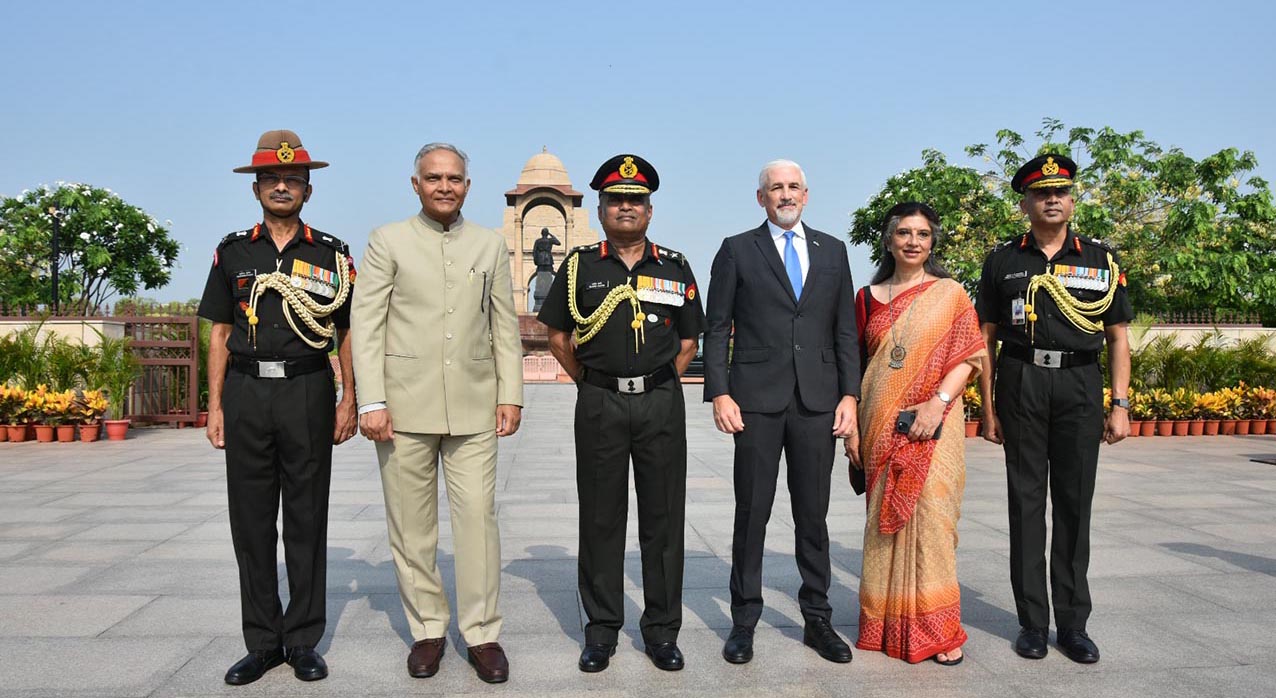
    New Delhi, 29th May 2023. The Indian Army commemorated the 75th International Day of UN Peacekeepers, today, by paying homage to the fallen comrades by laying wreath at National War Memorial, New Delhi by the Chief of the Army Staff, Vice Chief of Army Staff and representatives from Navy and Air Force, Ministry of External Affairs and United Nations. This is the day when in 1948 the first UN peacekeeping mission, “UN Truce Supervision Organisation (UNTSO)” began operations in Palestine.

    Each year on this Day, the UN and countries across the globe pay tributes to the professionalism, dedication and courage of all men and women who have served or are serving in UN Peacekeeping Missions and honour the memory of those who have laid down their lives in the cause of peace. This year marks the 75th Anniversary of the UN Peacekeepers Day.

    India has a rich legacy of contribution to UN Peacekeeping operations and is one of the largest contributors of troops. It has contributed approximately 2,75,000 troops to peacekeeping missions so far, with around 5,900 troops currently deployed in 12 UN Missions. Indian Army personnel have operated under difficult conditions in challenging terrains and have displayed exemplary professionalism, humane approach, courage and valour, to the extent of making the supreme sacrifice to defend the UN mandates. 159 Indian Army soldiers have made the supreme sacrifice to ensure peace across the globe. Apart from the current deployment, India has pledged one Infantry Battalion Group and Corvette with Helicopter, as hard power and an Engineer Company & Signal Company as Force enablers, to be deployed at the behest of the UN.

    In keeping with the need for women peacekeepers in conflict areas under UN mandate, India has deployed Female Engagement Teams (FETs) in MONUSCO and UNISFA (the second largest women contingent after Liberia). India has also deployed Women Military Police in UNDOF and women staff officers / military observers in various missions.

    The Indian Army has established a Centre for UN Peacekeeping (CUNPK) in New Delhi to impart niche training in peacekeeping operations. The Centre trains more than 12,000 troops every year. CUNPK undertakes a multitude of activities from contingent training to national and international courses for potential peacekeepers and trainers. It also hosts foreign delegations as part of sharing best practices. The Centre regularly dispatches Mobile Training Teams to Friendly Foreign Countries as part of capacity building in the field of UN peacekeeping training. The institute has evolved in the two decades as a Centre of Excellence and repository of experience and best practices.

    In order to ensure the operational efficiency and sustainability of Indian contingents in UN missions, the Indian Army has deployed state-of-the-art equipment and vehicles. These vehicles and equipment are manufactured in India and have successfully withstood the vagaries of difficult terrain, weather and operational conditions in the mission areas.

    India has been at the forefront of capacity development for the UN, host nations and partner nations. It has always strived to support UN initiatives by providing agile and flexible units, peacekeeper training, logistic support, enhancing gender parity and contributing to technological enhancements. India continues to provide active support for host nation capacity development by providing training, infrastructure development and Civil-Military Co-operation (CIMIC) activities.