Category: World

  • India Launches ‘Operation Sindoor’: Precision Strikes Hit Nine Terror Targets in Pakistan and PoK to Avenge Pahalgam Attack

    India Launches ‘Operation Sindoor’: Precision Strikes Hit Nine Terror Targets in Pakistan and PoK to Avenge Pahalgam Attack

    New Delhi, May 7, 2025 – In a bold and decisive response to the horrific Pahalgam terror attack that claimed 26 lives on April 22, the Indian Armed Forces launched ‘Operation Sindoor’ early Wednesday, targeting nine terrorist infrastructure sites in Pakistan and Pakistan-occupied Jammu and Kashmir (PoK). The meticulously planned tri-services operation, involving the Indian Army, Navy, and Air Force, struck terror camps linked to groups like Lashkar-e-Taiba and Jaish-e-Mohammed, delivering a strong message to those orchestrating cross-border terrorism.

    The strikes, executed at 1:44 AM IST, targeted locations including Muzaffarabad, Bahawalpur, Kotli, and Muridke, which Indian authorities identified as hubs for planning attacks against India. The operation was named ‘Sindoor,’ a symbolic reference to the red vermilion worn by married Hindu women, reflecting the April attack’s targeting of Hindu male tourists, leaving their wives widowed. “We are living up to the commitment that those responsible for this attack will be held accountable,” the Ministry of Defence stated, emphasizing the operation’s focus on terrorist infrastructure while avoiding civilian or military targets.

    Prime Minister Narendra Modi, who monitored the operation from a war room, had earlier granted the armed forces “complete operational freedom” to determine the timing, targets, and mode of retaliation. The Cabinet Committee on Security is set to meet today, followed by an all-party briefing to discuss the operation’s outcomes and next steps. Sources indicate that ‘Operation Sindoor’ is the first phase of India’s response, with further actions under consideration.

    Pakistan condemned the strikes, calling them a “blatant act of war,” and reported eight civilian deaths and dozens injured. Islamabad claimed to have shot down two Indian planes and a drone, though the Indian Air Force refuted this, stating all pilots and assets were accounted for. Pakistan’s Prime Minister Shehbaz Sharif convened an emergency meeting, and heavy cross-border shelling was reported along the Line of Control in Jammu and Kashmir’s Bhimber Gali sector, signaling heightened tensions.

    The Pahalgam attack, which killed 25 Indian civilians and one Nepali citizen in a brutal execution-style assault, had sparked nationwide outrage and calls for retaliation. India accused Pakistan of supporting the militants, a charge Islamabad denied. The strikes come after weeks of escalating tensions, including India’s suspension of the Indus Waters Treaty, a ban on Pakistani goods, and airspace restrictions for Pakistani airlines.

    Defence experts hailed the operation as a precise and proportionate response. “This is a clear signal that India will not tolerate terrorism,” said retired Air Chief Marshal RKS Bhadauria, noting that around 80 terrorists were reportedly killed. In Jammu and Kashmir, locals raised slogans of ‘Indian Army Zindabad’ and ‘Bharat Mata ki Jai,’ reflecting public support.

    The international community urged restraint. The U.S., while supporting India’s right to defend itself, called for de-escalation, with National Security Advisor Ajit Doval briefing his U.S. counterpart post-strikes. The United Nations expressed concern over rising tensions between the nuclear-armed neighbors.

    As India prepares for a detailed briefing on ‘Operation Sindoor’ later today, the subcontinent remains on edge. With Pakistan vowing retaliation and both nations on high alert, the coming days will be critical in determining whether this marks the end of India’s response or the beginning of a broader confrontation.

  • US Secretary of State Marco Rubio Calls India, Pakistan, Urges Both Countries to Work Together

    US Secretary of State Marco Rubio Calls India, Pakistan, Urges Both Countries to Work Together

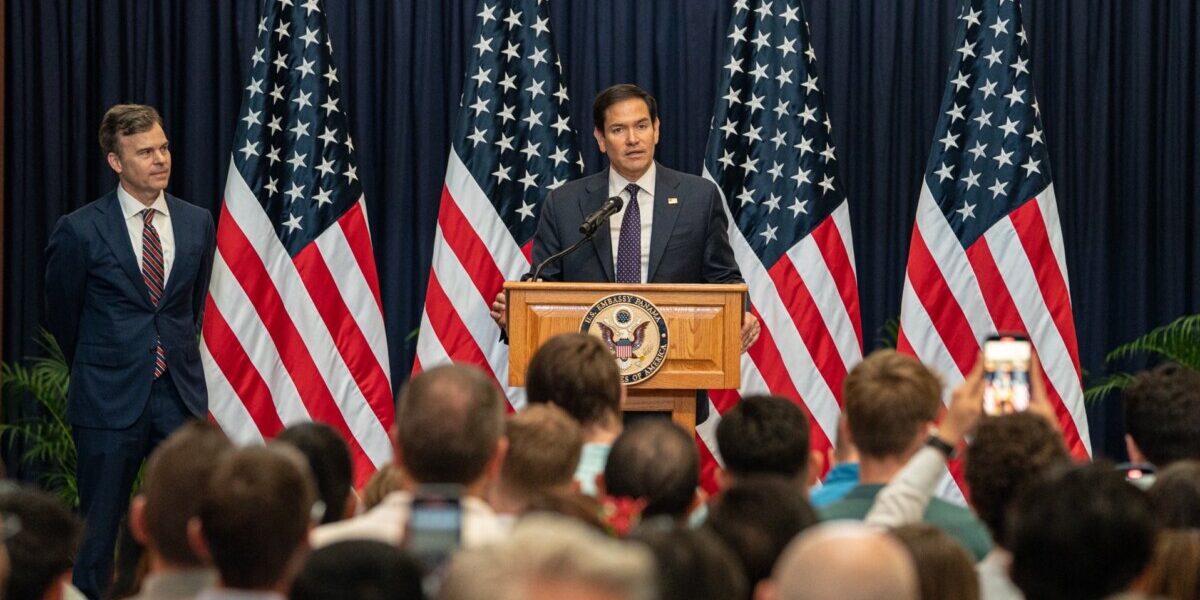
    US Secretary of State Marco Rubio has called on India and Pakistan to work together to de-escalate tensions following the deadly April 22, 2025, terror attack in Pahalgam, Jammu and Kashmir, which killed 26 civilians. In separate phone calls on Wednesday with Indian External Affairs Minister S. Jaishankar and Pakistani Prime Minister Shehbaz Sharif, Rubio emphasized the need for cooperation to maintain peace and security in South Asia, according to the US State Department.

    The Pahalgam attack, initially claimed by The Resistance Front (TRF), a proxy of the Pakistan-based Lashkar-e-Taiba (LeT), has reignited longstanding tensions between the nuclear-armed neighbors. India has accused Pakistan of supporting the attack, while Pakistan denies involvement and has called for a neutral investigation. The situation has been further inflamed by ceasefire violations along the Line of Control (LoC) for seven consecutive days, reciprocal airspace bans, India’s suspension of the 1960 Indus Waters Treaty, and the closure of the Attari-Wagah border crossing.

    During his call with Jaishankar, Rubio expressed sorrow for the lives lost and reaffirmed the United States’ commitment to cooperating with India in combating terrorism. He also encouraged India to engage with Pakistan to reduce tensions. In his conversation with Sharif, Rubio urged Pakistan to condemn the attack and cooperate fully in investigating what he described as an “unconscionable” act of terror, while stressing the importance of re-establishing direct communications between the two nations.

    State Department spokesperson Tammy Bruce underscored Washington’s active engagement, noting that the US is in touch with both countries at multiple levels to prevent further escalation. “The world is watching,” Bruce said, adding that Rubio has encouraged other global leaders to reach out to India and Pakistan to support a peaceful resolution.

    Pakistani Prime Minister Sharif, in response, accused India of “escalatory and provocative behavior” and urged the US to press New Delhi to “dial down the rhetoric.” He rejected allegations linking Pakistan to the attack and reiterated the need for a transparent probe, citing Pakistan’s own sacrifices in the fight against terrorism, including over 90,000 lives lost and $152 billion in economic damages.

    India’s Foreign Minister Jaishankar, meanwhile, emphasized the need for accountability, stating on X that India is resolved to bring the “perpetrators, planners, and backers” of the attack to justice. He expressed appreciation for the UN Secretary-General Antonio Guterres’ condemnation of the attack and noted India’s diplomatic outreach to non-permanent UN Security Council members to reinforce its stance against terrorism.

    The US has publicly condemned the Pahalgam attack, with President Donald Trump and Vice President JD Vance expressing solidarity with India, but has refrained from criticizing Pakistan directly. Analysts note that India’s growing strategic importance as a counterweight to China contrasts with Pakistan’s diminished role as a US ally following the 2021 Afghanistan withdrawal, shaping Washington’s balanced approach.

    International calls for restraint have intensified, with the United Nations and the United Kingdom also urging both nations to avoid actions that could lead to a broader conflict. As tensions persist, Rubio’s diplomatic outreach marks the highest level of US engagement to defuse the crisis since the attack, with Washington advocating for a “responsible solution” to prevent further escalation between the two nuclear powers.

  • “How Dare You”: Republican Lawmaker Slams Pakistan Over Minister’s ‘Dirty Work’ Claim Against U.S.

    “How Dare You”: Republican Lawmaker Slams Pakistan Over Minister’s ‘Dirty Work’ Claim Against U.S.

    Tensions between the United States and Pakistan have escalated following a sharp rebuke from Republican Congressman Rich McCormick, Co-Chair of the India Caucus, directed at Pakistan’s Defense Minister Khwaja Asif. The controversy stems from Asif’s recent claim that Pakistan has been doing the “dirty work” for the United States and the West for three decades, particularly in supporting terrorist organizations during the U.S.-led wars in Afghanistan.

    In a fiery response, McCormick demanded specifics from Asif, challenging the Pakistani minister to substantiate his allegations. “It makes me angry… How dare you?” McCormick stated, addressing the claims made during Asif’s interview with Sky News. “If Islamabad is going to accuse the U.S. of such actions, they need to provide evidence, not vague assertions,” he added, as reported by ANI. The congressman’s remarks reflect growing frustration in Washington over Pakistan’s narrative, especially amid strained bilateral relations following the deadly Pahalgam terror attack in Jammu and Kashmir, which killed 26 people.

    Asif’s comments, made on April 24, 2025, admitted Pakistan’s historical role in “backing, supporting, training, and funding” terrorist groups, describing it as a mistake driven by Western alliances during the Soviet-Afghan War and post-9/11 operations. He suggested that Pakistan suffered consequences for these actions, claiming the country’s “track record was unimpeachable” had it not joined these conflicts. However, Asif also accused India of staging the Pahalgam attack, further inflaming tensions with both India and the U.S.

    The Pahalgam attack, attributed to The Resistance Front (TRF), a proxy of the banned Lashkar-e-Taiba, prompted India to suspend the Indus Waters Treaty, close the Attari border post, and expel Pakistani diplomats. India’s Foreign Secretary Vikram Misri highlighted the attack’s cross-border linkages, intensifying diplomatic fallout. Meanwhile, Asif’s denial of TRF’s existence and his claim that Lashkar-e-Taiba is “extinct” have drawn skepticism, given Pakistan’s documented history of harboring militant groups.

    McCormick’s retort underscores a broader U.S. pushback against Pakistan’s attempts to deflect responsibility. Analysts note that Asif’s remarks may strain the already fragile U.S.-Pakistan relationship, which has faced challenges since the 2018 suspension of U.S. military aid over Pakistan’s “double game” in counterterrorism. The Biden administration has yet to respond officially to Asif’s claims, but McCormick’s outspoken criticism signals a potential shift toward a harder line in Congress.

    The episode has also sparked debate on social media, with posts on X reflecting polarized sentiments. Some users echo McCormick’s indignation, while others view Asif’s admission as a rare acknowledgment of Pakistan’s past policies. As tensions simmer, the U.S. and Pakistan face a critical juncture in navigating their strategic partnership amid rising regional instability.

  • F-47 vs. F-35: The Future of Air Dominance Unveiled

    F-47 vs. F-35: The Future of Air Dominance Unveiled

    F-47 vs. F-35: The F-35 Lightning II and the upcoming F-47 represent significant advancements in fighter jet technology, each serving distinct roles in modern warfare. The F-35, already in service, is a versatile multirole fighter used for air superiority, strike, and reconnaissance. In contrast, the F-47, part of the Next Generation Air Dominance (NGAD) program, is designed for air superiority in highly contested environments and is expected to integrate with uncrewed systems.

    Key Points

    • The F-35 is a fifth-generation multirole fighter jet, while the F-47 is a sixth-generation air superiority fighter, still in development.
    • Research suggests the F-35 has a top speed of Mach 1.6 and a range of 2,800 km, while the F-47 seems likely to offer longer range and advanced stealth.
    • The F-35 costs around $100 million per unit, but the F-47’s estimated cost is $300 million, reflecting its advanced technology.
    • It appears the F-35 is operational across multiple variants, while the F-47’s capabilities are not fully disclosed, adding uncertainty to comparisons.

    Specifications and Capabilities

    The F-35 comes in three variants: F-35A (conventional takeoff), F-35B (short takeoff/vertical landing), and F-35C (carrier-based), with a top speed of Mach 1.6 and a range of 2,800 km. It features advanced stealth, a powerful sensor suite, and can carry various munitions internally and externally. The F-47, however, is still under development, with limited public details, but it is expected to have superior stealth, longer range, and possibly hypersonic capabilities, designed to work with uncrewed collaborative combat aircraft.

    Cost and Production

    The F-35’s unit cost is approximately $100 million, with efforts to reduce costs through production. The F-47, estimated at $300 million per unit, reflects its advanced technology, but its higher cost may limit production compared to the F-35.

    Strategic Implications

    While the F-35 is already enhancing global partnerships and national security, the F-47 aims to address future threats, particularly against advanced adversaries. This transition highlights the US Air Force’s focus on maintaining air dominance in an evolving geopolitical landscape.

    Detailed Comparison of F-47 and F-35 Fighter Jets

    Background and Development

    The F-35, developed by Lockheed Martin, is a family of single-seat, single-engine, supersonic stealth strike fighters, designed to meet the needs of multiple services, including the US Air Force, Navy, and Marine Corps, as well as international partners. It entered service in 2016 and has been produced in three variants: F-35A (conventional takeoff and landing), F-35B (short takeoff/vertical landing), and F-35C (carrier variant). The program, initially estimated at $200 billion in 2001, has faced cost overruns and delays but is now in full production, with costs per unit around $82.5 million for F-35A as of recent reports.
    The F-47, on the other hand, is Boeing’s entry into the sixth-generation fighter category, announced in March 2025 as part of the NGAD initiative. It aims to replace the F-22 Raptor and complement the F-35, focusing on air superiority in contested environments. Development began with experimental tests flying since 2020, and the program faced a temporary pause in 2024 due to cost concerns, with per-unit estimates reaching $300 million. Much of its design remains classified, but it is expected to field by the end of the decade.

    Role and Mission

    The F-35 is designed as a multirole fighter, capable of air superiority, strike, and reconnaissance missions. Its versatility allows it to replace older aircraft like the F-16 and A-10, serving multiple roles across different branches. It is equipped to operate in network-centric warfare, sharing data with other platforms to enhance situational awareness.
    In contrast, the F-47 is primarily an air superiority fighter, intended to engage and defeat advanced adversary air defenses and fighters in highly contested environments. It is part of a “family of systems” approach, integrating with uncrewed collaborative combat aircraft (CCA) to enhance combat effectiveness through swarming and distributed operations. This focus on air dominance suggests a more specialized role compared to the F-35’s broader mission set.

    Specifications and Capabilities

    Given the classified nature of the F-47, its specifications are not fully disclosed, but we can compare it with the F-35 based on available data and expected sixth-generation features.

    Dimensions and Weight

    • F-35: The F-35A has a length of 51.4 ft (15.7 m), wingspan of 35 ft (10.7 m), height of 14.4 ft (4.39 m), and an empty weight of 28,999 lb (13,154 kg). Variants like F-35B and F-35C have slight variations, with F-35C having a larger wingspan of 43 ft (13.1 m) for carrier operations.
    • F-47: Expected to be larger, trading maneuverability for range and stealth, with details such as dimensions and weight not publicly available. Analysts suggest it may have a design optimized for long-range missions, potentially with a forward fuselage and sharply swept-back wings, as hinted in recent renderings.

    Performance

    • F-35: Achieves a maximum speed of Mach 1.6 at high altitude, with a combat radius of 669 nmi (1,239 km) for interdiction and 760 nmi (1,410 km) for air-to-air on internal fuel. It has a service ceiling of 50,000 ft (15,000 m) and can sustain 9 g maneuvers (F-35A).
    • F-47: Research suggests it will have significantly longer range, possibly exceeding 2,800 km, and may include hypersonic capabilities or improved supercruise performance. Its design is built for contested environments, implying enhanced speed and endurance compared to fifth-generation fighters.

    Stealth and Survivability

    • F-35: Features advanced stealth with a radar cross-section lower than a metal golf ball at certain frequencies, using radar-absorbent materials and a diverterless supersonic inlet. It can mount Luneburg lens reflectors to disguise its RCS for non-stealth missions.
    • F-47: Expected to have even more advanced stealth, potentially with new materials reducing infrared and acoustic signatures, making it virtually undetectable by current radar systems. This is crucial for operations against sophisticated air defenses like Russia’s S-400 or China’s HQ-9.

    Avionics and Sensors

    • F-35: Equipped with the AN/APG-81 AESA radar, AN/AAQ-37 Distributed Aperture System (DAS) for missile warning, and AN/AAQ-40 Electro-Optical Targeting System (EOTS) for targeting. It also features a helmet-mounted display system (HMDS) allowing pilots to see through the aircraft, with 8.6 million lines of code for Block 3F software.
    • F-47: Likely to include cutting-edge sensor fusion, possibly quantum-based sensors, and an open-systems architecture for frequent software and sensor upgrades. It is designed with a “built to adapt” mindset, enhancing situational awareness in networked battlespaces.

    Armament

    • F-35: Carries internal weapons in two bays, including AIM-120 AMRAAM for air-to-air and JDAM for air-to-ground, with external stations for non-stealth missions. It is certified for the B61 Mod 12 nuclear bomb and can carry up to 8 AIM-120s and 2 AIM-9s. Planned upgrades include the AIM-260 JATM and Mako hypersonic missile.
    • F-47: Expected to feature next-generation weapons, possibly directed energy weapons or hypersonic missiles, and is designed to integrate with CCA for extended firepower. Its armament will likely focus on air superiority, with internal bays for stealth operations.

    Integration with Other Systems

    • F-35: Operates within a network-centric warfare environment, using Multifunction Advanced Data Link (MADL) and Link 16 for data sharing. It is a node in the 21st Century Security vision, enhancing joint operations.
    • F-47: Part of a “family of systems,” it will work with uncrewed CCA, enhancing combat effectiveness through distributed operations. This integration is a key feature, allowing it to lead drone swarms and operate in highly contested battlespaces.

    Cost and Production

    • F-35: As of July 2024, flyaway costs are $82.5 million for F-35A, $109 million for F-35B, and $102.1 million for F-35C. The program’s total lifetime cost to 2070 is estimated at $1.5 trillion in then-year dollars, reflecting its international production and maintenance needs.
    • F-47: Estimated at $300 million per unit, with the initial Engineering and Manufacturing Development (EMD) contract worth $20 billion, potentially escalating to hundreds of billions over its lifecycle. Its higher cost may limit production, focusing on specialized roles rather than mass deployment.

    Strategic Implications and Controversies

    The F-35 has faced controversies, including cost overruns, technical flaws, and delays, but it remains a critical asset for the US and its allies, enhancing global partnerships. Its operational deployment has been praised for lethality and survivability, yet critics like Elon Musk have called it an “expensive & complex jack of all trades, master of none,” advocating for more investment in drone technology (X post: Insider Paper).
    The F-47, still in development, has sparked debate over its cost-effectiveness, with estimates three times that of the F-35 raising concerns about affordability. Its focus on air superiority and integration with uncrewed systems is seen as a response to emerging threats from China and Russia, but its high cost may strain defense budgets, especially given recent pauses in the NGAD program due to financial scrutiny.

    F-47 vs. F-35 Comparative Table

    Feature
    F-35 (A Variant)
    F-47 (Expected)
    Generation
    Fifth
    Sixth
    Role
    Multirole (air, strike, recon)
    Air Superiority
    Top Speed
    Mach 1.6
    Likely > Mach 1.6, possibly hypersonic
    Range
    2,800 km
    Significantly longer, potentially > 4,000 km
    Stealth
    Advanced, RCS like a golf ball
    More advanced, potentially near-invisible
    Cost per Unit
    ~$82.5 million (2024)
    ~$300 million (estimated)
    Avionics
    AN/APG-81 radar, DAS, EOTS, HMDS
    Advanced sensor fusion, quantum sensors
    Integration
    Network-centric, MADL, Link 16
    Family of systems, CCA integration
    Armament
    AIM-120, JDAM, B61 nuclear, external options
    Next-gen weapons, hypersonic, directed energy

    Conclusion

    The F-35 and F-47 represent evolutionary steps in fighter jet technology, with the F-35 already proving its worth in operational theaters and the F-47 poised to redefine air dominance. While the F-35 offers versatility and global reach, the F-47’s focus on advanced stealth, range, and integration with uncrewed systems addresses future threats in contested environments. As development progresses, the balance between cost, capability, and strategic need will shape their roles in the US Air Force’s future fleet.
  • China Sends Ominous Warning to US Ally: ‘Playing With Fire’ Amid Rising Tensions

    China Sends Ominous Warning to US Ally: ‘Playing With Fire’ Amid Rising Tensions

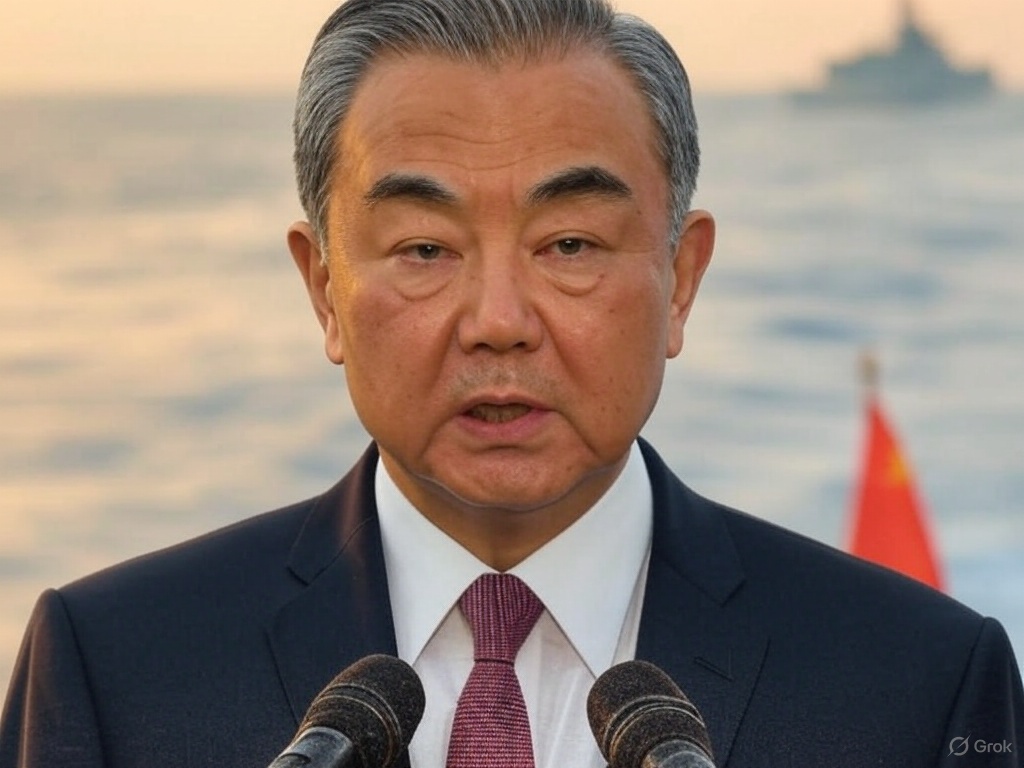
    Beijing, March 26, 2025 – China issued a stark warning to the Philippines on Tuesday, accusing the U.S. ally of “playing with fire” through its deepening military cooperation with the United States. The statement, delivered by Chinese Foreign Ministry spokesperson Guo Jiakun during a press conference in Beijing, comes as tensions in the South China Sea continue to escalate, raising fears of a broader regional conflict.
    The warning follows the Philippines’ decision to host the U.S. Army’s Mid-Range Capability (MRC) missile system, also known as Typhon, on its territory since April 2024. The system, capable of striking targets up to 1,000 miles away, places China’s eastern and southern coasts within its range, a development Beijing has repeatedly condemned as a “highly dangerous move.” Guo emphasized that military cooperation between the Philippines and other nations, including the U.S., “should not target any third party or harm their interests,” warning that such actions risk destabilizing the region.
    The Philippines, a long-standing U.S. treaty ally, has ramped up its defense ties with Washington in recent years, particularly under President Ferdinand Marcos Jr. The deployment of the MRC system, initially part of joint U.S.-Philippine war games, has now been extended indefinitely, a decision that has drawn sharp criticism from China. Manila’s ambassador to Washington, Jose Manuel Romualdez, recently stated that the Philippines aims to modernize its military with support from its allies to prepare for potential regional conflicts, a comment that appears to have provoked Beijing’s latest rebuke.
    “Inviting a wolf into the house is like playing with fire,” Guo said, using a Chinese idiom to underscore the perceived risks of the Philippines’ actions. He accused the U.S. of using the Philippines as a pawn to “stir up trouble” in the South China Sea, where China claims sovereignty over nearly 90% of the waters, including areas within the Philippines’ 200-nautical-mile exclusive economic zone. These claims have led to frequent clashes between Chinese and Philippine maritime forces, with Manila accusing Beijing of blockading traditional fishing grounds and using aggressive tactics like water cannons and lasers against Filipino vessels.
    The U.S. has reaffirmed its commitment to the Philippines under their Mutual Defense Treaty, with President Joe Biden stating last year that an attack on the Philippines, including in the South China Sea, would trigger an “ironclad” response. U.S. Defense Secretary Pete Hegseth is scheduled to visit the Philippines from Friday to Saturday, a trip that may include discussions on further MRC deployments, according to military sources. The U.S. Army has touted the MRC’s “deterrent effect,” with Secretary of the Army Dan Driscoll noting in a March 13 post on X that the system enhances interoperability with Philippine forces during crises.
    China’s warning also comes in the context of broader regional dynamics. The Philippines has strengthened military ties not only with the U.S. but also with Japan and Australia, both of whom are Washington’s allies in the Indo-Pacific. All four nations have conducted joint war games in the contested waters near the Philippines, further stoking Beijing’s concerns about a coordinated effort to counter its influence. “Facts have repeatedly proven that nothing good could come out of opening the door to a predator,” Guo added, signaling China’s frustration with what it sees as external interference in a region it considers its sphere of influence.
    The South China Sea remains a critical flashpoint, with the Philippines under Marcos vowing not to cede “even one square inch” of its territory. The ongoing disputes have garnered international support for Manila, with the U.S., its allies, and the G7 issuing statements backing the Philippines’ position. However, Beijing has accused the Southeast Asian nation of being a “mouthpiece” for the U.S. and spreading “Sinophobia,” claims the Philippine embassy in Washington has firmly rejected.
    As U.S.-China rivalry intensifies, the Philippines finds itself at the center of a geopolitical tug-of-war. Romualdez has warned that a single incident in the South China Sea could escalate into a broader conflict, potentially invoking the Mutual Defense Treaty and drawing the U.S. into direct confrontation with China. With both sides digging in, the region braces for what could be a perilous new chapter in an already volatile standoff.
  • Palestinians in Northern Gaza Demand End to Israel’s Renewed Offensive

    Palestinians in Northern Gaza Demand End to Israel’s Renewed Offensive

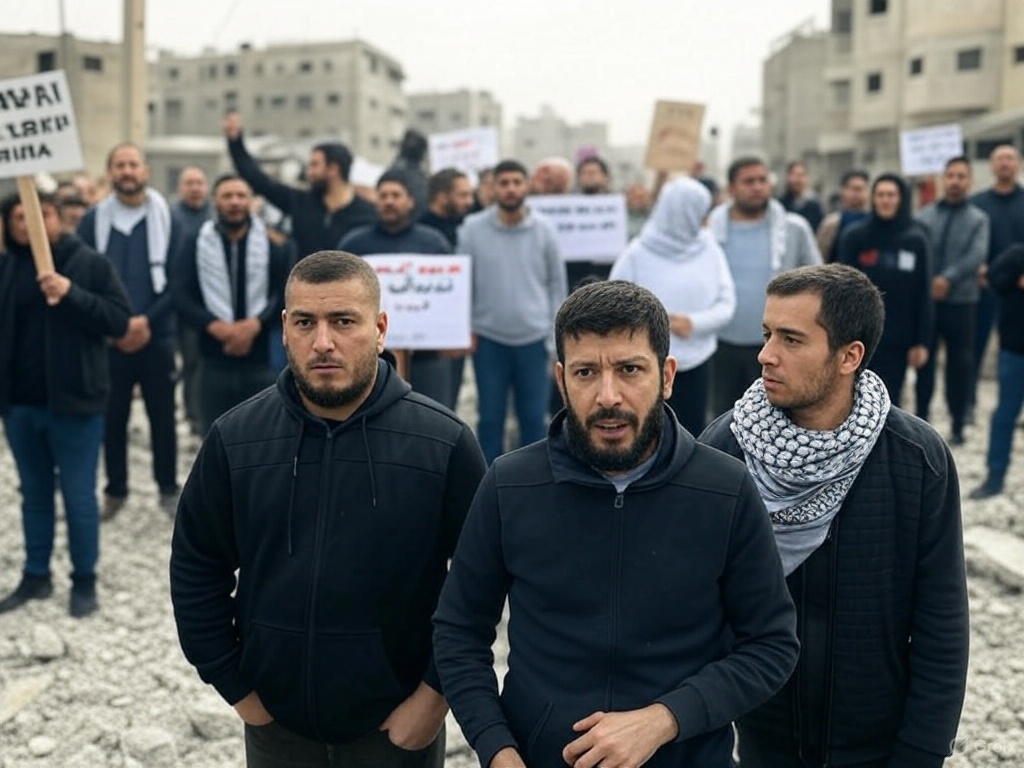
    Gaza City, March 26, 2025 – Hundreds of Palestinians took to the streets of Beit Lahia in northern Gaza on Tuesday, voicing their exhaustion and desperation as Israel’s military campaign intensifies following the collapse of a fragile ceasefire. Chanting slogans such as “Yes to peace, no to Hamas’ tyrannical rule” and “Enough of the war, enough of the destruction,” protesters called for an immediate end to the violence that has claimed over 50,000 lives since October 2023, according to Gaza’s Hamas-run Health Ministry.
    The rare public demonstration against both Israel’s onslaught and Hamas’ governance marks a significant shift in sentiment among residents of the war-torn enclave. Videos circulating on social media showed young men marching through the rubble-strewn streets, waving signs and demanding relief from the relentless conflict that has reduced much of northern Gaza to ruins. “We want an end to the war,” one protester shouted, echoing a growing chorus of frustration as humanitarian conditions deteriorate.
    Israel resumed its military operations in Gaza on March 18, following nearly two months of relative calm under a ceasefire brokered in January. The Israeli military has accused Hamas of rejecting a U.S.-proposed extension of the truce, while Hamas claims Israel abandoned the original agreement. Since the resumption of hostilities, hundreds of Palestinians have been killed, and thousands more displaced, with pre-dawn airstrikes on residential areas claiming at least 23 lives, including children, in the past 24 hours alone, local health officials report.
    The protests come amid a dire humanitarian crisis. The United Nations has warned that no food, water, medicine, or fuel has entered Gaza in three weeks, pushing the region toward an “acute hunger crisis.” An estimated 70% of buildings in Gaza have been damaged or destroyed, and healthcare and sanitation systems have collapsed, leaving residents with little access to basic necessities. “Our voices must reach the world,” read a message shared online by protest organizers. “Gaza is not silent, and we will not accept being eradicated.”
    The Israeli military has expanded its operations across northern and southern Gaza, issuing evacuation orders to tens of thousands of residents and encircling neighborhoods like Tal al-Sultan in Rafah. However, residents in Beit Lahia and other areas report receiving no prior warnings, forcing families to flee under fire with whatever they can carry. “They did not drop leaflets or give us time to leave,” said one displaced resident. “We are trapped between bombs and starvation.”
    International reactions have been swift. A UN official described Israel’s assault as a “bloody stain on our collective consciousness,” while Egypt has proposed a new ceasefire plan involving a phased release of Israeli hostages in exchange for a full military withdrawal from Gaza. The proposal, backed by U.S. guarantees, awaits a response from both sides as violence escalates.
    In Gaza, the protests were met with a harsh response from Hamas militants, some of whom were seen dispersing crowds with batons and gunfire. The militant group, which has controlled Gaza since 2007, has faced growing criticism from within for its handling of the war and the humanitarian crisis. “Hamas out!” chanted demonstrators, signaling a rare public challenge to the group’s authority.
    As the death toll climbs and displacement surges, the calls for peace from northern Gaza underscore the mounting toll of a conflict that shows no signs of abating. With the international community urging de-escalation, the voices of ordinary Palestinians are growing louder, demanding an end to the suffering that has defined their lives for over 17 months.
  • After Iran’s Missile Attack On Israel, US’ “Severe Consequences” Warning

    After Iran’s Missile Attack On Israel, US’ “Severe Consequences” Warning

    Iran launched a barrage of 181 ballistic missiles at Israel on Tuesday night, setting off air raid sirens across the nation and forcing nearly 10 million Israelis into bomb shelters. The Israel Defense Forces (IDF) reported that a significant number of the missiles were intercepted by the country’s advanced missile defence systems, including the Iron Dome and Arrow systems. However, a few projectiles managed to breach the defence shield, causing minor damage and light injuries.

    Israeli Prime Minister Benjamin Netanyahu strongly condemned the attack, stating that Iran had made a “big mistake” and warned Tehran that it “will pay for it.”

    This missile barrage is the second direct attack by Iran on Israel this year, following a similar offensive in April, which was quickly neutralised by Israeli and allied defences. Tuesday’s strikes, according to Iranian officials, were in retaliation for the recent killing of senior Hezbollah leader Hassan Nasrallah and Hamas leader Ismail Haniyeh in Israeli military operations.

    Guy Nir, spokesperson for the Israeli embassy in India, speaking exclusively to NDTV, stated that an appropriate response will be given to Tehran. “If Ayatollah Ali Khamenei is planning to start a full-scale war with Israel, it will be a big mistake for them (Iran),” Mr Nir told NDTV. “Israel’s response will be strategic and precise, not a full-scale war. I don’t think either side wants that.”

    In response to the attack, US National Security Advisor Jake Sullivan issued a stern warning to Iran, stating that the missile strike marked a “significant escalation” and that there would be “severe consequences.” During a press briefing at the White House, Sullivan assured that the US would stand by Israel and support any retaliatory actions.

    US President Joe Biden echoed this sentiment, expressing complete support for Israel and mentioning that military discussions were underway to decide on an appropriate response. Biden assured that the US military would assist in Israel’s defence and help intercept any further Iranian missile strikes. When asked about the extent of US involvement, Biden stated that discussions on a joint response were “active” and “ongoing.”

    UN Secretary-General Antonio Guterres condemned the attack, urging an immediate ceasefire and warning against the escalation of the conflict in the Middle East. “This must stop. We urgently need a ceasefire,” Guterres stated.

    As tensions continued to rise, Jordan, Iraq, and Israel closed their airspace, and flights were suspended at Tehran International Airport, Ben Gurion Airport in Israel, and other regional airports. Neighbouring countries like Iraq and Jordan are preparing for potential fallout, with Iran-backed Iraqi militias threatening to target US bases in the region if Washington intervenes in the conflict.

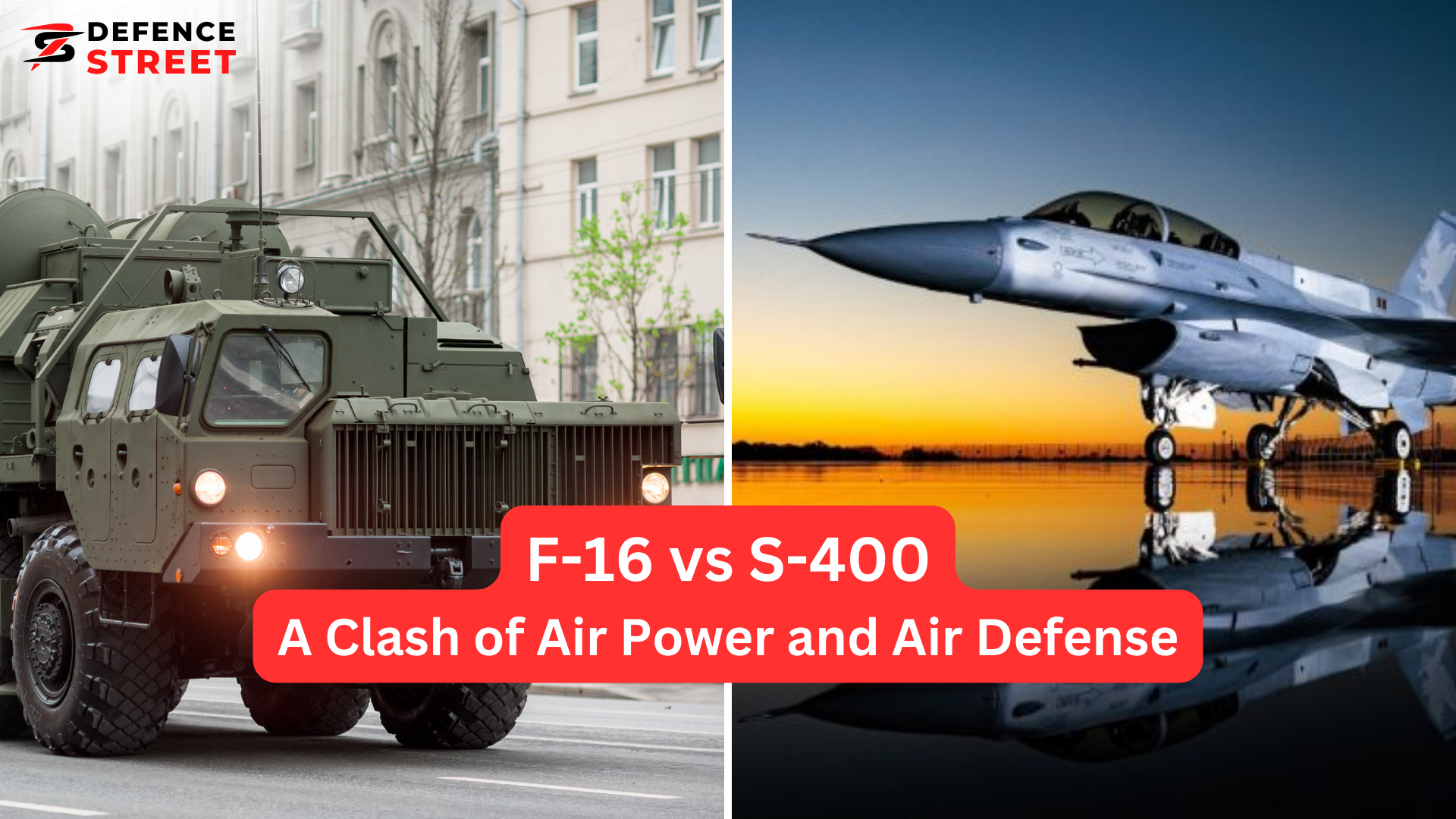
  • F-16 vs S-400 – A Clash of Air Power and Air Defense

    F-16 vs S-400 – A Clash of Air Power and Air Defense

    F-16 vs S-400: The F-16 Fighting Falcon and the S-400 Triumph represent two pinnacles of modern military technology, embodying air power and air defense, respectively. The F-16, renowned for its agility, advanced avionics, and multirole capabilities, dominates the skies with unmatched versatility. In contrast, the S-400, with its long-range precision and multi-target tracking, stands as a formidable shield against aerial threats. This clash of titans, where an agile predator meets a sophisticated guardian, offers a fascinating insight into the dynamics of modern warfare. In this comparative analysis, we explore the strengths, weaknesses, and tactical implications of these powerful systems.

    Western countries have pledged F-16s to Kyiv, and some have arrived in Ukraine, officials in Washington and Ukraine confirmed to The Associated Press. The fighter jets are expected to start flying sorties in Ukrainian skies soon and will be a much-needed boost to the country’s current fleet of Soviet-era jets that are laboring to counter Russia’s invasion. India is closely Watching this Military Battle between S-400 and F-16.

    F-16 vs S-400 Comparison

    Overview of the F-16 Fighting Falcon

    The F-16 Fighting Falcon is a multirole fighter jet developed by General Dynamics, now Lockheed Martin, for the United States Air Force. Since its introduction in 1978, the F-16 has become one of the most versatile and widely used fighter jets in the world. Key features of the F-16 include:

    • Speed and Agility: Capable of reaching speeds over Mach 2, the F-16 is known for its exceptional maneuverability, allowing it to perform a variety of combat roles including air-to-air combat, ground attack, and reconnaissance missions.
    • Advanced Avionics: Equipped with cutting-edge radar and electronic warfare systems, the F-16 can detect, track, and engage multiple targets simultaneously.
    • Armament: The F-16’s arsenal includes a 20mm M61 Vulcan cannon, a variety of air-to-air and air-to-ground missiles, and precision-guided bombs, making it a formidable opponent in both air and ground combat.

    Overview of the S-400 Triumph

    The S-400 Triumph, developed by Russia’s Almaz-Antey, is a next-generation surface-to-air missile system designed to provide comprehensive air defense against a range of aerial threats. First deployed in 2007, the S-400 has been adopted by several countries for its impressive capabilities:

    • Long-Range Precision: The S-400 can engage targets at distances of up to 400 km (248 miles) and altitudes of up to 30 km (98,425 ft), providing extensive coverage and protection.
    • Multi-Target Tracking: Utilizing advanced phased array radar, the S-400 can track and target multiple aircraft, missiles, and drones simultaneously.
    • Diverse Armament: The system can launch various missile types, including the 48N6E2, 40N6, and 9M96E2, tailored for different ranges and target profiles.

    F-16 vs S-400 Data Table

    Here is a detailed comparison table highlighting key data points for the F-16 Fighting Falcon and the S-400 Triumph:

    Feature F-16 Fighting Falcon S-400 Triumph
    Type Multirole Fighter Jet Surface-to-Air Missile Defense System
    Country of Origin United States Russia
    Manufacturer Lockheed Martin Almaz-Antey
    First Introduced 1978 2007
    Crew 1 N/A
    Role Air superiority, ground attack, reconnaissance Long-range air defense
    Speed Mach 2+ (2,414 km/h or 1,500 mph) N/A
    Range 4,220 km (2,620 miles) with drop tanks Up to 400 km (248 miles)
    Ceiling 15,240 m (50,000 ft) Targets up to 30 km (98,425 ft) altitude
    Armament – 20mm M61 Vulcan cannon – 48N6E2, 40N6, 9M96E2 missiles
    – Air-to-air and air-to-ground missiles – 72N6E, 92N6E radars
    – Bombs – Up to 72 missiles per system
    Avionics Advanced radar, electronic warfare systems Phased array radar, command and control systems
    Target Detection Range 370 km (229 miles) Up to 600 km (373 miles)
    Maximum Target Speed Mach 2+ Mach 14 (17,000 km/h or 10,563 mph)
    Operational Radius 550 km (340 miles) combat radius Effective against targets up to 400 km (248 miles)
    Deployment Time N/A 5-10 minutes
    Primary Users United States, Israel, Egypt, Turkey, and others Russia, China, India, Turkey, and others

    Strengths and Weaknesses

    F-16 Fighting Falcon:

    • Strengths: Exceptional speed and agility, versatile combat roles, advanced avionics, and a wide range of armament options.
    • Weaknesses: Requires significant logistical support, limited by range without refueling, and vulnerable to sophisticated air defense systems like the S-400.

    S-400 Triumph:

    • Strengths: Long-range engagement capability, ability to track and target multiple threats, diverse missile options, and rapid deployment.
    • Weaknesses: Expensive to deploy and maintain, dependent on advanced radar and command systems, and potentially vulnerable to electronic warfare tactics.

    Tactical Implications

    In a hypothetical engagement between the F-16 and the S-400, several factors would come into play. The F-16’s speed and maneuverability would be critical in evading and countering the S-400’s missiles. However, the S-400’s ability to detect, track, and engage multiple targets at long range would pose a significant challenge to the F-16. The outcome of such an encounter would depend heavily on the tactics employed, the environment, and the effectiveness of electronic warfare measures.

    Conclusion

    The F-16 Fighting Falcon and the S-400 Triumph represent two sides of modern warfare’s technological coin: air power and air defense. Each system boasts impressive capabilities and distinct advantages, making them formidable in their respective roles. Understanding their strengths, weaknesses, and tactical applications provides valuable insights into the evolving landscape of military strategy and technology.

  • Top 10 Best Special Forces in the World 2024 [Updated]

    Top 10 Best Special Forces in the World 2024 [Updated]

    In the shadowy world of military operations, where precision, secrecy, and skill converge, special forces units stand as the pinnacle of elite warfare. These units are the unsung heroes, undertaking the most dangerous missions and responding to the gravest threats with unmatched expertise. As we delve into 2024, it’s time to spotlight the top 10 special forces units that epitomize excellence and bravery on the global stage.

    Our meticulously curated list considers their capabilities, accomplishments, and impact, showcasing the most formidable and renowned special forces units around the world. From counterterrorism and hostage rescues to covert reconnaissance and direct action missions, these elite units operate with a level of proficiency and dedication that sets them apart.

    Best Special Forces in the World

    Below is our comprehensive compilation of the world’s best special forces. Our list takes into account a wide array of factors, meticulously considering each unit’s capabilities and accomplishments to identify the most formidable and dangerous forces as of 2024.

    • United States Navy SEALs (SEAL Team Six): Known for their counterterrorism and special reconnaissance capabilities, SEAL Team Six is an elite unit within the U.S. Navy SEALs.
    • Indian MARCOS (Marine Commando Force): MARCOS is an elite unit of the Indian Navy, specializing in amphibious warfare and counterterrorism.
    • Israeli Sayeret Matkal: A top-tier unit within the Israel Defense Forces (IDF), Sayeret Matkal specializes in intelligence gathering and special operations.
    • Russian Spetsnaz: The Russian Special Forces are highly trained in various disciplines and have been involved in various operations worldwide.
    • French GIGN (National Gendarmerie Intervention Group): GIGN is known for its expertise in counterterrorism and hostage rescue operations.
    • Canadian JTF2 (Joint Task Force 2): JTF2 is Canada’s elite special operations force, involved in various classified missions.
    • United States Army Delta Force (1st Special Forces Operational Detachment-D): A specialized unit within the U.S. Army, Delta Force is involved in counterterrorism and high-value target missions.
    • British SAS (Special Air Service): Renowned for their expertise in counterterrorism, hostage rescue, and reconnaissance missions, the SAS is one of the oldest and most respected Special Forces units.
    • German KSK (Kommando Spezialkräfte): KSK is the Special Forces unit of the German Army and is recognized for its counterterrorism and special operations capabilities.
    • Australian SASR (Special Air Service Regiment): The SASR is renowned for its versatility and expertise in unconventional warfare and counterterrorism.

    World’s Elite Special Forces: The Ultimate Compilation

    Our comprehensive list highlights the world’s top special forces, assessing their capabilities, accomplishments, and reputation to identify the most formidable and dangerous units in 2024.

    1. United States Navy SEALs (SEAL Team Six)

    The United States Navy SEALs, also known as SEAL Team Six, is one of the most renowned and elite Special Operations Forces in the world. SEAL Team Six is a specialized unit within the broader U.S. Navy SEAL community and is officially designated as the Naval Special Warfare Development Group (DEVGRU).

    • Designation: Naval Special Warfare Development Group (DEVGRU)
    • Specialties: Counterterrorism, special reconnaissance
    • Notable Missions: Osama bin Laden’s capture
    • Training: Rigorous courses in combat diving, airborne operations, close-quarters combat
    • Global Reach: Engages in diverse operations worldwide, including humanitarian missions
    • Collaboration: Works with other U.S. Special Operations units and international allies

    2. Indian MARCOS (Marine Commando Force)

    The Marine Commando Force, commonly known as MARCOS, is an elite Special Operations unit of the Indian Navy, specializing in maritime and amphibious warfare, as well as counterterrorism.

    • Specialties: Maritime and amphibious warfare, counterterrorism
    • Key Missions: Coastal and urban counterterrorism operations
    • Training: Intense selection and training in underwater demolitions, parachute operations, jungle warfare
    • Covert Operations: Skilled in classified missions
    • International Exercises: Participates in joint drills with global counterparts

    3. Israeli Sayeret Matkal

    Sayeret Matkal is an elite Special Forces unit of the Israel Defense Forces (IDF) and is considered one of the most skilled and secretive Special Forces units in the world.

    • Specialties: Intelligence gathering, special operations
    • Notable Missions: Operation Thunderbolt (Entebbe raid)
    • Selection: Grueling process focusing on mental and physical toughness
    • Operations: Conducts high-risk counterterrorism and hostage rescues
    • Versatility: Operates in diverse environments, from reconnaissance to targeted assassinations

    4. Russian Spetsnaz

    The term “Spetsnaz” refers to special purpose units in the Russian military, encompassing various Special Forces units and elite troops under different branches of the Armed Forces.

    • Branches: Army, Airborne Forces (VDV), Navy, Federal Security Service (FSB)
    • Specialties: Unconventional warfare, counterterrorism
    • Training: Demanding combat skills, survival techniques
    • History: Storied legacy since WWII, known for bravery and effectiveness
    • Operations: Conducts secretive and classified missions

    5. French GIGN (National Gendarmerie Intervention Group)

    The GIGN, which stands for Groupe d’Intervention de la Gendarmerie Nationale, is the elite Special Operations unit of the French National Gendarmerie, known for its exceptional skill in counterterrorism and hostage rescue operations.

    • Specialties: Counterterrorism, hostage rescue
    • Notable Operations: Domestic and international crisis response
    • Training: Rigorous selection, multidisciplinary skills including negotiation and marksmanship
    • Collaboration: Works closely with French and international Special Forces
    • Equipment: Advanced weaponry and tactical gear

    6. Canadian JTF2 (Joint Task Force 2)

    Joint Task Force 2 (JTF2) is the elite Special Operations unit of the Canadian Armed Forces, known for its high level of training and operational effectiveness.

    • Specialties: Counterterrorism, reconnaissance, direct action
    • Hostage Rescue: Highly trained for precision missions
    • Selection: Rigorous process ensuring top-tier operators
    • Operations: Domestic focus with significant international deployments
    • Collaboration: Engages in joint operations with allied forces

    7. United States Army Delta Force (1st Special Forces Operational Detachment-D)

    Delta Force, officially known as the 1st Special Forces Operational Detachment-Delta (1st SFOD-D), is a highly specialized and secretive Special Operations unit within the United States Army.

    • Specialties: Counterterrorism, high-value target missions
    • Tier-One Status: Operates at the highest secrecy and priority
    • Selection: Extremely challenging process
    • Operations: Known for successful covert missions and hostage rescues
    • Collaboration: Works with other U.S. and international Special Operations units

    8. British SAS (Special Air Service)

    The British Special Air Service (SAS) is one of the most distinguished and renowned Special Forces units globally, with a rich history dating back to its formation during World War II.

    • Specialties: Counterterrorism, reconnaissance, hostage rescue
    • History: Formed during WWII, highly influential in Special Forces development worldwide
    • Selection: Notoriously tough, focusing on extreme physical and mental endurance
    • Operations: Adapts to various environments, renowned for versatility
    • Legacy: Influences global Special Forces training and tactics

    9. German KSK (Kommando Spezialkräfte)

    The Kommando Spezialkräfte (KSK) is the elite Special Forces unit of the German Army, renowned for its specialized capabilities and contributions to both domestic and international operations.

    • Specialties: Counterterrorism, unconventional warfare
    • Training: Intense physical and combat training
    • Operations: Participates in multinational missions
    • Precision: Emphasizes accuracy in marksmanship
    • Versatility: Adapts to diverse mission profiles and environments

    10. Australian SASR (Special Air Service Regiment)

    The Special Air Service Regiment (SASR) is the elite Special Forces unit of the Australian Army, recognized for its extensive combat experience and proficiency in various types of missions.

    • Specialties: Counterterrorism, reconnaissance, long-range patrols
    • Selection: Stringent process focusing on combat skills and endurance
    • International Deployments: Actively supports global security efforts
    • Operations: Skilled in operating in remote and harsh environments
    • Collaboration: Engages in joint exercises with Australian and international forces

    Conclusion 

    As we conclude our exploration of the top 10 special forces in the world for 2024, it’s clear that these elite teams represent the pinnacle of military prowess. Each unit, with its unique strengths and unparalleled expertise, stands ready to tackle the most challenging and high-stakes missions. Their stories of bravery, precision, and dedication inspire and remind us of the immense sacrifices made to ensure global security.

    These special forces units operate in the shadows, often unknown to the public, yet their impact on national and international security is profound. They exemplify the highest standards of military excellence, embodying the courage and resilience necessary to confront the most formidable threats.

    As we honor these remarkable warriors, we acknowledge the continuous evolution and adaptation required to remain at the forefront of special operations. Their relentless training, advanced tactics, and unwavering commitment to their missions set them apart as the world’s most elite and respected forces.

    In a world where new threats emerge and old ones persist, these special forces units remain the ultimate defenders of peace and stability. Their legacy of excellence not only safeguards our present but also shapes the future of global security.

  • Iran attack on Israel ‘a prelude to World War 3′, Columbian President blames US: See world leaders reaction

    Iran attack on Israel ‘a prelude to World War 3′, Columbian President blames US: See world leaders reaction

    Tensions in the Middle East escalated significantly when Iran launched a direct military attack on Israel. World leaders and the United Nations swiftly condemned Iran’s actions, warning that the attack could further destabilize the entire region. Meanwhile, Colombian President has directly accused US policies of exacerbating the tension. This accusation has sparked reactions from leaders worldwide, who are all commenting on the implications of the attack.

    Iran attack on Israel: World leaders react

    Following Iran’s launch of multiple-front attacks using suicide drones and missiles, Netanyahu stated that Israel had been preparing for a direct attack by Iran in recent weeks. He emphasized that Israel is prepared to engage in both offensive and defensive actions, stating, “Our defensive systems are deployed, and we are prepared for any scenario. The State of Israel and the IDF are strong, and the public is resilient.”

    Expressing gratitude for the support from its allies, Netanyahu stated, “We appreciate the United States standing alongside Israel, as well as the support of Britain, France, and many other countries. We have established a clear principle: whoever harms us, we will harm them. We will defend ourselves against any threat, doing so calmly and resolutely.”

    The Islamic Revolutionary Guard Corps (IRGC) of Iran stated that the recent attack targeted specific locations. The IRGC justified its military action as a response to what it deemed as Israeli aggression against Iranian diplomatic premises in Damascus. The IRGC concluded by warning the United States to refrain from involvement, stating that any further Israeli actions would lead to a more severe Iranian response. The IRGC framed the conflict as between Iran and the Israeli government, asserting that the United States must not intervene.

    US President Joe Biden, who interrupted his weekend beach retreat to return to the White House upon learning of the attack, pledged “ironclad” support for Israel after convening an emergency meeting with top security advisors. The President is said to have communicated with Israeli Prime Minister Benjamin Netanyahu.

    “I just met with my national security team for an update on Iran’s attacks against Israel. Our commitment to Israel’s security against threats from Iran and its proxies is ironclad,” Biden official X handle updated the information.

    The European Union’s foreign affairs chief, Josep Borrell, described the strikes as “an unparalleled escalation and a serious threat to regional security” in a statement on X.

    The Colombian President expressed concern about escalating tensions and the potential for a broader conflict, criticizing U.S. support that is perceived to contribute to global instability. He stated, “It was foreseeable; we are now in the prelude to World War III, precisely at a time when humanity should be focusing on rapidly decarbonizing the economy. The U.S.’s practical support for what is seen as genocide has sparked global unrest. The beginning of wars is known to all, but their end remains uncertain. If only the people of Israel were as wise as their ancestors to halt the madness of their leader. The United Nations must convene urgently and commit to peace immediately.”

    President Javier Milei expressed solidarity and unwavering support for the State of Israel following the attacks by Iran. He stated, “The Republic of Argentina acknowledges the right of sovereign nations to defend themselves and stands firmly with the State of Israel in safeguarding its sovereignty, especially against regimes that propagate terror and aim to dismantle Western civilization.”