Category: World

  • Iran Attacks Israel In Retaliation, Raises Fears Of A Regional War

    Iran Attacks Israel In Retaliation, Raises Fears Of A Regional War

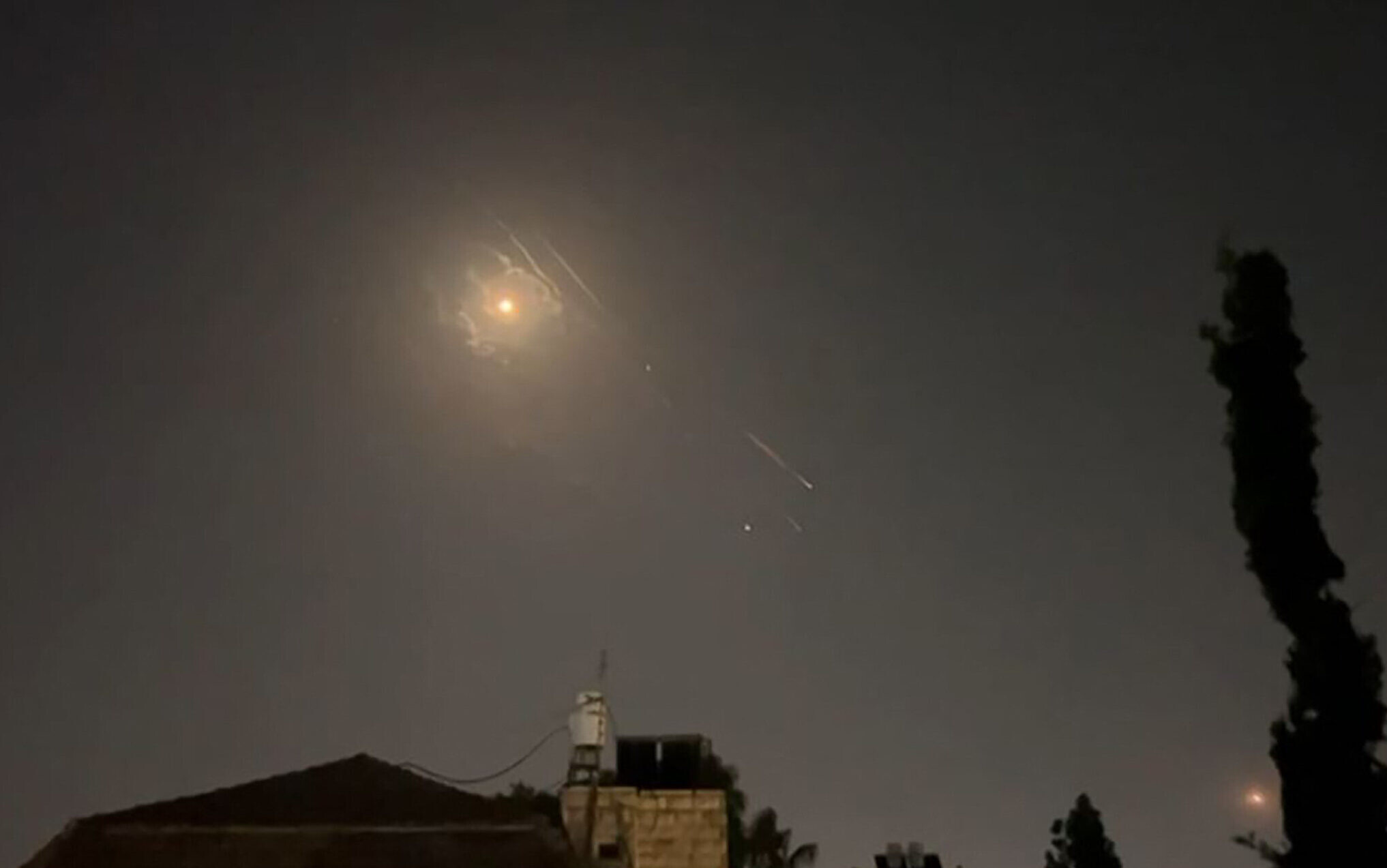
    Iran carried out an extensive drone and missile strike on Israel, an action that had not been seen before. This attack came after Iran promised to respond to an earlier strike on its consular building in Syria.

    Iran launched more than 200 drones and missiles at Israel, while its proxies and allies also conducted coordinated attacks on Israeli positions. An Israeli army spokesman described it as “The regime in Iran sent a massive swarm of over 200 killer drones, ballistic missiles and cruise missiles.”

    Iran claims it acted in “self-defense” following the targeting of its diplomatic mission in Damascus. It expressed hope that its actions would not lead to further escalation and that “the matter can be considered closed.”

    The Israeli army stated that Iran’s attack on Israel, involving hundreds of drones and missiles, was “thwarted,” with 99 percent of them intercepted. The statement mentioned that troops are stationed on all fronts, ready, and actively defending Israeli territory.

    However, some White House officials informed local media that the US would not engage in any offensive actions against Iran. These comments were reportedly made during a phone call between Biden and Netanyahu earlier today, the officials stated.

    Israeli Prime Minister Netanyahu has pledged to respond both defensively and offensively, stating that Israel has been preparing for a direct attack from Iran for many years.

    The European Union, United Kingdom, France, Mexico, Czechia, Denmark, Norway, and the Netherlands have all denounced Iran’s attack. The president of the UN Security Council announced that the body will convene an emergency meeting today to discuss Iran’s unprecedented drone and missile strike on Israel.

    India expressed serious concern over the escalation of hostilities between Israel and Iran, which poses a threat to peace and security in the West Asia region. A statement from the Foreign Ministry called for immediate de-escalation, urging all parties to exercise restraint, refrain from violence, and return to the path of diplomacy.

    The Gaza war between Israel and Hamas, now in its seventh month, has driven up tensions in the region, spreading to fronts with Lebanon and Syria and drawing long-range fire at Israeli targets from as far away as Yemen and Iraq.

    The escalating clashes now risk evolving into a direct, open conflict involving Iran and its regional allies against Israel and its primary supporter, the United States. Regional power Egypt has urged all parties to exercise “utmost restraint.”

  • Pakistan launches retaliatory airstrikes on Iran after Tehran attack, killing at least 9 people

    Pakistan launches retaliatory airstrikes on Iran after Tehran attack, killing at least 9 people

    On Thursday, Pakistan’s air force conducted retaliatory airstrikes in the early hours on alleged militant positions in Iran. The attack resulted in at least 9 casualties and escalated tensions between the two neighboring nations.

    A man looks at a television screen after the Pakistani foreign ministry said the country conducted strikes inside Iran targeting separatist militants, two days after Tehran said it attacked Israel-linked militant bases inside Pakistani territory, in Karachi, Pakistan January 18, 2024. REUTERS/Akhtar Soomro

    The airstrikes in Sistan and Baluchestan province came in response to Iran’s assault on Tuesday within Pakistani territory, which resulted in the tragic death of two children in the southwestern Baluchistan province.

    The airstrikes pose a threat to diplomatic relations between the two neighboring countries. Iran and nuclear-armed Pakistan have harbored mutual suspicions for an extended period, particularly in relation to militant attacks.

    The attacks have also heightened the risk of violence spreading in the unsettled Middle East, which is already grappling with Israel’s conflict with Hamas in the Gaza Strip. Additionally, Iran conducted airstrikes in Iraq and Syria late on Monday in response to an Islamic State-claimed suicide bombing that resulted in over 90 casualties earlier this month. In response to these developments, Iraq has recalled its ambassador from Iran for consultations.

    The Foreign Ministry of Pakistan characterized their offensive as “a sequence of meticulously coordinated and precisely targeted military strikes.”

    The Foreign Ministry stated, “The action undertaken this morning was based on credible intelligence indicating an imminent large-scale terrorist threat. This move reflects Pakistan’s unwavering commitment to safeguard and defend its national security against all potential threats.”

    Numerous insurgent factions are active in both Iran and Pakistan, among them the Jaish al-Adl Sunni separatist group, which was the focus of Tehran’s recent airstrike. These groups share a common objective of establishing an independent Baluchistan encompassing the ethnic Baluch regions in Afghanistan, Iran, and Pakistan.

    For over two decades, Baluch nationalists have been engaged in a subdued insurgency in Pakistan’s Baluchistan province and the neighboring Sistan and Baluchestan province of Iran.

    Pakistan named its operation “Marg Bar Sarmachar.” In Iranian Farsi, “marg bar” translates to “death to” — a well-known expression in Iran since the 1979 Islamic Revolution, commonly used to refer to both the United States and Israel. In the local Baluch language, “sarmachar” signifies guerrilla and is employed by the militants operating in the cross-border region.

    In a telephone interview, Ali Reza Marhamati, a deputy governor of Iran’s Sistan and Baluchestan province, provided the casualty figures from Thursday’s strike. He stated that the fatalities comprised three women and four children. At the moment, he did not offer further details, except to mention that the deceased individuals were not Iranian citizens.

    HalVash, an advocacy group for the Baluch people, posted images on the internet that seemed to depict the remnants of the munitions employed in the assault. The group reported that several residences in Saravan, a city in Iran’s Sistan and Baluchestan province, had been targeted. They shared videos illustrating a mud-walled building in ruins, with smoke ascending following the strike.

    The events on Thursday transpired a day following Pakistan’s decision to recall its ambassador to Tehran, a response to the strikes conducted by Iran within Pakistan’s southwestern Baluchistan province on Tuesday. Iran asserted that the targets were bases belonging to a militant Sunni separatist group. This action by Iran elicited strong condemnation from Pakistan, which decried the attack as a “blatant violation” of its airspace and lamented the tragic death of two children.

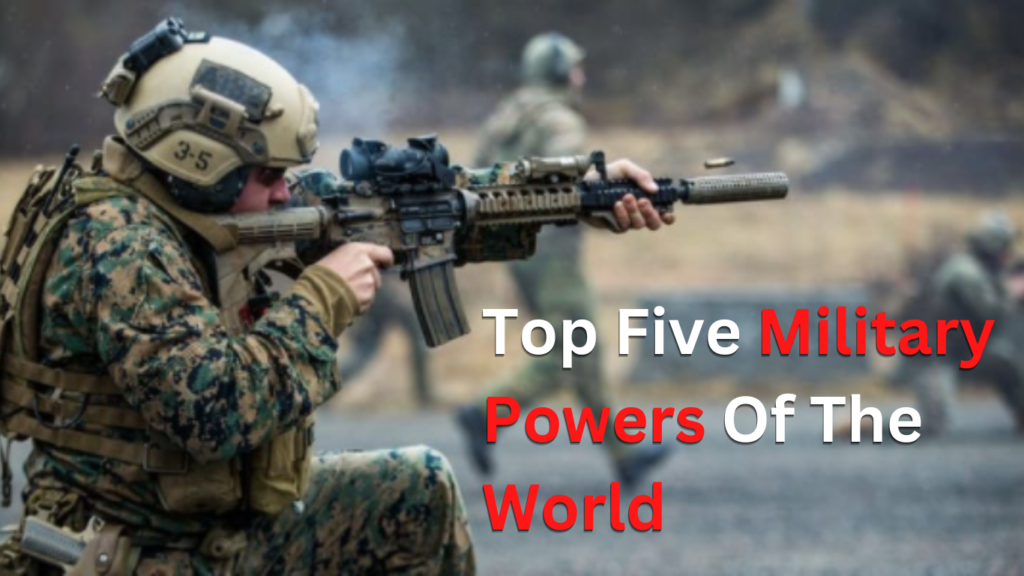
  • Top 5 Military Powers Of The World in 2024

    Top 5 Military Powers Of The World in 2024

    Now that the world is witnessing the Russia – Ukraine conflict going on for 6 month now, There have been reports of the latest and different kinds of weapons getting used by both sides, especially Russia.

    We need an efficient military and the most advanced weapons to keep ourselves safe and Secure from any external attacks. No doubt that the world needs peace and cordial relation. But, sometimes armed conflict becomes inevitable. It is when the different wings of the country’s military come into play.

    It has given rise to a curiosity about how and which countries in the world are enjoying the status of being in the top military forces of the world.

    As per the our Defence Street Team, USA has the strongest military force in the world while India ranks at number 4. Despite their enormous military budgets, China has second place.

    The study says that the ultimate military strength index gets calculated by taking into consideration a number of factors including budgets, the number of active and active military personnel, and total air, sea, land, and nuclear sources.

    The world’s biggest military spender with a budget of 732 billion dollars per year is the USA. China comes second with 261 billion. It is followed by India with 71 billion dollars.

    So, we decided to compile and present to you a list of Top 5 military powers in the world and India’s place in it. Check it out!

    USA

    The United States is arguably the most powerful and strongest army in the world.

    Active Soldiers: 1.3 million

    Annual Budget: $770 billion

    Total Aircraft Strength: 13,247

    Total Armored Combat Vehicles: 45,193

    Rocket Projectors: 1366

    Navy Fleet Forces: 484

    Aircraft Carriers: 11

    Helicopter Carriers: 9

    Submarines: 68

    Tanks: 6612

    Self-propelled Artillery: 1498

    Towed Artillery: 1339

    Russia

    Russia has been the 2nd most powerful military force in the world. It was a part of the Soviet Union, officially their Union of USSR.

    Today’s Russia is a capitalist country, but it retains the military might of the former red empire. Russia is one of the few countries that produce its military equipment.

    Active Soldiers: 850,000

    Annual Budget: $154 billion

    Total Aircraft Strength: 4,173 aircraft

    Total Armored Combat Vehicles: 30,122

    Rocket Projectors: 3391

    Navy Fleet Forces: 605

    Aircraft Carriers: 1

    Helicopter Carriers: 0

    Submarines: 70

    Tanks: 12,420

    Self-propelled Artillery: 6574

    Towed Artillery: 7571

    China

    China has the second-highest annual defense budget, left behind by the United States. According to experts, the Chinese army will be stronger in the next decade.

    Active Soldiers: 2 million

    Annual Budget: $250 billion

    Total Aircraft Strength: 3,285 aircraft

    Total Armored Combat Vehicles: 35,000

    Rocket Projectors: 3160

    Navy Fleet Forces: 777

    Aircraft Carriers: 2

    Helicopter Carriers: 1

    Submarines: 79

    Tanks: 5250

    Self-propelled Artillery: 4120

    Towed Artillery: 1734

    India

    Many would think that India is not a great military power, much less coming in fourth place. Yet, for a country of over 1.4 billion (similar to China), a $49.6 billion budget for national defense is a fair figure.

    India has the world’s second-largest military force and has the world’s largest volunteer army. It also has the third-largest defence budget in the world. The Global Firepower Index report lists it as the fourth most-powerful military.

    Active Soldiers: 1.5 million

    Annual Budget: $49.6 billion

    Total Aircraft Strength: 2,182 aircraft

    Total Armored Combat Vehicles: 12,000

    Rocket Projectors: 1338

    Navy Fleet Forces: 295

    Aircraft Carriers: 1

    Helicopter Carriers: 0

    Submarines: 17

    Tanks: 4614

    Self-propelled Artillery: 100

    Towed Artillery: 3311

    Japan

    One of the Axis forces in World War II, Japan has not been involved in major conflicts in recent decades.

    Japan’s current budget is $47 billion, and 240,000 men and women serve in the armed forces.

    Active Soldiers: 240,000

    Annual Budget: $47 billion

    Total Aircraft Strength: 1,449 aircraft

    Total Armored Combat Vehicles: 5,500

    Rocket Projectors: 99

    Navy Fleet Forces: 155

    Aircraft Carriers: 0

    Helicopter Carriers: 4

    Submarines: 21

    Tanks: 1004

    Self-propelled Artillery: 214

    Towed Artillery: 480


  • The 10 Most Powerful Navies in the World 2024

    The 10 Most Powerful Navies in the World 2024

    In today’s interconnected world, the oceans serve as a dynamic stage where nations project influence, protect their interests, and ensure global security. The strength of a nation’s navy is a clear reflection of its ability to navigate these challenges effectively. From blue-water operations to safeguarding maritime trade routes, the world’s most powerful navies play an integral role in shaping the geopolitical landscape.


    In this exploration, we delve into the intriguing realm of naval supremacy by delving into the ten most formidable naval forces globally. These maritime giants not only possess state-of-the-art vessels and advanced technology but also demonstrate a strategic vision that extends far beyond their territorial waters.

    From the modern naval arms race to the historical legacy of maritime exploration, these navies carry with them a legacy that spans centuries. With a focus on capabilities, strategies, and the ever-evolving nature of naval warfare, this examination sheds light on the intricate web of factors that contribute to the power of these oceanic titans.

    Most Powerful Navies in the World

    In a world defined by interconnected seas and geopolitical complexities, the power of navies takes center stage. From protecting trade routes to projecting influence, the list of the most powerful navies showcases the maritime forces that shape global security and politics.

    #1. United States Navy

    The United States Navy, unrivaled in its global reach and technological prowess, stands as the world’s preeminent naval force. With a history dating back centuries, it combines tradition with cutting-edge innovation. Anchored by its fleet of aircraft carriers, the US Navy projects power across oceans, providing unmatched strategic mobility and striking capabilities.

    The Navy’s arsenal encompasses advanced surface vessels, state-of-the-art submarines, and a formidable array of naval aviation assets. Beyond its military might, the US Navy engages in humanitarian missions, disaster relief, and peacekeeping operations, embodying a commitment to global stability.

    Supported by an intricate network of bases, research facilities, and a highly skilled personnel, the United States Navy is a pivotal instrument of American foreign policy. Its presence not only secures vital sea lanes but also serves as a beacon of American values and leadership on the high seas.

    Boasting a workforce of 349,593 active personnel, along with 101,583 personnel in the ready reserve and 279,471 civilian employees, the US Navy indisputably holds the title of the world’s most potent naval force. Its arsenal comprises 480 ships, 50,000 non-combat vehicles, 290 deployable combat vessels, and over 2,623 manned aircraft.

    #2. People’s Liberation Army Navy (PLAN)

    The People’s Liberation Army Navy (PLAN) of China has rapidly transformed into a formidable maritime force. With an expanding fleet of modern ships, submarines, and aircraft carriers, the PLAN asserts China’s maritime ambitions. Its 300,000 active personnel and advanced weaponry underline its strategic influence. The PLAN’s growth signifies China’s commitment to safeguarding its interests, securing sea lanes, and projecting power in the Indo-Pacific region. Naval exercises, technology advancements, and territorial claims in the South China Sea highlight its assertive stance. As the PLAN continues its expansion, it plays a significant role in shaping regional dynamics and global maritime security.

    Boasting 300,000 active personnel, the People’s Liberation Army Navy (PLAN) showcases its might with over 600 aircraft, more than 537 ships, including 19 replenishment vessels, 79 submarines, 36 mine countermeasure craft, over 17 gunboats, 26 submarine chasers, 109 missile boats, 70 corvettes, 49 frigates, 51 destroyers, 33 medium landing ships, 32 tank landing ships, 8 amphibious transport docks, 3 landing helicopter docks, and a notable count of 3 aircraft carriers. These impressive numbers illustrate PLAN’s extensive naval capabilities and its ambition to project power across the maritime realm.

    #3. Russian Navy

    The Russian Navy stands as a significant maritime force, known for its historical legacy and modern capabilities. With around 160,000 active personnel, it operates a diverse fleet of vessels, including submarines, surface ships, and naval aviation assets. The Russian Navy’s focus on ballistic missile submarines ensures a potent nuclear deterrence. Its strategic presence extends to key geopolitical regions, demonstrating Russia’s maritime influence. While it faces challenges, such as modernization and resource allocation, the Russian Navy remains a pivotal element of the country’s defense strategy and continues to play a role in shaping regional dynamics and global security.

    Comprising approximately 150,000 to 160,000 personnel, the Russian Navy operates with a fleet that includes over 355 aircraft. Notably, this fleet encompasses 1 aircraft carrier, 56 patrol boats, 4 patrol ships, 18 special-purpose vessels, 60 landing craft, 11 tank landing ships, 80 corvettes, 11 frigates, 10 destroyers, 2 cruisers, and 2 battle cruisers. These assets highlight the Russian Navy’s substantial naval power, reflecting its role in safeguarding national interests, projecting influence, and maintaining a strategic presence across regional and global waters.

    #4. Royal Navy, United Kingdom

    The Royal Navy of the United Kingdom boasts a rich maritime heritage and remains a formidable naval force. With around 32,000 active personnel, it operates a diverse fleet of vessels, including aircraft carriers, destroyers, frigates, and submarines. The Royal Navy’s global reach and modern capabilities contribute to international security efforts. Its two Queen Elizabeth-class aircraft carriers enhance power projection, and its nuclear-powered submarines provide strategic deterrence. The Royal Navy continues to adapt to evolving threats, engage in joint operations, and play a pivotal role in upholding UK’s maritime interests and alliances.

    With a fleet comprising 72 commissioned ships and supported by 160 aircraft, the Royal Navy of the United Kingdom showcases its naval prowess. The fleet includes diverse vessels such as 1 ice patrol ship, 3 survey ships, 18 fast patrol boats, 9 mine countermeasures vessels, 8 offshore patrol vessels, 12 frigates, 6 destroyers, 2 amphibious transport docks, 10 submarines, 2 aircraft carriers, and 1 ship of the line. This array underscores the Royal Navy’s commitment to maintaining maritime security, projecting influence, and upholding its historical legacy as a significant naval force.

    #5. Japan Maritime Self-Defense Force (JMSDF)

    The Japan Maritime Self-Defense Force (JMSDF) stands as a technologically advanced maritime entity. With approximately 51,000 active personnel, it operates a modern fleet, including destroyers, submarines, and helicopter carriers. The JMSDF focuses on regional security, maritime surveillance, and disaster response. Its helicopter carriers, equipped for amphibious operations, enhance Japan’s defense capabilities. The force’s commitment to international collaborations and joint exercises fosters regional stability. While constitutionally limited, the JMSDF plays a crucial role in safeguarding Japan’s maritime interests, contributing to maritime security in the Indo-Pacific, and maintaining strategic partnerships.

    Comprising a personnel strength of 51,000, the Japan Maritime Self-Defense Force (JMSDF) commands a fleet of over 150 ships and operates 346 aircraft. This fleet encompasses an array of vessels, including 8 training ships, 6 patrol boats, 30 minesweepers, 5 landing ships, 6 destroyer escorts, 10 frigates, 36 destroyers, 2 helicopter carriers, and 22 submarines. The JMSDF’s comprehensive maritime capabilities, demonstrated through this diverse fleet, highlight its role in ensuring regional security, disaster response, and international cooperation, further cementing its position as a pivotal force in the Indo-Pacific maritime landscape.

    #6. French Navy

    The French Navy, renowned for its historical maritime legacy, continues to assert its influence with a modern fleet. Boasting around 37,000 active personnel, it operates a versatile fleet, including nuclear submarines, amphibious assault ships, and frigates. The French Navy maintains a global presence through joint operations and international missions. Its nuclear-powered aircraft carrier, Charles de Gaulle, exemplifies power projection capabilities. The navy’s strategic focus encompasses diverse areas such as anti-piracy operations and maritime surveillance. With a commitment to technological innovation and international cooperation, the French Navy plays a vital role in protecting France’s maritime interests and contributing to global security efforts.

    Comprising a total of 37,000 personnel, which includes 7,000 civilians, the French Navy operates a fleet of over 180 ships and possesses 178 aircraft. Additionally, it maintains 6 specialized commando units. The navy’s assets include a variety of vessels and aircraft, showcasing its diverse capabilities.

    #7. Indian Navy

    The Indian Navy stands as a potent maritime force, vital to India’s security and regional stability. With around 67,252 active personnel, it operates a dynamic fleet, including aircraft carriers, submarines, and destroyers. The Indian Navy’s strategic reach extends across the Indian Ocean, safeguarding vital sea lanes. Its modernization efforts underscore its commitment to maritime dominance, with indigenous projects boosting self-reliance. Humanitarian missions and disaster relief operations exemplify its versatility. The navy’s emphasis on regional cooperation through joint exercises and diplomatic engagements enhances security in the Indian Ocean region. The Indian Navy plays a critical role in India’s defense strategy and global maritime influence.

    With a manpower of 67,252 active personnel and an additional 75,000 in reserve, the Indian Navy operates a fleet encompassing 300 aircraft, 150 ships, 4 fleet tankers, 1 mine countermeasure vessel, 24 corvettes, 16 attack submarines, 1 ballistic missile submarine, 1 nuclear-powered attack submarine, 13 frigates, 11 destroyers, 8 landing ship tanks, 1 amphibious transport dock, and 2 aircraft carriers. Complementing these are small patrol boats, supplementary vessels, and advanced ships. The Indian Navy’s capabilities extend its influence across the Indian Ocean, encompassing maritime security, humanitarian aid, disaster response, and regional cooperation for a comprehensive naval strategy.

    #8. Republic of Korea Navy

    The Republic of Korea Navy (ROKN) stands as a robust maritime force, pivotal to South Korea’s defense and regional stability. With around 70,000 active personnel, it operates an advanced fleet including destroyers, submarines, and amphibious vessels. The ROKN’s capabilities are aimed at securing sea lanes, deterring aggression, and promoting maritime cooperation. Its emphasis on indigenous shipbuilding and technological innovation highlights self-reliance. Notable assets include advanced destroyers, submarine-launched ballistic missiles, and amphibious assault ships. The ROKN’s contributions extend to international anti-piracy efforts and disaster relief missions, reinforcing its role in safeguarding South Korea’s maritime interests.

    With a force of 70,000 personnel, the Republic of Korea Navy (ROKN) operates a fleet that includes 70 aircraft and 150 ships. This fleet encompasses a diverse range of vessels, including 20 auxiliary ships, 12 mine warfare ships, 17 amphibious warfare ships, 65 patrol vessels, 7 corvettes, 14 frigates, 12 destroyers, and 19 submarines. The ROKN’s extensive maritime capabilities reflect its commitment to maritime security, regional stability, and disaster response. Its array of modern assets underscores South Korea’s dedication to maintaining a strong naval presence in the Asia-Pacific region.

    #9. Italian Navy

    The Italian Navy stands as a maritime pillar for Italy, with around 30,923 active personnel ensuring its strength. Operating a diverse fleet, it includes aircraft carriers, submarines, and frigates. The Italian Navy’s global presence supports maritime security, contributing to international missions and anti-piracy efforts. Technological advancements are evident in its modern vessels and submarine capabilities. The navy’s agility is showcased through disaster relief operations, reflecting its versatility. The Italian Navy’s commitment to partnerships and regional stability is demonstrated through participation in joint exercises. It remains a crucial component of Italy’s national defense strategy and a contributor to global security endeavors.

    With a manpower of 30,923 personnel, the Italian Navy commands a fleet comprising 70 aircraft and 184 vessels. Notable assets include 8 attack submarines, 20 frigates, 10 destroyers, 3 amphibious assault ships, 2 light aircraft carriers, 4 coastal patrol boats, and 10 mine countermeasure vessels, alongside 10 offshore patrol vessels. These assets underscore the Italian Navy’s commitment to maritime security, disaster response, and international cooperation. Through its modernization endeavors and participation in joint exercises, the navy plays a significant role in Italy’s national defense strategy and contributes to global maritime stability.

    #10. Taiwanese Navy

    The Taiwanese Navy, officially known as the Republic of China Navy, is a vital maritime force in the East Asian region. With around 40,000 personnel, it operates a diverse fleet, including submarines, surface ships, and naval aviation assets. The Taiwanese Navy’s focus is on safeguarding its maritime borders, maintaining deterrence, and promoting regional stability. Despite geopolitical challenges, it engages in modernization efforts, indigenous shipbuilding, and international cooperation to enhance its capabilities. As a symbol of Taiwan’s sovereignty, the navy serves a critical role in protecting national interests, contributing to regional security, and maintaining stability in the Taiwan Strait.

    Comprising a workforce of 40,000 personnel, the Taiwanese Navy operates a fleet encompassing 28 aircraft and 128 ships. This fleet includes 13 Minesweepers, 10 Landing Ship Tanks, 12 Patrol ships, 14 Corvettes, 4 Submarines, 31 Missile boats, 22 Frigates, 4 Destroyers, and 10 Auxiliaries. Despite regional challenges, the navy remains steadfast in its mission of maritime security, sovereignty protection, and regional stability. Its efforts in modernization, self-reliance, and international partnerships contribute to bolstering its capabilities, symbolizing Taiwan’s commitment to safeguarding its interests and maintaining stability in the complex geopolitical context of the Taiwan Strait.

    Final Words

    In a world shaped by maritime connectivity, geopolitical dynamics, and security challenges, the significance of powerful naval forces cannot be understated. From safeguarding territorial waters to projecting influence on the global stage, the world’s most potent navies play an essential role in shaping international relations and maintaining peace. Each navy’s unique combination of personnel, vessels, aircraft, and strategic vision defines its role in the broader context of national security and global stability. As these naval forces navigate through evolving technologies and emerging threats, their contributions to disaster relief, humanitarian missions, and joint exercises underscore their versatility. In a rapidly changing world, the strengths and capabilities of these navies continue to influence not only their respective nations but also the intricate balance of power on the vast expanse of the world’s oceans.

    FAQs

    Here are some frequently asked questions (FAQs) about the navies in the world:

    • What defines the power of a navy?
      A navy’s power is determined by factors such as the size and capability of its fleet, technological advancements, personnel training, strategic reach, and its ability to project force and secure maritime interests.
    • How are the rankings of the most powerful navies determined?
      Rankings consider various factors like fleet size, number and capability of vessels, aircraft, personnel, technological innovation, global reach, and naval strategy. Different organizations and institutes may use slightly different methodologies for their rankings.
    • Why are aircraft carriers considered a symbol of naval power?
      Aircraft carriers serve as mobile airbases capable of projecting air power across vast distances. They allow for offensive and defensive operations, provide reconnaissance, and support humanitarian efforts.
    • What role does nuclear deterrence play in naval power?
      Navies with nuclear-powered submarines equipped with ballistic missiles provide a second-strike capability, deterring potential adversaries from launching a nuclear attack due to the possibility of retaliation.
    • How do these powerful navies contribute to global security?
      Powerful navies are capable of participating in international anti-piracy operations, disaster relief missions, peacekeeping, and humanitarian efforts, contributing to regional and global stability.
    • Which is the best navy in the world 2024?
      As of 2024, while every nation’s navy holds significance for its own country, the United States Navy is widely acknowledged as the foremost and most potent naval force globally.
    • What is the rank of Indian Navy in the world?
      In the context of global naval rankings, the Indian Navy occupies the 7th position among the world’s most powerful navies.
  • Top 5 Most Advanced Fighter Jets of 2024

    Top 5 Most Advanced Fighter Jets of 2024

    In the world of military aircraft, technology is constantly evolving. It can be hard to keep up with all the advancements in the industry, so we’ve put together a list of the top five most advanced fighter jets in 2024. Read on to learn more about these amazing pieces of machinery!

    The Most Advanced Fighter Jets of 2024

    1. The F-35 Lightning II

    The F-35 Lightning II is a single-seat, single-engine stealth multirole fighter jet developed by Lockheed Martin for the US military and its allies. This fifth-generation fighter jet is capable of air superiority, ground attack, electronic warfare, and intelligence gathering. The F-35 has advanced avionics and sensors, including an active electronically scanned array radar that provides 360 degree coverage. It also features a powerful afterburning turbofan engine that allows it to reach supersonic speeds while remaining stealthy.

    2. The Su-57 Felon

    The Su-57 Felon is Russia’s fifth-generation fighter jet developed by Sukhoi Aviation Corporation. This highly maneuverable aircraft has been designed to compete with the US’s F-22 and F-35 fighters. The Su-57 features two engines with thrust vectoring capabilities for increased agility and performance at both subsonic and supersonic speeds. It also has an advanced suite of avionics which includes an active electronically scanned array radar system and an integrated infrared search and track system.

    Read More: Sukhoi Su-57 Vs. Dassault Rafale : What Will Be The Outcome

    3. The Chengdu J20 Stealth Fighter Jet

    The Chengdu J20 Stealth Fighter Jet is China’s first fifth generation aircraft designed for air superiority missions. This twin engine fighter jet features a composite material fuselage that reduces its radar cross section significantly, making it virtually invisible on enemy radar systems. The J20 has an advanced avionics suite including an integrated passive/active electronically scanned array radar system that provides 360 degree coverage as well as an infrared search and track system which gives it superior situational awareness in combat situations.

    4. The Dassault Rafale

    The Dassault Rafale is France’s fourth generation multirole fighter jet developed by Dassault Aviation for both air superiority and ground attack missions. This highly maneuverable aircraft features two powerful afterburning turbojet engines which allow it to reach supersonic speeds while maintaining excellent stealth characteristics due to its low observable design features such as internal weapons carriage and serrated edges on its wings and tailplane surfaces. Additionally, the Rafale has an impressive sensor suite that includes a high power active electronically scanned array radar system as well as sophisticated electronic warfare systems which make it potent in both air to air combat as well as ground attack missions.

    5. The Eurofighter Typhoon

    The Eurofighter Typhoon is Europe’s fourth generation multirole fighter jet developed by Airbus Group for both air superiority and ground attack missions. This highly maneuverable aircraft features two powerful afterburning turbofan engines which allow it to reach supersonic speeds while remaining extremely stealthy due to its low observable design features such as internal weapons carriage, serrated edges on its wings and tailplane surfaces, special coatings on its exterior surfaces, etc . Additionally, the Typhoon has one of the most advanced sensor suites available today with a high power active electronically scanned array radar system being one of its most notable features giving it superior situational awareness in combat situations compared to other aircraft available today .

    Conclusion

    From America’s F-35 Lightning II to France’s Dassault Rafale , from China’s Chengdu J20 Stealth Fighter Jet to Russia’s Su – 57 Felon , from Europe’s Eurofighter Typhoon , there are no shortage of incredible pieces of machinery ready for service in 2024. Each one offers something unique , whether it be speed , agility or stealth , each makes up part of this list thanks not only their impressive performance but also their cutting edge technology . All these factors combine make them some of the most powerful fighters available today . With this list you have everything you need know about these amazing machines ! We hope you found this article informative !

  • The 10 Most Powerful Missiles in the World 2024

    The 10 Most Powerful Missiles in the World 2024

    The world of military technology is ever-evolving and the race to develop the most powerful weapons is a constant one. Among these weapons, missiles stand out as the ultimate combination of speed, precision, and destructive power.

    In this article, we’ll take a look at some of the most fearsome missiles currently in existence and explore what makes them so deadly. From small tactical weapons that can take out targets just a few hundred feet away to larger missiles that can travel thousands of miles, these projectiles are truly a force to be reckoned with.

    But which country is currently leading the pack in missile technology? We’ll take a look at that too, so buckle up and get ready to be amazed by the world’s most powerful missiles and the nations that wield them.

    LGM-30 Minuteman US

    It is an American intercontinental ballistic missile. As of 2018, the LGM-30G Minuteman III variant has been introduced into service in the United States. Let us tell you that its range is 13000 kilometres. It can carry three different nuclear killers which can target three different locations. It is the only land-based intercontinental ballistic missile in the US.

    UGM-133 Trident II

    The Lockheed Martin UGM-133 Trident II (D5) is an inertially guided, three-stage ballistic missile that is launched from a submarine. 14 nuclear-powered SSBN 726 Ohio Class submarines as well as British Vanguard-class submarines are equipped with Trident II missiles. The missile was first used in March 1990, and by 2007 the U.S. Navy had received all of its supply. It is built by Lockheed Martin Space Systems in Sunnyvale, California. It was first deployed in March 1990 and remains in service today. And its range is from 7500 to 12000 km.

    RS-28 Sarmat Satan 2

    A three-stage, liquid-fueled missile with an 18,000 km range and a launch weight of 208.1 metric tonnes is known as the Sarmat. It’s a collection of space launchers and intercontinental meterstick missiles created by the Soviet Union during the Cold War. One of the most hazardous missiles in the world, which can carry three warheads and was the first Soviet MIRV (multiple independently targetable reentry vehicle). Let us inform you that it has an 18,000-kilometer range. Additionally, it is claimed that these missiles are the most potent. The missile measures 3 meters in diameter and 35.3 metres in length.

    R36M2 Voivode

    A huge, two-stage, tandem, storable liquid-propellant inertial guided missile called the R-36m/SS-18 ICBM was created to take the position of the SS-9 ICBM. It was launched in Russia having an estimated range of 11000 km. The missile’s basic design is the same as the R-36, but it has been updated to include cutting-edge technology and more potent motors. For both the first and second stages of the R-36M, a gas-dynamic system pressurized the propellant tanks by opening specific ports. This eliminated the requirement for chemical tank pressurization techniques as well as the usage of pressurized gases from tanks.

    Agni-V

    It is an intercontinental ballistic missile developed by the Defence Research and Development Organization of India. Agni-V is a part of the Agni series of missiles. India’s Swadesh is a nuclear missile manufactured by DRDO. India’s most advanced missile and many new technologies have been included in it. Its range has been told by the Government of India to be 5000 kilometres. But many experts, especially Chinese experts, believe that the missile has a range of 8000 kilometres. Agni-V can travel more than 7,000 kilometres and be successfully tested on December 15 from Odisha. With a three-stage solid-fuelled engine, Agni V can strike targets with extremely high precision at distances of up to 5,000 kilometres.

    DF-41

    This missile is China’s deadliest intercontinental ballistic missile.The DF-41 missile is one of the world’s longest-range missiles, overtaking the US LGM-30 Minuteman, which is said to have an estimated range of more than 14,000 kilometres, so with this capability, it can target all areas of Europe, Russia, and the United States within 20 to 20. . It can carry about 10 independently targetable nuclear warheads that can strike anywhere on Earth Although the exact specifications are unknown, it is believed to have been implemented in 2016 or 2017.

    M51

    A submarine-launched ballistic missile called the M51 SLBM was developed by EADS Astrium Space Transportation and used by the French Navy. The engine has a three-stage solid propellant (APCP), with an operational range of more than 10000 kilometres. This missile was first tested in a Biscarrosse ( a missile test centre in France) in the year 2006. The M51’s range allows for direct pier shooting to most parts of China, Russia, or the United States.

    Tomahawk Cruise Missile

    The Tomahawk Land Assault Missile (TLAM) is a long-range, subsonic cruise missile that is launched from US Navy surface ships as well as US Navy and UK Royal Navy submarines for use in deep land attack warfare. Tomahawk cruise missiles use a variety of mission-specific guidance systems to fly over an evasive path at high subsonic speeds and extremely low altitudes. To avoid being picked up by radar, Tomahawk was built to fly at subsonic speed while maintaining a low altitude. To operate at such a low level, it makes use of specialized navigation systems.

    Jericho III

    The claimed Jericho III, according to the Washington-based Center for Strategic and International Studies, has a reach of 4,800-6, 500 km and a payload of 1,000-1, 300 kg. A nuclear warhead weighing 750 kg is mounted on Jericho III. The range of the Jericho III, with a one-tonne warhead, is reportedly approximately 11,500 kilometres (nearly 7,200 miles). However, it is likely capable of reaching any location on Earth with a lesser payload.

    JL-2

    This ballistic missile is launched from a submarine near China. At the same time, the name of this missile launched from the ground is DF-31 (DF-31). China can do a nuclear attack with its help. The range of the missile is from 7400 to 8000 km. This means that the missile can easily reach entire Europe, India, Russia and parts of America. Three or four attacks can be done with this missile at a time.

    Conclusion

    The development of missiles did not begin in earnest until after World War II. They are frequently referred to as guided missiles because almost all of them have some sort of guidance and control system. As ICBM technology advanced, missiles occupied a vital position in Cold War strategy.

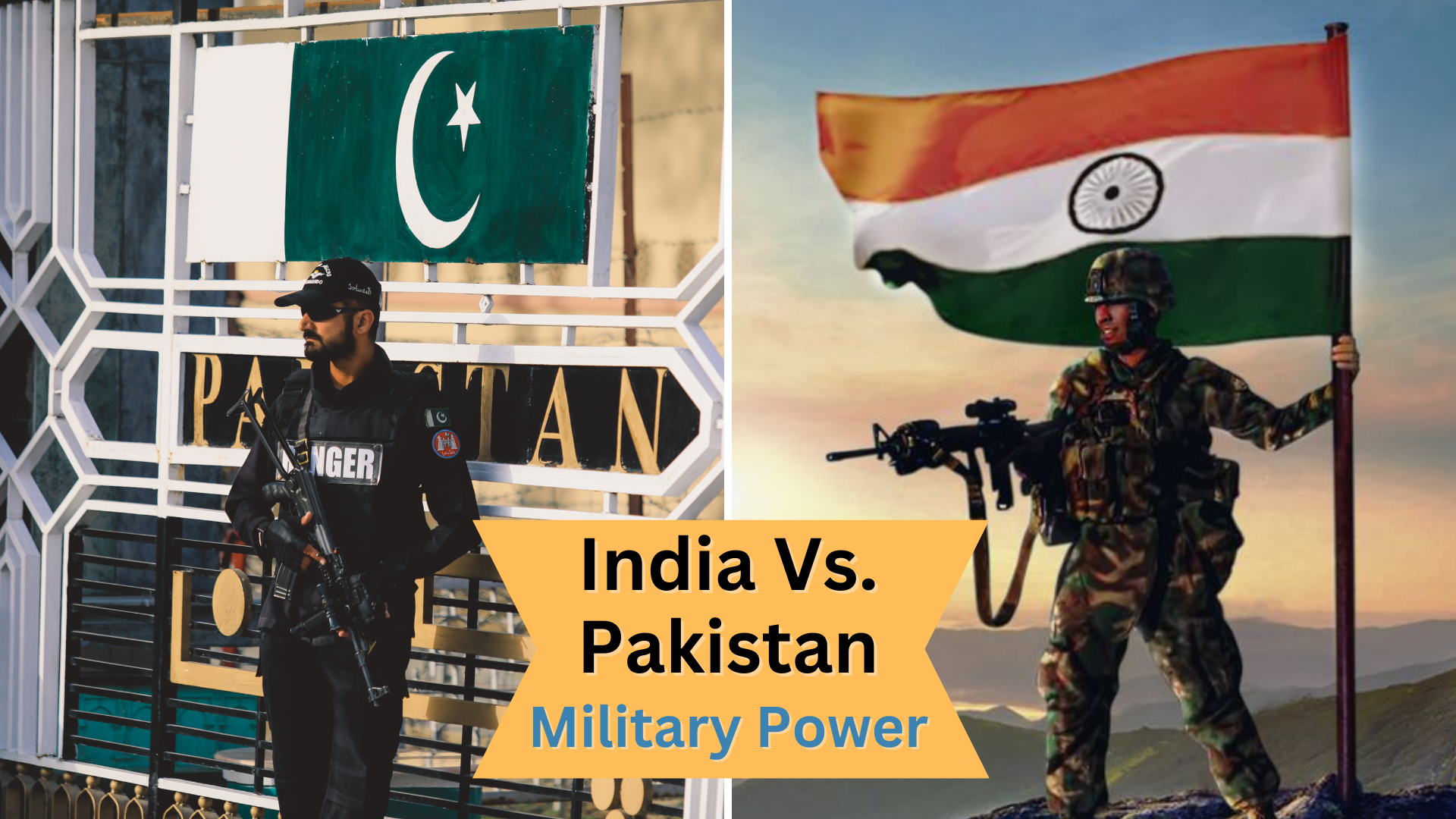
  • India Vs. Pakistan Military Power Comparison 2024

    India Vs. Pakistan Military Power Comparison 2024

    India Vs Pakistan Military Power: The military power comparison between India and Pakistan is a subject of significant interest and debate within geopolitical circles. These two South Asian nations, both possessing nuclear capabilities, have a long history of political tensions, conflicts, and military standoffs. The comparison of their military strengths involves assessing various factors, such as defense budgets, manpower, equipment, technological advancements, and strategic capabilities.

    Given their shared history and complex relationship, the military balance between India and Pakistan has implications not only for regional stability but also for global security dynamics. This analysis aims to provide an overview of the key components of the military capabilities of India and Pakistan, shedding light on their strengths, weaknesses, and the potential impact of their strategic choices on the broader geopolitical landscape. It’s important to note that military power is just one aspect of their relationship, and other factors such as diplomatic efforts, economic ties, and societal interactions also play significant roles in shaping their interactions.

    India and Pakistan independence day

    India and Pakistan celebrate their respective Independence Days to commemorate the day they gained independence from British colonial rule. Here are the details:

    India:

    • Independence Day: August 15th
    • Year of Independence: India gained independence from British rule on August 15, 1947.
    • Significance: Independence Day is a national holiday in India and is celebrated with great enthusiasm. The day is marked by the hoisting of the national flag, patriotic speeches, cultural programs, parades, and various events across the country.

    Pakistan:

    • Independence Day: August 14th
    • Year of Independence: Pakistan was created as a separate nation on August 14, 1947.
    • Significance: Independence Day is a significant national holiday in Pakistan. The day is celebrated with flag hoisting ceremonies, parades, speeches, cultural events, and various activities that highlight Pakistan’s history and culture.

    Both countries view their Independence Days as opportunities to celebrate their sovereignty, reflect on their histories, and reaffirm their commitment to progress, development, and the well-being of their citizens.

    India vs Pakistan: Who is more powerful?

    Comparing the military power of India and Pakistan involves evaluating various factors such as defense budgets, manpower, equipment, and technological advancements. It’s important to note that military power is multi-faceted, and a simple “who is more powerful” question can be complex due to the different strengths and weaknesses of each country’s armed forces. Here’s a basic data table comparing certain key aspects of their military capabilities as of latest data of 2024.

    Aspect India Pakistan
    Population Approx. 1.45 billion Approx. 654 million
    Defense Budget (2023) Approx. $75 billion USD Approx. $11 billion USD
    Active Military Personnel Approx. 1.45 million Approx. 654,800
    Reserve Military Personnel Approx. 2.2 million Approx. 500,000
    Tanks Approx. 4,614 Approx. 3,742
    Aircraft Approx. 2,210 (including fighters and others) Approx. 1,413 (including fighters and others)
    Naval Vessels Approx. 295 (including major warships) Approx. 114 (including major warships)
    Nuclear Weapons Estimated nuclear warheads: 150-160 Estimated nuclear warheads: 165-175

    India vs. Pakistan Defence Budget Comparison

    India:

    • Defense Budget (2023): Approx. $75 billion USD
    • India consistently allocates a significant portion of its budget to defense due to its large and diverse armed forces, as well as its strategic considerations in a complex regional environment.

    Pakistan:

    • Defense Budget (2023): Approx. $11 billion USD
    • Pakistan’s defense budget is comparatively smaller than India’s, but it still maintains a focus on modernizing its armed forces and ensuring its security needs are met.

    It’s important to note that defense budgets can fluctuate over time due to economic conditions, political priorities, and other factors. Both India and Pakistan allocate a substantial part of their national budgets to defense, reflecting the importance of security considerations in their strategic calculations.

    However, while defense budget comparisons provide a glimpse into the financial investments made in their armed forces, they do not provide a complete picture of military power. Other factors such as the efficiency of spending, technological advancements, training, and overall strategy also play vital roles in determining the actual military capabilities of each country.

    India vs. Pakistan Army Comparison

    Here is a basic comparison of the army capabilities of India and Pakistan:

    India:

    • Active Military Personnel: Approximately 1.45 million
    • Reserve Military Personnel: Approximately 2.2 million
    • Main Battle Tanks: Approximately 4,614
    • Armored Fighting Vehicles: Various types, including Arjun MBT and BMP series
    • Artillery: Diverse range of artillery systems, including self-propelled howitzers and towed guns
    • Infantry Weapons: Varied selection of small arms and equipment
    • Special Forces: Elite units such as the Para Commandos

    Pakistan:

    • Active Military Personnel: Approximately 654,800
    • Reserve Military Personnel: Approximately 500,000
    • Main Battle Tanks: Approximately 3,742
    • Armored Fighting Vehicles: Various types, including Al-Khalid MBT and Al-Zarrar
    • Artillery: Different artillery systems, including self-propelled howitzers and towed guns
    • Infantry Weapons: Various small arms and equipment
    • Special Forces: Special Service Group (SSG)

    It’s important to understand that the comparison of army capabilities goes beyond mere numbers. Factors such as training, equipment modernization, morale, doctrine, and overall strategic planning also significantly impact the effectiveness of an army. Additionally, the specific roles and capabilities of different units, such as special forces, can have a critical influence on a country’s military readiness.

    India and Pakistan Air Power Comparison

    Here is a basic comparison of the air power capabilities of India and Pakistan:

    India:

    • Total Aircraft: Approximately 2,210 (including fighters and other types)
    • Main Fighter Aircraft: Su-30MKI, Mirage 2000, MiG-29, Tejas (indigenous)
    • Attack Helicopters: Apache AH-64, Mi-35, Rudra (indigenous)
    • Aerial Refueling: Ilyushin Il-78
    • Airborne Early Warning and Control (AEW&C): Embraer EMB-145 AEW&C

    Pakistan:

    • Total Aircraft: Approximately 1,413 (including fighters and other types)
    • Main Fighter Aircraft: JF-17 Thunder, F-16 Fighting Falcon
    • Attack Helicopters: AH-1 Cobra, Z-10
    • Aerial Refueling: Il-78
    • Airborne Early Warning and Control (AEW&C): Saab 2000 Erieye AEW&C

    While these figures provide a snapshot of the air power capabilities of India and Pakistan, it’s important to note that military strength is not solely determined by numbers. Factors such as the training and skill of the personnel, the technological sophistication of the equipment, the effectiveness of support infrastructure, and the overall strategy and doctrine of each country’s air force also play crucial roles.

    India and Pakistan Naval Power Comparison

    Here’s a basic comparison of the naval power capabilities of India and Pakistan:

    India:

    • Naval Vessels: Approximately 295 (including major warships)
    • Aircraft Carriers: INS Vikramaditya (formerly Admiral Gorshkov), INS Vikrant (under construction)
    • Destroyers: Kolkata-class (3 in service), Delhi-class (3 in service)
    • Frigates: Shivalik-class (3 in service), Talwar-class (3 in service), others
    • Submarines: Scorpène-class (Kalvari-class) diesel-electric submarines, with more under construction, and older submarines
    • Naval Aviation: Various maritime patrol aircraft, helicopters, and unmanned aerial vehicles (UAVs)

    Pakistan:

    • Naval Vessels: Approximately 114 (including major warships)
    • Submarines: Agosta-class submarines, modernization efforts for improved capabilities
    • Frigates: Zulfiquar-class frigates, older vessels, and patrol craft
    • Naval Aviation: Limited maritime patrol aircraft and helicopters

    It’s important to note that naval power involves not only the number of vessels but also their capabilities, modernization, and the training of naval personnel. Both India and Pakistan have significant coastlines and maritime interests, making their naval capabilities a crucial component of their overall defense strategies.

    India vs. Pakistan: Missiles and Nuclear Weapons

    Both India and Pakistan possess nuclear weapons and missile capabilities, and their nuclear arsenals play a significant role in shaping the regional security dynamics. Here’s an overview of their missile and nuclear capabilities:

    India:

    • Nuclear Weapons: India is estimated to have around 150-160 nuclear warheads. It follows a policy of credible minimum deterrence, which means maintaining a sufficient nuclear arsenal to deter adversaries from initiating a nuclear conflict.
    • Missile Systems: India has developed a range of ballistic and cruise missiles, including:
      • Ballistic Missiles: Agni series (Agni-1, Agni-2, Agni-3, Agni-4, Agni-5), Prithvi series (short-range ballistic missiles), Surya (reportedly under development).
      • Cruise Missiles: BrahMos (jointly developed with Russia), Nirbhay (subsonic cruise missile).
    • Delivery Systems: India has land, air, and sea-based delivery systems for its nuclear weapons. It operates fighter aircraft capable of carrying nuclear bombs, land-based ballistic missiles, and potentially a nuclear-armed submarine-launched ballistic missile (SLBM) system.

    Pakistan:

    • Nuclear Weapons: Pakistan is estimated to have around 165-175 nuclear warheads. Similar to India, Pakistan’s nuclear strategy revolves around maintaining a credible minimum deterrence.
    • Missile Systems: Pakistan has developed various ballistic and cruise missile systems, including:
      • Ballistic Missiles: Ghaznavi, Shaheen series (Shaheen-1, Shaheen-2), Nasr (short-range ballistic missile).
      • Cruise Missiles: Babur (ground-launched cruise missile), Ra’ad (air-launched cruise missile).
    • Delivery Systems: Pakistan possesses land-based ballistic missile systems and air-launched cruise missile capabilities. The country’s air force is capable of delivering nuclear weapons using aircraft.

    Both countries’ nuclear capabilities have introduced a level of stability due to the concept of mutually assured destruction (MAD), which implies that neither country would initiate a large-scale conflict due to the catastrophic consequences of a nuclear exchange. However, maintaining effective command and control, preventing unauthorized use, and promoting regional stability remain ongoing concerns.

    India and Pakistan War

    India and Pakistan have engaged in several wars and military conflicts since their independence in 1947. Here’s a brief overview of the major conflicts between the two countries:

    • First Kashmir War (1947-1948): This was the first major conflict between India and Pakistan after their independence. The war was fought over the disputed region of Jammu and Kashmir. A ceasefire was eventually declared, and the territory remained divided.
    • Second Kashmir War (1965): Also known as the Indo-Pakistani War of 1965, this conflict was centered around Kashmir and lasted for about three weeks. The war ended with a ceasefire and no significant territorial changes.
    • Third Kashmir War (1971): This war, also known as the Indo-Pakistani War of 1971, was a significant conflict that resulted in the creation of Bangladesh. India supported the East Pakistani independence movement, leading to a decisive victory for India and the creation of Bangladesh as a separate nation.
    • Kargil Conflict (1999): The Kargil Conflict, also known as the Kargil War, was a limited war fought in the Kargil district of Jammu and Kashmir. It was sparked by infiltration and Pakistani military positions along the Line of Control (LoC). The conflict ended with India regaining control of the territory.

    Final Words

    It’s important to approach discussions about war and conflict with sensitivity and an understanding of the human costs and suffering that they entail. War brings about immense devastation, loss of life, displacement, and long-lasting socio-economic consequences. The focus should always be on promoting peace, dialogue, and conflict resolution.

    Rather than discussing potential outcomes of a conflict, it’s more productive to emphasize the importance of diplomatic efforts, dialogue, and international cooperation to prevent conflicts and resolve disputes. Both India and Pakistan have faced the consequences of past conflicts, and the desire for stability and prosperity should guide their actions toward peaceful coexistence.

    It’s my sincere hope that both nations can find ways to address their differences through peaceful means, work toward conflict resolution, and focus on building positive relationships that benefit their citizens and contribute to regional stability.

  • U.S. State Department approves ‘emergency’ sale of tank ammunition to Israel

    U.S. State Department approves ‘emergency’ sale of tank ammunition to Israel

    On Friday, the State Department informed Congress about the sale of munitions. Secretary of State Antony Blinken made the determination that there is an urgent need for the immediate sale due to an existing emergency.

    Bypassing Congressional approval, the Biden administration announced on December 9 that it has greenlit an emergency sale of nearly 14,000 rounds of tank ammunition to Israel. The value of the ammunition exceeds $106 million, and the decision comes in the context of Israel’s heightened military activities in the southern Gaza Strip.

    Amid a deadlock in Congress over President Joe Biden’s nearly $106 billion aid package for Ukraine, Israel, and national security, the approval is stalled due to debates on U.S. immigration policy and border security. Some Democratic lawmakers are considering linking the proposed $14.3 billion assistance to Israel in the Middle East with specific actions by Israeli Prime Minister Benjamin Netanyahu’s government. These actions would aim at reducing civilian casualties in Gaza during the ongoing conflict with Hamas.

    On Friday, the State Department informed Congress of the sale after Secretary of State Antony Blinken concluded that an urgent situation necessitated the immediate sale of munitions, citing it as being in the interest of U.S. national security.

    This implies that the acquisition will circumvent the necessity for congressional review in foreign military sales. While infrequent, such determinations are made in cases where administrations perceive an urgent demand for weapons and opt to proceed without awaiting approval from lawmakers.

    “The United States is dedicated to ensuring the security of Israel, considering it crucial to U.S. national interests to aid Israel in cultivating and sustaining a robust and prepared self-defense capability. The planned sale aligns with these goals,” stated the department. “Israel intends to employ the improved capability as a deterrent against regional threats and to fortify its defense of the homeland.”

    Valued at $106.5 million, the sale encompasses 13,981 units of 120 mm High Explosive Anti-Tank Multi-Purpose with Tracer tank cartridges, along with U.S. support, engineering, and logistics. The materials will be sourced from the Army inventory.

    Sidestepping Congress through emergency determinations for arms sales is an uncommon measure that has previously faced opposition from lawmakers. Typically, legislators are afforded a period to assess proposed weapons transfers and, in certain instances, have the authority to impede them.

    In May 2019, the then-Secretary of State, Mike Pompeo, issued an emergency determination for an $8.1 billion weapons sale to Saudi Arabia, the United Arab Emirates, and Jordan. This decision was prompted by the evident challenge faced by the Trump administration in addressing lawmakers’ apprehensions regarding the Saudi-UAE-led conflict in Yemen.

    Pompeo faced severe criticism for the action, with some expressing concerns that it might have breached the law, given that numerous weapons included in the sale were yet to be manufactured and could not be promptly delivered. However, he was later exonerated of any misconduct following an internal investigation.

    The authority has been invoked by at least four administrations since 1979. President George H.W. Bush’s administration employed it during the Gulf War to expedite the provision of arms to Saudi Arabia.

  • Azerbaijan vs Armenia: Military Power, Economy, Conflicts, Who Won?

    Azerbaijan vs Armenia: Military Power, Economy, Conflicts, Who Won?

    Azerbaijan vs Armenia: Azerbaijan and Armenia are two neighboring countries located in the South Caucasus region of Eurasia. The history and relationship between these two nations have been complex and, at times, contentious, primarily due to the Nagorno-Karabakh conflict, which has been a source of tension for decades.

    The epicenter of their discord lies in the Nagorno-Karabakh region, a tinderbox that has ignited military confrontations, shaped geopolitical strategies, and tested the resilience of both nations.

    This blog aims to delve into the multifaceted dimensions of the Azerbaijan-Armenia rivalry, examining critical aspects such as military power, historical conflicts, economic dynamics, and the burning question: Who emerged victorious in the struggle for regional supremacy?

    Azerbaijan vs Armenia

    Azerbaijan vs Armenia Military Power

    Azerbaijan and Armenia engage in a delicate equilibrium, each nation meticulously honing its capabilities in response to the enduring tensions over Nagorno-Karabakh. Azerbaijan boasts a military budget of $3 billion, allocating 5.5% of its GDP to defense, while Armenia, with a military budget of $1.28 billion, allocates a slightly higher percentage at 6%. In terms of manpower, Azerbaijan maintains a robust force with 126,400 active personnel and an additional 330,000 in reserve, dwarfing Armenia’s 68,500 active personnel and 210,000 reservists.

    The land forces reveal a significant asymmetry, with Azerbaijan’s 940 tanks and 2,363 armored fighting vehicles overshadowing Armenia’s 269 tanks and 610 armored fighting vehicles. Azerbaijan’s air forces, comprising 176 aircraft, including 5 fighter aircraft and 15 multirole aircraft, present a notable advantage over Armenia’s air fleet of 65 aircraft, including no fighter aircraft and only 4 multirole aircraft. Additionally, Azerbaijan’s naval capabilities, with 31 total vessels, including 4 submarines, contrast sharply with Armenia’s absence of naval assets. This disparity underscores the intricate military dynamics defining the longstanding conflict, where military strength intertwines with geopolitical strategies and historical grievances.

    Azerbaijan vs Armenia Military Power Data Table

    Here’s a table summarizing the military capabilities of Azerbaijan and Armenia:

    Category Azerbaijan Armenia
    Military Budget $3 billion $1.28 billion
    Percent of GDP 5.5% 6%
    Manpower
    Active Personnel 126,400 68,500
    Reserve Personnel 330,000 210,000
    Available for Military 3,000,000 809,576
    Land Forces
    Tanks 940 269
    Armoured Fighting Vehicles 2,363 610
    Total Artillery 909 236
    Self-Propelled Artillery 267 38
    Rocket Artillery 323 103
    Air Forces
    Total Aircraft 176 65
    Fighter Aircraft 5 0
    Multirole Aircraft 15 4
    Attack Aircraft 11 15
    Helicopters 97 45
    Navy
    Total Naval 31 0
    Aircraft Carriers 0 0
    Destroyers 0 0
    Frigates 1 0
    Corvettes 0 0
    Submarines 4 0

    Conflict Between Armenia and Azerbaijan

    The Azerbaijan-Armenia conflicts, particularly centered around the Nagorno-Karabakh region, have been marked by a complex web of historical, ethnic, and geopolitical factors. Here’s an overview of the key conflicts:

    Nagorno-Karabakh War (1988-1994):

    • The conflict began in the late 1980s when the predominantly Armenian population of Nagorno-Karabakh, an autonomous region within Azerbaijan, sought reunification with Armenia.
    • Amidst rising tensions and calls for independence, violence erupted, leading to a full-scale war in 1992.
    • The war resulted in significant displacement of populations, with both sides accusing each other of atrocities.

    Ceasefire and Status Quo (1994-2020):

    • The conflict was frozen in 1994 with a ceasefire brokered by Russia. Nagorno-Karabakh remained under the de facto control of ethnic Armenians.
    • International efforts, led by the OSCE Minsk Group (co-chaired by Russia, France, and the United States), aimed at finding a peaceful resolution, but a final settlement proved elusive.

    Four-Day War (April 2016):

    • Tensions flared in April 2016 when both sides engaged in a brief but intense conflict, known as the Four-Day War or April War.
    • The clashes resulted in casualties on both sides but did not lead to significant changes in the status quo.

    2020 Nagorno-Karabakh War:

    • The most significant escalation occurred in September 2020, leading to a 44-day war that fundamentally altered the territorial control in the region.
    • Azerbaijan, with a more modernized military and strategic support from Turkey, gained the upper hand and recaptured several territories surrounding Nagorno-Karabakh.
    • The conflict concluded with a Russia-brokered ceasefire in November 2020, leaving Azerbaijan in control of gained territories.

    Post-Conflict Dynamics:

    • The 2020 ceasefire agreement included provisions for the deployment of Russian peacekeeping forces to monitor the situation and facilitate the return of displaced people.
    • The conflict’s aftermath has seen challenges related to the return of refugees, the establishment of a lasting peace, and ongoing negotiations regarding the status of Nagorno-Karabakh.

    Azerbaijan officially reported that from 1994 to September 2020, just before the onset of the 2020 conflict, 398 of its soldiers and 31 civilians lost their lives. In contrast, the Caspian Defense Studies Institute NGO provided different figures, stating that between 1994 and 2016, a period spanning over two decades, 1,008 Azerbaijani soldiers and over 90 civilians were reported to have been killed. These contrasting figures highlight discrepancies in the official and NGO-reported casualty counts, underlining the challenges in accurately documenting the human toll of conflicts in the region during that time frame.

    Year Armenia Azerbaijan Total
    2008 N/A N/A 30 soldiers
    2009 N/A N/A 19 soldiers
    2010 7 soldiers 18 soldiers 25 soldiers
    2011 10 soldiers 4+ soldiers, 1 civilian 14+ soldiers, 1 civilian
    2012 14 soldiers 20 soldiers 34 soldiers
    2013 7 soldiers 12 soldiers 19 soldiers
    2014 27 soldiers, 6 civilians 37 soldiers, 2 civilians 64 soldiers, 8 civilians
    2015 42 soldiers, 5 civilians 64 soldiers 77 soldiers, 5 civilians
    2016 108–112 soldiers, 9 civilians 109 soldiers, 6 civilians 217–221 soldiers, 15 civilians
    2017 22 soldiers 19 soldiers 41 soldiers
    2018 5–7 soldiers 6 soldiers 11–13 soldiers
    2019 4 soldiers 6+ soldiers 10+ soldiers

    The Azerbaijan-Armenia conflicts have left an indelible mark on the region, shaping the geopolitical landscape and affecting the lives of countless individuals. The quest for a comprehensive and lasting resolution remains an ongoing challenge with global implications.

    Who Won?

    The question of who “won” in the Azerbaijan-Armenia conflicts, particularly the 2020 Nagorno-Karabakh War, is complex and depends on the perspective from which it is examined. In the context of the 2020 war, Azerbaijan is often considered to have achieved significant military gains, reclaiming territories around Nagorno-Karabakh that had been under the de facto control of ethnic Armenians since the early 1990s.

    Key points include:

    • Territorial Changes: Azerbaijan, with a more modernized military and support from Turkey, regained control over strategic areas, including the cities of Shusha and Hadrut, as well as parts of the internationally recognized Nagorno-Karabakh region.
    • Strategic Importance: The territorial gains by Azerbaijan were of considerable strategic importance, impacting transportation routes and altering the geopolitical dynamics in the South Caucasus region.
    • Ceasefire Agreement: The conflict concluded with a Russia-brokered ceasefire in November 2020. While this brought an end to active hostilities, it did not address the long-term status of Nagorno-Karabakh, leaving certain aspects of the conflict unresolved.

    However, it’s important to note that the concept of “winning” in conflicts with deep historical and ethnic roots is nuanced. The aftermath of the war has brought challenges, including the displacement of populations, issues related to the return of refugees, and ongoing negotiations on the final status of Nagorno-Karabakh.

    In international relations, the focus often shifts towards achieving lasting peace, reconciliation, and addressing the humanitarian and socio-economic consequences of the conflicts rather than a simplistic notion of victory or defeat.

  • Israel vs Turkey Military Power – A Comprehensive Look at Israel-Turkey Military Strength

    Israel vs Turkey Military Power – A Comprehensive Look at Israel-Turkey Military Strength

    Israel vs Turkey Military Power: In the complex geopolitical landscape of the Middle East, the military capabilities of nations play a pivotal role in shaping regional dynamics. Two key players in this strategic theater, Israel and Turkey, boast formidable armed forces that often find themselves at the forefront of global attention. This blog aims to provide a comprehensive examination of the military strength of both Israel and Turkey, delving into the intricacies of their defense apparatus, technological advancements, and strategic positioning.

    Israel, with its historical context deeply embedded in regional conflicts, has cultivated a military force known for its efficiency and innovation. From the Israel Defense Forces (IDF) to cutting-edge intelligence agencies, the nation has navigated a delicate balance between defense and deterrence. On the other hand, Turkey, with its unique position at the crossroads of Europe and Asia, maintains a sizable and modern military force. The Turkish Armed Forces, with a rich history dating back centuries, have undergone significant modernization, making them a formidable presence in the region.

    As we embark on this exploration, we will delve into the quantitative aspects of military might, considering troop numbers, weaponry, and technological advancements. Moreover, we will analyze the qualitative elements, such as strategic doctrines, regional alliances, and the geopolitical context that shapes the military postures of these nations.

    Israel vs Turkey Army Comparison

    Israel and Turkey maintain robust and well-equipped military forces. Israel’s Defense Forces (IDF) are known for their technological prowess, highly trained personnel, and a focus on intelligence capabilities. Israel possesses a diverse array of advanced military equipment and benefits from compulsory military service, contributing to a substantial reserve force.

    Turkey, on the other hand, boasts a sizable standing military and has invested in a burgeoning defense industry, producing a range of indigenous military hardware. The Turkish Armed Forces (TSK) have undertaken modernization efforts and participated in international peacekeeping missions. Geopolitically situated at the crossroads of Europe and Asia, Turkey holds strategic importance.

    In a direct comparison, factors such as technology, training, logistics, and geopolitical considerations come into play. Both nations have demonstrated military capabilities, and any assessment would require a detailed analysis of specific aspects, including air and naval forces, ground troops, and strategic capabilities.

    Israel vs Turkey Air Power Comparison

    Israel and Turkey both maintain formidable air forces with advanced capabilities. Israel’s Israeli Air Force (IAF) boasts a technologically sophisticated fleet, including variants of the F-15, F-16, and F-35 stealth fighters. Israel prioritizes air superiority and has a robust air defense system, exemplified by the Iron Dome.

    Turkey’s Turkish Air Force operates a mix of domestically produced and imported aircraft, such as F-16s and F-4 Phantoms. Notably, Turkey is developing the TAI TF-X, an indigenous fifth-generation fighter. The country has demonstrated a commitment to modernizing its air force and expanding its capabilities, particularly in unmanned aerial vehicles (UAVs) and electronic warfare.

    In a direct comparison, factors such as the number and technological edge of fighter jets, reconnaissance capabilities, and air defense systems are crucial. Both nations have participated in international air operations, showcasing their respective air power strengths.

    Israel vs Turkey Naval Power Comparison

    Israel and Turkey possess naval forces with varying capabilities, reflecting their regional geopolitical roles. Israel maintains a modest but technologically advanced naval fleet. The Israeli Navy focuses on ensuring maritime security, including protecting vital offshore infrastructure. Key assets include Sa’ar 5-class corvettes, Sa’ar 4.5-class missile boats, and submarines, enhancing Israel’s maritime deterrence.

    Turkey’s naval capabilities are more extensive, featuring a diverse fleet of frigates, corvettes, submarines, and amphibious vessels. The Turkish Navy plays a crucial role in securing key maritime routes and projecting power in the Eastern Mediterranean. Notable assets include Barbaros-class frigates, Ada-class corvettes, and Gür-class submarines.

    Israel vs Turkey Missiles and Nuclear Weapons

    Israel and Turkey are not officially recognized as nuclear-armed states, and neither country has publicly acknowledged possessing nuclear weapons. However, there have been longstanding speculations and reports suggesting that Israel has developed and maintained a nuclear arsenal, often referred to as the “Israeli nuclear ambiguity” policy.

    Israel has never officially confirmed nor denied possessing nuclear weapons. However, it is widely believed to have developed nuclear capabilities and is considered to be a nuclear-armed state by many experts. Israel is known to have a policy of nuclear ambiguity, neither confirming nor denying the presence of nuclear weapons.

    Turkey is a member of the Treaty on the Non-Proliferation of Nuclear Weapons (NPT) and has consistently maintained that it does not possess nuclear weapons. Turkey’s nuclear program is focused on peaceful uses of nuclear energy, including electricity generation and medical applications. Turkey is subject to International Atomic Energy Agency (IAEA) safeguards.

    In terms of missile capabilities, both countries have developed and possess advanced missile systems, including ballistic missiles and cruise missiles. These missile capabilities are part of their broader defense strategies, and the specific details of their missile arsenals may not be publicly disclosed.

    Israel vs Turkey Military Power Data Table

    Here’s a data table comparing the military capabilities of Israel and Turkey:

    Category Israel Turkey
    Active Personnel 169,500 425,000
    Reserve Personnel 465,000 200,000
    Available for Military 1,797,960 21,079,077
    Tanks 1,650 3,017
    Armoured Fighting Vehicles 6,135 11,450
    Total Artillery 1,000 2,521
    Self-Propelled Artillery 650 943
    Rocket Artillery 48 399
    Total Aircraft 618 1,573
    Fighter Aircraft 41 48
    Multirole Aircraft 230 245
    Attack Aircraft 0 0
    Helicopters 128 676
    UCAV (Combat Drone) 15 172
    Total Naval 74 154
    Aircraft Carriers 0 0
    Destroyers 0 0
    Frigates 0 16
    Corvettes 7 10
    Submarines 6 12

    Israel vs Turkey Who is Powerful?

    Determining which country is more powerful, Israel or Turkey, involves considering various factors. In terms of military capabilities, Israel boasts a highly advanced and technologically sophisticated military, with a focus on air superiority and intelligence. The Israel Defense Forces (IDF) have a history of successful military operations. Turkey, on the other hand, possesses a substantial and diverse military force, with strengths in both conventional and strategic capabilities.

    Economically, Turkey has a larger and more diversified economy compared to Israel, functioning as a crucial crossroads between Europe and Asia. However, Israel’s economy is highly advanced, particularly in sectors like cybersecurity and innovation.

    Geopolitically, both nations hold strategic importance in the Middle East, with Israel’s strong ties to the United States and Turkey’s influence in the Eastern Mediterranean contributing to their respective geopolitical weight.

    In terms of nuclear capabilities, while neither country officially confirms possession, Israel is widely believed to have a nuclear arsenal, whereas Turkey officially denies having nuclear weapons.

    Ultimately, the assessment of which country is more powerful depends on the specific criteria and context, and power dynamics can evolve over time due to geopolitical shifts and economic developments.