Author: Defence Street Editor

  • Self Reliance in Defence Production

    Self Reliance in Defence Production

    FILE PICTURE

    New Delhi, 20th March, 2023. In order to promote Aatmanirbharta, Ministry of Defence (MoD) has notified four Positive Indigenisation Lists comprising 411 major weapons platforms/systems with an embargo on their import from defined timelines. Further, MoD has also notified three Positive Indigenisation Lists in respect of DPSUs, comprising 3,738 major Line Replacement Units/sub-system/ assemblies/sub-assemblies/components & spares with an embargo on their import from defined timelines.

    Further, more than 26,000 defence items have been uploaded on SRIJAN Portal and offered to the Industry for indigenisation. Indigenisation is a dynamic process. So far, 7,031 items have already been indigenised, which cater to the domestic and global markets. As per data available till December 2022, the defence imports have reduced from 46% to 36.7% since 2018-19.

    This information was given by Raksha Rajya Mantri Shri Ajay Bhatt in a written reply to Shri Rakesh Sinha in Rajya Sabha on 20th March .

  • INS Sujata Visits Port Maputo, Mozambique

    INS Sujata Visits Port Maputo, Mozambique

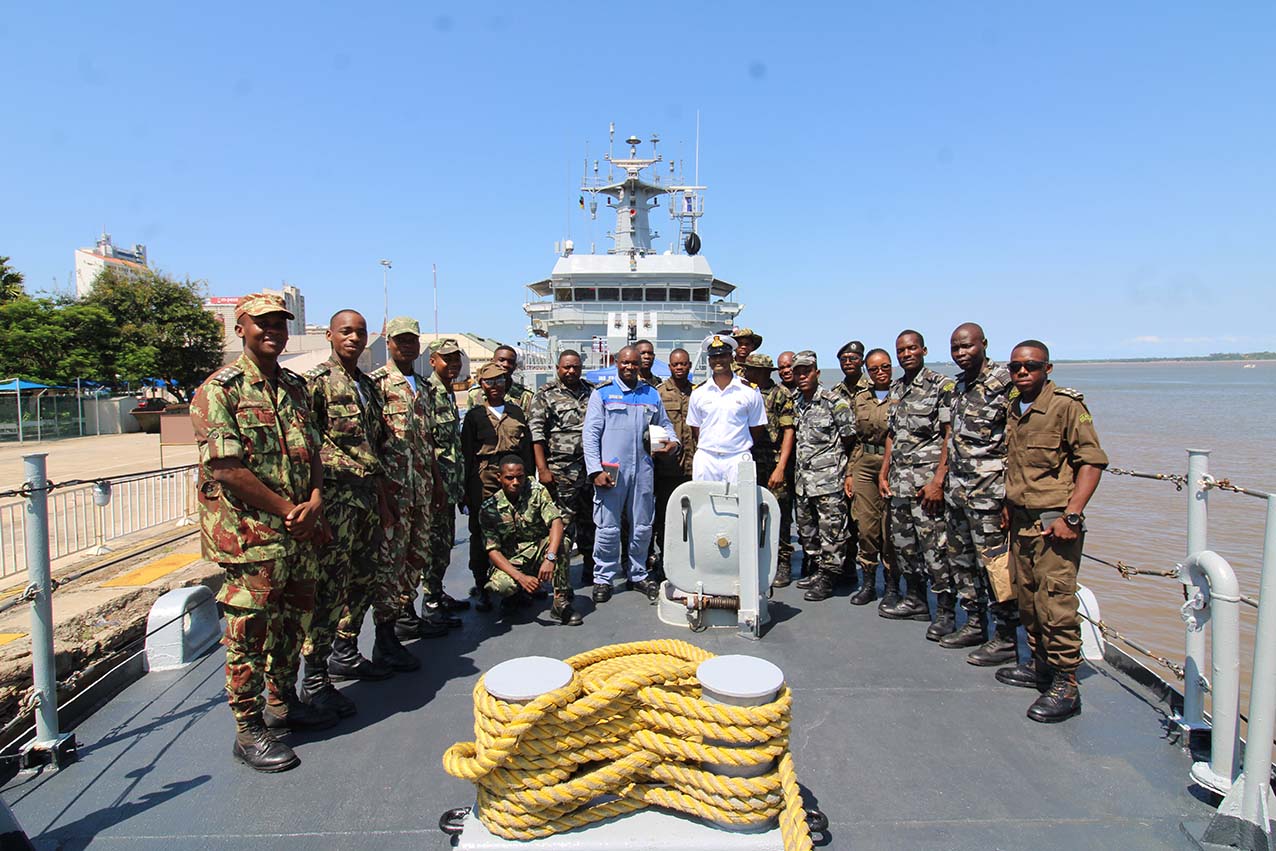
    New Delhi, 21st March 2023. Sujata, a ship based at Southern Naval Command, Kochi, visited Port Maputo, Mozambique as a part of  Overseas Deployment from 19 to 21 Mar 23. The ship was received by Captain Nitin Kapoor, DA Pretoria, Commandant NRN Siva Babu, Coast Guard Afloat Support Team and Captain Florentino Jose’ Narciso from Mozambican Navy amidst the fanfare of Mozambican Navy Band and traditional dance performances at the jetty.

    The Commanding Officer, INS Sujata called on Rear Admiral Eugenio Dias Da Silva Muatuca, the Commander of Mozambican Navy, Mr Eneas Da Conceicao Comiche. Mayor of Maputo, His Excellency Sri Ankan Banerjee, High Commissioner of India and several other military and civilian dignitaries.

    About 40 personnel of the Mozambican Navy visited the ship for Cross deck training, which included walkaround of training facilities, briefing about diving ops, training on VBSS and light weapons, visual communication and maintenance of machinery and hygiene onboard. Various other activities such as combined morning yoga session, soccer match were organised between the personnel of both the Navies. A reception was also hosted onboard Sujata which was attended by several Indian/ Mozambican dignitaries/ diplomats.

    The visit by INS Sujata at Maputo, Mozambique further enhanced the mutual cooperation and bilateral ties between the two Navies.

  • Northrop Grumman Australia Opens State of the Art Facility

    Northrop Grumman Australia Opens State of the Art Facility

    BRISBANE, Australia. 21st March. Queensland Deputy Premier Hon. Steven Miles, officially opened Northrop Grumman Australia’s newly-modernised Brisbane Maintenance and Modification Centre (BMMC), a major facility for the sustainment of the Royal Australian Air Force’s (RAAF) aviation capability. In attendance were key RAAF stakeholders and Kathy Warden, chair, chief executive officer and president, Northrop Grumman and Christine Zeitz, general manager, Asia Pacific region, Northrop Grumman.

    Northrop Grumman’s $20 million investment in the BMMC modernisation project created 300 local jobs, and directly involved over 500 people. The facility conducts continuous through life support to key RAAF fleets and will engage an ongoing Northrop Grumman Australia workforce of around 100 employees, with the new infrastructure capacity now allowing for a significant expansion.

    “Queensland has cemented itself as a powerhouse for Australia’s Defence industry and our capabilities are quickly growing. Two thirds of the Australian Army operates out of Queensland and this is just another feather in our cap,” said Deputy Premier Miles. “Northrop Grumman Australia’s facility here in Brisbane is just another great example of the close collaboration between Defence and Australian Industry, supporting an important ADF capability, as well as providing significant investment and generating good, skilled jobs for the Queensland workforce”

    “It’s been terrific to have the Deputy Premier open this strategically important facility, delivering sustainable support to the RAAF mission. Our sustainment and modernisation program is a key element of our on-going commitment and investment to the State,” said Christine Zeitz. “Northrop Grumman’s growing sustainment work at the BMMC has enabled us to establish an apprenticeship program providing a pipeline of skilled Queensland engineers underpinning the company’s ability to deliver Advanced Technology programs in the coming years. A world class skilled local workforce with genuine and attractive career options, in partnership with the Queensland Government, is a critical driver of future joint mission success.”

    About BMMC

    The facility provides support and maintenance to the RAAF’s six KC-30A Multi-Role Tanker Transport (MRTT) aircraft, a versatile platform that is an operational refuelling tanker for a range of RAAF aircraft.

    The Multi Role Tanker Transport has supported a range of ADF missions, including Operation OKRA in the fight against Daesh, Operation Afghan Assist and the Regional Presence deployment with allied partners.

    It also supports the RAAF’s fleet of 10 C-27J Spartan transport aircraft, which have proved invaluable in the airlift of people, equipment and supplies in Australia and our near region. The Spartan provides a versatile and unique capability that is well matched to Australia’s strategic and humanitarian objectives in the South Pacific and Southeast Asia due to its ability to land on regional and unsealed airstrips.

    Northrop Grumman is a leading global aerospace and defense technology company. Our pioneering solutions equip our customers with the capabilities they need to connect and protect the world, and push the boundaries of human exploration across the universe. Driven by a shared purpose to solve our customers’ toughest problems, our 95,000 employees define possible every day.

  • Northrop Grumman to Produce MESA for The U.S. Air Force E-7

    Northrop Grumman to Produce MESA for The U.S. Air Force E-7

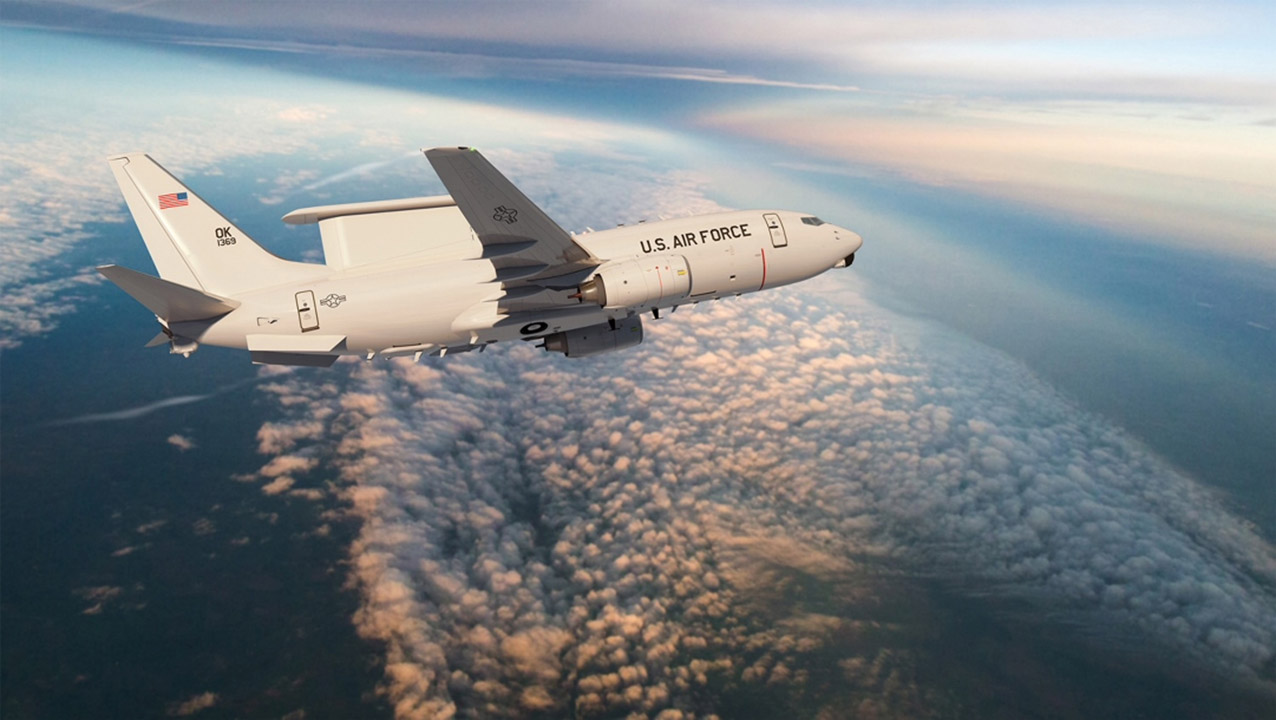
    BALTIMORE, 20th March, 2023. Northrop Grumman Corporation will enter into production of the Multi-role Electronically Scanned Array (MESA) sensor for the U.S. Air Force E-7 aircraft.

    As part of the E-7 weapons system, the combat proven MESA sensor will provide critical long range sensing, detection and identification in challenging environments equipping the U.S. Air Force with simultaneous air and maritime sensing capabilities, critical early warning and air battle management capabilities.

    “The multifunction MESA sensor will provide the U.S. Air Force with critical multi-domain awareness to enable decision superiority for the range of mission requirements today and into the future” said Ed Griebel, vice president of airborne surveillance programs, Northrop Grumman. “As we fulfill our promise to the Air Force to rapidly bring unmatched, decisive air battle management sensing capabilities including long range first detect and first engagement in the battlespace, we look forward to enabling global allied interoperability in partnership with Boeing.”

    This modern Airborne Active Electronically Scanned Array (AESA) sensor is already in production and deployed for customers worldwide, providing 360-degree situational awareness and flexibility to adapt to missions and environments in all weather conditions. MESA allows operators to simultaneously focus on priority missions, rapidly revisit targets with increased accuracy and pass relevant information to enable timely Battle Management Command and Control decisions.

    MESA is on an active production line to address global threats in the modern-day battlespace and evolve to meet future mission requirements. Australia, Turkey and South Korea have fielded the E-7 system, with production underway on the United Kingdom E-7 AEW&C fleet.

    Northrop Grumman is a leading global aerospace and defense technology company. Our pioneering solutions equip our customers with the capabilities they need to connect and protect the world, and push the boundaries of human exploration across the universe. Driven by a shared purpose to solve our customers’ toughest problems, our 95,000 employees define possible every day.

  • Keel Laying of Two Multi Purpose Vessel Project on 20th March at M/s. L&T Shipyard, Kattupalli

    Keel Laying of Two Multi Purpose Vessel Project on 20th March at M/s. L&T Shipyard, Kattupalli

    New Delhi, 20th March, 2023. Keel laying ceremony of the two ships of Multi Purpose Vessel (MPV) Project  (Yard18001 – Samarthak & Yard 18002 – Utkarsh) was held at L&T Shipyard, Kattupalli, on 20 Mar 23. The ceremony was presided by VAdm Sandeep Naithani, Chief of Materiel, in the presence of VAdm Kiran Deshmukh, CWP&A, Shri Ashok Khetan, Head Shipbuilding Business, L&T and other senior officials from Indian Navy and L&T. The contract of construction of two Multi Purpose Vessels was concluded with L&T Shipyard in Mar 22, in consonance with ‘Aatmarnirbhar Bharat’ and ‘Make in India’ initiatives of the Government of India. These are the first Indian Navy Warships being constructed by L&T, Kattupalli.

    All major machinery, auxiliary equipment and systems for the Multi Purpose Vessels will be sourced from indigenous manufacturers. This will provide further impetus to defence production and employment generation within the country. These vessels, once delivered to the Indian Navy, will perform multi role support functions such as maritime surveillance, patrolling, disaster relief and launching expendable targets for exercises. These ships would also be deployed for operating autonomous / remotely operated / unmanned vessels.

  • Boeing Delivers Powerful Satellite Platform to Viasat

    Boeing Delivers Powerful Satellite Platform to Viasat

    • ViaSat-3 Americas is the first of three satellites to provide high-quality, affordable connectivity to global users
    • Boeing integrated Viasat’s ultra-high-capacity payload to its custom-designed 702MP+ platform, harnessing the most power ever on a communications satellite

    EL SEGUNDO, Calif., 20th March, 2023. Boeing delivered the most powerful satellite platform the company has built to date, the 702MP+, a custom-designed spacecraft for network provider Viasat.

    “Working with Boeing, we’re very excited to complete the ViaSat-3 Americas and bring us one step closer to providing higher speeds, more bandwidth, and greater value to our customers on a global scale whether they be on land, on the sea, or in the air,” said Dave Ryan, president Space & Commercial Networks, Viasat. “The innovation of this satellite allows us new levels of flexibility to dynamically allocate capacity to the most attractive and engaged geographic markets.”

    Upon embarking from the Boeing factory in California, ViaSat-3 Americas was flown to the Florida Space Coast where Boeing and Viasat teams will support launch and mission operations as the spacecraft prepares to travel to geostationary orbit, approximately 22,000 miles from Earth. Once in orbit, ViaSat-3 Americas will be the first of three 702MP+ satellites to make up the ultra-high-capacity ViaSat-3 satellite constellation, designed to provide high-quality, affordable global connectivity and coverage.

    “We designed, built and delivered the most powerful satellite platform we have ever provided to a customer. The result really is an engineering marvel,” said Michelle Parker, vice president of Space Mission Systems at Boeing Defense, Space & Security. “We expanded the boundaries of our design and the platform components to exceed Viasat’s demanding mission requirements, while ensuring alignment with Boeing’s proven qualification and reliability standards.”

    Based on the flight-proven 702 vehicle design hosting the U.S. Department of Defense’s Wideband Global Satellite (WGS) constellation, and more than 40 other high-performing satellites, including ViaSat-2, Boeing’s 702MP+ features all-electric propulsion for the first time aboard a 702MP, providing more sustained thrust and efficiency.

    Boeing improved the platform’s structure to support Viasat’s large payload. The platform also accommodates the largest commercial satellite solar arrays Boeing-subsidiary Spectrolab has ever produced, along with batteries and supporting electronics, which generate well over 30 kW of solar power.

    The satellite has some of the largest reflectors ever sent to space and will be significantly larger than most geostationary satellites, requiring highly-refined, highly reliable hardware and software to maintain optimal satellite control. In addition to designing and manufacturing the platform, Boeing worked with Viasat to integrate the payload.

  • Norwegian Air Ambulance expands its H145 fleet

    Norwegian Air Ambulance expands its H145 fleet

    Donauwörth, 14th March. The Norwegian Air Ambulance is ordering two five-bladed H145s to be used for life-saving missions in Norway.

    “I would like to thank the Norwegian Air Ambulance for its continued trust in our helicopters to support their essential, life-saving missions,” said Thomas Hein, Head of Europe Region at Airbus Helicopters. “We’re proud that they are further expanding their fleet of five-bladed H145s.”

    “The five-bladed H145 has proven to be the perfect helicopter for our HEMS operations,” said Leif Olstad, CEO of the Norwegian Air Ambulance. “With the new helicopters we will continue to serve the people of Norway with state of the art equipment to ensure the best service possible.”

    Today, Norwegian Air Ambulance operates all 13 HEMS bases in Norway using a 100% Helionix-equipped fleet of H135s and H145s. The organisation’s mother company, the Norwegian Air Ambulance Foundation, was the first operator in the world to take delivery of a five-bladed H145 in 2020.

    The new version of Airbus’ best-selling H145 light twin-engine helicopter adds a new, innovative five-bladed rotor to the multi-mission aircraft, increasing the useful load of the helicopter by 150kg (330 lbs.). The simplicity of the new bearingless main rotor design also eases maintenance operations, further improving the benchmark serviceability and reliability of the H145, while improving ride comfort for both passengers and crew.

    In total, there are more than 1,600 H145 family helicopters in service, logging a total of more than seven million flight hours. Powered by two Safran Arriel 2E engines, the H145 is equipped with full authority digital engine control (FADEC) and the Helionix digital avionics suite. It includes a high performance 4-axis autopilot, increasing safety and reducing pilot workload. Its particularly low acoustic footprint makes the H145 the quietest helicopter in its class, while its CO2 emissions are the lowest amongst its competitors.

    Airbus Helicopters is the leading provider of helicopters to the air medical transport industry, providing some 54% of the 2,700 EMS helicopters flying in the world today.

  • Tactical Helmets for Sikh Soldiers

    Tactical Helmets for Sikh Soldiers

    FILE PICTURE

    New Delhi, 17th March. Indian soldiers are provided the requisite protection to include Bullet Proof Jackets and Bullet Proof Helmets to operate in challenging environment. Safety of soldiers who are deployed on security duties is considered paramount. A modern day soldier needs to have all round protection from the newer and emerging threat of warfare. Sikh troops battling terrorism have been wearing Bullet Proof Patka over cloth patka while maintaining their religious identity. Tank Crew of Armoured Regiments also wear padded communication head gear.

    Tactical helmets are an integral part of flying gear for combat aircraft operations and protective gear of soldiers against enemy gunfire. All pilots of fighter aircraft/combat helicopters and soldiers deployed in the areas where enemy attacks are anticipated or defending important installations are to wear the full protective gear for personal safety. Fighter Pilots and Helicopter Pilots of the Indian Defence Forces have always been wearing helmets over their religious head gear for heads up display and communication.

    This information was given by Raksha Rajya Mantri Shri Ajay Bhatt in a written reply to Shrimati Preneet Kaur in Lok Sabha on 17th March.

  • Boeing to Produce 184 Apaches for U.S. Army, International Customers

    Boeing to Produce 184 Apaches for U.S. Army, International Customers

    • Boeing will build E-model AH-64s for the U.S. Army and international operators
    • Australia is the 18th nation to select Apaches as their attack aircraft

    MESA, Ariz., 17th March. Boeing will build 184 AH-64E Apaches for the U.S. Army and international customers, including the first Apaches for Australia. This $1.9 billion award brings the total current funded value of the contract to $2.1 billion, and has the potential to increase to more than $3.8 billion with future obligations.

    “We are enhancing the U.S. Army’s attack fleet, while supporting additional partner nations and welcoming our newest Apache customer, the Australian Army,” said Christina Upah, vice president of Attack Helicopter Programs and senior Boeing Mesa site executive. “This contract highlights the need for Apaches worldwide.”

    The U.S. Army will receive 115 remanufactured Apaches, with an additional 15 Apaches to be procured as options, ensuring significant savings to taxpayers. The additional 54 aircraft will be delivered to partner nations as part of Foreign Military Sales.

    This award comes on the heels of the U.S. Army’s Apache fleet surpassing five million flight hours, a milestone proving the AH-64 is the most capable, reliable and versatile attack helicopter.

    “This multi-year contract is critical for the warfighter and the entire Apache team,” said Col. John (Jay) Maher, U.S. Army Apache project manager. “It demonstrates the Army’s commitment to continue putting unmatched capability into the hands of our nation’s finest, while providing stability and predictability for the outstanding citizens and companies that pour their talent into producing the best attack helicopter in the world.”

    Boeing Global Services will continue to deliver optimal readiness for the warfighter including training devices, spare provisions, support and test equipment kits, depot support, field engineering and technical manuals. Major advantages in the technical publication area allow for a streamlined process approach to re-use data which reduces operational and sustainment costs.

    Under the first multi-year contract, signed in 2017, Boeing delivered 244 remanufactured Apaches to the Army and 24 new-build aircraft to an international customer. The AH-64E, built at the Boeing site in Mesa, Ariz., is the most advanced multirole combat helicopter in the world. There are more than 1,275 Apaches currently in operation around the world.

  • UK Space Agency backs Rolls-Royce nuclear power for Moon exploration

    UK Space Agency backs Rolls-Royce nuclear power for Moon exploration

    UK. Rolls-Royce announces on 17th March, it has secured funding from UK Space Agency, as it backs research by Rolls-Royce into how nuclear power could be used to support a future Moon base for astronauts.

    Scientists and engineers at Rolls-Royce are working on the Micro-Reactor programme to develop technology that will provide power needed for humans to live and work on the Moon. All space missions depend on a power source, to support systems for communications, life-support and science experiments. Nuclear power has the potential to dramatically increase the duration of future Lunar missions and their scientific value.

    The UK Space Agency has announced £2.9 million of new funding for the project which will deliver an initial demonstration of a UK lunar modular nuclear reactor. This follows a £249,000 study funded by the UK Space Agency in 2022.

    Minister of State at the Department of Science, Innovation and Technology, George Freeman, said: “Space exploration is the ultimate laboratory for so many of the transformational technologies we need on Earth: from materials to robotics, nutrition, cleantech and much more.

    “As we prepare to see humans return to the Moon for the first time in more than 50 years, we are backing exciting research like this lunar modular reactor with Rolls-Royce to pioneer new power sources for a lunar base.

    “Partnerships like this, between British industry, the UK Space Agency and government are helping to create jobs across our £16 billion Space Tech sector and help ensure the UK continues to be a major force in frontier science.”

    Nuclear space power is anticipated to create new skilled jobs across the UK to support the burgeoning UK space economy. Rolls-Royce plan to have a reactor ready to send to the Moon by 2029.

    Relatively small and lightweight compared to other power systems, a nuclear micro-reactor could enable continuous power regardless of location, available sunlight, and other environmental conditions.

    Rolls-Royce will be working alongside a variety of collaborators including the University of Oxford, University of Bangor, University of Brighton, University of Sheffield’s Advanced Manufacturing Research Centre (AMRC) and Nuclear AMRC. The funding means Rolls-Royce can further strengthen its knowledge of these complex systems, with a focus on three key features of the Micro-Reactor; the fuel used to generate heat, the method of heat transfer and technology to convert that heat into electricity.

    The potential applications of Rolls-Royce Micro-Reactor technology are wide-ranging and could support commercial and defence use cases in addition to those in space. The aim is to create a world-leading power and propulsion capability for multiple markets and operator needs, alongside a clean, green and long-term power source.

    Abi Clayton, Director of Future Programmes for Rolls-Royce said: “The new tranche of funding from the UK Space Agency means so much for the Rolls-Royce Micro-Reactor Programme. We’re proud to work collaboratively with the UK Space Agency and the many UK academic institutions to showcase the best of UK innovation and knowledge in space.

    “This funding will bring us further down the road in making the Micro-Reactor a reality, with the technology bringing immense benefits for both space and Earth. The technology will deliver the capability to support commercial and defence use cases alongside providing a solution to decarbonise industry and provide clean, safe and reliable energy.”

    Dr Paul Bate, Chief Executive of the UK Space Agency, said: “We are backing technology and capabilities to support ambitious space exploration missions and boost sector growth across the UK. Developing space nuclear power offers a unique chance to support innovative technologies and grow our nuclear, science and space engineering skills base.

    “This innovative research by Rolls-Royce could lay the groundwork for powering continuous human presence on the Moon, while enhancing the wider UK space sector, creating jobs and generating further investment.”

    The partnership with Rolls-Royce comes after the UK Space Agency recently announced £51 million of funding available for UK companies to develop communication and navigation services for missions to the Moon, as part of the European Space Agency’s Moonlight programme, which aims to launch a constellation of satellites into orbit around the Moon.

    This will allow future astronauts, rovers, science experiments and other equipment to communicate, share large amounts of data including high-definition video, and navigate safely across the lunar surface.