Category: Featured

Featured posts

  • The Top 10 Best Single-Engine Fighter Jets

    The Top 10 Best Single-Engine Fighter Jets

    In the dynamic realm of aviation, where speed, agility, and cutting-edge technology converge, the single-engine fighter jet stands as a testament to the sheer brilliance of engineering and the pursuit of aerial supremacy. These sleek and nimble machines have played pivotal roles in shaping the course of aerial warfare, demonstrating that size isn’t everything when it comes to dominating the skies.

    In this blog, we embark on an exhilarating journey through the annals of aviation history to explore the top 10 single-engine fighter jets that have left an indelible mark on the world. From iconic warbirds that soared through the skies during pivotal moments in history to modern marvels that push the boundaries of what’s possible, each aircraft on this list has earned its place among the elite.

    Best Single-Engine Fighter Jets

    Let’s take off into the stratosphere as we unveil the Top 10 Single-Engine Fighter Jets, each a testament to the ingenuity and prowess of the engineers and pilots who dared to dream beyond the clouds.

    Lockheed P-80 Shooting Star: A Trailblazer in the Skies

    The Lockheed P-80 Shooting Star, a trailblazer in aviation history, emerged as the world’s first operational jet-powered fighter aircraft, marking a monumental leap in aerial technology. Introduced towards the end of World War II, the Shooting Star laid the foundation for the jet age, showcasing unprecedented speed and agility.

    Powered by the General Electric J33 engine, the P-80 could reach speeds of up to 600 miles per hour, setting a new standard for aerial performance. Its sleek design and groundbreaking features paved the way for subsequent generations of fighter jets. The Shooting Star’s combat success extended into the Korean War, where it demonstrated its versatility in both air-to-air combat and ground-attack missions.

    As we delve into the history of single-engine fighter jets, the Lockheed P-80 Shooting Star remains a symbol of ingenuity and a pioneering force that forever changed the dynamics of aerial warfare. Its legacy continues to soar in the skies of aviation history, leaving an indelible mark on the path to modern military aviation excellence.

    Lockheed F-104 Starfighter: The “Missile with a Man In It”

    The Lockheed F-104 Starfighter, famously dubbed the “Missile with a Man In It,” is a standout in the pantheon of single-engine fighter jets. Introduced during the late 1950s, the F-104 was a pioneering force in supersonic flight and became a symbol of cutting-edge aerospace technology.

    Characterized by its sleek design, slender fuselage, and distinctive razor-like wings, the F-104’s aesthetics mirrored its high-speed capabilities. Powered by a General Electric J79 engine, the Starfighter could achieve speeds surpassing Mach 2, earning it a reputation as one of the fastest aircraft of its time.

    Primarily designed for high-altitude interception missions, the F-104’s agility and speed made it a formidable presence in the Cold War era. Its adaptability extended to ground-attack roles, showcasing the versatility of this iconic aircraft. As we explore the top single-engine fighters, the F-104 Starfighter stands as a testament to the era’s bold design choices and its enduring legacy as a high-speed pioneer in military aviation.

    Mikoyan-Gurevich MiG-21: The Agile Soviet Workhorse

    In the annals of single-engine fighter jets, the Mikoyan-Gurevich MiG-21 emerges as a stalwart symbol of Soviet aviation prowess. Introduced in the early 1960s, the MiG-21 swiftly became one of the most produced and widely used supersonic fighter jets in the world.

    Renowned for its agility, simplicity, and adaptability, the MiG-21 earned the moniker “Fishbed” in NATO nomenclature. Its delta-wing design, coupled with a compact fuselage, facilitated exceptional maneuverability, making it a formidable adversary in dogfights. The MiG-21’s versatility was further highlighted by its ability to operate in various roles, including interceptor, ground-attack, and reconnaissance missions.

    The MiG-21’s ubiquity in the air forces of numerous nations underscores its impact on global military aviation. Despite its age, variants of the MiG-21 continue to serve in some air forces, attesting to the enduring legacy of this Soviet workhorse. As we navigate the skies of single-engine fighters, the MiG-21 stands out as a testament to the Soviet Union’s ability to produce a cost-effective, high-performance aircraft that left an indelible mark on the history of aviation.

    General Dynamics F-16 Fighting Falcon: A Versatile Aerial Marvel

    In the realm of single-engine fighter jets, the General Dynamics F-16 Fighting Falcon stands as a paragon of versatility and modern design. Introduced in the late 1970s, this American-made marvel has become a mainstay in the air forces of numerous nations.

    Renowned for its agility, the F-16’s delta-shaped wings and advanced avionics contribute to its exceptional dogfighting capabilities. Its versatility extends to various mission profiles, including air-to-air combat, ground-attack, and reconnaissance. The F-16’s fly-by-wire control system and bubble canopy enhance pilot situational awareness, solidifying its reputation as one of the most user-friendly fighters.

    With a legacy spanning decades, the F-16 remains a pivotal asset in global air forces, continually upgraded to meet evolving threats. As we explore the pantheon of single-engine fighter jets, the F-16’s enduring popularity and adaptability make it a standout symbol of American innovation and air superiority.

    Dassault Mirage 2000: French Elegance, Global Excellence

    A testament to French aeronautical prowess, the Dassault Mirage 2000 stands as an epitome of elegance and high-performance in the realm of single-engine fighter jets. Unveiled in the late 1970s, the Mirage 2000 quickly garnered international acclaim for its cutting-edge design and capabilities.

    Renowned for its delta wing configuration and slender fuselage, the Mirage 2000 boasts exceptional agility and speed. Its radar and avionics systems contribute to advanced air-to-air and air-to-ground capabilities, solidifying its role as a multi-role fighter. With variants tailored for interception, reconnaissance, and ground-attack missions, the Mirage 2000 has become a stalwart in the arsenals of numerous air forces worldwide.

    As we soar through the legacy of single-engine fighter jets, the Dassault Mirage 2000 emerges not only as a French masterpiece but as a symbol of global excellence, showcasing the fusion of elegance and cutting-edge technology in the dynamic world of military aviation.

    Saab JAS 39 Gripen: Swedish Ingenuity in Flight

    In the realm of single-engine fighter jets, the Saab JAS 39 Gripen proudly represents Swedish innovation and efficiency. Introduced in the late 1990s, the Gripen has earned its place as a versatile and cost-effective multi-role fighter, capturing the attention of air forces around the world.

    Distinguished by its delta wing and canard design, the Gripen combines agility with advanced avionics and radar systems. This amalgamation of features allows the aircraft to excel in a range of missions, from air superiority to ground-attack and reconnaissance. Notably, the Gripen’s ease of maintenance and operational flexibility make it an attractive option for nations seeking a modern and adaptable fighter jet.

    As we navigate the skies of single-engine marvels, the Saab JAS 39 Gripen stands as a testament to Swedish ingenuity, embodying the principles of efficiency, versatility, and cutting-edge technology in the ever-evolving landscape of military aviation.

    Chengdu J-10: China’s Striking Single-Engine Fighter

    A symbol of China’s ambition and technological prowess in the aerospace domain, the Chengdu J-10 graces the skies as a formidable single-engine fighter. Introduced in the early 2000s, this sleek and agile aircraft represents a significant leap in China’s indigenous aviation capabilities.

    Boasting a delta wing design and a fuselage tailored for high maneuverability, the J-10 stands out for its air-to-air and air-to-ground capabilities. Equipped with modern avionics and radar systems, it has become a vital asset in the People’s Liberation Army Air Force (PLAAF). The J-10’s versatility and adaptability to various mission profiles, including interception and ground-attack, underscore its importance in China’s air defense strategy.

    As we explore the dynamic world of single-engine fighter jets, the Chengdu J-10 emerges as a symbol of China’s commitment to technological advancement, showcasing the nation’s ability to design and deploy cutting-edge military aircraft on the global stage.

    HAL Tejas: India’s Pride in the Skies

    The HAL Tejas, India’s indigenously developed single-engine fighter, stands tall as a symbol of the nation’s aerospace capabilities. Commissioned in the Indian Air Force in 2016, the Tejas is the result of years of dedication, innovation, and technological expertise.

    Featuring a delta wing design and state-of-the-art avionics, the Tejas excels in both air-to-air and air-to-ground combat roles. Its lightweight frame, powered by a General Electric F404 engine, contributes to its agility and maneuverability, making it a formidable presence in the rapidly evolving landscape of military aviation.

    As India’s first homegrown supersonic fighter jet, the Tejas not only enhances the country’s defense capabilities but also marks a significant achievement in the nation’s quest for self-reliance in the defense sector. In the grand tapestry of single-engine fighter jets, the HAL Tejas proudly represents India’s prowess and determination to soar to new heights in the realm of military aviation.

    CAC/PAC JF-17 Thunder: A Symbol of Collaboration and Capability

    The CAC/PAC JF-17 Thunder, a product of the collaborative efforts between China and Pakistan, stands as a shining example of international cooperation and technological achievement. Introduced in the early 2000s, the JF-17 exemplifies a cost-effective and versatile approach to single-engine fighter design.

    Marked by a delta wing configuration and a potent Klimov RD-93 engine, the JF-17 showcases impressive speed and agility. Its modern avionics and radar systems contribute to its effectiveness in air-to-air and air-to-ground missions. As a key asset in the Pakistan Air Force, the JF-17 has become a linchpin in the nation’s defense strategy.

    In the mosaic of single-engine fighter jets, the JF-17 Thunder proudly represents the success of cross-border collaboration, offering a potent blend of performance and affordability that meets the strategic needs of both China and Pakistan.

    Lockheed Martin F-35 Lightning II: A Technological Marvel Redefining Air Dominance

    The Lockheed Martin F-35 Lightning II stands as a groundbreaking leap in the evolution of single-engine fighter jets, epitomizing the pinnacle of modern aviation technology. Introduced in the early 21st century, the F-35 is a multi-role stealth fighter that combines advanced capabilities, unparalleled versatility, and a collaborative international development effort.

    Featuring a distinctive design, the F-35 integrates cutting-edge sensors, avionics, and stealth technology, providing unprecedented situational awareness and survivability on the battlefield. With variants tailored for the United States Air Force, Navy, Marine Corps, and allied nations, the F-35 exemplifies a new era of interoperability and joint operations.

    As we navigate the complex skies of military aviation, the F-35 Lightning II stands as a testament to the power of innovation, international collaboration, and the relentless pursuit of air dominance, setting new standards for the capabilities and adaptability of single-engine fighter jets in the 21st century.

  • PM Modi celebrates Diwali with soldiers in Himachal’s Lepcha near China border

    PM Modi celebrates Diwali with soldiers in Himachal’s Lepcha near China border

    PM Modi celebrates Diwali with soldiers: Prime Minister Narendra Modi maintained his annual tradition by celebrating Diwali this year with soldiers in Lepcha, Himachal Pradesh, situated near the Chinese border.

    On Sunday morning, the Prime Minister arrived at the isolated village and described the experience of celebrating Diwali with the “brave security forces” in Lepcha as “emotionally profound and prideful.” He expressed that these guardians of the nation, despite being away from their families, bring illumination to our lives through their unwavering dedication.

    “The courage of our security forces is unwavering. Stationed in the toughest terrains, away from their loved ones, their sacrifice and dedication keep us safe and secure. India will always be grateful to these heroes who are the perfect embodiment of bravery and resilience,” PM Modi wrote on X.

    Earlier in the day, Prime Minister Modi extended his Diwali wishes to the people of the country, expressing his hope for their “excellent health.”

    “Wishing everyone a Happy Diwali! May this special festival bring joy, prosperity and wonderful health to everyone’s lives,” he said.

    Prime Minister Narendra Modi has consistently upheld a tradition of commemorating Diwali with the soldiers stationed at the nation’s borders. Since assuming office in 2014, he has consistently prioritized spending the festival of lights with the armed forces, making it a practice to travel to distant locations to convey his appreciation for their sacrifices. In the preceding year, he observed the festival with soldiers in Kargil, Jammu and Kashmir.

    PM Modi celebrates Diwali with soldiers Photos gone viral

  • Biden and Xi to meet on Wednesday, White House says – Here’s What They’ll Discuss

    Biden and Xi to meet on Wednesday, White House says – Here’s What They’ll Discuss

    The White House has officially confirmed that the President of the United States, Joe Biden, and his Chinese counterpart, Xi Jinping, are scheduled to meet on Wednesday in California. This marks the first meeting between the leaders of the world’s two largest economies in a year. The discussions during the meeting will encompass topics such as trade, Taiwan, and the management of their strained relations.

    According to China’s Ministry of Foreign Affairs, Xi Jinping intends to embark on a visit to the United States starting from Tuesday and extending through November 17. During this visit, he is slated to participate in the Asia-Pacific Economic Cooperation (APEC) summit in San Francisco. Additionally, he is scheduled to have a meeting with President Joe Biden on the sidelines of the summit.

    Officials from the Biden administration, speaking on the condition of anonymity, informed reporters that the two presidents are set to meet in the San Francisco Bay Area. Anticipated during the summit, starting on Saturday, is the arrival of thousands of protesters in San Francisco.

    In a statement, White House Press Secretary Karine Jean-Pierre expressed that the leaders would engage in discussions regarding the ongoing significance of upholding open lines of communication. The focus of their talks would be on responsibly navigating competition and collaborating where mutual interests converge, especially in addressing transnational challenges that impact the global community.

    The anticipated outcome of the meeting suggests that there will be few, if any, significant announcements.

    A U.S. official assured reporters that there would be complete transparency, emphasizing that there would be no withheld information, and all matters would be open for discussion.

    According to Oriana Mastro, a fellow at Stanford University’s Freeman Spogli Institute, she expressed to the Times that a conversation between Xi and Biden is unlikely to result in any significant breakthroughs. She added that there would be nothing to cause a shift in the direction of the relationship.

  • F-22 Raptor vs F-35 Lightning II  Comparison, BVR, Dogfight, Everything To Know

    F-22 Raptor vs F-35 Lightning II Comparison, BVR, Dogfight, Everything To Know

    From the vault of the immense military arsenal of the US Air Force, F-22 Raptor and F-35 Lightening are two very advanced Fighter Jets developed by Lockheed Martin.

    Stealth multirole Jets equipped with latest technology and advanced avionics, these jets have similar capabilities but were designed for different objectives and mission sets and have key differences in their design and competence.

    F-22 Raptor vs F-35 Lightning II Comparison

    The F-22 Raptor and the F-35 Lightning II are two of the most advanced fighter jets in the world. While both aircraft are designed for stealth and superior air-to-air and air-to-ground capabilities, they have different roles and capabilities that make them unique.

    The F-22 Raptor was designed primarily as an air superiority fighter, with the ability to engage enemy aircraft at long ranges and high speeds. The F-35 Lightning II, on the other hand, was designed as a multirole fighter, capable of performing air-to-air, air-to-ground, and intelligence, surveillance, and reconnaissance (ISR) missions.

    In terms of performance, the F-22 Raptor has a higher top speed (approximately Mach 2.25) and can climb higher and faster than the F-35 Lightning II. The F-35, however, has a longer range and a more advanced sensor and communications suite, making it better suited for network-centric warfare and joint operations with other aircraft and ground forces.

    Both aircraft are highly maneuverable, but the F-22 Raptor has a slight edge in terms of agility and the ability to perform tight turns and high-G maneuvers. The F-35, however, has a smaller radar cross-section and more advanced stealth technology, making it harder to detect and track by enemy radar systems.

    Another key difference between the two aircraft is their cost. The F-22 Raptor is significantly more expensive than the F-35 Lightning II, with a unit cost of approximately $150 million compared to the F-35’s unit cost of approximately $89 million. The F-22 also has a smaller production run, with only 195 aircraft produced compared to the F-35’s planned production run of over 3,000 aircraft.

    F-22 Raptor vs F-35 Lightning II

    Here’s a data table comparing the F-22 Raptor and the F-35 Lightning II:

    F-22 Raptor F-35 Lightning II
    Manufacturer Lockheed Martin Lockheed Martin
    Role Air superiority fighter Multirole fighter
    First flight 1997 2006
    Introduction 2005 2015
    Unit cost US$150 million (flyaway cost, as of 2009) US$89.2 million (F-35A, as of 2021)
    US$115.5 million (F-35B, as of 2021)
    US$108.8 million (F-35C, as of 2021)
    Maximum speed Mach 2.25 (1,500 mph, 2,410 km/h) Mach 1.6 (1,200 mph, 1,930 km/h)
    Range 1,600 nautical miles (2,900 km) with 2 external tanks 1,200 nautical miles (2,220 km)
    Service ceiling 65,000 feet (20,000 m) 50,000 feet (15,000 m)
    Engines 2 × Pratt & Whitney F119-PW-100 turbofans 1 × Pratt & Whitney F135-PW-100 turbofan
    (F-35A and F-35C)
    1 × Pratt & Whitney F135-PW-600 turbofan
    (F-35B, Short Takeoff and Vertical Landing)
    Thrust 35,000 lbf (156 kN) each 43,000 lbf (191 kN) (F-35A)
    40,000 lbf (178 kN) (F-35B)
    43,000 lbf (191 kN) (F-35C)
    Armament 1 × 20 mm M61A2 Vulcan Gatling gun Internal and external hardpoints for
    missiles, bombs, and other munitions
    (F-35A: 4 internal, F-35B/C: 2 internal)
    Air-to-air and air-to-ground ordnance
    (AIM-120, AIM-9X, GBU-12, GBU-31, etc.)
    Crew 1 1
    Length 62 feet 1 inch (18.92 m) 51 feet 4 inch (15.67 m)
    Wingspan 44 feet 6 inch (13.56 m) 35 feet 0 inch (10.7 m)
    Height 16 feet 8 inch (5.08 m) 14 feet 8 inch (4.42 m)

    Please note that the cost figures provided are approximate and may vary depending on the specific variant and year. Additionally, the performance characteristics mentioned are approximate values and can vary based on configuration, loadout, and other factors.

    Size Comparison Of F-22 and F-35

    CATEGORY F-22 Raptor F-35 Lightning II
    Length 18.9 m – 62.0 ft 15.6 m – 50.0 ft
    Height 5.08 m – 16.8 ft 4.33 m – 14.2 ft
    Wingspan 13.6 m – 45 ft 0 in 10.7 m – 35 ft 0 in
    Wing Area 78.0 m² – 840 sq ft 42.0 m² – 460 sq ft
    Power 2 x 153 kN – 35k lbf 1 x 190 kN – 43k lbf
    Weight 19,700 kg – 43,5k lb 13,200 kg – 30,2k lb

    F-22 and F-35 Dogfight Rating

    CATEGORY F-22 Raptor F-35 Lightning II
    Cannon GAU-22/A GAU-22/A
    Caliber (mm) 20 mm 20 mm
    Muzzle Velocity 1000 m/s 1000 m/s
    Maneuverability 9,4 8,5
    Rate of Fire (rpm) 4200 rpm 4200 rpm
    Size Point 10%-30% 20% 20%
    Thrust/Weight Ratio 1,26 1,07
    AAM (first) AIM-9X AIM-9X
    Operational range 0.2 – 50 km 0.2 – 50 km
    AAM (second) AIM-9X IRIS-T
    Operational range 0.2 – 50 km 0.5 – 30 km
    Dogfight Rating 86% 70%

    Similarity Between F-22 vs F-35

    The F-22 and F-35 are both advanced, fifth-generation fighter jets developed by Lockheed Martin for the United States military. While they share some similarities, they also have distinct differences. Here are some points of similarity between the F-22 and F-35:

    • Stealth capabilities: Both aircraft incorporate stealth technology to reduce their radar signatures and enhance survivability in hostile environments.
    • Sensor fusion: Both jets utilize advanced sensor fusion systems that gather and integrate data from various sensors, allowing pilots to have a comprehensive situational awareness and make informed decisions.
    • Advanced avionics: The F-22 and F-35 feature advanced avionics systems, including sophisticated radar systems, electronic warfare capabilities, and network-centric warfare capabilities.
    • Supersonic speeds: Both aircraft are capable of flying at supersonic speeds, with the F-22 being capable of sustained supersonic flight and the F-35 having a limited supersonic capability.
    • Precision strike capabilities: They both possess precision strike capabilities, allowing them to engage ground targets with a variety of weapons, including guided bombs and missiles.
    • Multirole capabilities: The F-22 and F-35 are designed as multirole fighters, capable of performing air-to-air combat, air-to-ground strikes, intelligence gathering, and electronic warfare missions.

    Difference Between F-22 vs F-35

    Despite these similarities, there are several key differences between the F-22 and F-35:

    • Design and purpose: The F-22 is primarily an air superiority fighter, optimized for air-to-air combat, whereas the F-35 is a multirole fighter intended for both air-to-air and air-to-ground missions.
    • Cost: The F-22 is a more expensive aircraft compared to the F-35, with a higher per-unit cost and a more limited production run.
    • Production status: The F-22 production line has been closed, meaning that no new F-22s are being produced, while the F-35 program is ongoing, with production and development still active.
    • Performance: The F-22 possesses superior maneuverability, speed, and altitude capabilities compared to the F-35. It has a higher thrust-to-weight ratio and can achieve higher speeds and altitudes.
    • Payload and range: The F-35 has a larger internal weapons payload and greater range compared to the F-22, allowing it to carry more weapons and operate over longer distances.
    • International participation: The F-35 program involves multiple international partners, with several countries participating in its development and procurement. The F-22, on the other hand, is exclusively used by the United States Air Force.

    In summary, while the F-22 and F-35 share some similarities, such as stealth capabilities, advanced avionics, and multirole capabilities, they also have notable differences in design, purpose, cost, performance, and international participation.

    What makes the F-22 better than the F-35?

    The F-22 and the F-35 complement each other, each serving distinct roles. In terms of air-to-air combat, the F-22 stands unrivaled with its exceptional features such as high speed, maneuverability, and a stealthy design, making it a formidable dogfighting machine.

    The F-22 boasts powerful twin-engines, providing it with a substantial take-off weight of approximately 83,500 lb, surpassing the F-35’s maximum takeoff weight of around 70,000 lb. This notable weight difference allows the F-22 to effortlessly carry heavier and more weapons, enhancing its combat capabilities.

    A key advantage of the F-22 is its 3D Thrust Vectoring Control (TVC) nozzles, which significantly enhance maneuverability—an aspect lacking in the F-35. This feature makes the F-22 exceptionally lethal in air-to-air warfare scenarios. Despite its 80s design, the F-22 maintains optimal aerodynamics and stealth while accommodating a substantial payload.

    What makes the F-35 better than the F-22?

    The F-35 outshines the F-22 in terms of cost, weight, and size. With lower operational costs and maintenance requirements, the F-35 proves to be a more cost-effective option, facilitating the maintenance of larger fleets.

    The F-35’s reasonable flight per hour is a notable advantage, especially when compared to the F-22, which incurs high operational costs, partly due to its twin fuel-hungry engines. The F-35’s higher combat readiness rate is a decisive factor in its favor.

    In terms of electronic technology, the F-35’s avionics are nearly a decade ahead of the F-22. Additionally, the F-35 program is still in its early stages, providing the opportunity for frequent software upgrades and configurations in the near future, whereas the F-22 program has concluded.

    Conclusion

    Being indispensable assets to the United States Air Force, both F-22 Raptor and F-35 Lightning have and provide critical capabilities and services to National Protection. While the F-22 Raptor is dedicated specially to Air Superiority with its manoeuvrability and weapon systems comparable to no other fighter jet, F-35 is a multirole fighter jet with a wide range of capabilities. Mission requirements and resources available to operate and maintain the aircraft defines the choice that must be made between these two heavy weights.

    Fighters are also a very important type of military equipment, so more and more cutting-edge technologies are applied to them. For pilots who fly fighter jets, they not only have superb flying skills, but also have excellent psychological and physical qualities, which are excellent and brave. Military challenge coins are a great way to express our recognition and praise for these airmen. Because challenge coins are a symbol of honor. Challenge coins can be customized based on elements such as the pilot’s name and the type of aircraft they fly. Giving these military coins to pilots will encourage them to continue to work hard and fight for the country’s air force cause!

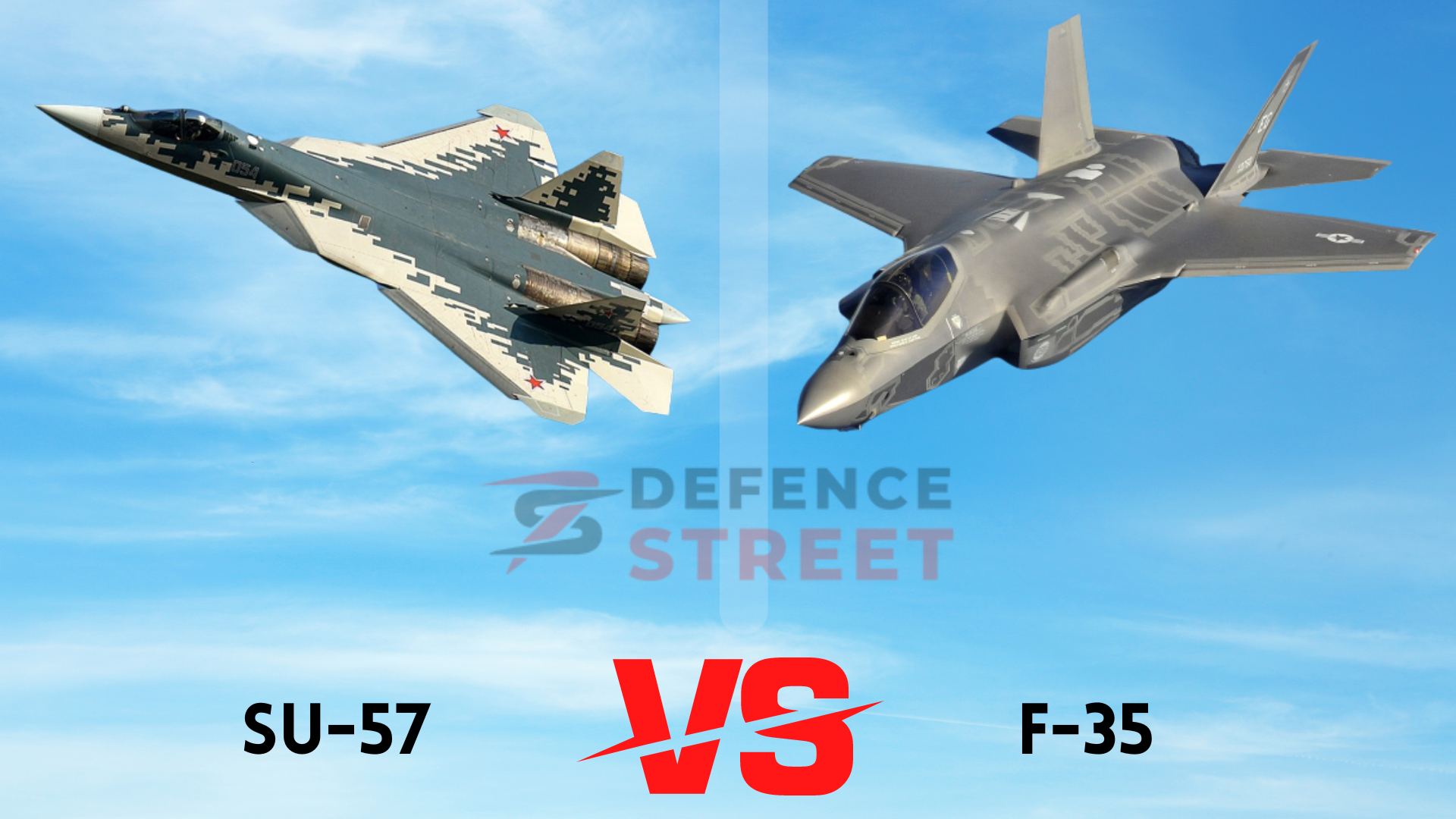
  • Su-57 Vs F-35 – Is Russia’s Su-57 warplane better than the US F-35 stealth fighters?

    Su-57 Vs F-35 – Is Russia’s Su-57 warplane better than the US F-35 stealth fighters?

    Su-57 Vs F-35: In the dynamic landscape of modern military aviation, two formidable contenders have taken center stage – Russia’s Su-57 and the United States’ F-35. As the world witnesses rapid advancements in technology and the evolution of warfare strategies, the comparison between these two cutting-edge aircraft has ignited fervent discussions among aviation enthusiasts, defense analysts, and global policymakers.


    The Su-57, developed by Russia’s aerospace industry, and the F-35, a product of American engineering prowess, represent the pinnacle of stealth, maneuverability, and multirole capabilities. Beyond their impressive specifications, these aircraft embody the strategic ambitions and priorities of their respective nations, each aiming to secure dominance in the skies.

    In this blog, we delve deep into the intricacies of the Su-57 and F-35. Through a comprehensive analysis of their design philosophies, technological innovations, combat effectiveness, and potential impact on the future of aerial warfare, we aim to shed light on the critical question: Which of these aviation marvels truly holds the upper hand in this high-stakes rivalry?

    Su-57 Vs F-35

    let’s delve into a detailed comparison of the Su-57 and F-35 across various key aspects:

    Design and Stealth Technology:

    Su-57: The Su-57 features advanced stealth characteristics, such as reduced radar cross-section, serrated edges, and radar-absorbent materials. Its design incorporates a blend of stealth and aerodynamic efficiency.

    F-35: The F-35 boasts a highly sophisticated stealth profile with a combination of angles, materials, and coatings to minimize radar reflection. Its design prioritizes reduced observability across a wide range of radar frequencies.

    Performance and Maneuverability:

    Su-57: The Su-57 is renowned for its supermaneuverability, allowing it to perform complex aerial maneuvers and maintain high agility in combat scenarios. It integrates thrust-vectoring nozzles for enhanced control.

    F-35: The F-35 focuses on a balance between agility and stability. Its fly-by-wire controls and advanced avionics provide excellent handling characteristics, enabling it to excel in a variety of mission profiles.

    Avionics and Sensors:

    Su-57: The Su-57 features a powerful and versatile radar system, the N036 Byelka, capable of tracking multiple targets simultaneously and engaging both air and ground threats. It also includes advanced electronic warfare systems.

    F-35: The F-35 incorporates the AN/APG-81 AESA radar, offering excellent target tracking and electronic warfare capabilities. Its Distributed Aperture System (DAS) provides unparalleled situational awareness.

    Multirole Capabilities:

    Su-57: The Su-57 is designed for air superiority and multirole missions, including air-to-air combat, air-to-ground strikes, and reconnaissance.

    F-35: The F-35 is a true multirole platform, available in three variants (A, B, and C) tailored for air force, navy, and marine requirements. It can perform air-to-air combat, ground attacks, intelligence, surveillance, and reconnaissance (ISR), and electronic warfare.

    Weaponry and Payload:

    Su-57: The Su-57 can carry a wide array of air-to-air and air-to-ground missiles, precision-guided bombs, and anti-ship weapons. It offers a significant payload capacity.

    F-35: The F-35 has internal weapon bays to maintain its stealth profile and can carry a variety of guided munitions and missiles, both internally and externally.

    Operational Range and Endurance:

    Su-57: The Su-57 has a substantial operational range, supported by in-flight refueling capabilities, enabling it to cover longer distances.

    F-35: The F-35 also has respectable operational range and endurance, particularly the F-35A variant. In-flight refueling extends its reach.

    Cost and Affordability:

    Su-57: The exact cost of the Su-57 remains a topic of debate due to limited production and development challenges.

    F-35: The F-35 has faced scrutiny for its initial high costs, but efforts have been made to reduce expenses through economies of scale and continuous improvements.

    Global Adoption and Influence:

    Su-57: The Su-57 has garnered interest from select countries, including Turkey and India, but has yet to achieve widespread international adoption.

    F-35: The F-35 is poised to become one of the most widely used fighter aircraft, with numerous partner and customer nations integrating it into their air forces and navies.

    Su-57 Vs F-35 Data Table

    Here’s a simplified data table comparing some key attributes of the Su-57 and F-35:

    Aspect Su-57 F-35A
    Country of Origin Russia United States
    First Flight 2010s 2006 (F-35A)
    Role Air superiority, multirole Multirole
    Stealth Technology Advanced stealth features Highly advanced stealth
    Maneuverability Superb agility and maneuverability Balanced agility
    Radar N036 Byelka AESA radar AN/APG-81 AESA radar
    Avionics Advanced systems and sensors Cutting-edge avionics
    Payload Air-to-air, air-to-ground missiles Wide variety of munitions
    Operational Range Considerable with in-flight refueling Respectable operational range
    In-Flight Refueling Yes Yes
    Variants Single variant (Su-57) Three variants (A, B, C)
    Global Adoption Limited international adoption Widespread international use
    Cost Cost challenges and debates Initial high costs, ongoing reductions
    Notable Features Thrust-vectoring nozzles Distributed Aperture System
    Advanced electronic warfare systems Network-centric warfare

    Please note that this table provides a simplified comparison and does not cover all aspects or variations of the Su-57 and F-35 aircraft. Additionally, specific details and capabilities can vary based on different versions of these aircraft.

    Similarity Between Su-57 Vs F-35

    Despite being developed by different countries and having distinct design philosophies, the Su-57 and F-35 do share several similarities in their capabilities and features. Here are some key similarities between the two advanced fighter aircraft:

    • Stealth Technology: Both the Su-57 and F-35 incorporate advanced stealth technology to reduce their radar cross-section and enhance their survivability in contested environments. Their designs aim to minimize radar reflections and improve their ability to evade detection by enemy radar systems.
    • Multirole Capabilities: While the primary focus of the Su-57 is air superiority with multirole capabilities, the F-35 is explicitly designed as a multirole platform. Both aircraft can perform a wide range of missions, including air-to-air combat, air-to-ground strikes, reconnaissance, and electronic warfare.
    • Advanced Avionics: Both aircraft feature cutting-edge avionics systems that provide enhanced situational awareness, target tracking, and communication capabilities. These avionics contribute to improved pilot effectiveness and mission success rates.
    • Data Sharing and Network-Centric Warfare: The Su-57 and F-35 are designed to operate within network-centric environments, enabling them to share data and communicate with other friendly assets in real time. This capability enhances their ability to coordinate and execute complex joint missions.
    • Internal Weapons Bays: Both aircraft are equipped with internal weapons bays to maintain their stealth profiles and reduce radar visibility. This feature allows them to carry a significant payload of weapons internally while minimizing their radar cross-section.
    • Variants and Adaptability: While the Su-57 has a single primary variant, the F-35 comes in three distinct variants (F-35A for the Air Force, F-35B for the Marines, and F-35C for the Navy). This adaptability allows the F-35 to meet the specific requirements of various branches of the U.S. military.
    • Modern Cockpit Design: Both the Su-57 and F-35 feature modern cockpit designs with advanced displays, controls, and human-machine interfaces. These features enhance pilot situational awareness and reduce workload during high-stress missions.
    • In-Flight Refueling Capability: Both aircraft are equipped with in-flight refueling capabilities, allowing them to extend their operational range and endurance through aerial refueling.
    • Focus on Future Warfare: The Su-57 and F-35 are designed to be relevant in the evolving landscape of modern warfare, where technology, network connectivity, and adaptability play crucial roles.

    What’s better about the F-35?

    Despite recent criticisms regarding cost and delays, the F-35 remains a highly commendable advanced fighter jet, with several noteworthy features:

    1. Stealth capabilities: The F-35’s distinctive shape and materials render it nearly invisible to radar, enabling it to approach enemies covertly without detection.
    2. Latest technology: Equipped with cutting-edge sensors and weapons systems, the F-35 stands out as one of the most technologically advanced and lethal fighter jets globally.
    3. Supersonic speed: With engines that propel it at speeds exceeding 1,200 miles per hour, the F-35 ranks among the fastest fighter jets, enhancing its agility and responsiveness.
    4. Amazing maneuverability: Thanks to its vectored thrust system, the F-35 displays remarkable maneuverability in combat situations, executing tight turns and cuts with precision.

    What’s better about the Su-57?

    1. 5th Generation: The Su-57, a 5th generation jet fighter developed by the Russian aerospace company Sukhoi, conducted its inaugural flight in 2010 and is presently undergoing further development under the Russian military.
    2. Fly-By-Wire Control System: Distinguishing itself, the Su-57 is the sole jet fighter globally to employ a fly-by-wire control system, wherein computers, rather than conventional mechanical controls, manage the aircraft.
    3. AESA radar: Enhancing its technological prowess, the Su-57 features an AESA radar, an electronic scanning radar variant utilized for target detection and tracking. This inclusion establishes the Su-57 as one of the most advanced jet fighters globally.
    4. Stealth capabilities: Additionally, the Su-57 boasts stealth capabilities attributable to its design, rendering it challenging for radar systems to detect. This characteristic heightens the difficulty for enemy forces to target the aircraft.

    Conclusion

    In conclusion, the F-35 and Su-57 present distinct approaches to modern air warfare. The F-35 excels with its advanced stealth, multirole adaptability, and widespread global integration, fostering collaborative operations. Its technology-driven design and network-centric capabilities contribute to enhanced situational awareness and interoperability.

    Conversely, the Su-57 shines through super maneuverability, potent radar systems, and raw agility, positioning it as a formidable force in dynamic engagements. Its thrust-vectoring nozzles offer a tactical advantage in aerial maneuvers. While limited in international adoption, the Su-57’s potential future advancements warrant attention.

    Choosing between the F-35 and Su-57 depends on nuanced factors: mission requirements, coalition strategies, cost-effectiveness, and geopolitical considerations. Both aircraft epitomize innovation and symbolize the priorities of their respective nations. As air warfare evolves, these platforms will continue to shape the future of aerial operations, proving their worth in an ever-changing global landscape.

  • Rafale vs F-18: Clash of the Titans in Modern Air Warfare

    Rafale vs F-18: Clash of the Titans in Modern Air Warfare

    Rafale vs F-18: When it comes to modern military aviation, two names stand out as prominent contenders: the Dassault Rafale and the Boeing F-18 Hornet. These cutting-edge fighter jets represent the pinnacle of technological achievement and have been at the forefront of aerial combat for several decades.

    In this blog post, we will delve into the world of military aircraft, comparing the key features and capabilities of the Rafale and F/A-18. As we explore their origins, design philosophies, and performance characteristics, you will gain a deeper understanding of the strengths and unique qualities that set these two remarkable aircraft apart.

    Rafale vs F-18

    Here’s a detailed comparison between the Dassault Rafale and the Boeing F/A-18 in various aspects:

    Origin:

    • Rafale: The Rafale is a French-made multirole fighter aircraft designed and produced by Dassault Aviation. It was developed in the late 1980s and has been in service with the French military since the early 2000s.
    • F/A-18: The F/A-18, primarily designed by McDonnell Douglas (now Boeing) and produced by various manufacturers, is an American twin-engine, carrier-capable fighter/attack aircraft. It first entered service in the late 1970s.

    Variants:

    • Rafale: The Rafale comes in several variants, including the Rafale C (single-seat air superiority), Rafale B (twin-seat training), Rafale M (naval variant), and more.
    • F/A-18: The F/A-18 has variants such as the F/A-18A/B (single-seat and twin-seat), F/A-18C/D, F/A-18E/F Super Hornet, and the EA-18G Growler (electronic warfare variant).

    Role:

    • Rafale: The Rafale is a multirole fighter capable of performing air superiority, ground-attack, and reconnaissance missions. It’s used by the French Air Force and Navy and has been exported to other countries.
    • F/A-18: The F/A-18 is also a multirole aircraft with variants designed for both land-based and carrier-based operations. It serves with the U.S. Navy and Marine Corps and is widely used by various international air forces.

    Engine:

    • Rafale: The Rafale is powered by two Snecma M88 turbofan engines, providing excellent thrust-to-weight ratio and maneuverability.
    • F/A-18: The F/A-18 Super Hornet is equipped with two General Electric F414 turbofan engines, offering superior performance and range.

    Speed and Range:

    • Rafale: The Rafale has a top speed of approximately Mach 1.8 and a combat radius of around 1,000 kilometers (620 miles).
    • F/A-18: The F/A-18 Super Hornet can reach speeds of Mach 1.8 and has a combat radius of approximately 722 kilometers (449 miles).

    Armament:

    • Rafale: The Rafale can carry a wide range of air-to-air and air-to-ground weapons, including Meteor, MICA, and Scalp missiles. It’s known for its versatility in weapon selection.
    • F/A-18: The F/A-18 can carry an array of munitions, including AIM-9 Sidewinder and AIM-120 AMRAAM air-to-air missiles, as well as various precision-guided bombs and AGM-88 HARM anti-radiation missiles.

    Avionics and Technology:

    • Rafale: The Rafale is equipped with advanced avionics and radar systems, including the RBE2 AESA radar, SPECTRA electronic warfare suite, and a glass cockpit with hands-on throttle and stick (HOTAS) controls.
    • F/A-18: The F/A-18 Super Hornet features the AN/APG-79 AESA radar, advanced electronic countermeasures, and a digital flight control system for improved handling.

    Carrier Operations:

    • Rafale: The Rafale M is specifically designed for carrier-based operations and is used by the French Navy on their aircraft carriers.
    • F/A-18: The F/A-18 is well-suited for carrier operations and has been a key component of U.S. Navy carrier air wings.

    Rafale vs F-18 Data Table

    Here’s a data table comparing the Dassault Rafale and the F-18 Super Hornet:

    CATEGORY DASSAULT RAFALE F/A-18E/F SUPER HORNET
    Length 15.27 m (50 ft 1 in) 18.4 m (60.1 ft)
    Wingspan 10.80 m (35 ft 4 in) 13.65 m (45 ft 0 in)
    Wing Area 45.7 m² (492 sq ft) 46.5 m² (500 sq ft)
    Height 5.30 m (17 ft 3 in) 4.88 m (16.0 ft)
    Weight 10,100 kg (22,600 lb) 14,500 kg (32,000 lb)
    Power 2 x 75 kN (17,000 lbf) 2 x 97 kN (22,000 lbf)
    BVR Rating 90% 83%
    Armament 8.6/10 7.9/10
    Technology 8.5/10 8.9/10
    Avionics 8.4/10 9.0/10
    Maneuverability 9.3/10 7.8/10
    Rate of Climb Max. 300 m/s (60,000 ft/min) Max. 228 m/s (44,000 ft/min)
    Thrust/Weight 1.13 1.03
    Service Ceiling 17 km (55,000 ft) 15 km (50,000 ft)
    Speed 2.00 Mach 1.80 Mach
    Fuel Economy 0.70 km/l (1.65 NM/gallon) 0.60 km/l (1.21 NM/gallon)
    Unit Cost $130,000,000 USD $80,000,000 USD
    Overall Rating Excellent Very Good

    This table provides a side-by-side comparison of various attributes and capabilities of the Dassault Rafale and the F-18 Hornet, helping readers to understand their differences and strengths.

    Conclusion

    In conclusion, the comparison between the Dassault Rafale and the F-18 Super Hornet reveals that both aircraft are exceptional in their own right, each with its unique set of advantages. The Rafale impresses with its superior maneuverability, armament options, and performance in beyond-visual-range (BVR) combat. Its smaller size, higher BVR rating, and speed make it a formidable contender in air-to-air engagements, and its rate of climb and service ceiling allow it to operate effectively at varying altitudes.

    On the other hand, the F-18 Super Hornet stands out for its advanced technology, avionics, and cost-effectiveness. It has a strong balance of capabilities, and its lower unit cost makes it an attractive option for air forces seeking modern multirole aircraft without breaking the bank.

    Ultimately, the choice between these two fighters hinges on specific mission requirements, budget constraints, and strategic considerations. The Rafale may be the preferred choice for nations seeking an edge in dogfights and air superiority, while the F-18 Super Hornet could be the practical option for countries looking for a versatile, cost-efficient platform capable of a wide range of missions. Both aircraft have proven their worth in modern air combat, making them vital assets for any nation’s defense.

    FAQs

    Here are some frequently asked questions (FAQs) related to the comparison between the Rafale and F-18:

    1. Which aircraft is faster, the Rafale or the F-18?

    The Rafale is faster, with a top speed of approximately 2.00 Mach, while the F-18 Super Hornet has a top speed of around 1.80 Mach.

    2. Which aircraft has better maneuverability?

    The Rafale is known for its superior maneuverability, with a rating of 9.3/10, while the F-18 Super Hornet has a maneuverability rating of 7.8/10.

    3. Are both aircraft capable of carrier-based operations?

    Yes, both the Rafale and the F-18 Super Hornet have carrier-based variants. The Rafale M is designed for naval operations, while the Super Hornet is used on U.S. Navy aircraft carriers.

    4. Which aircraft has a higher service ceiling?

    The Rafale has a higher service ceiling of 17 kilometers (55,000 feet) compared to the F-18 Super Hornet’s service ceiling of 15 kilometers (50,000 feet).

    5. How do their armament capabilities compare?

    The Rafale has a higher armament rating (8.6/10) and is known for its versatility in carrying a wide range of air-to-air and air-to-ground weapons. The F-18 Super Hornet also has a strong armament capability (7.9/10) but falls slightly behind the Rafale in this category.

    6. Which aircraft is more cost-effective?

    The F-18 Super Hornet is generally more cost-effective, with a lower unit cost of around $80 million USD, compared to the Rafale’s unit cost of approximately $130 million USD.

    7. How do their technology and avionics compare?

    The F-18 Super Hornet has a slight edge in technology and avionics with a rating of 8.9/10, while the Rafale is rated at 8.5/10 in this category.

    8. Which aircraft is better suited for beyond-visual-range (BVR) combat?

    The Rafale has a higher BVR rating of 90% compared to the F-18 Super Hornet’s rating of 83%, indicating its superiority in long-range air-to-air engagements.

    9. Can you summarize the key differences between the Rafale and F-18?

    The Rafale excels in maneuverability, BVR combat, and armament versatility, while the F-18 Super Hornet offers advanced avionics and technology, cost-effectiveness, and all-weather capability.

    10. Which aircraft is considered more versatile in terms of mission capabilities?

    Both the Rafale and the F-18 Super Hornet are highly versatile multirole aircraft, capable of performing a wide range of missions, including air superiority, ground-attack, and reconnaissance.

  • Major Somnath Sharma – First PVC Awardee, Who Enabled India To Prevent Kashmir From Falling Into Pakistani Hands

    Major Somnath Sharma – First PVC Awardee, Who Enabled India To Prevent Kashmir From Falling Into Pakistani Hands

    On November 3, 1947, just four months after India gained independence with great difficulty, Pakistan launched an attack on Srinagar with tribal militias. Their objective was to seize control of Srinagar Airbase. Around 700 enemies had invaded. Our 50 soldiers not only prevented them from advancing by six hours but also inflicted heavy casualties on around 200 infiltrators. During this fierce battle, 22 of our soldiers made the ultimate sacrifice. Major Somnath Sharma, the first Param Vir Chakra recipient of the country, is not only a source of inspiration for generations to come but also a symbol of unwavering courage and valor. This is the story of his remarkable bravery.

    On the morning of October 23, 1947, soldiers and weapons were flown from Palam Airport in Delhi to Srinagar. Major Somnath Sharma also arrived in Srinagar on October 31. At that time, Major Sharma had a plaster cast on his right hand because he had fractured it while playing hockey. Doctors had advised him to rest, but the heart of a patriot knows no rest. When the enemy is at the doorstep, wounds and pain become insignificant. Major Sharma requested permission to go to the battlefield, and it was granted. He was assigned the command of his unit.

    Senior military officers instructed Major Sharma that they needed to protect the Kashmir Valley from infiltrators. Their mission was to repel the enemy. Two days later, on November 2, 1947, news arrived that Pakistani invaders had reached from Srinagar Airfield to a location a few kilometers away in Badgam. Under the orders of Brigadier LP Bogie Sen, the commander of the 161 Infantry Brigade, Major Sharma and his company of 50 soldiers were dispatched to Badgam. On the morning of November 3, 1947, Major Sharma and his team arrived in Badgam. Immediately, he divided his company into several sections and took up positions to launch an attack.

    In the village of Badgam, there were signs of enemy activity. Major Sharma, while maintaining his position, estimated that these movements were merely a distraction to divert attention. The real attack would likely come from the west. Major Sharma’s assessment proved correct. At 2:30 in the afternoon, 700 Kabaili tribesmen launched an assault. They rained powerful mortar shells on the position of his 50 soldiers. Major Sharma and his fellow soldiers were surrounded from three sides. His team members were being badly wounded by the mortar shells exploding above their heads, showering them with shrapnel, glass, and deadly spikes. Despite the adversity, they were giving a resolute response.

    Each soldier was Taking on seven enemies single-handedly.

    When Major Sharma counted, he realized that each of his soldiers was engaged in combat with seven enemies. Immediately, he requested Brigade Sen to send more reinforcements. Major Sharma knew the value of the Badgam post. He was determined not to abandon that position. If that post were to fall, it could possibly lead to Srinagar slipping from India’s control, and the Kashmir Valley might become separate. However, Major Sharma and his team did not allow that to happen.

    In one hand a plaster, in the other a machine gun

    Despite having a plaster cast on one hand, Major Sharma was tirelessly boosting the morale of the soldiers at each post. Periodically, he rained bullets on the enemy. His forward platoon had been wiped out, but the rest of the soldiers continued the fight, inspired by Major Sharma’s determination. During this time, Major Sharma began supplying magazines to all the light automatic machine gunners to ensure that the posts never ran out of ammunition. This way, Indian bullets would continue tearing through the bodies of the enemy soldiers.

    During this time, Major Sharma sent a message to the headquarters. He conveyed that their numbers were very low, with the enemy positioned just 45-46 meters away. They were in the midst of a fierce firefight. But they would not retreat even an inch from their positions. They would continue to respond to the infiltrators until the last bullet and the last soldier. Shortly thereafter, Major Somnath Sharma was martyred in a mortar explosion. He fought until his last breath. His supreme sacrifice was not in vain.

    They prevented the capture of Srinagar Airbase.

    More than 20 soldiers from their position had already become martyrs, and Major Sharma was no longer among them. But the remaining soldiers displayed unwavering courage. Even after Major Sharma’s sacrifice, they held the enemy at bay for six hours, giving the next battalion enough time to arrive. As reinforcements, the first battalion of the Kumaon Regiment came in. Upon their arrival, they immediately took positions and delivered a resounding response to the enemy. Major Sharma, a junior commissioned officer, and 20 soldiers from the D Company of the 4th Kumaon Regiment had made the ultimate sacrifice. However, Srinagar and Kashmir were saved.

  • US Intelligence Indicates Assad’s Agreement to Provide Russian Missile System to Hezbollah with Assistance from Wagner Group

    US Intelligence Indicates Assad’s Agreement to Provide Russian Missile System to Hezbollah with Assistance from Wagner Group

    According to information from two individuals knowledgeable about the matter, the United States possesses intelligence indicating that Syrian President Bashar al-Assad has consented to supply the Lebanese militant group Hezbollah with a Russian-manufactured missile defense system.

    The Russian private military company, Wagner Group, known to operate in Syria, has been assigned the responsibility of delivering the SA-22 surface-to-air missile system, as per the information provided by these sources. It remains unclear whether the delivery has already taken place or how imminent it may be. The missile system in question was originally supplied by Russia for the Syrian government’s use.

    One of the informants mentioned that the United States has been keeping a close watch on recent movements of the system, which is alternatively referred to as a Pantsir. The other source noted that the U.S. assessment was partially founded on intelligence related to discussions involving Assad, Wagner, and Hezbollah regarding the delivery of this system.

    The Wall Street Journal previously reported that there were indications Wagner might supply the system to Hezbollah, but Assad’s involvement in this matter had not been reported before.

    Both Wagner and Hezbollah fighters have been active in Syria for an extended period, collaborating with Russian and Syrian armed forces to support the Assad regime against the Syrian opposition. Although Hezbollah started withdrawing its fighters in recent years, it continues to receive support from Iran, which is a strong ally of Assad. A third source with knowledge of Western intelligence noted that there is evidence of increased cooperation between Hezbollah and Wagner in Syria.

    Concerns have arisen about the possibility of Hezbollah acquiring a new air defense system, particularly in the context of potential militant activities near Israel’s northern border with Lebanon. The U.S. has consistently cautioned Hezbollah and other Iran-backed groups to avoid involvement in the conflict and has deployed aircraft carriers and troops in the region to deter potential escalation.

    Israel has previously conducted targeted strikes on these missile systems inside Syria, as part of its broader military actions against Iranian military installations in the country.

    The extent of Russia’s influence in the decision to supply the system to Hezbollah remains unclear. Since the passing of Wagner leader Yevgeny Prigozhin in August, the Kremlin has made efforts to integrate Wagner mercenaries and the group’s assets. However, as of late September, the United States had not observed a definitive shift indicating that the Kremlin had assumed complete control over these fighters, as reported by CNN earlier.

    Russia recently hosted Hamas leaders in Moscow, an action that drew strong condemnation from the Israeli government.

    According to a CNN report, the U.S. intelligence community’s current assessment suggests that Iran and its proxy groups are carefully calibrating their response to Israel’s military intervention in Gaza. They appear to be aiming to avoid direct conflicts with Israel or the United States while still imposing costs on their adversaries.

    However, it’s important to note that Iran doesn’t exert perfect control over all of its proxy groups, especially Hezbollah. Hezbollah is an ally of Hamas, the group responsible for attacking Israel on October 7, and has historically positioned itself as an anti-Israel force. U.S. officials are deeply concerned that internal dynamics within Hezbollah could lead to an escalation of tensions.

    One notable event to watch is a scheduled major speech by Hezbollah’s leader, Hassan Nasrallah, on Friday, which intelligence officials will closely monitor for any signals regarding the group’s intentions.

  • Who are Yemen’s Houthis and why did they attack Israel?

    Who are Yemen’s Houthis and why did they attack Israel?

    Yemen’s Houthi rebels, based more than 1,000 miles away from Israel in their stronghold of Sanaa, have recently entered the Israel-Hamas conflict. They announced on October 31 that they had launched drone and missile attacks on Israel. These actions emphasize the potential regional ramifications of the ongoing conflict.

    Who are Yemen’s Houthis

    The Houthis, officially known as the Ansar Allah (Supporters of Allah), are a Shia Muslim rebel group that emerged in Yemen in the early 2000s. They belong to the Zaidi sect, which is a branch of Shia Islam predominantly found in Yemen. The Houthi movement gained prominence in the late 2000s and early 2010s, primarily due to their opposition to the Yemeni government and their calls for greater autonomy and political representation for their community in the northern part of Yemen.

    The Houthi insurgency escalated into a full-scale conflict in 2014 when they seized control of Yemen’s capital, Sanaa, and later, large parts of the country. This resulted in a prolonged and multifaceted conflict often referred to as the Yemeni Civil War. The Houthi movement has received support from Iran, which has contributed to their military capabilities and political clout in Yemen.

    Houthi Attacks On Israel

    Houthi military spokesperson Yahya Saree, in a televised statement, confirmed that the group had launched a substantial number of ballistic missiles and drones towards Israel on October 31. He further asserted that more such attacks were planned to assist the Palestinians in achieving victory. Saree’s statement seemed to acknowledge the Houthi involvement in three separate attacks on Israel during the ongoing conflict. This included the drone attack on October 28, which caused explosions in Egypt and was attributed to the Houthis by Israel. Additionally, he mentioned an incident on October 19 when the U.S. Navy intercepted three cruise missiles, suggesting Houthi responsibility for these actions.

    Aim Of The Attacks

    The Houthi rebels, part of an “Axis of Resistance” supported by Iran, have expressed solidarity with the Palestinians in the aftermath of Hamas’ actions against Israel. Yahya Saree, their spokesperson, accused Israel of contributing to instability in the Middle East and expanding the “circle of conflict” through its ongoing actions. The Houthi rebels have stated their intent to continue launching attacks until Israeli aggression ceases. It’s worth noting that the Houthi movement’s slogan is “Death to America, Death to Israel, curse the Jews, and victory to Islam.”

    Links With Iran

    The Houthi rebels have showcased their missile and drone capabilities in the context of the Yemeni conflict. They have conducted attacks on Saudi Arabia and the United Arab Emirates, with a focus on striking oil installations and critical infrastructure.

    The Saudi-led coalition has accused Iran of providing the Houthis with arms, training, and financial support. In contrast, the Houthi group refutes the claim that they are an Iranian proxy, asserting that they independently develop their own weaponry.

  • Russia’s Su-57 vs. China’s J-20 – Decoding the Battle for Air Superiority

    Russia’s Su-57 vs. China’s J-20 – Decoding the Battle for Air Superiority

    Su57 vs J20: In the realm of modern military aviation, two names have risen to the forefront, capturing the imagination of defense enthusiasts and military strategists alike: Russia’s Su-57 and China’s J-20. These formidable fifth-generation fighter jets represent the pinnacle of aviation technology and are poised to reshape the dynamics of air combat in the 21st century.

    As nations worldwide seek to maintain air superiority and protect their interests in an increasingly contested global airspace, the Su-57 and J-20 have emerged as frontrunners, embodying the cutting edge of stealth, speed, and lethality. In this blog post, we embark on a high-flying journey, delving into the key features, capabilities, and critical differences between these two aerial titans.

    Su-57 vs J-20

    Development and Origins:

    Su-57: The Su-57, developed by Russia’s Sukhoi Corporation, is the culmination of Russia’s long-standing expertise in fighter aircraft design. It’s intended to succeed the aging Su-27 family of aircraft.

    J-20: China’s Chengdu J-20, developed by Chengdu Aerospace Corporation, is China’s first domestically produced fifth-generation fighter. It marks a significant step in China’s efforts to modernize its military and reduce its reliance on foreign technology.

    Stealth and Design:

    Su-57: The Su-57 incorporates advanced stealth features, including a reduced radar cross-section, internal weapon bays, and composite materials. Its design is optimized for agility and maneuverability.

    J-20: The J-20 also features stealth characteristics, such as a reduced radar cross-section and internal weapon bays. Its design is distinct, with a larger, more delta-wing configuration compared to the Su-57.

    Performance:

    Su-57: The Su-57 is highly maneuverable, thanks to its thrust-vectoring engines. It can perform advanced air combat maneuvers, making it a formidable dogfighter.

    J-20: The J-20 is also maneuverable, though it relies more on its speed and long-range engagement capabilities. It’s known for its impressive top speed and acceleration.

    Sensor Suite:

    Su-57: The Su-57 is equipped with an advanced Active Electronically Scanned Array (AESA) radar and an Infrared Search and Track (IRST) system. These sensors enhance its situational awareness and target tracking.

    J-20: The J-20 features its own AESA radar and IRST, both of which provide it with strong sensor capabilities. It also has a reportedly advanced electronic warfare suite.

    Armament:

    Su-57: The Su-57 can carry a wide range of air-to-air and air-to-surface weapons, including hypersonic missiles, precision-guided munitions, and advanced air-to-air missiles like the R-77 and R-73.

    J-20: The J-20 is capable of carrying a variety of air-to-air and air-to-surface munitions. It can be armed with PL-15 long-range air-to-air missiles, making it a formidable threat in aerial combat.

    Size and Payload:

    Su-57: The Su-57 is a medium-sized fighter, designed primarily for air superiority and multi-role missions. It has a somewhat limited internal weapons bay capacity.

    J-20: The J-20 is larger, allowing it to carry more fuel and potentially a larger payload. This flexibility makes it suitable for air superiority, strike, and electronic warfare roles.

    Export and International Relations:

    Su-57: Russia has offered the Su-57 for export, and it has garnered interest from countries like India. However, export prospects have been limited due to various factors, including cost.

    J-20: China has been somewhat secretive about the J-20’s export potential, and it’s not as widely available as the Su-57 on the global market.

    Pricing

    Su-57: $40-50 million USD per aircraft.

    J-20: $110 million USD per aircraft.

    Conclusion

    In conclusion, the Su-57 and J-20 represent two formidable contenders in the realm of fifth-generation fighter aircraft, showcasing remarkable engineering and innovation. While both aircraft share common attributes such as stealth capabilities, advanced sensor suites, and versatile mission profiles, it is challenging to definitively declare one as the superior platform.

    The outcome in any potential face-off would be influenced by a multitude of variables, including the tactics employed, pilot skill, numbers deployed, technological upgrades, and the geopolitical context in which they are used. Each aircraft caters to the specific needs and strategies of its respective operators, with the Su-57 excelling in agility and dogfighting capabilities, while the J-20 shines in speed and payload capacity.

    The future of air dominance belongs to those nations that can effectively harness the strengths of these aircraft while adapting to evolving threats and operational requirements. In essence, it is not a matter of one aircraft emerging as absolutely dominant but rather of each finding its niche and role in the complex and dynamic landscape of modern aerial warfare.