Category: Featured

Featured posts

  • Top 5 Military Powers Of The World in 2024

    Top 5 Military Powers Of The World in 2024

    Now that the world is witnessing the Russia – Ukraine conflict going on for 6 month now, There have been reports of the latest and different kinds of weapons getting used by both sides, especially Russia.

    We need an efficient military and the most advanced weapons to keep ourselves safe and Secure from any external attacks. No doubt that the world needs peace and cordial relation. But, sometimes armed conflict becomes inevitable. It is when the different wings of the country’s military come into play.

    It has given rise to a curiosity about how and which countries in the world are enjoying the status of being in the top military forces of the world.

    As per the our Defence Street Team, USA has the strongest military force in the world while India ranks at number 4. Despite their enormous military budgets, China has second place.

    The study says that the ultimate military strength index gets calculated by taking into consideration a number of factors including budgets, the number of active and active military personnel, and total air, sea, land, and nuclear sources.

    The world’s biggest military spender with a budget of 732 billion dollars per year is the USA. China comes second with 261 billion. It is followed by India with 71 billion dollars.

    So, we decided to compile and present to you a list of Top 5 military powers in the world and India’s place in it. Check it out!

    USA

    The United States is arguably the most powerful and strongest army in the world.

    Active Soldiers: 1.3 million

    Annual Budget: $770 billion

    Total Aircraft Strength: 13,247

    Total Armored Combat Vehicles: 45,193

    Rocket Projectors: 1366

    Navy Fleet Forces: 484

    Aircraft Carriers: 11

    Helicopter Carriers: 9

    Submarines: 68

    Tanks: 6612

    Self-propelled Artillery: 1498

    Towed Artillery: 1339

    Russia

    Russia has been the 2nd most powerful military force in the world. It was a part of the Soviet Union, officially their Union of USSR.

    Today’s Russia is a capitalist country, but it retains the military might of the former red empire. Russia is one of the few countries that produce its military equipment.

    Active Soldiers: 850,000

    Annual Budget: $154 billion

    Total Aircraft Strength: 4,173 aircraft

    Total Armored Combat Vehicles: 30,122

    Rocket Projectors: 3391

    Navy Fleet Forces: 605

    Aircraft Carriers: 1

    Helicopter Carriers: 0

    Submarines: 70

    Tanks: 12,420

    Self-propelled Artillery: 6574

    Towed Artillery: 7571

    China

    China has the second-highest annual defense budget, left behind by the United States. According to experts, the Chinese army will be stronger in the next decade.

    Active Soldiers: 2 million

    Annual Budget: $250 billion

    Total Aircraft Strength: 3,285 aircraft

    Total Armored Combat Vehicles: 35,000

    Rocket Projectors: 3160

    Navy Fleet Forces: 777

    Aircraft Carriers: 2

    Helicopter Carriers: 1

    Submarines: 79

    Tanks: 5250

    Self-propelled Artillery: 4120

    Towed Artillery: 1734

    India

    Many would think that India is not a great military power, much less coming in fourth place. Yet, for a country of over 1.4 billion (similar to China), a $49.6 billion budget for national defense is a fair figure.

    India has the world’s second-largest military force and has the world’s largest volunteer army. It also has the third-largest defence budget in the world. The Global Firepower Index report lists it as the fourth most-powerful military.

    Active Soldiers: 1.5 million

    Annual Budget: $49.6 billion

    Total Aircraft Strength: 2,182 aircraft

    Total Armored Combat Vehicles: 12,000

    Rocket Projectors: 1338

    Navy Fleet Forces: 295

    Aircraft Carriers: 1

    Helicopter Carriers: 0

    Submarines: 17

    Tanks: 4614

    Self-propelled Artillery: 100

    Towed Artillery: 3311

    Japan

    One of the Axis forces in World War II, Japan has not been involved in major conflicts in recent decades.

    Japan’s current budget is $47 billion, and 240,000 men and women serve in the armed forces.

    Active Soldiers: 240,000

    Annual Budget: $47 billion

    Total Aircraft Strength: 1,449 aircraft

    Total Armored Combat Vehicles: 5,500

    Rocket Projectors: 99

    Navy Fleet Forces: 155

    Aircraft Carriers: 0

    Helicopter Carriers: 4

    Submarines: 21

    Tanks: 1004

    Self-propelled Artillery: 214

    Towed Artillery: 480


  • Top 5 Most Advanced Fighter Jets of 2024

    Top 5 Most Advanced Fighter Jets of 2024

    In the world of military aircraft, technology is constantly evolving. It can be hard to keep up with all the advancements in the industry, so we’ve put together a list of the top five most advanced fighter jets in 2024. Read on to learn more about these amazing pieces of machinery!

    The Most Advanced Fighter Jets of 2024

    1. The F-35 Lightning II

    The F-35 Lightning II is a single-seat, single-engine stealth multirole fighter jet developed by Lockheed Martin for the US military and its allies. This fifth-generation fighter jet is capable of air superiority, ground attack, electronic warfare, and intelligence gathering. The F-35 has advanced avionics and sensors, including an active electronically scanned array radar that provides 360 degree coverage. It also features a powerful afterburning turbofan engine that allows it to reach supersonic speeds while remaining stealthy.

    2. The Su-57 Felon

    The Su-57 Felon is Russia’s fifth-generation fighter jet developed by Sukhoi Aviation Corporation. This highly maneuverable aircraft has been designed to compete with the US’s F-22 and F-35 fighters. The Su-57 features two engines with thrust vectoring capabilities for increased agility and performance at both subsonic and supersonic speeds. It also has an advanced suite of avionics which includes an active electronically scanned array radar system and an integrated infrared search and track system.

    Read More: Sukhoi Su-57 Vs. Dassault Rafale : What Will Be The Outcome

    3. The Chengdu J20 Stealth Fighter Jet

    The Chengdu J20 Stealth Fighter Jet is China’s first fifth generation aircraft designed for air superiority missions. This twin engine fighter jet features a composite material fuselage that reduces its radar cross section significantly, making it virtually invisible on enemy radar systems. The J20 has an advanced avionics suite including an integrated passive/active electronically scanned array radar system that provides 360 degree coverage as well as an infrared search and track system which gives it superior situational awareness in combat situations.

    4. The Dassault Rafale

    The Dassault Rafale is France’s fourth generation multirole fighter jet developed by Dassault Aviation for both air superiority and ground attack missions. This highly maneuverable aircraft features two powerful afterburning turbojet engines which allow it to reach supersonic speeds while maintaining excellent stealth characteristics due to its low observable design features such as internal weapons carriage and serrated edges on its wings and tailplane surfaces. Additionally, the Rafale has an impressive sensor suite that includes a high power active electronically scanned array radar system as well as sophisticated electronic warfare systems which make it potent in both air to air combat as well as ground attack missions.

    5. The Eurofighter Typhoon

    The Eurofighter Typhoon is Europe’s fourth generation multirole fighter jet developed by Airbus Group for both air superiority and ground attack missions. This highly maneuverable aircraft features two powerful afterburning turbofan engines which allow it to reach supersonic speeds while remaining extremely stealthy due to its low observable design features such as internal weapons carriage, serrated edges on its wings and tailplane surfaces, special coatings on its exterior surfaces, etc . Additionally, the Typhoon has one of the most advanced sensor suites available today with a high power active electronically scanned array radar system being one of its most notable features giving it superior situational awareness in combat situations compared to other aircraft available today .

    Conclusion

    From America’s F-35 Lightning II to France’s Dassault Rafale , from China’s Chengdu J20 Stealth Fighter Jet to Russia’s Su – 57 Felon , from Europe’s Eurofighter Typhoon , there are no shortage of incredible pieces of machinery ready for service in 2024. Each one offers something unique , whether it be speed , agility or stealth , each makes up part of this list thanks not only their impressive performance but also their cutting edge technology . All these factors combine make them some of the most powerful fighters available today . With this list you have everything you need know about these amazing machines ! We hope you found this article informative !

  • India Vs. Pakistan Military Power Comparison 2024

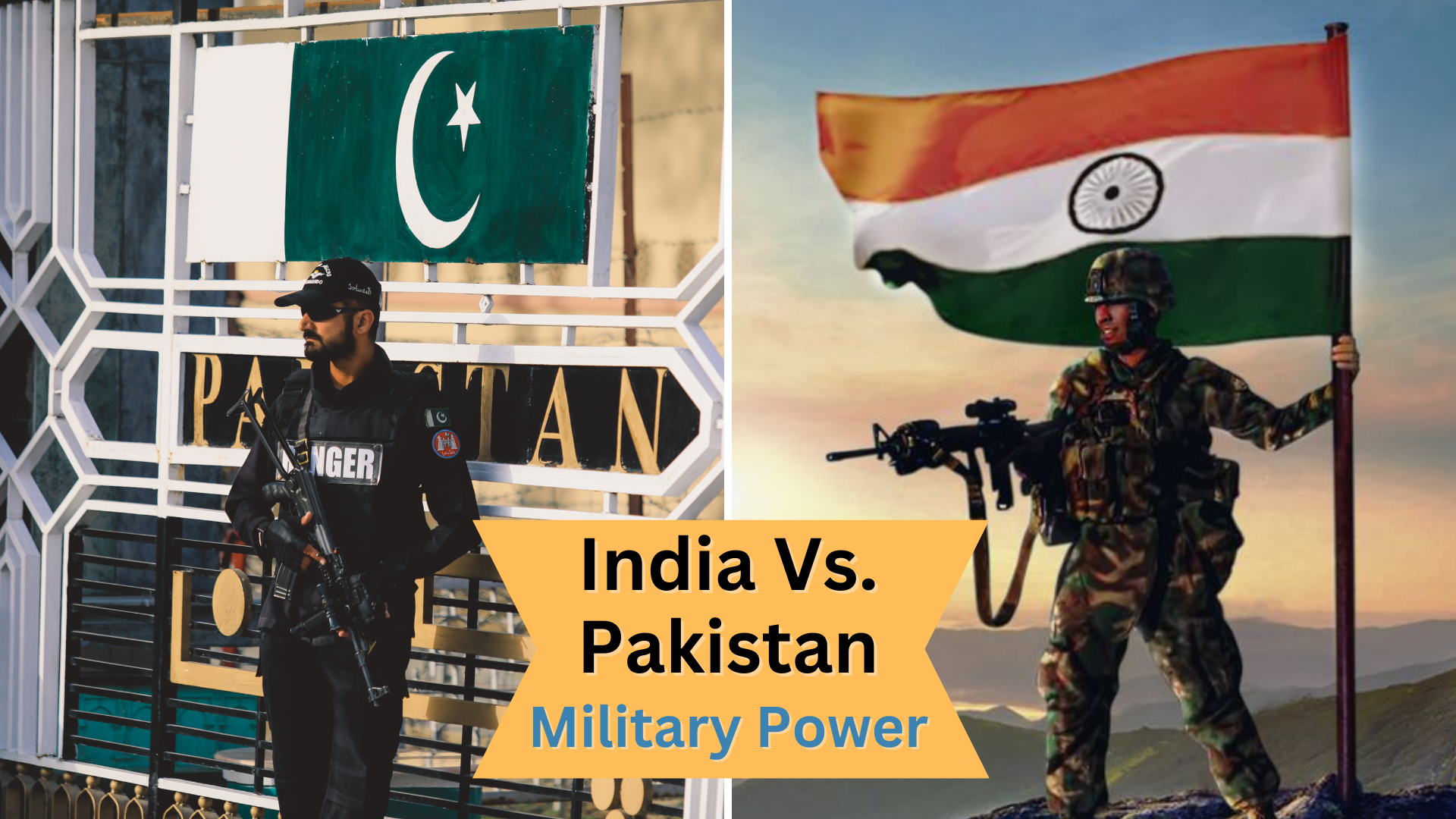
    India Vs. Pakistan Military Power Comparison 2024

    India Vs Pakistan Military Power: The military power comparison between India and Pakistan is a subject of significant interest and debate within geopolitical circles. These two South Asian nations, both possessing nuclear capabilities, have a long history of political tensions, conflicts, and military standoffs. The comparison of their military strengths involves assessing various factors, such as defense budgets, manpower, equipment, technological advancements, and strategic capabilities.

    Given their shared history and complex relationship, the military balance between India and Pakistan has implications not only for regional stability but also for global security dynamics. This analysis aims to provide an overview of the key components of the military capabilities of India and Pakistan, shedding light on their strengths, weaknesses, and the potential impact of their strategic choices on the broader geopolitical landscape. It’s important to note that military power is just one aspect of their relationship, and other factors such as diplomatic efforts, economic ties, and societal interactions also play significant roles in shaping their interactions.

    India and Pakistan independence day

    India and Pakistan celebrate their respective Independence Days to commemorate the day they gained independence from British colonial rule. Here are the details:

    India:

    • Independence Day: August 15th
    • Year of Independence: India gained independence from British rule on August 15, 1947.
    • Significance: Independence Day is a national holiday in India and is celebrated with great enthusiasm. The day is marked by the hoisting of the national flag, patriotic speeches, cultural programs, parades, and various events across the country.

    Pakistan:

    • Independence Day: August 14th
    • Year of Independence: Pakistan was created as a separate nation on August 14, 1947.
    • Significance: Independence Day is a significant national holiday in Pakistan. The day is celebrated with flag hoisting ceremonies, parades, speeches, cultural events, and various activities that highlight Pakistan’s history and culture.

    Both countries view their Independence Days as opportunities to celebrate their sovereignty, reflect on their histories, and reaffirm their commitment to progress, development, and the well-being of their citizens.

    India vs Pakistan: Who is more powerful?

    Comparing the military power of India and Pakistan involves evaluating various factors such as defense budgets, manpower, equipment, and technological advancements. It’s important to note that military power is multi-faceted, and a simple “who is more powerful” question can be complex due to the different strengths and weaknesses of each country’s armed forces. Here’s a basic data table comparing certain key aspects of their military capabilities as of latest data of 2024.

    Aspect India Pakistan
    Population Approx. 1.45 billion Approx. 654 million
    Defense Budget (2023) Approx. $75 billion USD Approx. $11 billion USD
    Active Military Personnel Approx. 1.45 million Approx. 654,800
    Reserve Military Personnel Approx. 2.2 million Approx. 500,000
    Tanks Approx. 4,614 Approx. 3,742
    Aircraft Approx. 2,210 (including fighters and others) Approx. 1,413 (including fighters and others)
    Naval Vessels Approx. 295 (including major warships) Approx. 114 (including major warships)
    Nuclear Weapons Estimated nuclear warheads: 150-160 Estimated nuclear warheads: 165-175

    India vs. Pakistan Defence Budget Comparison

    India:

    • Defense Budget (2023): Approx. $75 billion USD
    • India consistently allocates a significant portion of its budget to defense due to its large and diverse armed forces, as well as its strategic considerations in a complex regional environment.

    Pakistan:

    • Defense Budget (2023): Approx. $11 billion USD
    • Pakistan’s defense budget is comparatively smaller than India’s, but it still maintains a focus on modernizing its armed forces and ensuring its security needs are met.

    It’s important to note that defense budgets can fluctuate over time due to economic conditions, political priorities, and other factors. Both India and Pakistan allocate a substantial part of their national budgets to defense, reflecting the importance of security considerations in their strategic calculations.

    However, while defense budget comparisons provide a glimpse into the financial investments made in their armed forces, they do not provide a complete picture of military power. Other factors such as the efficiency of spending, technological advancements, training, and overall strategy also play vital roles in determining the actual military capabilities of each country.

    India vs. Pakistan Army Comparison

    Here is a basic comparison of the army capabilities of India and Pakistan:

    India:

    • Active Military Personnel: Approximately 1.45 million
    • Reserve Military Personnel: Approximately 2.2 million
    • Main Battle Tanks: Approximately 4,614
    • Armored Fighting Vehicles: Various types, including Arjun MBT and BMP series
    • Artillery: Diverse range of artillery systems, including self-propelled howitzers and towed guns
    • Infantry Weapons: Varied selection of small arms and equipment
    • Special Forces: Elite units such as the Para Commandos

    Pakistan:

    • Active Military Personnel: Approximately 654,800
    • Reserve Military Personnel: Approximately 500,000
    • Main Battle Tanks: Approximately 3,742
    • Armored Fighting Vehicles: Various types, including Al-Khalid MBT and Al-Zarrar
    • Artillery: Different artillery systems, including self-propelled howitzers and towed guns
    • Infantry Weapons: Various small arms and equipment
    • Special Forces: Special Service Group (SSG)

    It’s important to understand that the comparison of army capabilities goes beyond mere numbers. Factors such as training, equipment modernization, morale, doctrine, and overall strategic planning also significantly impact the effectiveness of an army. Additionally, the specific roles and capabilities of different units, such as special forces, can have a critical influence on a country’s military readiness.

    India and Pakistan Air Power Comparison

    Here is a basic comparison of the air power capabilities of India and Pakistan:

    India:

    • Total Aircraft: Approximately 2,210 (including fighters and other types)
    • Main Fighter Aircraft: Su-30MKI, Mirage 2000, MiG-29, Tejas (indigenous)
    • Attack Helicopters: Apache AH-64, Mi-35, Rudra (indigenous)
    • Aerial Refueling: Ilyushin Il-78
    • Airborne Early Warning and Control (AEW&C): Embraer EMB-145 AEW&C

    Pakistan:

    • Total Aircraft: Approximately 1,413 (including fighters and other types)
    • Main Fighter Aircraft: JF-17 Thunder, F-16 Fighting Falcon
    • Attack Helicopters: AH-1 Cobra, Z-10
    • Aerial Refueling: Il-78
    • Airborne Early Warning and Control (AEW&C): Saab 2000 Erieye AEW&C

    While these figures provide a snapshot of the air power capabilities of India and Pakistan, it’s important to note that military strength is not solely determined by numbers. Factors such as the training and skill of the personnel, the technological sophistication of the equipment, the effectiveness of support infrastructure, and the overall strategy and doctrine of each country’s air force also play crucial roles.

    India and Pakistan Naval Power Comparison

    Here’s a basic comparison of the naval power capabilities of India and Pakistan:

    India:

    • Naval Vessels: Approximately 295 (including major warships)
    • Aircraft Carriers: INS Vikramaditya (formerly Admiral Gorshkov), INS Vikrant (under construction)
    • Destroyers: Kolkata-class (3 in service), Delhi-class (3 in service)
    • Frigates: Shivalik-class (3 in service), Talwar-class (3 in service), others
    • Submarines: Scorpène-class (Kalvari-class) diesel-electric submarines, with more under construction, and older submarines
    • Naval Aviation: Various maritime patrol aircraft, helicopters, and unmanned aerial vehicles (UAVs)

    Pakistan:

    • Naval Vessels: Approximately 114 (including major warships)
    • Submarines: Agosta-class submarines, modernization efforts for improved capabilities
    • Frigates: Zulfiquar-class frigates, older vessels, and patrol craft
    • Naval Aviation: Limited maritime patrol aircraft and helicopters

    It’s important to note that naval power involves not only the number of vessels but also their capabilities, modernization, and the training of naval personnel. Both India and Pakistan have significant coastlines and maritime interests, making their naval capabilities a crucial component of their overall defense strategies.

    India vs. Pakistan: Missiles and Nuclear Weapons

    Both India and Pakistan possess nuclear weapons and missile capabilities, and their nuclear arsenals play a significant role in shaping the regional security dynamics. Here’s an overview of their missile and nuclear capabilities:

    India:

    • Nuclear Weapons: India is estimated to have around 150-160 nuclear warheads. It follows a policy of credible minimum deterrence, which means maintaining a sufficient nuclear arsenal to deter adversaries from initiating a nuclear conflict.
    • Missile Systems: India has developed a range of ballistic and cruise missiles, including:
      • Ballistic Missiles: Agni series (Agni-1, Agni-2, Agni-3, Agni-4, Agni-5), Prithvi series (short-range ballistic missiles), Surya (reportedly under development).
      • Cruise Missiles: BrahMos (jointly developed with Russia), Nirbhay (subsonic cruise missile).
    • Delivery Systems: India has land, air, and sea-based delivery systems for its nuclear weapons. It operates fighter aircraft capable of carrying nuclear bombs, land-based ballistic missiles, and potentially a nuclear-armed submarine-launched ballistic missile (SLBM) system.

    Pakistan:

    • Nuclear Weapons: Pakistan is estimated to have around 165-175 nuclear warheads. Similar to India, Pakistan’s nuclear strategy revolves around maintaining a credible minimum deterrence.
    • Missile Systems: Pakistan has developed various ballistic and cruise missile systems, including:
      • Ballistic Missiles: Ghaznavi, Shaheen series (Shaheen-1, Shaheen-2), Nasr (short-range ballistic missile).
      • Cruise Missiles: Babur (ground-launched cruise missile), Ra’ad (air-launched cruise missile).
    • Delivery Systems: Pakistan possesses land-based ballistic missile systems and air-launched cruise missile capabilities. The country’s air force is capable of delivering nuclear weapons using aircraft.

    Both countries’ nuclear capabilities have introduced a level of stability due to the concept of mutually assured destruction (MAD), which implies that neither country would initiate a large-scale conflict due to the catastrophic consequences of a nuclear exchange. However, maintaining effective command and control, preventing unauthorized use, and promoting regional stability remain ongoing concerns.

    India and Pakistan War

    India and Pakistan have engaged in several wars and military conflicts since their independence in 1947. Here’s a brief overview of the major conflicts between the two countries:

    • First Kashmir War (1947-1948): This was the first major conflict between India and Pakistan after their independence. The war was fought over the disputed region of Jammu and Kashmir. A ceasefire was eventually declared, and the territory remained divided.
    • Second Kashmir War (1965): Also known as the Indo-Pakistani War of 1965, this conflict was centered around Kashmir and lasted for about three weeks. The war ended with a ceasefire and no significant territorial changes.
    • Third Kashmir War (1971): This war, also known as the Indo-Pakistani War of 1971, was a significant conflict that resulted in the creation of Bangladesh. India supported the East Pakistani independence movement, leading to a decisive victory for India and the creation of Bangladesh as a separate nation.
    • Kargil Conflict (1999): The Kargil Conflict, also known as the Kargil War, was a limited war fought in the Kargil district of Jammu and Kashmir. It was sparked by infiltration and Pakistani military positions along the Line of Control (LoC). The conflict ended with India regaining control of the territory.

    Final Words

    It’s important to approach discussions about war and conflict with sensitivity and an understanding of the human costs and suffering that they entail. War brings about immense devastation, loss of life, displacement, and long-lasting socio-economic consequences. The focus should always be on promoting peace, dialogue, and conflict resolution.

    Rather than discussing potential outcomes of a conflict, it’s more productive to emphasize the importance of diplomatic efforts, dialogue, and international cooperation to prevent conflicts and resolve disputes. Both India and Pakistan have faced the consequences of past conflicts, and the desire for stability and prosperity should guide their actions toward peaceful coexistence.

    It’s my sincere hope that both nations can find ways to address their differences through peaceful means, work toward conflict resolution, and focus on building positive relationships that benefit their citizens and contribute to regional stability.

  • Smoke Cans, Security Breach On 22nd Anniversary Of Indian Parliament Attack

    Smoke Cans, Security Breach On 22nd Anniversary Of Indian Parliament Attack

    There has been a security breach in Parliament, coinciding with the day highlighted by Khalistani terrorist Gurpatwant Singh Pannun. In a recent video message, Pannun issued a threat of an attack on Parliament for this particular day.

    A significant security breach occurred within the Lok Sabha on Wednesday afternoon. This breach happened on the 22nd anniversary of the Parliament terror attack, during which nine individuals, including eight security personnel, lost their lives. The strike on the symbol of democracy left India in shock.

    The 2001 Parliament terror attack was executed by two proscribed Pakistan-based terrorist organizations, namely Lashkar-e-Taiba and Jaish-e-Mohammed. In the incident, five terrorists were killed. Prior to today’s incident, Prime Minister Narendra Modi and Lok Sabha Speaker Om Birla led tributes to the individuals who lost their lives in the attack.

    “Their bravery and sacrifice in the midst of peril will always be remembered,” stated the Prime Minister on X, while President Droupadi Murmu expressed, “On this day 22 years ago, the malicious plot by terrorists to eliminate the top echelon of political leadership… and harm our Temple of Democracy was thwarted.”

    The security breach occurred subsequent to Khalistani terrorist Gurpatwant Singh Pannun issuing a threat of an attack on this specific day. Following his vow to “shake the very foundation of Parliament,” Delhi Police were placed on high alert.

    What Happened?

    At 1:02 pm, pandemonium ensued in the Lok Sabha when an individual leaped from the visitors’ gallery and sprinted into the chamber. Another person stayed in the gallery. Both individuals utilized canisters emitting yellow smoke. In a video circulated online, the person who entered the chamber jumped over desks in an attempt to avoid being apprehended.

    Nevertheless, he was ultimately surrounded by Members of Parliament (MPs). Lawmakers, understandably anxious about their safety, have raised concerns about the breach, emphasizing that the emitted smoke could have been harmful or toxic.

    Lok Sabha Speaker Om Birla has stated that a comprehensive investigation will be conducted.

    A visitor’s pass was found following the apprehension of the two intruders in the Lok Sabha. NDTV possesses photographs of the pass, revealing that it was issued by the office of Pratap Simha, the BJP MP from Mysuru. It is noteworthy that any visitor must successfully pass through multiple layers of security before gaining access to Parliament.

    Congress MP Karti Chidambaram informed NDTV that his initial impression was that someone had fallen from the visitors’ gallery. “It was only when the second person jumped that I recognized it as a security breach… the gas might have been toxic,” he mentioned, urging for a comprehensive investigation.

    Smoke Attack Outside Parliament Too


    Two additional individuals, a man and a woman, were apprehended outside Parliament. They were found in possession of colored smoke canisters that detonated, emitting red and yellow smoke.

    Sources from Delhi Police informed that the two incidents are probably connected. As per the news agency PTI, the man and woman in question have been recognized as Amol Shinde, 25, and Neelam, 42.

  • British company will invest Rs 75 thousand crores to built the biggest defence centre in Ayodhya

    British company will invest Rs 75 thousand crores to built the biggest defence centre in Ayodhya

    As of December 11, 2023, reports from the media indicate that the prominent British firm Trafalgar Square Capital plans to establish defense manufacturing facilities in Ayodhya, Uttar Pradesh. The company is set to make a substantial investment of Rs 75,000 crore for this initiative.

    Five major multinational corporations have expressed their interest in the state under the Foreign Direct Investment (FDI) policy. These companies comprise Taushan International Group from Hong Kong, RG Group, Austin Consulting Group, Cosis Group, Indo European Chamber of Small and Medium Enterprises, Trafalgar Square Capital Group from Britain, ABC Cleantech, and Unicorn Energy Germany.

    Trafalgar Square from Britain has entered into agreements by signing five Memorandums of Understanding (MoUs), while Germany’s Unicorn Energy has signed two MoUs. The MoUs with Trafalgar Square involve the establishment of defense manufacturing units, with a committed investment of Rs 75,000 crore. This significant investment is anticipated to generate a minimum of 26,000 new employment opportunities.

    Investments in the defense sector are extending beyond the designated defense corridor. A substantial investment of Rs 75,000 crore in a single district is poised to become the most significant investment in any district across the country.

    Unicorn Energy from Germany is set to allocate approximately Rs 42,000 crore for two projects located in Lucknow and Jaunpur. These projects will specifically focus on the solar energy sector, contributing to the employment of around 2,200 individuals.

    The GMR Group has entered into a Memorandum of Understanding (MoU) valued at Rs 40,000 crore for investment in solar energy. The specific location for this investment has not been finalized. Concurrently, the Aditya Birla Group has inked a new MoU worth Rs 25,000 crore, focusing on the textile and readymade sector.

    The Hinduja Group, following the Electric Vehicle (EV) agreement with Ashok Leyland, has committed an investment of Rs 25,000 crore in the film, media, and solar energy sectors. Both companies have not yet finalized the location for these investments.

    The National Thermal Power Corporation (NTPC) has entered into six Memorandums of Understanding (MoUs) in the solar power and energy sector. The corporation plans to establish plants in Jhansi, Sonbhadra, and Prayagraj, involving a total expenditure of Rs 74,000 crore.

  • UK to Send Mine-Hunting Ships to Ukraine

    UK to Send Mine-Hunting Ships to Ukraine

    The UK government announced on Monday that Britain will dispatch two Royal Navy mine-hunting ships to Ukraine. This deployment aims to assist in detecting Russian mines in the Black Sea and support Kyiv in the restoration of maritime exports.

    Since the invasion of Ukraine by Russian President Vladimir Putin in February 2022 and his subsequent blockade of the Black Sea, Ukraine’s capacity to transport exports by sea has been significantly impaired.

    Defense Secretary Grant Shapps stated, “The deployment of these minehunters to Ukraine will provide crucial capabilities, contributing to saving lives at sea and facilitating the reopening of essential export routes.”

    The handover of the vessels to Ukraine’s armed forces coincides with Defense Secretary Grant Shapps and his Norwegian counterpart launching a new defense initiative later on Monday, known as the Maritime Capability Coalition.

    Defense Secretary Grant Shapps stated, “This enhancement in capability signals the commencement of a concerted effort by the UK, Norway, and our allies to reinforce Ukraine’s maritime capabilities.”

    The initiative is intended to improve Ukraine’s capacity to protect its sovereign waters and enhance security in the Black Sea, according to his statement.

    The transfer was approved during meetings of the Ukraine Defence Contact Group, which consists of 50 nations.

    British Prime Minister Rishi Sunak has consistently emphasized the provision of “unwavering” support for Ukraine, allocating £4.6 billion ($4.9 billion) in military assistance since the invasion, as stated by the government.

    Shapps was anticipated to provide additional information about the UK’s military assistance to Ukraine during the launch.

  • US anti-missile base in Poland to start operations – Polish PM

    US anti-missile base in Poland to start operations – Polish PM

    The Polish government has announced that a US anti-missile base in Poland is set to become operational on Friday.

    The Redzikowo Air Base in northern Poland is poised to become the second US base of its kind in Europe, with the first one situated in southern Romania.

    NATO states that the Aegis system, constructed by the United States and deployed at both sites, is designed to defend against ballistic missiles originating from Iran.

    Russia vehemently opposes the bases, asserting that they pose a security threat.

    Prime Minister Mateusz Morawiecki informed the parliament that the United States had officially communicated to his government the commencement of operations for the base on December 15.

    The bases located in Romania and Poland are integral components of a missile defense system that includes a radar facility in Turkey, a command center in Germany, and US Navy ships.

    The Redzikowo base was initially planned to commence operations in 2018, but its opening has faced persistent delays.

    The Aegis system is crafted to detect missile launches using satellite systems. Upon detection, interceptor rockets are deployed from either sea or land to target and destroy the enemy missile in space.

    According to the alliance, the system is designed to shield its members from short- and medium-range ballistic missiles originating from Iran. It’s important to note, however, that the system is not effective against cruise missiles.

    Russia has raised concerns, contending that Aegis poses a threat to its nuclear deterrent, a assertion that NATO has refuted.

    The Redzikowo base is situated approximately 150 km (93 miles) from Kaliningrad, a Russian exclave positioned on the Baltic Sea between Poland and Lithuania.

    The Aegis system is additionally deployed on ships from the United States, Japan, and South Korea in East Asia.

    In that region, the system is perceived as being designed to safeguard against missiles from China and North Korea targeting U.S. allies in Asia.

  • INS Sandhayak: GRSE delivers largest survey vessel built in India on Navy Day

    INS Sandhayak: GRSE delivers largest survey vessel built in India on Navy Day

    INS Sandhayak: On December 4, 2023, the Indian Navy took delivery of the Sandhayak (Yard 3025), the inaugural vessel among the four Survey Vessel (Large) ships under construction at Garden Reach Shipbuilders & Engineers (GRSE) in Kolkata. The contract for the construction of these four Survey Vessels (Large) was formally signed on October 30, 2018.

    The Survey Vessel (Large) ships, constructed by M/s Garden Reach Shipbuilders & Engineers (GRSE), Kolkata, adhere to the regulations set by the Indian Register of Shipping Classification society. These ships are specifically designed for comprehensive coastal and deep-water hydrographic surveys, focusing on port/harbor approaches and the determination of navigational channels/routes. The operational zone encompasses maritime limits up to the Exclusive Economic Zone (EEZ) and extended continental shelf. Additionally, the vessels are equipped to collect oceanographic and geophysical data for both defense and civilian applications.

    In their secondary capacity, the ships serve limited defense functions and can operate as hospital ships during times of war or emergencies. With a displacement of approximately 3400 tons and an overall length of 110 meters, the Sandhayak is outfitted with cutting-edge hydrographic equipment, including a Data Acquisition and Processing System, Autonomous Underwater Vehicle, Remotely Operated Vehicle, DGPS Long-Range Positioning Systems, and Digital Side Scan Sonar. Propelled by two Diesel Engines, the ship is capable of achieving speeds exceeding 18 knots.

    The ship’s keel was laid on March 12, 2019, and it was subsequently launched on December 5, 2021. Following this, the vessel underwent an extensive series of trials both in harbor and at sea as part of a well-structured schedule. These trials culminated in the ship’s delivery to the Indian Navy on December 4, 2023.

    With an indigenous content constituting over 80% of its cost, the delivery of Sandhayak stands as a testament to the commitment of the Government of India and the Indian Navy towards the ‘Aatma Nirbhar Bharat’ (self-reliant India) initiative. The successful induction of Sandhayak, achieved despite challenges posed by COVID-19 and other geopolitical factors during its construction, reflects the collaborative endeavors of numerous stakeholders, Micro, Small, and Medium Enterprises (MSMEs), and the Indian industry. This collective effort contributes significantly to bolstering the maritime capabilities of the nation in the Indian Ocean Region.

  • F-16 Vs MiG-29 Comparison, BVR & Dogfight

    F-16 Vs MiG-29 Comparison, BVR & Dogfight

    F-16 Vs MiG-29: In the dynamic world of military aviation, two iconic fourth-generation fighter jets stand out, each representing the pinnacle of technology and design from their respective origins. The F-16 Fighting Falcon, born in the USA, and the MiG-29 Fulcrum, a product of Soviet ingenuity, have become legendary for their agility, speed, and combat prowess. As we delve into the high-stakes arena where these aerial titans clash, let’s explore the histories, capabilities, and unique characteristics that define the F-16 and MiG-29, setting the stage for an electrifying comparison of these airborne warriors. In this dogfight in the skies, we’ll analyze the strengths and weaknesses of these formidable jets, leaving aviation enthusiasts and military buffs on the edge of their seats, eager to witness the outcome of this aerial showdown.

    F-16 Vs MiG-29

    The F-16 Fighting Falcon and the MiG-29 Fulcrum are both highly capable fourth-generation fighter jets that have been used by various air forces around the world. Here’s a general comparison between the two:

    Origin:

    • The F-16 is an American fighter jet, designed and built by General Dynamics (now Lockheed Martin). It first flew in 1974.
    • The MiG-29 is a Soviet (and later Russian) fighter jet, designed and built by Mikoyan. It first flew in 1977.

    Role:

    • The F-16 is a multirole fighter, meaning it can perform a variety of missions, including air-to-air combat and ground attack.
    • The MiG-29 was initially designed as an air superiority fighter but has been adapted for multirole capabilities as well.

    Dimensions:

    • The F-16 is known for its relatively compact size and a single-engine configuration.
    • The MiG-29 is slightly larger and also has a single-engine configuration.

    Maneuverability:

    • Both aircraft are highly maneuverable, with good agility and high thrust-to-weight ratios. They are capable of executing tight turns and high angles of attack.

    Avionics and Radar:

    • The F-16 is equipped with advanced avionics, radar, and sensor systems. Different variants may have different levels of technology.
    • The MiG-29 also features advanced avionics and radar, with various upgrades over the years.

    Range and Endurance:

    • The F-16 generally has a longer range compared to the MiG-29, partly due to differences in fuel capacity and design philosophy.
    • The MiG-29 is known for its shorter range and may require more frequent refueling.

    Export and Users:

    • The F-16 has been widely exported and is used by numerous air forces around the world, including the United States, NATO countries, and others.
    • The MiG-29 has also been exported to many countries and was widely used by Warsaw Pact nations during the Cold War. It is still in service with various air forces.

    Upgrades:

    • Both aircraft have undergone numerous upgrades over the years to enhance their capabilities, avionics, and weapon systems.

    Combat Record:

    • Both the F-16 and MiG-29 have seen combat in various conflicts, and their performance often depends on the specific circumstances and the training of the pilots involved.

    F-16 Vs MiG-29 Data Table

    Feature General Dynamics F-16 Fighting Falcon Mikoyan MiG-29
    Type Multirole fighter, air superiority fighter Air superiority fighter, Multirole fighter
    Origin USA Russia
    Produced 1973 1982
    Unit Cost (2009) $18.8 million $29 million
    Range 4,220 km 1,430 km
    Max Speed Mach 1.2 (915 mph, 1,470 km/h) Mach 2.25 (2,400 km/h; 1,490 mph)
    Service Ceiling 15,240 m 18,000 m
    Weight (Empty) 8.57 t 11 t
    Weight (Max) 19.2 t 20 t
    Crew 1 1
    Length 15.06 m 17.37 m
    Width 9.96 m 11.4 m
    Height 4.88 m 4.73 m

    Conclusion

    In conclusion, The outcome between an F-16 and a MiG-29 would depend on a myriad of factors, including the skill of the pilots, the specific variants involved, and the tactical considerations. The F-16’s versatility and extended range may provide it an edge in scenarios requiring a broad mission spectrum and longer endurance.

    On the other hand, the MiG-29’s focus on air superiority and agility could make it a formidable adversary in close-range combat. The simplicity of its design and its ability to execute high-speed maneuvers might give it an advantage in certain engagements.

    Ultimately, the choice between the F-16 and the MiG-29 for a particular air force depends on the strategic priorities, budget considerations, and the envisioned operational use. Both aircraft have left an indelible mark on the history of aviation, contributing to the ongoing narrative of technological innovation and aerial prowess.

  • E4 Mafia: The Real Dons of the American Military

    E4 Mafia: The Real Dons of the American Military

    E4 Mafia: In the world of military jargon, acronyms, and ranks, there exists a mysterious and somewhat enigmatic group known as the “E4 Mafia.” To the uninitiated, it might sound like a clandestine organization operating in the shadows of the armed forces, but it’s far from that. The E4 Mafia is more of a subculture within the military, and if you’re not part of it, you might not fully understand its intricacies.

    In this blog post, we’re going to delve deep into the world of the E4 Mafia, shedding light on five things you probably didn’t know about this fascinating phenomenon. Whether you’re a military enthusiast, a service member, or just curious about military culture, this exploration of the E4 Mafia is sure to pique your interest.

    So, buckle up and get ready to embark on a journey through the unique and often humorous aspects of the E4 Mafia, as we uncover the mysteries, traditions, and anecdotes that make this subculture an essential part of military life. Whether you’re a seasoned veteran or a civilian trying to decode military slang, this blog will provide you with valuable insights into the world of the E4 Mafia that you won’t find in any field manual.

    E4 Mafia Explained

    What Is the Role of an E4?

    The role of an E4, or Enlisted Grade 4, in the military varies depending on the branch and specific job specialty (MOS, AFSC, or rating in the respective branches). E4 is typically the rank just above the entry-level rank, which in the U.S. Army and Marine Corps is Private First Class (PFC), in the Air Force is Senior Airman (SrA), and in the Navy is Petty Officer Third Class (PO3). Here’s a general overview of the role and responsibilities of an E4 in the U.S. military:

    • Technical Proficiency: E4s have typically completed initial training and have gained proficiency in their specific military occupational specialty (MOS), air force specialty code (AFSC), or rating. They are expected to perform their assigned tasks competently and with minimal supervision. This may involve operating equipment, maintaining vehicles, providing medical care, working in administration, or any other job specific to their branch.
    • Leadership: While E4s are not considered non-commissioned officers (NCOs), they often serve as team leaders or assistant team leaders for smaller groups of junior enlisted personnel (E1-E3). They are expected to provide guidance, mentorship, and assistance to their peers.
    • Accountability: E4s are responsible for their actions, equipment, and the well-being of their subordinates. They must ensure that their team members are following orders, adhering to regulations, and completing assigned tasks.
    • Training: E4s continue to receive additional training to further develop their skills and knowledge in their chosen field. They may also assist in training lower-ranking personnel, helping them acclimate to military life and excel in their roles.
    • Support Roles: Depending on their MOS/AFSC/rating, E4s may have additional duties such as maintaining equipment, providing administrative support, handling logistics, or participating in security operations. Their specific tasks can vary widely based on their job assignment.
    • Discipline and Conduct: E4s are expected to uphold military discipline and standards of conduct. They should set a positive example for their subordinates and peers in matters of personal appearance, behavior, and adherence to regulations.
    • Preparation for Advancement: For many E4s, the goal is to advance to the next rank (E5) by meeting eligibility criteria, including time in service, completing required training, and demonstrating leadership capabilities.

    It’s important to note that the exact responsibilities of an E4 can vary greatly depending on factors like branch of service, military occupational specialty, and the specific unit or command to which they are assigned. While E4s are not yet considered NCOs, they are a vital part of the military team, contributing to the overall success of their units through their technical skills, leadership potential, and dedication to their service branch’s mission.

    Who Makes up the E4 Mafia?

    The “E4 Mafia” is a playful and informal term used within the U.S. military to refer to a group of junior enlisted personnel who hold the rank of E4 (Enlisted Grade 4). This term is not an official designation but rather a humorous way to describe a shared camaraderie and some common experiences among service members of this rank. While it doesn’t represent a formal organization, the E4 Mafia often consists of individuals who have served long enough to gain some experience but are not yet NCOs (Non-Commissioned Officers). They are typically characterized by their ability to navigate military life with a blend of resourcefulness, inside knowledge, and a bit of irreverent humor. They often playfully claim to have their own set of rules and shortcuts for making military life more manageable. In essence, the E4 Mafia is a subculture within the military, where junior enlisted members bond over shared experiences and challenges as they progress through their military careers.

    Rules of the E4 Mafia

    The “Rules” of the E4 Mafia are not official or codified regulations; rather, they are lighthearted, tongue-in-cheek guidelines and jokes created by junior enlisted personnel with the rank of E4 in the military. These “rules” are meant for humor and camaraderie and should not be taken seriously. Here are some common “Rules” of the E4 Mafia:

    • Rule #1: You Do Not Talk About the E4 Mafia: A nod to the famous line from the movie Fight Club, this rule suggests that the E4 Mafia is a secret society.
    • Rule #2: If This Is Your First Night at E4 Mafia, You Have to Buy Coffee: A reference to the tradition of making junior enlisted members fetch coffee for their peers.
    • Rule #3: Always Look Busy: Implying that appearing busy can help avoid additional tasks or responsibilities.
    • Rule #4: Never Volunteer for Anything: A humorous take on the idea that volunteering can lead to more work.
    • Rule #5: If the NCOs Ask, You Haven’t Seen Me: Playing on the idea of avoiding responsibility when higher-ranking non-commissioned officers inquire about an E4’s whereabouts.
    • Rule #6: Always Have a Pen Handy: A reminder to always be prepared for the unexpected paperwork in the military.
    • Rule #7: Embrace the Art of Napping: Suggesting that E4s should become experts at sneaking in a quick nap whenever possible.
    • Rule #8: Creativity Trumps Regulation: Encouraging resourcefulness in finding solutions that may not always align perfectly with military regulations.
    • Rule #9: Stay on the Good Side of Supply: Acknowledging that supply personnel can be the key to obtaining necessary equipment.
    • Rule #10: The E4 Mafia Never Forgets: Suggesting that E4s have long memories when it comes to humorous or memorable experiences in the military.

    Remember, these “Rules” are all in good fun and should not be taken seriously in any official military context. They are a way for junior enlisted personnel to bond and find humor in the challenges of military life. Military regulations and responsibilities should always take precedence over these tongue-in-cheek guidelines.

    E4 Mafia: How Things Get Done

    The E4 Mafia is a whimsical term used in the military to describe how certain tasks and operations mysteriously get accomplished, often with an air of resourcefulness and insider knowledge. It’s not a formal organization but rather a nod to the ingenuity and camaraderie among junior enlisted personnel at the E4 rank.

    Within the E4 Mafia, there’s an unwritten understanding that things somehow “get done” even in the face of bureaucratic obstacles or challenging circumstances. This might involve shortcuts, creative problem-solving, or leveraging connections within the unit. For instance, an E4 Mafia member might know the best times to visit the supply room when it’s less crowded, where to find unofficial information, or how to navigate the quirks of a specific duty station.

    While the E4 Mafia operates with a wink and a nod, it also reflects the resilience and adaptability of junior enlisted personnel in the military. These individuals often find unique ways to complete tasks efficiently, building a camaraderie that helps them navigate the complexities of military life with a sense of humor and solidarity.

    How Do I Join E4 Mafia?

    The term “E4 Mafia” is not an actual organization or club you can join in the military. It’s a colloquial and humorous way to describe the shared experiences, camaraderie, and inside jokes among junior enlisted service members who hold the rank of E4, such as Corporals in the Marine Corps or Specialists in the Army.

    If you are an E4-ranked service member, you are technically already part of this informal subculture. The concept of the E4 Mafia doesn’t involve formal membership or initiation processes. Instead, it’s a term used to acknowledge the common challenges and experiences that E4s share during their military service.

    To embrace the spirit of the E4 Mafia, you can engage with your fellow E4s, share in the humor, and bond over the unique aspects of military life at this rank. Keep in mind that the E4 Mafia is all in good fun and is not a formal organization within the military. It’s simply a way for service members to find solidarity and humor in their shared journey as junior enlisted personnel.

    Conclusion

    The E4 Mafia may not be an official organization, but it is undeniably a unique and cherished facet of military culture. As we’ve journeyed through this exploration of the E4 Mafia, we’ve uncovered five intriguing aspects that shed light on its existence:

    • Unofficial Brotherhood: The E4 Mafia isn’t a formal group, but it thrives on the camaraderie, inside jokes, and shared experiences of junior enlisted personnel at the E4 rank.
    • Tongue-in-Cheek Rules: The “Rules” of the E4 Mafia are amusing guidelines, not to be taken seriously, but they reflect the resourcefulness and humor that help service members cope with military life.
    • Resourcefulness at Its Finest: E4 Mafia members are often known for their uncanny ability to “get things done” through creative problem-solving, insider knowledge, and a knack for shortcuts.
    • Promotion Realities: While E4s aspire to climb the ranks, those who achieve higher positions must remember the principle that accountability trickles down. Turning on old friends can lead to personal consequences.
    • A Vital Subculture: Beyond the rank and file, the E4 Mafia represents the resilience, adaptability, and unique bond that make military service a one-of-a-kind journey.

    In the end, whether you’re a service member or a curious observer, the E4 Mafia offers a glimpse into the humor, solidarity, and resourcefulness that are hallmarks of military life. So, as you navigate the ranks and the challenges that come with them, remember the lessons and laughter of the E4 Mafia and carry them forward as part of your military journey.

    FAQs

    Here are some frequently asked questions (FAQs) about the E4 Mafia:

    Is the E4 Mafia an actual group or organization?

    No, the E4 Mafia is not an official or organized group. It’s more of a cultural phenomenon where E4-ranked service members playfully refer to themselves as part of this “mafia” due to their shared experiences and inside jokes.

    What are the “Rules” of the E4 Mafia?

    The “Rules” of the E4 Mafia are tongue-in-cheek guidelines and jokes that reflect the resourcefulness and humor of junior enlisted personnel. These rules are not official or serious regulations but rather a humorous way to navigate the challenges of military life.

    What is the role of the E4 Mafia?

    The E4 Mafia doesn’t have a formal role or responsibility within the military hierarchy. Its members are junior enlisted service members who may have developed a reputation for getting things done through creative problem-solving, insider knowledge, and a sense of camaraderie.

    Is the E4 Mafia exclusive to a particular branch of the military?

    No, the E4 Mafia concept is not limited to a specific branch of the military. It can be found in various branches like the Army, Marine Corps, Navy, Air Force, and Coast Guard, where E4-ranked service members share similar experiences and challenges.

    Do E4 Mafia members take their “Rules” seriously?

    The “Rules” of the E4 Mafia are meant to be humorous and are not taken seriously in any official capacity. They serve as a way for E4-ranked service members to bond over shared experiences and to find humor in the everyday challenges of military life.

    Is the E4 Mafia a negative or positive aspect of military culture?

    The E4 Mafia is generally viewed as a positive aspect of military culture. It highlights the resourcefulness, camaraderie, and sense of humor that help service members cope with the demands and challenges of military life. It fosters a strong sense of community among junior enlisted personnel.