Author: Defence Street Editor

  • Transport, treat, save lives: Airbus delivers first protected-wounded transport container to German Armed Forces

    Transport, treat, save lives: Airbus delivers first protected-wounded transport container to German Armed Forces

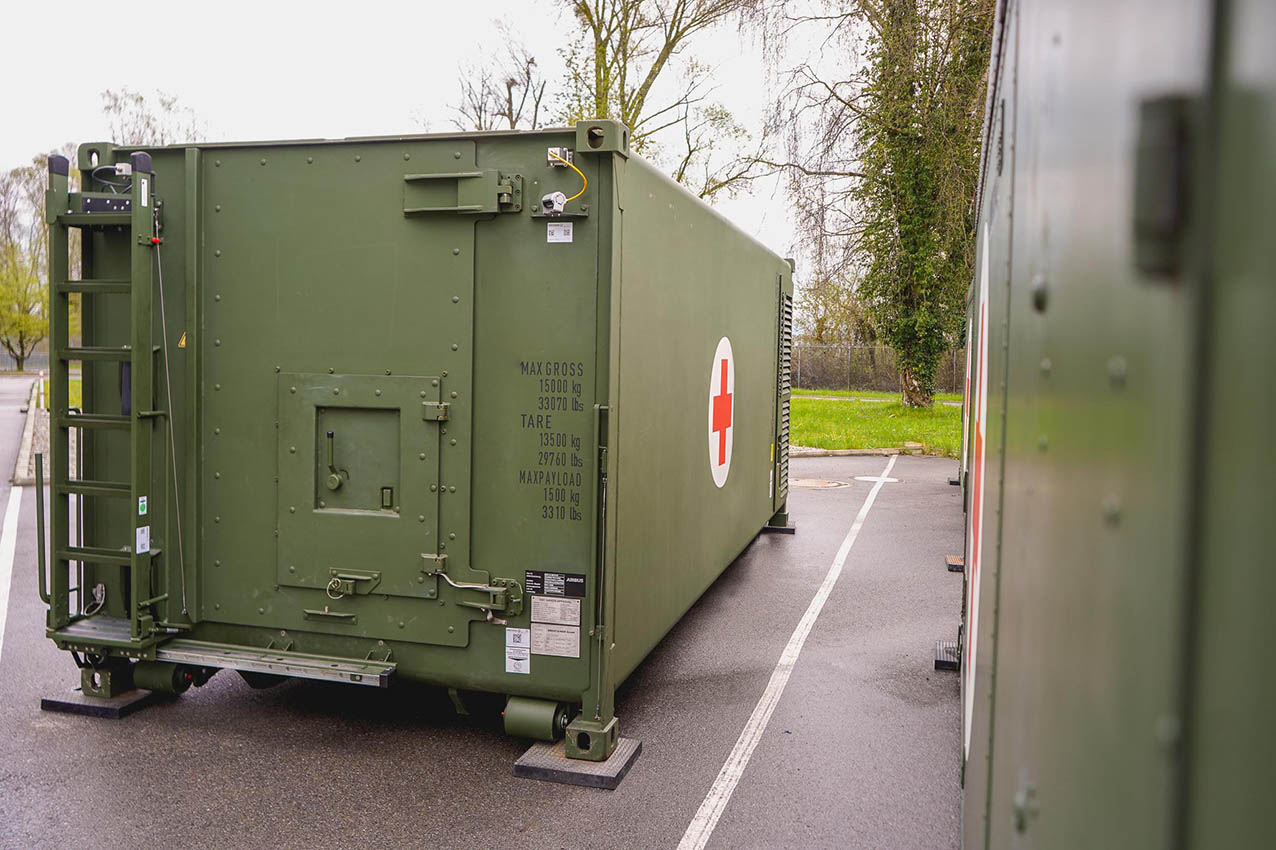
    Friedrichshafen, 2nd May, 2023. Airbus Defence and Space has now handed over the first of 13 protected-wounded transport containers (GVTC) to the German Armed Forces. From now on, their medical personnel will use them to save lives: In the containers, they can safely transport the sick, injured and wounded to hospitals or field hospitals – and even provide medical care while doing so.

    In the protected wounded transport container, Bundeswehr medical personnel can safely transport injured persons and provide them with medical care.

    “Our protected-wounded transport containers improve the Bundeswehr’s rescue chain and ability to recover, transport and treat the wounded in crisis areas,” said Harald Mannheim, managing director of Airbus Defence and Space GmbH. “In this respect, the GVTC is further proof of how we and our state-of-the-art technologies help all those who help others.”

    The first GVTC, delivered on 20 April, will be used as a so-called ‘proof-of-concept’ vehicle. This means that the Bundeswehr will put the container through its paces and train and educate its medical personnel on it, after which, the GVTC will go into series production. The 12-series GVTCs are then scheduled to be handed over to the Bundeswehr from 2024 to 2026.

    The protected-wounded transport container is based on the international ISO standard 20-foot container.

    The GVTC: flexible, simple and safe

    The GVTC, which Airbus Defence and Space developed with partner companies Drehtainer GmbH and Binz Automotive, is based on the international ISO standard 20-foot container. It is around 6 metres long and can be easily mounted on existing Bundeswehr trucks via an integrated hook roll-off system. Cranes or other special equipment are not required.

    In the GVTC, two paramedics can treat up to eight patients and, for example, monitor their vital signs and oxygen saturation, perform a defibrillator operation or have patients ventilated via the integrated oxygen-generation system. The container also protects its occupants and the equipment on board from chemical warfare agents, shelling and heavy explosions. A power generation unit enables self-sufficient operation for hours, while the high-performance air-conditioning system allows the GVTC to be used in extreme climatic conditions.

  • European Space and Telecoms Players Sign Partnership Agreement to Bid for IRIS2 Constellation

    European Space and Telecoms Players Sign Partnership Agreement to Bid for IRIS2 Constellation

    Copyright: Airbus

    Luxembourg / Madrid / Munich / Paris, 2nd May, 2023. A group of European space and telecommunications players have come together to form a partnership to respond to the European Commission’s call for tender related to the future European satellite constellation IRIS² (Infrastructure for Resilience, Interconnectivity and Security by Satellite). IRIS² aims to bring a new secure and resilient connectivity infrastructure to European governments, businesses and citizens.

    The open consortium will be governed by Airbus Defence and Space, Eutelsat, Hispasat, SES and Thales Alenia Space. The consortium will also rely on the core team of the following companies: Deutsche Telekom, OHB, Orange, Hisdesat, Telespazio, and Thales. Together, they will aim to create a state-of-the-art satellite constellation based on a multi-orbit architecture that would be interoperable with the terrestrial ecosystem.

    This partnership will set up an integrated best-in-class European space and telecoms team across these companies to leverage the expertise and capabilities in the field of secure satellite communications solutions. The consortium will encourage start-ups, mid-Caps and SMEs to join the partnership, resulting in a more innovative and competitive European space sector where new business models will emerge.

    The integrated team aims to foster collaboration among all European space players across the whole connectivity value chain with a view to enabling EU’s strategic autonomy through the delivery of sovereign, secure and resilient government services to protect European citizens. The team will leverage synergies between government and commercial infrastructures. The teaming partners are also well positioned to provide commercial services to bridge the digital divide across European territories and to increase Europe’s global outreach and competitiveness as a space and digital power on the global market.

    IRIS² will deliver resilient and secure connectivity solutions to governments to protect European citizens and will provide commercial services in the interest of European economies and societies. It will also bolster the EU partnership policy by offering its infrastructure abroad. IRIS² is the EU’s new flagship space programme for a digital, resilient and safer Europe.

  • Northrop Grumman’s Integrated Battle Command System Achieves Initial Operational Capability

    Northrop Grumman’s Integrated Battle Command System Achieves Initial Operational Capability

    Northrop Grumman's Integrated Battle Command System Achieves Initial Operational Capability

    HUNTSVILLE, Ala., 1st May, 2023. Northrop Grumman Corporation’s Integrated Battle Command System (IBCS) has achieved initial operational capability from the U.S. Army. With this declaration, the system is now ready to be fielded to U.S. Army units to further support the development of the system’s capabilities.

    U.S. military load a C-5 aircraft with Northrop Grumman’s Integrated Battle Command System (IBCS) equipment during a training session. (Photo Credit: U.S. Army)

    IBCS is the cornerstone of the Army’s air and missile defense modernization strategy, replacing the multiple current air and missile defense command and control systems with a single system. The system has completed rigorous and demanding Initial Operational Test and Evaluation and numerous successful development and operational flight tests. During these demanding assessments, IBCS demonstrated its ability to deliver decision-quality fire control data across joint networks, increasing situational awareness and time for decision making.

    “IBCS has the leading role in the Army’s air and missile defense modernization strategy because its ability to integrate multi-domain sensors to create fire quality fused data enables the warfighter to quickly decide on the best shooter to defend against incoming threats,” said Rebecca Torzone, vice president and general manager, combat systems and mission readiness, Northrop Grumman. “With its mature, proven and ready capabilities, IBCS transforms and extends the battlespace for the U.S. and its allies.”

    This groundbreaking step toward putting multi-domain capabilities in the hands of the warfighter comes on the heels of the program’s recent approval for Full Rate Production. These milestones are the result of the successful completion of critical testing, and development of logistics, support and training. To date, IBCS has integrated, or demonstrated integration on numerous sensors and shooters from all U.S. service branches and allies. IBCS can quickly integrate additional systems given its open architecture – enabling the U.S. and its allies to move beyond interoperability to achieve the high level of multi-domain integration required today and in the future.

    IBCS implements a modular, open and scalable architecture that integrates available assets in the battlespace onto a common, integrated fire control network, regardless of source, service or domain. Its architecture enables the efficient and affordable integration of current and future systems and extends the battlespace by disaggregating sensors and effectors. By enabling this high level of network integration, the warfighter is given unprecedented time to make accurate decisions. Through numerous successful developments, operational tests and demonstrations, IBCS has proven its capability to connect and fuse multi-service sensor data to multi-service weapons, demonstrating the Army’s contribution to Joint All Domain Command and Control (JADC2) capabilities.

    Northrop Grumman is a leading global aerospace and defense technology company. Our pioneering solutions equip our customers with capabilities they need to connect and protect the world, and push the boundaries of human exploration across the universe. Driven by a shared purpose to solve our customers’ toughest problems, our 95,000 employees define possible every day.

  • General Atomics Delivers Spacecraft Simulator Supporting NASA TSIS-2 Program

    General Atomics Delivers Spacecraft Simulator Supporting NASA TSIS-2 Program

    SAN DIEGO. On 1st May, 2023, General Atomics Electromagnetic Systems (GA-EMS) announced that it has developed and delivered a spacecraft simulator to the University of Colorado (CU) Laboratory for Atmospheric and Space Physics (LASP) in support of the Total and Spectral solar Irradiance Sensor- 2 (TSIS-2) spacecraft program.  GA-EMS is under contract with NASA’s Goddard Space Flight Center (GSFC) to build the TSIS-2 spacecraft, which will provide measurements of solar irradiance and high-quality data for the long-term climate record. CU LASP is providing the Total Irradiance Monitor (TIM) and Spectral Irradiance Monitor (SIM) sensors for TSIS-2.

    “This represents the first complete end-to-end spacecraft simulator we have designed, programmed, built, and delivered to a customer, adding another significant capability to our space systems and technologies portfolio,” stated Scott Forney, president of GA-EMS. “The spacecraft simulator allows us to check the communication and functionality of the TSIS-2 payload onboard our GA-150 satellite bus in preparation for satellite operations. Although the delivered simulator is specific to TSIS-2, we have an experienced team in-house to develop and build simulators to support new customers and satellite programs.”

    The TSIS-2 spacecraft simulator provides capabilities to send and verify commands, receive health and status telemetry, and receive science and analog thermistor data and specific command file uploads. The spacecraft simulator provides valuable capabilities to test system performance, payload interfaces, and functions pre-flight in preparation for on-orbit mission operations.  GA-EMS has designed and is manufacturing the TSIS-2 satellite based on its modular and scalable GA-150 ESPA-class bus architecture. GA-EMS is also performing TSIS-2 payload integration and testing and will provide mission operations support. Once launched, the satellite will operate in a sun-synchronous orbit, with the TSIS-2 payload providing NASA with continuous solar monitoring capabilities throughout its mission life.

    “We provide an agile approach to satellite design, test, manufacturing, and payload integration to help customers access space and execute their missions,” stated Gregg Burgess, vice president of GA-EMS Space Systems. “Simulation is a critical step in satellite design to help maximize risk mitigation. Not only does this allow us to evaluate spacecraft and component performance under various scenarios prior to launch, it is also a valuable tool for troubleshooting and resolving any issues that might arise while the satellite is on orbit.”

    About General Atomics Electromagnetic Systems
    General Atomics Electromagnetic Systems (GA-EMS) Group is a global leader in the research, design, and manufacture of first-of-a-kind electromagnetic and power generation systems. GA-EMS’ history of research, development, and technology innovation has led to an expanding portfolio of specialized products and integrated system solutions supporting aviation, space systems and satellites, missile defense, power and energy, and processing and monitoring applications for defense, industrial, and commercial customers worldwide.

  • Raksha Mantri Shri Rajnath Singh & his Maldivian counterpart hold talks in Male to further strengthen bilateral defence & security ties

    The Union Minister for Defence, Shri Rajnath Singh bilateral meeting with his Maldivian counterpart Ms Mariya Ahmed Didi, in Male on May 01, 2023.

    New Delhi, 1st May, 2023. Raksha Mantri Shri Rajnath Singh arrived in Maldives on May 01, 2023, on a 3-day official visit at the invitation of his Maldivian counterpart Ms Mariya Ahmed Didi. As a special gesture, reflecting the warmth in the bilateral relations, the Defence Minister of Maldives broke protocol and personally received the Raksha Mantri upon arrival at the airport.

    Later, the Raksha Mantri held bilateral delegation-level talks with the Maldivian Defence Minister. Issues of mutual defence cooperation and new initiatives to further strengthen defence and security partnership were discussed in the meeting. India will be handing over a Fast patrol vessel along with an assault landing craft to Maldivian Coast Guard in a formal ceremony on May 02, 2023.

    The Raksha Mantri also held discussions with the Foreign Minister of Maldives Mr Abdulla Shahid. Issues of ongoing bilateral defence and infrastructural development cooperation in Maldives by India were discussed.

    The Raksha Mantri will call on the President of Maldives Mr Ibrahim Mohamed Solih on May 02, 2023.

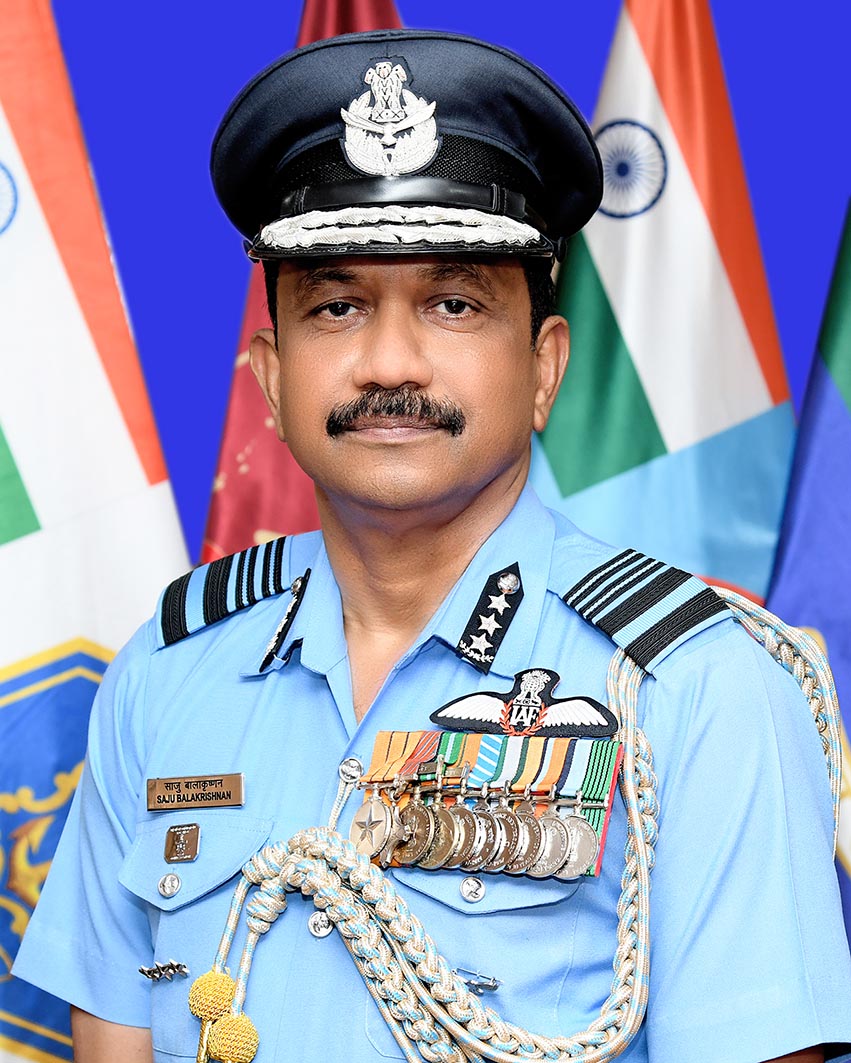
  • Air Marshal Saju Balakrishnan AVSM, VM Takes Over As 17th Commander-In-Chief, Andaman & Nicobar Command (CINCAN)

    Air Marshal Saju Balakrishnan AVSM, VM Takes Over As 17th Commander-In-Chief, Andaman & Nicobar Command (CINCAN)

    New Delhi, 1st May 2023. Air Marshal Saju Balakrishnan, AVSM, VM has taken over as the 17th Commander-in-Chief of the Andaman and Nicobar Command (CINCAN) on 01 May 2023. The Andaman and Nicobar Command (ANC) is the only Joint-services Command in India and serves as a model for the country’s planned theaterisation of Army, Navy, and Air Force capabilities.

    Air Marshal Saju Balakrishnan is a distinguished alumnus of the National Defence Academy Khadakwasla, having been commissioned into the fighter stream of the Indian Air Force (IAF) in 1986. With over 3200 accident-free fighter flying hours on various variants of MIG-21 and Kiran aircraft, he is an accomplished fighter combat leader. The Air Marshal has held various key positions throughout his illustrious career, including CO of a Bison Squadron, the first Commanding Officer of an AWACS Squadron, and Air Officer Commanding at the prestigious AF Station at Jodhpur. Before assuming Command of ANC he was the Senior Air Staff Officer at the IAF Training Command at Bengaluru.

    For his distinguished service, he has been awarded the Presidential Awards of Ati Vishisht Seva Medal and Vayu Sena Medal.

  • DRDO & Indian Navy conduct successful maiden test trial of indigenous Air Droppable Container ‘ADC-150’ from IL-38SD aircraft off Goa coast

    DRDO & Indian Navy conduct successful maiden test trial of indigenous Air Droppable Container ‘ADC-150’ from IL-38SD aircraft off Goa coast

    New Delhi, 1st May 2023. Defence Research & Development Organisation (DRDO) and Indian Navy conducted the successful maiden test trial of ‘ADC-150’ from IL 38SD aircraft off the coast of Goa on April 27, 2023. ‘ADC-150’ is an indigenously designed and developed Air Droppable Container with 150 kg payload capacity. The trial was conducted to enhance the naval operational logistics capabilities by providing quick response to meet the requirement of critical engineering stores to ships (under distress), which are deployed more than 2,000 kms from the coast. It reduces the requirement of ships to come close to the coast to collect spares and stores.

    Three DRDO laboratories – Naval Science & Technological Laboratory (NSTL), Visakhapatnam; Aerial Delivery Research & Development Establishment (ADRDE), Agra and Aeronautical Development Establishment (ADE), Bengaluru – have been involved in the development of ADC-150 container. The crucial flight clearance certification was given by Regional Center for Military Airworthiness (RCMA), Kanpur headed by Centre for Military Airworthiness & Certification (CEMILAC), Bengaluru.

    Secretary, Department of Defence R&D & Chairman DRDO has congratulated the scientists and the Indian Navy for the successful trial of ADC-150.

  • DRDO conducts Design Validation Trial of Vertical Shaft based Underground Ammunition Storage Structure

    DRDO conducts Design Validation Trial of Vertical Shaft based Underground Ammunition Storage Structure

    New Delhi, 1st May 2023. Centre of Fire, Explosive and Environment Safety (CFEES), a Delhi-based laboratory of Defence Research and Development Organisation (DRDO) has designed and developed a Vertical Shaft based Underground Ammunition Storage Facility. It enables upward vertical dissipation of blast effects considerably reducing the blast effect on surrounding utilities.

    The Design Validation Trial of this Underground Ammunition Storage Structure was successfully conducted on April 30, 2023. The instrumented blast trial was carried out in presence of the Armed Forces by detonating 5,000 kgs of TNT in one of the chambers of the underground facility.

    The CFEES team conducted the trial with precision and utmost safety in place. All the parameters recorded during the trial matched with estimated values. This facility will ensure that an explosion within will not cause damage to the adjacent chamber and also ensuring full operability of the remaining facility.

    The Armed Forces find it difficult to stock ammunition as required by them due to non- availability of adequate land as large safety distances are required for ammunition storage structures. The safety distances considerably reduce, when ammunition is stored underground. Based on the results of the instrumented trials, the safety distance has been established up to 120 Metric Ton (40 Metric Ton Net Explosive Content) ammunition storage per chamber. The unique design developed has an additional advantage of reducing Safety Distances and Cost by 50 per cent as compared to current designs. The design also ensures higher safety of ammunition stored from any kind of aerial attack or sabotage.

    Secretary, Department of Defence R&D and Chairman DRDO has congratulated the teams involved in the successful instrumented blast trial and stated that the facility can be extensively used by the Armed Forces for storage of all types of ammunition reducing the land footprint requirements in addition to providing enhanced safety of ammunition against aerial attacks or sabotage..

  • Chief of the Air Staff visits Sri Lanka

    Chief of the Air Staff visits Sri Lanka

    New Delhi. Air Chief Marshal VR Chaudhari, Chief of the Air Staff (CAS), embarked on a four-day official visit to Sri Lanka on 1st May, 2023.  During the visit, the CAS is scheduled to meet the Hon’ble President of Sri Lanka, the Hon’ble Prime Minister of Sri Lanka, the Hon’ble State Minister of Defence, the Chief of the Defence Staff, the Commanders of Sri Lanka Air Force, Army & Navy, and the Defence Secretary.

    The CAS is visiting Sri Lanka on the invitation of the Commander of Sri Lanka Air Force, Air Marshal SK Pathirana. During the visit the CAS shall also interact with student officers of the National Defence College, Sri Lanka and visit the Sri Lankan Air Force Academy.  The visit of the CAS will enhance the existing professional ties and bonds of mutual cooperation between both the Nations.

  • Northrop Grumman’s Advanced Anti-Radiation Guided Missile Extended Range Team Honored with William J. Perry Award

    Northrop Grumman’s Advanced Anti-Radiation Guided Missile Extended Range Team Honored with William J. Perry Award

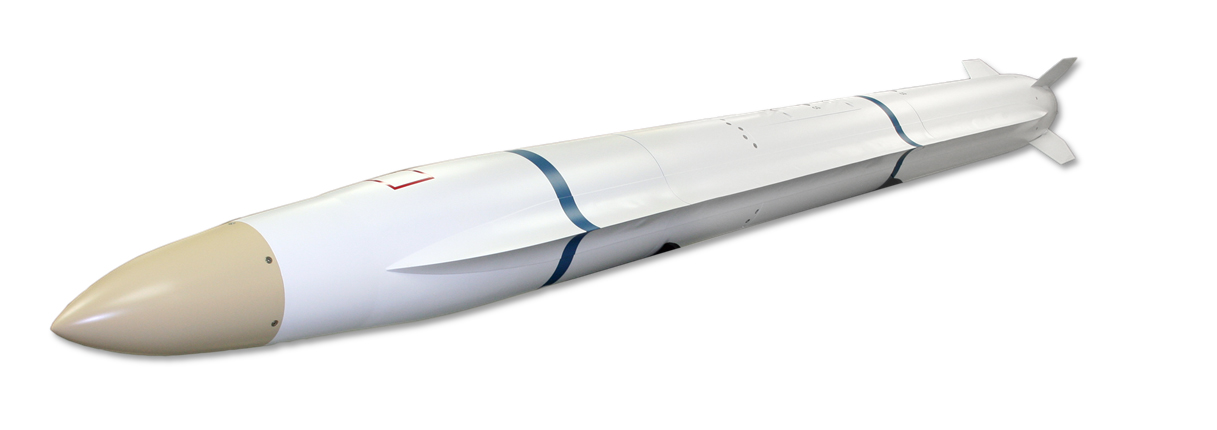
    Northrop Grumman’s Advanced Anti-Radiation Guided Missile Extended Range. (Photo Credit: Northrop Grumman)

    LOS ANGELES, 25th April, 2023. The AGM-88G Advanced Anti-Radiation Guided Missile Extended Range (AARGM-ER) team, led by Northrop Grumman Corporation and the U.S. Navy, has received the prestigious William J. Perry award presented by the National Defense Industrial Association. The award recognizes the team for their exceptional contributions to precision strike systems which strengthen national security and shapes the nation’s precision strike combat advantage.

    “We are honored to accept the William J. Perry award on behalf of the entire AARGM-ER team. Our strong partnership has accelerated the maturity of this advanced weapon capability to quickly deliver this time-critical, precise weapon into the hands of warfighters who fly into harm’s way,” said Gordon Turner, vice president, advanced weapons, Northrop Grumman.

    The air-launched, tactical missile advances the Navy’s AARGM baseline program by creating the most advanced counter air defense capability with extended standoff range and increased survivability and effectiveness against future threats.

    “The AARGM-ER industry-government team have displayed innovation and dedicated leadership, resulting in a significant and enduring advancement in precision warfare for the U.S. and our allies,” said David Norquist, NDIA president and chief executive officer.

    AARGM-ER is part of the company’s broad portfolio of advanced weapons, which includes tactical armaments, components, strike missiles and interceptors. The missile is being integrated on the Navy F/A-18E/F Super Hornet and EA-18G Growler aircraft as well as the Air Force F-35A, Marine Corps F-35B, and Navy and Marine Corps F-35C aircraft.

    The Perry Award is named in honor of former Secretary of Defense Dr. William J. Perry, the first individual recipient. The award recognizes exceptional contributions to precision strike systems, by an individual or team, which lead to the strengthening of national security or has had in shaping the United States’ precision strike combat advantage.

    Northrop Grumman is a leading global aerospace and defense technology company. Our pioneering solutions equip our customers with the capabilities they need to connect and protect the world, and push the boundaries of human exploration across the universe. Driven by a shared purpose to solve our customers’ toughest problems, our 95,000 employees define possible every day.