Author: Defence Street Editor

  • With Increased Sales to Europe, Elbit Systems to Present Range of Solutions at DEFEA 2023

    With Increased Sales to Europe, Elbit Systems to Present Range of Solutions at DEFEA 2023

    Elbit Systems PULS – Precise & Universal Launching System

    Haifa, Israel, 4th May 2023. Elbit Systems will participate at the DEFEA exhibition in Athens, Greece between 9-11th of May 2023 and exhibit a wide range of products and systems at its booth with both visual and interactive displays.

    Elbit Systems views the display of its state-of-the-art portfolio of solutions at stand in Hall 2 stand B2 at DEFEA as an important contribution to the strengthening of its relationships with Greece, NATO and Europe. The war in Ukraine has highlighted the increasing releavance of our solutions to the European Market. In 2022 Elbit Systems reported a 40% increase in sales to European countries. As a reflection of the growing demand, the Company will display a range of cutting edge technological solutions that can be customized to the customers’ requirements.

    Elbit has recently completed a significant joint milestone with the Greek Airforce with the upcoming arrival of two of the M-346 aircraft for the International Flight Training Center in Kalamata as well as the completion of the training infrastructure including 5th Generation simulators for the center. More details regarding the landing of the M-346 will be announced in the coming days.

    Aerial & Ground Precision Guided Munitions

    Elbit Systems will display a portfolio of highly accurate rockets including the 40km Accular, 150km EXTRA and 300km Predator Hawk. Also on display will be the GATR (Guided Advanced Tactical Rocket), REST (Range Extension and Smart Tail) guidance kit for general purpose warheads and SPEAR fully autonomous, vehicle-mounted 120mm soft recoil mortar system for high-mobility platforms. The Precise & Universal Launching System, PULS, capable of launching a range of rockets and missiles, as well as local and foreign made rockets will also be on display.

    The Company offers state-of-the-art combat proven General Purpose Bombs, delivering advanced capabilities with configurations for 500, 1000, and 2000-pound advanced warheads. The MPR Family bombs feature concentrated blast and controlled fragmentation for high strike probability with minimal collateral damage against a wide range of ground targets in open terrain.

    Unmanned Aerial Systems – UAS

    A model Skylark 3 tactical mini UAS has up to six hours endurance and with a range of 100km it delivers ISTAR capabilities to the division, brigade and battalion levels. Battle-proven, the Skylark 3 has an electric engine and enables performance of ongoing covert operations and provides real-time intelligence during the day or night. The SkyStriker UAS fully autonomous loitering munitions (LM) can locate, acquire and engage operator designated targets with a flexible warhead of up to 10 Kg installed inside the fuselage, enabling high-precision performance. The UAS operator can also abort the mission and recover the UAS. Its electric propulsion generates a low acoustic signature. As a silent, invisible, and surprise attacker, SkyStriker delivers high performance precision and reliability, providing a critical advantage on the modern battlefield.

    Airborne Solutions

    Elbit Systems will showcase the SkyTouch end-to-end, multifunctional Planning, Command and Control solution. The SkyTouch gathers and analyzes vast amounts of data to create a complete and accurate aerial Common Operational Picture that can be distributed to the entire chain of command- to increase threat-detection probability and enable optimal real-time operational response. The Helmet Display and Tracking System family (HDTS) features enhanced situational awareness capabilities including color symbology and Line-of-Sight technology for improved mission effectiveness and survivability. The solution can be installed on any helicopter, Eastern and Western, and is in operation on thousands of helicopters, accumulating over 2.5million operational hours on different platforms. BrightNite unique night vision pilotage solution that overcomes visibility limitations and enable to safely and effectively fly mission helicopters in pitch dark nights and in DVE conditions including poor weather conditions, brownouts, whiteouts and sandstorms; Xplore Airborne Imaging RADAR DVE terrain and obstacle mapping that allows pilots to perform missions in full degraded visibility environments and in GPS denied areas. Fully compatible with the HMDS, the low-cost solution improves situational awareness and flight safetly and improves mission success probability.

    Advanced EW & SIGINT Solutions

    With advanced solutions for land, sea and air, Elbit Systems will display a number of passive and active solutions including:

    The ReDrone operational counter-UAS defense solution against all drone types. Designed for military, paramilitary, homeland security and civilian uses, ReDrone provides complete, multi-layered, multi-mission, and operationally-proven protection against the full spectrum of UAS threats across a wide range of scenarios. A unique set of seamlessly-integrated countermeasures detects, identifies, classifies, locates, tracks, neutralizes, manipulates and defeats multiple threats simultaneously, in urban and rural environments, day and night and in all weather conditions. The mini-Music is the smallest and most advanced system with a powerful laser for small to medium helicopter and fixed wing aircraft. The compact, lightweight system has a powerful fiber laser for efficient operation and a thermal camera for accurate acquisition and tracking.

    The Spectro multi-spectral electro-optical payload that is suitable for today’s operational complexity. The lightweight playload system provides continuous target scanning capabilities for enhanced situational awareness and is designed for day-and-night and all weather extended-range surveillance. The DAiR multi-mission 3D tactical radar can simultaneously detect and classify thousands of targets in the area of various sizes and velocities, in the air, on land and at sea including humans, small quadcopters, aircrafts, helicopters, UAV and artillery. The lightweight mobile tactical radar is a leading solution for air situational awareness, border security missions and maneuvering tactical forces. The company will also display the Electronic Countermeasure (ECM) Pod and the COAPS-L stabilized panoramic sights that provide and day night target dection, acquisition and tracking capabilities using high-end sensors and advanced AI/ML video-analytics.

    C4I & Cyber Demo Room

    E-LynX radios are a key enabler of networked warfare capabilities and deployed at group and platoon levels and installed on board various combat vehicles. The E-LynX radios are capable of dynamic and autonomous optimization and enable fast, resilient and secure communications in any terrain; The GRX-8000 high capacity and frequency hopping LOS radio system for tactical .communication with advanced electronic counter-measures for secured, interference-free communications and jamming immunity.

    The THOR mini UAS is a fully autonomous military tactical mule platform designed for a wide range of military operational applications and reconnaissance missions. The powerful platform that can carry a payload of up to 10kg is foldable and stored in a backpack, for easy deployment in less than two minutes, is suitable for operation in urban areas as well as in marine zones.The Magni-X micro-UAS is a military fully autonomous multi-rotor platform, developed to provide the most advanced close-range observation system. Though suited for a wide range of missions and applications, the Magni-X is specially designed for Short Range Reconnaissance (SRR) and for the urban arena, providing day and night intelligence imagery powered by advanced AI algorithms for tactical combat units. The HattoriX next generation fire support and intelligence solution for dismounted forces is designed to shorten the sensor-to-shooter cycle while engaging fire effectively and accurately. Tailor made for customer’s specific requirements, the HattoriX enables the integration of various electro-optics, LRF, designators, C4i, radar, radio and more.
  • General Atomics Awarded Contract from General Dynamics Electric Boat for Virginia-class Payload Tube Manufacturing

    General Atomics Awarded Contract from General Dynamics Electric Boat for Virginia-class Payload Tube Manufacturing

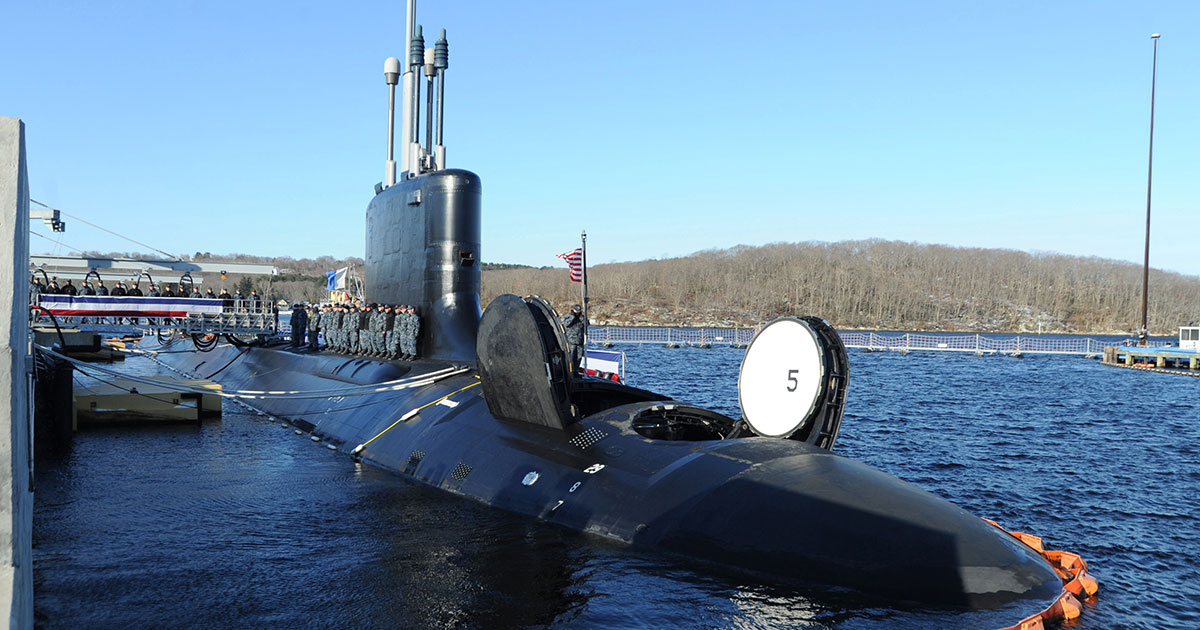
    USS Colorado Virginia-class attack submarine. U.S. Navy photo by Chief Petty Officer Darryl I. Wood/Released. Source: Defense Visual Information Distribution Service The appearance of U.S. Department of Defense (DoD) visual information does not imply or constitute DoD endorsement.

    SAN DIEGO, 4th May, 2023. General Atomics Electromagnetic Systems (GA-EMS) announced today that it has been awarded a contract from General Dynamics Electric Boat for manufacturing, production, and delivery of Virginia Payload Tubes (VPTs) for upcoming Virginia-class submarines. GA-EMS will prepare manufacturing and quality systems, and will build, test and ship two VPTs for use by Electric Boat and HII’s Newport News Shipbuilding in their construction of the submarines.

    “Our Manufacturing Center of Excellence in Tupelo, Mississippi offers world-class fabrication and precision machining industrial base capabilities, supported by an experienced program management team and manufacturing engineering and quality assurance experts that are critical for on-time production of large, complex submarine assemblies,” stated Scott Forney, president of GA-EMS. “We are very proud to be working with Electric Boat, as we bring demonstrated expertise in manufacturing to tight tolerances, exacting specifications, and documented first-time-quality performance to deliver these critical payload tubes that allow the Virginia-class submarines to support critical national security missions.”

    About General Atomics Electromagnetic Systems

    General Atomics Electromagnetic Systems (GA-EMS) Group is a global leader in the research, design, and manufacture of first-of-a-kind electromagnetic and power generation systems. GA-EMS’ history of research, development, and technology innovation has led to an expanding portfolio of specialized products and integrated system solutions supporting aviation, space systems and satellites, missile defense, power and energy, and processing and monitoring applications for critical defense, industrial, and commercial customers worldwide.

  • Protector Training for First RAF Cohort Begins at GA-ASI’s FTTC

    Protector Training for First RAF Cohort Begins at GA-ASI’s FTTC

    • MQ-9B Training at FTTC Will Become Benchmark for Future Training

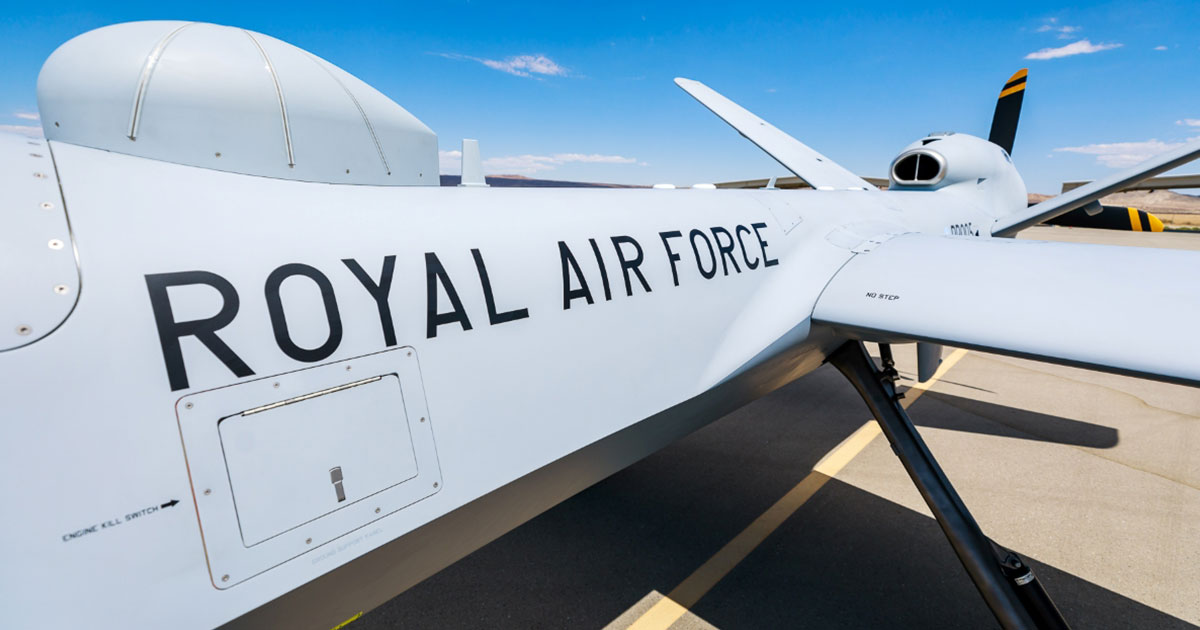
    SAN DIEGO, 4th May, 2023. On May 1, the Royal Air Force (RAF) began training its first cohort of pilots, sensor operators, and mission intelligence coordinators on operating its new Protector Remotely Piloted Aircraft System (RPAS) at the Flight Test & Training Center (FTTC) in Grand Forks, N.D. The FTTC is owned and operated by General Atomics Aeronautical Systems, Inc. (GA-ASI), which has begun deliveries of Protector RPAS to the RAF. Protector is a derivative of the MQ-9B SkyGuardian® and is initially being flown in the USA for training.

    GA-ASI is training the first four Operational Conversion Units (OCUs), each comprising of eight crews, including pilots, sensor operators (SOs), and mission intelligence coordinators (MICs). Upon completion, the crews will operate the Protector Air system as part of 31, 54 or 56 Sqn. Training for the pilots and SOs is scheduled to run for 12 weeks; six weeks for MICs.

    The scope of the training is focused on foundational skills required to operate the Protector air vehicle and its equipment, including the Multi-Spectral Targeting System (MTS), Synthetic Aperture Radar (SAR), Mission Intelligence Station (MIS), and System for Tasking and Real-Time Exploitation (STARE). Training involves building solid foundations for both normal and emergency operations in Intelligence, Surveillance, and Reconnaissance (ISR) systems, instrument flying, and Automatic Takeoff and Landing Capability (ATLC).

    The training includes simulation and live flight of the air vehicle. The synthetic training includes a desktop procedural trainer and a mission trainer.

    “The training services performed at our Grand Forks center for the RAF represent an important benchmark for future MQ-9B training for other partners,” said GA-ASI President David R. Alexander.

    MQ-9B has garnered significant interest from customers throughout the world. After the UK Ministry of Defence selected MQ-9B SkyGuardian for its Protector program, the Belgian Ministry of Defence signed a contract for SkyGuardian. The Japan Coast Guard is currently operating MQ-9B in the SeaGuardian® configuration, which the Japan Maritime Self-Defense Force (JMSDF) also recently selected for its Medium-Altitude, Long-Endurance (MALE) RPAS Trial Operation Project that began in April. Additionally, the U.S. Air Force Special Operations Command (AFSOC) signed a contract for three MQ-9B SkyGuardians, becoming the first U.S. customer for those aircraft.

  • Her Royal Highness Princess Reema Visits Boeing South Carolina

    Her Royal Highness Princess Reema Visits Boeing South Carolina

    • Ambassador of The Kingdom of Saudi Arabia to the United States joins leadership from Saudi carriers SAUDIA and Riyadh Air to celebrate recent 787 Dreamliner announcement with teammates at Boeing South Carolina
    (From left to right): Tony Douglas, CEO of Riyadh Air; Dave Calhoun, president and CEO of The Boeing Company; Her Royal Highness Princess Reema, Ambassador of The Kingdom of Saudi Arabia to the United States; Stan Deal, president and CEO of Boeing Commercial Airplanes; Captain Ibrahim Koshy, CEO of SAUDIA. Photo: Boeing

    NORTH CHARLESTON, S.C., On 5th May 2023, Boeing celebrated with Her Royal Highness Princess Reema Bandar Al-Saud, Ambassador of The Kingdom of Saudi Arabia to the United States, and leaders from Saudi carriers SAUDIA and Riyadh Air at Boeing South Carolina, following the March announcement for the two airlines to purchase a combined total of up to 121 787 Dreamliners.

    Her Royal Highness Princess Reema Bandar Al-Saud, Captain Ibrahim Koshy, CEO of SAUDIA, and Tony Douglas, CEO of Riyadh Air, addressed more than 3,000 Boeing teammates and toured the 787 final assembly building.

    The fleet orders will be among the fifth largest commercial order by value in Boeing’s history, supporting American aerospace manufacturing jobs at Boeing and across its supply chain. The purchase is part of Saudi Arabia’s strategic Vision 2030, with the goal of serving 330 million passengers and attracting 100 million visitors by 2030.

    As a leading global aerospace company, Boeing develops, manufactures and services commercial airplanes, defense products and space systems for customers in more than 150 countries. As a top U.S. exporter, the company leverages the talents of a global supplier base to advance economic opportunity, sustainability and community impact. Boeing’s diverse team is committed to innovating for the future, leading with sustainability, and cultivating a culture based on the company’s core values of safety, quality and integrity.

  • Bombardier announced that it has completed a thorough analysis of the Global 5500 and Global 6500 in order to publish Environmental Product Declarations (EPDs) for two of its large aircraft

    • Environmental Product Declarations (EPDs) provide detailed information about each aircraft’s environmental footprint across its life cycle 
    • Bombardier’s unique Product Sustainability and Strategy team analyzed environmental incidence of over 140K aircraft parts per program to create holistic and transparent public reports 
    • Long-range Global 5500 and Global 6500 aircraft join Global 7500 and Challenger 3500 as world’s only business jets carrying an EPD  
    • Global 5500 and Global 6500 EPDs contribute to Bombardier’s long-term view EcoJet research platform  

    Montreal. On 2nd May, 2023, Bombardier announced that it has completed a thorough analysis of the Global 5500 and Global 6500 in order to publish Environmental Product Declarations (EPDs) for two of its large aircraft. They join the Global 7500 aircraft and the Challenger 3500 aircraft as business aviation’s only EPD-designated jets.  

    For over a decade, Bombardier dedicated a full-time internal team of experts to the development of standardizable key metrics, data gathering, validation and analysis. Bringing together industry players and 45 tier-1 suppliers, Bombardier assessed 200K aircraft parts over the development of the Global 7500 aircraft program, gaining valuable insights on the environmental impact of this business jet and leading to a third-party verified public report.

    The industry-leading, high-performance Global 7500 aircraft became the first business aircraft to receive an EPD designation for this report in 2020 and was followed by the Challenger 3500 EPD in 2022. The holistic methodology was replicated in analyzing the Global 5500 and Global 6500 programs, where 280K parts were assessed.

    “The publication of the Global 5500 and Global 6500 aircraft EPDs are the results of years of scientific effort,” said Michel Ouellette, Executive Vice President, Engineering and Product Development, Bombardier. “These declarations are more than brochures: they are tools for the aviation industry to drive sustainable innovations across its activities spectrum. They are also the outcome of the thoroughness, mindfulness and ingenuity of a uniquely skilled internal team of experts. As a company, we are immeasurably proud that the reputation of our products and exciting opportunities attract the best minds in the world.” 

    Thanks to the colossal groundwork done by Bombardier’s dedicated team in establishing environmental requirements at the design phase of future programs, the Global 5500 and Global 6500 business jets possess strong sustainability elements. From a design perspective, they feature up to 13% better fuel efficiency than their predecessors with redesigned wings and new purpose-built Rolls-Royce Pearl engines. The high-speed transonic wing on these aircraft also cuts down on drag, reducing fuel burn, and lowering emissions, offering a smooth ride, excellent short-field and high-speed performance. Bombardier also currently offers sustainable cabin material options for the interior of all aircraft.

    “Bombardier has the influence and expertise to change the future of aviation,” said Michel Ouellette, “We made the decision over 10 years ago to tackle the industry’s most urgent challenge in the long run with our EcoJet research platform; in the short run by encouraging the increased use of Sustainable Aviation Fuels (SAF); and in the medium run by adopting a sustainability mindset when designing all our aircraft; before the first piece of sheet metal is cut. With our business jets EPDs, we have equipped ourselves with a comprehensive and replicable methodology to ensure environmental risks and impacts across our value chain are identified now, and effectively managed through our continuous innovation and improvement approach.” 

    The extensive data gleaned in the development of Bombardier’s product life cycle analysis, which is available for the industry and the public to consult, help key players reevaluate how current aircraft are designed and built. Bombardier’s sustainable cabin interiors materials offering is one example of how this life cycle analysis led to tangible product improvement. Meanwhile, in working towards inventing the future of sustainable aviation with its long-term view EcoJet research platform, these EPDs are already influencing decisions at the supply chain level, by mapping a clear strategy for sustainable sourcing and product development processes.

    Bombardier’s overall environmental, social and governance (ESG) plan also supports the industry-wide aspiration to achieve net zero emissions by 2050, by actively advocating for the adoption of Sustainable Aviation Fuels, enhancing aircraft recoverability and sustainable sourcing, improving energy efficiency in its operations, optimizing carbon offsets, and more.

  • JetBlue now using Raytheon Technologies’ InteliSight™ and GlobalConnect to improve aircraft data retrieva

    JetBlue now using Raytheon Technologies’ InteliSight™ and GlobalConnect to improve aircraft data retrieva

    • Operational efficiencies achieved through aircraft data transmission

    ANNAPOLIS, Md. On 3rd May, 2023 Raytheon Technologies’ announced a Collins Aerospace’s InteliSight Aircraft Interface Device will be installed on more than 200 of JetBlue’s Airbus A320s. The device captures, records, stores, encrypts, and securely transmits aircraft data to Collins’ robust and secure cloud platform, GlobalConnect.

    “After an extensive review process, we chose the Collins Aerospace solution,” said JetBlue’s Captain Chuck Cook, director communications, navigation, surveillance, and technical programs. “Real-time access to data will allow JetBlue to adjust service schedules and increase the sustainability of these select aircraft.”

    Providing an offload of the data after each flight ensures the data is available for analysis, operational insights, and improvements. Collins Aerospace’s InteliSight solution helps flight crews, ground crews and airline operations teams optimize cost and improve customer service.

    “JetBlue will see immediate and quantifiable benefits from the digital transformation of these aircraft,” said Jennifer Schopfer, president of Connected Aviation Solutions at Collins Aerospace. “The InteliSight data, passed via GlobalConnect, will give JetBlue’s flight operations, engineers, and maintenance teams the information they need to ensure an even more efficient travel experience for their passengers.”

    InteliSight solutions can be customized based on their unique, modular structure to address customers’ different needs and are supported 24/7 by a worldwide network. At least one carrier has reported a substantial increase in their data capture rates, up to more than 99%, after equipping its aircraft with InteliSight solutions.

  • Raytheon Technologies develops ‘NexGen Optix’ Tactical Free-Space Optical Comms

    Raytheon Technologies develops ‘NexGen Optix’ Tactical Free-Space Optical Comms

    NexGen Optics provides the warfighter with high-bandwidth, high-speed, secure communications in a rugged lightweight package for field deployment.

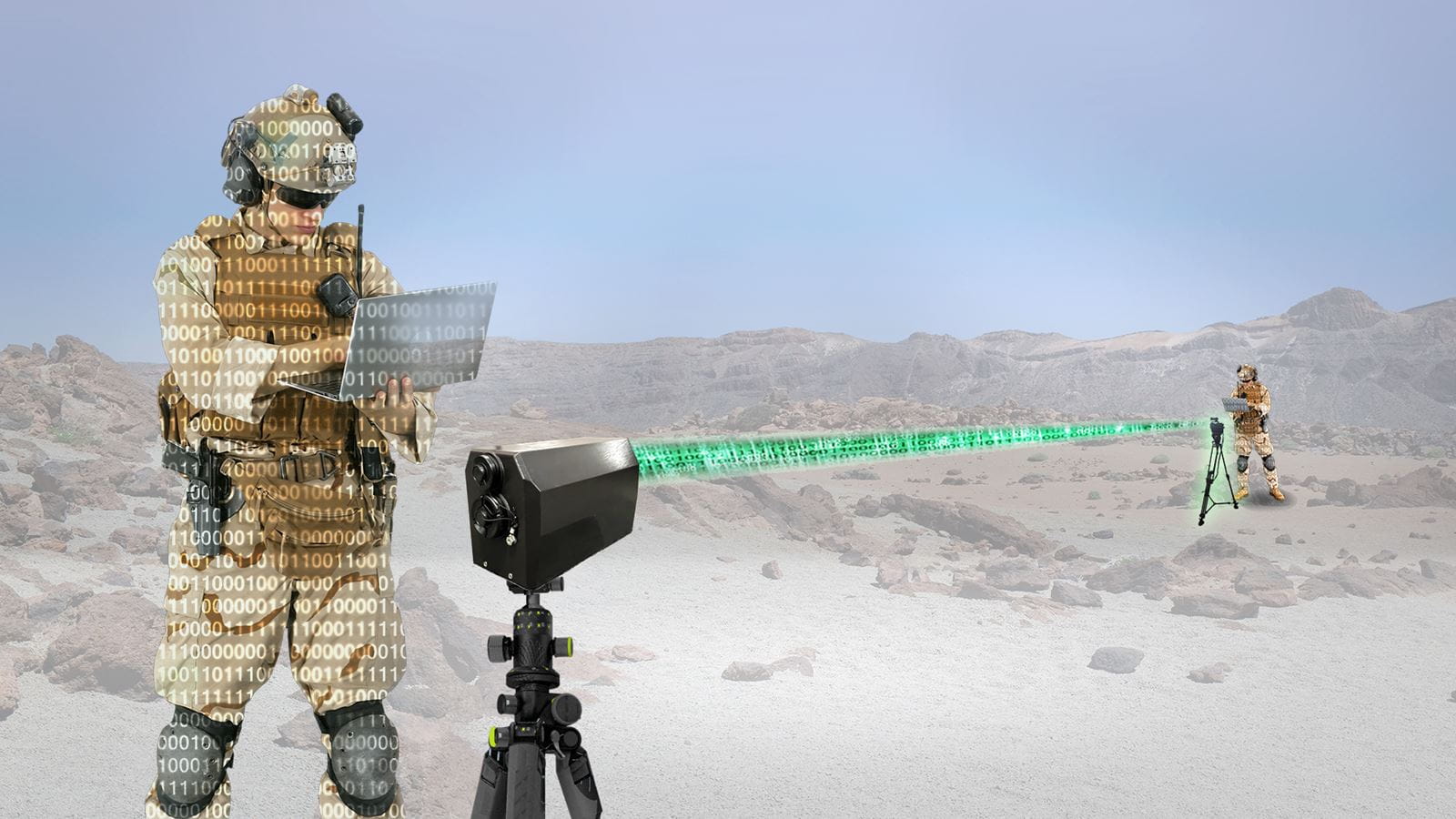
    DULLES, Va., 3rd May, 2023. Raytheon Technologies, announced the launch of NexGen Optix, a tactical Free-Space Optical Communications system that enables high-speed, secure data transfer in challenging environments.

    NexGen Optix, developed by Raytheon Blackbird Technologies, provides greater bandwidths in a form factor that is smaller, weighs less, uses less power and costs less than conventional optical systems and can securely send more data within the same bandwidth over longer distances. The system uses lasers instead of radio frequencies as a means of communication, which makes the signal less susceptible to detection, interference and jamming.

    “NexGen Optix represents a significant advancement in secure communication and shared networking technology,” said Troy Smith, director of Raytheon Blackbird Technologies. “We’ve developed a solution that enables organizations to communicate effectively in challenging environments where traditional communication systems may not be reliable.”

    The ultra-low size, weight and power-cost (SWaP-C) communications has been optimized for peer and near-peer operational environments and provides rapid, secure communication and connectivity. Offering a tactical advantage to forces, the system has been tested and approved during U.S. government exercises.

    In addition to its high-speed data transfer capabilities, NexGen Optix is lightweight and portable, making it easy to deploy in the field. The system is also designed with rugged components that can withstand harsh environmental conditions, ensuring reliability even in the most extreme situations.

  • P-3 Orion: The All-Terrain Hunter

    P-3 Orion: The All-Terrain Hunter

    3rd May, 2023. Over the course of twenty days in March 2002, Navy veterans from coast to coast were riveted as reports trickled back to the United States regarding Operation Anaconda, the military’s fierce offensive against al-Qaida and the Taliban in southeast Afghanistan.

    There, over an arid landlocked country, P-3 Orion maritime patrol aircraft that were originally designed to hunt submarines during the Cold War were making quite a splash.

    The crew of the 116-foot-long turboprop plane did it all, using its cutting-edge sensors and thermal-sensitive cameras to do nearly everything from identifying safe sites for helicopter landings to locating small bands of insurgents hiding in caves.

    During a key battle in the Shah-e-Kot Valley, P-3 crews scouted the rugged valleys below and radioed in movement of enemy vehicles, allowing Special Operations Forces soldiers on the ground to set up strategic ambushes and save countless lives.

    Not bad for a fifty-year-old sea-searching aircraft design on duty in the middle of the desert.

    Over Troubled Waters

    Entering service for the Navy in 1962, the Orion’s airframe was based on Lockheed’s Model 188 Electra commercial airliner. Though capable of reaching a top speed of 405 mph and a range of 5,570 miles, the Orion was designed to fly at low altitudes and slow speeds for long periods of time, making it an invaluable maritime patrol plane for the Navy, and used as a critical tool in the successful blockade of Cuba during the 1962 Cuban Missile Crisis.

    The aircraft’s sensor suite, which included the distinctive Magnetic Anomaly Detection boom at the end of the fuselage allowed the P-3 crew to monitor Soviet sub activity around the world. Over time, the P-3 slowly evolved in to more than just a submarine hunter. It became an ideal platform for introducing new reconnaissance and sensor technologies, including special imaging radar, low-light long-range video cameras and Lockheed’s first digital, computer-based, software-controlled avionic systems. These technologies could be considered as the grandfather of the avionics systems used in the F-117 Nighthawk and the F-22 Raptor.

    Modified P-3s went on to be used both domestically and internationally for a variety of missions ranging from the study of acid rain, polar ice and wind shear to the Earth’s magnetic field, to search and rescue, to fisheries protection to the detection of drug smuggling and the monitoring of shipping lanes by US Customs and Border Protection officers.

    Mid-Life Makeover

    It was during Operation Desert Storm in 1991 that the P-3 first showed its potential as a land surveillance aircraft, monitoring Iraqi troop activities and providing battle-damage assessments on the ground. The introduction of new long-range video cameras for use over the skies of Bosnia allowed P-3s to provide real-time combat intelligence for NATO commanders, a tactical advantage that proved equally useful during ensuing U.S. campaigns.

    Now starting its sixth decade of service, the P-3 shows no signs of flying off into the sunset any time soon. The addition of Lockheed Martin’s Mid-Life Upgrade kit replaces the aircraft’s outer wings and horizontal wing stabilizers with new technology, giving this hunter an estimated 15,000 additional flight hours and up to twenty-five years’ continued service over land and sea.

  • Valedictory Function of the 35th Naval Higher Command Course (NHCC)

    Valedictory Function of the 35th Naval Higher Command Course (NHCC)

    New Delhi, 3rd May, 2023. Valedictory Function of the 35th Naval Higher Command Course (NHCC) was held at Naval War College (NWC) Goa on 03 May 23. 34 officers including 25 officers of the Indian Navy, four officers each from the Indian Army & Indian Airforce and one Coast Guard officer completed the course which commenced on 01 Aug 22. NHCC is the flagship course attended by Captains of the Indian Navy and equivalent ranks from the Army, Airforce and Coast Guard. The course aims to prepare officers for leadership at strategic and operational level with the primary focus on national security, maritime strategy, joint operations and technology transformations. During the course, the participating officers undertook research on a wide variety of subjects of strategic and operational importance to the nation in general and the Armed Forces in particular.

    Shri Sreedharan Pillai, the Hon’ble Governor of Goa, was the Chief Guest for the function. Vice Admiral MA Hampiholi, Flag Officer Commanding-in-Chief, Southern Naval Command also graced the occasion. All the course participants were awarded degree certificates on Defence and Strategic Studies. Capt Rajeev Tiwari was awarded the Chief of Naval Staff Gold Medal for the Best Dissertation and Capt Vikram Ahuja was awarded the Flag Officer Commanding-in-Chief (West) Silver medal for second best dissertation. Capt Kunal Bharadwaj was awarded the Flag Officer Commanding-in-Chief (South) Silver Medal for the best Operation Research paper whilst Capt Varun Paniker and Col RR Laddha were awarded the Flag Officer Commanding-in- Chief (East) Silver Medal for the second best paper. A newly instituted, General Bipin Rawat Trophy in the memory of first Chief of Defence Staff for the Most Spirited Officer was awarded to Capt Suraj James Rabeira during the function. Mrs Kala Hari Kumar, President Navy Welfare & Wellness Association (NWWA), Mrs Madhumati Hampiholi NWWA (Southern Region) and daughters of Late General Bipin Rawat were also present for the award function.

    The Chief Guest congratulated the medal winners and lauded the officers for their perseverance and professional excellence. The graduating officers will now occupy key operational and staff billets in the Armed Forces and will be instrumental in policy formulation as also in decision making.

  • Airbus A330 MRTT performs landmark air-to-air sustainable aviation refuelling mission

    Airbus A330 MRTT performs landmark air-to-air sustainable aviation refuelling mission

    • RAF’s VIP Voyager refuels four Eurofighter Typhoons with SAF blend over the North Sea
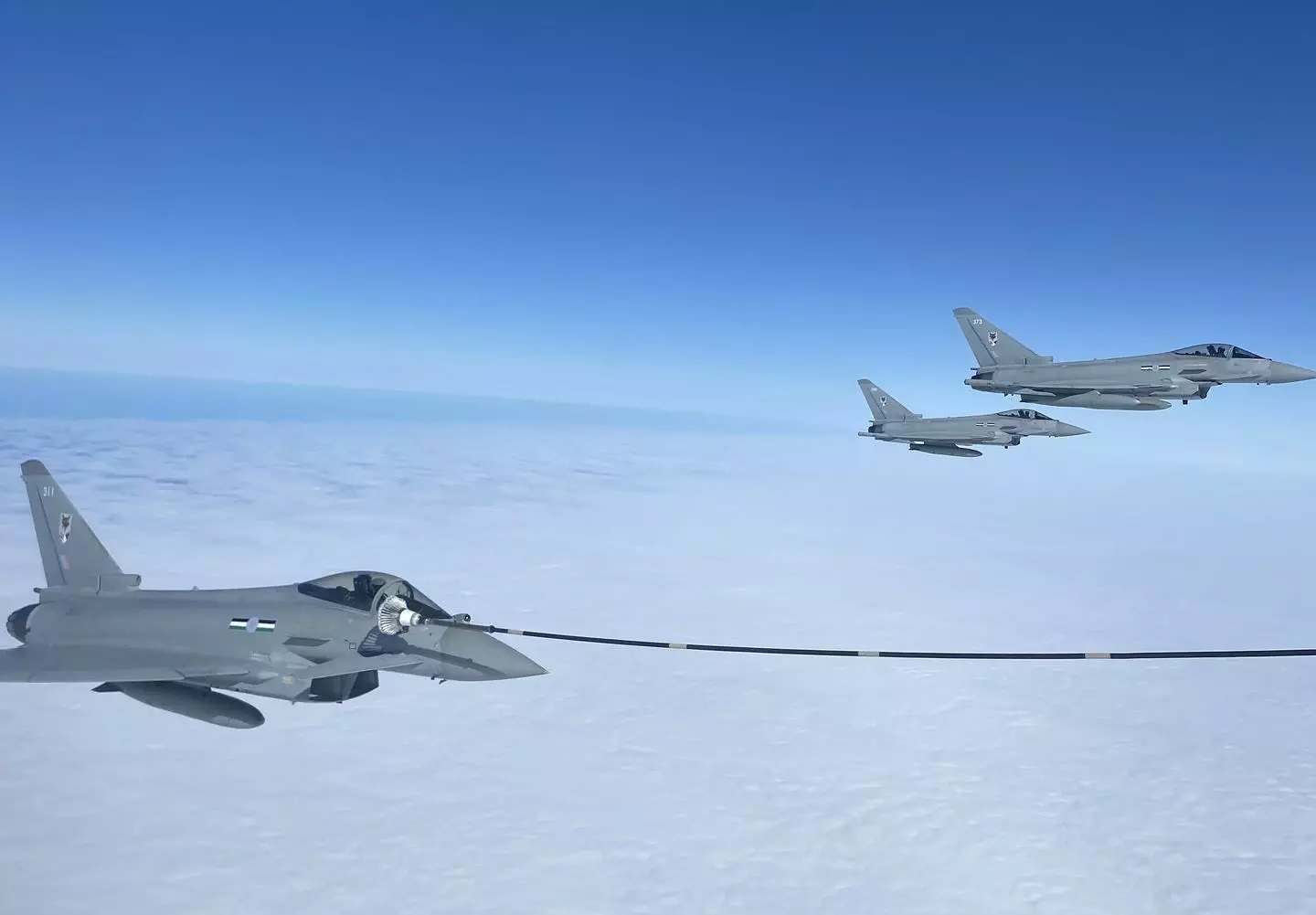
    RAF Typhoon refuelling with 43% SAF blend

    UK, 3rd May, 2023. One-hundred years since the first ever air-to-air refuelling of an aircraft, the British Royal Air Force (RAF) has carried out a landmark in-flight refuelling exercise with blended sustainable aviation fuel (SAF) using an Airbus Multi Role Tanker Transport (MRTT) Voyager aircraft.

    On a crisp Spring morning in the Oxfordshire countryside, the RAF’s VIP Voyager – emblazoned with Union Flag tail and gold-lettered ‘United Kingdom’ livery – taxied on to the Brize Norton runway filled with 43% SAF.

    On board were UK Business and Trade Minister Nusrat Ghani MP, members of the media and Airbus’ Filton-based engineer Loraine McIlree, who had led the team which successfully flew the Voyager on 100% SAF from Brize in November.

    Loraine said: “Last year, we had the opportunity to push the boundaries and performed a flight test on an in-service military aircraft. I led the technical team for this project and we successfully flew an RAF Voyager A330 MRTT with 100% SAF on both engines, with no fossil fuel on board.

    “All our aircraft have been designed to operate with normal jet fuels. SAF has different properties but from our testing we are able to demonstrate how capable our aircraft are for flying with a new type of fuel.

    “To clear the aircraft to fly with 100% SAF requires a thorough analysis of all parts of the aircraft impacted by fuel. All materials need to be checked for compatibility, together with the systems adjacent to the fuel tanks. It took months of work to obtain the clearance and it was a great moment to witness the Voyager fly last November with 100% SAF. The flight crew reported no difference in performance during the flight and we captured a lot of data to help us progress towards clearing SAF on our aircraft.”

    April’s demonstration flight took sustainability to a new level – refuelling four Eurofighter Typhoon fighter jets with blended SAF. The exercise was timed to coincide with the start of the Farnborough Sustainable Skies World Summit, and the VIP Airbus Voyager performed a 500ft low fly-past over Farnborough before landing back at Brize Norton.

    Air Vice-Marshal Paul Lloyd said: Providing increased reliability and range, the Voyager aircraft gives the RAF an enhanced capability in support of troop mobility, the movement of military assets, and supports UK air defence.

    “With a payload of 43 tonnes of freight and 291 seat passenger capacity, plus an aeromedical evacuation capability, Voyager also delivers flexibility in air mobility to the UK Armed forces in support of military and humanitarian operations.”

    During the two days of the Sustainable Skies World Summit, the Jet Zero Council – a partnership between industry and government with the aim of delivering at least 10% SAF in the UK fuel mix by 2030 and zero emission transatlantic flight within a generation – also met.

    Defence Minister Baroness Goldie added: “The RAF has identified that using SAF and alternative aviation fuels will be critical for the future operational capability of the RAF and wider military aviation.

    “The UK’s SAF programme is already one of the most comprehensive in the world and supports our vision to set the UK up to be a global leader in the development, production, and use of SAF.”