New Delhi. Imphal, Indian Navy’s third indigenous stealth destroyer of the Project 15B class, planned to be commissioned later this year, undertook her maiden sea sortie on 28th April, 2023. The ship incorporates several niche technologies and high indigenous content and is designed in-house by the Navy’s Warship Design Bureau and constructed by Mazagon Dock Ltd. (MDL) stands proud testimony to the Indian Navy’s thrust on the national vision of ‘AatmaNirbhar Bharat’ and ‘Make in India’ initiative.
Imphal will have the unique distinction of being the largest and most advanced destroyer to be ever named after a city from the North-East. Imphal would thus be a befitting symbol of the growing importance and contribution of the North-Eastern region and the state of Manipur towards national security and development.
Imphal will add significantly to the Indian Navy’s combat capabilities. With the recent commissioning of her predecessor INS Mormugao in December 2022 and the fifth Project 75 submarine INS Vagir in January 2023, commencement of sea trials of Imphal is yet another important milestone in MDL’s continued contribution towards building a strong, modern and self-reliant India.
New Delhi, 28th April, 2023. A meeting of the Consultative Committee of Ministry of Civil Aviation held in New Delhi today. The subject for discussion was Sustainable Aviation Fuel (SAF).The meeting was chaired by Minister of Civil Aviation Shri Jyotiraditya M. Scindia and attended by several Hon’ble Members of Parliament.
International Civil Aviation Organization (ICAO) has been entrusted to facilitate to reduce the carbon emissions from international civil aviation as one of its focus areas. In order to mitigate carbon emissions from aviation sector and its impacts on climate change. ICAO has adopted the aspirational goals, viz. 2% annual fuel efficiency improvement through 2050, Carbon Neutral Growth from 2020 onwards, and net zero by 2050. A basket of measures has also been identified by ICAO to achieve these goals which include the Carbon Offfsetting and Reduction Scheme for International Aviation (CORSIA) and the Long Term Aspirational Goals (LTAG).
CORSIA is implemented in three phases, out of which participation is voluntary in the first two phases for (2021-2026). India has decided not to participate in the voluntary phases of CORSIA. Offsetting requirement under the CORSIA for Indian careers will start from 2027. This will enable airlines of the developing countries like India to get time to grow more and do not face any financial consequences due to CORSIA by joining voluntary phases. CORSIA is applicable to international flights originating from one country to another. Financial implications due to offsetting will be born by individual airlines depending upon their international operations as and when applicable.
India has committed to net zero by 2070 at COP26 to the United Nations Framework Convention on Climate Change (UNFCCC). The Ministry of Petroleum & Natural Gas (MoPNG) has notified a National Policy on Bio Fuels 2018 to realize the goal of de-carbonization of aviation sector. MoPNG constituted the Bio-Aviation Turbine Fuel Programme Committee to take forward the Bio-ATF Programme in the country to promote the use of clean fuel in aviation. The Committee has submitted its report which has now been circulated to various stakeholders.
India has also taken several steps like joining ICAO’s Assistance Capacity Building & Training for Sustainable Aviation Fuels Programme. The Bureau of Indian Standard has issued Indian Standard for Bio-Jet ATF in January 2019. Several meetings have been held with the Indian Carriers to sensitize them regarding the impact of CORSIA on airlines once the mandatory phase starts and the resultant needs to be prepared for the same.
DGCA has also granted approval to following:
M/s Spicejet operated a demonstration flight with 25% SAF (Biofuel produced from Jatropha seeds by Indian Institute of Petroleum, CSIR lab) blended with ATF from Dehradun to Delhi in August, 2018. The fuel is under process of ASTM approval.
M/s Indigo carried out its first international ferry flight with 10% blended fuel from Toulouse to Delhi on 17.02.2022.
M/s Vistara carried out 30% blended SAF ferry flight from Seattle to Delhi in March 2023
M/s Air Asia to carry out first commercial domestic flight with 0.57% SAF belnded fuel flight is yet to commence.
Indian Oil Corporation Ltd. (IOICL) has planned an 86.8 TMTPA plant at Panipat using LanzaJet ATJ (alcohol to jet) Technology. IOCL has also signed a MoU with Pune-based Praj Industries to set up a plant for developing ATJ fuels.
Mangalore Refinery and Petrochemicals Ltd. Is planning to build a bio-ATF pilot plant at Mangalore using CSIR-Indian Institute of Petroleum’s technology using non edible oils and used cooking oil as feedstock.
The meeting ended with the Union Minister thanking the participating Members of Parliament for their valuable suggestions.
26th April, 2023. Lockheed Martin is rapidly demonstrating technologies with a focus on the homeland missile defense mission, to ensure our customers can counter a rapidly evolving threat environment.
In this changing world, it is increasingly important to modernize the Ground-Based Midcourse Defense System (GMD) capability. The MDA’s Next Generation Interceptor (NGI) is the future of that system to protect the homeland against intercontinental ballistic missile threats from rogue nations.
And Lockheed Martin’s NGI solution is based on proven technology with advancements designed with the warfighter in mind.
1. Advanced Digital Approach Means Advanced Defenses
Lockheed Martin is enabling mission-driven transformation by implementing a model-based enterprise and maintaining a digital thread from design all the way through production and sustainment.
“We are driving long-term affordability and weapon system sustainability by applying cutting-edge digital transformation, software factory, model-based engineering, and cyber security approaches,” said Sarah Reeves, vice president of NGI at Lockheed Martin.
Digital tools empower Lockheed Martin to solve problems and develop solutions more quickly and efficiently. The NGI team is leveraging companywide investments in digital engineering and advanced production to use data as a strategic asset.
2. Building a Bright Future: Lab for Missile Defense Development to Open in 2023
Lockheed Martin executives and elected officials break ground on NGI Missile System Integration Lab in Huntsville, Alabama on Monday, 27th June, 2022.
Lockheed Martin continues construction on new facilities to take U.S. homeland missile defense into the next decade with NGI.
The new NGI Missile System Integration Lab (MSIL), a $16.5 million Lockheed Martin investment, demonstrates the company’s commitment to the defense of our nation, to the warfighter, and to our customers. When complete, this 25,000-square-foot facility will support development, testing, and system integration including the all-up round (AUR) and communications system, along with ground testing activities.
The MSIL concept is born from Lockheed Martin’s proven heritage of system integration, test, and field support for integrated missile defense systems.
“We know our customers need sophisticated solutions designed with the mission in mind,” said Reeves. “Just as NGI has been digital from day one, we intend to continue our digital program execution as we move into integration of the All Up Round with this new lab serving as a lynchpin for demonstration and testing.”
This new facility represents additional capability for Lockheed Martin Space in Alabama. It will synch with our 65,000-square-foot, proven missile production facility in Courtland and Pike County Operations in Troy, Alabama, accelerating lessons learned and enabling collaboration and rapid troubleshooting as the program progresses.
3. From the Company that Pioneered Hit-to-Kill Technology
No other defense company has Lockheed Martin’s depth and breadth of experience. That includes production of integrated, sophisticated missiles and systems designed for our customers’ needs today, and for the future. The company recently delivered the 700th combat-proven Terminal High Altitude Area Defense (THAAD) interceptor to the Missile Defense Agency (MDA) –at Pike County Operations, another critical milestone in support of our customers.
“Lockheed Martin’s technology is embedded in every facet of the missile defense architecture,” said Reeves. “We’re planning for, and building, NGI facilities to meet our customers’ needs for production today and in the future.”
The company pioneered Hit-to-Kill technology and led development of multiple kill vehicle interceptor architectures for more than two decades. This experience is fueling the NGI team to mature a design that can increase warfighter capability and provide an improved defensive battlespace.
At Lockheed Martin, we understand our customers’ challenges and are developing advanced capabilities and platforms to help deter, defend, and defeat advanced threats in increasingly contested environments. Across our corporation and through our 21st Century Security vision, we are combining digital engineering, Agile practices and open architectures to rapidly deliver new technologies, increase affordability and optimize sustainment.
4. Not your Father’s Factory
Lockheed Martin has defined software of the future with our Software Factory as the centerpiece. The company’s Software Factory capability allows us to accelerate our code capabilities to support our customers’ vital missions.
We recently achieved the first official software release for NGI, marking the first flight software delivery to the customer for the program.
“We will continue to produce code for the future of the program,” said Reeves, “laying the path toward critical flight testing.”
The software was developed through the NGI Software Factory to enable speed, retire risk, and enable iteration to add additional capability.
“The digital thread, together with our Software Factory, enables us to validate our modeled system performance early and continually refine and improve the capability we deliver,” said Reeves.
Delivering with a Mission-Driven Approach
Lockheed Martin is bringing together expertise across departments to deliver value and quality our customers can count on at the speed of innovation so they can stay ahead of ready. The company’s NGI solution will help revolutionize homeland missile defense with a digital approach, combined with significant investment in the Huntsville community and decades of proven corporate experience and expertise in missile intercept technology and defense systems, including space-hardened and strategic missile systems.
(The views expressed here are the views of Lockheed Martin and do not imply endorsement by the Missile Defense Agency.)
Paris. The holding company owned equally by Airbus, Safran and Tikehau Capital has finalised the acquisition of Aubert & Duval from Eramet on 28th April, 2023.
Aubert & Duval is a strategic supplier of critical parts and materials to high-precision customers, notably the aerospace, defence, nuclear and medical industries. The company generates annual revenues in the region of €550 million and employs 3,700 people, mostly in France. Its cutting-edge know-how in specialty steels and superalloys, and its more recently acquired expertise in titanium are crucial to the aerospace, transportation, energy, defence and medical markets.
Bruno Durand has been appointed CEO of Aubert & Duval by the holding company’s Board of Directors and will be managing its operations.
Safran CEO Olivier Andriès commented: “The acquisition of Aubert & Duval will ensure the national and European sovereignty of our strategic programs developing disruptive civil and military engines, and secure our critical parts and materials supply chain. I am confident the new team will carry through the transformation project to get this leading French industry player back on track.”
“Completion of this acquisition represents a crucial step towards the creation of a leading European player in critical parts and materials, equipped to compete globally and to support the aerospace and defence industry, thereby reducing geopolitical risks of supply”, said Airbus CEO Guillaume Faury.“Airbus will provide its full support to Aubert & Duval as it executes its ambitious transformation plan.”
“The acquisition of Aubert & Duval reflects the quickening pace of transformation and consolidation in the aerospace sector. Tikehau Capital is proud to be aiding the company’s recovery and the development of its industrial expertise alongside Airbus and Safran. Aubert & Duval is a strategic player vital to maintaining France and Europe’s industrial independence,” added Marwan Lahoud, Chairman Private Equity, Tikehau Capital.
This operation marks the latest in a series of initiatives in recent years to support and strengthen France’s aerospace sector, notably through the Ace Aéro Partenaires investment fund set up in 2020 and handled by alternative asset management firm Tikehau Capital with the backing of the French government, which retains a golden share in Aubert & Duval company in order to protect its strategic interests.
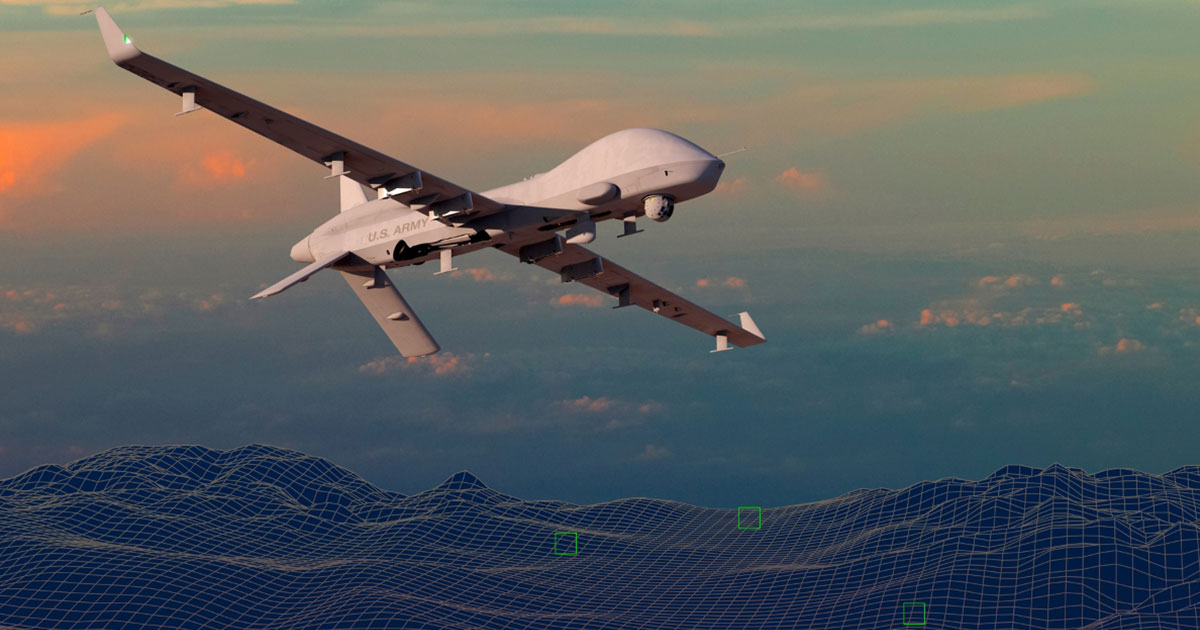
SAN DIEGO. 26th April, 2023. General Atomics Aeronautical Systems, Inc. (GA-ASI) announces that the Army National Guard (ARNG) has received fiscal year 2023 Congressional funding for 12 new Gray Eagle 25M (GE-25M) Unmanned Aircraft Systems (UAS).
The funding comesafter Army National Guard States, which make up 45 percent of the U.S. Army’s combat divisions, requested GE-25Ms to make ARNG Divisions Multi-Domain Operations (MDO) capable, deployable, and better able to team with newly formed Division Artillery Brigades (DIVARTY). They will also be available tosupport domestic missions, such as homeland defense and disaster response, as needed.
“The GE-25M UAS is a very versatile aircraft,” said GA-ASI Vice President of DoD Strategic Development Patrick Shortsleeve.“Gray Eagle is a valuable tool that gives the ARNG capabilities that match the organizational and doctrinal Reconnaissance, Surveillance, and Target Acquisition (RSTA) requirements of active Army divisions with up to 40 hours of continuous flight.”
GE-25M is equipped with the new Eagle-Eye multi-mode radar and electro-optical/infrared sensors, and can host a wide range of additional kinetic and non-kinetic payloads. Equipping ARNG Divisions with organic GE-25Ms makes possible the necessary mission planning, targeting, communications, detailed coordination, and realistic training needed to employ the systems successfully in combat. GE-25M will allow ARNG Divisions to have Divisional ISR for the first time.
The Gray Eagle UAS has a proven record of performance with millions of hours of safe operations, including automatic takeoff and landing capability. The aircraft excels as an enabler for Fires, Maneuver, Network, and Intelligence operations. It is also an integral part of the Army Aviation team, working closely with manned rotary-wing systems to achieve overmatch against pacing threats.
Delivery of GE-25M capability to the ARNG will deepen the skill and experience of the whole force. Not only will the aircraft enhance the lethality of the United States’ strategic reserve, but it will also spread the operational burden more broadly. ARNG Gray Eagle companies will be able to deploy to operational theaters and conflicts where, to date, only Regular Army Gray Eagle units have been supporting deployments.
Configuration offers potential solutions for key fusion pilot plant design challenges
San Diego, 24th April, 2023. The DIII-D National Fusion Facility has completed an innovative month-long fusion research campaign utilizing a plasma configuration known as “negative triangularity.” The campaign was organized and conducted to explore the potential benefits of using this configuration to improve exhaust handling and particle confinement as a means of making future fusion energy plants more efficient and cost effective.
The campaign was a global collaboration and included the participation of researchers from 15 institutions. It produced the highest-powered negative triangularity experiments in the history of the U.S. fusion research program.
Initial data from this work appear very encouraging and full results will be released in the summer of 2023 after further analysis.
The DIII-D National Fusion Facility
DIII-D is an Office of Science scientific user facility, operated by General Atomics (GA) for the U.S. Department of Energy. Its mission is to pioneer the science and innovative technology that will enable the development of fusion as an energy source. DIII-D is the largest operating magnetic fusion research facility in the United States and one of the most flexible tokamaks in the world, which allows it to run innovative experiments and research campaigns that cannot be conducted anywhere else.
Fusion is the process that powers the stars and offers the potential for nearly limitless clean, safe energy. It occurs when two light nuclei combine to form a new one, releasing vast amounts of energy that can be used to generate electricity. Researchers can achieve fusion using a tokamak, a device that uses heat, magnetic fields, and microwaves to create and contain a plasma of charged particles. When enough heat is added, the plasma reaches fusion conditions.
Positive vs. Negative Configurations
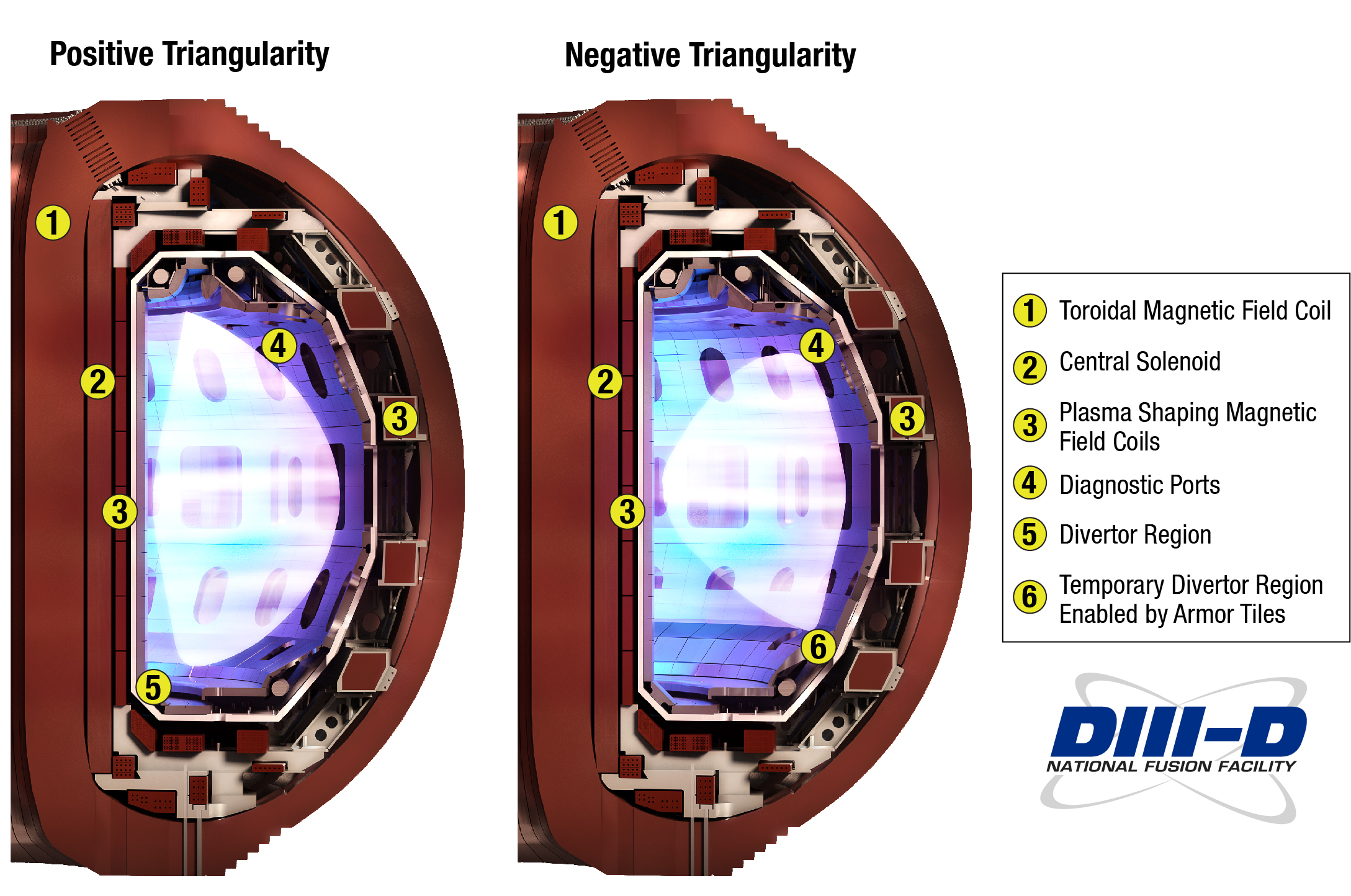
To achieve fusion conditions relevant for energy production, DIII-D’s plasma must be heated to temperatures exceeding 100 million degrees Celsius—approximately ten times the temperature at the center of the sun. DIII-D generates these conditions inside a vacuum vessel that has a D-shaped cross-section. When operating with a standard configuration, the plasma inside the DIII-D tokamak takes the same “D” shape as the vacuum vessel. This is known as “positive triangularity” and is the configuration used in nearly every experiment at the DIII-D National Fusion Facility.
By comparison, the cross-section of a plasma configured in a “negative triangularity” appears mirrored, closely resembling a backwards “D” (Figure 1). Due to their shape within the fusion machine, plasmas in negative triangularity are less likely to impact the inner walls of the tokamak, potentially offering significant benefits for the design of future fusion power plants.
Figure 1: A side-by-side comparison of a standard plasma configuration, known as positive triangularity, and a plasma created as part of the negative triangularity campaign at the DIII-D National Fusion Facility. Additional armor tiles were installed to enable a temporary divertor region.
To prevent the harsh conditions within the tokamak from damaging the inner walls, DIII-D must channel excess heat away from the edge of the plasma. Using the machine’s magnetic fields, this heat exhaust is guided into a region known as the divertor, where it is efficiently dispersed, cooled, and vented. The divertor is a permanently installed component on DIII-D and is positioned for a standard plasma configuration.
Because negative triangularity plasmas place heat exhaust outside of the installed divertor region, DIII-D’s interior required a special modification. To enable the research campaign at DIII-D, the research team completed an engineering project to design and install special armor tiles to provide sufficient protection and create a temporary divertor region (Figure 2).
Designed to be one of the most flexible research tokamaks in the world, DIII-D is uniquely capable of accommodating changes to its interior and plasma configurations. Once the armor was in place, the campaign was able to run for four weeks in January and February 2023. The full month of experiments produced 178 run hours (22 percent of the 800 planned run hours throughout the calendar year).
Figure 2: Images of the additional armor tiles installed at the base of the DIII-D tokamak to enable the negative triangularity campaign. The image on the upper left shows the interior of the DIII-D tokamak configured for positive triangularity plasmas. The lower images show the tiles configured for the negative triangularity campaign. The visible discoloration of the armor tiles in the lower right image is due to the intense power exhaust of the plasmas.
International Collaboration
Participants joined the research campaign from eight universities, four national laboratories, GA, and several international institutions, including the Swiss Federal Institute of Technology Lausanne, Germany’s Max Planck Institute for Plasma Physics, and Japan’s National Institute for Fusion Science.
“The negative triangularity research team deserves a lot of credit for their planning and execution of this research campaign,” said Dr. Richard Buttery, Director of the DIII-D National Fusion Facility.“As an Office of Science user facility, our goal is to deliver cutting-edge science for the world. This collaboration is a perfect illustration of what we can do when we bring different voices together from around the world to tackle a specific challenge.”
The research team was led by Dr. Kathreen Thome, a GA Scientist stationed at DIII-D, and Prof. Carlos Paz-Soldan, Associate Professor of Applied Physics at Columbia University’s School of Engineering. Prof. Paz-Soldan recently served as the co-lead for a collaboration between Columbia University and the Massachusetts Institute of Technology (MIT), facilitating a graduate-level fusion reactor design course in which students designed fusion reactors leveraging negative triangularity for electricity production.
“In my entire time working at DIII-D, I have never seen the research team come together like this,” said Dr. Thome. “From our incredible engineers who made this campaign possible, to our world-class operations and science groups, this was an international team effort from top to bottom. It was truly special to be part of it. I know the entire team is very excited to dive into the results.”
“Our campaign consisted of several experiments each targeting an important part of tokamak plasma physics, and our team benefited from great expertise on all fronts,” said Prof. Paz-Soldan.“We were able to gather data to push the limits of the plasma’s behavior in this unique configuration, and to understand how all the pieces fit together into a successful fusion reactor operating regime. It was an honor to help realize the campaign.”
Dr. Max Austin, a DIII-D Scientist affiliated with the University of Texas-Austin, served as the deputy research lead.
“This campaign was unique. Everyone involved contributed their own individual expertise, and it was great to see the team work together to solve challenges in real time and ensure successful experiments,” said Dr. Austin.
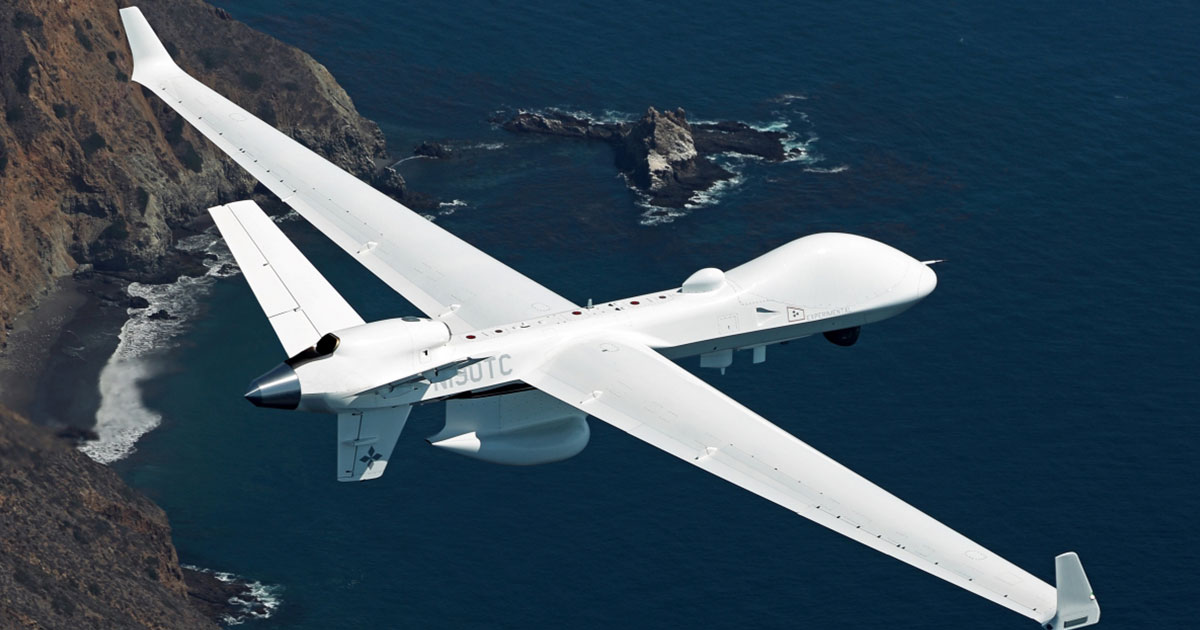
SAN DIEGO. 25th April, 2023. The U.S. Navy’s Group Sail Exercise, held over a six-day period in Hawaiian military operating areas, featured one of the world’s most advanced Unmanned Aircraft Systems (UAS) — the MQ-9B SeaGuardian® supplied by General Atomics Aeronautical Systems, Inc. (GA-ASI). SeaGuardian conducted Maritime Intelligence, Surveillance and Reconnaissance (MISR), Anti-Submarine Warfare (ASW), Long Range Fires, and simulated Battle Damage Assessment as part of Group Sail, which supported Carrier Strike Groups FIFTEEN and ONE.
During the exercise, which ran April 12-17, 2023, SeaGuardian integrated with U.S. Navy ships (carriers, cruisers, and destroyers) and aircraft (F-35C, F/A-18, EA-18G, E-2D, MH-60, and P-8) to support various naval missions that included Maritime Domain Awareness, Surface Warfare, Information Warfare, and numerous time-sensitive targeting objectives and simulated Battle Damage Assessments.
“We were thrilled that the U.S. Navy requested SeaGuardian be part of the Group Sail training event,” said GA-ASI President David R. Alexander.“We know the many successes of SeaGuardian during the USN’s RIMPAC 2022 exercise was a big reason the SeaGuardian was invited back to Hawaii to support Group Sail.”
In addition to its contributions during Group Sail, the SeaGuardian self-deployed from GA-ASI’s Desert Horizons flight operations facility in El Mirage, Calif., to Marine Corps Base Hawaii, covering over 2,500 nautical miles in a single flight and demonstrating SeaGuardian’s unrivalled expeditionary attributes. The aircraft self-deployed back to El Mirage following the exercise.
Eight new Dreamliners will help Azerbaijani flag carrier provide more service and new routes
Boeing and Azerbaijan Airlines today announced the national flag carrier has ordered eight 787-8 Dreamliners to support the growth of its long-haul fleet. The super-efficient jets will enable the Central Asian carrier to profitably open up new routes from Azerbaijan and boost capacity for inbound tourism. Image credit: Boeing
BAKU, Azerbaijan. Boeing and Azerbaijan Airlines announced on 28th April, 2023 that the national flag carrier has ordered eight 787-8 Dreamliners to support the growth of its long-haul fleet. The super-efficient jets will enable the Central Asian carrier to profitably open up new routes from Azerbaijan and boost capacity for inbound tourism.
Leaders from both companies, including Jahangir Asgarov, president of Azerbaijan Airlines, and Stan Deal, president and CEO of Boeing Commercial Airplanes, celebrated the order at a signing ceremony at the airline’s hub in Baku. In July 2022, Boeing and the carrier announced a commitment to purchase four 787s; since then, the order was finalized for eight airplanes and unidentified on Boeing’s Orders and Deliveries website.
“The successful development of the country’s civil aviation has become possible thanks to the continuous support and attention of the President of Azerbaijan, Ilham Aliyev. The signing of a contract with Boeing for the purchase of modern wide-body Boeing 787 Dreamliners is an important step in modernizing the fleet and increasing the level of AZAL air transportation,” said Asgarov.
More than 85 customers around the world have placed orders for more than 1,600 787 Dreamliners, making the 787 the fastest selling twin-aisle airplane in history. Since entering service in 2011, the 787 family’s fuel efficiency, flexibility and range have enabled airlines to open more than 350 new nonstop routes, such as Azerbaijan Airlines’ recent connection between Baku and New Delhi.
“The 787 has helped position Azerbaijan Airlines as the leading carrier across Central Asia, with the airplane’s flexibility and capability opening Azerbaijan up to increased tourism and economic growth,” said Deal. “For more than 20 years we have enjoyed a tremendous partnership with Azerbaijan Airlines and this order for Dreamliners is a testament to the strength of our product family and the relationship between our companies.”
Built with lightweight composite materials and powered by advanced engines, the 787 Dreamliner can fly up to 20% more passengers while reducing fuel use and emissions by 25% compared to the airplanes it replaces. The 787-8’s range reaches up to 13,530 km in a typical two-class configuration, enabling Azerbaijan Airlines to grow its network across Europe, Asia and beyond.
Azerbaijan Airlines is one of the largest carriers in Central Asia, serving 40 destinations across 25 countries, with a fleet that includes Boeing 757, 767 and 787 jets.
Accelerating technology development for sustainability with multiple airplanes
Boeing will use first Boeing ecoDemonstrator Explorer, a 787-10 Dreamliner, to partner with four countries on operational efficiency testing
Flagship ecoDemonstrator will test 19 new technologies in 2023
Boeing is expanding its ecoDemonstrator program to include “Explorer” platforms that will focus on short-term testing of a specific technology. The first Boeing ecoDemonstrator Explorer, a Boeing 787-10 Dreamliner, will participate in an operational efficiency exercise in June 2023.
SEATTLE. Boeing is expanding its ecoDemonstrator flight-test program to further accelerate innovation for sustainability and safety. On April 27, 2023, the company announced its 2023 plan to assess 19 technologies on the Boeing 777 ecoDemonstrator, while also adding “Explorer” airplanes that will focus tests on specific technologies.
The first ecoDemonstrator Explorer, a 787-10 Dreamliner, will conduct flight tests in June from Seattle to Tokyo, Singapore and Bangkok to demonstrate how coordinating navigation across global airspace jurisdictions can improve operational efficiency, which can reduce an airplane’s fuel use and emissions by up to 10%. Utilizing today’s onboard capabilities, Boeing and air navigation service providers (ANSPs) in the U.S., Japan, Singapore and Thailand will collectively sequence the airplane’s routes to achieve the optimal flight path across multiple regions, factoring in conditions such as weather, air traffic and airspace closures. The airplane will fly on the highest available blend of sustainable aviation fuel (SAF) at each location.
The 2023 Boeing ecoDemonstrator kicks off its second year of testing on a Boeing-owned 777-200ER with more than a dozen technologies.
“To support our industry’s goal for net zero carbon emissions by 2050, Boeing is expanding our ecoDemonstrator program with Explorer airplanes to test even more sustainability-focused technologies,” said Stan Deal, president and CEO of Boeing Commercial Airplanes.“We continue to invest in innovation that reduces fuel use, emissions and noise on our products and to partner with governments and industry to make progress on sustainability during each phase of flight.”
“The industry will need continued fleet renewal, efficiency gains, renewable energy carriers such as sustainable aviation fuel and advanced technology to meet the civil aviation industry’s commitment to achieve net zero carbon emission by 2050,” said Boeing Chief Sustainability Officer Chris Raymond. “Our initial Explorer testing in partnership with aviation stakeholders in four countries is a great example of how we can work together to optimize operational efficiency and reduce emissions.”
In 2023, Boeing also will use its current flagship ecoDemonstrator airplane, a 777-200ER (Extended Range), to test 19 technologies including:
Sustainable wall panels in the cargo hold that are made of 40% recycled carbon fiber and 60% resin made from a bio-based feedstock
A fiber optic fuel quantity sensor compatible with 100% SAF
An Electronic Flight Bag application featuring Smart Airport Maps, a component of Jeppesen FliteDeck Pro, which reduces operational costs and supports safe taxi operations with the depiction of contextual airport data
For all flight tests, the airplane will fly on the highest available blend of SAF locally
Since its initial flights in 2012, the Boeing ecoDemonstrator program has accelerated innovation by taking new technologies out of the lab and testing them in an operational environment. Including the 2023 plan, the program will have tested about 250 technologies to help decarbonize aviation, improve operational efficiency and enhance safety and the passenger experience. Approximately a third of tested technologies have progressed onto Boeing’s products and services.
Haifa, Israel. Elbit Systems Ltd. Elbit Systems announced on 27th April, 2023 that it has signed a follow-on contract worth approximately $100 million to provide aerial firefighting services to the Israeli Ministry of National Security. The contract will be carried out over a period of eight years.
As part of the contract, Elbit Systems will continue to provide aerial firefighting services in Israel to the Ministry of National Security through a fleet of 14 aircraft, as well as additional operational services including ongoing maintenance of the aircraft and their preparation for flights.
The squadron will be operated under the guidance of the Israeli Police and in accordance with the operational needs determined in coordination with the Fire and Rescue Authority.
Yoram Shmuely, General Manager of Elbit Systems Aerospace:“Elbit Systems has been a partner of the national aerial firefighting squadron since its establishment. I welcome the choice of the Ministry of National Security to extend the contract until the end of 2031, a decision that expresses confidence in the Company and satisfaction with its capabilities and services. The squadron is prepared and ready for its missions in Israel and to provide international assistance to neighboring countries as needed.”