Author: admin

  • Malala Yousafzai Appeals for Peace Amid India-Pakistan Conflict, Urges Immediate De-escalation

    Malala Yousafzai Appeals for Peace Amid India-Pakistan Conflict, Urges Immediate De-escalation

    Nobel Peace Prize laureate Malala Yousafzai has issued a heartfelt plea for peace as tensions between India and Pakistan spiral into dangerous territory following a series of military engagements. In a statement released on Thursday, the Pakistani activist called on leaders of both nations to prioritize dialogue and protect civilians caught in the crossfire of the escalating conflict.

    The appeal comes in the wake of a powerful explosion near Lahore’s Walton Airport, which sparked panic across the city, and India’s recent missile strikes under Operation Sindoor, which Pakistan claims killed 31 civilians, including women and children. The strikes, targeting alleged terrorist infrastructure in Pakistan and Pakistan-administered Kashmir, have drawn international condemnation and heightened fears of a broader war between the nuclear-armed neighbors.

    “Hatred and violence are our common enemies,” Malala said in her statement, shared widely across social media platforms, including X. “The people of Pakistan and India deserve peace, safety, and the chance to live without fear. I urge the leaders of both nations to step back from the brink, engage in dialogue, and protect the lives of innocent civilians.”

    Malala, who survived a Taliban assassination attempt in 2012 and has since become a global advocate for education and peace, emphasized the devastating impact of the conflict on ordinary citizens. “Children are losing their homes, families are being torn apart, and communities are living in fear. This is not the future we want for South Asia,” she added, calling for an immediate ceasefire and diplomatic efforts to resolve the crisis.

    The ongoing conflict has seen heavy shelling along the Line of Control (LoC) in Kashmir, with at least 12 civilian deaths reported in Indian-administered Jammu and Kashmir and significant casualties in Pakistan. Pakistan’s authorization of retaliatory measures and claims of downing five Indian jets have further inflamed the situation, prompting global leaders, including U.S. President Donald Trump and UN Secretary-General António Guterres, to call for restraint.

    Malala’s statement also addressed the broader implications of the conflict, warning that continued escalation could have catastrophic consequences for the region and beyond. “South Asia cannot afford a war. The stakes are too high, and the cost will be borne by the most vulnerable—our children, our families, our future,” she said.

    Her call for peace has resonated widely, with thousands of users on X amplifying her message and urging both governments to heed her words. Civil society groups in Pakistan and India have echoed her appeal, organizing small peace vigils in cities like Lahore, Karachi, and New Delhi, though security concerns have limited their scale.

    However, the path to de-escalation remains uncertain. Pakistan’s leadership has vowed a “forceful response” to India’s strikes, while India maintains that its actions were aimed at neutralizing terrorist threats. Amid this volatile backdrop, Malala’s voice serves as a powerful reminder of the human cost of conflict and the urgent need for diplomacy.

    As the international community watches closely, Malala has urged global leaders to support mediation efforts and humanitarian aid for those affected by the violence. “The world must stand with the people of Pakistan and India in demanding peace,” she concluded.

    Her words, rooted in her own experience of surviving violence and advocating for resilience, have struck a chord in a region gripped by fear and uncertainty. Whether they will inspire meaningful action from the leaders of India and Pakistan remains to be seen.

  • Lahore Blast: Loud Explosion and Smoke Near Walton Airport Trigger Panic
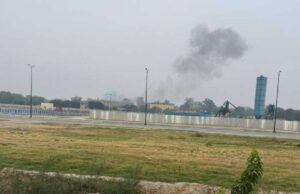
    Lahore Blast: Loud Explosion and Smoke Near Walton Airport Trigger Panic

    A powerful explosion rocked Lahore’s Walton Road area near Walton Airport on Thursday morning, sending shockwaves through the city and sparking widespread panic among residents. The loud bang, followed by plumes of smoke, was reported around 8:00 AM, prompting locals to flee their homes in fear. According to multiple sources, including Geo TV and eyewitness accounts, the blast was significant enough to be heard across several neighborhoods, with some claiming it targeted the vicinity of Walton Airfield.

    Initial reports from ARY News indicated that three consecutive explosions occurred in the area, escalating concerns among residents and authorities. “The sound was deafening, and we saw smoke rising near the airport. People were running out of their homes, unsure of what was happening,” said a local resident. Police and emergency services swiftly cordoned off the area, and sirens echoed through the city as authorities scrambled to assess the situation.

    The cause of the blast remains unclear, with no official statement from the government or security agencies confirming whether it was an act of terrorism, an accident, or related to military activity. Speculation has been rife, with some local media outlets and social media posts suggesting a possible link to heightened tensions between Pakistan and India following recent cross-border incidents. On Wednesday, India conducted strikes on alleged “terrorist infrastructure” in Pakistan, which Islamabad claimed killed 31 civilians. However, no direct connection between these events and the Lahore blast has been established.

    Walton Airport, primarily used for general aviation and training, is located in a densely populated area of Lahore, amplifying the impact of the incident. The proximity to Allama Iqbal International Airport, which has experienced fire-related disruptions in the past, further fueled public anxiety. In April 2025, a fire at the international airport caused flight cancellations, though authorities later clarified it was due to a tire blaze on a military aircraft.

    Police officials have urged calm, stating that investigations are underway to determine the nature and source of the explosion. “We are ascertaining the cause of the blast and ensuring the safety of the public,” said a Lahore police spokesperson. No casualties or significant damage have been officially reported, but hospitals in the area have been placed on high alert.

    The incident comes at a time of heightened regional tensions, with Pakistan and India trading accusations over recent attacks. Social media platforms, particularly X, have been abuzz with unverified claims, with some users alleging the blast targeted military infrastructure near Walton Airport. Authorities have cautioned against spreading unconfirmed information, emphasizing the need for verified reports.

    As the situation develops, residents of Lahore remain on edge, with many awaiting official updates. The incident underscores the city’s vulnerability to sudden disruptions, particularly in light of its history of terror-related incidents. In January 2022, a bomb blast in Lahore’s Anarkali market killed three and injured 20, highlighting the persistent security challenges in Pakistan’s second-largest city.

    For now, authorities are focused on securing the area and providing clarity to a rattled public. Further details are expected as investigations progress.

  • India-Pakistan Tensions: Why Rafale Jets Were the Backbone of Operation Sindoor
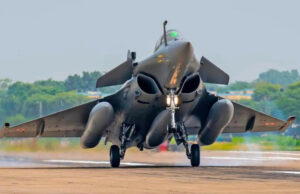
    India-Pakistan Tensions: Why Rafale Jets Were the Backbone of Operation Sindoor

    As tensions between India and Pakistan escalate following India’s ‘Operation Sindoor,’ a precision strike operation targeting nine terrorist infrastructure sites in Pakistan and Pakistan-occupied Jammu and Kashmir (PoK), the Indian Air Force’s (IAF) Rafale jets have emerged as the centerpiece of the mission. Launched to avenge the April 22 Pahalgam terror attack that killed 26 people, the operation showcased the Rafale’s cutting-edge capabilities, underscoring why these French-made fighters were chosen for such a high-stakes mission.

    Why Rafale Jets Were Chosen for Operation Sindoor

    • Stealth and Precision Strike Capability
      The Rafale, a 4.5-generation omni-role fighter, is equipped with advanced stealth features, including a low radar cross-section and electronic countermeasures, making it ideal for penetrating hostile airspace undetected. During ‘Operation Sindoor,’ Rafale jets used Scalp cruise missiles and Hammer precision-guided munitions to strike terror camps in locations like Muzaffarabad, Bahawalpur, and Muridke with pinpoint accuracy. This minimized collateral damage, aligning with India’s objective of targeting terrorist infrastructure while avoiding civilian and military sites.
    • Advanced Avionics and Sensor Fusion
      The Rafale’s Active Electronically Scanned Array (AESA) radar and Spectra electronic warfare suite provided unparalleled situational awareness, enabling pilots to navigate Pakistan’s air defenses effectively. The jets’ sensor fusion technology integrated data from multiple sources, allowing real-time tracking of threats and targets. This was critical for the pre-dawn strikes on May 7, executed at 1:44 AM IST, where rapid decision-making was essential.
    • Long-Range and Standoff Capabilities
      With a combat radius exceeding 1,000 km and the ability to carry long-range standoff weapons like the Scalp missile (range: 560 km), Rafale jets could engage targets deep inside Pakistan and PoK without entering heavily defended airspace. This reduced the risk of interception by Pakistan’s air defenses, which include Chinese-supplied JF-17 jets and surface-to-air missiles. The IAF’s ability to strike from a distance was a key factor in ensuring all aircraft returned safely, debunking Pakistan’s claim of downing Indian planes.
    • Multi-Role Versatility
      The Rafale’s ability to perform air superiority, reconnaissance, and ground attack roles simultaneously made it the ideal choice for a complex operation like Sindoor. During the mission, Rafales conducted suppression of enemy air defenses (SEAD), delivered precision strikes, and provided real-time intelligence to ground command. Their versatility allowed the IAF to execute a tri-services operation seamlessly, coordinating with the Army and Navy.
    • Proven Performance in High-Intensity Scenarios
      Since their induction into the IAF in 2020, the 36 Rafale jets stationed at Ambala (No. 17 Squadron) and Hasimara (No. 101 Squadron) have been tailored for India-specific enhancements, including Meteor beyond-visual-range missiles and integration with Indian satellites. Their performance in exercises like ‘Tarang Shakti’ and prior operations, such as the 2019 Balakot airstrike simulation, gave the IAF confidence in their reliability for ‘Operation Sindoor.’ The jets’ ability to operate in contested environments was critical, given Pakistan’s reported air defense upgrades.
    • Psychological and Strategic Impact
      The Rafale’s deployment sent a strong message to Pakistan about India’s technological superiority and resolve. As a state-of-the-art platform, the Rafale outclasses Pakistan’s aging F-16s and JF-17s in most combat scenarios, deterring potential escalatory responses. The successful execution of ‘Operation Sindoor,’ neutralizing approximately 80 terrorists without IAF losses, reinforced India’s military dominance in the region.

    Context of the Operation

    ‘Operation Sindoor,’ named symbolically after the red vermilion worn by married Hindu women, was a response to the Pahalgam attack, which targeted Hindu tourists. The Rafale jets’ role in dismantling terror hubs linked to Lashkar-e-Taiba and Jaish-e-Mohammed underscored their strategic importance. Pakistan’s claims of civilian casualties and downed aircraft were dismissed by India as “propaganda,” with the IAF confirming all assets returned safely.

    Post-Operation Developments

    Following the strikes, the IAF intensified border patrols with Rafale, Mirage 2000, and Sukhoi Su-30 MKI jets, supported by a NOTAM restricting airspace in Rajasthan, Punjab, and Jammu. The Rafale’s continued presence in these drills highlights its role in maintaining deterrence amid ongoing cross-border shelling and Pakistan’s missile tests.

  • India Refutes Pakistan’s Claims, Says No IAF Planes Hit in ‘Operation Sindoor’ Strikes

    India Refutes Pakistan’s Claims, Says No IAF Planes Hit in ‘Operation Sindoor’ Strikes

    India’s Ministry of Defence categorically denied Pakistan’s claims that its air defenses shot down or damaged Indian Air Force (IAF) aircraft during ‘Operation Sindoor,’ a series of precision strikes targeting nine terrorist infrastructure sites in Pakistan and Pakistan-occupied Jammu and Kashmir (PoK) early Wednesday. Labeling Pakistan’s assertions as “fake and baseless,” India reaffirmed that all IAF assets and pilots returned safely after the operation, which was launched to avenge the April 22 Pahalgam terror attack that killed 26 people.

    The IAF, in a statement, clarified that ‘Operation Sindoor’ involved Rafale jets deploying Scalp and Hammer munitions to strike terror camps linked to Lashkar-e-Taiba and Jaish-e-Mohammed in locations including Muzaffarabad, Bahawalpur, Kotli, and Muridke. “All aircraft executed their missions with precision and returned to base without incident,” Air Chief Marshal Amar Preet Singh said, adding that approximately 80 terrorists were neutralized. The operation, described as “targeted and non-escalatory,” avoided Pakistani military and civilian sites, India emphasized.

    Pakistan’s military, through its Inter-Services Public Relations (ISPR), claimed it downed five Indian aircraft, including a drone, and reported eight civilian deaths across six strike locations, including Bahawalpur and Kotli. India’s Defence Ministry dismissed these claims as “propaganda to deflect attention from the successful dismantling of terror infrastructure.” Sources in New Delhi suggested Pakistan’s narrative was an attempt to rally domestic support amid public criticism of its failure to counter the strikes.

    Tensions escalated post-operation, with heavy shelling reported along the Line of Control, particularly in Jammu and Kashmir’s Poonch and Rajouri sectors, where three Indian civilians were killed by Pakistani artillery fire. Pakistan closed its airspace, and India suspended operations at northern airports like Srinagar and Jammu. Social media posts from India celebrated the operation, with hashtags like #OperationSindoor and #BharatMataKiJai trending, while Pakistani accounts shared unverified images of alleged aircraft wreckage.

    Prime Minister Narendra Modi, who monitored the tri-services operation, is set to address an all-party meeting today to brief leaders on the strikes. Defence Minister Rajnath Singh praised the IAF’s “flawless execution,” while External Affairs Minister S. Jaishankar reiterated India’s right to self-defense against cross-border terrorism.

    The international community urged de-escalation. The U.S. acknowledged India’s briefing on the strikes but called for restraint, while the U.N. expressed alarm over the rising India-Pakistan tensions. Pakistan’s Prime Minister Shehbaz Sharif, vowing retaliation, conducted missile tests, signaling a volatile standoff.

    India plans to release further details on ‘Operation Sindoor’ later today, as both nations remain on high alert amid fears of further escalation.

  • Pakistan Claims Six Locations Hit, Eight Killed in India’s ‘Operation Sindoor’ Strikes

    Pakistan Claims Six Locations Hit, Eight Killed in India’s ‘Operation Sindoor’ Strikes

    Pakistan’s military reported that Indian forces struck six locations within its territory and Pakistan-occupied Jammu and Kashmir (PoK) early Wednesday, killing eight people and injuring dozens, in an operation India codenamed ‘Operation Sindoor.’ The strikes, which India described as targeting nine terrorist infrastructure sites to avenge the April 22 Pahalgam terror attack, have escalated tensions between the nuclear-armed neighbors.

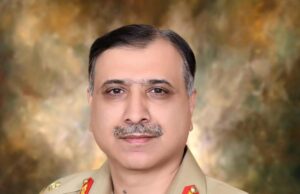
    Pakistan’s Director General of Inter-Services Public Relations (DG ISPR), Lt. Gen. Ahmed Sharif Chaudhry, confirmed strikes in Bahawalpur, Kotli, Muzaffarabad, Muridke, Chak Amru, and Bhimber, alleging civilian casualties, including a 3-year-old child, and damage to civilian structures like a mosque in Bahawalpur. “This is an unprovoked act of war,” Chaudhry said, claiming Pakistan shot down five Indian aircraft, a claim India denied, asserting all assets and pilots were safe. Pakistan’s Prime Minister Shehbaz Sharif vowed a “robust response,” stating, “Pakistan will retaliate at a time and place of its choosing.”

    India’s Ministry of Defence, in a 1:44 AM IST statement, said ‘Operation Sindoor’ targeted nine sites linked to Lashkar-e-Taiba and Jaish-e-Mohammed, including their headquarters in Muridke and Bahawalpur, respectively. The tri-services operation, involving precision strikes by Rafale jets using Scalp and Hammer munitions, was described as “focused, measured, and non-escalatory,” avoiding Pakistani military facilities. India reported neutralizing around 80 terrorists and emphasized restraint in target selection. The operation was a direct response to the Pahalgam attack, which killed 25 Indian civilians and one Nepali citizen, an act India blamed on Pakistan-backed militants.

    Heavy cross-border shelling followed along the Line of Control, with Pakistan’s artillery fire in Poonch and Rajouri killing three Indian civilians, according to the Indian Army. Northern Indian airports, including Srinagar and Jammu, suspended operations, and Pakistan closed its airspace, impacting regional flights.

    The international community called for restraint. U.S. President Donald Trump, informed of the strikes, said, “I hope it ends very quickly,” while U.N. Secretary-General António Guterres expressed concern over a potential India-Pakistan confrontation. India’s National Security Advisor Ajit Doval briefed U.S., U.K., and other counterparts, asserting the strikes’ precision.

    Pakistan’s Foreign Ministry condemned the strikes as a violation of sovereignty, claiming they endangered commercial air traffic. Social media posts from Pakistan showed explosions in Bahawalpur, while Indian leaders, including Defence Minister Rajnath Singh and Uttar Pradesh CM Yogi Adityanath, hailed the operation, posting “Bharat Mata ki Jai” and “Jai Hind.”

    As both nations remain on high alert, India plans a detailed briefing on ‘Operation Sindoor’ later today, while Pakistan’s reported retaliatory measures, including missile tests, signal a volatile standoff.

  • India Launches ‘Operation Sindoor’: Precision Strikes Hit Nine Terror Targets in Pakistan and PoK to Avenge Pahalgam Attack

    India Launches ‘Operation Sindoor’: Precision Strikes Hit Nine Terror Targets in Pakistan and PoK to Avenge Pahalgam Attack

    New Delhi, May 7, 2025 – In a bold and decisive response to the horrific Pahalgam terror attack that claimed 26 lives on April 22, the Indian Armed Forces launched ‘Operation Sindoor’ early Wednesday, targeting nine terrorist infrastructure sites in Pakistan and Pakistan-occupied Jammu and Kashmir (PoK). The meticulously planned tri-services operation, involving the Indian Army, Navy, and Air Force, struck terror camps linked to groups like Lashkar-e-Taiba and Jaish-e-Mohammed, delivering a strong message to those orchestrating cross-border terrorism.

    The strikes, executed at 1:44 AM IST, targeted locations including Muzaffarabad, Bahawalpur, Kotli, and Muridke, which Indian authorities identified as hubs for planning attacks against India. The operation was named ‘Sindoor,’ a symbolic reference to the red vermilion worn by married Hindu women, reflecting the April attack’s targeting of Hindu male tourists, leaving their wives widowed. “We are living up to the commitment that those responsible for this attack will be held accountable,” the Ministry of Defence stated, emphasizing the operation’s focus on terrorist infrastructure while avoiding civilian or military targets.

    Prime Minister Narendra Modi, who monitored the operation from a war room, had earlier granted the armed forces “complete operational freedom” to determine the timing, targets, and mode of retaliation. The Cabinet Committee on Security is set to meet today, followed by an all-party briefing to discuss the operation’s outcomes and next steps. Sources indicate that ‘Operation Sindoor’ is the first phase of India’s response, with further actions under consideration.

    Pakistan condemned the strikes, calling them a “blatant act of war,” and reported eight civilian deaths and dozens injured. Islamabad claimed to have shot down two Indian planes and a drone, though the Indian Air Force refuted this, stating all pilots and assets were accounted for. Pakistan’s Prime Minister Shehbaz Sharif convened an emergency meeting, and heavy cross-border shelling was reported along the Line of Control in Jammu and Kashmir’s Bhimber Gali sector, signaling heightened tensions.

    The Pahalgam attack, which killed 25 Indian civilians and one Nepali citizen in a brutal execution-style assault, had sparked nationwide outrage and calls for retaliation. India accused Pakistan of supporting the militants, a charge Islamabad denied. The strikes come after weeks of escalating tensions, including India’s suspension of the Indus Waters Treaty, a ban on Pakistani goods, and airspace restrictions for Pakistani airlines.

    Defence experts hailed the operation as a precise and proportionate response. “This is a clear signal that India will not tolerate terrorism,” said retired Air Chief Marshal RKS Bhadauria, noting that around 80 terrorists were reportedly killed. In Jammu and Kashmir, locals raised slogans of ‘Indian Army Zindabad’ and ‘Bharat Mata ki Jai,’ reflecting public support.

    The international community urged restraint. The U.S., while supporting India’s right to defend itself, called for de-escalation, with National Security Advisor Ajit Doval briefing his U.S. counterpart post-strikes. The United Nations expressed concern over rising tensions between the nuclear-armed neighbors.

    As India prepares for a detailed briefing on ‘Operation Sindoor’ later today, the subcontinent remains on edge. With Pakistan vowing retaliation and both nations on high alert, the coming days will be critical in determining whether this marks the end of India’s response or the beginning of a broader confrontation.

  • US Secretary of State Marco Rubio Calls India, Pakistan, Urges Both Countries to Work Together

    US Secretary of State Marco Rubio Calls India, Pakistan, Urges Both Countries to Work Together

    US Secretary of State Marco Rubio has called on India and Pakistan to work together to de-escalate tensions following the deadly April 22, 2025, terror attack in Pahalgam, Jammu and Kashmir, which killed 26 civilians. In separate phone calls on Wednesday with Indian External Affairs Minister S. Jaishankar and Pakistani Prime Minister Shehbaz Sharif, Rubio emphasized the need for cooperation to maintain peace and security in South Asia, according to the US State Department.

    The Pahalgam attack, initially claimed by The Resistance Front (TRF), a proxy of the Pakistan-based Lashkar-e-Taiba (LeT), has reignited longstanding tensions between the nuclear-armed neighbors. India has accused Pakistan of supporting the attack, while Pakistan denies involvement and has called for a neutral investigation. The situation has been further inflamed by ceasefire violations along the Line of Control (LoC) for seven consecutive days, reciprocal airspace bans, India’s suspension of the 1960 Indus Waters Treaty, and the closure of the Attari-Wagah border crossing.

    During his call with Jaishankar, Rubio expressed sorrow for the lives lost and reaffirmed the United States’ commitment to cooperating with India in combating terrorism. He also encouraged India to engage with Pakistan to reduce tensions. In his conversation with Sharif, Rubio urged Pakistan to condemn the attack and cooperate fully in investigating what he described as an “unconscionable” act of terror, while stressing the importance of re-establishing direct communications between the two nations.

    State Department spokesperson Tammy Bruce underscored Washington’s active engagement, noting that the US is in touch with both countries at multiple levels to prevent further escalation. “The world is watching,” Bruce said, adding that Rubio has encouraged other global leaders to reach out to India and Pakistan to support a peaceful resolution.

    Pakistani Prime Minister Sharif, in response, accused India of “escalatory and provocative behavior” and urged the US to press New Delhi to “dial down the rhetoric.” He rejected allegations linking Pakistan to the attack and reiterated the need for a transparent probe, citing Pakistan’s own sacrifices in the fight against terrorism, including over 90,000 lives lost and $152 billion in economic damages.

    India’s Foreign Minister Jaishankar, meanwhile, emphasized the need for accountability, stating on X that India is resolved to bring the “perpetrators, planners, and backers” of the attack to justice. He expressed appreciation for the UN Secretary-General Antonio Guterres’ condemnation of the attack and noted India’s diplomatic outreach to non-permanent UN Security Council members to reinforce its stance against terrorism.

    The US has publicly condemned the Pahalgam attack, with President Donald Trump and Vice President JD Vance expressing solidarity with India, but has refrained from criticizing Pakistan directly. Analysts note that India’s growing strategic importance as a counterweight to China contrasts with Pakistan’s diminished role as a US ally following the 2021 Afghanistan withdrawal, shaping Washington’s balanced approach.

    International calls for restraint have intensified, with the United Nations and the United Kingdom also urging both nations to avoid actions that could lead to a broader conflict. As tensions persist, Rubio’s diplomatic outreach marks the highest level of US engagement to defuse the crisis since the attack, with Washington advocating for a “responsible solution” to prevent further escalation between the two nuclear powers.

  • Pakistan’s ISI chief Muhammad Asim Malik appointed as NSA amid tensions with India

    Pakistan’s ISI chief Muhammad Asim Malik appointed as NSA amid tensions with India

    Islamabad, May 1, 2025: In a significant development, Pakistan has appointed Lieutenant General Muhammad Asim Malik, the current Director General of the Inter-Services Intelligence (ISI), as the country’s new National Security Advisor (NSA). The move, announced via a formal notification by the Cabinet Division, marks the first time a serving ISI chief will concurrently hold the NSA position, consolidating significant authority over Pakistan’s security and intelligence policies.

    The appointment comes at a time of heightened tensions between India and Pakistan, following the April 22, 2025, terror attack in Pahalgam, Jammu and Kashmir, which claimed 26 civilian lives, mostly tourists. India has accused Pakistan-based groups, specifically linking the attack to The Resistance Front (TRF), a proxy of the banned Lashkar-e-Taiba (LeT), though TRF later retracted its initial claim of responsibility, reportedly under pressure from Pakistan’s defense establishment.

    Lt Gen Malik, who assumed the role of ISI chief in September 2024, brings extensive military experience to his new post. A graduate of Fort Leavenworth in the United States and the Royal College of Defence Studies in London, Malik has commanded divisions in conflict-prone regions like Balochistan and South Waziristan. His academic credentials include a PhD in US-Pakistan relations from the National Defence University, making him the first PhD holder to lead the ISI.

    The decision to entrust Malik with dual roles has sparked mixed reactions. Some political analysts view it as a pragmatic move to streamline Pakistan’s security strategy amid fears of Indian retaliation, while others express concerns about the militarization of a traditionally civilian role. Pakistan’s Information Minister Attaullah Tarar cited “credible intelligence” suggesting India might launch military action within 24-36 hours, a claim that has heightened Islamabad’s state of alert.

    India, in response to the Pahalgam attack, has taken several measures, including banning Pakistani airlines from its airspace, suspending the Indus Waters Treaty, and closing the Attari-Wagah border crossing. Prime Minister Narendra Modi, in a series of high-level security meetings, vowed to “pursue” the perpetrators and their backers, granting the Indian military “complete operational freedom” to respond.

    Ceasefire violations along the Line of Control (LoC) have continued for seven consecutive days, with unprovoked small-arms fire reported from Pakistan’s side in Jammu and Kashmir’s Akhnoor, Kupwara, and Uri sectors. Pakistan’s Prime Minister Shehbaz Sharif has denied involvement in the attack, calling for an unbiased investigation and urging the United States to discourage India’s “provocative statements.”

    Malik’s new role as NSA will focus on managing India-Pakistan relations, counterterrorism efforts, and border security, particularly with Afghanistan. His appointment underscores the trust placed in him by Chief of Army Staff General Asim Munir, with whom he shares a longstanding professional connection.

    As tensions simmer, the United Nations has urged both nations to exercise restraint to prevent further escalation. The international community continues to monitor the situation closely, with fears of a broader conflict between the two nuclear-armed neighbors.

  • India Closes Air Space For All Pakistan Aircraft, NOTAM Issued
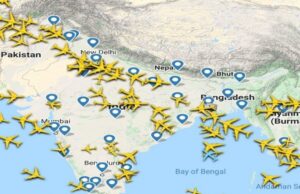
    India Closes Air Space For All Pakistan Aircraft, NOTAM Issued

    New Delhi, April 30, 2025: India has officially closed its airspace to all Pakistani-registered aircraft and airlines, issuing a Notice to Airmen (NOTAM) effective immediately, in a significant escalation of tensions between the two nations. The move, announced on Wednesday, comes as a retaliatory measure following Pakistan’s closure of its airspace to Indian carriers on April 24, 2025, and is linked to the fallout from the deadly Pahalgam terror attack in Jammu and Kashmir, which killed 26 people.

    According to a post on X by @NewsIADN, the Indian NOTAM bans all Pakistani civil and military aircraft, including those operated or leased by Pakistani airlines, from Indian airspace until May 23, 2025, with the possibility of extension based on the evolving situation. The decision is expected to disrupt Pakistan International Airlines (PIA) and other Pakistani operators, forcing them to reroute flights via longer paths, potentially through China or Sri Lanka, significantly increasing operational costs and flight times.

    The closure follows a series of tit-for-tat actions sparked by the Pahalgam attack, which India attributes to cross-border terrorism linked to Pakistan-based groups like The Resistance Front (TRF), a proxy of Lashkar-e-Taiba. India has already suspended the Indus Waters Treaty, closed the Attari border crossing, expelled Pakistani diplomats, and revoked visas for Pakistani nationals. Pakistan reciprocated by closing the Wagah border, suspending trade, and downgrading diplomatic ties, while its Defense Minister Khwaja Asif’s controversial claim that Pakistan did the “dirty work” for the U.S. in past conflicts drew sharp criticism from U.S. Congressman Rich McCormick.

    The airspace ban is likely to have a profound impact on regional aviation. Pakistan’s Civil Aviation Authority (CAA) and PIA could face losses similar to those in 2019, when a five-month airspace closure cost Pakistan nearly $100 million in overflight fees and operational disruptions. A 2019 precedent saw Indian airlines lose approximately ₹700 crore due to Pakistan’s airspace restrictions post-Balakot airstrikes, hinting at the economic stakes involved.

    Posts on X reflect heightened tensions, with @Tar21Operator claiming Pakistan’s leadership is bracing for an Indian response within 24-36 hours, citing reduced Pakistan Air Force operations and naval vessels on standby. Meanwhile, @carin__fischer reported Pakistan’s anticipation of military action from India, with PIA canceling flights from Gilgit and Skardu. These claims, while unverified, underscore the charged atmosphere.

    India’s Ministry of Civil Aviation has not yet detailed the operational impact on Indian carriers, but the reciprocal ban is seen as a symbolic and strategic move to pressure Pakistan. Aviation experts warn that prolonged closures on both sides could disrupt international routes, increase airfares, and strain regional connectivity, particularly for flights to Central Asia, the Middle East, and Europe.

    As both nations dig in, the closure of airspace marks a new low in India-Pakistan relations, with diplomatic observers warning of potential further escalation. The international community, including the U.S. and the UN, has called for restraint, but with both sides accusing each other of fomenting instability, de-escalation remains uncertain.


  • “How Dare You”: Republican Lawmaker Slams Pakistan Over Minister’s ‘Dirty Work’ Claim Against U.S.

    “How Dare You”: Republican Lawmaker Slams Pakistan Over Minister’s ‘Dirty Work’ Claim Against U.S.

    Tensions between the United States and Pakistan have escalated following a sharp rebuke from Republican Congressman Rich McCormick, Co-Chair of the India Caucus, directed at Pakistan’s Defense Minister Khwaja Asif. The controversy stems from Asif’s recent claim that Pakistan has been doing the “dirty work” for the United States and the West for three decades, particularly in supporting terrorist organizations during the U.S.-led wars in Afghanistan.

    In a fiery response, McCormick demanded specifics from Asif, challenging the Pakistani minister to substantiate his allegations. “It makes me angry… How dare you?” McCormick stated, addressing the claims made during Asif’s interview with Sky News. “If Islamabad is going to accuse the U.S. of such actions, they need to provide evidence, not vague assertions,” he added, as reported by ANI. The congressman’s remarks reflect growing frustration in Washington over Pakistan’s narrative, especially amid strained bilateral relations following the deadly Pahalgam terror attack in Jammu and Kashmir, which killed 26 people.

    Asif’s comments, made on April 24, 2025, admitted Pakistan’s historical role in “backing, supporting, training, and funding” terrorist groups, describing it as a mistake driven by Western alliances during the Soviet-Afghan War and post-9/11 operations. He suggested that Pakistan suffered consequences for these actions, claiming the country’s “track record was unimpeachable” had it not joined these conflicts. However, Asif also accused India of staging the Pahalgam attack, further inflaming tensions with both India and the U.S.

    The Pahalgam attack, attributed to The Resistance Front (TRF), a proxy of the banned Lashkar-e-Taiba, prompted India to suspend the Indus Waters Treaty, close the Attari border post, and expel Pakistani diplomats. India’s Foreign Secretary Vikram Misri highlighted the attack’s cross-border linkages, intensifying diplomatic fallout. Meanwhile, Asif’s denial of TRF’s existence and his claim that Lashkar-e-Taiba is “extinct” have drawn skepticism, given Pakistan’s documented history of harboring militant groups.

    McCormick’s retort underscores a broader U.S. pushback against Pakistan’s attempts to deflect responsibility. Analysts note that Asif’s remarks may strain the already fragile U.S.-Pakistan relationship, which has faced challenges since the 2018 suspension of U.S. military aid over Pakistan’s “double game” in counterterrorism. The Biden administration has yet to respond officially to Asif’s claims, but McCormick’s outspoken criticism signals a potential shift toward a harder line in Congress.

    The episode has also sparked debate on social media, with posts on X reflecting polarized sentiments. Some users echo McCormick’s indignation, while others view Asif’s admission as a rare acknowledgment of Pakistan’s past policies. As tensions simmer, the U.S. and Pakistan face a critical juncture in navigating their strategic partnership amid rising regional instability.