Category: Equipments

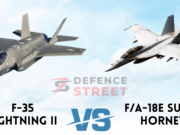
  • F-35 Lightning II vs F/A-18E Super Hornet Comparison, BVR & Dogfight

    F-35 Lightning II vs F/A-18E Super Hornet Comparison, BVR & Dogfight

    The F-35 Lightning II and the F/A-18E Super Hornet, are both advanced fighter jets used by the army of the United States and its many allies. While they share some similarities, the former which is designed by Lockheed Martin is a 5th generation fighter jet while the latter designed by Boeing is a 4th generation fighter jet. There are many other differences that set them apart.

    F-35 Lightning II vs F/A-18E Super Hornet Comparison

    The F-35 Lightning II is a fifth-generation, single-seat, single-engine multirole fighter jet designed for various missions including air-to-air combat, air-to-ground attack, and intelligence, surveillance, and reconnaissance (ISR) missions. It has advanced sensors and avionics that provide the pilot with a complete view of the battlespace, including data from other aircraft and ground-based sensors. It features advanced stealth technology, highly advanced avionics, and can carry a wide range of weapons.

    The F/A-18E Super Hornet is a fourth-generation fighter designed to replace the older F/A-18C/D Hornet. It is larger and more advanced than the older Hornet and has a longer range, greater weapons-carrying capacity, and improved avionics.The Super Hornet is designed for air-to-air and air-to-ground missions and is capable of performing electronic warfare and reconnaissance missions as well. It is known for its versatility, advanced technology, and excellent performance in combat situations.

    In terms of speed and range, the F-35 Lightning II has a top speed of Mach 1.6 and a range of up to 1,200 nautical miles, while the F/A-18E Super Hornet has a top speed of Mach 1.8 and a range of up to 1,275 nautical miles.

    The F-35 Lightning II is a more advanced and sophisticated aircraft than the F/A-18E Super Hornet, but it is also more expensive. The F/A-18E Super Hornet, on the other hand, is a proven aircraft with a long history of successful operations and has a lower operating cost.

    Conclusion

    Overall F-35 has a greater range and immense speed at its disposal, with advanced stealth technologies which makes it escape the enemy radars and other detection systems. While the F/A-18 Super Hornet is highly agile and manoeuvrable combined with advanced technologies and weapon systems, making it specifically suited for Air to Air combat.

    Ultimately, the choice between the F-35 Lightning II and the F/A-18E Super Hornet depends on the specific mission requirements and the budget of the military or government agency.For some missions, the advanced capabilities of the F-35 may be necessary, while for others, the Super Hornet may be more than sufficient.

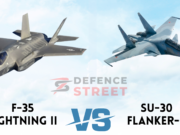
  • F-35 Lightning II Vs SU-30 Flanker-C Comparison, BVR & Dogfight

    F-35 Lightning II Vs SU-30 Flanker-C Comparison, BVR & Dogfight

    The F-35 Lightning II and the SU-30 Flanker-C are both advanced fighter jets used by different countries around the world. They have different capabilities and are designed for different types of missions.

    The F-35 Lightning II is a fifth-generation stealth fighter jet designed by Lockheed Martin for the United States military and its allies. It is a multirole fighter with advanced sensors and avionics, and it is designed to be highly effective in air-to-air and air-to-ground combat. The F-35 is known for its advanced stealth capabilities, which allow it to operate undetected by enemy radar systems.

    The SU-30 Flanker-C, on the other hand, is a fourth-generation fighter jet designed by Russia’s Sukhoi Aviation Corporation. It is a multirole fighter with advanced avionics and weapons systems, and it is designed to be highly effective in air-to-air and air-to-ground combat. The SU-30 is known for its maneuverability and agility, which make it highly effective in dogfights.

    F-35 Lightning II vs Sukhoi SU-30 Flanker

    In terms of speed and range, the F-35 is capable of flying at speeds up to Mach 1.6 and has a range of approximately 1,200 nautical miles. The SU-30, on the other hand, is capable of flying at speeds up to Mach 2.0 and has a range of approximately 1,800 nautical miles.

    In terms of weapons systems, the F-35 is equipped with a wide range of advanced weapons, including air-to-air missiles, air-to-ground missiles, and guided bombs. The SU-30 is also equipped with a wide range of weapons, including air-to-air missiles, air-to-ground missiles, and unguided bombs.

    Last Words

    Overall, both the F-35 and the SU-30 are highly advanced fighter jets with unique capabilities. The F-35 is designed for stealth and multirole missions, while the SU-30 is designed for maneuverability and agility. The choice between the two would depend on the specific mission and requirements of the user.

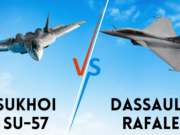
  • Sukhoi Su-57 Vs. Dassault Rafale : What Will Be The Outcome

    Sukhoi Su-57 Vs. Dassault Rafale : What Will Be The Outcome

    The Sukhoi Su-57 and the Dassault Rafale are two of the most advanced fighter jets in operation today. They’re both incredibly powerful, so how do you decide which one is best for you? Let’s take a look at some of their key differences to help make your decision easier.

    Sukhoi Su-57 Vs. Dassault Rafale

    Performance & Specifications

    The Su-57 is Russia’s fifth-generation multirole fighter jet. It has a maximum take-off weight of 38 tons, a maximum speed of 1,400 km/h (Mach 1.6), and an internal weapons bay that can hold up to 8 tons of equipment. The Su-57 also has an impressive range of 4,500 km, making it one of the longest-range fighters in operation today.

    The Rafale is France’s fourth-generation multirole fighter jet. It has a maximum take-off weight of 24 tons, a maximum speed of 1,300 km/h (Mach 1.8), and an internal weapons bay that can hold up to 6 tons of equipment. The Rafale also has an impressive range of 3,700 km making it another long-range fighter aircraft in operation today.

    Both aircraft are equipped with advanced avionics systems including infrared search and track systems (IRST), active electronically scanned array radars (AESA), and digital flight control systems (FCS). Both also have beyond visual range missiles (BVRAAM) as well as short and medium range air to air missiles (ASRAAM). However, the Su 57 has more advanced avionics than the Rafale due to its fifth-generation design.

    Cost & Availability

    The Su 57 is currently only available for purchase by Russia; however, India signed an agreement with Russia in 2018 to develop and produce a jointly designed version called the FGFA or Fifth Generation Fighter Aircraft for use by both countries. As for cost, estimates vary but some sources suggest that each unit will cost between $100 million-$150 million dollars depending on configuration options selected.

    The Rafale is available for purchase by other countries through France’s export sales program as well as through cooperation agreements with other countries such as India who recently purchased 36 units from France in 2016 at a total cost estimated at around $9 billion dollars depending on configuration options selected. Conclusion:

    Conclusion

    In conclusion, while both the Sukhoi Su-57 and Dassault Rafale are powerful fighter jets with impressive features, they each have their own unique strengths and weaknesses that must be taken into consideration when making your choice. The Su 57 is more expensive but offers more advanced avionics while the Rafales lower price point makes it more appealing to budget conscious buyers or those looking for greater quantity over quality when purchasing military hardware. Ultimately though it comes down to personal preference since both aircraft offer similar capabilities but different levels of performance depending on user needs or budget constraints. Ultimately no matter which one you choose you can rest assured knowing that either aircraft will provide excellent service in any situation whether it be air superiority combat missions or ground attack operations. When it comes to choosing between these two fighters though ultimately it comes down to personal preference since both offer similar capabilities but different levels of performance depending on user needs or budget constraints! Ultimately no matter which fighter you choose, you can rest assured knowing that either aircraft will provide excellent service in any situation whether it be air superiority combat missions or ground attack operations. When faced with the tough decision of choosing between these two amazing fighters, make sure to consider what your specific needs are and how each aircraft fits into those requirements. Hopefully this guide has helped answer some of your questions about the F-16 Fighting Falcon and the F/A-18 Hornet so that you can make an informed decision when selecting a fighter for your next mission! Thanks for reading!